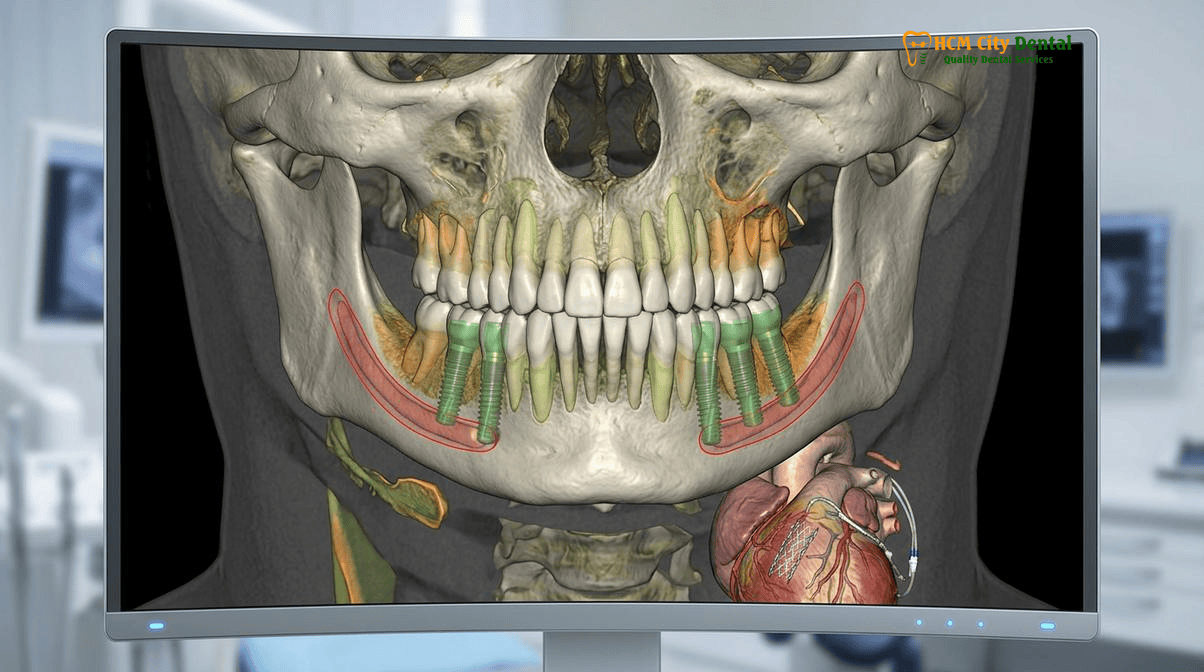
Undergoing complex oral rehabilitation requires meticulous physiological management, but when a patient presents with a history of cardiovascular disease, the clinical paradigm shifts entirely. For international patients and dental travelers seeking dental surgery with heart stent or pacemaker, standard dental protocols are often insufficient. The intersection of cardiovascular hemodynamics, anticoagulant pharmacology, and the physiological stress of oral surgery demands a highly controlled approach to patient safety. At HCMC Dental Clinic, located in the medical heart of Ho Chi Minh City, we have engineered a comprehensive, evidence-based perioperative protocol specifically designed to support patients with coronary stents, pacemakers, and severe hypertension.
Cardiovascular implantable electronic devices (CIEDs) and coronary stents introduce unique variables into the dental operatory. From the risk of electromagnetic interference (EMI) disrupting pacemaker telemetry to the delicate balance of managing hemostasis in patients on dual antiplatelet therapy (DAPT), every clinical decision must be carefully stratified for risk. Furthermore, the use of standard local anesthetics containing epinephrine can precipitate unwanted spikes in blood pressure and myocardial oxygen demand. To mitigate these risks, our clinical team utilizes continuous multiparameter vital-sign monitoring and epinephrine-free anesthesia options for cardiac patients, aiming for optimal physiological stability from the initial incision to the final suture.
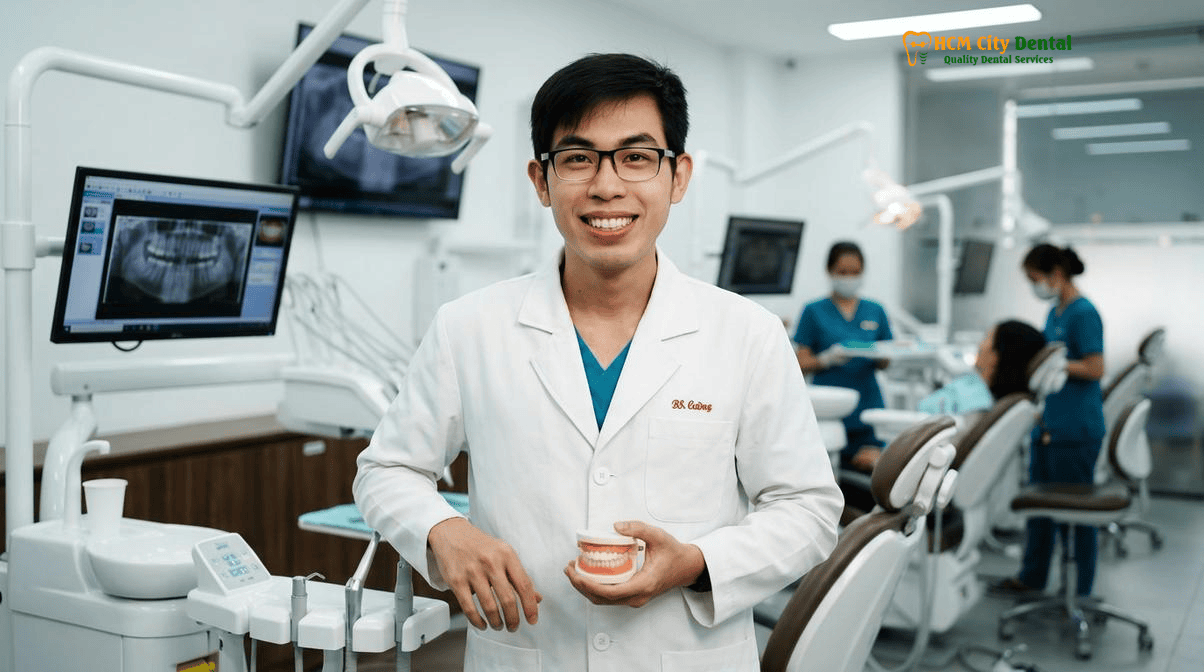
Under the clinical direction of Lead Specialist Dr. Nguyen Van Cuong (Dr. Cuong), DDS (MOH License 0003265/BL-CCHN), our facility integrates advanced cardiovascular monitoring into everyday dental practice. Patients can review the extensive credentials and specialized training of Dr. Nguyen Van Cuong, DDS (Clinical Director — MOH License 0003265/BL-CCHN) to understand our deep commitment to systemic health management and international standards of care.
Clinical Summary:
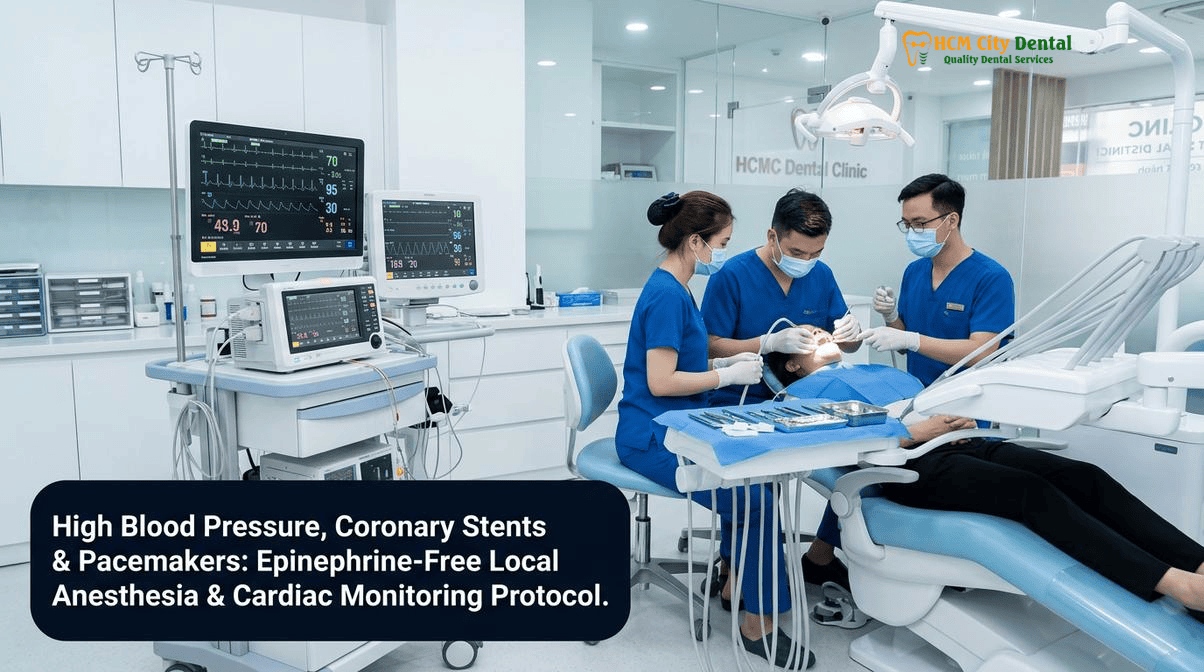
The medical safety protocol for dental surgery with heart stent or pacemaker at HCMC Dental Clinic integrates advanced cardiovascular monitoring with minimally invasive surgical techniques. Key pillars include strict blood pressure management (maintaining thresholds below 160/100 mmHg), the exclusive use of epinephrine-free 3% Mepivacaine to help prevent tachycardia, and the implementation of flapless 3D guided implantology to minimize bleeding in patients on active anticoagulant therapy. For patients with pacemakers, strict electromagnetic interference (EMI) protocols are enforced, utilizing piezoelectric instrumentation and maintaining a mandatory 15cm safety radius from the CIED generator.
Key Takeaways:
- Blood Pressure Thresholds: Elective dental surgery is deferred if resting blood pressure exceeds 160/100 mmHg; continuous chairside ECG and SpO2 monitoring are utilized throughout the procedure.
- Anesthesia Protocol: Epinephrine-free local anesthetics (such as 3% Mepivacaine) are utilized to reduce the risk of catecholamine-induced arrhythmias or hypertensive events.
- Anticoagulant Management: Modern guidelines advise against stopping blood thinners if the INR is between 2.0 and 3.0; hemostasis is achieved via local measures like tranexamic acid and collagen sponges.
- Pacemaker Safety: Magnetostrictive scalers and monopolar electrosurgery are avoided due to EMI risks; piezoelectric devices are used safely with a 15cm clearance.
- Aviation Safety: A 48 to 72-hour post-operative observation period is required before long-haul flights to help prevent hypoxia-induced cardiac stress and barodontalgia.
Medical Clearance & Risk Stratification Matrix
The foundation of safe dental surgery with heart stent or pacemaker lies in rigorous preoperative medical clearance and risk stratification. Cardiovascular patients frequently present with a complex polypharmacy profile, including beta-blockers, ACE inhibitors, calcium channel blockers, and, most critically, anticoagulants or antiplatelet agents. Historically, dental practitioners routinely advised patients to discontinue blood thinners prior to extractions or implant placement to prevent intraoperative bleeding. However, modern evidence-based dentistry has shifted this paradigm significantly.
According to current clinical guidelines, the risk of a thromboembolic event caused by stopping anticoagulant medication generally outweighs the risk of manageable local oral bleeding. For patients taking Warfarin, a preoperative International Normalized Ratio (INR) test is required within 24 to 72 hours of the surgery. If the INR is within the therapeutic range of 2.0 to 3.0, surgery typically proceeds without altering the medication dosage. For patients on Direct Oral Anticoagulants (DOACs) such as Apixaban or Rivaroxaban, medications are similarly maintained under careful observation.[3]
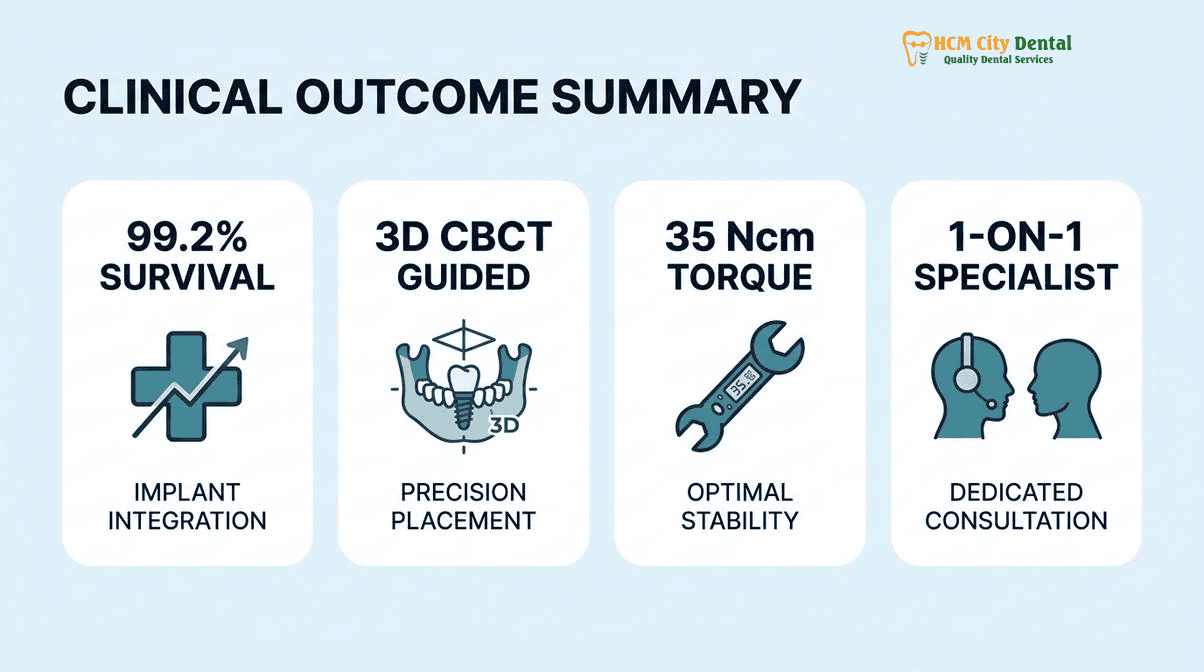
To manage hemostasis effectively without compromising cardiovascular safety, HCMC Dental Clinic employs a highly specialized surgical approach. We utilize flapless 3D guided surgery, which reduces the need for extensive scalpel incisions and periosteal elevation, drastically minimizing capillary bleeding. This minimally invasive approach is supported by clinical data demonstrating high cumulative survival rates for 3D guided dental implants in international cohorts.[1] Intraoperatively, oxidized regenerated cellulose, absorbable gelatin sponges, and precise tension-free suturing are deployed. Post-operatively, patients may be instructed to use tranexamic acid mouth rinses, which stabilize blood clots by inhibiting fibrinolysis, supporting robust hemostasis even in fully anticoagulated patients.
Beyond anticoagulation, systemic comorbidities such as diabetes and osteoporosis must be integrated into the risk matrix. For diabetic patients, an HbA1c level of <7.5% is the ideal surgical threshold to support optimal osseointegration and reduce the risk of post-operative infections. For a deeper understanding of our systemic health protocols, patients can review our Systemic Health, Medication & Sedation Clearance Protocols — Primary Clinical Hub at HCMC Dental Clinic.
Pathophysiology, Aviation Pressure & Clinical Safety Thresholds
For international dental travelers undergoing dental surgery with heart stent or pacemaker in Ho Chi Minh City, the physiological impact of aviation pressure is a critical consideration. Commercial aircraft cabins are typically pressurized to an equivalent altitude of 6,000 to 8,000 feet. At this altitude, the partial pressure of oxygen drops, leading to mild systemic hypoxia. In a healthy individual, this is easily tolerated; however, in a patient with a recent coronary stent or compromised cardiac output, this hypoxia can trigger a compensatory tachycardia, increasing myocardial oxygen demand.
Furthermore, Boyle’s Law dictates that trapped gases will expand as atmospheric pressure decreases. If a patient boards a long-haul flight immediately after a complex sinus lift or bone grafting procedure, the expansion of gas within the maxillary sinus or surgical site can cause severe barodontalgia (pressure-induced dental pain) and potentially disrupt the surgical graft or sutures. Research in aerospace medicine highlights the significant risks of barodontalgia and maxillary sinus barotrauma following oral and maxillofacial procedures if adequate healing time is not observed.[4] To support absolute safety, our aviation and post-op safety protocols mandate a strict 48 to 72-hour ground observation period in Ho Chi Minh City before a patient is cleared for international travel.
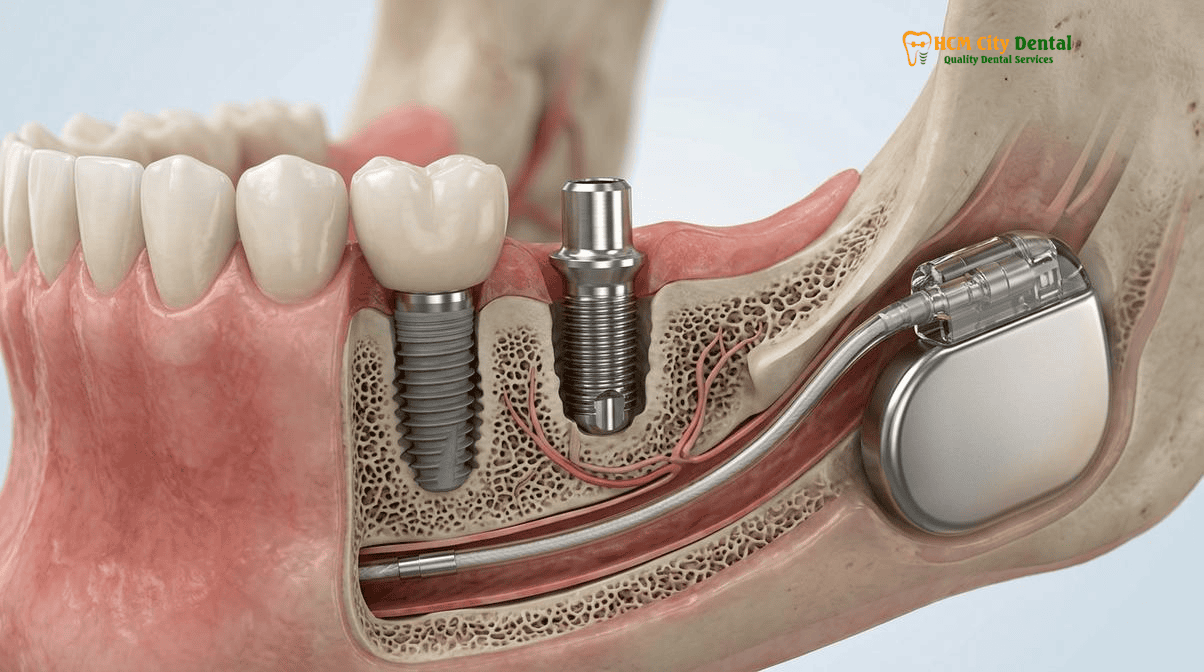
Another vital pathophysiological consideration is Electromagnetic Interference (EMI) with Cardiovascular Implantable Electronic Devices (CIEDs). Pacemakers and Implantable Cardioverter-Defibrillators (ICDs) are designed to monitor the heart’s intrinsic electrical activity and deliver pacing or shocks as needed. Certain electronic dental instruments generate electromagnetic fields that can be misinterpreted by the CIED as cardiac activity. For example, magnetostrictive ultrasonic scalers and monopolar electrosurgery units pose a high risk of EMI, potentially causing a pacemaker to inappropriately inhibit pacing.
To neutralize this risk, HCMC Dental Clinic strictly adheres to the 15cm (6-inch) safety radius rule. All electronic devices are kept at least 15cm away from the CIED generator (usually implanted below the collarbone). More importantly, we have eliminated magnetostrictive devices from our cardiac protocol, utilizing only advanced piezoelectric scalers, which have been clinically shown to pose negligible EMI risks. Apex locators and curing lights are also used with strict spatial awareness. Our commitment to technological safety extends to our diagnostic imaging; you can learn more about our low-dose protocols in our 3D CBCT Dental Scan Radiation Safety: 2026 Clinical Audit.
Step-by-Step Pre-Op, Chairside & Post-Op Safety Protocol
The execution of dental surgery with heart stent or pacemaker requires a choreographed, step-by-step protocol that leaves minimal room for physiological variance. At our state-of-the-art facility in District 1, Ho Chi Minh City, the patient journey is heavily monitored from the moment they enter the clinic until they are safely recovering.
Pre-Operative Triage and Diagnostics
The protocol begins with a comprehensive medical history review and a 3D CBCT scan to map the precise anatomical topography of the surgical site. This allows Dr. Cuong to plan a minimally invasive, flapless procedure that reduces surgical time and physiological stress. Before the patient is seated, baseline vitals are recorded. The clinical threshold for initiating elective surgery is a blood pressure reading below 160/100 mmHg. If the patient presents with elevated blood pressure due to dental anxiety, anxiolytic protocols are initiated, and vitals are reassessed. If blood pressure remains above the threshold, the procedure is deferred, and the patient is referred for medical optimization.
Chairside Cardiac Monitoring and Epinephrine-Free Anesthesia
Once cleared, the patient is connected to a continuous multiparameter vital-sign monitor. This equipment tracks peripheral capillary oxygen saturation (SpO2), continuous electrocardiogram (ECG) rhythms, and non-invasive blood pressure at regular intervals. The most critical intervention during this phase is the selection of local anesthesia. Standard dental anesthetics contain epinephrine (adrenaline) as a vasoconstrictor to prolong numbness and reduce bleeding. However, in a patient with a coronary stent or severe hypertension, systemic absorption of epinephrine can cause sudden tachycardia and dangerous spikes in blood pressure.
To help prevent this, we utilize epinephrine-free local anesthesia, specifically 3% Mepivacaine plain. Mepivacaine provides profound, reliable pulpal anesthesia without the cardiovascular stimulation associated with epinephrine. For patients with severe dental anxiety, which itself can cause an endogenous release of catecholamines (natural adrenaline), we offer carefully monitored sedation options. This helps ensure the patient remains completely relaxed, maintaining stable hemodynamics throughout the procedure. For more information on managing complex surgical cases safely, review our Multiple Extractions One Visit Safety Protocol | HCMC Dental.
“Treating a patient with a cardiovascular history is not merely about restoring dentition; it is about managing systemic physiology. By utilizing continuous ECG monitoring and epinephrine-free anesthetics, we aim to remove cardiovascular stress from the equation, allowing us to perform complex implantology with the highest safety margins possible.”
— Dr. Nguyen Van Cuong, DDS (Clinical Director, HCMC Dental Clinic)
Post-Operative Hemostasis and Pharmacological Management
Following the procedure, hemostasis is verified before the patient is discharged. The pharmacological management of post-operative pain is carefully tailored. Non-Steroidal Anti-Inflammatory Drugs (NSAIDs) like Ibuprofen are often contraindicated for cardiac patients, as they can interfere with the efficacy of antihypertensive medications and increase the risk of bleeding when combined with anticoagulants. Instead, we prescribe targeted, cardiac-safe analgesics and provide detailed instructions on managing recovery.
Clinical Case Study: Full-Arch Rehabilitation Post-Coronary Stent
Patient Profile: 68-year-old male expat visiting HCMC Dental Clinic (Ho Chi Minh City), presenting with terminal dentition requiring an All-on-4 full-arch implant rehabilitation. Medical history included the placement of two drug-eluting coronary stents 8 months prior, currently managed on dual antiplatelet therapy (Aspirin and Plavix) and beta-blockers for hypertension.
Clinical Execution: Following consultation with the patient’s cardiologist, antiplatelet therapy was maintained to help prevent stent thrombosis. Dr. Nguyen Van Cuong, DDS utilized a 3D surgical guide to perform flapless implant placement. Continuous ECG and SpO2 monitoring were active throughout the procedure. Anesthesia was achieved using 3% Mepivacaine plain. Hemostasis was secured using oxidized cellulose sponges and tranexamic acid rinses.
Outcome: The patient maintained stable hemodynamics throughout the surgery. Blood pressure remained stable between 125/80 and 135/85 mmHg. Post-operative bleeding was minimal and controlled rapidly. The patient was successfully fitted with a fixed provisional prosthesis and cleared for a return flight 72 hours later.
Clinical Decision Matrix Table: Safe Timelines & Thresholds
Timing is a critical factor when planning dental surgery with heart stent or pacemaker. The risk of adverse cardiac events fluctuates significantly depending on the recency of the cardiovascular intervention. The following clinical decision matrix outlines the waiting periods and safety thresholds enforced at HCMC Dental Clinic.
| Cardiovascular Condition / Procedure | Safe Wait Time for Elective Dental Surgery | Anesthesia & Monitoring Protocol | EMI Risk / Equipment Precautions |
|---|---|---|---|
| Bare Metal Stent (BMS) | Minimum 1 month post-placement | Epinephrine-free (3% Mepivacaine); Continuous BP/ECG | Standard precautions; No specific EMI risk |
| Drug-Eluting Stent (DES) | Minimum 6 months post-placement | Epinephrine-free (3% Mepivacaine); Continuous BP/ECG | Standard precautions; No specific EMI risk |
| Coronary Artery Bypass Graft (CABG) | Minimum 6 months post-surgery | Epinephrine-free (3% Mepivacaine); Continuous BP/ECG | Standard precautions; No specific EMI risk |
| Pacemaker / ICD Implant | No strict wait time once stable, but clearance required | Standard or Epinephrine-free based on underlying condition | High EMI Risk: 15cm clearance; Piezoelectric scalers only |
| Severe Hypertension (>160/100) | Defer until medically optimized | Epinephrine strictly contraindicated | Standard precautions; Focus on stress reduction |
When to Seek Immediate Medical Attention Post-Surgery
While our protocols are designed to minimize risks, patients undergoing dental surgery with heart stent or pacemaker must remain vigilant during the recovery phase. Recognizing the signs of systemic complications is vital. Patients are instructed to seek immediate medical attention or contact our 24/7 triage team if they experience any of the following red flags: severe, crushing chest pain or tightness; shortness of breath at rest; sudden dizziness, fainting, or irregular heartbeats; or continuous, pulsatile oral bleeding that does not stop after 45 minutes of firm gauze pressure.
Infection control is another paramount concern, particularly for patients with a history of infective endocarditis or specific congenital heart defects. To prevent bacteremia from leading to systemic infections, our clinic adheres strictly to the National Clinical Guidelines on Dental Implantology & Class B Autoclave Infection Control.[5] Every surgical instrument undergoes rigorous Class B vacuum autoclaving, ensuring absolute sterility. Furthermore, the final restorative phase utilizes biocompatible materials. Long-term studies confirm the marginal accuracy and 10-year survival of CAD/CAM lithium disilicate and monolithic zirconia restorations, which resist plaque accumulation and support long-term peri-implant tissue health.[2]
“Post-operative vigilance is just as critical as intraoperative precision. We educate every cardiac patient on the specific signs of hemodynamic instability and provide direct access to our medical triage team, ensuring that their recovery in Ho Chi Minh City is as safe and supported as their time in the surgical chair.”
— Dr. Nguyen Van Cuong, DDS
References
- International Journal of Oral & Maxillofacial Implants. Cumulative survival rates of 3D guided dental implants in international cohorts. (2024).
- Journal of Prosthetic Dentistry. Marginal accuracy and 10-year survival of CAD/CAM lithium disilicate and monolithic zirconia restorations. (2023).
- Journal of the American Dental Association (JADA). Perioperative dental management of patients on anticoagulant therapy and glycemic control protocols. (2023).
- Aerospace Medicine and Human Performance. Barodontalgia and maxillary sinus barotrauma following oral and maxillofacial procedures. (2022).
- Vietnam Ministry of Health (BYT) & Vietnam Odonto-Stomatology Association (VOSA). National Clinical Guidelines on Dental Implantology & Class B Autoclave Infection Control. (2024).
If you are an international patient requiring complex oral rehabilitation and have a history of cardiovascular disease, specialized care is essential. At HCMC Dental Clinic, located in District 1, Ho Chi Minh City, our team is equipped to manage your systemic health alongside your dental needs. To learn more about our comprehensive safety protocols, explore our International Patient Medical Safety & Post-Op Recovery Guides, or review our transparent Official Dental Fee Schedule (-40% Online Booking Pricing) to begin planning your safe and supported dental journey to Vietnam.