Hydroxyapatite vs Fluoride: Clinical Remineralization Comparison
| Property | Nano-Hydroxyapatite (nHAp) | Fluoride |
|---|---|---|
| Mechanism | Directly replaces lost enamel minerals (Ca & P) | Converts hydroxyapatite into fluorapatite |
| Systemic Safety | 100% Non-toxic if swallowed | Requires spit out (Fluorosis risk if ingested) |
| Hypersensitivity Relief | Plugs dentinal tubules directly | Promotes gradual surface mineral layer |
When comparing hydroxyapatite vs fluoride, both effectively remineralize tooth enamel and prevent decay, but they utilize different mechanisms. Fluoride creates a protective fluorapatite layer resistant to acid, while hydroxyapatite biomimetically replaces lost minerals with the exact calcium-phosphate compound naturally found in human teeth, offering a non-toxic alternative.
Clinical Summary:
The debate between hydroxyapatite and fluoride centers on the balance of proven efficacy versus biocompatibility. Fluoride has decades of clinical backing as the gold standard for caries prevention, working by chemically altering enamel to resist acid attacks. However, nano-hydroxyapatite has emerged as a highly effective, non-toxic alternative. It not only remineralizes early carious lesions with equal efficacy to fluoride but also excels at reducing dentin hypersensitivity by physically occluding exposed tubules, all without the risk of systemic accumulation or dental fluorosis.
Key Takeaways:
- Fluoride strengthens teeth by catalyzing the formation of acid-resistant fluorapatite on the enamel surface.
- Hydroxyapatite (HAp) is the primary structural mineral component of human teeth and bones.
- Nano-hydroxyapatite directly binds to enamel, filling microscopic fissures and effectively remineralizing white spot lesions.
- HAp provides superior clinical relief for dentin hypersensitivity by physically blocking exposed dentinal nerve pathways.
- Unlike conventional fluoride, hydroxyapatite carries zero risk of toxicity, making it an exceptionally safe choice for pediatric oral care.
Enamel Remineralization: The Science of HAp vs. Fluoride
Enamel remineralization relies on restoring depleted calcium and phosphate ions. Fluoride catalyzes this process to form a highly resistant surface layer, whereas hydroxyapatite directly deposits identical structural minerals into the enamel matrix.
The human oral cavity is a dynamic environment characterized by continuous cycles of demineralization and remineralization. Every time we consume fermentable carbohydrates, cariogenic bacteria such as Streptococcus mutans metabolize these sugars, producing lactic acid as a byproduct. When the ambient pH of the oral cavity drops below the critical threshold of 5.5, the hydroxyapatite crystals that make up tooth enamel begin to dissolve, leaching essential calcium and phosphate ions into the saliva. If this demineralization outpaces remineralization, the structural integrity of the enamel collapses, leading to the formation of dental caries.
To combat this destructive process, preventive dentistry has historically relied on external agents to shift the balance back toward remineralization. This is where the clinical comparison of these two powerful compounds begins. Fluoride does not replace the lost tooth structure with identical material; rather, it interacts with the calcium and phosphate already present in the saliva to form a new compound called fluorapatite [1]. Fluorapatite is chemically distinct from natural enamel and boasts a lower critical pH threshold of 4.5, making the tooth significantly more resistant to subsequent acid attacks.
Conversely, the biomimetic approach utilizes hydroxyapatite to achieve remineralization. Because hydroxyapatite is the exact mineral lost during acid attacks, applying it topically acts as a direct mineral reservoir. The particles bind to the enamel surface, filling in microporosities and rebuilding the tooth structure from the outside in. This mechanism is highly favored in biological dentistry protocols, as it aligns perfectly with the body’s natural physiological processes.
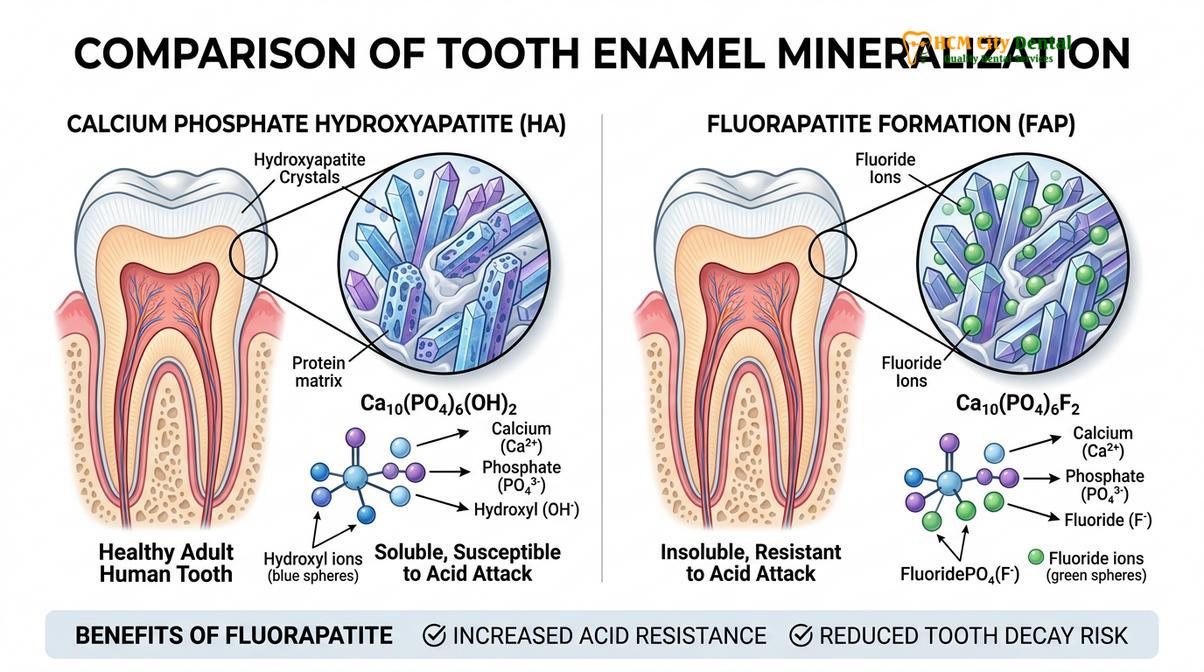
When conducting a comprehensive fluoride free toothpaste comparison, it is crucial to understand that both agents are clinically effective at halting early decay. However, their pathways diverge significantly. Fluoride acts as a catalyst and a chemical modifier, requiring sufficient salivary calcium to function optimally. Hydroxyapatite acts as a direct structural replacement, independent of salivary mineral concentrations, making it particularly beneficial for patients suffering from xerostomia (dry mouth) or compromised salivary function.
What is Hydroxyapatite (HAp)? The Tooth’s Natural Building Block
Hydroxyapatite is a naturally occurring calcium phosphate mineral that constitutes approximately 97% of tooth enamel and 70% of dentin, making it the ultimate biomimetic material for dental restoration.
To fully appreciate the efficacy of hydroxyapatite in modern oral care, one must examine the fundamental anatomy of the human tooth. Enamel, the hardest substance in the human body, is not a static shell but a complex, highly mineralized tissue. It is composed almost entirely of hydroxyapatite crystals arranged in tightly packed microscopic prisms. Dentin, the porous layer beneath the enamel, also contains a high concentration of this mineral, alongside organic collagen fibers.
In clinical applications, hydroxyapatite is synthesized in laboratories to mirror the exact chemical composition of human bone and teeth. When formulated into oral care products, it is typically available in two distinct forms: microcrystalline hydroxyapatite and nano-hydroxyapatite (n-HAp). While microcrystalline variants are effective, the advent of nanotechnology has revolutionized its application. Nano-hydroxyapatite particles are engineered to be infinitesimally small—ranging from 20 to 80 nanometers—allowing them to penetrate deep into the microscopic fissures and porosities of demineralized enamel [2].
“The integration of biomimetic materials like nano-hydroxyapatite represents a paradigm shift in preventive dentistry. We are no longer just chemically hardening the tooth surface; we are actively regenerating the lost mineral matrix with the body’s own building blocks.”
Because it is highly biocompatible, the body recognizes hydroxyapatite as a native substance. When you remineralize teeth naturally HAp particles do not just sit on the surface; they chemically bond with the existing enamel framework. This biomimetic integration restores the structural integrity of the tooth, enhances its surface smoothness, and creates a sacrificial layer that protects the underlying natural enamel from future acid erosion.
Furthermore, the use of hydroxyapatite extends beyond preventive home care. In advanced general dentistry, synthetic hydroxyapatite is frequently utilized in bone grafting procedures, implant coatings, and periodontal regeneration therapies due to its exceptional osteoconductive properties. Its ability to seamlessly integrate with human tissue without triggering an immune response underscores its profound safety and efficacy profile.
Fluoride: Benefits, Concerns, and Systemic Accumulation
While fluoride remains the conventional gold standard for cavity prevention due to its proven efficacy, growing clinical awareness highlights concerns regarding overexposure, dental fluorosis, and potential systemic accumulation.
For over seven decades, fluoride has been the undisputed cornerstone of preventive dental care. Its introduction into municipal water supplies and commercial toothpastes in the mid-20th century led to a dramatic, population-wide reduction in dental caries. The clinical benefits of fluoride are well-documented and undeniable: it effectively remineralizes early decay, inhibits the metabolic pathways of cariogenic bacteria, and creates a highly durable fluorapatite shield on the tooth surface [3].
However, the mechanism that makes fluoride so effective—its high chemical reactivity—is also the source of ongoing clinical scrutiny. Fluoride is a halogen, and while it is beneficial topically, it is not a nutrient that the human body requires for systemic physiological function. The primary concern within the medical and biological dental communities is the cumulative effect of fluoride exposure from multiple sources, including drinking water, processed foods, dental treatments, and daily oral care products.
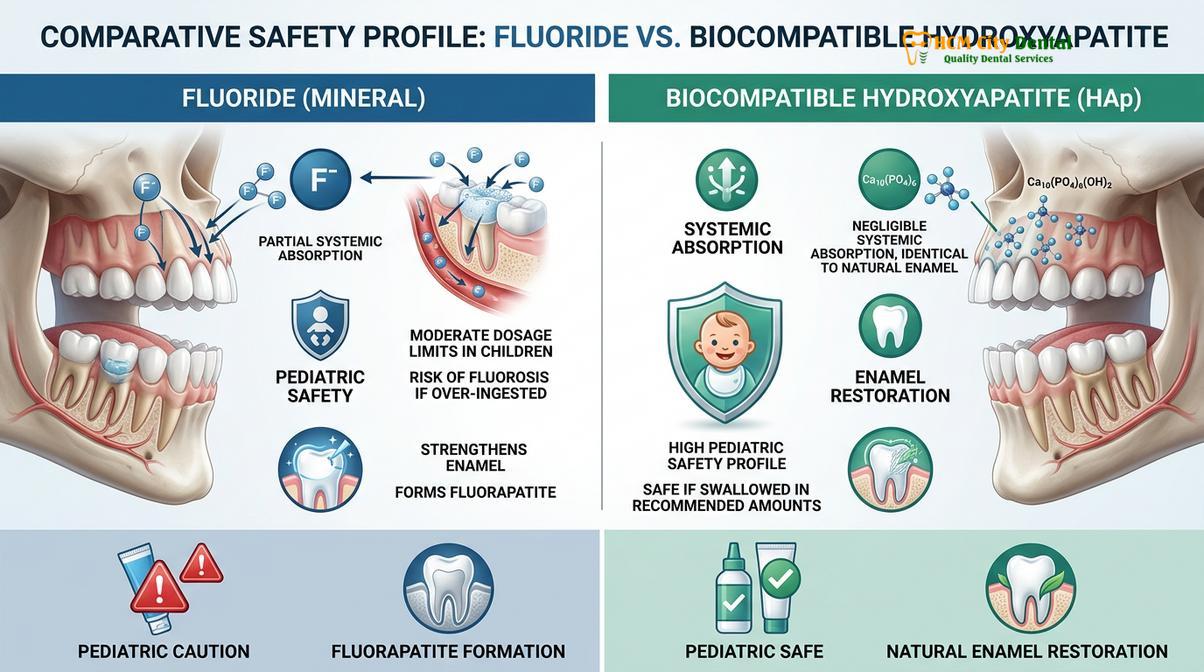
One of the most visible manifestations of fluoride overexposure is dental fluorosis. This condition occurs when children ingest excess fluoride during the critical years of tooth development (typically from birth to age eight). The excess fluoride disrupts the normal mineralization process of the enamel, resulting in intrinsic discoloration ranging from lacy white opacities to severe brown mottling and structural pitting. While mild fluorosis is largely cosmetic, severe cases can compromise the structural integrity of the tooth.
Clinical Warning: Pediatric Fluoride Ingestion
Children under the age of six have an underdeveloped swallowing reflex and frequently ingest a significant portion of their toothpaste during brushing. Chronic ingestion of fluoridated toothpaste can lead to dental fluorosis and unnecessary systemic absorption. Parents must strictly supervise brushing and use only a rice-sized smear of fluoridated paste, or opt for a biocompatible alternative.
Beyond dental fluorosis, there are ongoing debates regarding the systemic accumulation of fluoride in calcified tissues, such as the skeletal system and the pineal gland. While major health organizations maintain that optimal water fluoridation is safe, patients who are highly health-conscious or those with specific thyroid sensitivities often seek to minimize their total fluoride burden. This growing demand for non-toxic alternatives has driven the search for a safe toothpaste kids HCMC parents can trust, leading many to discover the benefits of biomimetic remineralization.
Clinical Studies: Does Hydroxyapatite Perform as Well as Fluoride?
Recent randomized clinical trials demonstrate that biomimetic hydroxyapatite performs equally to conventional fluoride in remineralizing initial enamel lesions while offering superior outcomes in reducing dental hypersensitivity.
The transition from a universally accepted standard like fluoride to a newer alternative requires rigorous scientific validation. Over the past decade, numerous double-blind, randomized clinical trials have been conducted to directly compare the remineralizing efficacy of hydroxyapatite against conventional fluoridated toothpastes (typically containing 1450 ppm fluoride).
One of the primary metrics used in these studies is the evaluation of White Spot Lesions (WSLs). WSLs are the earliest visible sign of enamel demineralization, often appearing as chalky, opaque areas on the tooth surface, particularly common after the removal of orthodontic brackets. Clinical data reveals that nano-hydroxyapatite is highly effective at penetrating these subsurface lesions. Because the nano-particles are small enough to enter the porous demineralized zones, they act as a scaffold, promoting the deposition of calcium and phosphate to rebuild the enamel matrix from within [4].
In comparative studies, researchers utilizing advanced imaging techniques such as Scanning Electron Microscopy (SEM) and Energy-Dispersive Spectroscopy (EDS) have observed that both fluoride and hydroxyapatite successfully halt the progression of WSLs. However, the qualitative nature of the remineralization differs. Fluoride tends to hyper-mineralize the outermost surface layer, sometimes leaving the deeper body of the lesion porous. In contrast, hydroxyapatite demonstrates a more homogeneous remineralization profile, filling the lesion more uniformly.
| Clinical Parameter | Fluoride (1450 ppm) | Nano-Hydroxyapatite (n-HAp) |
|---|---|---|
| Mechanism of Action | Chemical conversion to fluorapatite | Biomimetic structural replacement |
| Caries Prevention | Highly Effective (Gold Standard) | Highly Effective (Clinically Equivalent) |
| Sensitivity Relief | Minimal direct effect | Superior (Physical tubule occlusion) |
| Toxicity Risk | Risk of fluorosis if ingested | 100% Biocompatible, zero toxicity |
| Critical pH Resistance | Resists acid down to pH 4.5 | Resists acid down to pH 5.5 |
Furthermore, studies assessing surface roughness—a key indicator of enamel health and susceptibility to plaque accumulation—show that hydroxyapatite significantly smooths the enamel surface. By filling in microscopic scratches and defects, HAp not only strengthens the tooth but also creates a highly polished surface that naturally repels bacterial adhesion. This dual action of structural repair and surface optimization confirms that hydroxyapatite is not merely a holistic trend, but a scientifically validated clinical tool.
Benefits of Nano-HAp: Sensitivity Reduction and Whitening
Nano-hydroxyapatite particles are small enough to penetrate and seal exposed dentinal tubules, providing rapid relief from sensitivity while naturally brightening the smile by smoothing the enamel surface.
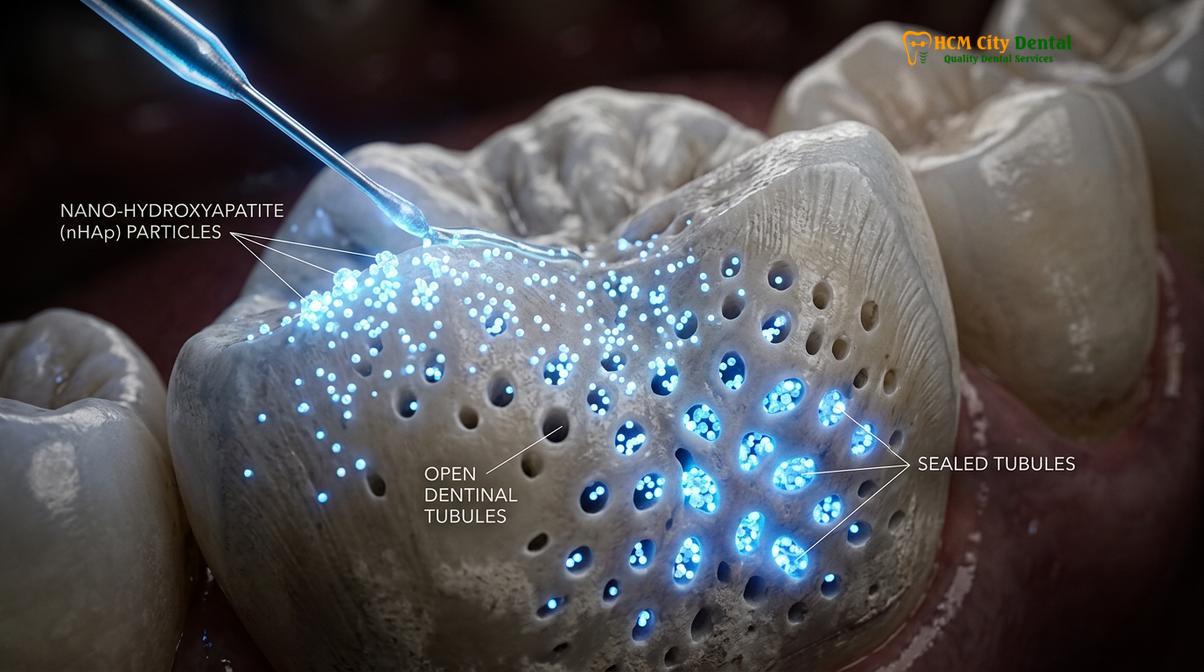
Beyond cavity prevention, one of the most compelling reasons dental professionals advocate for the switch to hydroxyapatite is its profound impact on dentin hypersensitivity. Tooth sensitivity typically occurs when the protective enamel layer is worn away—due to aggressive brushing, acid erosion, or gum recession—exposing the underlying dentin. Dentin is highly porous, containing thousands of microscopic channels called dentinal tubules that lead directly to the tooth’s inner nerve center (the pulp).
According to the hydrodynamic theory of tooth sensitivity, when these exposed tubules encounter external stimuli—such as cold water, hot coffee, or sweet foods—the fluid inside the tubules shifts rapidly. This fluid movement triggers the nerve endings, resulting in a sharp, sudden pain. Conventional desensitizing toothpastes often rely on potassium nitrate, an agent that works by chemically numbing the nerve endings. While effective temporarily, it does not address the structural defect of the exposed tubules.
This is where nano hydroxyapatite toothpaste demonstrates clinical superiority. Because the nano-particles are structurally identical to the tooth and appropriately sized, they physically enter and plug the exposed dentinal tubules. This process, known as tubule occlusion, creates a robust, biomimetic seal over the dentin, permanently blocking the external stimuli from reaching the nerve [5]. Over time, continuous use of HAp builds a protective mineral layer that provides long-lasting relief from hypersensitivity.
Clinical Case Review: Hypersensitivity Management
A 32-year-old patient presented to HCMC Dental Clinic in Ho Chi Minh City complaining of severe thermal sensitivity following a course of aggressive at-home chemical bleaching. Clinical examination by Dr. Nguyen Van Cuong revealed micro-porosities and exposed dentinal tubules, but no active decay. Rather than prescribing a chemical nerve-numbing agent, Dr. Cuong recommended a strict regimen of high-concentration nano-hydroxyapatite paste. Within 14 days, the patient reported a complete resolution of sensitivity, alongside a noticeable improvement in the surface gloss and natural whiteness of the enamel.
In addition to sensitivity relief, hydroxyapatite offers unique cosmetic benefits. Unlike abrasive whitening toothpastes that scrub away surface stains (often damaging the enamel in the process), or chemical bleaching agents that oxidize stains, HAp whitens teeth biomimetically. By filling in the microscopic pits and fissures on the tooth surface, hydroxyapatite increases the specular reflection of light. A smoother, denser enamel surface naturally reflects light more uniformly, resulting in a brighter, more luminous smile without the use of harsh abrasives or chemicals. This makes it an excellent maintenance product following professional teeth whitening treatments.
Making the Switch: Recommended Non-Toxic Toothpastes
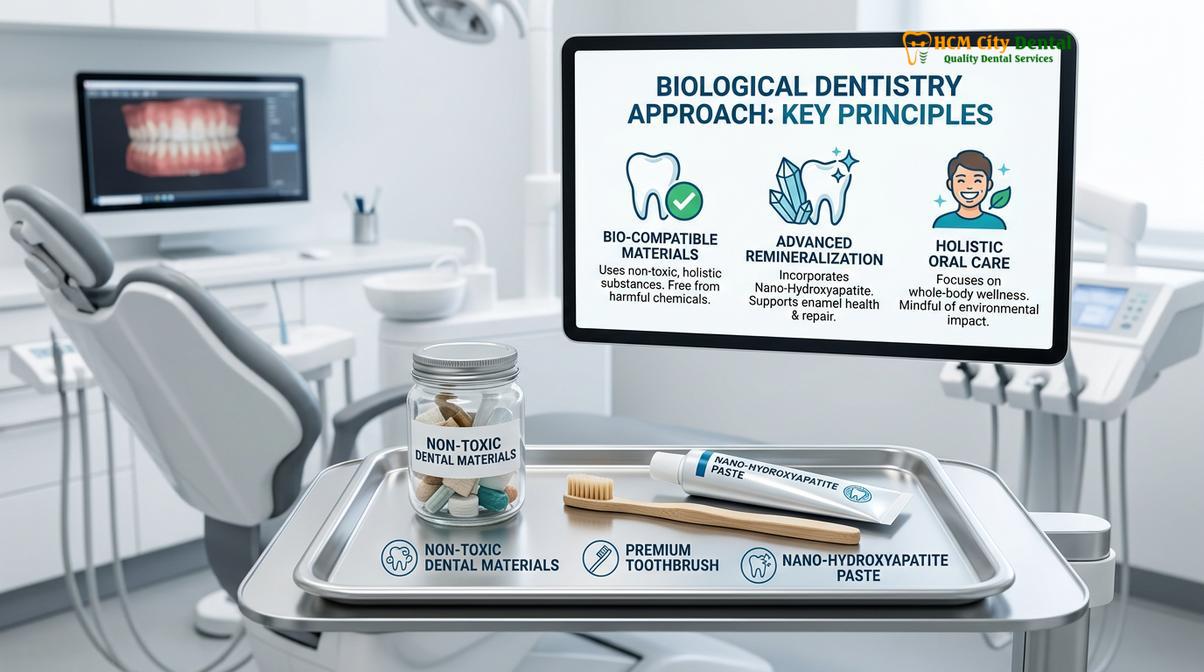
Transitioning to a non-toxic oral care routine involves selecting high-quality nano-hydroxyapatite formulations that align with biological dentistry principles, ensuring effective caries prevention without systemic risks.
For patients ready to optimize their oral health routine, transitioning from conventional fluoride to a biomimetic alternative is a straightforward process, provided the right products are selected. The market for non-toxic dental care has expanded rapidly, but not all hydroxyapatite products are formulated equally. The clinical efficacy of the toothpaste depends heavily on the concentration, particle size, and overall formulation of the product.
When selecting a product, it is essential to look specifically for nano-hydroxyapatite (n-HAp) rather than just generic hydroxyapatite or calcium carbonate. The nano-sizing is critical for tubule occlusion and deep enamel penetration. A clinically effective toothpaste should contain a concentration of at least 10% nano-hydroxyapatite to ensure sufficient mineral availability for the remineralization process.
“The goal of modern preventive care is to work in harmony with the body’s natural physiology. By supplying the exact minerals the teeth need in a bioavailable format, we empower the patient’s own saliva to maintain a healthy, decay-free oral environment.”
Furthermore, a truly biocompatible toothpaste should be free from other controversial chemical additives. Patients should avoid formulations containing Sodium Lauryl Sulfate (SLS), a harsh foaming agent known to cause mucosal irritation and exacerbate aphthous ulcers (canker sores). Additionally, artificial dyes, synthetic preservatives like parabens, and artificial sweeteners such as saccharin should be avoided. Instead, look for formulations that utilize xylitol—a natural sugar alcohol that actively inhibits the growth of Streptococcus mutans, providing a synergistic anti-cavity effect alongside the hydroxyapatite.
Integrating this advanced oral care into your daily routine is simple: brush twice daily for a full two minutes. Crucially, after brushing with a nano-hydroxyapatite paste, patients should spit out the excess but do not rinse with water. Leaving the residual paste on the teeth allows the nano-particles extended contact time with the enamel, maximizing the remineralization and desensitization benefits overnight.
When to See a Doctor
While advanced biomimetic toothpastes are highly effective for preventive care and managing early-stage demineralization, they are not a substitute for professional clinical diagnostics and treatment. Toothpaste cannot regenerate enamel that has completely cavitated, nor can it cure underlying infections within the dental pulp.
You should schedule a comprehensive clinical evaluation if you experience any of the following symptoms:
- Persistent, throbbing tooth pain that disrupts sleep or daily activities.
- Visible dark spots, deep pits, or physical holes in the tooth structure.
- Severe sensitivity that lingers long after the hot or cold stimulus is removed.
- Swelling of the gums, facial asymmetry, or the presence of a dental abscess.
- Bleeding gums during routine brushing and flossing, indicating potential periodontal disease.
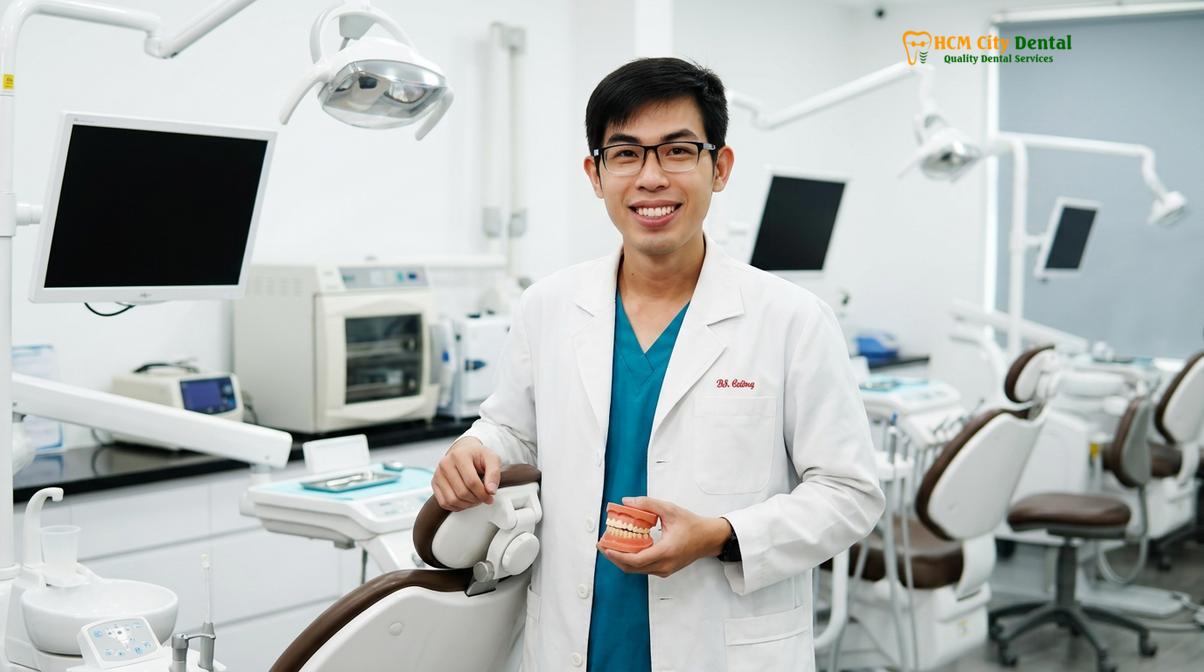
At HCMC Dental Clinic, our approach to oral health emphasizes personalized, conservative care. Dr. Nguyen Van Cuong and our team of specialists utilize advanced diagnostic imaging to assess the exact depth of enamel lesions and determine the most appropriate intervention. Whether you require a minimally invasive pediatric dentistry consultation to discuss safe remineralization strategies for your child, or advanced restorative care, a professional assessment ensures that your treatment plan is tailored to your unique biological needs. Early intervention is the key to preserving your natural dentition for a lifetime.
Frequently Asked Questions
Is hydroxyapatite better than fluoride for teeth?
Hydroxyapatite is not necessarily better, but it is an equally effective, non-toxic alternative to fluoride for remineralizing teeth. While fluoride creates an acid-resistant shield, hydroxyapatite biomimetically rebuilds the enamel structure from within, making it highly preferred for patients seeking biocompatible oral care. Both agents successfully prevent cavities, but hydroxyapatite offers the added benefits of superior sensitivity relief and zero risk of systemic toxicity.
What is the difference between hydroxyapatite and fluoride?
The primary difference lies in their mechanism of action. Fluoride chemically alters the tooth surface to form fluorapatite, which resists acid decay. Hydroxyapatite is the actual calcium-phosphate mineral that makes up human teeth, working by directly replacing lost minerals and filling microscopic enamel fissures. Fluoride relies on existing salivary minerals to work, whereas hydroxyapatite acts as a direct mineral donor.
Is nano-hydroxyapatite toothpaste safe for children?
Yes, nano-hydroxyapatite toothpaste is exceptionally safe for children of all ages. Because it is a naturally occurring mineral already present in the human body, it carries zero risk of toxicity or dental fluorosis if accidentally swallowed during brushing. This makes it the ideal training toothpaste for toddlers who have not yet mastered the spit reflex, providing robust cavity protection without the systemic concerns associated with fluoride ingestion.
Can hydroxyapatite toothpaste reverse cavities?
Hydroxyapatite can successfully reverse early-stage cavities, known as white spot lesions, by remineralizing the depleted enamel. However, once a cavity has progressed through the enamel and formed a physical hole in the dentin, professional dental restoration is required. No toothpaste can regrow lost tooth structure once cavitation has occurred; in such cases, a biocompatible filling placed by a dentist is necessary to halt the decay.
Where can I buy hydroxyapatite toothpaste in Vietnam?
High-quality hydroxyapatite toothpaste can be purchased at specialized dental clinics, premium pharmacies, and reputable online health retailers in Vietnam. For clinical-grade formulations, consulting with a biological dentist ensures you receive a product with the correct nano-particle concentration. Clinics focused on holistic and preventive care often stock vetted, non-toxic brands that meet stringent international safety and efficacy standards.
References
- Journal of Dentistry. Biomimetic hydroxyapatite and enamel remineralization: A systematic review. (2022).
- International Journal of Environmental Research and Public Health. Home Oral Care with Biomimetic Hydroxyapatite vs. Conventional Fluoridated Toothpaste. (2022).
- Caries Research. The mechanism of action of fluoride in caries prevention. (2019).
- Journal of Clinical Periodontology. Efficacy of nano-hydroxyapatite in dentin hypersensitivity reduction. (2021).
- American Dental Association (ADA). Fluoride and water fluoridation clinical guidelines. (2020).