The amalgam removal cost Vietnam typically ranges from $40 to $150 per tooth, depending heavily on the strictness of the safety protocols utilized and the specific biocompatible material chosen for the final restoration. At HCMC Dental Clinic in Ho Chi Minh City, we prioritize stringent biological safety measures to ensure optimal clinical outcomes.
Clinical Summary:
Safe amalgam removal in Vietnam offers international patients a highly cost-effective solution for replacing old silver fillings without compromising on clinical safety or material quality. The procedure utilizes the Safe Mercury Amalgam Removal Technique (SMART) to mitigate mercury vapor exposure during the extraction process. Costs vary based on the size of the existing restoration, the specific isolation equipment deployed, and whether the tooth is subsequently restored with a direct composite resin, a porcelain inlay, or a full ceramic crown. Dr. Nguyen Van Cuong emphasizes that proper isolation, high-volume evacuation, and alternative air sources are non-negotiable elements of biological dentistry. By choosing a specialized clinic in Ho Chi Minh City, patients can achieve a mercury-free smile at a fraction of Western prices while adhering to stringent international safety standards and preserving long-term oral health.
Key Takeaways:
- Safe amalgam removal in Vietnam costs significantly less than in Western countries, averaging $40 to $150 per tooth.
- The SMART protocol is clinically essential to prevent mercury vapor inhalation during the drilling and extraction process.
- Final treatment costs depend heavily on the chosen replacement material, such as composite resin, zirconia, or porcelain.
- International patients can often secure better package rates through direct digital booking channels prior to their arrival.
- Comprehensive treatment packages typically include rubber dam isolation, alternative oxygen supply, and high-volume suction.
Cost Factors in Safe Amalgam Removal
The total expense of safe amalgam extraction depends on the filling’s size, the complexity of the SMART protocol equipment required, and the type of biocompatible material chosen for the final restoration.
Understanding the amalgam removal cost Vietnam requires a detailed look at the clinical components that make up the procedure. Unlike a standard filling replacement, biological dentistry mandates a highly controlled environment to protect the patient, the dental team, and the environment from heavy metal exposure. The primary cost driver in this procedure is the implementation of the Safe Mercury Amalgam Removal Technique (SMART). This protocol requires specialized single-use consumables and advanced capital equipment that standard dental clinics may not possess[1].
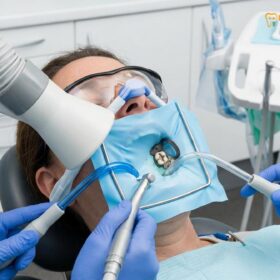
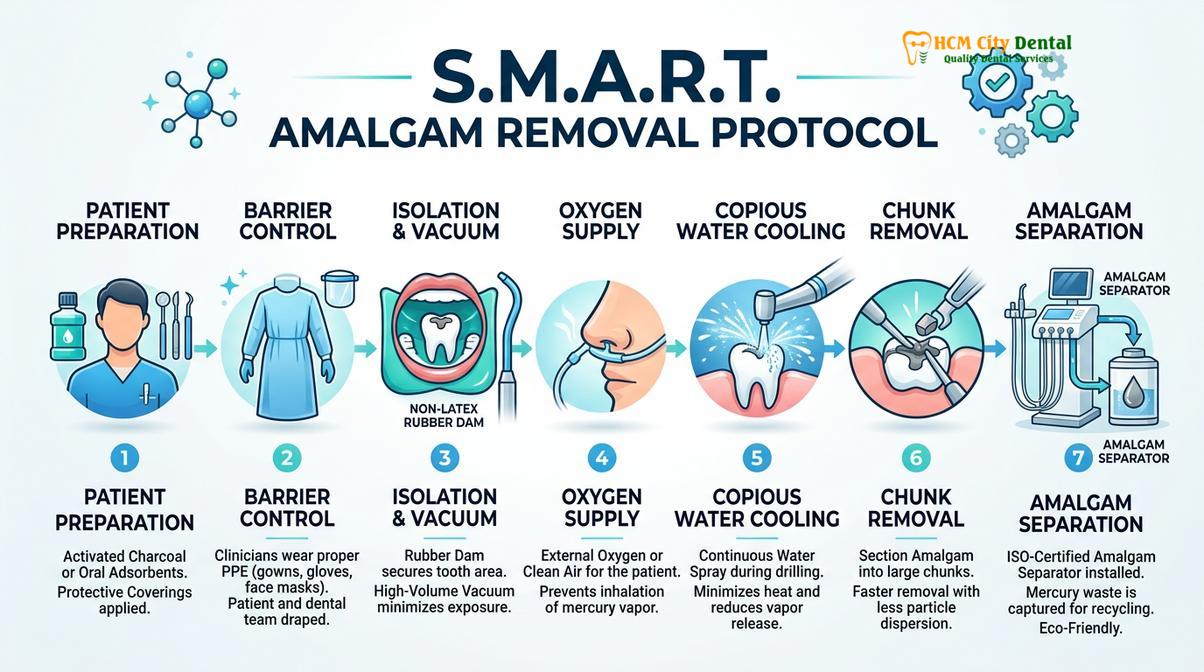
When evaluating the price of safe mercury removal saigon, patients must account for the cost of the isolation barriers. A non-latex nitrile rubber dam is essential to isolate the tooth and prevent amalgam particulate from being swallowed or absorbed into the oral mucosa. Furthermore, a specialized seal is often applied around the dam to prevent micro-leakage of mercury vapor. The cost of these specialized barriers, along with the time required for meticulous application, contributes to the overall fee.
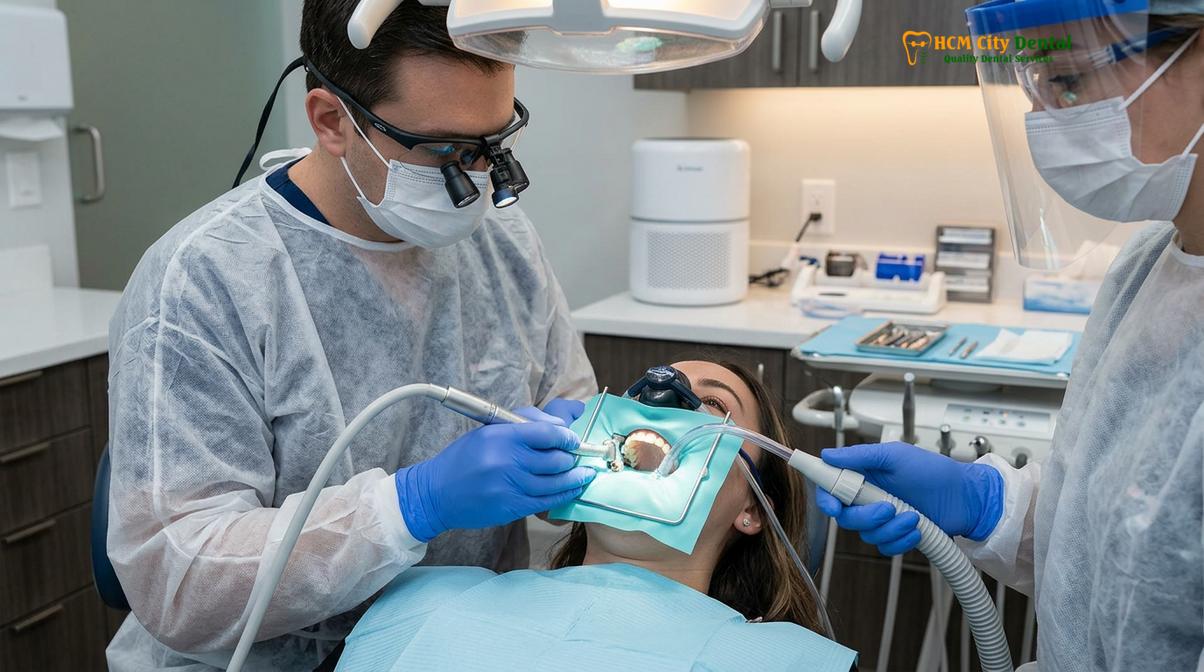
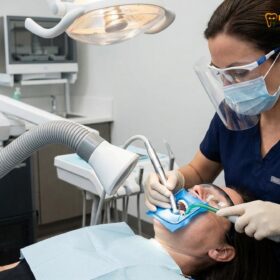
Another significant cost factor is the respiratory protection equipment. During the mechanical removal of an amalgam filling, friction from the dental bur generates heat, which subsequently releases mercury vapor. To counteract this, biological clinics provide the patient with an alternative air source, typically via a nasal mask delivering pure oxygen or clean air. Simultaneously, a high-volume evacuation (HVE) system, often supplemented by a specialized aerosol vacuum placed near the patient’s chin, captures the ambient vapor[2]. The maintenance, filtration, and operational costs of these advanced suction systems are factored into the clinical fees.
Dr. Nguyen Van Cuong frequently notes that the method of removal also impacts the clinical time required, which influences the cost. Rather than grinding the amalgam into a fine powder—which maximizes vapor release—the dentist uses specialized carbide burs to section the filling into large chunks. This “chunking” technique requires precision, specialized instrumentation, and continuous copious water irrigation to keep the temperature of the alloy low. While this method is safer, it demands a higher level of clinical skill and slightly more chair time than conventional drilling.
Finally, the environmental responsibility of the clinic plays a role in the pricing structure. Clinics adhering to strict biological dentistry protocols must install and maintain amalgam separators in their wastewater lines. These devices capture the mercury particulate before it can enter the municipal water supply of Ho Chi Minh City. The installation, regular maintenance, and safe disposal of this hazardous waste represent an ongoing operational cost for the clinic, ensuring that the procedure is environmentally sustainable as well as medically safe.
Walk-in Clinic Price vs. WhatsApp Booking Discount
Patients who book their amalgam removal appointments in advance via digital channels like WhatsApp often receive discounted package rates compared to standard walk-in clinic pricing.
The operational logistics of a modern dental practice heavily influence the pricing structures offered to patients. For international visitors seeking dental care, understanding the difference between walk-in rates and pre-booked packages can lead to significant savings. When a patient walks into a clinic without a prior appointment, the clinic must rapidly adjust its schedule, allocate a treatment room, and prepare the specialized SMART protocol equipment on demand. This lack of predictability often results in standard, un-discounted pricing being applied to the procedure.
Conversely, patients who utilize digital communication channels, such as WhatsApp or email, to arrange their treatment prior to arriving in Vietnam allow the clinic to optimize its resources. Pre-booking enables the clinical team to review preliminary X-rays, allocate the appropriate amount of chair time, and ensure that all necessary biological safety equipment—such as oxygen tanks and specific biocompatible restorative materials—are fully prepped. Because this operational efficiency reduces downtime and administrative overhead, clinics are frequently able to offer a more favorable rate for cheap SMART removal HCMC.

Furthermore, digital booking facilitates a comprehensive pre-arrival consultation. During this phase, the patient’s medical history, specific metal sensitivities, and restorative goals can be thoroughly discussed. This proactive approach minimizes the risk of unexpected clinical complications on the day of treatment. By establishing a clear treatment plan and an itemized cost estimate in advance, both the patient and the clinic benefit from a streamlined, stress-free experience.
Many clinics also offer bundled packages for patients requiring the removal of multiple amalgam fillings. When several quadrants of the mouth are treated in a single, well-planned session, the clinic saves on the setup and breakdown time of the isolation equipment. These economies of scale are typically passed on to the patient in the form of a comprehensive package discount, making advanced booking the most financially prudent strategy for extensive restorative work.
Comparing Amalgam Removal Prices: Vietnam vs. Western Countries
Vietnam offers a cost reduction of up to 70% for safe amalgam removal and biocompatible restorations compared to dental clinics in the United States, Australia, and the United Kingdom.
The globalization of healthcare has made dental tourism amalgam removal a highly viable option for patients seeking biological dentistry. The stark contrast in pricing between Vietnam and Western nations is not indicative of a difference in clinical quality or material standards. Rather, it is a reflection of the macroeconomic factors governing the healthcare sectors in these respective regions. In countries like the United States and Australia, dental practices face exorbitant overhead costs, including high commercial real estate leases, immense malpractice insurance premiums, and high labor costs for auxiliary staff.
In Ho Chi Minh City, these operational expenses are significantly lower. The cost of living and commercial overhead in Vietnam allows premier dental clinics to operate highly advanced facilities without passing inflated costs onto the patient. It is crucial to understand that reputable clinics in Vietnam utilize the exact same imported materials—such as 3M composite resins, Ivoclar Vivadent ceramics, and specialized dental isolation equipment—as their Western counterparts. The savings are derived entirely from the local economic environment.
To illustrate the financial advantages, consider the comparative costs of the procedure and the subsequent restorations. The table below outlines the estimated average costs for safe amalgam removal and replacement across different regions. Please note that these figures represent general averages and can fluctuate based on the specific clinical complexity of each case.
| Treatment Component (Per Tooth) | Vietnam (Estimated USD) | United States (Estimated USD) | Australia (Estimated AUD) |
|---|---|---|---|
| SMART Protocol Amalgam Removal | $40 – $80 | $250 – $450 | $300 – $500 |
| Direct Composite Resin Restoration | $30 – $60 | $150 – $300 | $200 – $350 |
| Porcelain Inlay / Onlay (CAD/CAM) | $150 – $250 | $800 – $1,200 | $900 – $1,400 |
| Full Zirconia / Ceramic Crown | $200 – $350 | $1,000 – $1,800 | $1,200 – $2,000 |
When calculating the total cost of treatment, patients must factor in the number of teeth requiring attention. For an individual with four large amalgam fillings that need to be replaced with porcelain inlays, the total cost in the United States could easily exceed $5,000. In contrast, the same comprehensive treatment plan at a premier clinic in Vietnam would likely cost under $1,500. This substantial price differential often covers the entirety of the patient’s travel and accommodation expenses, making the journey highly economical.
Furthermore, the quality of care in Vietnam’s top-tier clinics is heavily regulated and often aligns with international standards. Many practitioners have received advanced training or certification from global organizations dedicated to biological dentistry. This ensures that the clinical execution of the SMART protocol is rigorous, providing patients with peace of mind alongside significant financial savings.
What is Included in Our SMART Price Package
A comprehensive SMART amalgam removal package includes clinical assessment, specialized isolation barriers, alternative air supply, high-volume mercury vapor suction, and the safe disposal of the extracted alloy.
When evaluating the amalgam removal cost Vietnam, it is imperative to understand exactly what clinical services and safety measures are included in the quoted fee. A true biological dental practice does not treat the SMART protocol as an optional add-on; it is the fundamental standard of care for handling mercury-containing materials. The price package is designed to encompass every necessary step to protect the patient from heavy metal exposure during the critical extraction phase.
The protocol begins with comprehensive isolation. The package includes the application of a non-latex nitrile rubber dam. This physical barrier is meticulously placed over the target tooth, isolating it from the rest of the oral cavity. This prevents any amalgam fragments, which are highly toxic if ingested, from passing into the throat or being absorbed by the highly vascular tissues under the tongue. To further seal the area, a specialized liquid dam or sealant is often applied around the neck of the tooth to block microscopic vapor leaks.
Respiratory protection is a cornerstone of the SMART package. As the dental bur contacts the amalgam, friction generates heat, which exponentially increases the release of invisible mercury vapor. To ensure the patient does not inhale this neurotoxin, the package includes the provision of an alternative air source. A nasal mask is fitted to deliver clean air or oxygen throughout the procedure. Simultaneously, the clinical team utilizes a specialized high-volume evacuation (HVE) system. This includes a standard intraoral suction device and often an extraoral aerosol vacuum positioned inches from the patient’s mouth to capture ambient vapor before it can disperse into the room[3].
“The implementation of rigorous isolation and high-volume evacuation during amalgam removal is not merely a preference; it is a clinical necessity to mitigate the documented risks of acute mercury vapor inhalation for both the patient and the attending dental personnel.”
The surgical technique itself is also factored into the comprehensive care package. The dentist employs the “chunking” method, utilizing specialized carbide burs to section the amalgam into large pieces rather than grinding it down. This is performed under copious amounts of cold water irrigation to suppress the temperature of the filling. Once the amalgam is completely removed, the package includes a thorough decontamination process. The isolated tooth and the surrounding rubber dam are meticulously rinsed, and the patient is often provided with a specialized slurry—such as activated charcoal or chlorella—to rinse their mouth, binding any residual microscopic heavy metal particles before they can be absorbed.
Restoring the Tooth: Additional Costs for Fillings or Crowns
After the mercury filling is removed, the tooth must be restored; costs vary depending on whether a direct composite filling, a porcelain inlay, or a full ceramic crown is clinically indicated.
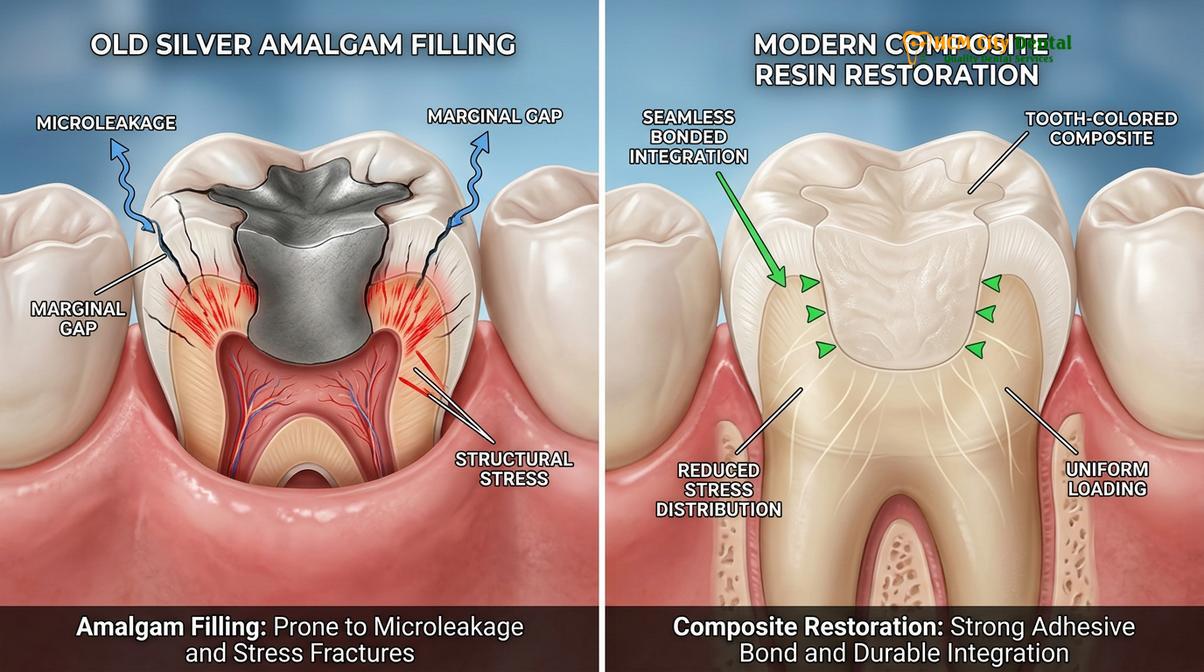
The removal of the amalgam is only the first half of the clinical procedure; the tooth must then be structurally restored to return it to full function and aesthetic harmony. The cost to replace silver fillings is heavily dependent on the volume of healthy tooth structure that remains after the old restoration and any underlying decay have been excavated. Amalgam fillings, by their physical nature, do not bond to the tooth. Instead, they are packed into an undercut cavity preparation, relying on mechanical retention. Over time, the metal expands and contracts with temperature fluctuations, often causing micro-fractures in the surrounding enamel and dentin.
If the remaining cavity is relatively small and the cusps of the tooth are intact and structurally sound, a direct composite resin restoration is the most cost-effective and conservative option. Modern composite resins are highly biocompatible, tooth-colored materials that chemically bond to the dentin and enamel. This bonding process actually reinforces the remaining tooth structure. The placement of a composite filling is typically completed in the same visit immediately following the amalgam removal, keeping the overall treatment cost low.
However, if the old amalgam was exceptionally large, or if it caused significant structural compromise to the tooth’s cusps, a simple composite filling may not possess the necessary biomechanical strength to withstand the forces of mastication. In these cases, Dr. Nguyen Van Cuong will recommend an indirect restoration, such as a porcelain inlay or onlay. These restorations are custom-fabricated in a dental laboratory or via in-house CAD/CAM milling machines. They offer superior durability, precise marginal adaptation, and excellent aesthetics. Because they require specialized fabrication and often a two-step cementation process, inlays and onlays represent a higher cost tier than direct composites[4].
Clinical Case Review: Structural Restoration Post-Amalgam Removal
A 42-year-old patient presented to HCMC Dental Clinic with a failing, multi-surface amalgam filling on a lower first molar. The patient reported occasional sharp pain upon biting, indicative of cracked tooth syndrome caused by the expanding metal. Following the SMART removal protocol, clinical evaluation revealed a vertical micro-fracture compromising the lingual cusp. A direct composite was contraindicated due to the high occlusal load. The tooth was successfully restored with a custom-milled zirconia onlay, providing cuspal coverage and preventing catastrophic tooth fracture. The patient achieved a highly aesthetic, biocompatible result with complete resolution of biting sensitivity.
In scenarios where the tooth has suffered extensive damage, severe fracturing, or has previously undergone root canal therapy, a full-coverage ceramic or zirconia crown is the definitive restorative solution. A crown encases the entire visible portion of the tooth above the gum line, providing maximum protection and structural integrity. While crowns are the most significant investment in the restorative phase, they offer the greatest longevity and are essential for preserving heavily compromised teeth from future extraction. Patients should discuss these general dentistry services during their initial consultation to understand the full scope of their required investment.
Planning Your Amalgam Removal Trip to Saigon
Organizing your dental trip to Ho Chi Minh City involves scheduling an initial digital consultation, planning for adequate recovery time, and coordinating multiple appointments if extensive restorative work is required.
Embarking on a dental tourism journey requires careful logistical planning to ensure a smooth and clinically successful experience. The first step in planning your trip to Ho Chi Minh City is to initiate a comprehensive digital consultation with the clinic. By providing recent panoramic X-rays, bitewing radiographs, and clear intraoral photographs, the clinical team can assess the number, size, and condition of your existing amalgam fillings. This allows the clinic to generate a highly accurate preliminary treatment plan and cost estimate, ensuring you are fully aware of the financial commitment before booking your flights.
When scheduling your travel dates, it is crucial to allocate sufficient time for the entire clinical workflow. While the removal of a single amalgam and placement of a composite filling can be completed in a single afternoon, more extensive cases require a longer stay. If your treatment plan involves multiple quadrants of the mouth, the clinic will likely stage the appointments over several days to minimize jaw fatigue and systemic stress. Furthermore, if your restorations require custom laboratory fabrication—such as porcelain inlays or crowns—you must factor in the turnaround time for the dental lab, which typically ranges from three to five days.
“We advise our international patients to plan for a minimum stay of seven to ten days when undergoing comprehensive amalgam replacement and indirect restorative work. This timeframe allows for meticulous clinical execution, laboratory fabrication, and a final occlusal adjustment session to ensure perfect bite harmony before returning home.”
Post-operative care and recovery should also be factored into your itinerary. Following the removal of deep amalgam fillings, it is common to experience mild to moderate thermal sensitivity in the treated teeth for a few days. The bonding process and the adjustment of the new restorations can temporarily irritate the dental pulp. Patients are advised to enjoy the softer culinary delights of Vietnam during the initial 48 hours and avoid excessively hot, cold, or hard foods. Scheduling a final follow-up appointment at HCMC Dental Clinic just before your departure allows the dentist to verify the occlusion (bite) and ensure that the new restorations are functioning flawlessly.
When to See a Doctor for Amalgam Replacement
While many patients choose to replace their amalgam fillings for proactive health and aesthetic reasons, there are specific clinical scenarios where replacement becomes a medical necessity. Dental amalgam is a durable material, but it is not permanent. Over decades of use, the harsh environment of the oral cavity—characterized by constant moisture, temperature fluctuations, and immense biting forces—takes a toll on the restoration. It is critical to monitor old fillings and seek professional evaluation if signs of failure emerge.
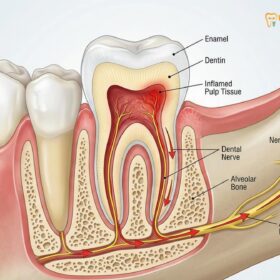
One of the primary indicators that an amalgam filling requires immediate attention is marginal breakdown. As the filling ages, the edges where the metal meets the tooth structure can begin to chip or pull away, creating microscopic gaps. This microleakage allows cariogenic bacteria to infiltrate beneath the filling, leading to recurrent decay deep within the tooth. Because the dark metal obscures the underlying dentin, this decay often goes unnoticed until it reaches the sensitive dental pulp, causing significant pain and potentially necessitating root canal therapy[5].
Important Clinical Considerations:
Do not wait for severe pain before having old amalgam fillings evaluated. If you experience sharp pain when biting down, lingering sensitivity to hot or cold temperatures, or a metallic taste in your mouth, these are strong indicators of a failing restoration or a cracked tooth. Prompt clinical intervention can often save the tooth with a conservative inlay or onlay, whereas delayed treatment may result in the need for a full crown or extraction.
Another clinical phenomenon associated with aging amalgams is galvanic toxicity or galvanic shock. This occurs when dissimilar metals are present in the mouth (e.g., an amalgam filling and a gold crown or titanium implant). The saliva acts as an electrolyte, creating a small electrical current between the metals. This can cause a sharp, shocking sensation, a persistent metallic taste, and localized tissue irritation. If you experience these symptoms, a comprehensive evaluation by a biological dentist is highly recommended to assess the integrity of your restorations and discuss the transition to biocompatible, non-metallic alternatives. You can learn more about our approach by exploring our about us page or by scheduling a consultation through our contact portal.
Frequently Asked Questions
How much does safe amalgam removal cost in Vietnam?
The safe amalgam removal cost in Vietnam typically ranges from $40 to $150 per tooth, depending on the complexity of the extraction and the replacement material. This fee generally includes the application of the SMART protocol to minimize mercury vapor exposure. Additional costs apply if the tooth requires a complex porcelain inlay or a full ceramic crown rather than a standard composite filling.
Why is amalgam removal cheaper in Vietnam?
Amalgam removal is cheaper in Vietnam primarily due to lower operational overhead, reduced facility costs, and favorable exchange rates, not a reduction in clinical quality. Dental clinics in Ho Chi Minh City utilize the exact same imported biocompatible materials and advanced isolation equipment found in Western countries. The cost savings are a direct result of the local economic environment rather than compromised safety standards.
Does travel insurance cover amalgam removal?
Standard travel insurance rarely covers elective dental procedures like amalgam removal unless the filling has fractured and requires emergency intervention. However, some specialized dental tourism insurance policies or comprehensive international health plans may offer partial reimbursement for the restorative portion of the treatment. Patients should request a detailed clinical treatment plan with international dental codes to submit to their insurance provider.
Are there hidden fees for the SMART protocol?
Reputable biological dental clinics do not charge hidden fees for the SMART protocol; the cost of isolation equipment and high-volume suction is typically bundled into the removal price. However, patients should clarify whether the quoted price includes the final restoration (filling or crown) and any necessary diagnostic X-rays. Requesting an itemized treatment estimate prior to your appointment ensures complete financial transparency.
How do I get a price quote?
You can obtain a precise price quote by contacting the clinic directly via their official website, email, or WhatsApp with a description of your dental condition. Providing recent dental X-rays or clear intraoral photographs allows the clinical team to assess the size of the amalgam fillings and recommend the appropriate restorations. A preliminary digital consultation will yield a comprehensive, itemized cost estimate for your trip.
References
- International Academy of Oral Medicine and Toxicology (IAOMT). Safe Mercury Amalgam Removal Technique (SMART) Guidelines. (2021).
- Journal of Occupational Medicine and Toxicology. Mercury exposure in dentistry: safe removal protocols and environmental impact. (2019).
- Dental Materials Journal. Biomechanical evaluation of teeth restored with composite resin versus amalgam. (2020).
- Clinical Oral Investigations. Longevity and clinical performance of ceramic inlays and onlays replacing large amalgam restorations. (2022).
- Journal of the American Dental Association. Management of defective amalgam restorations: repair versus replacement. (2018).