
Dental Implants in Saigon, District 1 — Prices, Brands & Timelines

For international patients seeking dental implants saigon district 1, the clinical standard (see our full Dental Implants guide) combines advanced titanium fixtures with significant cost savings. A complete surgical trip typically requires 5-7 days, with premium restorations starting from $700, ensuring high-quality osseointegration and aesthetic rehabilitation in the heart of Ho Chi Minh City.
Clinical Summary:
Dental implant therapy in District 1, Ho Chi Minh City, offers a highly predictable restorative solution for edentulous spaces. Utilizing Grade 5 titanium fixtures and European CE-certified protocols, clinics provide comprehensive treatments including immediate loading and guided bone regeneration. Patients benefit from stringent Class B autoclave sterilization, advanced 3D CBCT diagnostics, and specialized care led by experienced implantologists, ensuring optimal functional and aesthetic outcomes while maintaining significant cost efficiency compared to Western dental markets.
Key Takeaways:
- Korean implants (Dentium/Osstem) range from $700 to $950 per fixture.
- Premium Swiss (Straumann) implants cost between $1,200 and $1,500.
- Pre-arrival WhatsApp bookings can secure a 40% clinical discount.
- Surgical trips typically require a 5-7 day stay in Ho Chi Minh City.
- Bone grafting or sinus lifts add $400 to $800 depending on volume deficit.
- Direct billing is available for major expat insurance networks like Allianz, Bupa, and Cigna.

Saigon District 1 Dental Implant Pricing & Options
The cost of dental implants in Saigon's District 1 varies by brand, ranging from $700 for Korean systems to $1,500 for premium Swiss fixtures, offering substantial savings without compromising clinical integrity.
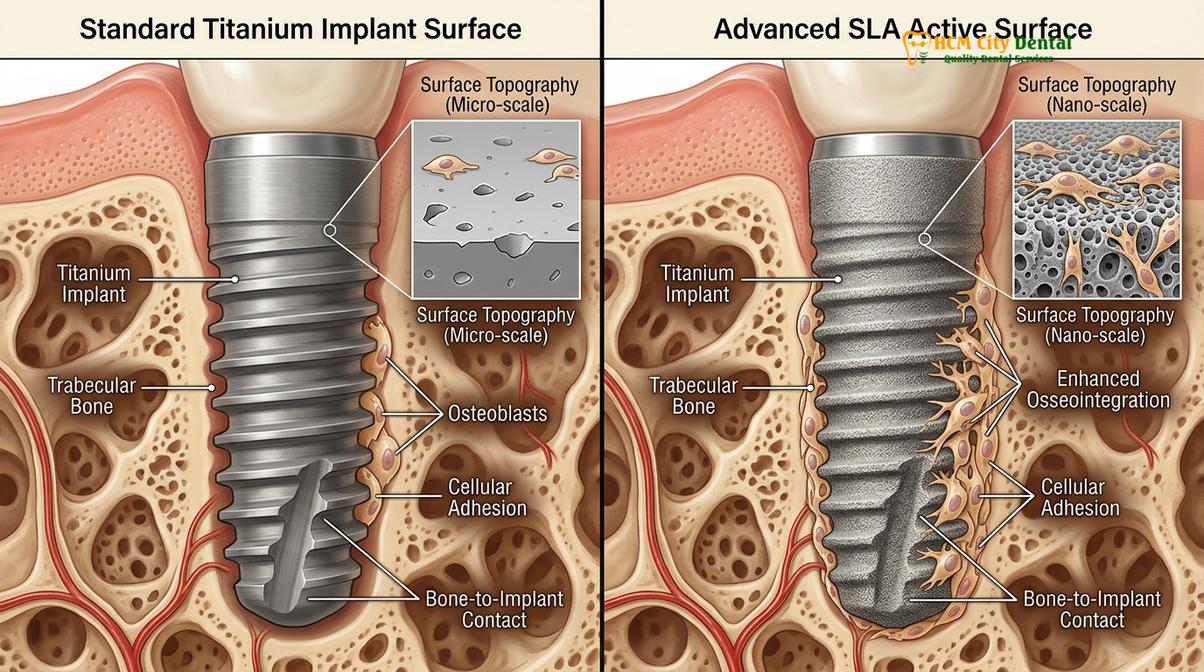
When evaluating the landscape of restorative dentistry in Southeast Asia, the central hub of Ho Chi Minh City stands out for its integration of cutting-edge technology and accessible healthcare. The dental implant saigon cost is structured to provide international patients with transparent, tiered options based on the specific biomechanical requirements of their case and their budgetary preferences. The foundation of any successful implant procedure lies in the quality of the materials used. Reputable clinics in District 1 exclusively utilize Grade 5 titanium alloys, known for their exceptional biocompatibility, tensile strength, and resistance to corrosion within the dynamic oral environment [1].
The pricing spectrum is primarily dictated by the manufacturer's research and development, surface topography technology, and global warranty networks. Korean implant systems, such as Dentium and Osstem, represent the entry-level tier for high-quality restorations. These systems have decades of clinical data supporting their efficacy and typically range from $700 to $950 per complete unit (including the fixture, abutment, and standard porcelain crown). For patients requiring enhanced osseointegration capabilities, particularly in cases of compromised bone density, premium systems like Nobel Biocare (USA) are priced between $1,100 and $1,400. At the apex of implant technology sits the Swiss-engineered Straumann system, renowned for its SLActive surface that accelerates bone healing, priced between $1,200 and $1,500.
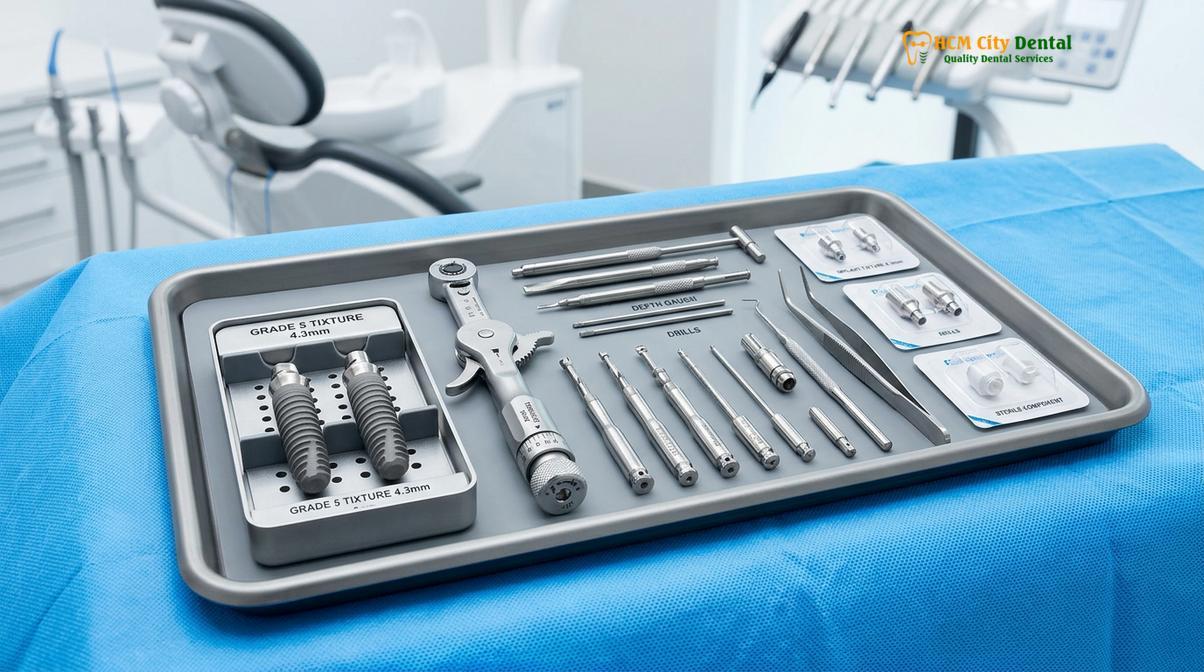
Clinical safety and infection control are paramount in these pricing models. Top-tier facilities adhere to European CE certification standards and utilize Class B autoclave sterilization to ensure an entirely aseptic surgical environment. The expertise of the surgical team is equally critical. For instance, under the guidance of Dr. Nguyen Van Cuong, who brings over 20 years of clinical expertise to the operatory, patients receive meticulous pre-surgical planning using 3D Cone Beam Computed Tomography (CBCT). Dr. Cuong's rigorous approach to family dental safety standards ensures that every fixture is placed with optimal angulation and depth, maximizing long-term survivability.
| Implant Brand / System | Origin | Estimated Cost (USD) | Clinical Indication |
|---|---|---|---|
| Dentium / Osstem | South Korea | $700 - $950 | Standard bone density, cost-effective single tooth replacement. |
| Nobel Biocare | USA / Sweden | $1,100 - $1,400 | High primary stability, excellent for All-on-4 full-arch restoration. |
| Straumann (SLA / SLActive) | Switzerland | $1,200 - $1,500 | Accelerated healing, ideal for immediate loading and compromised bone. |
| Guided Bone Regeneration (GBR) | Various | $400 - $800 | Required for alveolar ridge defects prior to or during placement. |
To further enhance accessibility for international travelers, many clinics offer a streamlined digital consultation process. By submitting panoramic X-rays or CBCT scans prior to travel, patients can receive a comprehensive treatment plan and cost estimate. Notably, patients who finalize their pre-arrival bookings via WhatsApp can often secure a 40% discount on standard clinical fees, making the financial proposition even more compelling for those seeking comprehensive full-mouth rehabilitation.
Straumann & Premium Implant Costs: Saigon vs. Australia/US
Premium implant systems like Straumann cost significantly less in Saigon compared to Australia or the US, allowing international patients to access top-tier osseointegration technology at a fraction of the price.
The globalization of healthcare has led to a paradigm shift in how patients approach complex dental surgeries. When conducting a rigorous cost comparison, the financial disparity between Western dental markets and Vietnam becomes starkly apparent, particularly concerning premium implant systems. The straumann implant price saigon vs australia is a primary driver for dental tourism. In Australia or the United States, a single Straumann implant, complete with a custom abutment and high-translucency zirconia crown, can easily exceed $4,500 to $6,000. In contrast, the exact same CE-certified Straumann components, placed by highly credentialed specialists in District 1, range from $1,200 to $1,500.
This dramatic reduction in dental implant cost Vietnam vs Australia is not indicative of inferior materials or compromised clinical standards. Rather, it reflects the macroeconomic realities of operating a medical facility in Vietnam. Lower overhead costs, including facility leasing, administrative staffing, and localized laboratory fees, allow clinics to pass substantial savings directly to the patient. Furthermore, the high volume of implant surgeries performed by specialists in Saigon fosters a level of clinical proficiency and efficiency that optimizes the entire treatment workflow [2].
"The economic advantage of undergoing implant therapy in Southeast Asia is profound. Patients are not purchasing cheaper implants; they are purchasing the exact same premium Swiss and American titanium fixtures within a more favorable economic ecosystem, allowing for comprehensive rehabilitations that might otherwise be financially prohibitive in their home countries."
For expatriates living in Southeast Asia or international patients traveling specifically for medical care, the logistical support provided by District 1 clinics is a crucial component of the value proposition. Recognizing the needs of a global clientele, leading practices have established robust direct billing partnerships with major international insurance networks, including Allianz, Bupa, and Cigna. This seamless administrative integration ensures that expat families can maximize their dental coverage without the burden of out-of-pocket reimbursements. Whether a patient requires a single posterior restoration or complex multiple dental implants, the combination of elite Straumann technology, profound cost savings, and streamlined insurance processing makes Saigon an unparalleled destination for restorative dentistry.
Same-Day Implants (Immediate Loading) in District 1
Immediate loading protocols allow for the placement of a provisional crown on the same day as surgery, provided the patient exhibits sufficient primary stability and bone density.
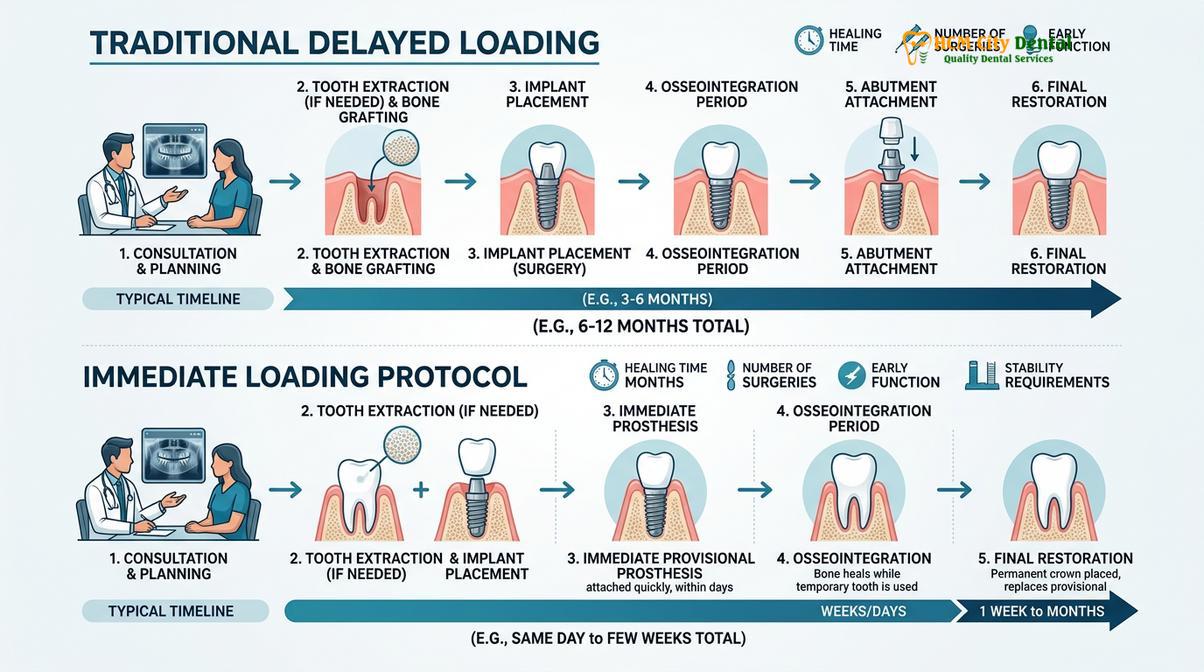
The traditional protocol for implant dentistry involves a delayed loading approach, requiring a healing period of three to six months after the surgical placement of the fixture before a crown can be attached. However, advancements in implant macro-design and digital surgical planning have popularized the concept of same day dental implants saigon. This immediate loading protocol is highly sought after by international patients whose travel itineraries demand expedited results. By utilizing implants with aggressive thread designs that achieve high insertion torque (typically greater than 35 Ncm), surgeons can secure a provisional acrylic crown to the implant immediately following surgery [3].
It is critical to understand the biological mechanics underlying this procedure. The initial stability of the implant is purely mechanical, relying on the friction between the titanium threads and the surrounding osteotomy site. Over the subsequent weeks, this mechanical stability transitions to biological stability through the process of osseointegration—where living bone cells attach directly to the implant surface. During this critical transition phase, the provisional crown is carefully designed to be out of occlusion (not touching the opposing teeth during chewing) to prevent micro-movements that could disrupt bone healing and lead to implant failure.
Clinical Case Study: Immediate Loading for Anterior Aesthetics
Patient Profile: A 45-year-old international patient visiting HCMC Dental Clinic in Ho Chi Minh City presented with a vertically fractured maxillary central incisor requiring immediate extraction.
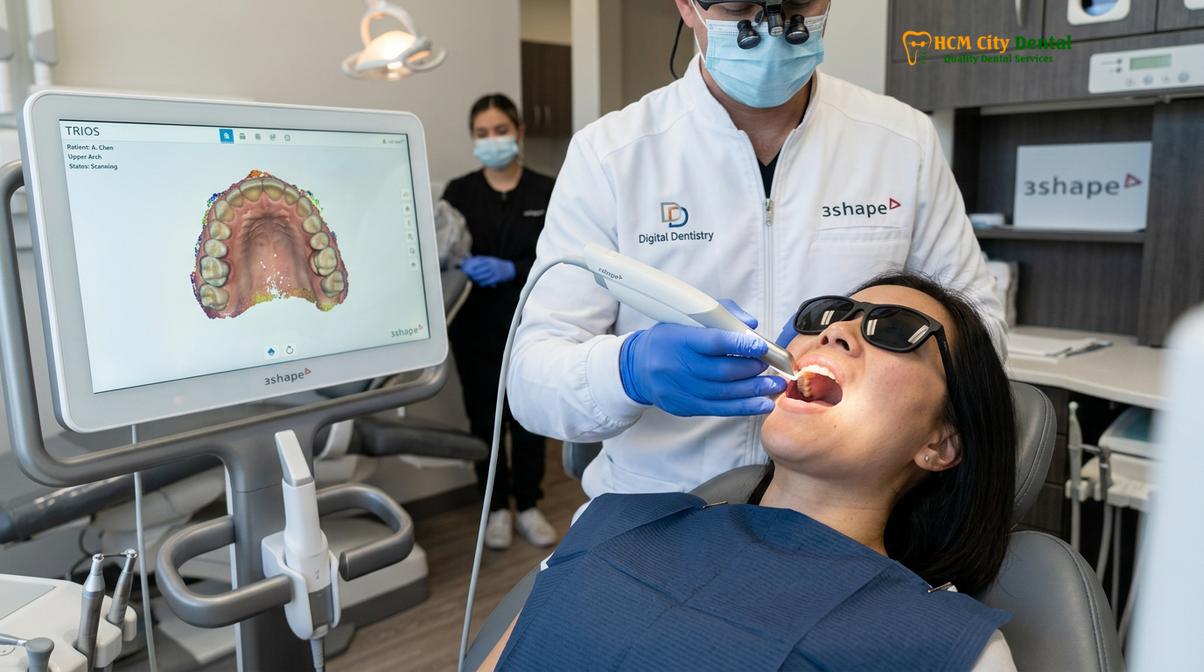
Clinical Protocol: Following atraumatic extraction, the site was thoroughly debrided. A 3D CBCT scan confirmed adequate palatal bone volume. The best implant dentist district 1 performed an immediate implant placement using a Straumann SLActive fixture, achieving an insertion torque of 45 Ncm. A custom provisional crown was fabricated and attached on the same day, preserving the natural gingival emergence profile.
Outcome: The patient left the clinic with an aesthetically pleasing provisional restoration. After a 4-month integration period, the patient returned for the final highly translucent zirconia crown, resulting in a virtually seamless aesthetic integration with the adjacent natural dentition.
For patients traveling to Vietnam, the surgical trip for same day dental implants typically requires a 5 to 7-day stay. This window allows the clinical team to perform comprehensive diagnostics, execute the surgery, fabricate the provisional restoration, and conduct necessary post-operative evaluations to ensure soft tissue healing is progressing normally. Patients must adhere strictly to a soft diet and avoid heavy masticatory forces during the initial healing phase. After 3 to 6 months, a second, shorter visit is required to take final digital impressions and deliver the definitive ceramic restoration.
Bone Grafting & Sinus Lift Costs in Saigon
When alveolar bone volume is insufficient, guided bone regeneration or a sinus lift is required, typically adding $400 to $800 to the overall treatment cost in Saigon.
A fundamental prerequisite for the long-term success of any dental implant is the presence of adequate alveolar bone volume and density. When a tooth is lost, the surrounding bone no longer receives the biomechanical stimulation of chewing, leading to rapid and progressive resorption (atrophy). If a patient has been missing teeth for an extended period, or has suffered from severe periodontitis, they may lack the necessary bone architecture to house a titanium fixture. In these scenarios, bone grafting becomes a mandatory adjunctive procedure.
Guided Bone Regeneration (GBR) involves the placement of particulate bone graft material—often a mix of allograft (human donor) and xenograft (bovine origin)—into the deficient site. This material acts as an osteoconductive scaffold, encouraging the patient's own osteoblasts to migrate into the area and form new, vital bone. The graft is typically covered with a resorbable collagen membrane to prevent faster-growing soft tissues from invading the space reserved for bone regeneration. The bone grafting cost saigon generally ranges from $400 to $800, depending on the volume of material required and the complexity of the defect [4].
In the posterior maxilla (upper back jaw), bone loss is often compounded by the pneumatization (expansion) of the maxillary sinus cavity. When the vertical height of bone between the oral cavity and the sinus floor is insufficient to stabilize an implant, a sinus lift (maxillary sinus floor elevation) is indicated. This delicate surgical procedure involves accessing the sinus cavity, gently elevating the Schneiderian membrane, and packing bone graft material into the newly created space. Depending on the residual bone height, a sinus lift can be performed via a lateral window approach (for severe deficiencies) or a crestal approach (for minor deficiencies).
Clinical Warning: Flying After Sinus Lift Surgery
International patients undergoing a sinus lift must exercise extreme caution regarding air travel. The changes in cabin pressure during a flight can exert severe stress on the newly elevated sinus membrane, potentially leading to membrane perforation, graft displacement, or acute sinusitis. It is clinically advised to wait a minimum of 10 to 14 days before flying after dental implants that involve sinus augmentation. Always consult with your maxillofacial surgeon for personalized clearance before booking return flights.
While bone grafting and sinus lifts extend the overall treatment timeline—often requiring 6 to 9 months of healing before an implant can be placed or loaded—they are indispensable for ensuring the biomechanical foundation of the restoration. Attempting to place an implant in inadequate bone significantly increases the risk of peri-implantitis, thread exposure, and ultimate implant failure.
When to Consult an Implant Specialist (When to See a Doctor)
Patients should consult an implant specialist to evaluate their candidacy through 3D imaging, especially if they have systemic health conditions or a history of severe periodontal disease.
While dental implants boast a high success rate, they are not universally suitable for every patient. The decision to undergo implant surgery must be preceded by a rigorous clinical evaluation to identify any potential contraindications. Patients should schedule a comprehensive consultation with an implantologist if they are experiencing functional difficulties due to missing teeth, suffering from the instability of removable dentures, or seeking to prevent further alveolar bone resorption.
During the initial consultation, specialists like Dr. Cuong will conduct a thorough review of the patient's medical history. Systemic conditions that impair healing or compromise the immune system require careful management. For example, patients with uncontrolled diabetes mellitus exhibit a higher risk of delayed wound healing and post-operative infection. Similarly, individuals undergoing intravenous bisphosphonate therapy for osteoporosis or cancer are at risk for medication-related osteonecrosis of the jaw (MRONJ) and may be contraindicated for elective implant surgery [5]. Heavy tobacco smoking is also a significant risk factor, as it causes peripheral vasoconstriction, reducing blood flow to the surgical site and dramatically increasing the risk of implant failure.
"The success of implant dentistry is not solely dependent on the surgeon's hands; it is equally reliant on the patient's biological capacity to heal. Comprehensive diagnostics, including CBCT imaging and a thorough systemic health review, are non-negotiable steps in determining true clinical candidacy and ensuring long-term predictability."
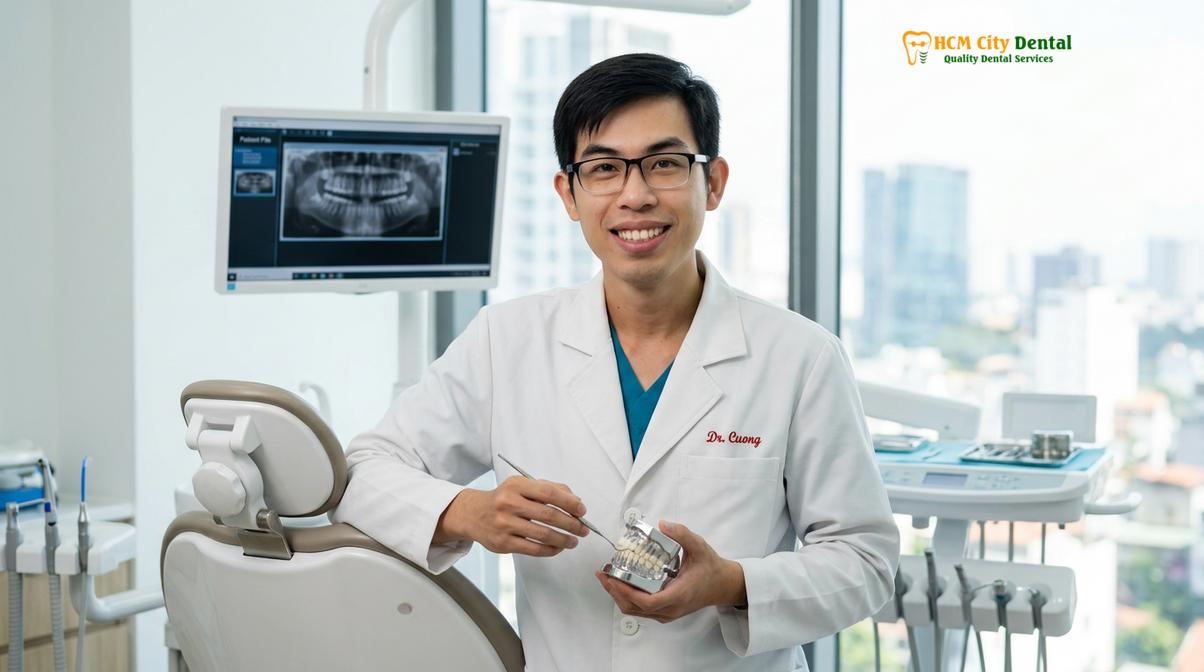
If you have been told in the past that you lack sufficient bone for implants, or if you are wondering, "can I get dental implants if I have bone loss?", a modern consultation utilizing 3D imaging can provide new avenues for treatment. Advanced techniques such as short implants, angled implant placement (All-on-4), or zygomatic implants can often bypass the need for extensive bone grafting in severely atrophic jaws. Ultimately, a personalized diagnostic assessment at a reputable facility like HCMC Dental Clinic is the only way to accurately determine the safest and most effective restorative pathway.
Frequently Asked Questions
Common questions from international patients seeking dental implants saigon district 1 in Saigon.
A dental implant in Saigon typically costs between $700 and $1,500 per tooth, depending on the implant system chosen. Korean brands like Dentium range from $700 to $950, while premium Swiss systems like Straumann cost between $1,200 and $1,500. These fees generally cover the titanium fixture, abutment, and standard porcelain crown, though additional procedures like bone grafting will incur extra charges. Patients booking via WhatsApp prior to arrival can often secure a 40% discount on clinical fees.
A standard surgical trip for dental implants in Ho Chi Minh City requires a 5 to 7-day stay. During this period, the clinical team conducts 3D CBCT diagnostics, performs the surgical placement of the titanium fixture, and monitors initial soft tissue healing. While the surgery itself takes only 1 to 2 hours per arch, a healing period of 3 to 6 months is necessary for complete osseointegration before the final permanent crown can be loaded in a subsequent visit.
No, bone grafting is not always necessary for dental implants; it is only required when a patient lacks sufficient alveolar bone volume or density to support the titanium fixture. Clinical diagnostics, specifically 3D Cone Beam CT scans, determine the exact bone dimensions. If significant resorption has occurred due to prolonged tooth loss or periodontal disease, guided bone regeneration or a sinus lift becomes a mandatory prerequisite to ensure the long-term biomechanical stability of the implant.
Yes, same-day dental implants are available in District 1 for patients who meet strict clinical criteria, including excellent primary bone stability and the absence of active periodontal infection. This immediate loading protocol allows the surgeon to place the implant and attach a provisional acrylic crown in a single appointment. However, patients must adhere to a soft diet for several months while osseointegration occurs, after which the provisional restoration is replaced with a definitive ceramic crown.
Yes, top-tier dental clinics in Saigon are highly safe for international patients, adhering to stringent global medical standards. Reputable centers utilize European CE-certified materials, Grade 5 titanium implants, and strict Class B autoclave sterilization protocols to prevent cross-contamination. Furthermore, leading implantologists often possess decades of experience and international training, ensuring that surgical workflows, digital diagnostics, and post-operative care rival or exceed the standards found in Western healthcare systems.
References
- Journal of Clinical Periodontology. Osseointegration and titanium surface topographies. (2021).
- International Journal of Oral & Maxillofacial Implants. Immediate loading protocols in edentulous mandibles. (2020).
- Clinical Implant Dentistry and Related Research. Maxillary sinus floor elevation and guided bone regeneration. (2019).
- Journal of Prosthetic Dentistry. Economic analysis of dental tourism and implantology in Southeast Asia. (2022).
- American Academy of Implant Dentistry. Systemic contraindications and risk factors in implant surgery. (2018).
Planning a dental trip? → Dental Tourism Vietnam Guide | Routine checkups & cleaning → | Sleep & Sedation dentistry →
Restore Your Smile with Dr. Cuong
Contact us via WhatsApp for a free digital consultation. Send us your dental records or CT scan for an upfront, transparent cost estimation.