Overcoming dental anxiety during a root canal in Saigon requires a combination of modern pain management, conscious sedation, and empathetic clinical communication. By utilizing advanced endodontic technology and tailored pharmacological relief, patients can experience a virtually painless, stress-free procedure that preserves their natural tooth.
Clinical Summary:
Dental anxiety associated with root canal therapy (odontophobia) is a recognized psychological barrier to essential endodontic care. Modern clinical protocols in Ho Chi Minh City address this through a multi-tiered approach: behavioral management, environmental modifications, and pharmacological interventions such as oral sedatives or nitrous oxide. By establishing clear patient-dentist communication and utilizing advanced local anesthesia techniques, clinicians can effectively neutralize pain pathways and psychological distress, ensuring safe and comfortable tooth preservation.
Key Takeaways:
- Root canal anxiety is manageable through structured communication and modern sedation protocols.
- Establishing non-verbal stop signals gives patients immediate control during the procedure.
- Pharmacological options range from mild oral sedatives to nitrous oxide conscious sedation.
- Advanced local anesthesia techniques ensure the endodontic treatment is virtually painless.
- Post-treatment psychological recovery is enhanced by positive, pain-free clinical experiences.
Understanding Dental Anxiety: Why Root Canals Trigger Severe Fear
Dental anxiety regarding root canals stems from outdated misconceptions of pain, fear of the unknown, and a perceived loss of control during the procedure.
For many patients, the mere mention of endodontic therapy triggers a profound psychological response. This phenomenon, often classified under the broader spectrum of dental phobias, is not merely a mild apprehension but a complex physiological reaction. When a patient experiences severe dental anxiety, their sympathetic nervous system activates the “fight or flight” response. This results in an elevated heart rate, increased blood pressure, and a surge of cortisol and adrenaline. Clinically, this heightened state of arousal actually lowers the patient’s pain threshold, meaning that even minor sensations of pressure or vibration are amplified and interpreted by the brain as pain [1].
The historical context of root canal treatments heavily influences modern perceptions. Decades ago, before the advent of profound local anesthetics and rotary endodontic instruments, root canals were often uncomfortable and lengthy procedures. These generational stories have permeated cultural consciousness, creating a stigma that the procedure is inherently agonizing. However, modern endodontics has evolved dramatically. Today, the procedure is designed to relieve the excruciating pain of an infected pulp, not cause it. Despite this medical reality, the psychological anticipation of pain remains a significant barrier to care [2].
Seeking specialized odontophobia treatment Saigon involves addressing both the physical and psychological components of this fear. The fear of the unknown plays a massive role; patients often do not understand the micro-surgical nature of the procedure. They imagine invasive, aggressive techniques, whereas modern root canals are performed with microscopic precision. Furthermore, the vulnerability of lying supine in a dental chair, unable to speak while instruments are in the mouth, strips the patient of their sense of control. Recognizing these triggers is the first step for any clinician aiming to provide compassionate, anxiety-free care.
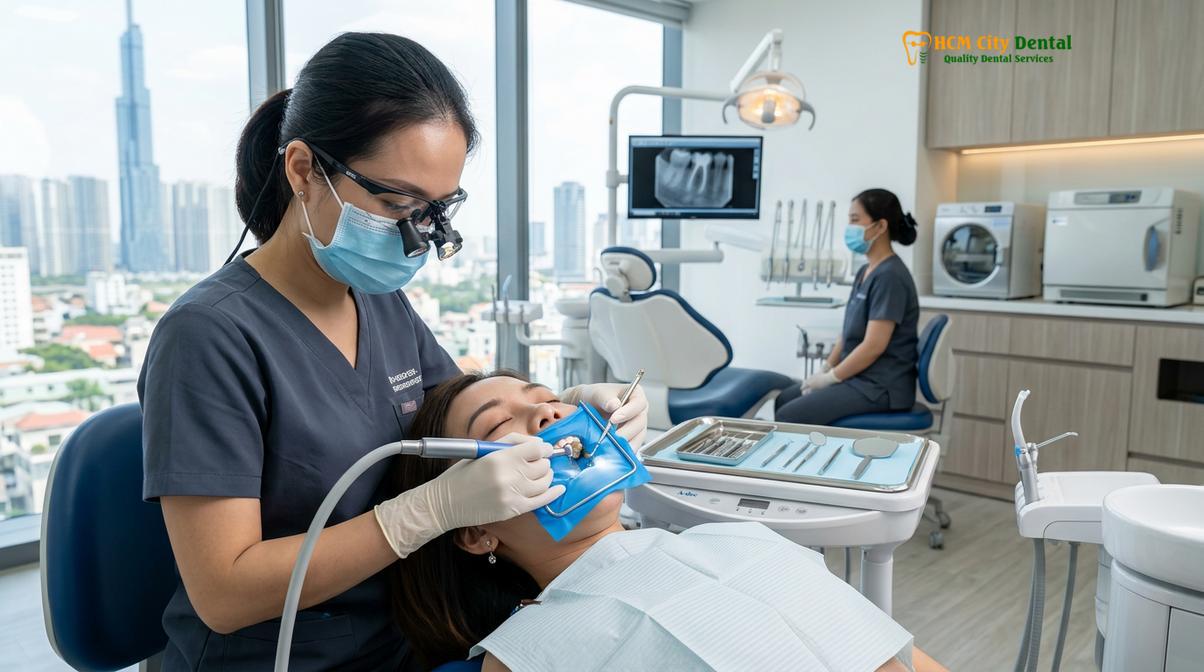
Patient-Dentist Communication: Establishing Stop Signals and Control
Establishing clear non-verbal communication, such as raising a hand to pause treatment, empowers patients and significantly reduces psychological distress.
The foundation of any successful anxiety management protocol is trust, which is built through transparent and empathetic communication. When a patient feels heard and understood, their baseline anxiety levels decrease significantly. This process begins during the initial consultation, long before any clinical instruments are utilized. A thorough explanation of the diagnosis, the step-by-step workflow of the procedure, and the expected sensations helps demystify the treatment and replace fear with clinical understanding.
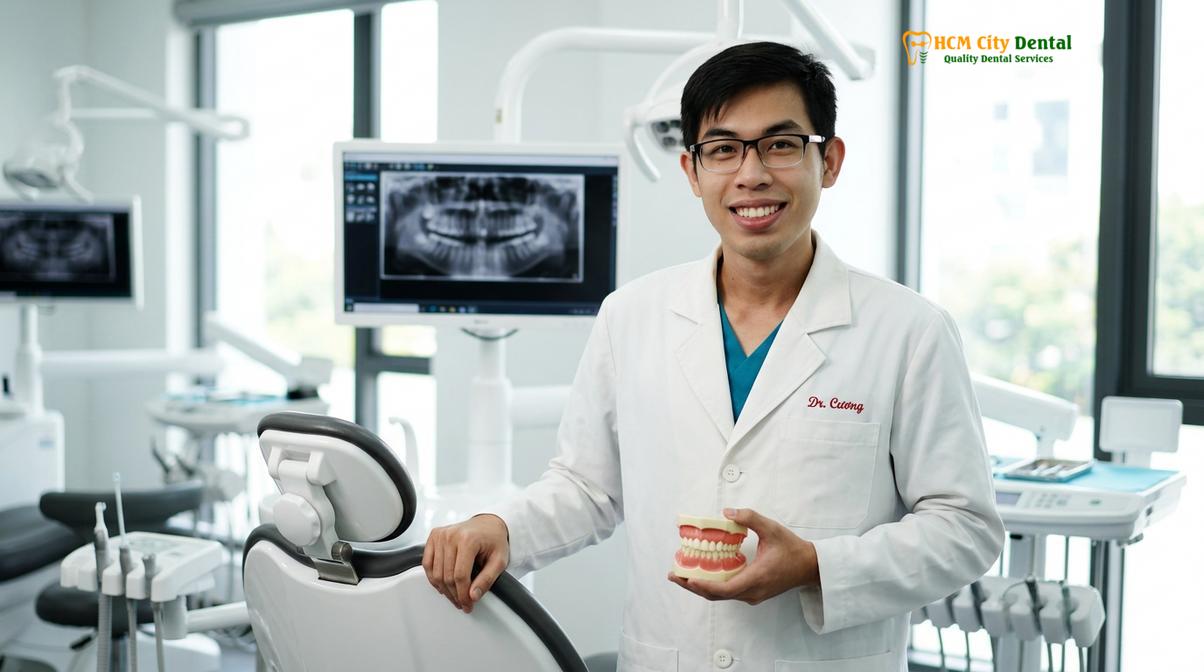
Dr. Nguyen Van Cuong, a leading specialist in patient-centered care, emphasizes that restoring a patient’s sense of autonomy is critical in managing dental phobias. When patients feel they have no say in what is happening to their bodies, panic ensues. To counteract this, clinicians implement structured non-verbal communication systems. The most common and effective method is the “stop signal.”
“Empowering the patient with a simple physical gesture—such as raising their left hand—acts as an immediate psychological safety net. Knowing they have the absolute power to halt the procedure at any millisecond drastically reduces anticipatory anxiety and builds profound clinical trust.”
Before the procedure begins, the dentist and patient agree on this signal. The clinical team must honor this signal unconditionally. If the patient raises their hand, the dentist immediately stops the rotary instruments, removes their hands from the patient’s mouth, and asks how they can help. Often, the patient simply needs to swallow, adjust their jaw, or take a deep breath. This practice of “Tell-Show-Do,” adapted for adult patients, ensures that there are no surprises. The dentist narrates the procedure, explaining what they are doing and what the patient might feel (e.g., “You will feel a slight vibration now, but no sharp pain”). This continuous loop of feedback and reassurance is a cornerstone of modern endodontic therapy [3].
Ambient Stress Relief: Designing a Calm, Non-Clinical Environment
Modifying the clinical environment with soothing acoustics, subtle aromatherapy, and visual distractions helps lower baseline cortisol levels before treatment begins.
The sensory environment of a dental clinic plays a pivotal role in triggering or alleviating anxiety. The traditional clinical setting—characterized by harsh fluorescent lighting, the distinct smell of eugenol and clinical disinfectants, and the high-pitched whine of dental drills—can instantly trigger a trauma response in phobic patients. To combat this, modern practices focus on creating a calm dental clinic environment that feels more akin to a wellness space than a surgical operatory.
At HCMC Dental Clinic in Ho Chi Minh City, environmental psychology is integrated into the patient experience. Visual management is a primary focus. Treatment rooms are designed with neutral, soothing color palettes. More importantly, the clinical setup is managed so that the patient does not see the anesthetic syringes or endodontic files before they are seated. Instruments are kept out of the direct line of sight, reducing visual triggers that spike adrenaline [4].
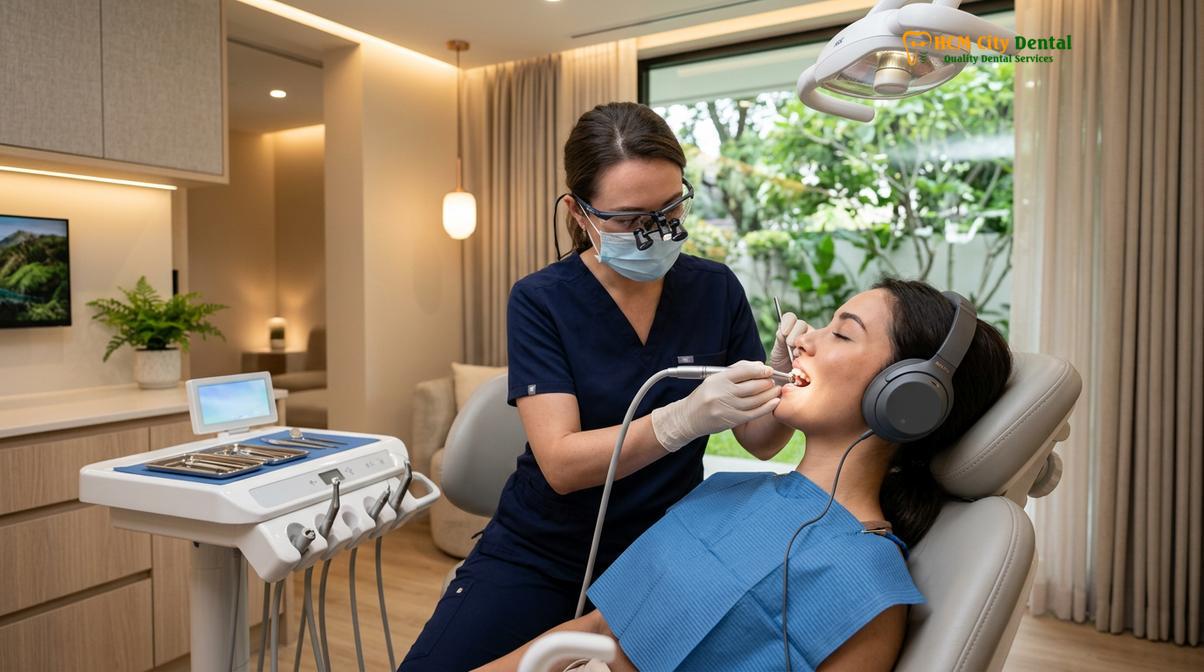
Auditory and olfactory modifications are equally important. The sound of the dental handpiece is a universal trigger for anxiety. To mitigate this, patients are often provided with noise-canceling headphones and encouraged to listen to their preferred music, podcasts, or guided meditations. This auditory masking not only blocks out clinical noises but also provides a cognitive distraction. Olfactory management involves replacing the sterile, chemical smells of the clinic with subtle, calming scents such as lavender or chamomile, which have been clinically shown to possess mild anxiolytic properties. By carefully curating the sensory input, the dental team can significantly lower the patient’s physiological stress response before the local anesthesia is even administered.
Pharmacological Anxiety Relief: Oral Sedatives and Pre-Medication
Oral anxiolytics administered prior to the appointment effectively depress the central nervous system, inducing a state of deep relaxation while maintaining consciousness.
For patients whose anxiety cannot be managed through behavioral and environmental modifications alone, pharmacological intervention becomes necessary. Oral conscious sedation is a highly effective method for managing moderate to severe dental phobias. This involves the prescription of anxiolytic medications, typically from the benzodiazepine family, which the patient takes prior to their appointment.
Benzodiazepines work by enhancing the effect of the neurotransmitter gamma-aminobutyric acid (GABA) in the brain. This results in a sedative, hypnotic, and muscle-relaxant effect, effectively dulling the central nervous system’s response to stress. Patients remain awake and capable of responding to verbal commands, but they experience a profound sense of detachment from the procedure. Furthermore, these medications often induce anterograde amnesia, meaning the patient will have little to no memory of the procedure itself, which is highly beneficial for preventing future trauma.
| Medication | Onset Time | Duration of Action | Clinical Application |
|---|---|---|---|
| Diazepam (Valium) | 30 – 60 minutes | Long (up to 8 hours) | Ideal for night-before administration to ensure sleep, plus a dose before the procedure. |
| Midazolam (Versed) | 15 – 30 minutes | Short (1 – 2 hours) | Excellent for shorter procedures; provides strong amnesic effects. |
| Triazolam (Halcion) | 15 – 30 minutes | Moderate (2 – 4 hours) | Highly effective for moderate to severe anxiety; rapid onset and strong sedation. |
When exploring dental sedation options, it is crucial to understand that oral sedatives require strict protocol adherence. Because the patient’s cognitive and motor functions are impaired, they cannot drive themselves to or from the clinic. A responsible adult must escort them. Additionally, the clinical team must continuously monitor the patient’s vital signs, including blood oxygen levels (via pulse oximetry), blood pressure, and heart rate, throughout the procedure to ensure their safety.
Clinical Warning: Oral sedatives are not suitable for everyone. They are contraindicated in patients with severe respiratory depression, sleep apnea, certain forms of glaucoma, and pregnant individuals. A comprehensive medical history review and consultation with your dentist are mandatory before any sedative is prescribed.
Nitrous Oxide and Conscious Sedation: Safe Ways to Feel Relaxed
Nitrous oxide, or laughing gas, provides rapid, titratable anxiety relief with a fast recovery time, making it ideal for endodontic procedures.
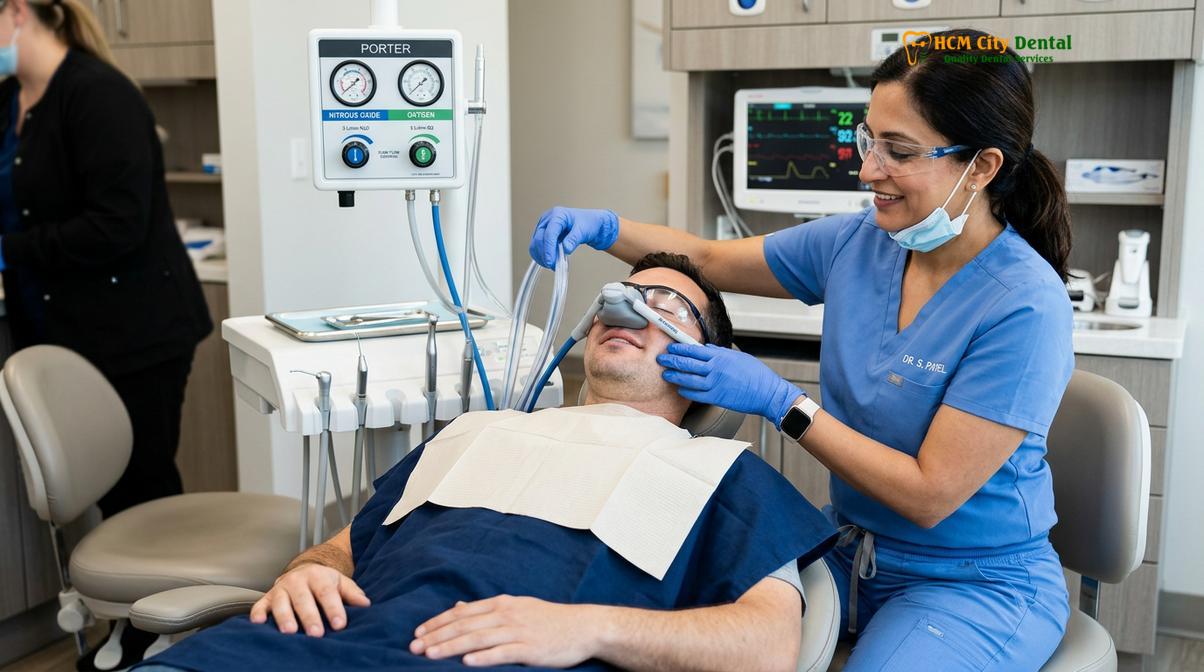
Nitrous oxide (N2O) combined with oxygen is one of the safest and most widely used forms of conscious sedation in dentistry. Administered through a small nasal hood, this colorless, slightly sweet-smelling gas provides rapid anxiolysis and mild analgesia. Unlike oral sedatives, which have a fixed duration of action, nitrous oxide is highly titratable. This means the dentist can adjust the depth of sedation minute-by-minute based on the patient’s real-time needs.
The mechanism of action involves the gas entering the bloodstream through the lungs and quickly reaching the brain, where it depresses the central nervous system. Patients often describe the sensation as a warm, floating feeling, accompanied by a tingling in the extremities. The anxiety-inducing aspects of the root canal—the sounds, the pressure, the duration—fade into the background. The patient remains fully conscious, able to breathe on their own, and capable of communicating with the dental team.
One of the most significant advantages of nitrous oxide is its rapid onset and offset. The sedative effects are felt within three to five minutes of inhalation. Once the endodontic procedure is complete, the dentist switches the gas flow to 100% oxygen for a few minutes. This flushes the nitrous oxide from the patient’s system, allowing them to recover completely before leaving the chair. Unlike oral sedation, patients who receive only nitrous oxide can safely drive themselves home and resume their normal daily activities immediately [5].
It is important to note that nitrous oxide does not replace the need for local anesthesia. While it raises the pain threshold, profound local anesthesia is still required to numb the tooth and surrounding tissues. However, because the patient is relaxed by the gas, the administration of the local anesthetic injection is often perceived as entirely painless.
Post-Treatment Anxiety Recovery: Rebuilding Your Relationship with Dental Care
A successful, pain-free root canal experience actively rewires the brain’s fear response, gradually diminishing long-term dental anxiety.
The journey of overcoming dental anxiety does not end when the root canal is finished. In fact, the post-treatment phase is critical for long-term psychological recovery. In psychology, the concept of “fear extinction” occurs when a conditioned fear response is diminished by repeated exposure to the feared stimulus without a negative outcome. A successful, comfortable root canal serves as a powerful corrective experience.
When a patient who anticipated severe pain instead experiences a calm, controlled, and virtually painless procedure, their brain begins to rewire its associations with dental care. The amygdala, the brain’s fear center, learns that the dental chair is not a place of trauma, but a place of healing. This positive reinforcement is essential for ensuring the patient returns for future necessary treatments, such as zirconia or Emax restorations, which are crucial for protecting the treated tooth with a crown.
Clinical Case Study: A 45-year-old patient presented to HCMC Dental Clinic in Ho Chi Minh City with severe acute pulpitis but had avoided treatment for weeks due to debilitating odontophobia. Dr. Cuong implemented a combined protocol of oral sedation (Midazolam) and nitrous oxide, alongside strict non-verbal stop signals. The patient successfully underwent a complex molar root canal without distress. At the follow-up appointment, the patient reported a significant reduction in generalized dental anxiety, noting that the experience completely altered their perception of endodontic care.
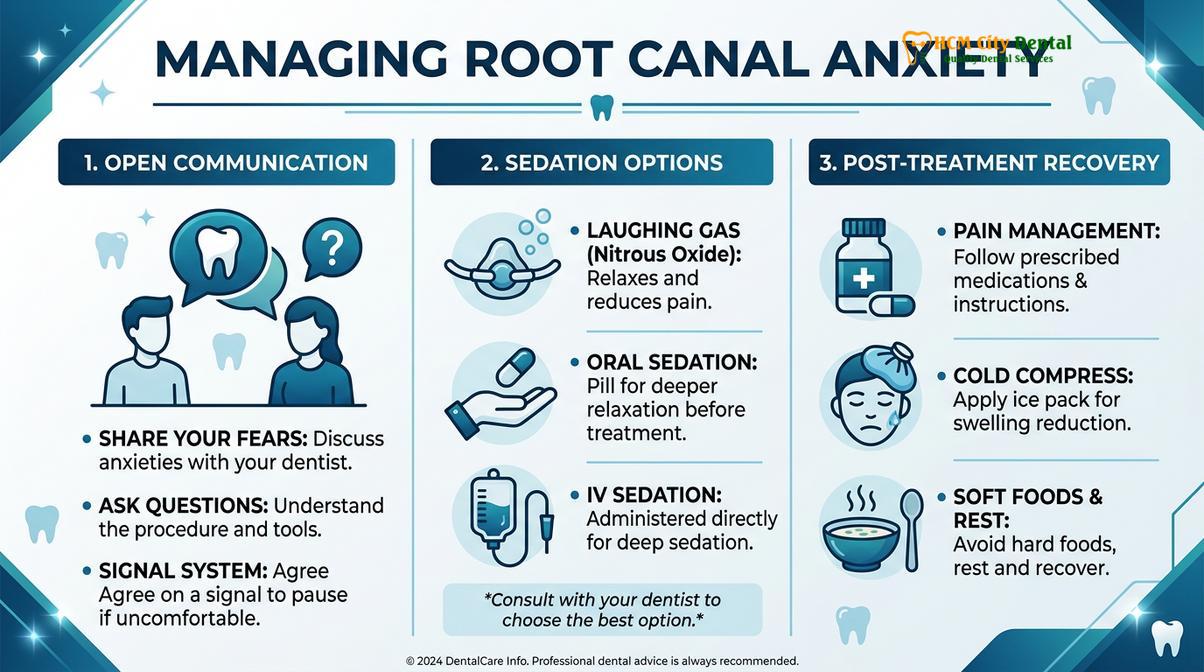
To support this psychological recovery, the clinical team provides clear, reassuring post-operative instructions. Knowing exactly what to expect during the healing phase reduces anxiety about the unknown. Patients are guided on post-treatment dietary guidelines, pain management strategies for mild inflammation, and even advice on traveling or flying after the procedure. By providing a comprehensive recovery timeline, the dentist ensures the patient feels supported long after they leave the clinic.
“The ultimate goal of anxiety management in endodontics is not just to get through a single procedure, but to rehabilitate the patient’s relationship with oral healthcare, empowering them to maintain their natural smile for a lifetime without fear.”
When to See a Doctor
While dental anxiety is a valid and common psychological barrier, allowing it to delay necessary medical treatment can lead to severe systemic complications. You should seek immediate endodontic evaluation if you experience spontaneous, throbbing tooth pain that wakes you up at night, as this is a hallmark sign of irreversible pulpitis. Additionally, if you notice swelling in your gums, face, or neck, or if you develop a fever in conjunction with tooth pain, these are indicators of an active bacterial infection or abscess.
An untreated root canal infection will not resolve on its own. The bacteria can spread through the root apex into the surrounding jawbone, leading to bone loss, systemic infection, and potentially life-threatening conditions if the airway becomes compromised. If your fear is preventing you from seeking care for these symptoms, contact a clinic that specializes in sedation dentistry. Modern clinics are equipped to handle highly anxious patients safely, ensuring that your phobia does not cost you your natural tooth or your overall health. A personalized clinical examination is necessary to determine the most appropriate sedation and treatment plan for your specific medical profile.
Frequently Asked Questions
How can I overcome severe fear of getting a root canal?
Overcoming severe fear requires a combination of open communication with your dentist, behavioral techniques, and appropriate sedation. By discussing your anxiety beforehand, your endodontist can tailor a treatment plan that includes step-by-step explanations, non-verbal stop signals, and pharmacological support to ensure you remain completely comfortable and in control throughout the procedure. Building trust with your clinical team is the most critical first step.
Can I take a mild sedative before coming to my dental appointment?
Yes, oral sedatives can be prescribed by your dentist to be taken prior to your appointment to help reduce anticipatory anxiety. However, this must be strictly coordinated with your clinical team. You will require a comprehensive medical evaluation to rule out contraindications, and you must have a responsible adult escort you to and from the clinic, as these medications impair your ability to drive safely.
What happens if I have a panic attack during my dental treatment?
If a panic attack occurs, the dental team will immediately pause the procedure, remove any instruments from your mouth, and focus on your recovery. Clinicians are trained to manage acute anxiety episodes by guiding you through breathing exercises, adjusting sedation levels if applicable, and ensuring your vital signs remain stable before deciding whether to proceed or reschedule the treatment for another day under deeper sedation.
Is local anesthesia enough to stop the pain if I am highly anxious?
Local anesthesia effectively blocks pain signals, but high anxiety can lower your pain threshold and make you hyper-aware of pressure and vibrations. For highly anxious patients, combining profound local anesthesia with conscious sedation (like nitrous oxide) addresses both the physical sensation and the psychological distress, ensuring a virtually painless experience by relaxing the central nervous system.
Will I be completely asleep during a sedated root canal procedure?
Under conscious sedation methods like nitrous oxide or oral sedatives, you will not be completely asleep; you will remain awake and responsive but in a state of deep relaxation. This allows you to follow the dentist’s instructions while feeling detached from the stress of the procedure, ensuring safety and a faster recovery time compared to general anesthesia.
References
- British Dental Journal. Pain management and dental anxiety in endodontics. (2018).
- Journal of Endodontics. Psychological factors influencing the perception of endodontic pain. (2020).
- International Endodontic Journal. The efficacy of conscious sedation in endodontic therapy. (2021).
- Journal of the American Dental Association. Behavioral management techniques for the anxious dental patient. (2019).
- Clinical Oral Investigations. Environmental psychology in dental clinic design and patient stress reduction. (2022).