Choosing between dentures and dental implants depends on your clinical needs, jawbone density, and budget. While dentures offer a non-invasive, removable solution for missing teeth, implants provide a permanent, surgically fixed foundation that prevents bone loss and restores full chewing capacity.
Clinical Summary:
The decision between traditional dentures and dental implants represents a choice between tissue-borne and bone-borne prosthetics. Dentures provide an immediate, non-surgical method to restore aesthetics and basic phonetic function, making them suitable for patients with extensive bone loss or medical contraindications to surgery. However, they rely on the gums for support, which can lead to progressive bone resorption and reduced masticatory efficiency over time. Conversely, dental implants utilize biocompatible titanium posts surgically integrated into the jawbone. This osseointegration mimics natural tooth roots, preserving facial structure, delivering superior bite force, and offering a permanent foundation for crowns, bridges, or overdentures. While implants require a higher initial investment and a longer treatment timeline, their longevity and physiological benefits often yield greater long-term satisfaction and oral health stability.
Key Takeaways:
- Dentures are removable, tissue-supported prosthetics that offer a non-invasive and cost-effective initial solution for missing teeth.
- Dental implants are surgically placed titanium roots that fuse with the jawbone, providing permanent, highly stable support.
- Implants actively stimulate the jawbone, preventing the progressive bone loss (resorption) typically associated with traditional dentures.
- While dentures restore approximately 20-30% of natural bite force, implants can restore up to 90%, allowing for an unrestricted diet.
- Hybrid solutions, such as implant-supported overdentures, combine the affordability of dentures with the stability of implants.
Understanding the Structural Difference: Removable vs. Fixed
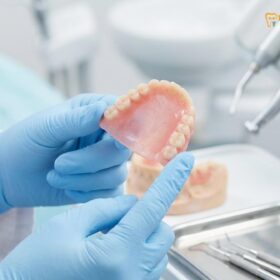
Dentures are removable acrylic or metal frameworks resting on the gums, whereas dental implants are titanium posts surgically embedded into the jawbone to act as artificial tooth roots.
To make an informed decision regarding your oral rehabilitation, it is crucial to understand the fundamental biomechanical differences between these two primary tooth replacement options. The structural foundation of a prosthesis dictates not only how it feels in the mouth but also how it interacts with the underlying biological tissues over the course of a patient’s lifetime.
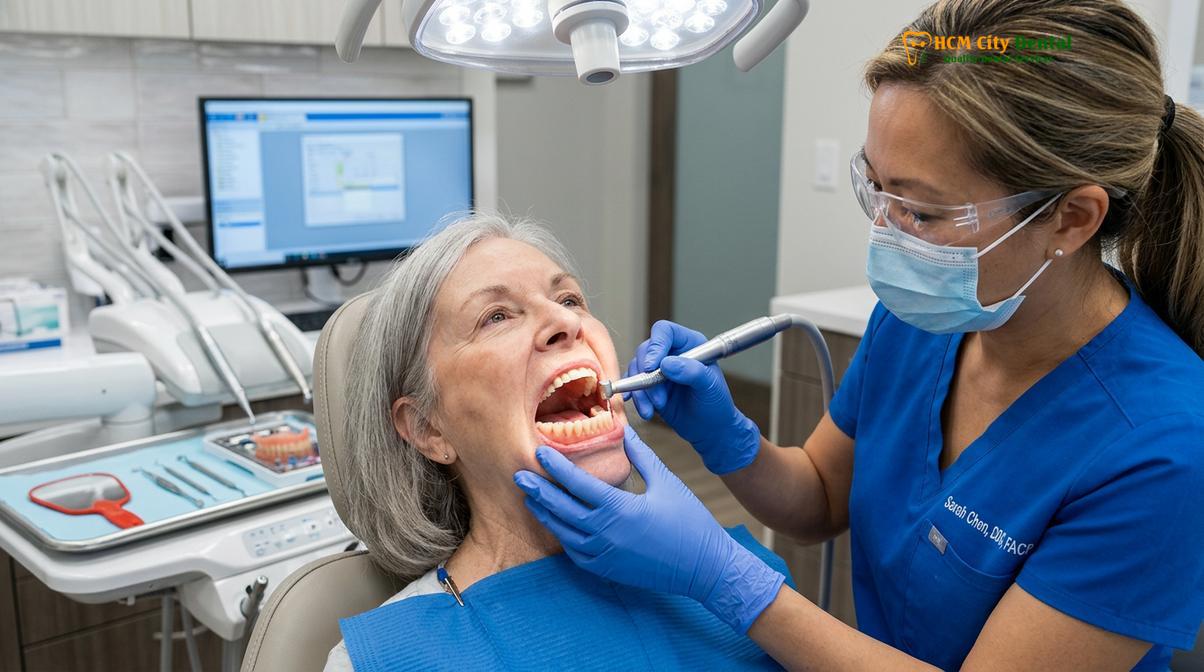
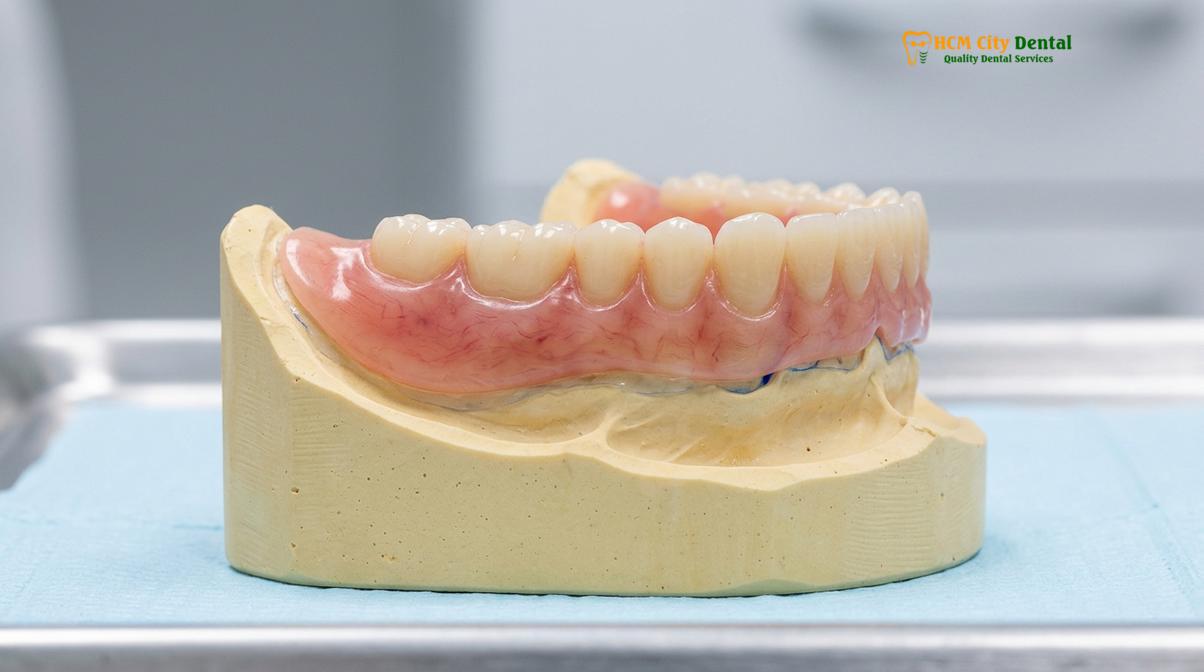
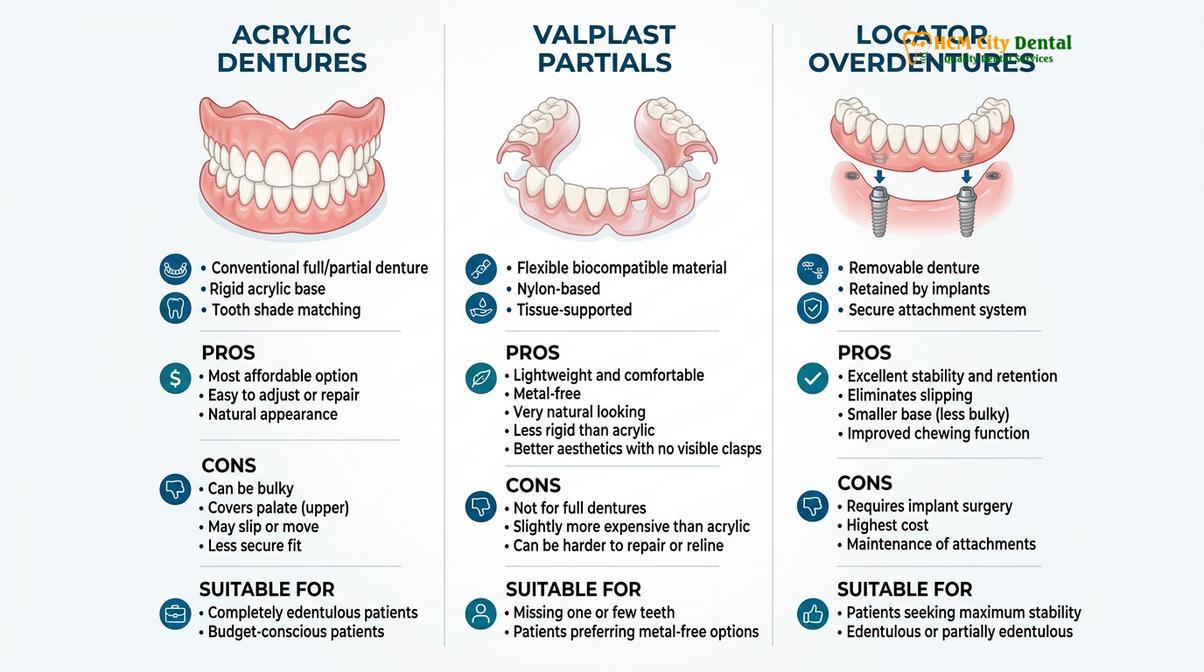
Traditional complete and partial dentures are classified as tissue-borne prosthetics. They consist of a prosthetic base—typically fabricated from polymethyl methacrylate (PMMA) acrylic or a combination of acrylic and a cast metal framework—that rests directly on the oral mucosa (the gums) and the underlying alveolar ridge. Because they sit on top of the tissue, their retention relies heavily on a combination of anatomical fit, surface tension, and the neuromuscular control of the patient’s cheeks, lips, and tongue. In the upper jaw, a complete denture covers the entire hard palate to create a suction seal. In the lower jaw, where the tongue requires space to move, creating a stable seal is notoriously more difficult, often resulting in a prosthesis that is prone to shifting during speech and mastication [1].
In stark contrast, dental implants are bone-borne prosthetics. The core of an implant system is a small, highly engineered post made of biocompatible titanium (or sometimes zirconia). This post is surgically placed directly into the jawbone. Over a period of several months, a biological process known as osseointegration occurs, wherein the living bone cells grow and attach directly to the micro-roughened surface of the titanium implant. Once this fusion is complete, the implant serves as a rigid, immovable artificial tooth root. An abutment is then attached to the implant, which in turn supports a custom-milled ceramic crown, a fixed bridge, or a specialized attachment for an overdenture.
Dr. Nguyen Van Cuong, a leading prosthodontic specialist, frequently explains to patients that the difference is akin to a house built on a concrete foundation versus a mobile home resting on the ground. The fixed nature of implants eliminates the friction and micro-movements that cause sore spots and ulcerations commonly associated with removable acrylic appliances. Furthermore, because implants do not rely on adjacent natural teeth for support—unlike traditional dental bridges or partial dentures with metal clasps—they preserve the structural integrity of the remaining natural dentition.
Chewing Efficacy: How Implants Outperform Traditional Acrylic
Dental implants restore up to 90% of natural bite force by anchoring directly to the bone, while traditional dentures typically provide only 20% to 30% of original chewing capacity.
One of the most profound impacts of tooth loss is the diminished ability to masticate (chew) food effectively. The efficiency of your bite directly influences your nutritional intake, digestion, and overall systemic health. When comparing dentures and implants, the disparity in chewing efficacy is one of the most significant clinical distinctions.
Natural teeth are anchored in the jawbone and surrounded by the periodontal ligament, a specialized connective tissue that acts as a shock absorber and provides sensory feedback regarding bite pressure. A healthy set of natural teeth can generate a bite force of approximately 200 to 250 Newtons in the anterior region and up to 800 Newtons in the molar region. When a patient transitions to traditional complete dentures, this dynamic changes drastically. Because dentures rest on compressible gum tissue rather than rigid bone, the maximum bite force a patient can comfortably exert drops precipitously—often to just 50 or 60 Newtons [2].
“The transition from natural dentition to complete removable dentures results in a severe reduction in masticatory performance, forcing patients to alter their diets, often avoiding fibrous vegetables and tough proteins in favor of softer, highly processed foods.”
This reduction in force means that denture wearers often struggle to chew foods like raw carrots, apples, nuts, and tough meats. The instability of the lower denture, in particular, can cause the prosthesis to dislodge when biting into resistant foods. To compensate, many patients resort to using copious amounts of denture adhesives, which can be messy, alter the taste of food, and require constant reapplication throughout the day.
Dental implants bypass these limitations entirely. Because the titanium fixture is fused directly to the jawbone, the occlusal (biting) forces are transferred straight into the skeletal structure, much like natural teeth. This rigid fixation allows implant patients to exert a bite force that closely rivals that of a natural, healthy mouth. Patients with implant-supported restorations can confidently bite into an apple or chew a steak without fear of their teeth shifting, clicking, or causing painful compression on the gums [3].
The restoration of chewing efficacy goes beyond mere convenience; it has profound implications for gastrointestinal health. Proper mastication is the first step in digestion, breaking down food into smaller particles and mixing it with salivary enzymes. When food is swallowed whole or poorly chewed due to inadequate prosthetics, it can lead to chronic indigestion, nutrient malabsorption, and a decline in overall well-being.
The Bone Resorption Factor: Why Implants Preserve Your Jawline
Without tooth roots to stimulate the jaw, the bone gradually shrinks over time; dental implants provide the necessary mechanical stimulation to halt this resorption and preserve facial structure.
To fully grasp the long-term implications of tooth replacement, one must understand the biological principle known as Wolff’s Law. This physiological rule states that bone in a healthy person will adapt to the loads under which it is placed. In the oral cavity, the roots of natural teeth transmit mechanical forces into the surrounding alveolar bone every time you chew. This constant stimulation signals the body to maintain bone density and volume in the jaw.
When teeth are extracted, this vital stimulation ceases. The body, sensing that the bone is no longer needed to support teeth, begins to resorb (break down and absorb) the bone tissue to repurpose the calcium and minerals elsewhere. This process, known as disuse atrophy, begins immediately after tooth loss and progresses rapidly during the first year, continuing at a steady rate for the rest of the patient’s life.
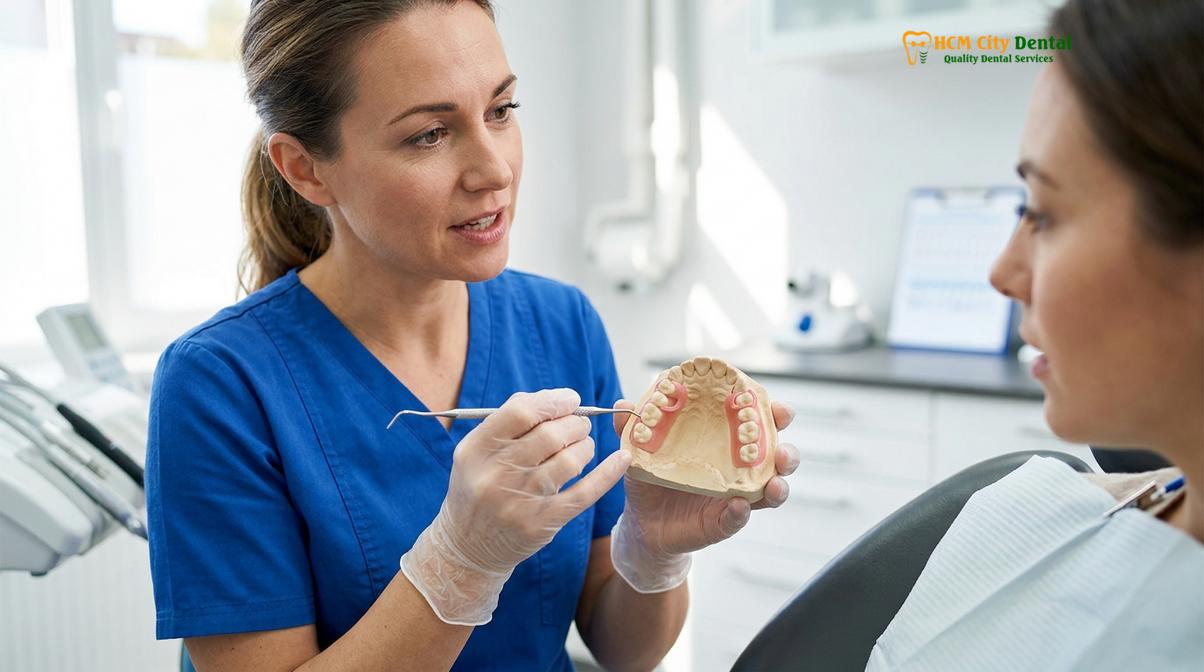
As the jawbone shrinks, the anatomical landscape of the mouth changes. A denture that fit perfectly on the day it was delivered will inevitably become loose and unstable as the bone beneath it recedes. This necessitates frequent visits to the dentist for relining—a procedure where new acrylic is added to the tissue side of the denture to fill in the gaps created by bone loss. Over decades, severe bone resorption can lead to a sunken facial appearance, premature wrinkling around the mouth, and a protruding chin, drastically aging the patient’s profile.
Dental implants are currently the only medical intervention capable of halting this destructive process. Because the titanium implant acts as an artificial root, it restores the mechanical stimulation required to maintain bone volume [4]. The forces of mastication are once again transmitted into the jaw, signaling the osteoblasts (bone-building cells) to keep the surrounding bone dense and healthy. This concept of jaw bone preservation is a cornerstone of modern prosthodontics and is a primary reason why dental professionals strongly advocate for implants whenever clinically feasible.
By preserving the alveolar ridge, implants not only maintain the structural foundation for the prosthetic teeth but also support the facial muscles and soft tissues, preserving the patient’s natural facial contours and youthful appearance over the long term.
Upfront Costs vs. Long-Term Value: A Detailed Financial Analysis
Although dentures have a lower initial price tag, the recurring costs of relines, replacements, and adhesives often make dental implants a more cost-effective investment over a lifetime.
Financial considerations are often the primary deciding factor for patients evaluating their restorative options. When comparing the dental implant cost to the price of traditional dentures, it is essential to look beyond the initial surgical and fabrication fees and conduct a comprehensive lifecycle cost analysis.
Traditional dentures are undeniably the more affordable option upfront. The process involves impressions, laboratory fabrication, and fitting, without the need for surgical intervention or expensive titanium components. For patients on a strict immediate budget, dentures provide a rapid and economical way to restore a functional smile. However, the financial journey of a denture wearer does not end on the day the appliance is delivered.
Due to the continuous bone resorption discussed earlier, dentures require ongoing maintenance. A hard reline is typically necessary every one to two years to maintain an acceptable fit. Furthermore, the acrylic teeth and base are subject to wear, staining, and fatigue, meaning a complete replacement of the denture is usually required every five to seven years. When you factor in the daily cost of specialized cleaning tablets and denture adhesives, the cumulative expense over a decade or two becomes substantial.
| Cost Factor | Traditional Dentures | Dental Implants (Fixed) |
|---|---|---|
| Initial Investment | Lower upfront cost | Higher upfront surgical/prosthetic cost |
| Maintenance Costs | High (relines, adhesives, daily cleaners) | Low (standard toothpaste, floss, routine exams) |
| Replacement Frequency | Every 5 to 7 years | Implants can last a lifetime; crowns may need replacement after 15+ years |
| Bone Grafting Needs | None initially, but bone loss is inevitable | May be required initially, but prevents future loss |
| Long-Term Value | Decreases over time as fit worsens | High return on investment through stability and health |
Conversely, while the initial investment for dental implants is significantly higher, they offer exceptional long-term dental savings. Once an implant is successfully osseointegrated, the titanium fixture itself is designed to last a lifetime. The prosthetic crown or bridge attached to the implant may eventually require replacement due to normal wear and tear, but the foundation remains secure. There are no recurring costs for adhesives, no need for frequent relines, and the preservation of the jawbone prevents the need for complex reconstructive surgeries later in life.
For patients seeking high-quality care at a more accessible price point, dental tourism has become a viable strategy. Many international patients visiting HCMC Dental Clinic in Ho Chi Minh City discover that they can receive world-class implant treatments—utilizing premium European or American implant systems—at a fraction of the cost they would incur in their home countries, making the superior clinical choice financially attainable.
Maintenance and Daily Care: Soak vs. Brush and Floss
Dentures require nightly removal, specialized soaking solutions, and careful handling, whereas dental implants are maintained exactly like natural teeth with standard brushing and flossing.
The daily routine required to maintain your oral prosthesis significantly impacts your lifestyle and convenience. The maintenance protocols for removable dentures and fixed implants are entirely different, reflecting their distinct structural natures.
Removable dentures demand a meticulous and somewhat tedious daily hygiene regimen. Because acrylic is a porous material, it can harbor bacteria, plaque, and fungi (such as Candida albicans) if not cleaned properly. Denture wearers must remove their prosthetics after every meal to rinse away food debris. At night, the dentures must be taken out to allow the gum tissues to rest and recover from the compressive forces of the day. During this time, the dentures should be brushed with a soft-bristled denture brush and a non-abrasive cleanser—regular toothpaste is too abrasive and will create microscopic scratches in the acrylic where bacteria can thrive. Finally, the dentures must be soaked overnight in water or a specialized effervescent cleaning solution to prevent the acrylic from drying out and warping [5].
Failure to adhere to this strict regimen can lead to denture stomatitis, a painful inflammation of the oral mucosa, as well as chronic bad breath (halitosis).
Dental implants, on the other hand, offer a maintenance routine that is virtually identical to caring for natural teeth. Because the prosthetic crowns are permanently fixed in the mouth, there is no need for nightly removal or soaking in a glass. Patients simply brush twice a day with a standard fluoride toothpaste and a soft-bristled toothbrush. Flossing is equally critical; specialized floss threaders or water flossers are highly recommended to clean beneath implant-supported bridges and around the implant abutments to remove plaque.
While implants are impervious to dental decay (cavities), the surrounding gum tissue remains susceptible to infection. Poor oral hygiene can lead to peri-implant mucositis (inflammation of the gums around the implant) and, if left untreated, peri-implantitis, a severe condition that causes bone loss and can ultimately lead to implant failure. Therefore, routine professional cleanings and biannual examinations remain essential for implant patients to ensure the long-term health of the peri-implant tissues.
Surgical Suitability: Assessing Bone Density and General Health
Implant placement requires adequate bone volume and a healthy immune system, meaning patients with severe bone loss or uncontrolled systemic conditions may be better suited for modern dentures.
While dental implants are widely considered the gold standard for tooth replacement, they are a surgical intervention and are not universally suitable for every patient. Determining candidacy requires a comprehensive clinical evaluation, including a detailed review of the patient’s medical history and advanced radiographic imaging.
The most critical prerequisite for successful implant placement is adequate bone volume and density. As previously discussed, bone resorption occurs rapidly after tooth loss. If a patient has been missing teeth or wearing traditional dentures for many years, they may lack the necessary bone width and height to securely anchor a titanium post. In such cases, a 3D Cone Beam Computed Tomography (CBCT) scan is utilized to precisely map the jawbone architecture, locate vital structures like the inferior alveolar nerve and the maxillary sinuses, and determine if adjunctive procedures are required.
If bone volume is insufficient, bone grafting procedures—such as sinus lifts or guided bone regeneration—can often rebuild the foundation. However, these procedures add time, cost, and surgical complexity to the treatment plan.
Systemic health is equally important. Dr. Cuong emphasizes that conditions that impair healing or compromise the immune system can increase the risk of implant failure. Uncontrolled diabetes, active periodontal disease, autoimmune disorders, and a history of radiation therapy to the head and neck are significant clinical considerations. Additionally, heavy smoking severely constricts blood vessels in the gums, drastically reducing the blood supply necessary for successful osseointegration. For patients with absolute contraindications to surgery, high-quality, precision-milled dentures remain the safest and most effective restorative option.
Hybrid Solutions: The Comfort of Implant-Supported Overdentures
For patients seeking stability without the cost of full fixed bridges, implant-supported overdentures use two to four implants to securely snap a removable denture into place.
For many patients, the choice between dentures and implants is not strictly binary. Modern prosthodontics offers highly effective hybrid solutions that bridge the gap between the affordability of removable appliances and the stability of fixed implants. The most common of these solutions is the implant-supported overdenture, often referred to as a “snap-in denture.”
An overdenture utilizes a minimal number of strategically placed dental implants—typically two to four in the lower jaw and four in the upper jaw—to anchor a removable prosthesis. Instead of relying solely on the gums for support and suction, the denture is fitted with specialized attachments (such as Locator abutments or a custom-milled titanium bar) that snap securely onto the implants.
“Implant-retained overdentures represent a paradigm shift for edentulous patients, transforming a floating, unstable lower denture into a secure prosthesis that restores confidence in social settings and significantly improves masticatory function.”
This hybrid approach offers several distinct clinical advantages. First, it completely eliminates the need for messy denture adhesives. The mechanical retention provided by the implants ensures that the denture will not slip, click, or fall out during speech or eating. Second, the presence of the implants provides vital stimulation to the anterior jawbone, helping to mitigate the rapid bone resorption that occurs with conventional dentures.
Furthermore, because the overdenture is still removable by the patient, daily hygiene is straightforward. The patient simply snaps the denture out at night to clean the appliance and brush around the implant abutments. For patients who desire a completely non-removable solution, advanced protocols like All-on-4 implants offer a full arch of fixed teeth supported by four precisely angled implants, providing the ultimate in comfort and function.
When to See a Doctor
Whether you currently wear traditional dentures or are missing teeth and considering your options, timely clinical intervention is crucial to preventing irreversible bone loss and maintaining your oral health. You should schedule a consultation with a prosthodontic specialist if you experience any of the following symptoms:
- Your current dentures frequently slip, click, or fall out when speaking or eating.
- You require increasing amounts of denture adhesive to keep your prosthesis in place.
- You develop chronic sore spots, ulcers, or bleeding on your gums beneath the denture base.
- You notice a visible change in your facial structure, such as a sunken appearance around the mouth or a protruding chin.
- You are restricting your diet to soft foods due to an inability to chew effectively.
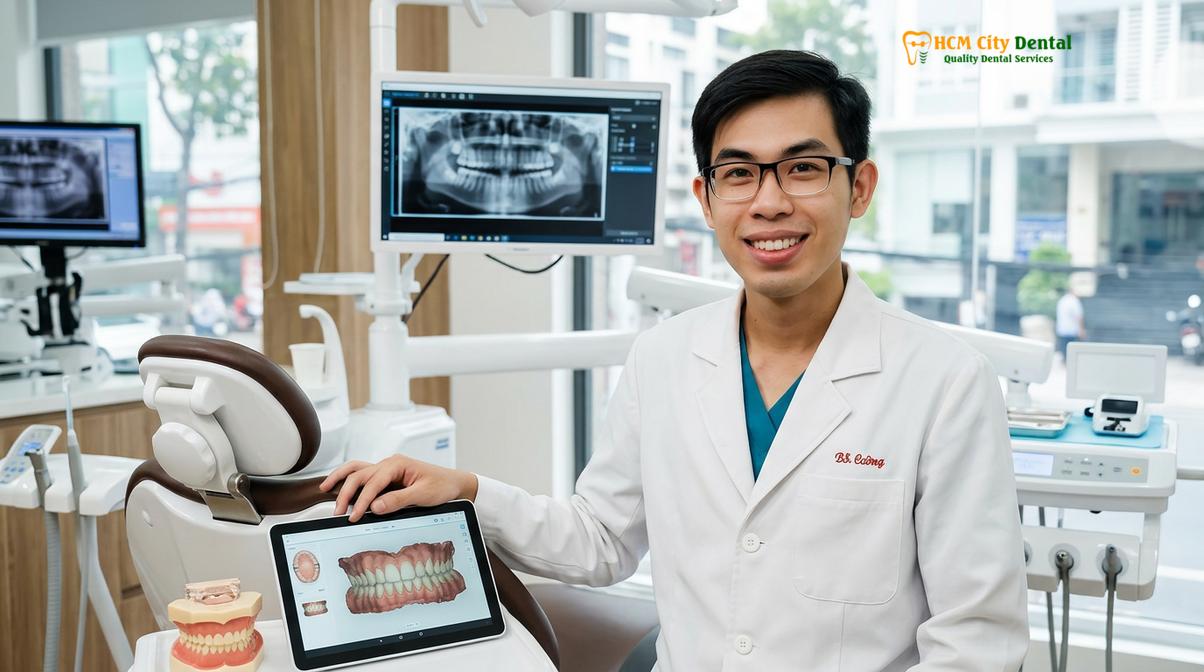
A comprehensive evaluation, including a 3D CBCT scan, will allow your dental team to assess your bone density and recommend the most appropriate, personalized treatment plan. If you are ready to explore your restorative options, contact our specialists at HCMC Dental Clinic to schedule a detailed clinical assessment.
Frequently Asked Questions
Is it worth upgrading from a loose denture to implants in Vietnam?
Yes, upgrading to implants provides significant improvements in bite force, speech clarity, and jawbone preservation. Many international patients find that the advanced clinical expertise and cost-effective care available in Vietnam make this life-changing transition highly accessible. By stabilizing the prosthesis, patients eliminate the pain of gum compression and the daily frustration of messy adhesives, resulting in a profound improvement in overall quality of life.
Does travel insurance cover implants or dentures?
Standard travel insurance typically only covers emergency dental care for acute pain or trauma, not elective prosthodontics. Patients traveling for tooth replacement should consult specialized medical tourism insurance or review their domestic dental policies for out-of-network international coverage. It is highly recommended to clarify coverage limits, waiting periods, and required documentation with your provider prior to commencing any major restorative treatment abroad.
How long does a dental implant last compared to a premium denture?
A successfully integrated dental implant can last a lifetime with proper oral hygiene and regular clinical maintenance. In contrast, even the highest quality premium dentures typically require relining every few years and complete replacement after five to seven years due to structural wear and underlying bone changes. While the prosthetic crown attached to an implant may eventually need replacement, the titanium root itself offers unparalleled longevity.
Can I switch from dentures to implants if I have already lost bone?
Yes, patients with existing bone loss can often transition to implants through advanced bone grafting procedures. Techniques such as sinus lifts or ridge augmentation can rebuild the necessary bone volume to safely support titanium implants. A detailed 3D CBCT scan is required to evaluate the extent of the atrophy and determine the precise grafting protocol needed to restore the architectural foundation of the jaw.
Are implant-supported dentures removable at night?
It depends on the specific design of the prosthesis. Implant-retained overdentures (snap-in dentures) must be removed nightly for cleaning, whereas fixed implant-supported bridges (like All-on-4) are permanently screwed into place and can only be removed by a dentist. Your clinician will help you choose the appropriate system based on your anatomical constraints, budget, and personal preference for daily maintenance.
References
- Journal of Oral and Maxillofacial Surgery. Biomechanical principles and tissue response in complete dentures. (2021).
- International Journal of Oral and Maxillofacial Surgery. Suction-effective lower dentures and border molding outcomes. (2020).
- British Dental Journal. Patient satisfaction and chewing efficacy with premium BPS dentures. (2019).
- Journal of the American Dental Association. Implant-supported overdentures vs. conventional removable prosthetics. (2022).
- Clinical Oral Investigations. Thermoplastic flexible partial dentures: clinical suitability and aesthetics. (2018).