Zirconia dental implants are advanced, metal-free artificial tooth roots crafted from highly biocompatible ceramic. They provide a tissue-friendly, highly aesthetic alternative to traditional titanium, seamlessly integrating with the jawbone while eliminating the risks of metal hypersensitivity and dark shadows along the gumline.
Clinical Summary:
Zirconia dental implants represent a significant advancement in modern implantology, catering to the growing demand for holistic and highly aesthetic restorative solutions. Manufactured from yttria-stabilized tetragonal zirconia polycrystal (Y-TZP), these ceramic fixtures offer exceptional biomechanical strength and superior soft-tissue compatibility. Unlike traditional titanium implants, zirconia is entirely metal-free, eliminating the potential for galvanic toxicity, tribocorrosion, and metal-induced hypersensitivity. Clinically, ceramic implants excel in the anterior aesthetic zone, as their natural white color prevents the grayish discoloration often seen through thin gingival biotypes. Furthermore, zirconia surfaces demonstrate a lower affinity for bacterial plaque accumulation, potentially reducing the long-term risk of peri-implantitis. While patient selection and precise surgical protocols are critical, zirconia implants provide a durable, biocompatible, and visually flawless foundation for comprehensive oral rehabilitation.
Key Takeaways:
- Metal-Free Composition: Crafted from zirconium dioxide, offering a completely non-metallic solution for patients with titanium allergies or sensitivities.
- Superior Aesthetics: The natural white color of the ceramic prevents dark lines or gray shadows from appearing through thin gum tissue.
- Optimal Biocompatibility: Zirconia is highly inert, minimizing inflammatory responses and promoting excellent soft-tissue attachment.
- Reduced Plaque Affinity: The smooth ceramic surface naturally resists bacterial colonization, supporting long-term peri-implant health.
- High Fracture Toughness: Modern Y-TZP materials utilize transformation toughening to withstand significant occlusal (chewing) forces.
What Are Zirconia Ceramic Implants?
Zirconia ceramic implants are high-strength, non-metallic tooth replacements made from zirconium dioxide, designed to fuse naturally with the jawbone while providing a highly aesthetic and biocompatible foundation for dental crowns.
In the evolving landscape of modern restorative dentistry, the demand for materials that mimic natural human biology has led to the development of zirconia dental implants. Traditionally, titanium has been the undisputed gold standard for replacing missing teeth due to its predictable osseointegration and mechanical durability. However, as clinical understanding of material-tissue interactions deepens, ceramic dental implants have emerged as a formidable, scientifically validated alternative for patients seeking metal-free restorations.
Zirconia, in its dental application, is not the cubic zirconia used in jewelry. It is a highly specialized, high-performance technical ceramic known as Yttria-stabilized tetragonal zirconia polycrystal (Y-TZP) [1]. This specific formulation involves adding a small percentage of yttrium oxide to pure zirconium dioxide. The addition of yttria stabilizes the material in its tetragonal phase at room temperature, granting it extraordinary mechanical properties that rival, and in some aspects exceed, those of traditional metals.
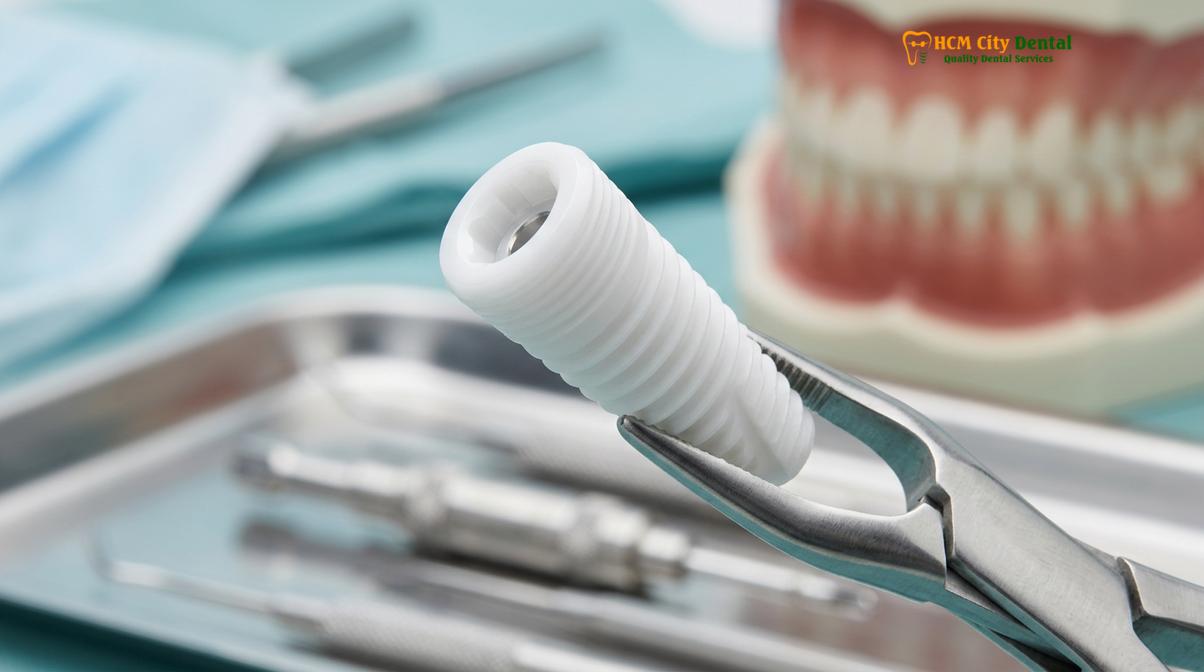
One of the most remarkable biomechanical features of Y-TZP is a phenomenon known as “transformation toughening.” When a microscopic crack begins to form in the ceramic structure due to occlusal stress, the localized stress triggers the zirconia crystals in that specific area to transform from a tetragonal phase to a monoclinic phase. This phase shift is accompanied by a volumetric expansion of approximately 3% to 4%. This localized expansion effectively “pinches” the crack shut, halting its propagation and preventing catastrophic failure of the implant fixture. This self-healing characteristic makes zirconia an exceptionally resilient material for load-bearing dental applications.
Beyond its mechanical prowess, a zirconia tooth replacement is fundamentally designed to interact harmoniously with human bone. The process of osseointegration—where living bone cells (osteoblasts) attach directly to the surface of the implant—occurs just as effectively with micro-roughened zirconia as it does with titanium. Advanced manufacturing techniques, including sandblasting and acid-etching of the ceramic surface, create a micro-topography that encourages rapid bone apposition, ensuring the implant becomes a stable, permanent part of the patient’s jaw architecture.
The Biocompatibility Advantage of Ceramic over Metal
Ceramic implants offer exceptional biocompatibility by remaining completely inert in the oral environment, thereby eliminating the risks of galvanic corrosion, metal particle release, and subsequent immunological hypersensitivity.
The oral cavity is a harsh, dynamic environment characterized by constant fluctuations in temperature, pH levels, and mechanical stress, alongside a diverse microbiome. When metallic restorations are placed in this environment, they are subjected to a process known as tribocorrosion—a combination of mechanical wear and chemical corrosion. Over time, traditional titanium implants can release microscopic metal ions and nanoparticles into the surrounding peri-implant tissues and the systemic bloodstream [2].
While titanium is generally well-tolerated by the vast majority of the population, a growing subset of patients exhibits immunological sensitivities to metal ions. Titanium hypersensitivity, though relatively rare, can manifest as localized inflammation, unexplained pain, mucosal erythema, or even progressive bone loss around the implant fixture (a condition often misdiagnosed as standard peri-implantitis). Furthermore, when multiple different metals are present in the mouth (such as amalgam fillings, gold crowns, and titanium implants), saliva acts as an electrolyte, creating a “galvanic battery” effect. This galvanic toxicity can lead to metallic tastes, mucosal irritation, and localized tissue disruption.
“The shift towards biological dentistry emphasizes materials that do not burden the immune system. Zirconia is profoundly bio-inert; it does not corrode, it does not conduct electricity, and it does not release metallic ions, making it the premier choice for patients prioritizing systemic wellness alongside oral rehabilitation.”
— Dr. Nguyen Van Cuong, Clinical Director
By utilizing metal free implants, clinicians can entirely circumvent these immunological and galvanic concerns. Zirconia is a thermal and electrical insulator. It remains chemically stable and completely inert regardless of the dietary acids or oral bacteria it encounters. This profound biocompatibility means that the immune system does not recognize the ceramic fixture as a foreign metallic invader, leading to a remarkably calm, non-inflammatory healing response.
For patients who have a documented history of metal allergies (often confirmed via MELISA testing) or those who suffer from autoimmune conditions, choosing a holistic dental care approach that utilizes ceramic materials provides profound peace of mind. The surrounding gingival tissues respond exceptionally well to zirconia, often exhibiting a tight, healthy seal that closely mimics the biological width found around natural teeth.
Aesthetic Excellence: No Gray Shadows at the Gumline
The naturally white, tooth-like color of zirconia implants ensures flawless aesthetic integration, preventing the dark gingival discoloration frequently associated with titanium fixtures in patients with thin gum tissue.
While functional stability is the primary goal of any implant procedure, aesthetic outcomes are equally paramount, particularly in the anterior maxilla (the upper front teeth). This region is often referred to as the “aesthetic zone,” where even minor visual discrepancies can significantly impact a patient’s confidence and satisfaction with the treatment.
One of the most common aesthetic complications associated with traditional titanium implants is the “gray effect.” Titanium is inherently dark silver. In patients with a thin gingival biotype (thin, translucent gum tissue), the dark color of the metal fixture can shine through the mucosa, creating an unnatural, grayish shadow along the gumline. Furthermore, if minor gingival recession occurs over time—a common physiological process—the metallic collar of the titanium implant may become visibly exposed, severely compromising the aesthetic result [3].
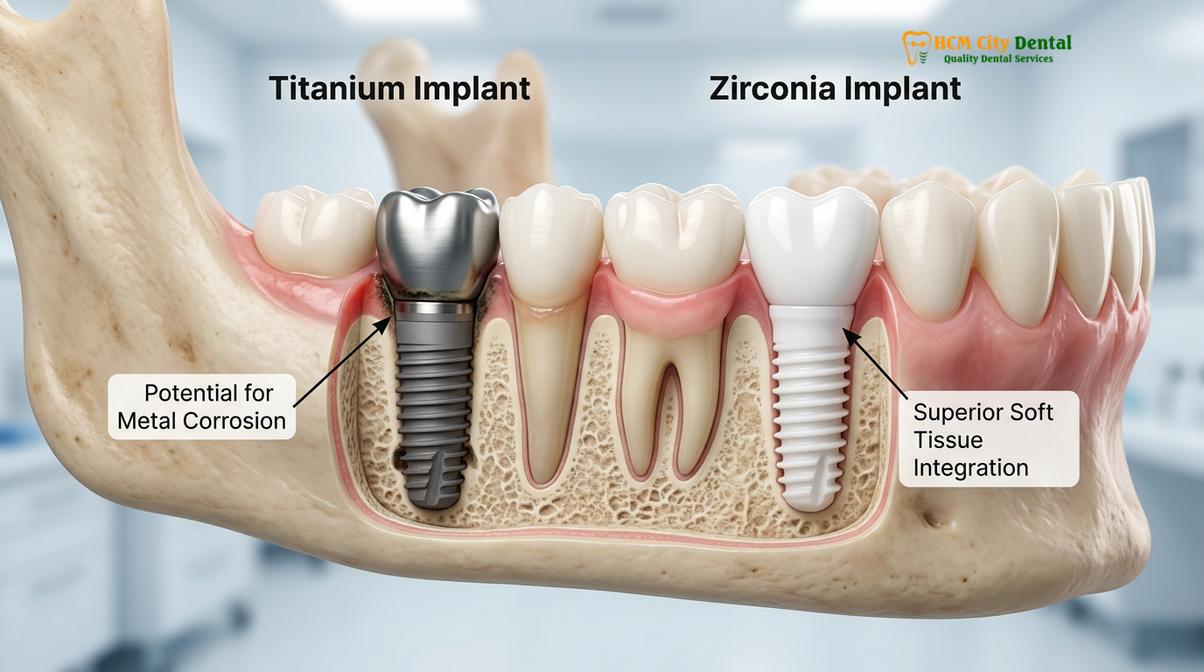
Ceramic dental implants completely eradicate this aesthetic dilemma. Because the core material is a bright, natural white, it closely mimics the optical properties of a natural tooth root. Even in cases of extremely thin soft tissue, or if slight gingival recession occurs years after placement, the exposed portion remains white and visually unobtrusive. This inherent color advantage allows clinicians to achieve a level of biomimetic perfection that is highly challenging to replicate with metal fixtures.
Moreover, zirconia possesses favorable light transmission properties. Natural teeth are somewhat translucent, allowing light to pass through the crown and illuminate the root and surrounding gums. When a porcelain or zirconia crown is placed over a titanium abutment, the metal core blocks light transmission, sometimes resulting in a dull or opaque appearance of the final restoration. Conversely, a zirconia tooth replacement allows for natural light diffusion through both the crown and the implant body, resulting in a vibrant, lifelike restoration that blends seamlessly with the adjacent natural dentition.
Tissue Health and Reduced Plaque Accumulation
Zirconia surfaces exhibit a significantly lower affinity for bacterial plaque adhesion compared to titanium, promoting superior peri-implant soft tissue health and reducing the risk of inflammatory bone loss.
The long-term survival of any dental implant is heavily dependent on the health of the peri-implant tissues—the bone and gums surrounding the fixture. The primary threat to these tissues is peri-implantitis, an infectious disease characterized by inflammation of the mucosa and progressive loss of supporting bone, driven primarily by pathogenic bacterial biofilms.
Clinical research has consistently demonstrated that the material composition and surface free energy of an implant significantly influence bacterial colonization. Zirconia exhibits a lower surface wettability and a different electrostatic charge compared to titanium. These physical properties make it inherently more difficult for primary colonizing bacteria (such as *Streptococcus mutans*) to adhere to the ceramic surface [4]. Consequently, the overall volume and complexity of the plaque biofilm that forms on zirconia are significantly reduced.
This resistance to plaque accumulation translates to profound clinical benefits. The soft tissues surrounding a biocompatible dental implant often exhibit less inflammation, reduced bleeding on probing, and a tighter mucosal seal. The epithelial cells and connective tissue fibers (hemidesmosomes) appear to attach more intimately to the smooth machined collar of a zirconia implant, creating a robust biological barrier that prevents bacteria from migrating down into the bone.
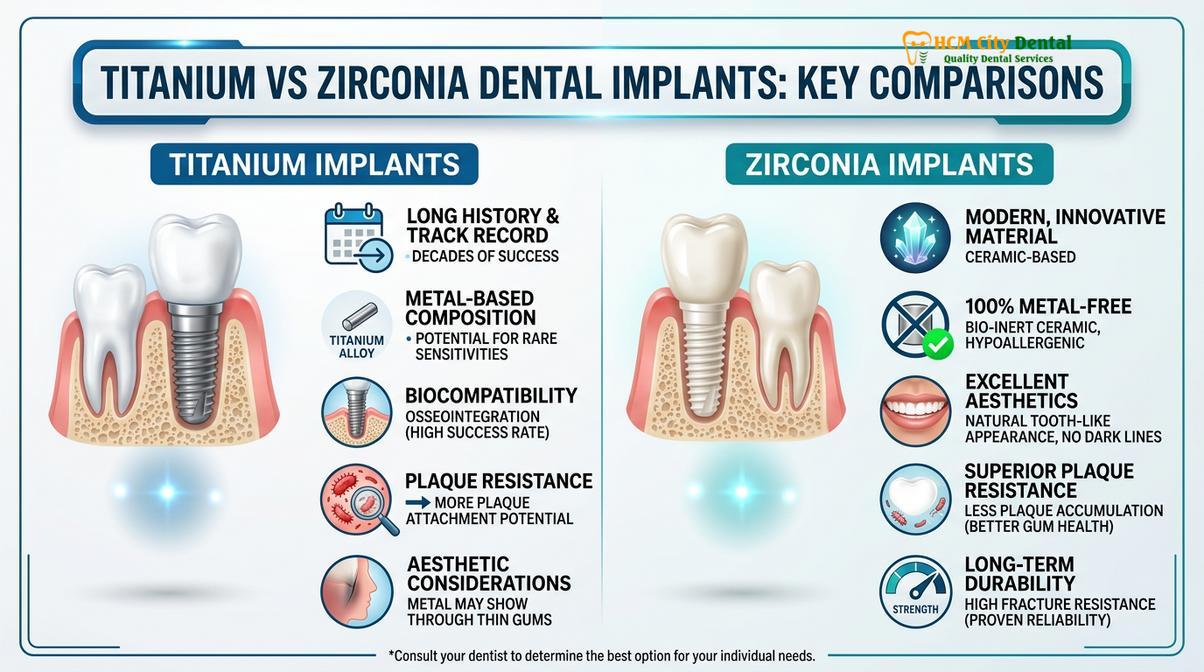
| Clinical Property | Titanium Implants | Zirconia (Ceramic) Implants |
|---|---|---|
| Material Composition | Metallic alloy (Ti-6Al-4V or pure Ti) | Yttria-stabilized Zirconium Dioxide (Y-TZP) |
| Aesthetic Profile | Dark gray; risk of mucosal shadowing | Natural white; excellent optical integration |
| Allergy Potential | Low, but possible (metal hypersensitivity) | Virtually non-existent (hypoallergenic) |
| Plaque Affinity | Moderate to high bacterial adhesion | Low bacterial adhesion; highly hygienic |
| Corrosion Resistance | Susceptible to tribocorrosion over time | Completely inert; zero corrosion |
For patients who have previously struggled with periodontal disease, or those who find meticulous oral hygiene challenging, the hygienic advantages of ceramic fixtures offer an added layer of protection against future implant complications. The pristine, inflammation-free gingival cuffs frequently observed around zirconia restorations are a testament to the material’s profound biological compatibility.
Who is the Ideal Candidate for Ceramic Implants?
Ideal candidates include patients with known metal allergies, those seeking highly aesthetic anterior restorations, and individuals pursuing holistic dental treatments, provided they have adequate bone volume and healthy oral tissues.
While the benefits of metal free implants are extensive, careful patient selection and comprehensive diagnostic evaluations are essential to ensure long-term clinical success. Not every patient is an immediate candidate for ceramic fixtures, as the biomechanical properties and surgical requirements of zirconia differ slightly from those of titanium.
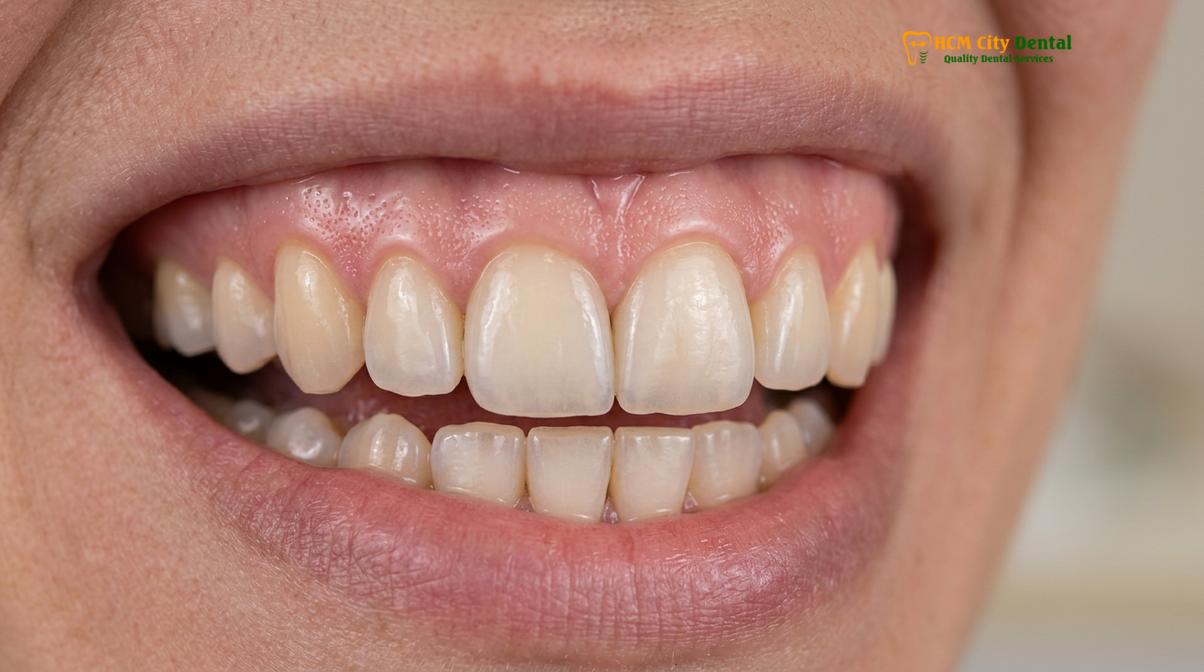
The ideal candidate for a zirconia tooth replacement is an individual who prioritizes systemic health and biomimetic aesthetics. Patients who have a documented history of contact dermatitis, titanium allergies, or sensitivities to other metals (such as nickel or cobalt) are prime candidates. Additionally, individuals with a high smile line and a thin gingival biotype—where the gums are highly visible and prone to showing the dark shadow of a metal implant—will benefit immensely from the white color of ceramic.
However, there are specific clinical considerations that must be evaluated. Historically, many zirconia implants were manufactured as one-piece systems (where the implant root and the abutment are a single continuous unit). While two-piece ceramic systems are now widely available, the material’s rigidity requires precise surgical placement and careful management of occlusal forces. Zirconia does not possess the same degree of elastic modulus (flexibility) as titanium, meaning it is less forgiving of off-axis loading [5].
Important Clinical Consideration: Patients with severe, untreated bruxism (chronic teeth grinding) or those requiring complex full-arch reconstructions with extreme angulations must undergo a thorough biomechanical assessment. In cases of extreme occlusal stress or insufficient bone volume requiring highly angled placement, traditional titanium may still be the preferred structural choice.
Furthermore, adequate bone volume is crucial. Because ceramic implants cannot be manufactured in extremely narrow diameters without compromising their fracture resistance, patients must have sufficient ridge width to accommodate a standard-diameter fixture. If bone volume is deficient, preparatory advanced implantology solutions, such as guided bone regeneration or sinus lifting, must be successfully completed prior to implant placement.
The Ceramic Implant Placement Process at HCMC Dental
The placement of zirconia implants involves meticulous 3D digital planning, atraumatic surgical techniques, and a carefully monitored healing phase to ensure optimal osseointegration and precise aesthetic restoration.
At HCMC Dental Clinic, the surgical workflow for placing ceramic dental implants is governed by strict biological principles and advanced digital technology. The goal is to minimize surgical trauma, preserve the delicate peri-implant tissues, and create an environment conducive to rapid, uncomplicated bone healing.
The process begins with a comprehensive diagnostic phase. High-resolution 3D Cone Beam Computed Tomography (CBCT) scans are utilized to evaluate the patient’s bone density, volume, and the precise location of vital anatomical structures such as nerves and sinus cavities. Using specialized implant planning software, the clinical team virtually positions the biocompatible dental implant in the optimal three-dimensional orientation, ensuring that the final restoration will be both functionally sound and aesthetically perfect.
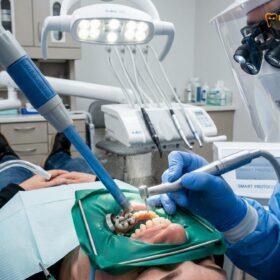
During the surgical phase, profound local anesthesia is administered to ensure complete patient comfort. If a failing tooth needs to be removed, an atraumatic extraction technique is employed to preserve the surrounding bone socket. The osteotomy (the preparation of the bone to receive the implant) is performed using specialized ceramic or low-heat surgical drills. Because zirconia implants generate different frictional forces during insertion compared to titanium, the drilling protocol is meticulously controlled, utilizing copious sterile saline irrigation to prevent thermal damage to the bone cells.
“The surgical handling of zirconia requires a delicate, precise touch. We must achieve excellent primary stability without over-torquing the ceramic fixture. It is a harmonious balance between mechanical fixation and biological respect.”
— Dr. Nguyen Van Cuong, Clinical Director
Once the implant is placed, a healing period of three to six months is typically required. During this time, the jawbone undergoes osseointegration, firmly fusing to the micro-roughened surface of the ceramic. Patients are often provided with a temporary, aesthetic restoration to maintain their smile and function during the healing phase. After successful integration is confirmed via clinical testing and radiography, the final custom-milled zirconia crown is securely attached, completing the metal-free restoration.
Clinical Case Example: A 34-year-old female patient visited HCMC Dental Clinic in Ho Chi Minh City presenting with a failing upper central incisor and a known hypersensitivity to metallic jewelry. Utilizing 3D guided surgery, the failing tooth was atraumatically extracted, and a one-piece zirconia implant was immediately placed. Following a four-month healing period, a highly translucent all-ceramic crown was delivered. The patient achieved a flawless aesthetic result with perfectly healthy, pink gingival contours and zero immunological reactivity.
When to Consult a Dental Professional
While dental implants are highly successful, proactive monitoring is essential for long-term health. You should schedule a comprehensive evaluation with a qualified dental professional if you experience any of the following symptoms, particularly if you currently have older metallic implants or are considering a transition to metal-free alternatives:
- Signs of Metal Hypersensitivity: Unexplained chronic inflammation, redness, or a burning sensation in the gums surrounding an existing titanium implant, especially if accompanied by a metallic taste or systemic allergic symptoms.
- Aesthetic Concerns: The appearance of dark gray lines, shadows, or visible metal collars along the gumline of your current dental restorations.
- Peri-Implant Complications: Bleeding when brushing around an implant, persistent bad breath, or a feeling of looseness or mobility in the implant crown.
- Missing Teeth: If you have recently lost a tooth or are facing an impending extraction and wish to explore the most biocompatible, tissue-friendly replacement options available.
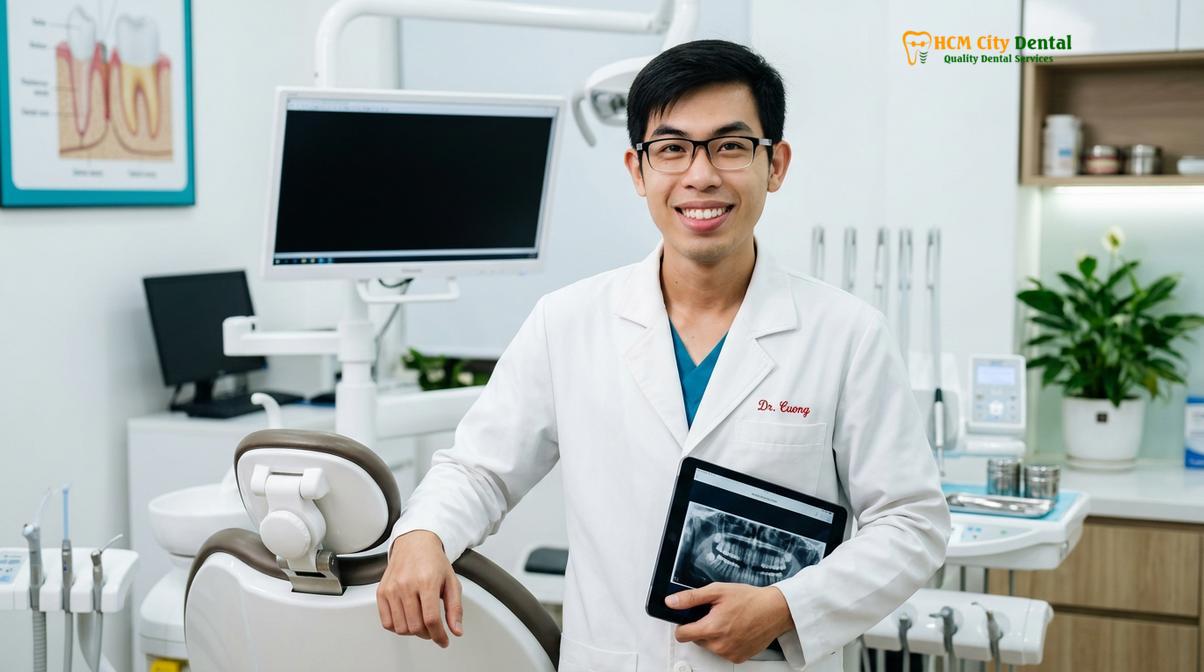
Early intervention is critical in implant dentistry. If you are experiencing discomfort or are interested in upgrading your oral health with advanced ceramic technology, a detailed clinical and radiographic examination is necessary to determine your specific anatomical suitability. We encourage patients to seek personalized diagnostic advice to ensure their treatment aligns with both their functional needs and their holistic health goals. For expert guidance and comprehensive evaluations, patients can rely on the specialized care provided at HCMC Dental Clinic in Ho Chi Minh City.
Frequently Asked Questions
What is a Zirconia dental implant?
A zirconia dental implant is a metal-free, biocompatible artificial tooth root made from high-strength ceramic (zirconium dioxide). It is surgically placed into the jawbone to provide a stable, highly aesthetic foundation for replacement teeth without the use of traditional titanium. Because it is entirely non-metallic, it is an ideal solution for patients seeking holistic dental care or those with known metal allergies.
Are ceramic implants better than titanium?
Ceramic implants are not universally ‘better’ but offer distinct advantages for specific clinical scenarios, particularly regarding aesthetics and biocompatibility. They eliminate the risk of metal allergies and prevent gray shadows at the gumline, though titanium remains the standard for complex biomechanical cases. The choice between the two depends heavily on the patient’s bone volume, occlusal forces, and aesthetic requirements.
How long do Zirconia dental implants last?
With proper surgical placement, excellent oral hygiene, and routine professional maintenance, zirconia dental implants are designed to be a long-lasting solution. Clinical studies indicate high survival rates comparable to titanium over the long term, provided the patient maintains healthy bone and gum tissue. Regular dental check-ups are essential to monitor the peri-implant health and ensure the longevity of the restoration.
Can ceramic implants break easily?
Modern ceramic implants are highly resistant to fracture under normal chewing forces. They are manufactured using yttria-stabilized tetragonal zirconia polycrystal (Y-TZP), a specialized material that undergoes transformation toughening to prevent crack propagation, making them exceptionally durable for daily function. However, patients with severe, untreated teeth grinding (bruxism) may require special consideration or protective night guards.
Is Zirconia dental implant surgery painful?
Zirconia dental implant surgery is typically performed under local anesthesia, ensuring the procedure is virtually painless. Post-operative discomfort is generally mild and manageable with standard over-the-counter analgesics, and the biocompatible nature of the ceramic often promotes smooth, uncomplicated tissue healing. Most patients report that the recovery process is much easier than a standard tooth extraction.
References
- Journal of Clinical Periodontology. Osseointegration of zirconia implants: a systematic review. (2021).
- International Journal of Oral and Maxillofacial Implants. Titanium allergy and metal hypersensitivity in dental implantology. (2020).
- Clinical Oral Implants Research. Soft tissue integration and aesthetic outcomes of ceramic implants. (2022).
- Journal of Periodontology. Bacterial adhesion and plaque accumulation on zirconia versus titanium surfaces. (2019).
- Journal of Prosthetic Dentistry. Biomechanical properties and fracture resistance of Y-TZP dental implants. (2023).