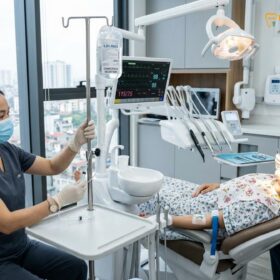
The sedation cost Vietnam vs UK comparison reveals that British patients can save significantly on intravenous (IV) and general anesthesia services by traveling to Southeast Asia[1]. While UK private clinics charge premium hourly fees due to NHS backlogs, Vietnamese facilities offer internationally accredited, highly monitored sedation at highly accessible rates[2]. For individuals requiring extensive surgical intervention, understanding these cross-border financial and clinical differences is essential for accessing timely care.
Clinical Summary:
For patients experiencing severe dental phobia or requiring complex oral surgery, securing timely and affordable sedation is a critical barrier to care in the United Kingdom. The current landscape of NHS dentistry severely limits access to intravenous (IV) sedation and general anesthesia, forcing many individuals into the expensive private sector where hourly anesthetic fees can quickly escalate. Conversely, dental tourism in Ho Chi Minh City provides a medically sound, highly cost-effective alternative. Clinics in Vietnam utilize advanced pharmacological protocols—such as target-controlled infusion (TCI) with Propofol or Midazolam—administered exclusively by board-certified anesthesiologists. This dedicated care model ensures that the sedation cost Vietnam vs UK remains highly favorable for the patient without compromising on stringent safety monitoring, including continuous capnography and electrocardiogram (ECG) tracking. By understanding the clinical care models, travel logistics, and insurance reimbursement pathways, British patients can make informed, evidence-based decisions regarding their specialized dental treatments abroad.
Key Takeaways:
- Private IV sedation in the UK typically costs three to four times more than equivalent clinical protocols administered in Vietnam.
- NHS waiting lists for specialist sedation referrals can delay urgent restorative or surgical dental care for several months.
- Vietnamese dental hospitals employ dedicated, board-certified anesthesiologists to continuously monitor vital signs during complex procedures.
- Comprehensive travel packages to Saigon often total less than the standalone cost of private complex oral surgery with sedation in London.
- Detailed clinical records and itemized invoices from Vietnamese clinics can facilitate partial reimbursement from select UK private health insurance plans.
NHS Dental Access Issues and Private Sedation Costs in the UK
Accessing dental sedation through the NHS is increasingly difficult due to strict rationing, driving patients toward costly private alternatives for anxiety management.
The landscape of dental care in the United Kingdom has undergone significant strain, particularly concerning specialized services such as conscious sedation and general anesthesia. For patients suffering from severe dental anxiety, or those requiring extensive surgical interventions like multiple impacted wisdom tooth extractions, sedation is not merely a luxury—it is a clinical necessity. However, accessing these services through the National Health Service (NHS) presents formidable challenges. NHS guidelines strictly regulate the provision of sedation, generally reserving it for patients with documented, severe phobias or complex medical needs that preclude treatment under local anesthesia alone. Consequently, the referral process to community dental services or hospital-based oral and maxillofacial departments is fraught with extensive waiting periods, often leaving patients in chronic pain or allowing localized infections to progress into systemic issues.
When faced with these insurmountable NHS backlogs, many British citizens are forced to explore the private dental sector. In private practice, the financial burden shifts entirely to the patient. The cost structure for private dental sedation in the UK is typically calculated on an hourly basis. This fee encompasses the specialized equipment required, the pharmacological agents, and the professional fees of the sedationist or consultant anesthetist. Because complex restorative work can take several hours, the cumulative cost of anesthesia alone can become prohibitively expensive.
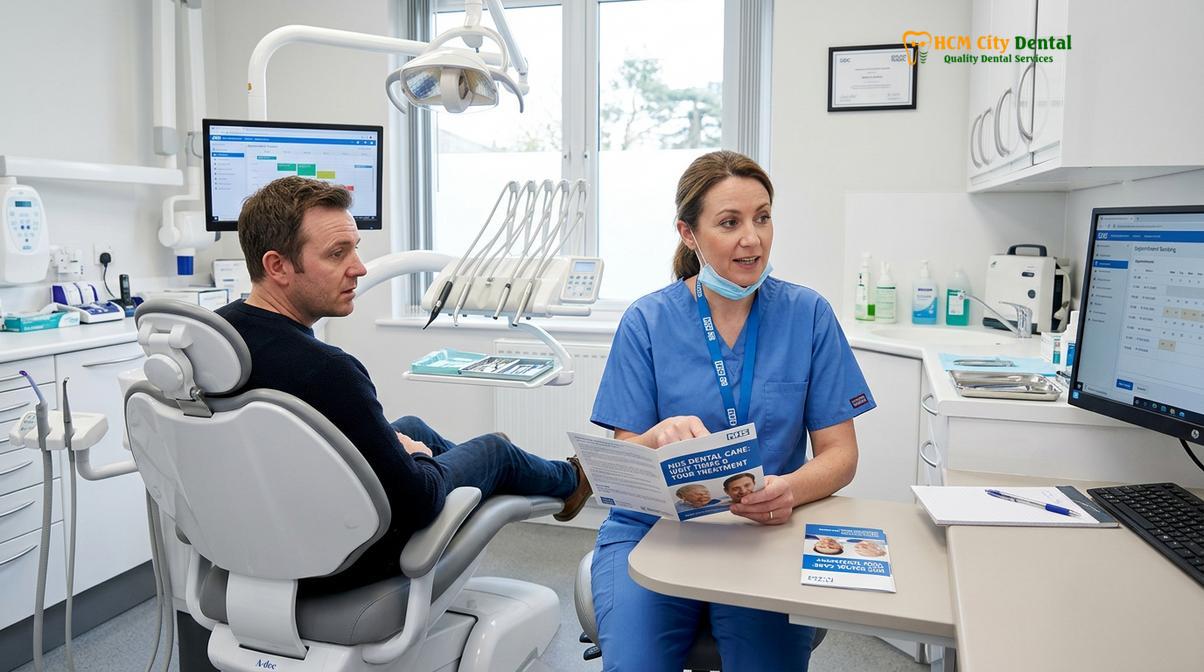
“The psychological toll of delayed dental care cannot be overstated. When patients with severe dental phobia are placed on extended waiting lists, their anxiety often compounds, leading to complete avoidance of care until a severe acute emergency arises. Timely access to safe sedation is a critical component of preventive oral health and psychological well-being.”
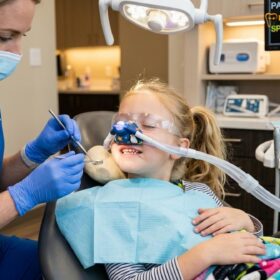
Furthermore, the private sector in the UK often operates on a tiered pricing model depending on the depth of sedation required. Inhalation sedation (nitrous oxide) is the most accessible option, but it is frequently insufficient for highly anxious adults or highly invasive procedures[3]. Intravenous (IV) sedation provides a deeper state of anxiolysis and anterograde amnesia, but requires rigorous physiological monitoring and specialized training, driving up the cost. General anesthesia, which renders the patient completely unconscious, is restricted entirely to hospital settings in the UK due to stringent safety regulations, resulting in astronomical facility and anesthetist fees for private patients. Understanding these systemic limitations is crucial for patients evaluating the broader scope of dental phobia vs anxiety management.
Anesthesia Cost Comparison Table: United Kingdom vs. Vietnam (GBP)
A direct financial analysis demonstrates substantial savings across all tiers of dental anesthesia when choosing treatment in Vietnam over the UK private sector.
To fully grasp the financial advantages of dental tourism, it is necessary to conduct a granular comparison of the specific fees associated with different modalities of anxiety management. The financial contrast is primarily driven by differences in operational overhead, medical liability insurance premiums, and the general cost of living, rather than any disparity in the quality of pharmacological agents or monitoring technology used. Both regions utilize the same globally recognized medications and employ identical physiological monitoring standards.
The following table outlines the estimated comparative costs for various sedation modalities. It is important to note that these figures represent the cost of the anesthesia service alone and do not include the fees for the actual dental procedures.
| Sedation Modality | UK Private Cost (Estimated GBP) | Vietnam Cost (Estimated GBP) | Clinical Notes & Monitoring Requirements |
|---|---|---|---|
| Inhalation Sedation (Nitrous Oxide) | £80 – £150 per session | £30 – £60 per session | Provides mild anxiolysis. Patient remains fully conscious. Requires continuous clinical observation and pulse oximetry. |
| Oral Sedation (Pharmacological) | £50 – £100 per dose | £15 – £30 per dose | Administered via benzodiazepines. Unpredictable absorption rates. Requires escort for discharge. |
| Intravenous (IV) Conscious Sedation | £200 – £400 per hour | £80 – £150 per hour | Profound anxiolysis and amnesia. Requires dedicated IV access, continuous SpO2, NIBP, and capnography monitoring. |
| Deep Sedation / General Anesthesia | £1,500 – £3,000+ (Facility + Anesthetist) | £300 – £600 per session | Complete loss of consciousness. Requires intubation or laryngeal mask airway (LMA), full surgical theater, and board-certified anesthesiologist. |
Analyzing this data highlights why the overseas pricing model is so compelling. For a complex procedure requiring three hours of IV sedation, a patient in the UK might pay upwards of £1,200 just for the anesthesia. In Ho Chi Minh City, the same three-hour sedation protocol, managed by a dedicated anesthesiologist using target-controlled infusion pumps, would cost approximately £300 to £450. This massive reduction in overhead allows patients to reallocate their healthcare budget toward higher-quality restorative materials.
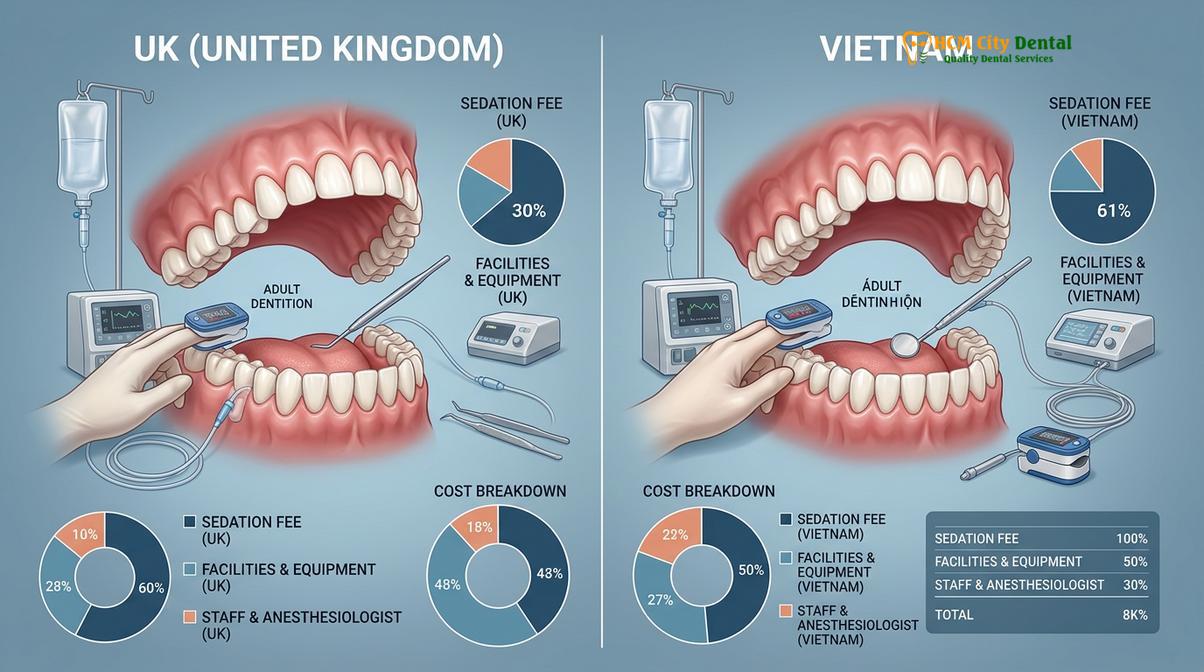
It is also vital to consider the predictability of these costs. In the UK, unexpected surgical complications that extend the duration of the procedure can result in immediate, steep increases in the hourly sedation billing. Conversely, many premier clinics in Vietnam offer comprehensive surgical packages where the anesthesia fee is capped or bundled into the total treatment plan, providing international patients with financial certainty.
Comparing Care Models: General Anesthetic Options in the UK and Saigon
While both regions adhere to strict medical protocols, the delivery models for deep sedation and general anesthesia differ significantly in facility requirements and accessibility.
The clinical pathways for administering deep sedation and general anesthesia vary considerably between the British healthcare system and the specialized dental hospitals in Vietnam. In the UK, the administration of general anesthesia for dental procedures is heavily restricted. Following several high-profile historical cases regarding patient safety in primary care settings, the UK regulatory bodies mandated that all general anesthesia must be performed in a hospital environment equipped with critical care facilities. While this ensures the highest level of emergency preparedness, it also creates a massive logistical bottleneck.
In contrast, the care model in Ho Chi Minh City integrates specialized surgical theaters directly within the dental hospital infrastructure. These purpose-built suites are designed specifically for maxillofacial and complex oral surgeries. They are equipped to the exact same standards as a general hospital operating room, featuring central oxygen supplies, advanced anesthesia workstations, and comprehensive emergency resuscitation carts. This integrated model aligns with the stringent safety frameworks established by the Vietnam Ministry of Health (MOH), which mandates rigorous emergency preparedness for any facility offering advanced sedation[6]. This eliminates the need for third-party hospital admissions, streamlining the patient experience and drastically reducing facility fees.
Furthermore, the approach to patient selection and pre-operative assessment is rigorous in both jurisdictions. Before any advanced sedation is administered, patients must undergo a thorough medical evaluation. This includes a detailed review of their medical history, current medications, allergies, and a physical assessment to determine their American Society of Anesthesiologists (ASA) physical status classification. Typically, only patients classified as ASA I or ASA II are considered candidates for outpatient sedation[5].
Training of Anesthesiologists and Safety Monitoring Guidelines
Patient safety during sedation relies on rigorous anesthesiologist training and the mandatory use of advanced physiological monitoring equipment to prevent complications.
A common and entirely valid concern among international patients exploring overseas dental care is the standard of medical training and safety protocols in a foreign country. It is a misconception that lower costs equate to compromised safety. In premier Vietnamese dental hospitals, the administration of intravenous sedation and general anesthesia is never performed by the operating dentist. Instead, it is exclusively managed by board-certified medical anesthesiologists. These specialists have undergone extensive medical school training followed by rigorous residency programs in anesthesiology and intensive care.
The presence of a dedicated anesthesiologist allows for the implementation of advanced pharmacological techniques, such as Target-Controlled Infusion (TCI). TCI utilizes sophisticated computer algorithms to deliver precise, continuous doses of anesthetic agents based on the patient’s specific pharmacokinetic profile. This results in a much smoother sedation experience, maintaining a steady state of relaxation without the peaks and troughs associated with manual bolus injections.
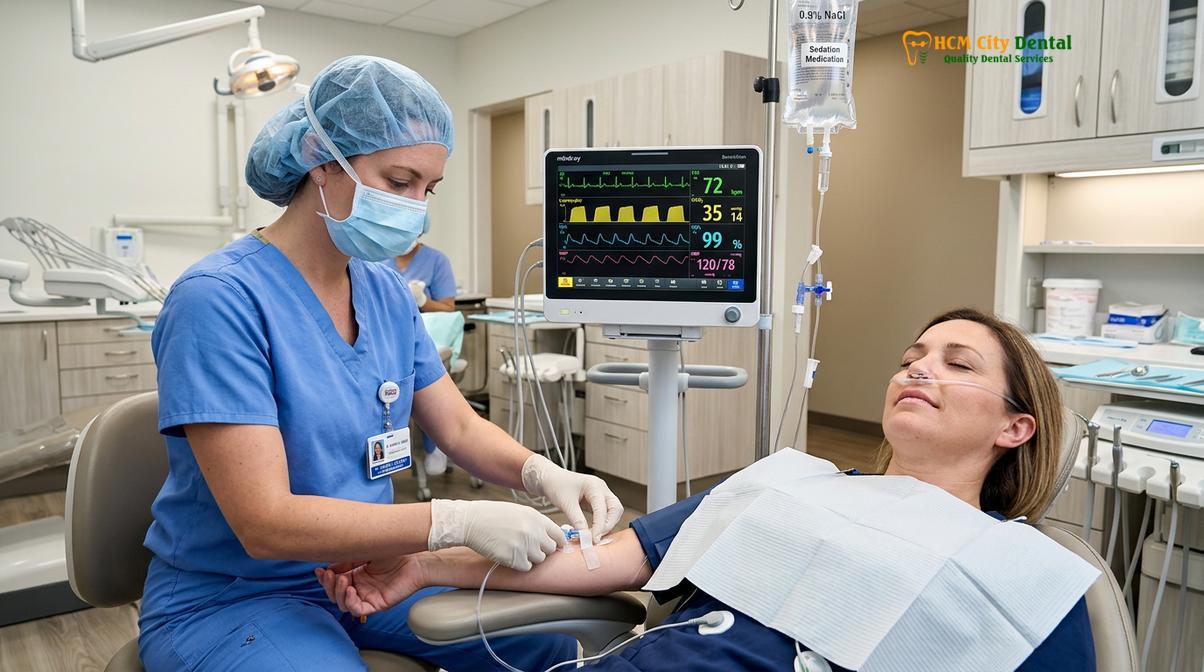
Clinical Safety Warning: Intravenous sedation should never be administered without continuous, multi-parameter physiological monitoring. Patients must ensure that their chosen clinic utilizes capnography (end-tidal CO2 monitoring) alongside standard pulse oximetry, as capnography is the only reliable method to instantly detect respiratory depression before dangerous hypoxia occurs.
The monitoring guidelines adhered to in top-tier Ho Chi Minh City clinics are identical to those mandated by the UK’s Intercollegiate Advisory Committee for Sedation in Dentistry (IACSD). Continuous monitoring protocols include pulse oximetry (SpO2) to measure oxygen saturation, non-invasive blood pressure (NIBP) cycling every few minutes, electrocardiogram (ECG) to monitor cardiac electrical activity, and capnography (ETCO2) to measure exhaled carbon dioxide.
Flight and Hotel Math: NHS Backlogs vs. Immediate Care in Saigon
When factoring in the cost of international flights and premium accommodation, the total expenditure for dental tourism in Vietnam often remains significantly lower than private UK treatment.
A critical component of the sedation cost Vietnam vs UK analysis involves calculating the logistical expenses of traveling to Southeast Asia. British patients often wonder if the cost of long-haul flights and extended hotel stays negates the savings achieved on the clinical procedures. However, a comprehensive financial breakdown consistently demonstrates that for complex, multi-stage treatments requiring sedation, the math heavily favors dental tourism.
Direct or one-stop flights from London Heathrow to Tan Son Nhat International Airport in Ho Chi Minh City are highly accessible. When combined with the exceptionally low cost of premium, recovery-friendly accommodation in Saigon, the total travel overhead is often less than the standalone cost of a few hours of private IV sedation in a central London clinic. More importantly, traveling to Vietnam allows patients to bypass the agonizing NHS backlogs, securing immediate, high-quality care rather than enduring months of progressive dental deterioration and chronic pain.
Submitting Dental Treatment Records for UK Private Health Claims
Patients with private UK health insurance may be eligible for partial reimbursement of their overseas dental treatment by submitting properly documented clinical records.
For British expatriates or travelers who hold comprehensive private health insurance policies, navigating the reimbursement process for overseas dental care is a vital financial step. While the NHS does not reimburse for elective dental tourism, many private UK insurers offer global coverage tiers that include major restorative and surgical dentistry performed abroad, provided the facility meets international accreditation standards.
To successfully process a claim, patients must ensure their chosen clinic provides meticulous documentation. Premier facilities in Ho Chi Minh City are well-versed in international insurance requirements and can supply itemized invoices in English, detailed pre-operative and post-operative radiographs, and comprehensive clinical notes outlining the specific sedation protocols and surgical interventions performed. Securing these documents prior to departure ensures a streamlined claims process upon returning to the United Kingdom.
Patient Case Study: Overcoming Dental Phobia in Ho Chi Minh City
Real-world clinical outcomes demonstrate how international patients successfully navigate complex surgical treatments using advanced sedation protocols abroad.
To illustrate the practical application of these sedation protocols, consider the clinical journey of a British patient who presented with severe dental phobia and a failing dentition requiring full-arch implant rehabilitation. After being quoted an exorbitant fee for private treatment with IV sedation in London and facing a multi-month waitlist on the NHS, the patient opted to travel to HCMC Dental Clinic in Ho Chi Minh City.
Clinical Case Study: Full-Arch Rehabilitation Under IV Sedation
Patient Profile: 45-year-old male from the UK, presenting with severe dental anxiety and generalized advanced periodontitis.
Clinical Challenge: The patient required the extraction of all remaining maxillary teeth, bilateral sinus lifts, and the placement of six dental implants. The anticipated surgical duration was four hours, necessitating profound, continuous intravenous sedation to manage the patient’s severe phobia and ensure surgical compliance.
Treatment Protocol at HCMC Dental Clinic: The patient underwent a comprehensive pre-anesthetic evaluation. A customized sedation plan utilizing intravenous Midazolam and Fentanyl was administered and continuously monitored by a board-certified anesthesiologist. The surgical team successfully completed the extractions, grafting, and implant placement in a single session.
Outcome: The patient reported zero intraoperative awareness or pain, demonstrating high satisfaction with the anxiety management protocol[4]. The total cost of the surgery, including the four hours of dedicated IV sedation and two weeks of premium accommodation in Ho Chi Minh City, was approximately 60% less than the equivalent private treatment quote in the UK.
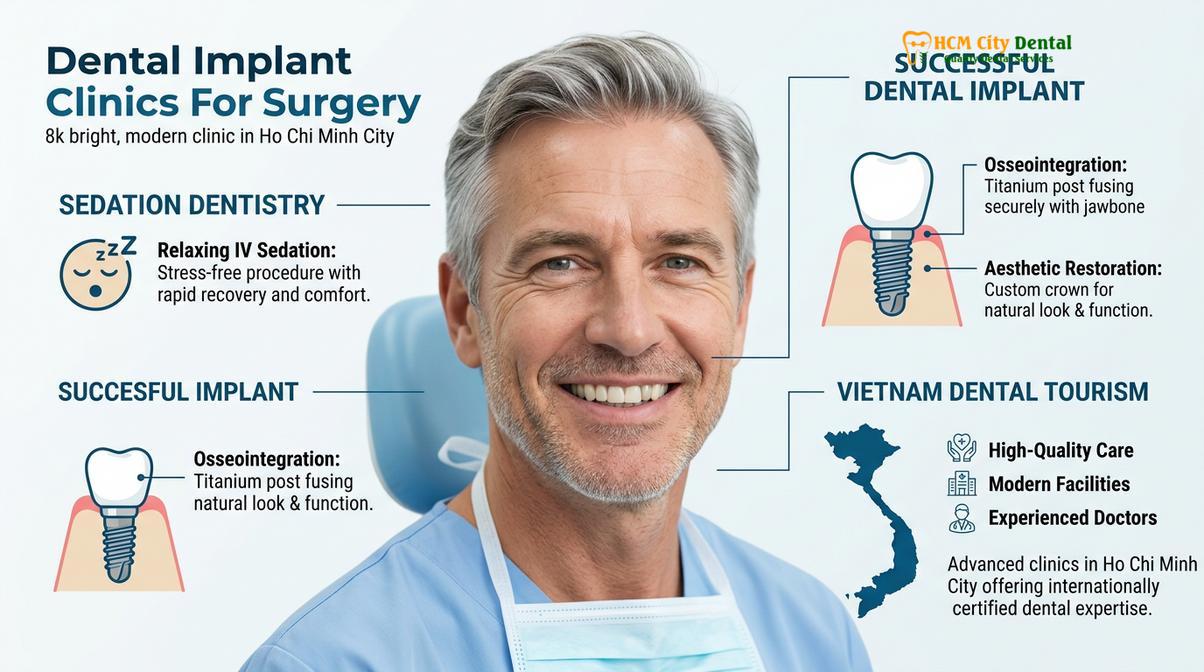
This case highlights that the primary concern for international patients is not just the surgical outcome, but the effective management of their profound anxiety, which had previously prevented them from seeking even basic preventive care. By recognizing the dental anxiety symptoms early and utilizing advanced pharmacological support, the clinical team ensured a safe and atraumatic experience.
When to Seek Immediate Dental Care and Important Clinical Notes
Delaying necessary dental treatment due to fear or financial constraints can lead to severe systemic health complications requiring emergency intervention.
Patients experiencing acute dental pain, localized swelling, or signs of systemic infection (such as fever or difficulty swallowing) should not delay care while waiting for NHS sedation referrals or saving for private UK treatment. These symptoms indicate an active infection that can rapidly spread to adjacent fascial spaces, posing a significant risk to overall health. If you are unable to secure immediate emergency care in your home country, exploring expedited treatment options abroad may be a necessary clinical decision to prevent life-threatening complications.
It is crucial to remember that while sedation significantly improves patient comfort, it requires strict adherence to pre-operative fasting guidelines (typically nil by mouth for six to eight hours prior to surgery) and mandatory post-operative escort arrangements. Patients traveling alone for dental tourism must coordinate with their clinic to ensure appropriate post-surgical monitoring and transportation back to their accommodation are securely in place.
Expert Clinical Leadership at HCMC Dental Clinic
Dedicated clinical leadership ensures that international patients receive the highest standard of evidence-based anxiety management and surgical care.
Dr. Nguyen Van Cuong oversees the implementation of advanced anxiety management protocols at HCMC Dental Clinic. With extensive experience in complex oral rehabilitation, Dr. Cuong ensures that every international patient receives comprehensive pre-operative assessments before any sedative agents are administered. His commitment to evidence-based care guarantees that individuals suffering from severe dental phobia can undergo extensive surgical procedures comfortably and safely, utilizing the latest oral sedation dentistry techniques.
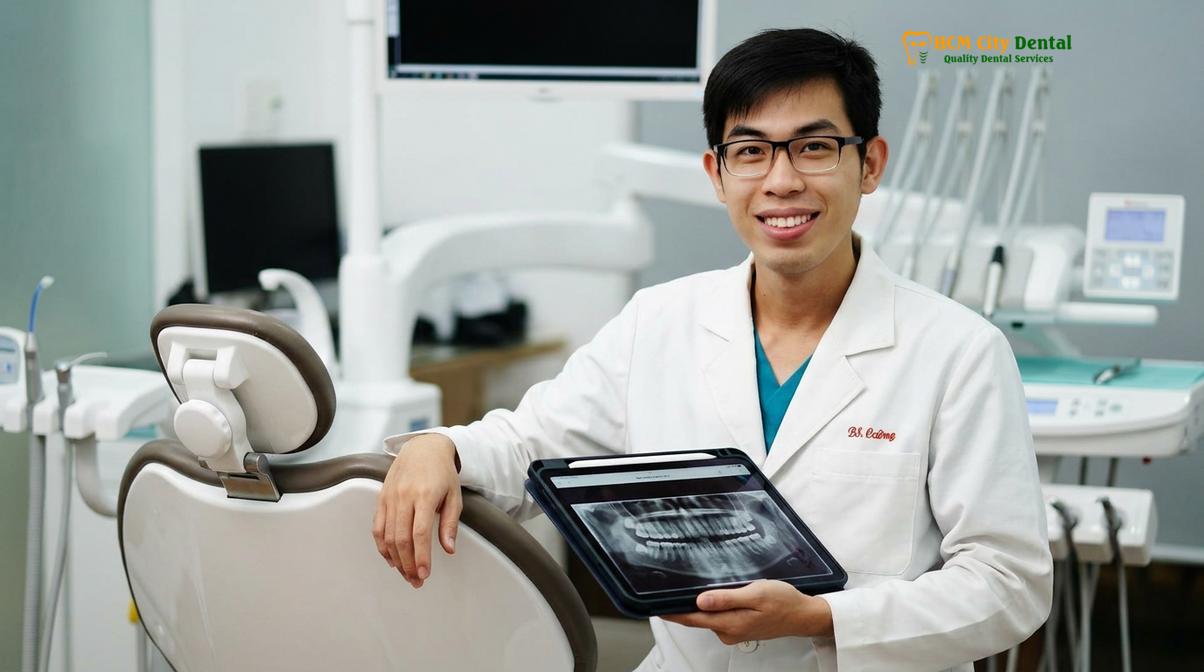
“Our clinical philosophy centers on the understanding that managing a patient’s fear is just as critical as the surgical procedure itself. By integrating dedicated anesthesiology teams into our daily practice, we provide a safe, controlled environment where patients can finally achieve the oral health they deserve without the burden of anxiety or prohibitive costs.”
For British patients navigating the complexities of NHS wait times and exorbitant private fees, understanding the sedation cost Vietnam vs UK is the first step toward reclaiming their oral health. By choosing a reputable facility like HCMC Dental Clinic in Ho Chi Minh City, patients can access world-class surgical care, advanced physiological monitoring, and profound anxiety relief at a fraction of the domestic cost. To explore your personalized treatment options and begin planning your journey to a healthier smile, discover our comprehensive general dentistry services today.
References
- Journal of Oral and Maxillofacial Surgery. Patient safety in dental sedation and anesthesia. (2021).
- International Journal of Oral and Maxillofacial Surgery. Intravenous conscious sedation protocols for complex oral surgery. (2020).
- British Dental Journal. Nitrous oxide inhalation sedation in dentistry: a review of safety. (2019).
- Journal of the American Dental Association. Patient satisfaction and anxiety levels under conscious sedation. (2022).
- Clinical Oral Investigations. Safety and recovery profiles of conscious sedation vs general anesthesia. (2018).
- Vietnam Ministry of Health (MOH). National guidelines on safe anesthesia and sedation in odonto-stomatology. (2022).
For pricing, booking, and a free clinical assessment, visit our Sedation Dentistry service page at HCMC Dental Clinic in Ho Chi Minh City.