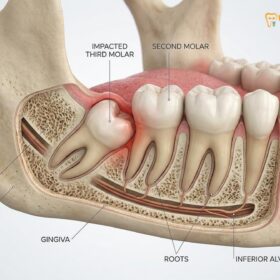
Experiencing bleeding after wisdom tooth removal is a normal physiological response as your body forms a protective blood clot. While mild oozing can last for 24 to 48 hours, active bleeding requires immediate intervention using firm gauze pressure or a moistened black tea bag to stabilize the site.
Clinical Summary:
Post-operative bleeding following third molar extraction is a standard phase of the hemostatic process. The primary objective is to facilitate the formation of a stable fibrin clot within the alveolar socket. Clinical management relies on sustained, direct mechanical pressure using sterile gauze. If standard gauze fails, the application of a damp black tea bag introduces tannic acid, a natural astringent that promotes vasoconstriction and clot stabilization. Patients must strictly avoid creating negative intraoral pressure—such as spitting, rinsing, or using straws—which can dislodge the fragile clot and trigger secondary hemorrhage or alveolar osteitis (dry socket). Persistent, bright red bleeding that saturates gauze rapidly after the initial hours necessitates professional clinical evaluation.
Key Takeaways:
- Mild oozing mixed with saliva is normal for the first 24 to 48 hours post-surgery.
- Direct, uninterrupted biting pressure on a sterile gauze pad for 30 to 45 minutes is the primary method to achieve hemostasis.
- Tannic acid in moistened black tea bags acts as a powerful localized astringent to halt stubborn bleeding.
- Spitting, vigorous rinsing, and drinking through straws create negative pressure that dislodges blood clots.
- Soaking through multiple gauze pads in an hour with bright red blood is a clinical red flag requiring immediate dental attention.
Normal Oozing vs. Active Bleeding: Differentiating the Two
Normal oozing appears as pinkish saliva and gradually subsides, whereas active bleeding involves continuous, bright red blood that rapidly saturates gauze pads within minutes.
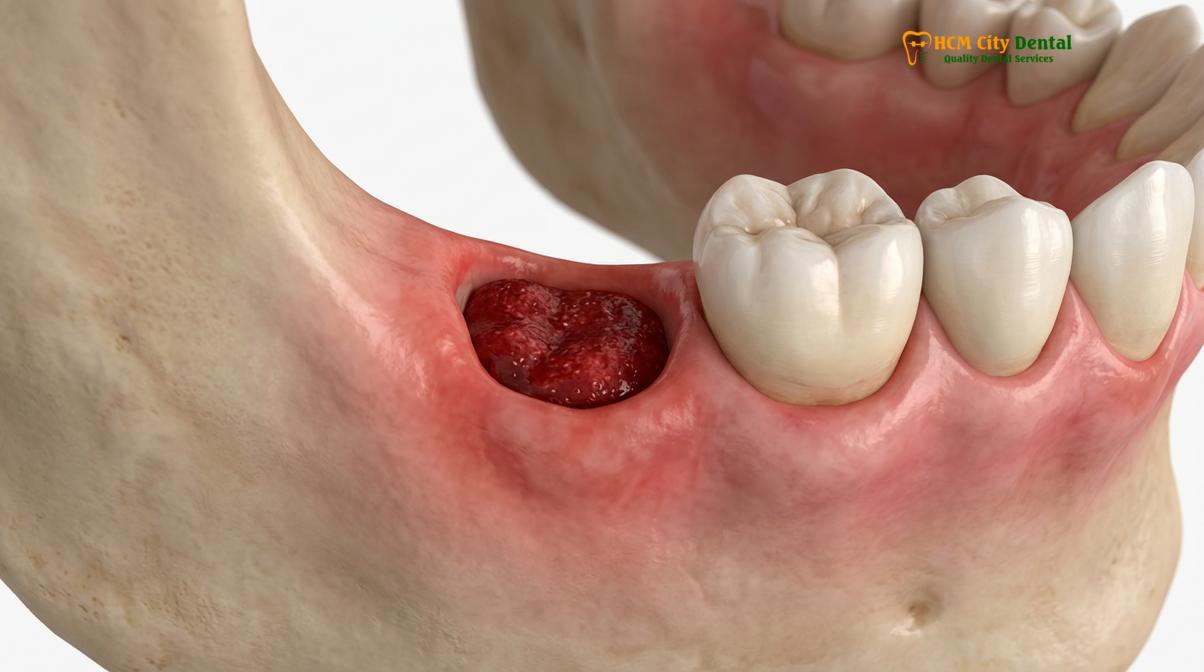
Understanding the difference between normal post-operative oozing and active hemorrhage is the most critical step in managing your recovery after surgical extraction of wisdom teeth. When a tooth is removed from the jawbone, it leaves behind an alveolar socket—a void in the bone and soft tissue that is rich in blood vessels. The body’s immediate physiological response is to initiate the coagulation cascade, a complex biological process designed to stop the bleeding and form a protective fibrin clot over the exposed bone and nerve endings[1].
During the first 24 to 48 hours, it is entirely expected to experience oozing blood after extraction. Because the oral cavity is constantly producing saliva, even a microscopic drop of blood will mix with the saliva, creating a high volume of pink or light red fluid. This phenomenon often causes patients unnecessary alarm, as it visually appears as though they are bleeding profusely when, in reality, they are simply observing blood-tinged saliva.
Active bleeding, conversely, is a failure of the hemostatic process. This occurs when the severed capillaries within the socket continue to pump blood without forming a stable clot. Active bleeding is characterized by a steady flow of dark or bright red blood that pools in the mouth and rapidly saturates a thick gauze pad within 15 to 30 minutes. If you are experiencing active bleeding beyond the first four to six hours post-surgery, it indicates that the clot has either failed to form or has been prematurely dislodged.
To help patients accurately assess their condition at home, clinical guidelines categorize bleeding into distinct visual and volumetric parameters. The table below outlines the primary diagnostic differences between standard healing and a potential complication.
| Clinical Characteristic | Normal Oozing (Expected) | Active Hemorrhage (Requires Action) |
|---|---|---|
| Color Profile | Light pink, watery red, or dark brownish-red | Vibrant, bright red or deep crimson |
| Fluid Consistency | Thin, heavily diluted with natural saliva | Thick, pure blood pooling in the oral cavity |
| Volume & Saturation | Leaves small spots on gauze; easily managed | Rapidly saturates a thick gauze pad in 15-30 mins |
| Expected Timeline | Gradually tapers off over 24 to 48 hours | Should not persist past the first 4-6 hours |
| Clot Status | Stable, forming a dark, jelly-like protective mass | Failing to form, or repeatedly washing away |
It is also important to recognize the formation of a “liver clot” (currant jelly clot). Occasionally, a large, dark, gelatinous mass of blood may form over the extraction site. While it looks alarming, this is often a poorly organized clot that is too large and lacks the necessary fibrin structure to stop the underlying bleeding. If a liver clot forms and bleeding persists around it, it may need to be gently wiped away so that firm pressure can be reapplied to form a tighter, more effective seal against the bone.
How to Correctly Apply Pressure with Gauze Packs
To stop bleeding, fold a sterile gauze pad into a firm square, place it directly over the surgical socket, and bite down with steady, uninterrupted pressure for 45 minutes.
The cornerstone of post-operative hemostasis is direct, mechanical pressure. When you apply pressure to a bleeding wound, you physically compress the severed blood vessels, slowing the flow of blood and allowing platelets to aggregate and form a plug. However, the technique used to apply this pressure is critical; improper gauze placement is the leading cause of prolonged bleeding after oral surgery[2].
Dr. Nguyen Van Cuong frequently emphasizes to his patients that the goal is not simply to fill the mouth with gauze, but to deliver targeted pressure directly onto the extraction socket. If the gauze is resting on the adjacent teeth rather than sinking into the surgical site, the pressure is dispersed, and the underlying socket will continue to bleed.
Follow this clinical workflow to ensure optimal pressure application:
- Prepare the Gauze: Take a clean, sterile piece of surgical gauze and fold it tightly into a small, dense square. The pad must be thick enough to prevent your upper and lower teeth from touching when you bite down.
- Moisten Slightly: Lightly dampen the gauze with clean water and squeeze out the excess. A completely dry gauze pad can act like a sponge, drawing blood out of the socket via capillary action and potentially sticking to the newly formed clot.
- Precise Placement: Using clean fingers, place the folded gauze directly over the empty socket. For upper wisdom teeth, ensure the gauze is pushed far back behind the last visible molar.
- Apply Sustained Pressure: Bite down firmly and hold your jaw completely still. Do not chew on the gauze, do not talk, and do not repeatedly open your mouth to check if the bleeding has stopped.
- Observe the Time: Maintain this uninterrupted pressure for a minimum of 45 minutes. The biological clotting cascade requires time to synthesize fibrin; interrupting this process by checking the gauze too early will force the process to start over.
If you have undergone bilateral extractions (teeth removed on both sides of the mouth), you must place separate gauze pads on each side and bite down evenly. During this time, sit upright in a comfortable chair. Lying flat on your back increases blood pressure in the head and neck region, which can exacerbate bleeding. If you need to rest, ensure your head is elevated above your heart using several pillows.
It is crucial to note that while biting on gauze is highly effective, it should never be done while sleeping. The risk of the gauze slipping backward and obstructing the airway is a severe medical hazard. Always remove all gauze before falling asleep, relying instead on head elevation to manage any residual overnight oozing.
The Black Tea Bag Trick: Why Tannic Acid Stops Bleeding
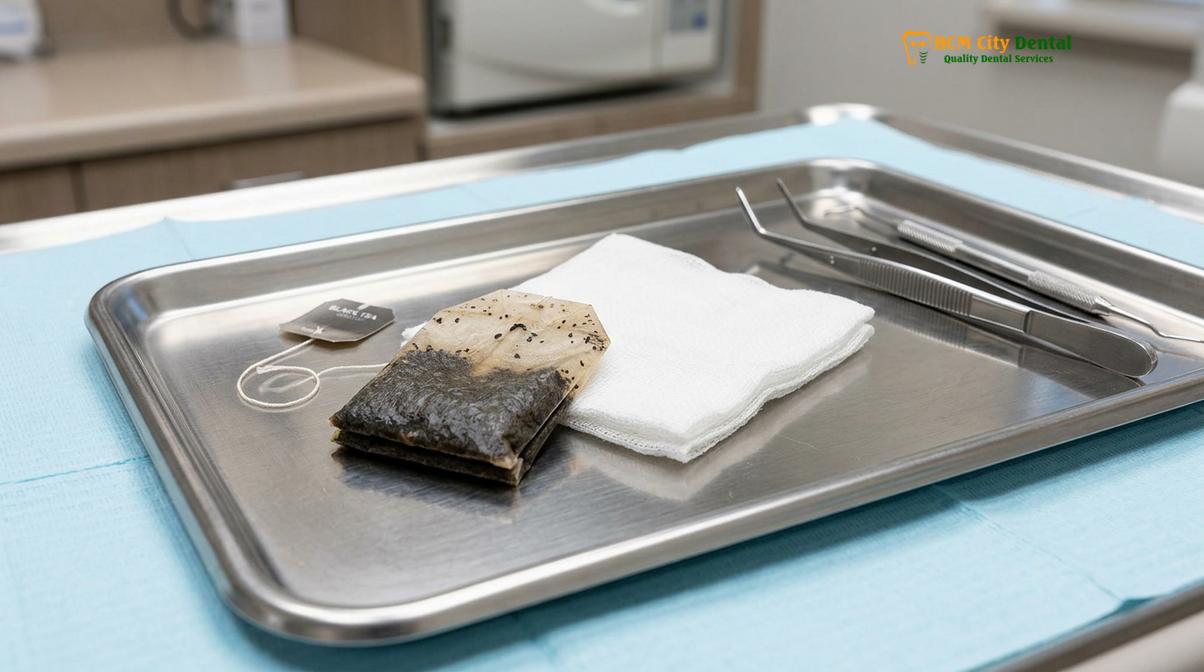
Black tea contains tannic acid, a natural astringent that constricts blood vessels and accelerates the blood clotting cascade when applied directly to a bleeding extraction socket.
When standard mechanical pressure with sterile gauze is insufficient to achieve complete hemostasis, oral surgeons universally recommend a highly effective, scientifically backed home remedy: the black tea bag trick. This method is not merely an old wives’ tale; it is rooted in established biochemistry and pharmacology.
Black tea leaves contain a high concentration of tannic acid, a type of polyphenol. In medical applications, tannic acid acts as a powerful localized astringent. When an astringent is applied to living tissue, it causes the cellular structures to shrink and constrict. In the context of a bleeding dental socket, the tannic acid forces the severed capillaries to contract (vasoconstriction), significantly reducing the volume of blood flowing into the wound[3].
“The application of tannic acid via a moistened black tea bag remains one of the most effective, accessible home remedies for localized oral hemorrhage, acting as a potent vasoconstrictor that rapidly stabilizes the fibrin clot.”
Furthermore, tannic acid has the unique ability to precipitate proteins in the blood. By binding to blood proteins, it accelerates the coagulation cascade, helping to form a dense, stable clot much faster than pressure alone. This makes tea bag dental bleeding management an essential tool in your post-operative recovery kit.
To utilize this method correctly, follow these specific steps:
- Select the Right Tea: You must use standard, caffeinated black tea (such as Lipton or Earl Grey). Green tea, herbal teas, and fruit infusions do not contain sufficient levels of tannic acid to be clinically effective.
- Preparation: Submerge the tea bag in hot water for one minute to activate the tannins. Remove it and allow it to cool completely. You can place it in the refrigerator for a few minutes, as the cold temperature will provide an additional vasoconstrictive benefit.
- Application: Squeeze out the excess water so the bag is damp but not dripping. Fold it in half, place it directly over the bleeding extraction socket, and bite down firmly.
- Duration: Maintain steady, uninterrupted biting pressure for 45 to 60 minutes. The tea bag will taste bitter, but it is imperative that you do not swallow the bag or chew on it.
Once the hour has passed, gently open your mouth and allow the tea bag to fall out. Do not pull it forcefully, as it may have adhered slightly to the newly formed clot. The site should now exhibit a dark, stable clot, and active bleeding should be resolved.
Activities that Dislodge the Blood Clot (No Spitting, No Rinsing)
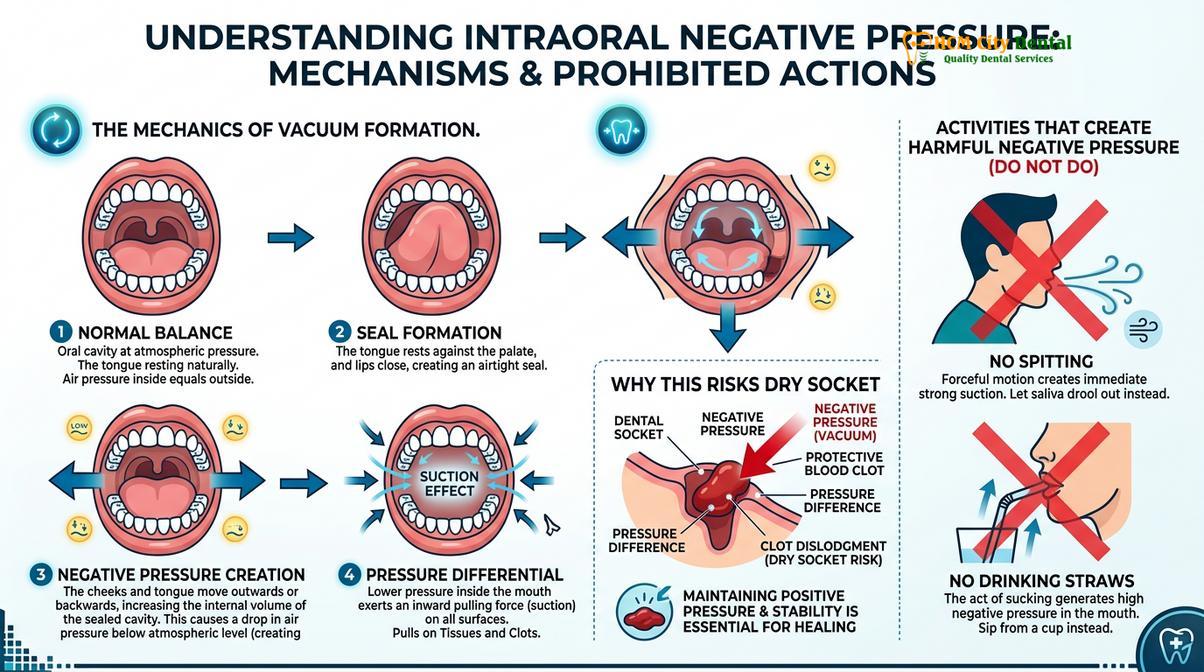
Actions that create negative pressure in the mouth, such as spitting, using straws, or vigorous rinsing, can physically tear the fragile blood clot from the socket and restart bleeding.
Achieving hemostasis is only the first half of the battle; maintaining the integrity of the blood clot is equally critical. The fibrin clot that forms in your extraction socket is incredibly fragile during the first 72 hours. It serves as a biological bandage, protecting the underlying jawbone and sensitive nerve endings from the oral environment while providing a matrix for new tissue to grow.
The most common reason patients fail to stop wisdom tooth bleeding is the inadvertent creation of intraoral negative pressure. The human mouth acts as a sealed chamber. When you perform certain actions, you alter the atmospheric pressure inside this chamber. If the pressure drops significantly (creating a vacuum), the physical force exerted on the delicate clot can literally suck it out of the socket[4].
To protect the clot and ensure a smooth recovery timeline after extraction, you must strictly avoid the following activities:
- Spitting: The act of gathering saliva and forcefully expelling it creates a massive spike in negative pressure. Instead of spitting, simply lean over the sink and let the saliva passively drool out of your mouth, or gently wipe your lips with a tissue.
- Using Straws: Drinking through a straw requires you to create a vacuum in your mouth to pull the liquid upward. This suction force is highly destructive to a healing socket. Always drink directly from a cup or glass.
- Vigorous Rinsing: Swishing water or mouthwash aggressively creates turbulent fluid dynamics that can wash the clot away. While gentle salt-water rinses are recommended after 24 hours, the liquid should only be passively rolled around the mouth by tilting your head, never forcefully swished.
- Smoking and Vaping: Inhaling smoke or vapor combines the destructive force of negative pressure with the introduction of toxic chemicals. Nicotine is a systemic vasoconstrictor that starves the healing tissue of oxygen and vital nutrients, drastically increasing the risk of complications.
If the clot is lost, the underlying bone is exposed to air, food debris, and bacteria. This condition, known as a dry socket, is characterized by severe, radiating pain that is often not relieved by standard analgesics. Preventing the loss of the clot through careful behavioral management is vastly preferable to treating a dry socket after the fact.
Emergency Steps for Heavy Bleeding at Home
If heavy bleeding occurs, elevate your head, remain calm to keep blood pressure low, clear excess clots gently, and apply firm pressure with a damp tea bag for one hour.
Despite following all post-operative instructions, some patients may experience a sudden resurgence of heavy bleeding. This can be triggered by an accidental bump to the jaw, a spike in blood pressure, or the premature dissolution of the initial clot. If you find yourself dealing with significant hemorrhage at home, it is vital to approach the situation methodically and calmly.
Panic and anxiety trigger the sympathetic nervous system, causing a release of adrenaline that increases your heart rate and elevates your blood pressure. Higher blood pressure forces more blood through the severed capillaries, making it exponentially harder to achieve hemostasis. Your first step must be to sit down, take slow, deep breaths, and consciously relax.
Execute the following emergency protocol immediately:
- Elevate and Isolate: Sit upright in a chair or prop yourself up in bed with at least three pillows. Gravity is your ally; keeping your head significantly higher than your heart reduces the hydrostatic pressure in the maxillofacial blood vessels.
- Clear the Airway: If your mouth is filled with large, dark, jelly-like liver clots, these must be removed. A massive, unorganized clot prevents gauze from applying direct pressure to the actual bleeding site. Gently wipe the excess clot away with a clean piece of gauze.
- Deploy the Tea Bag: Bypass standard gauze and immediately prepare a moistened black tea bag as described in the previous section. The combination of mechanical pressure and tannic acid is your strongest at-home defense.
- Apply Unrelenting Pressure: Place the tea bag directly over the socket and bite down with maximum tolerable force. You must hold this pressure for a full 60 minutes without checking it. Set a timer on your phone and do not open your mouth until the alarm sounds.
- Apply Cold Therapy: While biting on the tea bag, apply an ice pack wrapped in a thin towel to the outside of your face, directly over the surgical area. The cold temperature will penetrate the tissues and induce further vasoconstriction, slowing the blood flow.
During this emergency management phase, do not consume any hot liquids, as heat causes vasodilation (expansion of blood vessels), which will encourage further bleeding. Stick to cold or room-temperature fluids once the bleeding has been controlled.
When to Contact the Clinic in Saigon for Bleeding Concerns
While the vast majority of post-operative bleeding can be successfully managed at home using the techniques outlined above, there are specific clinical scenarios that require professional medical intervention. Knowing when to seek post op bleeding help saigon is crucial for your safety and the success of your recovery.
Dr. Nguyen Van Cuong advises all patients to monitor their symptoms closely and to contact the clinic immediately if they observe any of the following red flag indicators:
- Uncontrollable Hemorrhage: If you have applied firm, uninterrupted pressure with a black tea bag for a full 60 minutes and the socket is still actively pumping bright red blood that rapidly fills your mouth, you need clinical assistance.
- Systemic Symptoms: If the blood loss is accompanied by feelings of severe dizziness, lightheadedness, confusion, shortness of breath, or a rapid, fluttering heartbeat, this is a medical emergency. While extremely rare in routine dental extractions, these are signs of significant hypovolemia (fluid loss) and require immediate attention.
- Inability to Swallow or Breathe: If blood is pooling so rapidly in the back of your throat that it is compromising your airway or making it difficult to swallow, proceed to the nearest emergency department immediately.
- Delayed Bleeding: If you successfully achieved hemostasis for several days, but suddenly experience a massive rush of bright red blood on day four or five, this could indicate an underlying infection or the rupture of a larger vessel that was previously sealed.

When you return to the clinic for uncontrolled bleeding, the surgical team has an array of advanced hemostatic agents at their disposal. The surgeon may administer local anesthesia containing epinephrine to immediately constrict the blood vessels. They can then clean the socket, identify the specific source of the bleeding, and apply specialized materials such as absorbable gelatin sponges (Gelfoam), oxidized regenerated cellulose (Surgicel), or bone wax directly into the wound[5]. In some cases, additional sutures may be placed to pull the gingival tissues tightly over the socket, physically locking the clot in place.
If you are planning to travel shortly after your procedure, it is imperative that you achieve complete hemostasis before boarding an aircraft. The changes in cabin pressure can affect healing tissues. For detailed guidelines on this topic, review our clinical protocols regarding flying after dental surgery.
At HCMC Dental Clinic in Ho Chi Minh City, our priority is your safety and comfort. If you are ever in doubt about the volume or nature of your post-operative bleeding, it is always safer to contact our clinical team for a professional assessment rather than attempting to manage a severe complication alone.
Frequently Asked Questions
How long is it normal to bleed after wisdom tooth extraction?
It is completely normal to experience mild bleeding and oozing for the first 24 to 48 hours after wisdom tooth extraction. During this initial recovery phase, your saliva will mix with small amounts of blood, creating the illusion of heavier bleeding. As long as the volume is decreasing and you are not rapidly soaking through gauze pads, this timeline is a standard part of the body’s natural hemostatic process. By day three, the oozing should cease entirely as the fibrin clot matures.
What should I do if my extraction socket won’t stop bleeding?
If your extraction socket continues to bleed actively, immediately apply a folded, moistened sterile gauze pad directly over the surgical site and bite down with firm, continuous pressure for 45 minutes. If standard gauze fails to achieve hemostasis, substitute it with a damp black tea bag, as the tannic acid acts as a powerful natural vasoconstrictor. Keep your head elevated, avoid any physical exertion, and apply an ice pack to the outside of your face to further constrict blood vessels.
Can I sleep while biting on gauze?
No, you should never sleep while biting on gauze due to the severe risk of accidental choking or airway obstruction. Before you go to sleep, ensure that active bleeding has subsided and remove all gauze pads from your mouth. To minimize nighttime oozing, sleep with your head elevated on two or three pillows to reduce blood pressure in the maxillofacial region. Place an old towel over your pillowcase, as it is normal to drool slightly blood-tinged saliva while sleeping.
Why does spitting make a tooth extraction bleed more?
Spitting creates a sudden, forceful vacuum of negative pressure inside the oral cavity, which can physically tear the newly formed, fragile blood clot away from the extraction socket walls. When this protective fibrin clot is dislodged, the underlying capillaries are exposed, instantly restarting the bleeding process and significantly increasing your risk of developing a painful dry socket. Instead of spitting, allow saliva to passively drool into a sink or wipe your mouth gently with a tissue.
How does a tea bag stop bleeding after tooth removal?
A black tea bag stops bleeding because it contains a high concentration of tannic acid, a naturally occurring astringent compound. When applied directly to a bleeding dental socket, tannic acid causes the local blood vessels to constrict and helps precipitate proteins in the blood, rapidly accelerating the clotting cascade and stabilizing the protective fibrin clot over the surgical wound. It must be a caffeinated black tea, as herbal or green teas lack sufficient tannic acid to be effective.
“Patient compliance with post-operative instructions—specifically the avoidance of negative intraoral pressure and the correct application of mechanical force—is the single greatest determinant in preventing secondary hemorrhage and alveolar osteitis.”
For patients requiring complex extractions, including coronectomy procedures to protect the inferior alveolar nerve, our team provides comprehensive, personalized aftercare instructions to ensure a seamless recovery.
References
- Journal of Oral and Maxillofacial Surgery. Hemostatic management following third molar extraction. (2021).
- International Journal of Oral and Maxillofacial Surgery. Efficacy of mechanical pressure in alveolar socket healing. (2019).
- British Dental Journal. Tannic acid applications in localized oral hemorrhage control. (2020).
- Journal of the American Dental Association. The physics of intraoral negative pressure and alveolar osteitis. (2022).
- Clinical Oral Investigations. Post-operative complication management in oral surgery. (2018).