Using nitrous oxide for wisdom teeth extraction provides a safe, mild form of conscious sedation that significantly reduces dental anxiety and raises your pain threshold. Commonly known as laughing gas, it allows patients to remain awake and responsive while experiencing a deep sense of calm during the surgical procedure.
Clinical Summary:
Nitrous oxide (N2O) mixed with oxygen is a highly effective inhalation sedative utilized during third molar extractions. It induces anxiolysis and mild analgesia without causing a loss of consciousness. The rapid onset and quick elimination from the pulmonary system make it an ideal choice for patients experiencing mild to moderate dental phobia. Clinical protocols dictate the continuous monitoring of vital signs, ensuring optimal safety throughout the procedure. While it does not replace local anesthesia for profound pain control, it synergizes with it to create a comfortable, stress-free surgical environment. Recovery is almost immediate, allowing the vast majority of patients to resume normal daily activities shortly after the extraction.
Key Takeaways:
- Nitrous oxide provides rapid anxiety relief while keeping the patient fully conscious and responsive.
- It is administered via a comfortable nasal hood, always mixed with a high percentage of pure oxygen.
- The sedative effects wear off within minutes after the gas flow is stopped and replaced with oxygen.
- It is highly effective for mild to moderate anxiety but may not be sufficient for severe dental phobias.
- Patients can typically drive themselves home following the extraction, unlike with deeper sedation methods.
What is Nitrous Oxide (Laughing Gas) Inhalation?
Nitrous oxide is a colorless, sweet-smelling gas mixed with oxygen and inhaled through a nasal mask to induce a state of conscious sedation during dental surgeries.
Nitrous oxide (N2O) is a chemical compound that has been a cornerstone of dental pharmacology for over a century. In the context of modern oral surgery, it is utilized as an inhalation sedative to help patients manage the psychological stress and physical discomfort associated with dental procedures. When discussing the surgical removal of third molars, the anticipation of the procedure is often more distressing for the patient than the surgery itself. Nitrous oxide bridges this gap by providing a reliable, easily adjustable method of conscious sedation.
The Chemical and Pharmacological Profile
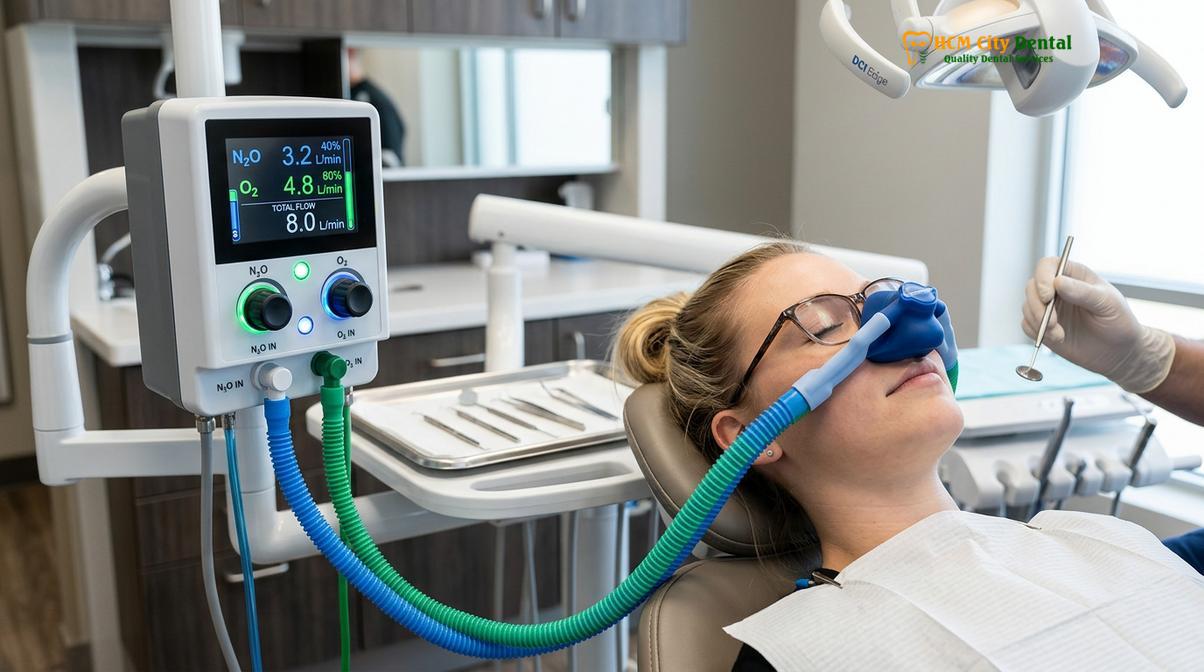
At room temperature, nitrous oxide is a non-flammable, colorless gas with a slightly sweet odor and taste. In a clinical setting, it is never administered as a pure gas; it is always blended with pure oxygen (O2) using a specialized digital or analog flowmeter. The standard delivery system ensures a fail-safe mechanism where the oxygen concentration never drops below 30%, which is higher than the 21% oxygen found in normal room air. This precise control allows the clinician to titrate the gas mixture to the exact needs of the patient.[1]
One of the most remarkable pharmacological properties of nitrous oxide is its low blood-gas partition coefficient. This means that the gas does not readily dissolve in the blood. Instead, it rapidly crosses the alveolar membranes in the lungs, enters the bloodstream, and reaches the brain within seconds. Because it remains in a gaseous state within the blood, it is not metabolized by the liver or kidneys. This unique characteristic is responsible for both its rapid onset of action and its incredibly fast elimination from the body once the administration ceases.
How Laughing Gas Relieves Dental Anxiety and Pain
The gas interacts with neurotransmitters in the brain to elevate the pain threshold and trigger the release of endogenous opioids, creating a euphoric, calming effect.
The dual action of nitrous oxide—acting as both an anxiolytic (anxiety reducer) and an analgesic (pain reducer)—makes it exceptionally valuable in oral and maxillofacial surgery. Understanding how it achieves these effects requires a look at its interaction with the central nervous system.
Neurological Mechanisms of Anxiolysis
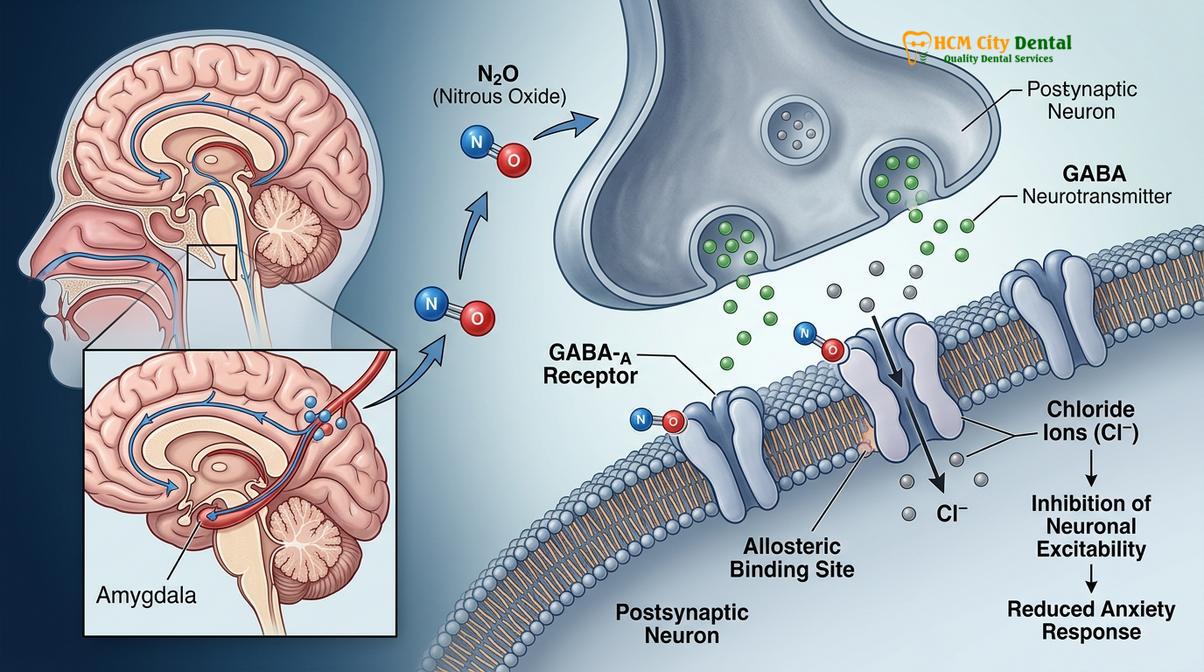
Dental anxiety triggers the body’s sympathetic nervous system, leading to the “fight or flight” response. This manifests as an elevated heart rate, increased blood pressure, and heightened sensitivity to external stimuli. Nitrous oxide counters this by interacting with the Gamma-aminobutyric acid (GABA) receptors in the brain. GABA is the primary inhibitory neurotransmitter in the central nervous system. By enhancing GABAergic activity, nitrous oxide dampens the overactive neural pathways associated with fear and panic, inducing a profound sense of tranquility.[2]
Elevation of the Pain Threshold
While nitrous oxide is not a substitute for local anesthesia, it possesses distinct analgesic properties. It stimulates the release of endogenous opioids—the body’s natural painkillers—and activates descending noradrenergic pathways that inhibit pain signaling in the spinal cord. This means that while the patient may still feel pressure during the elevation and delivery of an impacted wisdom tooth, their brain’s interpretation of that pressure as “pain” is significantly diminished.
“The true clinical value of nitrous oxide lies in its synergistic effect with local anesthetics. By lowering the patient’s anxiety, we simultaneously lower their perception of pain, allowing the profound numbness of the local anesthetic to work optimally without the interference of psychological distress.”
For patients seeking a comfortable surgical experience, it is important to understand that the surgical site will still be thoroughly numbed using local anesthetics such as lidocaine or articaine. The nitrous oxide simply ensures that the administration of these local anesthetics, and the subsequent surgical steps, are experienced in a state of deep relaxation.
The Laughing Gas Procedure: What to Expect
The procedure involves placing a small nasal hood over your nose, gradually increasing the nitrous oxide concentration until you feel relaxed, and continuously monitoring your vitals.
The workflow for administering nitrous oxide is highly standardized to ensure maximum safety and efficacy. If you are scheduled for a wisdom tooth extraction under inhalation sedation, understanding the step-by-step process can further alleviate any pre-operative apprehension.
Pre-Operative Preparation
Unlike deeper forms of sedation or general anesthesia, nitrous oxide does not strictly require a prolonged fasting period. However, clinicians generally recommend eating only a light meal a few hours before the appointment to minimize the risk of nausea, which is a rare but possible side effect. Upon seating in the surgical chair, the dental team will review your medical history, record baseline vital signs (blood pressure, heart rate, and oxygen saturation), and explain the sensations you are about to experience.
The Titration Process
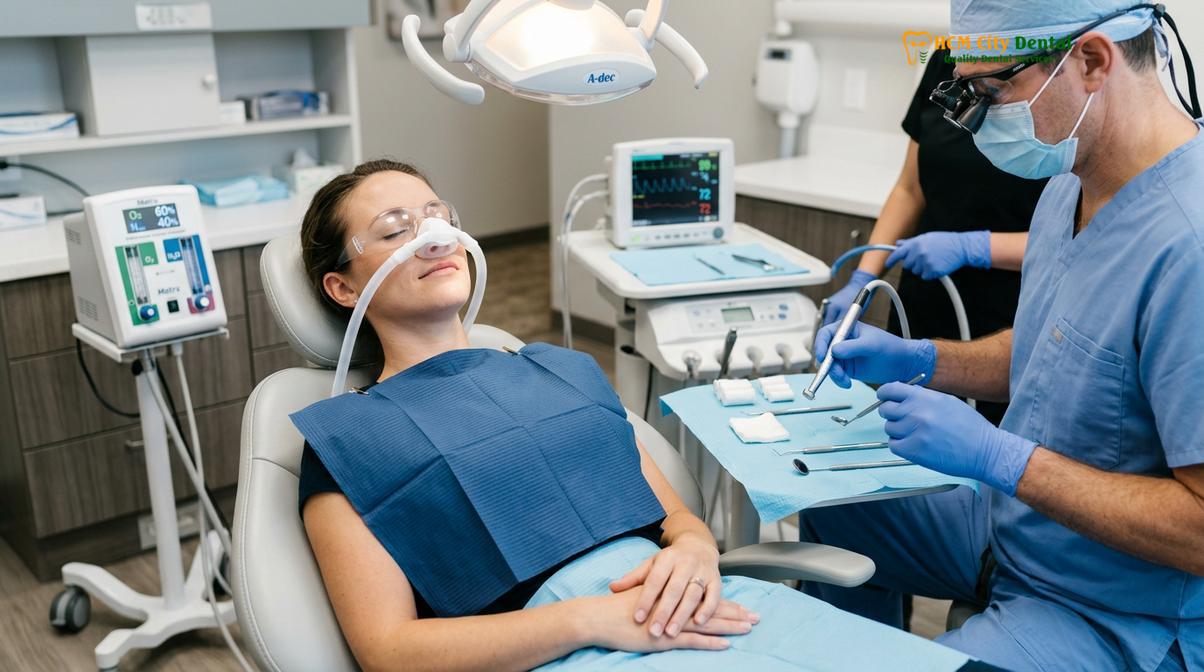
The administration begins with the placement of a scented or unscented nasal hood over your nose. You will be instructed to breathe normally through your nose. Initially, 100% pure oxygen is delivered for a few minutes. The clinician will then begin the process of titration—slowly introducing nitrous oxide in increments (typically starting at 10% to 20% and gradually increasing).
Most patients achieve optimal sedation at a concentration between 30% and 50% nitrous oxide. During this phase, you may experience a tingling sensation in your fingers, a feeling of warmth spreading throughout your body, and auditory changes where sounds may seem distant or slightly muffled.
Clinical Case Example:
A 24-year-old patient presented to HCMC Dental Clinic in Ho Chi Minh City with severe anxiety regarding the extraction of two partially bony impacted mandibular third molars. The patient had delayed treatment for years due to dental phobia. By utilizing a titrated nitrous oxide protocol, the surgical team was able to achieve profound anxiolysis. The patient remained cooperative, reported no distress during the administration of local anesthesia, and successfully completed the bilateral extraction in a single visit with excellent post-operative compliance.
Nitrous Oxide vs. IV Sedation: Which is Right for You?
While nitrous oxide offers mild relaxation with immediate recovery, IV sedation provides a deeper, sleep-like state suitable for highly complex impactions or severe dental phobia.
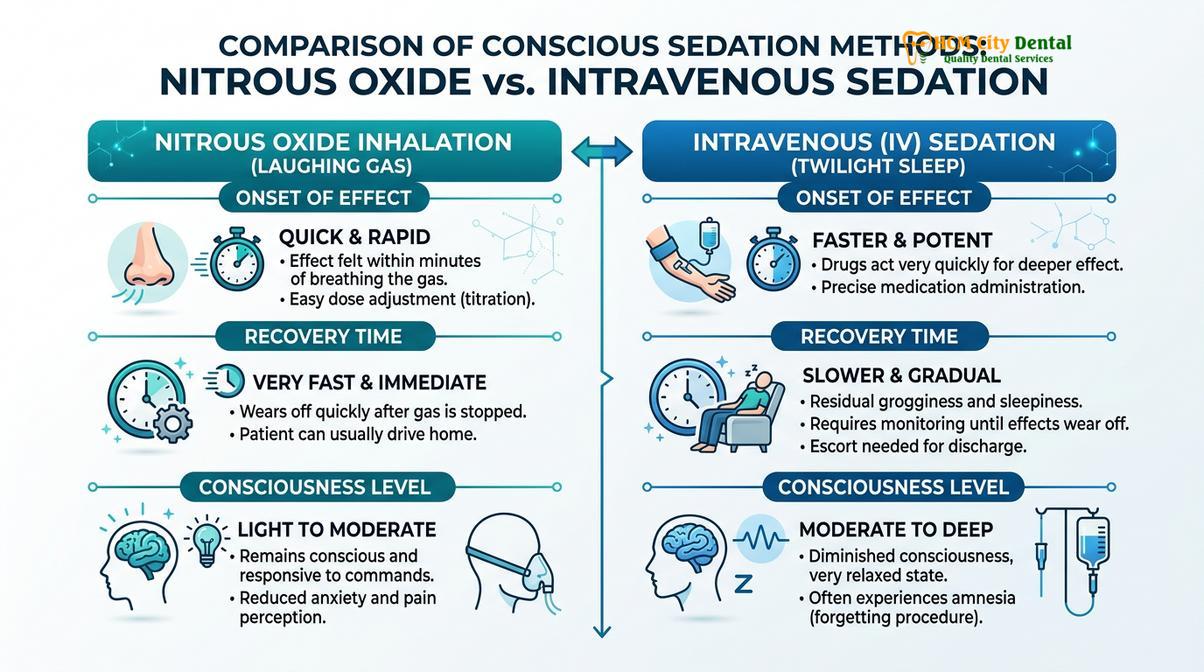
Choosing the appropriate level of sedation is a collaborative decision between you and your oral surgeon. While nitrous oxide is highly popular due to its convenience, it is not the only option available. Intravenous (IV) sedation is frequently utilized for more complex surgical scenarios. Understanding the distinctions between these modalities is crucial for setting accurate clinical expectations.[3]
| Clinical Parameter | Nitrous Oxide (Inhalation) | IV Sedation (Intravenous) |
|---|---|---|
| Depth of Sedation | Mild to moderate conscious sedation. | Moderate to deep sedation (twilight sleep). |
| Onset of Action | Rapid (within 2 to 3 minutes). | Very rapid (within seconds). |
| Level of Awareness | Fully awake, responsive to commands. | Depressed consciousness, may drift in and out of sleep. |
| Recovery Time | Immediate (5-10 minutes post-oxygen flush). | Prolonged (requires 1-2 hours of clinical monitoring). |
| Post-Op Escort Required? | Usually no; patients can typically drive. | Strictly yes; patients cannot drive for 24 hours. |
Nitrous oxide is generally the treatment of choice for patients with mild to moderate anxiety undergoing straightforward or moderately complex wisdom tooth extractions. It is particularly advantageous for patients who have busy schedules and cannot afford the downtime associated with deeper sedation, as it allows them to return to work or school on the same day.
Safety, Side Effects, and Fast Recovery Time
Nitrous oxide is widely considered one of the safest sedatives in dentistry, boasting a rapid elimination from the body and minimal transient side effects like mild nausea.
The safety profile of nitrous oxide is exceptionally high, which is why it is utilized extensively in both pediatric and adult dentistry. Because it does not undergo biotransformation in the liver or kidneys, it places no metabolic burden on the body’s organs. However, like any pharmacological intervention, it must be administered by trained professionals following strict clinical guidelines.[4]
When administered correctly via titration, side effects are rare. However, if the concentration is increased too rapidly or maintained at an excessively high level, patients may experience mild nausea, transient dizziness, or shivering. These effects are quickly reversed by lowering the nitrous oxide concentration and increasing the oxygen flow. Post-operative recovery protocols dictate that patients must be evaluated for full cognitive return before discharge.[5]
“The mandatory five-minute administration of 100% oxygen at the conclusion of the procedure is non-negotiable. This protocol not only ensures the complete clearance of nitrous oxide from the alveoli but also effectively prevents the onset of diffusion hypoxia, which is the primary cause of post-operative lethargy and headaches.”
Clinical Contraindications:
While safe for most, nitrous oxide is contraindicated for certain patients. You must inform your dentist if you have:
- Chronic Obstructive Pulmonary Disease (COPD) or severe asthma.
- A recent history of middle ear surgery or tympanic membrane grafting.
- Undergone recent eye surgery involving intraocular gas injections.
- A known MTHFR gene mutation or severe Vitamin B12 deficiency.
- Are in the first trimester of pregnancy.
Important Clinical Notes and When to Contact Your Dentist
While recovery from laughing gas is immediate, patients must still follow standard post-operative care instructions for the surgical extraction site itself.
It is crucial to differentiate between recovering from the sedation and recovering from the oral surgery. The effects of the laughing gas will dissipate before you leave the clinic, but the local anesthesia will keep your mouth numb for several hours. During this time, you must be careful not to bite your lips or tongue. Furthermore, adherence to national health guidelines regarding safe sedation practices ensures that your vital signs remain stable throughout the recovery phase.[6]
You should contact your dental provider immediately if you experience prolonged dizziness, severe nausea that prevents you from taking your prescribed post-operative medications, or any unexpected respiratory difficulties after returning home. While these complications are exceedingly rare with nitrous oxide, maintaining open communication with your clinical team is a vital component of safe surgical care.
Nitrous Oxide Sedation Costs in Vietnam
The cost of nitrous oxide sedation is generally affordable and is billed as an adjunct fee on top of the standard surgical extraction cost, depending on the clinic and duration.
When planning for wisdom tooth removal, understanding the financial aspect of sedation is important. For patients researching their options, it is helpful to know that inhalation sedation is significantly more cost-effective than IV sedation or general anesthesia. In Vietnam, the fee for nitrous oxide is typically calculated based on the duration of the surgical procedure. It is billed as a supplemental service in addition to the cost of the radiographic imaging (CBCT scans) and the surgical extraction itself.
Dr. Nguyen Van Cuong, a leading specialist at HCMC Dental Clinic, emphasizes that patient comfort is paramount during oral surgery. Dr. Cuong and his clinical team utilize advanced nitrous oxide delivery systems to ensure that even the most anxious patients can undergo wisdom tooth extraction in a completely relaxed state. By adhering to strict international and local safety protocols, the clinic provides a secure and stress-free environment for all procedures.

Frequently Asked Questions (FAQs)
What does laughing gas feel like at the dentist?
Laughing gas typically induces a sensation of lightheadedness, warmth, and deep relaxation, often accompanied by a mild tingling in the arms and legs. Once the nitrous oxide takes effect, the clinical environment fades into the background, and feelings of anxiety are replaced by a euphoric, floating sensation. You remain fully conscious, able to hear the dental team and respond to instructions, but your emotional reaction to the surgical stimuli is significantly blunted.
Can I drive home after nitrous oxide sedation?
Yes, the vast majority of patients can safely drive themselves home after receiving nitrous oxide sedation. Because the gas is eliminated from your pulmonary system within minutes of breathing pure oxygen at the end of the procedure, there is no lingering cognitive impairment or grogginess. However, your clinician will evaluate your recovery post-operatively to ensure you meet all discharge criteria before you get behind the wheel.
Is laughing gas safe for children and adults?
Nitrous oxide is widely recognized by dental and medical associations as one of the safest forms of conscious sedation for both pediatric and adult patients. It has an excellent safety profile due to its rapid onset, easy reversibility, and lack of metabolization in the body. Provided the patient does not have specific contraindications, such as severe respiratory diseases or first-trimester pregnancy, it is a highly reliable method for managing dental phobia.
How quickly does nitrous oxide wear off?
The sedative effects of nitrous oxide wear off almost immediately, typically within three to five minutes after the gas flow is replaced with 100% oxygen. This rapid clearance occurs because the gas does not bind to tissues or blood proteins; it is simply exhaled through the lungs. By the time you leave the dental chair, your cognitive and motor functions will have returned to their normal baseline.
How much does nitrous oxide cost for wisdom teeth in Saigon?
The cost of nitrous oxide sedation in Ho Chi Minh City is generally quite affordable, typically billed as a supplemental fee alongside the surgical extraction costs. Prices vary depending on the duration of the surgery and the specific clinic’s fee schedule. It remains a highly cost-effective alternative to deeper sedation methods like intravenous (IV) sedation or general anesthesia, providing excellent value for anxiety management.
References
- Journal of Oral and Maxillofacial Surgery. Efficacy of nitrous oxide in third molar surgery.
- Anesthesia Progress. Neurological mechanisms of nitrous oxide analgesia and anxiolysis.
- British Dental Journal. Comparative analysis of conscious sedation techniques in dentistry.
- Journal of the American Dental Association. Safety profile and contraindications of inhalation sedation.
- Clinical Oral Investigations. Post-operative recovery protocols following nitrous oxide administration.
- Vietnam Ministry of Health (MOH). National Guidelines on Safe Sedation in Odonto-Stomatology.
If you are experiencing dental anxiety and need a safe, comfortable solution for your oral surgery, contact HCMC Dental Clinic in Ho Chi Minh City today. Our experienced team is ready to discuss how laughing gas can make your wisdom tooth extraction a stress-free experience.