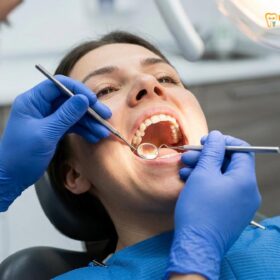
Experiencing wisdom tooth pain as a tourist in Vietnam requires immediate assessment to prevent severe infection. While temporary relief can be achieved with warm saline rinses and over-the-counter analgesics, definitive treatment often involves clinical evaluation and extraction by a qualified dental professional to ensure safe onward travel.
Clinical Summary:
Wisdom tooth flare-ups during international travel are frequently caused by pericoronitis or impaction, conditions exacerbated by fatigue, dietary changes, and aviation pressure. Immediate clinical intervention, utilizing 3D CBCT imaging and minimally invasive extraction techniques like Piezotome surgery, ensures rapid recovery and prevents systemic infection. Tourists can safely undergo this procedure in Ho Chi Minh City, benefiting from advanced clinical protocols that allow them to resume their travel itinerary within days without compromising their health or vacation experience.
Key Takeaways:
- Changes in routine, stress, and cabin pressure can trigger acute wisdom tooth flare-ups during international travel.
- Pericoronitis is the most common cause of third molar pain, requiring professional irrigation or surgical extraction.
- Modern surgical extractions utilize ultrasonic technology for minimal bone trauma and significantly faster healing.
- Post-operative recovery typically takes a few days, allowing tourists to comfortably continue their vacation.
- Local pharmacies offer temporary relief, but severe swelling or trismus demands immediate clinical attention.
Understanding Wisdom Tooth Pain & Pericoronitis
Wisdom tooth pain often stems from partial eruption leading to pericoronitis, an acute inflammation of the surrounding gingival tissue that traps bacteria and food debris.
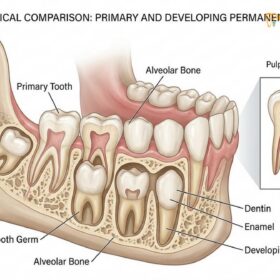
The third molars, commonly known as wisdom teeth, are the final set of teeth to develop and erupt in the adult dentition. Due to evolutionary changes in human jaw size, there is frequently insufficient arch space to accommodate these teeth. Consequently, wisdom teeth often become impacted—meaning they are blocked from fully erupting through the gingival tissue and underlying alveolar bone. When a wisdom tooth only partially erupts, it creates a soft tissue flap known as an operculum. This anatomical pocket is notoriously difficult to clean, making it highly susceptible to the accumulation of food particles and anaerobic bacteria.
For travelers, the stress of navigating a new country, changes in dietary habits, disrupted sleep schedules, and the physical toll of long-haul flights can temporarily suppress the immune system. Furthermore, the fluctuations in barometric pressure experienced during air travel (barodontalgia) can exacerbate existing subclinical inflammation, transforming a mild, unnoticed issue into acute, throbbing pain[1].
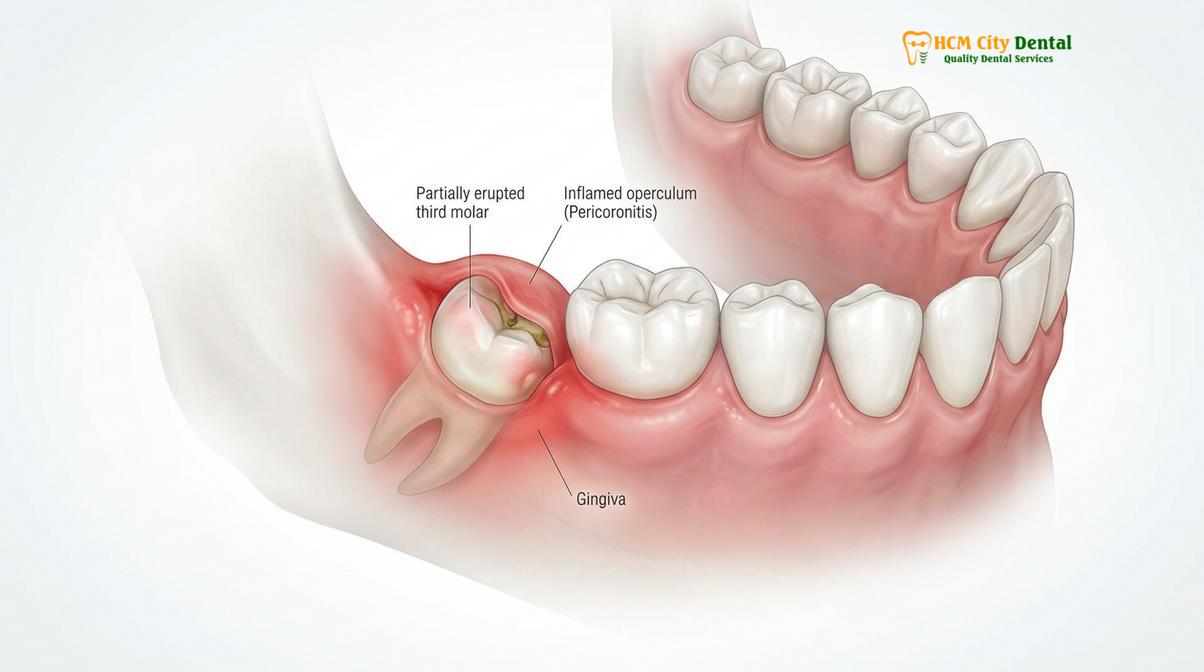
The pathophysiology of pericoronitis involves the proliferation of obligate anaerobes within the opercular space. As the bacterial load increases, the body mounts an inflammatory response, leading to vasodilation, increased capillary permeability, and the influx of immune cells. This manifests clinically as erythema (redness), edema (swelling), and severe localized pain. If left untreated, the infection can spread to adjacent fascial spaces in the head and neck, posing a significant health risk. Clinical management of acute pericoronitis is essential to halt this progression and restore oral health[2].
Home Remedies for Wisdom Tooth Pain While Traveling
Temporary pain management involves warm saline rinses, cold compresses, and over-the-counter non-steroidal anti-inflammatory drugs (NSAIDs) available at local pharmacies.
When a wisdom tooth flare-up occurs in the middle of a vacation, accessing immediate professional care might not always be possible within the first few hours. In such instances, implementing evidence-based home remedies can help manage the acute symptoms and provide temporary relief until a clinical evaluation can be arranged. The primary goal of these interim measures is to reduce bacterial load in the oral cavity and modulate the inflammatory response.
A highly effective and easily accessible remedy is a warm saline rinse. Dissolving half a teaspoon of salt in a cup of warm water creates an isotonic solution that helps draw out inflammatory exudate from the swollen gingival tissues via osmosis. Gently rinsing the affected area for 30 to 60 seconds, several times a day, can dislodge trapped food debris and temporarily alter the local pH, making the environment less hospitable to bacterial growth. Additionally, applying a cold compress to the external cheek adjacent to the painful tooth can induce localized vasoconstriction, thereby reducing tissue edema and numbing the sensory nerve endings.
Pharmacological management using over-the-counter (OTC) medications is also a cornerstone of temporary relief. In Vietnam, pharmacies are ubiquitous, and tourists can easily obtain standard analgesics and anti-inflammatory medications. Non-steroidal anti-inflammatory drugs (NSAIDs), such as Ibuprofen, are particularly effective for odontogenic pain because they inhibit the cyclooxygenase (COX) enzymes, thereby reducing the synthesis of prostaglandins—the lipid compounds that mediate inflammation and pain signaling.
When to See a Doctor
While home remedies can temporarily mitigate discomfort, they do not resolve the underlying anatomical or infectious etiology of wisdom tooth pain. Recognizing the clinical red flags that necessitate immediate professional intervention is vital to prevent life-threatening complications. A wisdom tooth emergency should never be ignored, especially when the localized infection begins to exhibit signs of systemic involvement or regional spread.
One of the most critical warning signs is the development of trismus, commonly referred to as lockjaw. Trismus occurs when the infection and subsequent inflammation spread from the pericoronal space into the muscles of mastication, particularly the medial pterygoid or masseter muscles. This results in a severe restriction in the ability to open the mouth. If a patient finds it difficult to open their mouth wide enough to insert two fingers vertically between their incisors, immediate clinical evaluation is mandatory according to established surgical guidelines[3].

Other alarming symptoms include progressive facial asymmetry, where swelling extends beyond the immediate jawline into the cheek, submandibular region, or neck. Dysphagia (difficulty swallowing) or odynophagia (painful swallowing) indicates that the infection may be encroaching upon the parapharyngeal or retropharyngeal spaces, which can rapidly compromise the airway. Furthermore, the presence of a systemic fever, chills, or swollen, tender lymph nodes (lymphadenopathy) in the neck signifies that the localized infection has overwhelmed the body’s initial defenses.
When Extraction is the Only Option
Surgical removal is clinically indicated when there is recurrent infection, irreversible pulpitis, severe decay, or risk of damage to the adjacent second molar.
The decision to extract a wisdom tooth is based on a comprehensive clinical and radiographic assessment. Not all wisdom teeth require removal; those that are fully erupted, functional, painless, cavity-free, and situated in a healthy environment can often be retained with proper oral hygiene. However, when a tooth becomes symptomatic or poses a significant risk to adjacent anatomical structures, extraction becomes the definitive standard of care. The primary diagnostic tool utilized in modern oral surgery is Cone Beam Computed Tomography (CBCT). Unlike traditional two-dimensional panoramic X-rays, CBCT provides a high-resolution, three-dimensional reconstruction of the maxillofacial region.
Dr. Nguyen Van Cuong emphasizes that timely intervention is crucial for traveling patients experiencing acute third molar flare-ups. By utilizing advanced diagnostic imaging and minimally invasive surgical techniques, Dr. Cuong ensures that international visitors receive the highest standard of care. His approach focuses on preserving surrounding bone and tissue, which significantly accelerates the healing timeline for those undergoing a Tooth Extraction.
The Extraction Process: Simple vs Surgical
The extraction protocol depends on the tooth’s angulation and eruption status, ranging from straightforward forceps delivery to complex surgical sectioning.
The clinical workflow for removing a third molar is meticulously planned based on the preoperative radiographic assessment. Procedures are broadly categorized into simple extractions and surgical extractions, though the transition between the two can be fluid depending on intraoperative findings. Regardless of the classification, the procedure begins with the administration of profound local anesthesia to ensure absolute pain control.
A simple extraction is typically performed on a wisdom tooth that is fully erupted through the gingival tissue and has a relatively straight root anatomy. The clinician uses specialized instruments called dental elevators to sever the periodontal ligament. By applying controlled, sustained pressure, the tooth is luxated (loosened) within its socket. Once adequate mobility is achieved, dental forceps are used to grasp the crown and deliver the tooth from the alveolar ridge.
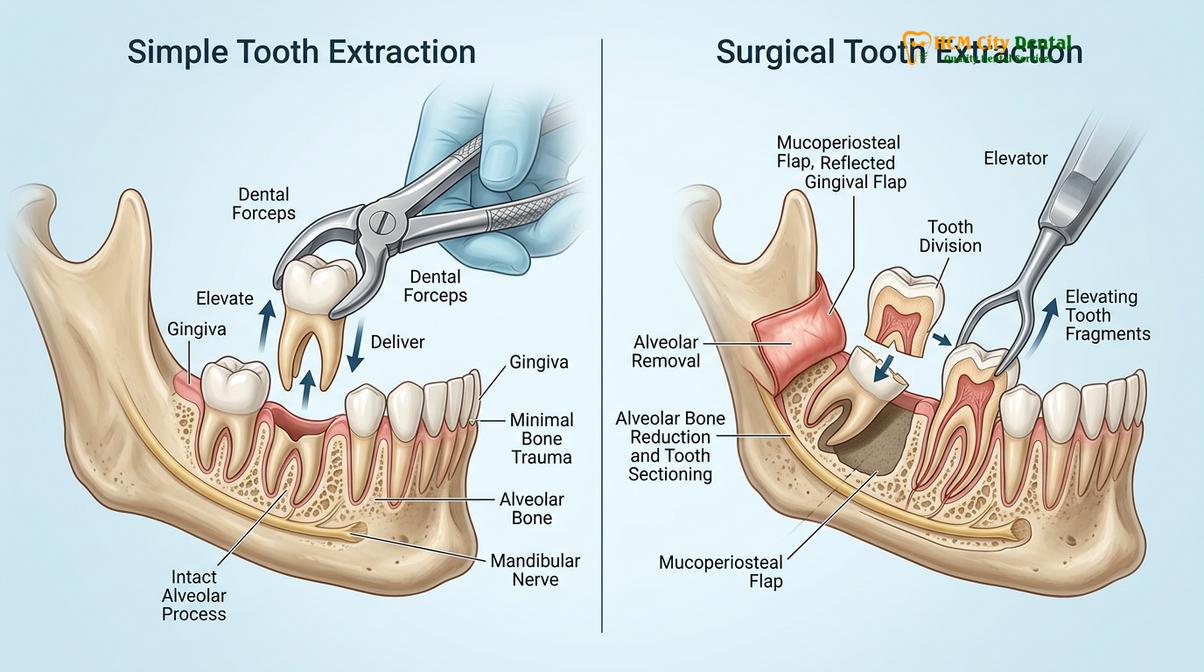
Conversely, a surgical extraction is required for teeth that are partially or fully impacted within the jawbone. This procedure involves a more complex surgical protocol. First, a mucoperiosteal flap is carefully reflected to expose the underlying bone and the impacted tooth. If the tooth is encased in bone, a surgical handpiece or an advanced ultrasonic device (Piezotome) is used to perform an ostectomy (removal of overlying bone). Once the tooth is adequately exposed, it is often necessary to perform an odontotomy—sectioning the tooth into smaller, manageable pieces to minimize bone trauma during removal.
| Clinical Parameter | Simple Extraction | Surgical Extraction |
|---|---|---|
| Tooth Eruption Status | Fully erupted, visible above the gum line. | Partially or fully impacted within bone/gums. |
| Surgical Access | Direct access using elevators and forceps. | Requires mucoperiosteal flap and bone removal. |
| Tooth Sectioning | Rarely required; tooth delivered intact. | Frequently required (odontotomy) for safe removal. |
| Suturing | Often unnecessary, natural clot formation. | Required to reposition tissue and aid hemostasis. |
| Average Recovery Time | 1 to 3 days of mild discomfort. | 3 to 7 days, moderate swelling expected. |
Cost of Wisdom Tooth Extraction in Vietnam
The financial investment for removing a wisdom tooth in Vietnam is highly competitive, offering international standards of care at a fraction of Western prices.
For tourists and expatriates, the cost of dental care is often a significant consideration. The cost of wisdom tooth extraction in Vietnam is determined by several clinical factors, primarily the complexity of the impaction. A fully erupted tooth requiring a simple extraction represents the most cost-effective scenario. In contrast, a horizontally impacted tooth deeply embedded in the jawbone necessitates a surgical approach, which incurs a higher fee due to the advanced techniques, specialized equipment (such as Piezotome ultrasonic surgery), and additional clinical time required.
Diagnostic imaging also plays a role in the overall cost. A comprehensive 3D CBCT scan is standard protocol for surgical extractions to map the exact position of the tooth roots in relation to the inferior alveolar nerve. Despite these advanced diagnostic and surgical requirements, the total cost remains exceptionally affordable compared to clinics in North America, Europe, or Australia. Patients receive transparent, itemized treatment plans prior to any procedure, ensuring there are no unexpected financial surprises during their travels.
Recovery and Aftercare Guide for Travelers
Successful recovery requires strict adherence to post-operative instructions, including a soft diet, avoiding negative oral pressure, and maintaining gentle oral hygiene.
The post-operative phase is a critical component of the overall treatment success, particularly for a tourist who wishes to resume their travel activities promptly. The biological healing process begins immediately after the tooth is removed, with the primary objective being the establishment and preservation of a stable blood clot within the extraction socket. This clot serves as a biological scaffold for the formation of granulation tissue and, eventually, new alveolar bone[4].
“The first 24 hours post-extraction are critical for hemostasis and the formation of a stable blood clot. Patients must avoid vigorous rinsing, spitting, or any activity that creates negative pressure in the oral cavity, as this can dislodge the clot and lead to alveolar osteitis.”
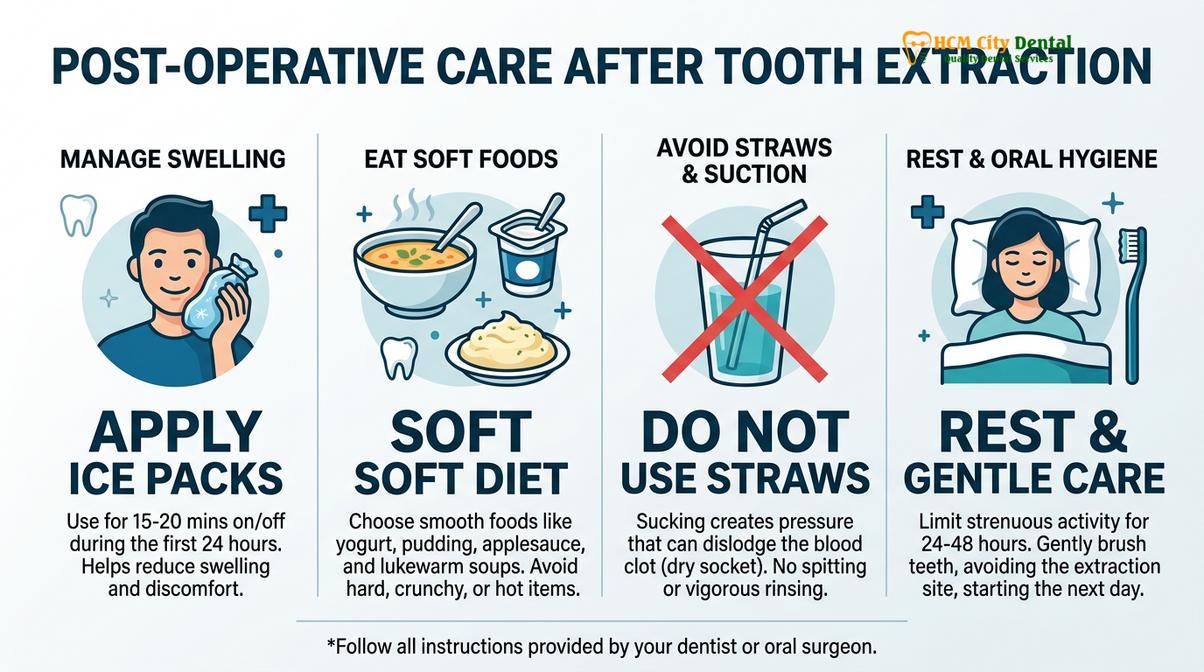
Dietary modifications are essential during the initial healing phase. Patients should consume a soft, cool, or lukewarm diet that requires minimal chewing. In Vietnam, excellent local options include plain rice porridge (cháo) and soft tofu. It is imperative to avoid using straws, as the suction can easily dislodge the protective blood clot. Furthermore, adherence to local clinical protocols ensures that patients receive appropriate follow-up care and medication guidance tailored to their specific surgical outcome, aligning with national health standards[5].
Expert Care at HCMC Dental Clinic
Experiencing a dental emergency abroad can be daunting, but choosing a reputable, internationally accredited facility ensures that you receive safe, effective, and compassionate care. Modern clinics in Vietnam are equipped with state-of-the-art technology, including 3D CBCT scanners and ultrasonic surgical units, which rival the standards found in Western countries.
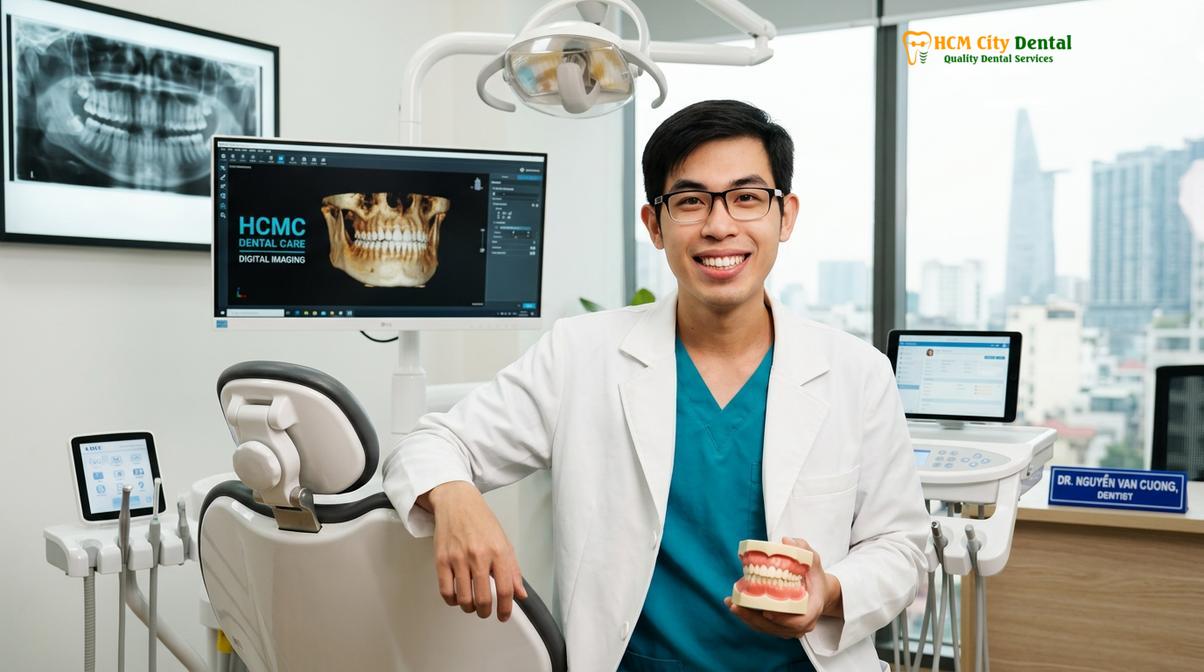
“Providing emergency dental care for tourists requires not only clinical precision but also an understanding of their unique travel constraints. Our goal is to resolve the infection swiftly so patients can return to enjoying their journey with minimal disruption.”
If you are experiencing severe oral pain, swelling, or suspect an infected third molar while traveling, do not wait for the symptoms to worsen. Contact HCMC Dental Clinic in Ho Chi Minh City for an immediate clinical evaluation. Our experienced team, led by Dr. Cuong, is dedicated to providing prompt relief and expert surgical care. Learn more about our comprehensive approach to Tooth Extraction or explore our Emergency Dentistry services to secure your appointment today at HCMC Dental Clinic, Ho Chi Minh City.
References
- International Journal of Oral Science. The impact of aviation pressure changes on odontogenic pain. (2019).
- Journal of Oral and Maxillofacial Surgery. Management of acute pericoronitis and third molar impactions. (2020).
- American Association of Oral and Maxillofacial Surgeons. Clinical guidelines for third molar extractions. (2021).
- Journal of Clinical Periodontology. Post-operative care and healing following surgical tooth extraction. (2022).
- Vietnam Ministry of Health. National Clinical Guidelines on Oral and Maxillofacial Surgery. (2020).
Read also: If you recently had orthodontics, understand the guidelines of wearing retainers after wisdom tooth extraction.