Dental implants lack the natural shock-absorbing ligament found in biological teeth, making them highly susceptible to damage from nighttime teeth grinding. A custom-fitted night guard acts as a crucial protective barrier, distributing occlusal forces evenly and preventing costly structural failures in your implant restorations.
Clinical Summary:
The integration of a night guard for dental implants is a critical component of post-surgical restorative care, particularly for patients exhibiting signs of sleep bruxism. Unlike natural dentition, titanium implants are rigidly ankylosed to the alveolar bone through osseointegration. This rigid fixation means they cannot yield to the extreme lateral and vertical forces generated during nocturnal grinding, which can exceed 900 psi. Without the proprioceptive feedback and cushioning of a periodontal ligament, implants are at a high risk for mechanical complications, including porcelain fracture, abutment screw loosening, and peri-implant bone loss. Utilizing a custom-fabricated, hard acrylic occlusal guard mitigates these risks by providing a flat, frictionless surface that disoccludes the posterior teeth, relaxes the masticatory muscles, and evenly distributes parafunctional loads across the entire arch, thereby ensuring the long-term survivability of the prosthetic investment.
Key Takeaways:
- Implants lack a periodontal ligament, making them unable to absorb heavy grinding forces naturally.
- Unprotected bruxism can lead to crown fractures, screw loosening, and progressive bone loss around the implant.
- Hard acrylic or dual-laminate guards are clinically preferred over soft guards for implant protection.
- The protective appliance should be custom-fitted immediately after the final implant crown is permanently seated.
- Consistent nightly wear significantly reduces the risk of late-stage implant failure caused by occlusal overload.
Why Implants Are Vulnerable to Grinding
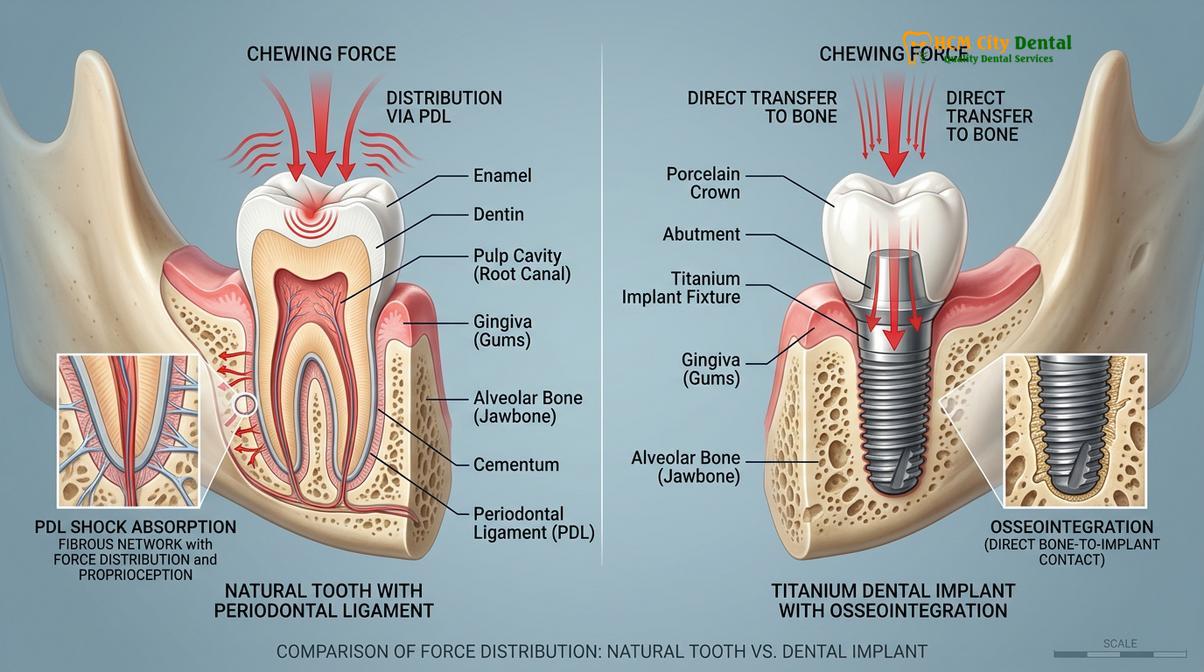
Natural teeth possess a periodontal ligament that acts as a shock absorber, whereas dental implants are rigidly fused to the bone, forcing them to absorb the full impact of grinding forces directly.
To understand why a night guard is imperative for implant patients, one must first examine the fundamental anatomical differences between a natural tooth and a titanium dental implant. A healthy natural tooth is suspended in its bony socket by the periodontal ligament (PDL). This complex network of connective tissue fibers acts as a natural shock absorber. When you bite down, the PDL allows the tooth to compress slightly into the socket—typically moving between 50 to 100 microns. Furthermore, the PDL is rich in mechanoreceptors, which provide proprioceptive feedback to the brain. If you bite down too hard on a natural tooth, these receptors instantly signal the jaw muscles to relax, preventing self-inflicted damage.
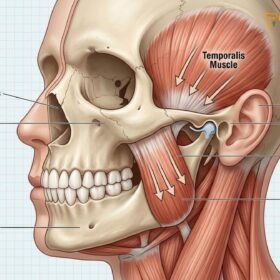
Dental implants, however, operate on a completely different biomechanical principle. Through a process called osseointegration, the titanium fixture fuses directly with the surrounding alveolar bone. There is no periodontal ligament, no shock absorption, and virtually no proprioceptive feedback. An implant can only move a maximum of 10 microns under heavy load, which is merely the elasticity of the bone itself [1]. Consequently, when a patient engages in nocturnal bruxism, the extreme forces generated by the masseter and temporalis muscles are transmitted directly through the prosthetic crown, down the abutment, and straight into the crestal bone.
This lack of natural defense mechanisms makes the structural components of the restoration highly susceptible to fatigue. Patients who suffer from bruxism implant damage often do not realize the extent of the forces they are applying because the implants cannot “feel” the pressure in the same way natural teeth do. Therefore, to protect dental implants grinding forces must be intercepted and dispersed by an external appliance. A custom occlusal guard acts as an artificial shock absorber, recreating a protective buffer that the implant inherently lacks.
Types of Implant Damage from Bruxism
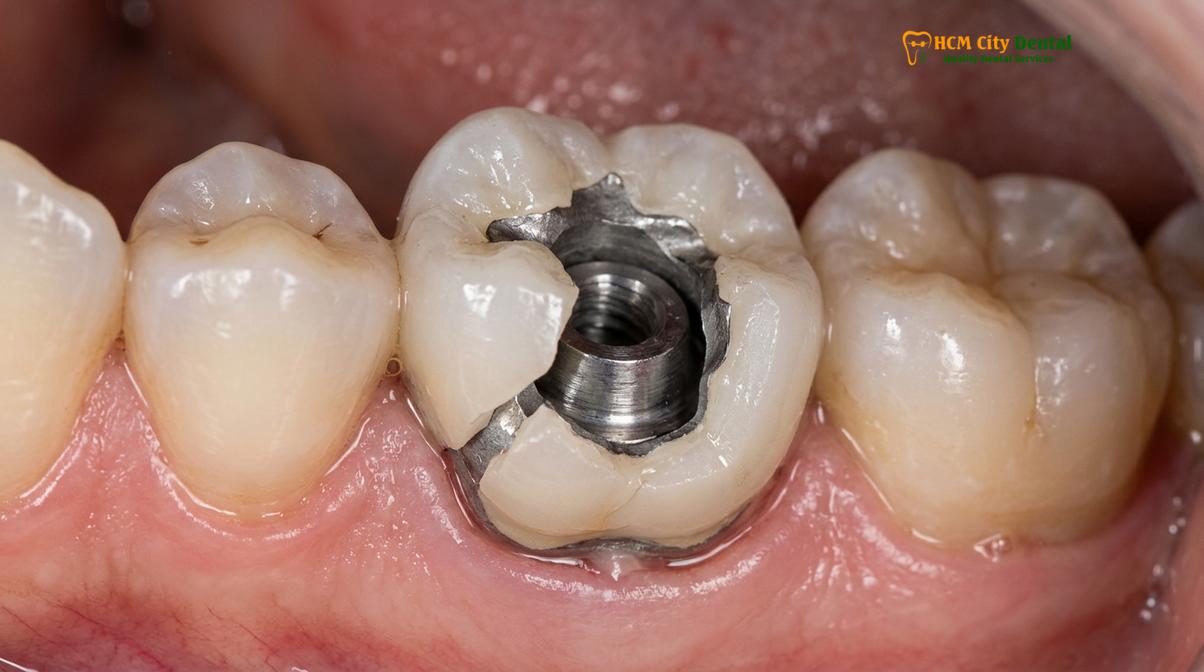
Uncontrolled grinding forces can lead to severe mechanical complications, including fractured porcelain crowns, loosened abutment screws, and progressive crestal bone loss around the implant fixture.
When parafunctional habits are left unchecked, the resulting occlusal overload can manifest in several destructive ways. The damage typically occurs in a hierarchical manner, starting with the weakest components of the restorative complex and potentially progressing to catastrophic failure of the implant itself.
1. Prosthetic Crown Fracture: The most common complication associated with unprotected grinding is the chipping or catastrophic fracture of the implant crown. While modern dental ceramics, such as monolithic zirconia, are incredibly strong, the repetitive lateral shearing forces of bruxism can cause material fatigue. Porcelain layered over metal or zirconia is particularly prone to cohesive failure when subjected to the extreme pressures of sleep bruxism.
2. Abutment Screw Loosening and Fracture: The implant crown is connected to the titanium root via an abutment screw. This screw is tightened to a specific torque to create a preload tension. However, the continuous micro-vibrations and lateral forces generated by grinding can cause this screw to slowly unthread—a phenomenon known as screw loosening [2]. If the patient continues to grind on a loose crown, the screw can eventually bend or snap inside the implant body, creating a complex clinical emergency that is difficult to repair.
3. Crestal Bone Loss: According to the microstrain theory of bone remodeling, while mild stress stimulates bone growth, excessive pathological stress causes bone resorption. The direct transmission of heavy grinding forces to the implant-bone interface can lead to a saucer-like pattern of bone loss around the neck of the implant [3]. This peri-implant bone loss compromises the foundation of the implant, potentially leading to soft tissue inflammation and eventual implant mobility.
Clinical Warning: The human jaw can generate normal chewing forces of around 40 to 60 psi. However, during episodes of nocturnal sleep bruxism, patients can unconsciously generate forces exceeding 900 psi. Without the protection of a night guard, these extreme loads are concentrated directly on the rigid dental implants, drastically increasing the risk of mechanical failure.
4. Implant Fixture Fracture: Although rare, the most severe consequence of bruxism implant damage is the actual fracture of the titanium implant body. This typically occurs after significant crestal bone loss has exposed the threads of the implant, reducing its structural integrity. When an implant fractures, it cannot be repaired; it must be surgically explanted, followed by extensive bone grafting before a new implant can be considered.
Guard Design for Implant Patients
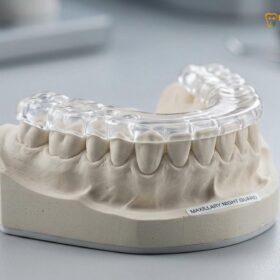
A custom hard acrylic or dual-laminate night guard is clinically recommended for implant patients because it provides a rigid surface that evenly distributes heavy occlusal loads.
Not all mouthguards are created equal, and selecting the correct material and design is paramount when fabricating an implant protection guard. Over-the-counter “boil-and-bite” guards made from soft thermoplastic materials are generally contraindicated for patients with dental implants. Soft materials tend to compress under pressure, which can inadvertently stimulate the masticatory muscles to chew and clench more vigorously during sleep. Furthermore, soft guards cannot evenly distribute forces across the arch, leaving individual implants vulnerable to isolated stress.
For optimal protection, dental professionals utilize custom-fabricated appliances based on precise digital or physical impressions of the patient’s mouth. The design must ensure that all teeth contact the guard simultaneously and evenly, a concept known as mutually protected occlusion [4]. If you are experiencing issues with an existing appliance, consulting a specialist about adjusting an ill-fitting occlusal device is crucial to prevent uneven force distribution.
Material Selection for Implant Protection
The choice of material depends on the severity of the bruxism and the opposing dentition. The following table outlines the primary materials used for night guard implants:
| Guard Material | Composition | Clinical Indication for Implants | Pros & Cons |
|---|---|---|---|
| Hard Acrylic (PMMA) | Rigid polymethyl methacrylate | Highly Recommended | Pros: Excellent force distribution, highly durable, prevents muscle engagement. Cons: Can feel tight initially, requires precise clinical adjustment. |
| Dual-Laminate | Hard PETG outer shell, soft polyurethane inner lining | Recommended | Pros: Hard occlusal surface for protection, soft interior for patient comfort. Cons: Slightly thicker than pure hard acrylic, shorter lifespan under severe grinding. |
| Soft EVA | Flexible ethylene vinyl acetate | Contraindicated | Pros: Comfortable, easy to adapt. Cons: Stimulates clenching, poor force distribution, wears out rapidly. |
The fabrication of a hard acrylic guard involves articulating the patient’s upper and lower jaw models to simulate their exact bite. The dentist will carefully adjust the biting surface of the guard so that the opposing teeth glide smoothly across it without catching. This flat-plane design allows the lower jaw to move freely during bruxism episodes, significantly reducing the strain on the temporomandibular joint (TMJ) and the implant restorations.
When to Get a Guard After Implant Surgery
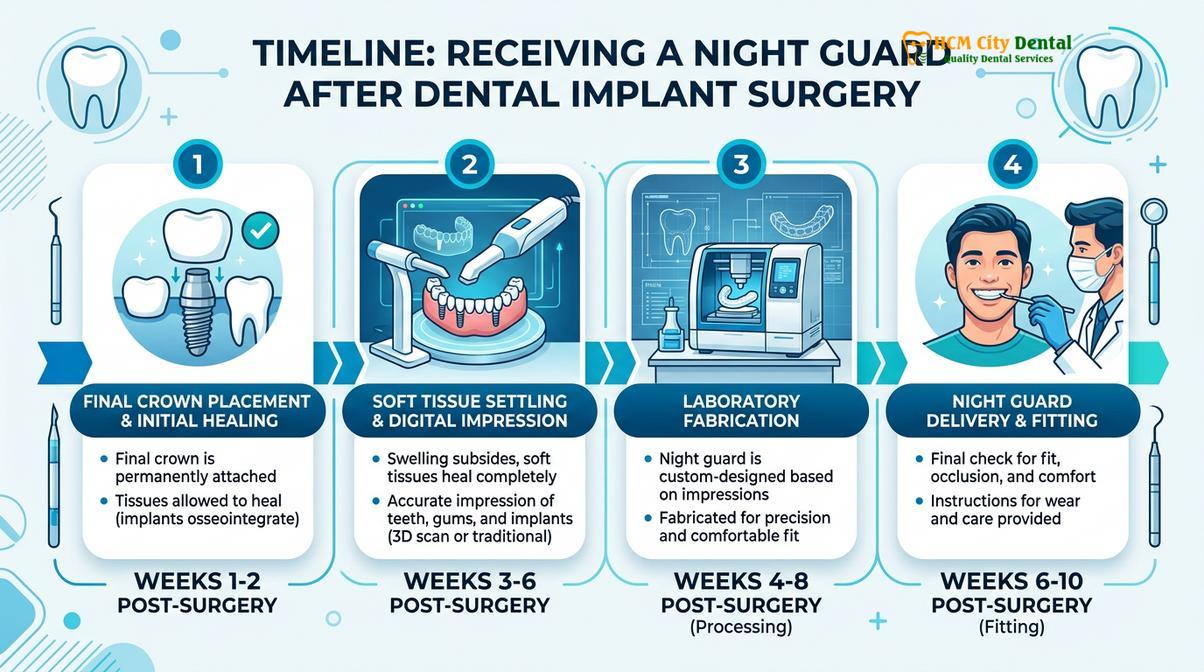
Patients should typically receive their final custom night guard immediately after the permanent implant crown or bridge is attached to ensure precise fit and optimal bite alignment.
The timeline for integrating a night guard into an implant treatment plan must be carefully managed. Dental implant therapy is a multi-phased process, typically involving surgical placement, a healing period (osseointegration), and the final restorative phase. The strategy for protecting the implant varies depending on the current phase of treatment.
During the initial healing phase, the implant is submerged beneath the gums or fitted with a low-profile healing abutment. Because the implant is not yet bearing any occlusal load, a specific implant guard is usually not required. However, if the patient is a severe bruxer and has natural teeth that still require protection, the dentist may modify their existing night guard by hollowing out the area over the surgical site to ensure no pressure is inadvertently applied to the healing tissue.
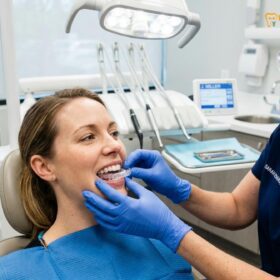
The critical moment for fabricating the definitive implant protection guard occurs immediately after the final permanent crown, bridge, or denture is delivered. Because the new restoration alters the patient’s occlusal scheme (bite), any previous night guards will no longer fit properly. Impressions or digital scans for the new guard are taken on the same day the final restoration is seated.
“The delivery of the final implant restoration is not the end of the treatment; it is the beginning of the maintenance phase. Fabricating a precise, hard acrylic night guard immediately upon seating the final crown is non-negotiable for patients with a history of parafunctional habits. It is the ultimate insurance policy for the surgical and restorative work we have completed.”
— Dr. Nguyen Van Cuong, Clinical Director
Patients are typically instructed to wear the guard every night. During the first few weeks, minor adjustments may be necessary as the jaw muscles adapt to the new appliance and the newly restored bite settles.
Full-Arch Implant Protection
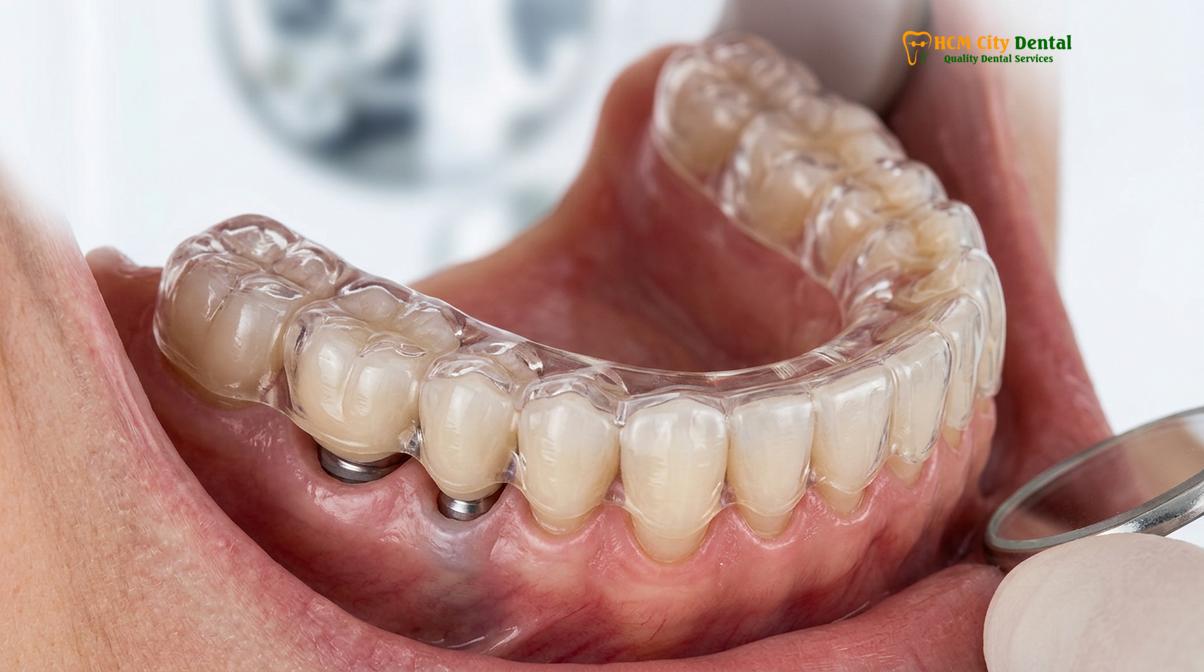
Patients with full-arch implant restorations require specialized flat-plane occlusal guards to protect the extensive prosthetic framework from nocturnal grinding stress.
The biomechanical dynamics change significantly when a patient receives a full-arch implant restoration, such as an All-on-4 or All-on-6 prosthesis. In these cases, the entire dental arch is replaced by a single, continuous framework supported by multiple implants. While these permanent tooth replacement solutions are incredibly robust, they present unique challenges regarding occlusal forces.
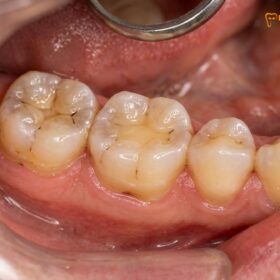
In a full-arch scenario, the lack of proprioception is absolute across the entire jaw. Patients have no natural teeth left in that arch to signal the brain when bite forces are too high. Furthermore, the prosthetic materials used—whether acrylic, composite, or zirconia—are subjected to massive cross-arch forces during sleep bruxism. If a patient grinds heavily on a full-arch zirconia bridge without protection, the opposing natural teeth can suffer severe attrition, or the ceramic itself may chip.
To protect dental implants grinding in full-arch cases, a specialized maxillary (upper) or mandibular (lower) hard guard is fabricated. The design principles focus on achieving bilateral simultaneous contacts. This means that when the patient bites down on the guard, all posterior teeth touch the acrylic at the exact same time, with equal intensity. The anterior (front) section of the guard is often designed to provide “anterior guidance,” ensuring that if the jaw slides forward or sideways, the back teeth immediately separate, preventing destructive lateral friction on the implant framework.
Cost-Benefit of Implant Protection
Investing in a custom night guard is a highly cost-effective preventive measure that safeguards the significant financial investment of dental implant surgery against premature failure.
Dental implant therapy represents a significant investment of both time and financial resources. The cost of surgical placement, abutments, and high-quality ceramic restorations reflects the advanced technology and clinical expertise required. Given this investment, the cost-benefit ratio of a custom night guard is overwhelmingly favorable.
A professionally fabricated hard acrylic night guard typically represents only a small fraction of the total cost of a single dental implant, and an even smaller percentage of a full-arch restoration. Conversely, the financial consequences of unprotected bruxism can be staggering. Replacing a fractured zirconia implant crown involves laboratory fees, clinical time, and potential component replacement. If the bruxism leads to screw fracture or implant failure, the patient faces the cost of surgical extraction, bone grafting, and starting the entire implant process over from the beginning.
Clinical Case Review: A 45-year-old male patient presented to HCMC Dental Clinic in Ho Chi Minh City with a fractured porcelain crown on a posterior molar implant. Clinical examination revealed severe wear facets on his remaining natural teeth, indicative of chronic sleep bruxism. The patient admitted to declining a night guard after his initial implant surgery three years prior. The clinical team had to replace the damaged implant crown and immediately fabricated a custom hard-acrylic night guard. Since utilizing the guard nightly, the patient has experienced zero mechanical complications over a five-year follow-up period, demonstrating the critical protective value of the appliance.
Beyond the financial aspect, the biological cost of implant failure is high. Each subsequent surgery in the same site carries a slightly lower success rate due to compromised bone vascularity and soft tissue scarring. Therefore, viewing a night guard for dental implants not as an optional accessory, but as an integral component of the prescription, is essential for long-term success [5].
When to See a Doctor
Regular clinical monitoring is vital for patients with dental implants, especially those who utilize a night guard to manage bruxism. While the guard provides excellent protection, the appliance itself will undergo wear and tear over time and must be evaluated periodically. You should schedule an evaluation with your dental provider if you experience any of the following symptoms:
- Visible Damage to the Guard: If your hard acrylic guard develops deep grooves, cracks, or perforations, it is no longer providing a smooth surface for your jaw to glide on and must be replaced.
- Implant Crown Mobility: If you feel any slight movement, clicking, or shifting when you bite down on your implant crown, this may indicate a loose abutment screw caused by occlusal overload. This requires immediate clinical intervention before the screw fractures.
- Pain or Discomfort: Dental implants should not hurt once fully healed. Pain upon biting, or a dull ache in the jawbone surrounding the implant, can be a sign of peri-implantitis or bone stress from heavy grinding.
- Changes in Bite Alignment: If your night guard feels excessively tight, or if your bite feels “off” when you remove the guard in the morning, the appliance may need professional adjustment to ensure forces are still being distributed evenly.
“Patients often assume that once an implant is placed, it requires no further attention. In reality, implants require meticulous maintenance. I advise all my implant patients to bring their night guards to every routine hygiene appointment so we can inspect the wear patterns. The guard tells us exactly what the jaw is doing at night.”
— Dr. Nguyen Van Cuong
If you are experiencing jaw pain, suspect you are grinding your teeth, or need to evaluate the condition of your current protective appliance, seeking a professional assessment is crucial. For comprehensive implant care and custom appliance fabrication, patients can rely on the expertise at HCMC Dental Clinic in Ho Chi Minh City to ensure their restorative investments are fully protected. It is also important to understand the differences between athletic and nocturnal dental protection, as sports guards are not suitable for nighttime bruxism management.
Frequently Asked Questions
Can bruxism damage dental implants?
Yes, bruxism can severely damage dental implants by exerting excessive occlusal forces that lead to porcelain chipping, screw loosening, or even bone loss. Because implants lack a natural shock-absorbing ligament, they are highly vulnerable to the extreme pressures generated during nighttime teeth grinding. Continuous grinding without protection compromises the structural integrity of both the prosthetic crown and the titanium fixture embedded in the jawbone.
When should I start wearing a guard after implants?
You should begin wearing a custom night guard immediately after your final implant crown or bridge is permanently attached. During the initial surgical healing phase, your dentist may provide a modified temporary guard if you are a severe grinder, but the definitive protective appliance must be custom-fitted to your new permanent bite alignment to ensure proper force distribution.
What guard protects implants best?
A custom-fitted hard acrylic or dual-laminate night guard provides the best protection for dental implants. These rigid materials prevent the jaw from locking into a grinding pattern and evenly distribute heavy bite forces across the entire dental arch, whereas soft over-the-counter guards can actually stimulate further chewing and clenching muscle activity.
Can grinding cause implant failure?
Yes, chronic and unprotected grinding can lead to late-stage implant failure. The continuous micro-movements and excessive stress can disrupt the bone-to-implant interface (osseointegration), causing progressive crestal bone loss, titanium fixture fracture, or failure of the abutment connection, ultimately requiring surgical removal and replacement of the implant.
Is a guard included with implant treatment?
A night guard is typically not included in the standard cost of dental implant surgery and is billed as a separate preventive appliance. However, for patients with a documented history of severe bruxism or those receiving full-arch restorations, many dental professionals strongly mandate its fabrication as an essential final step of the comprehensive treatment plan.
References
- Journal of Prosthetic Dentistry. Biomechanics of dental implants and occlusal overload. (2019).
- Clinical Oral Implants Research. Effects of bruxism on implant survival rates. (2020).
- International Journal of Oral & Maxillofacial Implants. Crestal bone loss associated with parafunctional habits. (2018).
- Journal of Clinical Periodontology. The role of occlusal guards in implant dentistry. (2021).
- American College of Prosthodontists. Guidelines for the maintenance of implant restorations. (2022).
For pricing, booking, and a free clinical assessment, visit our Night Guard & Mouthguard service page at HCMC Dental Clinic in Ho Chi Minh City.