The idea that a properly fitted night guard will shift your teeth is a myth. While a custom-made appliance protects against bruxism without altering your bite, poorly designed over-the-counter guards can cause unwanted orthodontic movement. Understanding the clinical differences ensures your smile remains safely aligned.
Clinical Summary:
The widespread concern regarding the night guard moving teeth myth stems from patients experiencing temporary bite changes in the morning or suffering the consequences of ill-fitting, store-bought appliances. Clinically, a custom-fabricated occlusal splint is a passive device; it is meticulously engineered from precise dental impressions to lock the teeth into their current anatomical positions, distributing grinding forces evenly across the arch. Because orthodontic movement requires continuous, directional pressure to remodel the alveolar bone, a properly adjusted custom guard cannot cause teeth to shift. However, over-the-counter boil-and-bite guards often feature uneven biting surfaces that can inadvertently apply active orthodontic forces, leading to genuine bite misalignment. Dentists strongly advise professional fabrication and regular clinical adjustments to ensure the appliance protects the enamel without compromising the patient’s occlusal equilibrium.
Key Takeaways:
- Custom night guards are passive appliances designed to maintain your bite, not alter it.
- Morning bite stiffness is usually a temporary muscle relaxation effect, not actual tooth movement.
- Over-the-counter (OTC) boil-and-bite guards are the primary cause of unintended orthodontic shifting.
- Orthodontic tooth movement requires continuous, directional force, which a flat-plane custom guard does not provide.
- Regular dental check-ups are essential to adjust the guard’s surface and ensure optimal occlusal harmony.
The Teeth Movement Concern
Patients often worry that wearing a night guard will act like an orthodontic appliance and shift their teeth. In reality, a clinically prescribed guard is designed to maintain your current bite, not alter it.
When patients are first diagnosed with sleep bruxism (nocturnal teeth grinding and clenching), the recommendation to wear an oral appliance every night can trigger anxiety. A common fear is the night guard moving teeth myth—the belief that inserting a rigid piece of plastic over the dental arch for eight hours a night will inevitably push the teeth out of alignment. To understand why this is a misconception when dealing with professional appliances, we must examine the biological mechanisms of how teeth actually move within the human jaw.
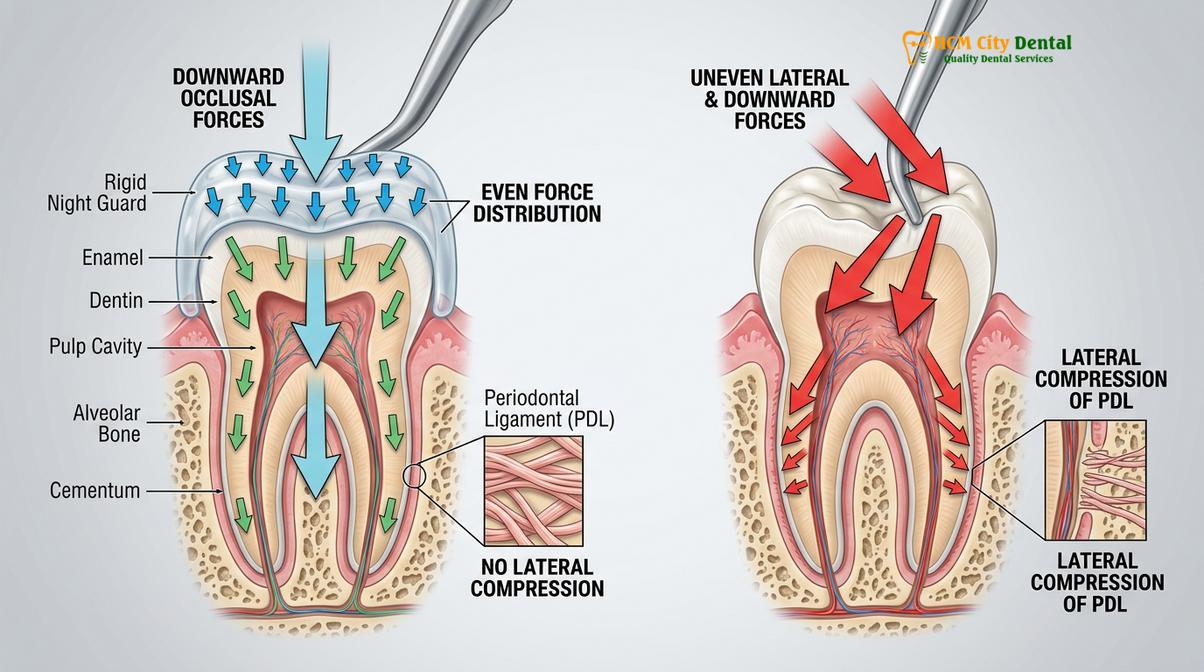
Teeth are not rigidly fused to the jawbone. Instead, they are suspended in their bony sockets by a complex network of fibers called the periodontal ligament (PDL). The PDL acts as a biological shock absorber, allowing for microscopic movements during chewing. For a tooth to permanently change its position—as it does during orthodontic treatment with braces or clear aligners—it requires the application of a continuous, light, and highly directional force over an extended period. This sustained pressure compresses the PDL on one side of the root, stimulating specialized cells called osteoclasts to break down bone, while simultaneously stretching the PDL on the opposite side, prompting osteoblasts to build new bone[1]. This cellular remodeling process takes days and weeks of constant pressure to achieve even a fraction of a millimeter of movement.
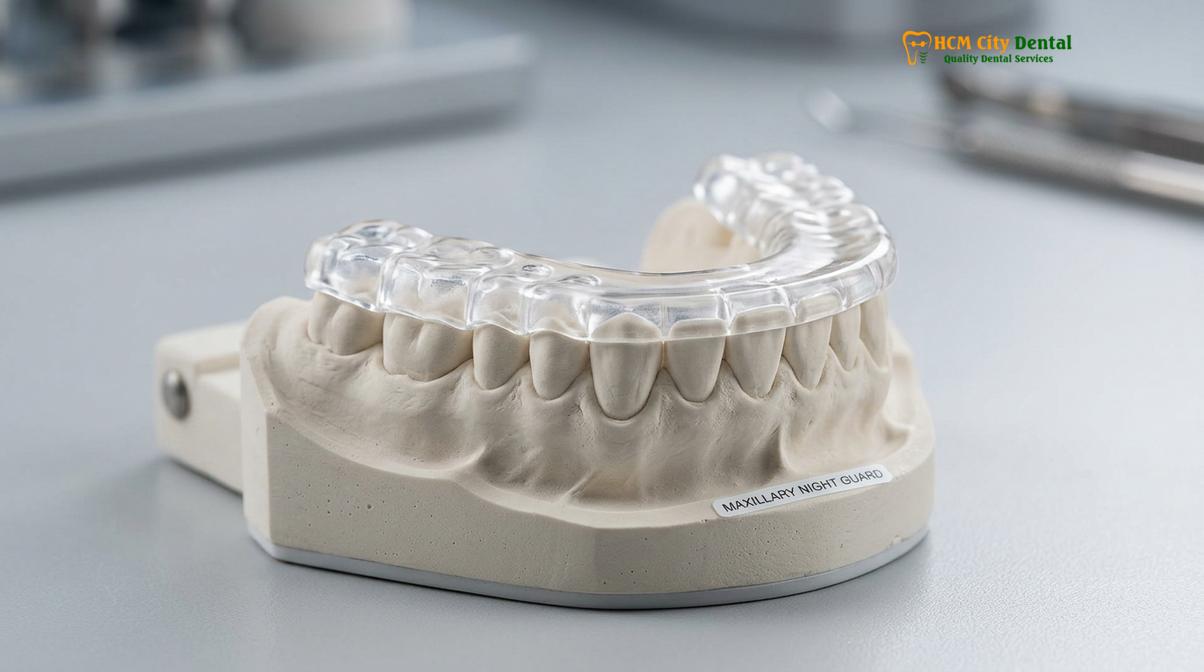
A custom-fabricated night guard, conversely, is classified as a passive appliance. It is not designed to apply directional pressure to any individual tooth. Instead, it is molded to the exact current contours of your dental arch. When you seat a custom guard, it acts as a stabilizing splint. Rather than pushing a tooth in a specific direction, it effectively locks all the teeth together into a single, unified block. If you clench your jaw, the force is distributed evenly across the entire surface of the appliance, dissipating the energy rather than concentrating it on a single point. Therefore, the biomechanical environment required for orthodontic tooth movement is entirely absent when wearing a properly designed custom splint[2].
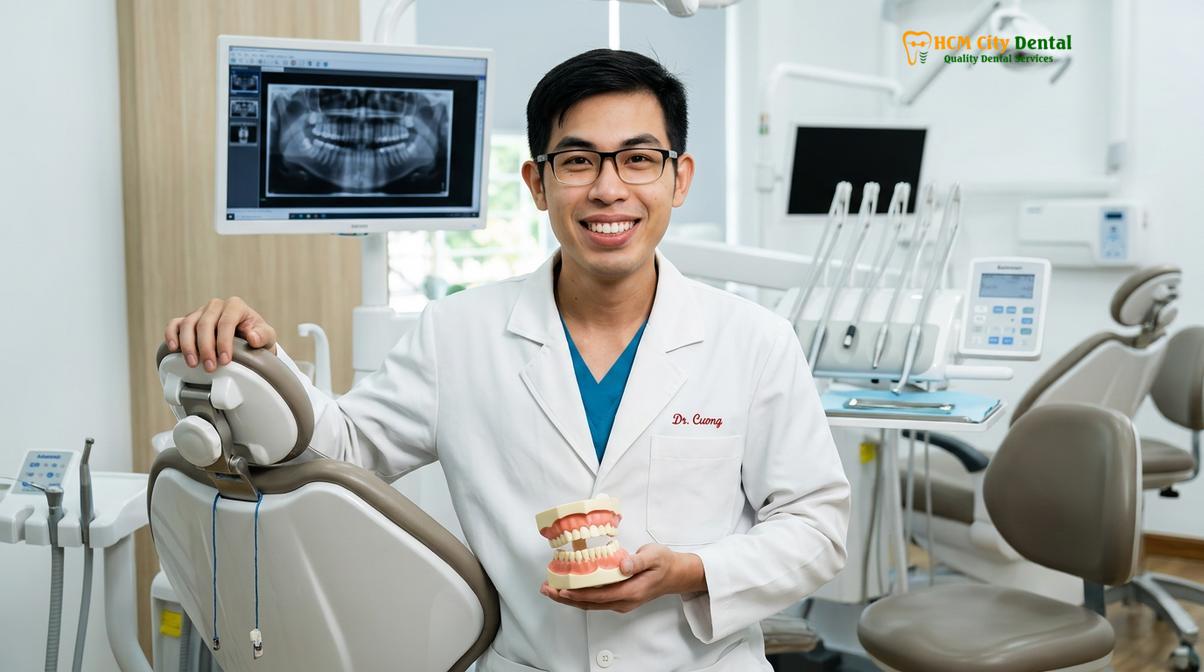
Dr. Nguyen Van Cuong, a leading specialist at HCMC Dental Clinic, frequently addresses this concern during bruxism consultations. He notes that patient anxiety often stems from a misunderstanding of how dental appliances function. While active appliances (like Invisalign) are programmed with microscopic discrepancies to force teeth into new positions, passive appliances (like night guards and retainers) are exact replicas of the current dentition, designed specifically to prevent any form of night guard teeth movement.
How Custom Guards Prevent Movement
Custom night guards are fabricated from precise dental impressions to lock teeth into their current positions. This exact fit distributes occlusal forces evenly, preventing any single tooth from experiencing shifting pressure.
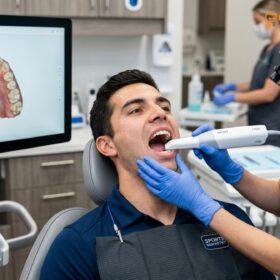
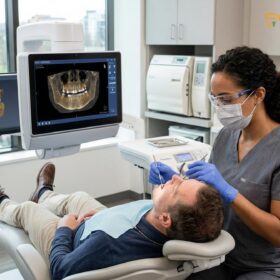
The clinical efficacy of a custom night guard lies entirely in its precision. The workflow for creating a professional appliance is a meticulous process designed to capture the exact micro-anatomy of the patient’s mouth. This process begins with either a high-resolution intraoral digital scan or a highly accurate polyvinyl siloxane (PVS) physical impression. These records capture not just the position of the teeth, but the exact contours of the clinical crowns, the interproximal spaces, and the gingival margins.
Once the digital or physical model is transferred to the dental laboratory, the fabrication process ensures that the internal surface of the night guard adapts intimately to the teeth without applying active pressure. Modern dental laboratories often utilize CAD/CAM (Computer-Aided Design and Computer-Aided Manufacturing) technology to mill the guard from a solid puck of polymethyl methacrylate (PMMA) or use advanced 3D printing resins. This results in an appliance that fits with microscopic accuracy. When the patient inserts the guard, it snaps into place securely, utilizing the natural undercuts of the teeth for retention without exerting lateral forces.
Furthermore, a custom guard acts as a full-arch splint. By covering the entire occlusal (biting) surface of either the upper or lower teeth, it ties the individual teeth together. If a patient experiences severe bruxism and grinds their teeth laterally, the custom guard absorbs the shear forces. Because the teeth are splinted together by the rigid or semi-rigid material, no single tooth can be pushed out of alignment. This splinting effect is a primary reason why custom appliances are highly effective at preventing night guard shifting teeth.
“In clinical prosthodontics, a properly adjusted occlusal splint serves as a passive retention device. By providing a stable, frictionless surface for the opposing arch and intimately adapting to the supporting teeth, it neutralizes pathological grinding forces while maintaining absolute orthodontic stability.”
The choice of material also plays a crucial role in maintaining tooth position. As detailed in our clinical comparison of differences between hard and soft night guards, hard acrylic guards offer the highest level of stability. They do not compress or distort under heavy clenching forces. Soft guards, while sometimes perceived as more comfortable initially, can occasionally encourage more clenching (a phenomenon known as the “chewing gum effect”) and may distort over time if not properly monitored. However, regardless of whether a hard, soft, or dual-laminate material is chosen, the fundamental principle remains: the custom fit ensures that the appliance acts as a protective barrier, not an orthodontic mover.
To fully understand the protective nature of these appliances, patients can review our protective dental splints hub, which outlines how these custom devices are integrated into a comprehensive treatment plan to preserve both tooth structure and alignment.
When OTC Guards Cause Problems
Store-bought, boil-and-bite guards lack the precision required for long-term use and can inadvertently apply uneven pressure. This uneven force is the primary culprit behind actual cases of unwanted tooth shifting.
While the myth that all night guards move teeth is false, the danger of tooth movement becomes a very real clinical reality when patients opt for over-the-counter (OTC) boil-and-bite mouthguards. These mass-produced products are widely available in pharmacies and sporting goods stores, marketed as a quick and inexpensive fix for teeth grinding. However, from a dental perspective, they present significant risks to occlusal stability and are the primary source of the mouth guard moving teeth phenomenon.
The fundamental flaw of OTC guards lies in their adaptation process. Patients are instructed to soften the thermoplastic material in boiling water and then bite into it to create a custom fit. This DIY approach is fraught with clinical errors. First, the patient is biting into the soft material without professional guidance, often resulting in an uneven bite registration. The jaw may be slightly skewed, or the patient may bite down harder on one side than the other. As the material cools and hardens, it locks in these inaccuracies, creating deep, uneven indentations (interferences) on the biting surface.
When the patient wears this distorted guard during sleep, the consequences can be severe. During a bruxism episode, the jaw attempts to move laterally or anteriorly. However, the opposing teeth are trapped in the deep, uneven grooves of the OTC guard. As the jaw muscles exert tremendous force (often exceeding 250 pounds of pressure per square inch during sleep bruxism), the teeth are pushed against the rigid walls of these indentations. This creates the exact continuous, directional force required for orthodontic tooth movement[3]. Over weeks and months, the teeth are literally pushed out of their natural alignment.
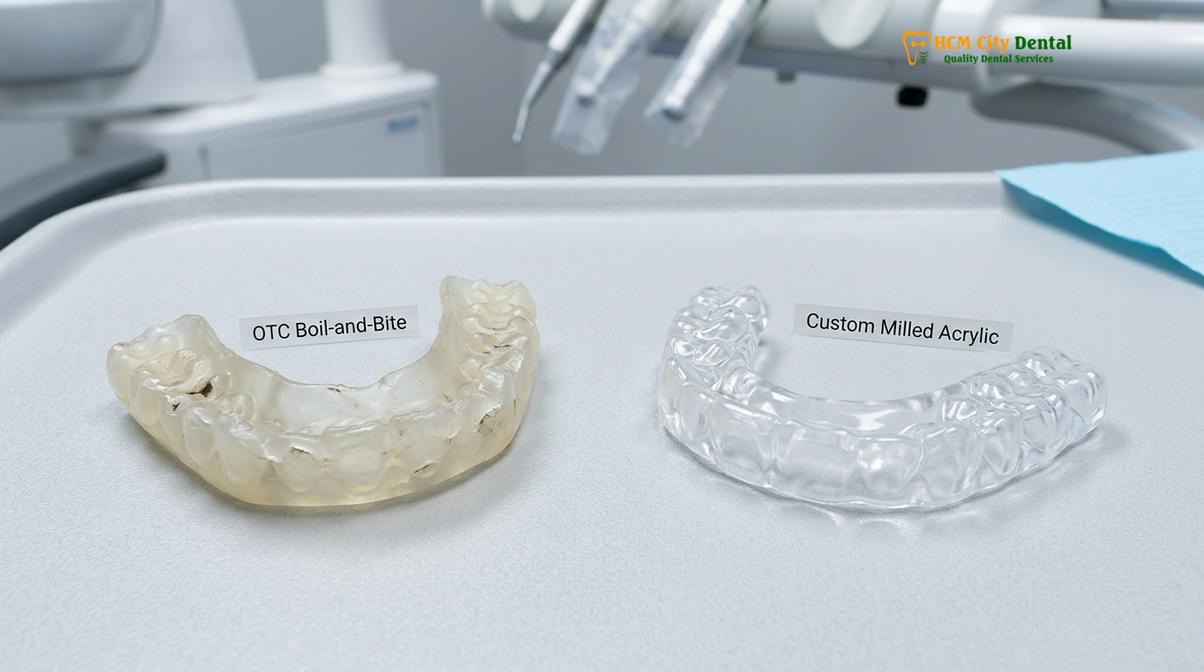
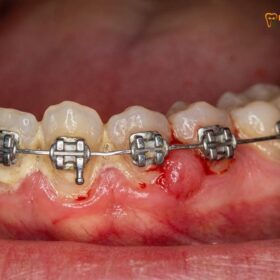
Furthermore, OTC guards are often bulky and do not cover the posterior teeth completely, or they may be too thick in the posterior region. If a guard only covers the front teeth, the back teeth may over-erupt (grow downwards or upwards to find contact). If the guard is too thick in the back, it can intrude the posterior teeth (push them into the bone), leading to an anterior open bite where the front teeth no longer touch when the jaw is closed. These severe occlusal changes require complex and expensive orthodontic or prosthodontic intervention to correct.
For a deeper understanding of why professional fabrication is non-negotiable for long-term wear, patients should review the clinical comparison of custom and store-bought guards. The initial cost savings of an OTC guard are rapidly eclipsed by the potential dental damage they can cause.
Signs of Unwanted Tooth Shifting
If your bite feels misaligned hours after removing your guard, or if you experience new jaw pain and difficulty chewing, your appliance may be exerting unintended orthodontic forces.
It is crucial for patients to distinguish between normal, transient morning sensations and actual pathological tooth movement. When you wake up and remove a custom night guard, it is entirely normal for your bite to feel slightly “off” or different for about 15 to 30 minutes. This temporary sensation is not a sign of the night guard moving teeth myth coming true. Instead, it is a neuromuscular phenomenon. Throughout the night, the guard slightly separates the upper and lower teeth, allowing the lateral pterygoid muscles and the temporomandibular joint (TMJ) to relax into a more neutral, decompressed posture. When you remove the guard, your jaw muscles need a few minutes to recalibrate and find their habitual intercuspal position (the normal way your teeth fit together)[4].
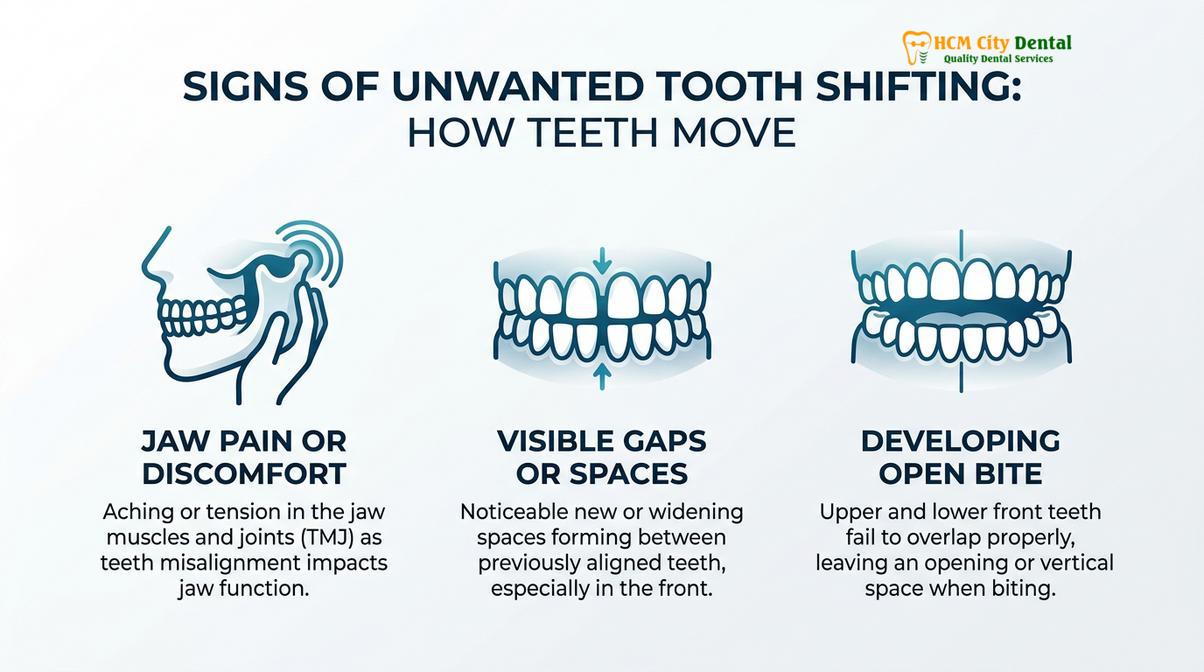
However, if this altered bite sensation persists for hours, or if you notice physical changes in your dental alignment, it indicates that the appliance is exerting an unintended night guard orthodontic effect. Recognizing the clinical signs of unwanted shifting is essential for preventing long-term damage.
| Clinical Symptom | Normal Adaptation (Transient) | Pathological Shifting (Requires Attention) |
|---|---|---|
| Bite Alignment | Feels slightly “off” for 15-30 minutes after waking. | Bite feels misaligned all day; teeth do not fit together normally. |
| Tooth Sensitivity | Mild, generalized awareness of the teeth for the first few days of wear. | Sharp, localized pain in specific teeth, especially when chewing. |
| Visual Changes | No visible changes to tooth position or spacing. | New gaps forming between teeth (diastema) or crowding. |
| Appliance Fit | Snug but comfortable; easy to seat and remove. | Extremely tight, requires force to seat, or no longer fits properly. |
| Jaw Posture | Relaxed jaw muscles in the morning. | Inability to bring front or back teeth together (open bite). |
If you experience any of the pathological signs listed above, it is imperative to discontinue wearing the appliance immediately and seek professional evaluation. Continuous wear of a guard that is actively moving teeth can lead to severe occlusal trauma, periodontal ligament inflammation, and exacerbation of TMJ disorders.
A 34-year-old patient presented to HCMC Dental Clinic in Ho Chi Minh City complaining of an inability to chew properly. The patient had been using a pharmacy-bought boil-and-bite guard for six months to manage stress-induced clenching. Clinical examination by Dr. Nguyen Van Cuong revealed a newly developed posterior open bite; the patient’s molars no longer touched when closing. The bulky OTC guard had intruded the posterior teeth. Treatment required immediate cessation of the OTC guard, a period of neuromuscular rehabilitation, and the eventual fabrication of a precision-milled flat-plane acrylic splint to stabilize the bite and allow the posterior teeth to passively erupt back into occlusion.
Proper Guard Design Principles
A clinically sound night guard must feature a flat occlusal plane, precise internal adaptation, and proper canine guidance to ensure it protects against bruxism without inducing an orthodontic effect.
To guarantee that a night guard serves its protective function without causing harm, dental professionals adhere to strict biomechanical design principles. The most critical aspect of a custom night guard’s design is its occlusal surface—the part of the guard that the opposing teeth bite against. Unlike the deep, locking grooves of an OTC guard, a professionally designed stabilization splint (often referred to as a Michigan splint) features a meticulously adjusted, flat occlusal plane.
This flat surface is crucial. When the patient closes their mouth, all opposing teeth should contact the flat surface of the guard simultaneously and with equal intensity. This is known as bilateral simultaneous contact. By ensuring even contact, the forces of clenching are distributed across the entire dental arch, preventing any single tooth from bearing excessive load. Furthermore, because the surface is flat, the opposing teeth are free to glide smoothly across the guard during lateral (side-to-side) or protrusive (forward) grinding movements. This freedom of movement prevents the teeth from being locked into interferences, thereby eliminating the lateral forces that cause the night guard orthodontic effect.
Another vital design element is the incorporation of anterior guidance, specifically canine rise. In a healthy natural bite, when you slide your jaw to the side, your canine teeth should guide the movement, causing the back teeth to separate slightly. This protects the posterior teeth from damaging lateral forces. A well-designed custom night guard replicates this protective mechanism. The dentist will carefully build up the acrylic in the canine region of the guard so that during a grinding episode, the opposing canine glides up a gentle ramp, disoccluding (separating) all the posterior teeth. This significantly reduces muscle activity and protects the entire stomatognathic system[5].
“The primary objective of occlusal splint therapy is to provide a reversible, non-invasive biomechanical environment that promotes neuromuscular relaxation while strictly maintaining the existing spatial relationship of the dentition.”
Achieving this level of precision requires careful clinical adjustment. When a patient receives their custom guard, the dentist does not simply hand it over. They use ultra-thin articulating paper (often 8 to 12 microns thick) to mark the exact points where the opposing teeth contact the guard. The dentist then uses specialized acrylic burs to micro-adjust the surface, eliminating any high spots or interferences until perfect occlusal equilibrium is achieved. This meticulous attention to detail is what separates a medical-grade appliance from a dangerous store-bought piece of plastic.
Patients interested in learning more about the destructive forces of grinding and how proper design mitigates them can explore our detailed guide on the long-term effects of bruxism on teeth and gain a deeper understanding bruxism and its treatments.
When to Consult Your Dentist
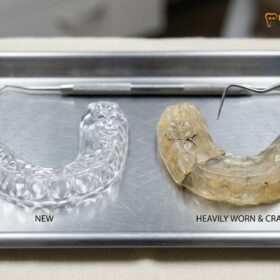
While a custom night guard is a highly durable and effective treatment, it is not a “set it and forget it” device. The acrylic material is designed to be slightly softer than human enamel, meaning it will gradually wear down over time as it absorbs the forces of bruxism. As the guard wears, the carefully calibrated flat plane and canine guidance can become altered. Therefore, regular dental supervision is essential to ensure the appliance continues to function safely and effectively.
You should bring your night guard to every routine dental check-up. During these visits, your dentist will examine the appliance for signs of excessive wear, micro-fractures, or bacterial buildup. More importantly, they will re-evaluate your bite with the guard in place, using articulating paper to ensure that the occlusal contacts remain even and that no new interferences have developed. If the guard has worn unevenly, the dentist can easily resurface and polish it chairside, restoring its optimal protective function.
Furthermore, if you undergo any major dental work—such as receiving a new crown, a dental implant, or a large filling—the shape of your teeth will change. Your existing night guard will likely no longer fit perfectly and could begin to exert unwanted pressure. In these cases, the guard must be professionally adjusted or, in some instances, completely remade to accommodate the new dental anatomy.
If you are experiencing jaw pain, suspect your current appliance is altering your bite, or need a comprehensive guide to stopping teeth grinding, professional intervention is required. Do not attempt to adjust or boil a guard yourself. For those struggling with nocturnal habits, reviewing information on teeth grinding during sleep can provide further insights into management strategies. For personalized care, expert evaluation, and precision appliance fabrication, schedule a consultation with the specialists at HCMC Dental Clinic in Ho Chi Minh City.
Frequently Asked Questions
Can a night guard shift your teeth?
A professionally fabricated, custom-fitted night guard will not shift your teeth. It is designed as a passive appliance to lock your teeth in their current position and protect them from grinding forces. However, poorly fitting over-the-counter guards can exert uneven pressure and cause unwanted movement.
Why do my teeth feel different after wearing a guard?
It is normal for your bite to feel slightly different for 15 to 30 minutes after removing your guard. This occurs because your jaw muscles relax into a different posture overnight, temporarily altering your proprioception, not because your teeth have actually moved. Once the muscles recalibrate, your normal bite sensation will return.
Can a poorly fitted guard move teeth?
Yes, a poorly fitted or distorted store-bought guard can act like an unintended orthodontic appliance. If the material applies continuous, uneven pressure to specific teeth while you sleep, it can stimulate the periodontal ligament and cause actual tooth shifting over time, potentially leading to severe bite misalignment.
Should a night guard feel tight?
A custom night guard should feel snug and secure, but it should not cause active pain or intense pressure on individual teeth. If the appliance feels painfully tight, causes morning toothaches, or requires excessive force to seat or remove, it needs to be clinically adjusted by your dentist to prevent unwanted forces.
Do custom guards prevent tooth movement?
Yes, custom night guards act as a rigid splint that holds the dental arch together. By distributing occlusal forces evenly across all teeth, they effectively prevent individual teeth from shifting, acting similarly to an orthodontic retainer while simultaneously protecting against bruxism and enamel wear.
References
- Journal of Prosthetic Dentistry. Biomechanics of occlusal splint therapy and force distribution. (2021).
- American Journal of Orthodontics and Dentofacial Orthopedics. Periodontal ligament response to continuous versus intermittent forces. (2019).
- Journal of Clinical Sleep Medicine. Efficacy and complications of custom versus prefabricated oral appliances in sleep bruxism. (2020).
- International Journal of Prosthodontics. Long-term occlusal changes associated with over-the-counter bite guards. (2022).
- Journal of Oral Rehabilitation. Proprioceptive changes in the stomatognathic system following nocturnal splint wear. (2018).