Bruxism is primarily caused by psychological stress and sleep disorders, leading to involuntary jaw clenching and teeth grinding. Chronic anxiety activates the central nervous system, while sleep disruptions like apnea trigger micro-arousals that stimulate masticatory muscles, resulting in severe dental wear and facial pain.
Clinical Summary:
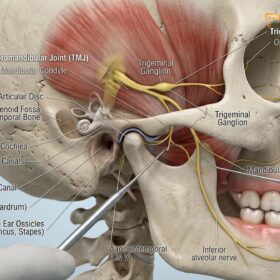
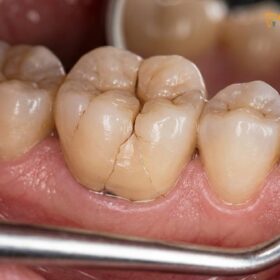
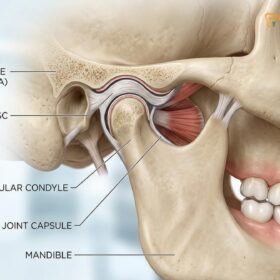
Bruxism is a multifactorial condition characterized by the repetitive, involuntary activity of the masticatory muscles. Clinically divided into awake bruxism (primarily clenching) and sleep bruxism (rhythmic grinding), its etiology is deeply rooted in central nervous system regulation rather than merely peripheral dental factors. The primary drivers include psychological distress, allostatic load, and sleep-related breathing disorders such as obstructive sleep apnea (OSA). Secondary triggers encompass pharmacological agents, particularly selective serotonin reuptake inhibitors (SSRIs), and lifestyle factors like excessive caffeine or alcohol consumption. According to Dr. Nguyen Van Cuong, a comprehensive diagnostic approach is essential, as addressing the root cause—whether it requires stress management, sleep medicine intervention, or occlusal protection—is critical to preventing irreversible structural damage to the dentition and the temporomandibular joint (TMJ).
Key Takeaways:
- Stress and Anxiety: Chronic psychological stress activates the fight-or-flight response, significantly increasing jaw muscle tension and triggering both awake and sleep bruxism.
- Sleep Apnea Connection: Sleep-disordered breathing causes micro-arousals; the brain reflexively commands the jaw to clench to reopen the collapsed airway.
- Medication Side Effects: Antidepressants, particularly SSRIs, can alter dopamine pathways in the brain, leading to secondary, drug-induced teeth grinding.
- Lifestyle Triggers: High consumption of caffeine, alcohol, and tobacco disrupts sleep architecture and increases central nervous system excitability.
- Clinical Protection: While addressing the root cause is paramount, custom-fabricated occlusal splints are the gold standard for protecting teeth from immediate mechanical damage.
Stress and Anxiety as Primary Triggers
Psychological stress and anxiety are the most dominant triggers for bruxism, activating the central nervous system and causing involuntary hypertonicity in the jaw muscles as part of the body’s physiological fight-or-flight response.
The correlation between psychological distress and the onset of involuntary masticatory muscle activity is one of the most well-documented phenomena in dental medicine. When an individual experiences high levels of anxiety, frustration, or chronic stress, the body undergoes a profound physiological transformation governed by the autonomic nervous system. This state of hyperarousal is not merely an emotional experience; it manifests physically, often targeting the orofacial musculature. The causes of teeth grinding are deeply intertwined with how the brain processes and responds to environmental and emotional pressures.[1]
At the core of this response is the hypothalamic-pituitary-adrenal (HPA) axis. When a stressor is perceived, the hypothalamus releases corticotropin-releasing hormone (CRH), which cascades through the system to ultimately trigger the adrenal glands to release cortisol and adrenaline. This hormonal surge prepares the body for a “fight or flight” scenario. Heart rate increases, pupils dilate, and muscle tone elevates significantly. Because modern stressors—such as workplace pressure, financial anxiety, or interpersonal conflicts—rarely require a physical fight or flight, this pent-up muscular energy often finds an outlet in the jaw. The masseter and temporalis muscles, which are among the strongest muscles in the human body relative to their size, become chronically tense, leading to awake clenching and nocturnal grinding.[1]
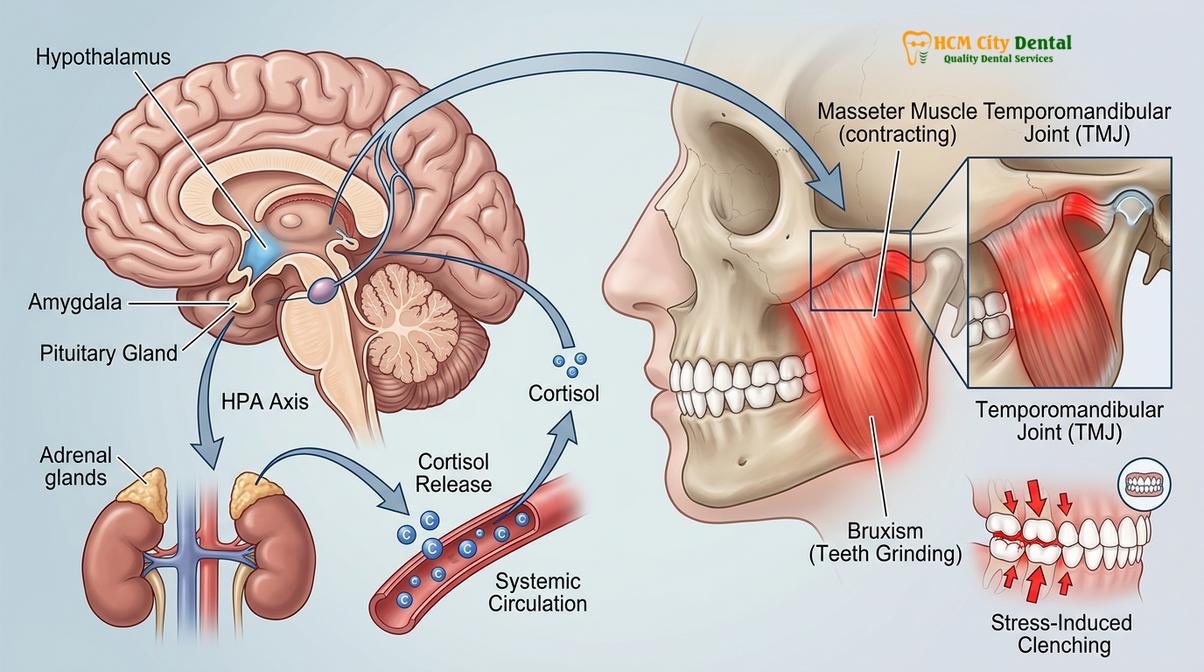
Furthermore, chronic stress leads to a condition known as allostatic overload, where the body’s adaptive mechanisms become exhausted. In this state, the central nervous system remains in a perpetual state of vigilance. The locus coeruleus, a nucleus in the pons of the brainstem involved with physiological responses to stress and panic, increases the release of norepinephrine. This neurotransmitter directly influences the motor neurons that control the jaw, lowering the threshold for involuntary muscle contractions. Consequently, patients experiencing high allostatic load often exhibit severe awake bruxism, subconsciously bracing or thrusting their mandible while concentrating, driving, or experiencing emotional turbulence.[1]
“Bruxism is often the physical manifestation of an overwhelmed nervous system. When we see rapid, severe enamel attrition in a structurally sound bite, our first clinical inquiry must address the patient’s psychosocial environment and stress management protocols.”
The clinical presentation of stress-induced bruxism is distinct. Patients frequently report waking up with a dull, aching headache localized around the temples, profound fatigue in the facial muscles, and a sensation that their jaw is “locked” or stiff. Over time, this chronic hypertonicity can lead to temporomandibular joint disorders (TMD), characterized by clicking, popping, and restricted mouth opening. Recognizing stress and bruxism as a coupled pathology is essential for effective treatment; mechanical protection of the teeth must be paired with cognitive behavioral therapy, relaxation techniques, or stress reduction strategies to achieve long-term resolution.
Sleep Disorders and Bruxism Link
Sleep bruxism is heavily linked to sleep-disordered breathing, particularly obstructive sleep apnea, where the brain triggers jaw clenching to reopen a collapsed airway during micro-arousals.
While awake bruxism is strongly tied to conscious emotional states, sleep bruxism is increasingly recognized as a sleep-related movement disorder closely associated with disruptions in sleep architecture. The most significant and clinically critical correlation exists between sleep bruxism and Obstructive Sleep Apnea (OSA). OSA is a condition where the soft tissues at the back of the throat collapse during sleep, partially or completely blocking the airway. This leads to a drop in blood oxygen levels (hypoxia) and an increase in carbon dioxide (hypercapnia).[2]
When the brain detects this dangerous drop in oxygen, it initiates a “micro-arousal”—a brief, subconscious awakening designed to restore breathing. This micro-arousal is accompanied by a massive spike in sympathetic nervous system activity. Heart rate spikes, blood pressure surges, and a reflexive motor command is sent to the orofacial muscles. The brain signals the masseter and pterygoid muscles to contract forcefully, thrusting the lower jaw forward. This mandibular advancement is a survival mechanism intended to pull the tongue forward and mechanically reopen the collapsed airway. The friction generated by this forceful, rhythmic jaw movement is what we clinically identify as sleep bruxism.[2]
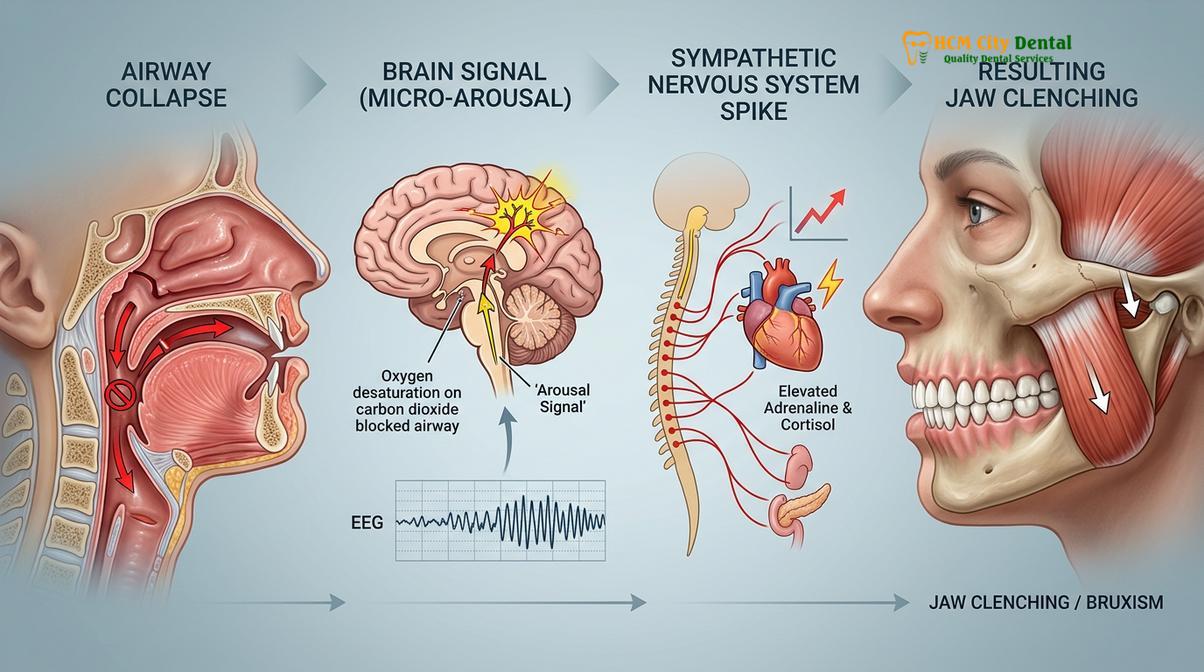
Polysomnographic studies (sleep studies) have mapped the exact sequence of these events. The sequence typically begins with an increase in autonomic sympathetic activity, followed by an acceleration in heart rate, an increase in brain wave frequency (EEG arousal), and finally, rhythmic masticatory muscle activity (RMMA). This sequence proves that in many cases, sleep bruxism causes are secondary to respiratory distress rather than being an isolated dental habit. Therefore, treating the bruxism without evaluating the airway can be a critical clinical oversight.[2]
Clinical Warning: Patients with undiagnosed Obstructive Sleep Apnea should avoid over-the-counter, soft “boil-and-bite” mouthguards. These bulky devices can push the tongue further back into the throat, worsening the airway obstruction and potentially increasing the frequency of apneic events and reflexive teeth grinding.
Beyond sleep apnea, other sleep disturbances also contribute to bruxism. Fragmented sleep, whether caused by environmental noise, restless leg syndrome, or poor sleep hygiene, increases the frequency of transitions between sleep stages. Most bruxism episodes occur during the lighter stages of non-REM sleep (stages N1 and N2) and during transitions toward REM sleep. When sleep is highly fragmented, the patient spends more time in these transitional phases, thereby increasing the statistical probability of RMMA events. Addressing the underlying sleep architecture is therefore a fundamental component of managing nocturnal teeth grinding.
Medications That Cause Grinding
Certain prescription medications, particularly SSRI and SNRI antidepressants, can induce secondary bruxism by altering the delicate balance of dopamine and serotonin in the brain’s motor control centers.
Secondary bruxism, or iatrogenic bruxism, refers to teeth grinding that is directly caused by an external chemical agent, most commonly prescription medications. The most well-documented pharmacological triggers are antidepressants, specifically Selective Serotonin Reuptake Inhibitors (SSRIs) and Serotonin-Norepinephrine Reuptake Inhibitors (SNRIs). Medications such as fluoxetine, sertraline, citalopram, and venlafaxine are widely prescribed for depression and anxiety, but they carry a known risk of inducing severe jaw clenching and grinding.[3]
The pathophysiology behind SSRI-induced bruxism lies in the complex interplay of neurotransmitters within the central nervous system, particularly in the basal ganglia, which is responsible for coordinating smooth, voluntary motor movements and suppressing involuntary ones. SSRIs work by increasing the availability of serotonin in the synaptic cleft. However, an excess of serotonin in certain neural pathways can exert an inhibitory effect on dopaminergic neurons in the ventral tegmental area. Dopamine is crucial for motor control; when its activity is suppressed by elevated serotonin, it creates a localized hypodopaminergic state. This imbalance manifests as extrapyramidal symptoms, including akathisia (restlessness) and involuntary rhythmic contractions of the jaw muscles.[3]
| Medication Class | Common Examples | Mechanism of Action | Clinical Management Strategy |
|---|---|---|---|
| SSRIs (Antidepressants) | Fluoxetine, Sertraline, Citalopram | Serotonin-induced dopamine suppression in the basal ganglia. | Dose adjustment, switching to non-SSRI (e.g., Bupropion), or adding Buspirone. |
| SNRIs (Antidepressants) | Venlafaxine, Duloxetine | Increased noradrenergic tone and dopamine suppression. | Medical consultation for alternative therapies; occlusal splint therapy. |
| ADHD Stimulants | Methylphenidate, Amphetamines | Central nervous system hyperarousal and increased muscle tone. | Timing of dosage to avoid nighttime peaks; magnesium supplementation. |
| Antipsychotics | Haloperidol, Risperidone | Direct dopamine receptor blockade causing tardive dyskinesia. | Neurological evaluation; adjustment of psychiatric medication. |
Patients experiencing medication-induced bruxism often notice the onset of symptoms within a few weeks of starting the drug or increasing the dosage. The grinding is typically severe and occurs during both wakefulness and sleep. It is crucial that patients do not abruptly discontinue their psychiatric medications upon noticing these symptoms. Instead, a collaborative approach between the prescribing physician and the dentist is required. The physician may opt to lower the dosage, switch to an atypical antidepressant like bupropion (which affects dopamine and norepinephrine rather than serotonin), or prescribe a counteracting agent like buspirone. Meanwhile, the dentist will fabricate a custom nightguard to protect the dentition from immediate mechanical destruction while the pharmacological adjustments take effect.
Lifestyle Factors: Caffeine, Alcohol, Smoking
Lifestyle choices heavily influence bruxism; excessive caffeine and nicotine act as central nervous system stimulants, while alcohol disrupts sleep architecture, all leading to increased jaw muscle hyperactivity.
The daily habits and lifestyle choices of a patient play a profound role in the frequency and intensity of bruxism episodes. The consumption of psychoactive substances—even those that are socially acceptable and widely used, such as caffeine, alcohol, and tobacco—can significantly alter neurological function and sleep quality, acting as potent bruxism triggers. Understanding these lifestyle factors is essential for comprehensive patient education and behavioral modification.[4]
Caffeine is a powerful central nervous system stimulant. It functions primarily by acting as an antagonist to adenosine receptors in the brain. Adenosine is a neurotransmitter that promotes sleepiness and relaxation; as it accumulates throughout the day, it signals the body that it is time to rest. By blocking these receptors, caffeine prevents the onset of drowsiness and keeps the brain in a state of heightened alertness. When consumed in large quantities, especially in the late afternoon or evening, caffeine maintains a high level of sympathetic nervous system tone. This hyperarousal prevents the deep relaxation of the masticatory muscles during sleep, leading to an increased incidence of rhythmic jaw movements.[4]
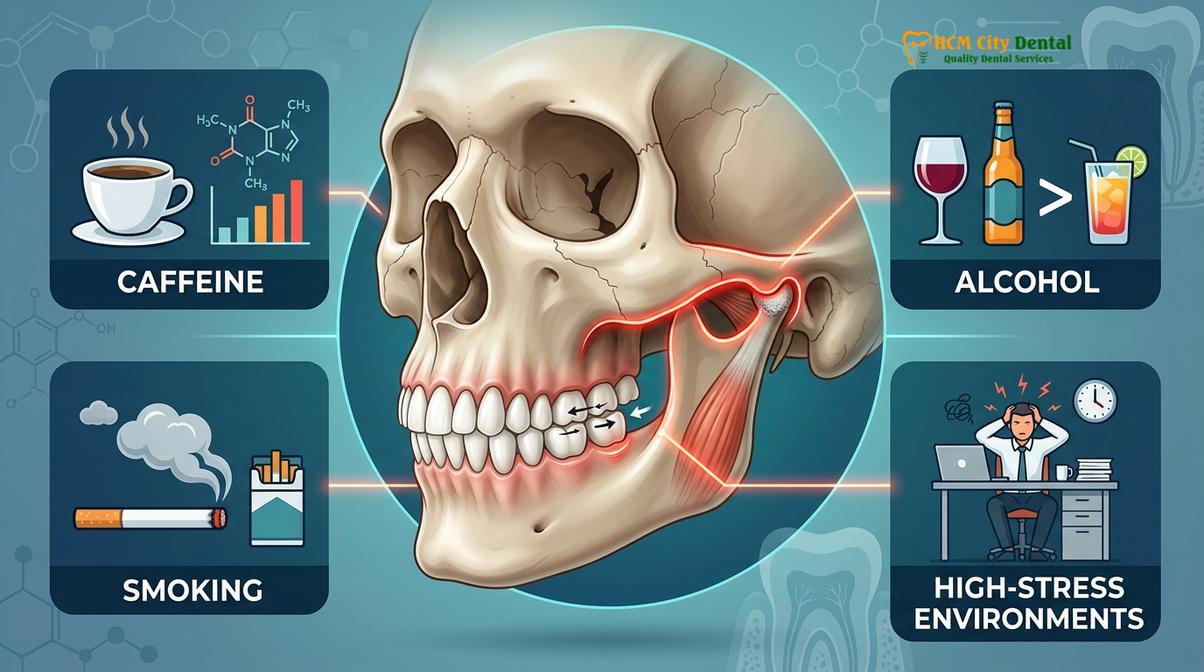
Alcohol, conversely, is a central nervous system depressant, but its relationship with sleep and bruxism is paradoxical. While a “nightcap” might help an individual fall asleep faster due to its sedative properties, alcohol severely disrupts the architecture of the sleep cycle. As the body metabolizes the alcohol during the night, it triggers a “rebound effect,” leading to fragmented sleep, frequent micro-arousals, and a reduction in restorative REM sleep. Furthermore, alcohol acts as a muscle relaxant, which can exacerbate the collapse of the upper airway in patients predisposed to snoring or sleep apnea. As previously discussed, this airway collapse triggers a sympathetic nervous system spike and reflexive jaw clenching. Studies have shown that alcohol consumption can double the risk of sleep bruxism.[4]
Nicotine is another potent stimulant that significantly impacts bruxism. Smoking tobacco or using electronic cigarettes introduces nicotine into the bloodstream, which stimulates the release of dopamine, adrenaline, and norepinephrine. This neurochemical cascade increases heart rate, blood pressure, and overall muscle tension. Smokers are statistically much more likely to report episodes of teeth grinding compared to non-smokers. The stimulant effect of nicotine, combined with the mild withdrawal symptoms experienced during the night, creates a volatile neurological environment that is highly conducive to sleep bruxism. Mitigating these lifestyle factors through moderation and cessation programs is a critical step in reducing the severity of the condition.
Bite Misalignment and Dental Causes
While central nervous system factors are primary, peripheral dental issues such as malocclusion, missing teeth, or premature occlusal contacts can exacerbate bruxism by disrupting proprioceptive feedback.
Historically, the dental profession believed that bruxism was almost entirely caused by peripheral morphological factors—specifically, discrepancies in the way the upper and lower teeth meet, known as malocclusion or occlusal interferences. While modern medical consensus has shifted to recognize central nervous system factors (like stress and sleep disorders) as the primary drivers, the structural alignment of the teeth still plays a significant contributory role in the exacerbation and localization of bruxism damage.[5]
The periodontal ligaments, which anchor the teeth into the jawbone, are rich in proprioceptive nerve endings. These mechanoreceptors constantly send feedback to the trigeminal motor nucleus in the brainstem regarding the position of the teeth and the force of the bite. In a healthy, well-aligned occlusion, the forces of chewing are distributed evenly across the posterior teeth, and the anterior teeth provide smooth guidance during lateral jaw movements. However, if there is a premature contact—a high spot on a filling, a rotated tooth, or a misaligned bite—the proprioceptive feedback is altered. The brain senses this interference and may subconsciously attempt to “grind away” the obstacle to achieve a stable, comfortable resting position for the mandible.[5]
Clinical Case Study: A 34-year-old patient visited HCMC Dental Clinic in Ho Chi Minh City complaining of severe morning jaw pain and a chipped lower incisor. Clinical examination revealed a premature contact on a recently placed, slightly over-contoured molar crown, which was triggering localized muscle spasms and nocturnal grinding. Dr. Cuong performed a precise occlusal equilibration to adjust the high spot and provided a custom nightguard. Within two weeks, the proprioceptive interference was eliminated, and the patient’s bruxism symptoms subsided entirely.
Missing teeth also contribute to this structural instability. When a tooth is extracted and not replaced, the adjacent teeth tend to drift or tilt into the empty space, and the opposing tooth may super-erupt. This shifting creates new occlusal interferences and destabilizes the bite. The masticatory muscles must work harder and in unnatural vectors to bring the teeth together, leading to muscle fatigue, spasm, and clenching. In these scenarios, restorative dentistry—such as orthodontics, dental implants, or occlusal equilibration—is necessary to harmonize the bite. Additionally, providing a custom appliance is crucial. Patients seeking comprehensive protection can explore options for custom nightguards, which provide an even, frictionless surface that disengages the teeth and allows the jaw muscles to relax.
Genetic and Neurological Factors
Emerging research indicates a strong genetic predisposition to bruxism, linked to specific DNA polymorphisms that affect neurotransmitter receptors and the central nervous system’s regulation of motor control.
Beyond environmental stressors and dental anatomy, there is a profound, intrinsic biological component to bruxism. Clinical observations have long noted that teeth grinding tends to run in families. If a parent has a history of severe sleep bruxism, their children are statistically at a much higher risk of developing the condition. This familial clustering suggests a strong genetic and neurobiological foundation, moving the understanding of bruxism from a mere “habit” to a complex, genetically influenced motor disorder.[6]
Recent advancements in genomic research have begun to isolate specific genetic markers associated with sleep bruxism. Much of this research focuses on the genes responsible for encoding neurotransmitter receptors in the central nervous system, particularly those related to serotonin and dopamine. For instance, polymorphisms in the HTR2A gene, which encodes the serotonin 5-HT2A receptor, have been strongly linked to an increased susceptibility to sleep bruxism. These receptors are heavily involved in the regulation of sleep architecture, mood, and motor control. A genetic variation that alters the sensitivity or density of these receptors can predispose an individual to heightened masticatory muscle activity during sleep transitions.[6]
Furthermore, the neurological pathways governing involuntary movements are centered in the basal ganglia. This complex network of subcortical nuclei relies on a delicate balance of excitatory and inhibitory signals to ensure smooth muscle function. In individuals with a genetic predisposition to bruxism, there may be a subtle, inherent dysfunction in these pathways—a micro-imbalance in dopaminergic transmission that lowers the threshold for rhythmic jaw movements. This neurological vulnerability explains why two individuals exposed to the exact same level of psychological stress or the same sleep disruptions may react differently; the genetically predisposed individual will manifest the stress through bruxism, while the other may not.[6]
“We must view bruxism through a biopsychosocial lens. It is rarely just a dental problem. It is a complex interplay of a patient’s genetic neurological baseline, their current psychological allostatic load, and their anatomical airway patency.”
Understanding the genetic and neurological underpinnings of stress and bruxism is crucial for patient empathy and clinical management. It removes the stigma that bruxism is simply a “bad habit” that the patient should be able to consciously stop. Instead, it frames the condition as a physiological response requiring comprehensive medical and dental intervention to manage effectively.
When to See a Doctor
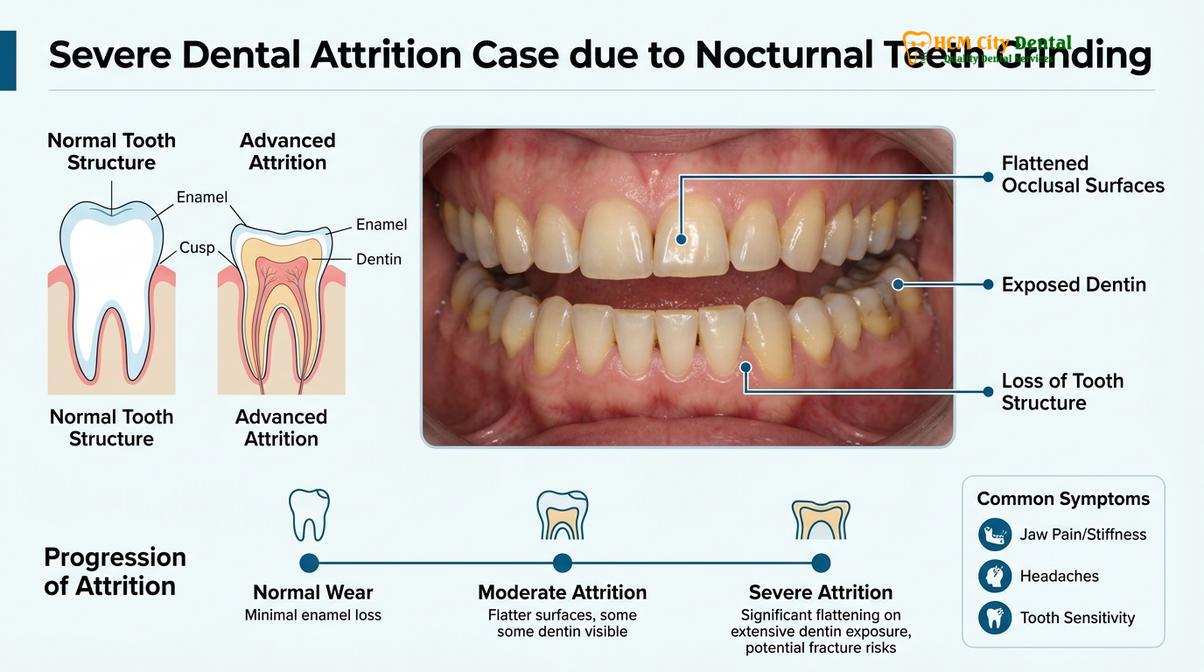
Because bruxism often occurs subconsciously during sleep, many patients remain entirely unaware of their condition until significant damage has already occurred. It is imperative to seek professional clinical evaluation if you experience specific warning signs. The most common indicators include waking up with a dull, constant headache radiating from the temples, unexplained facial pain, or a feeling of profound fatigue in the jaw muscles. If you notice that your teeth are becoming increasingly sensitive to hot or cold, or if they appear flattened, chipped, or fractured at the edges, these are clear signs of mechanical attrition caused by grinding. Additionally, if a sleep partner reports hearing loud grinding or clicking noises during the night, immediate dental consultation is warranted.
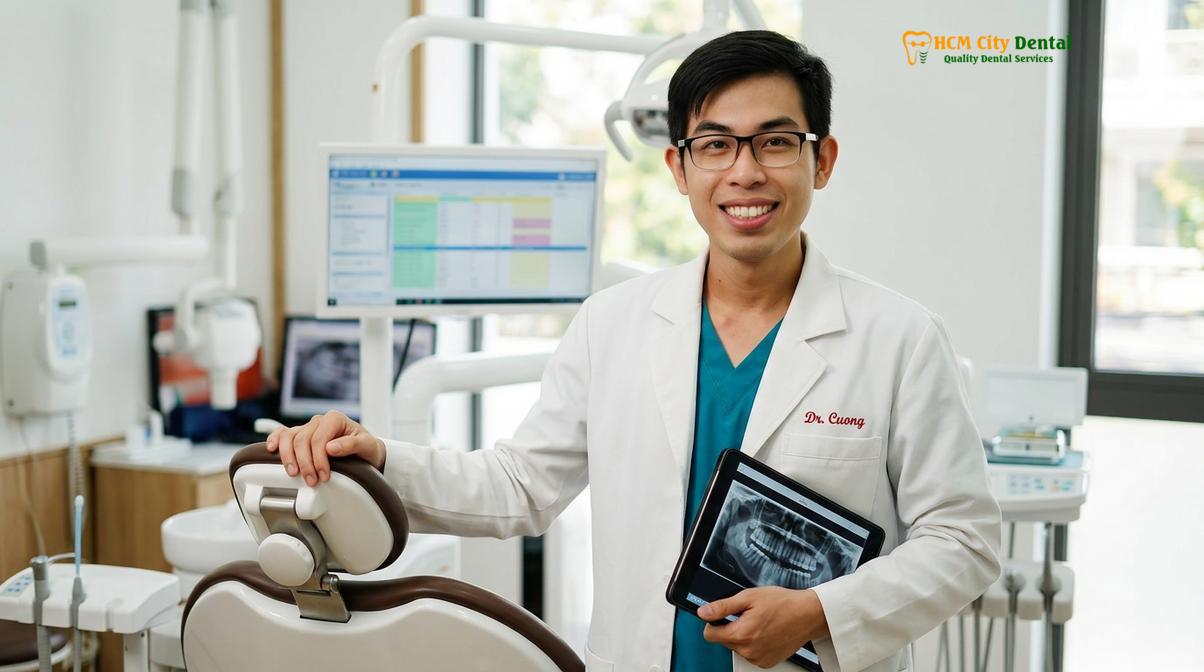
At HCMC Dental Clinic, the diagnostic workflow for bruxism is highly comprehensive. Dr. Nguyen Van Cuong emphasizes that a visual inspection of the teeth is only the first step. The clinical examination includes a detailed assessment of the temporomandibular joints (TMJ) for clicking, crepitus, or restricted range of motion. Muscle palpation is performed to identify trigger points and hypertonicity in the masseter and temporalis muscles. Advanced intraoral scanning may be utilized to map the exact wear facets on the enamel, providing a baseline to monitor disease progression.[7]
Crucially, the diagnostic process also involves a thorough medical history review to identify potential central triggers. The dental team will screen for signs of obstructive sleep apnea, evaluate current prescription medications for bruxism-inducing side effects, and discuss lifestyle and stress factors. If sleep apnea is suspected, a referral for a formal polysomnography (sleep study) will be coordinated. Based on this holistic assessment, a personalized treatment plan is developed. This typically involves the fabrication of a custom, hard acrylic occlusal splint to protect the dentition, combined with targeted referrals for stress management, physical therapy, or sleep medicine, ensuring a high success rate in managing the condition and preserving long-term oral health.
Frequently Asked Questions
Does stress cause teeth grinding?
Yes, psychological stress is a primary trigger for teeth grinding. Chronic anxiety activates the body’s fight-or-flight response, increasing sympathetic nervous system activity and elevating cortisol levels. This heightened state of arousal translates into increased muscle tension, particularly in the jaw, leading to involuntary clenching and grinding during both waking hours and sleep. Managing stress through cognitive behavioral therapy, relaxation techniques, and lifestyle adjustments is a critical component of treating the root cause of awake and sleep bruxism.
Can medications cause bruxism?
Yes, certain medications can induce secondary bruxism as a side effect. Selective serotonin reuptake inhibitors (SSRIs) and serotonin-norepinephrine reuptake inhibitors (SNRIs) are the most common culprits. These drugs can alter the balance of dopamine and serotonin in the brain’s basal ganglia, which regulates involuntary motor movements, thereby triggering rhythmic jaw muscle activity. If you suspect your medication is causing teeth grinding, consult your prescribing physician before making any changes to your dosage.
Is bruxism related to sleep apnea?
Yes, there is a strong clinical correlation between sleep bruxism and obstructive sleep apnea (OSA). When the airway collapses during sleep, the brain initiates a micro-arousal to restore breathing. This sudden awakening is accompanied by a spike in sympathetic nervous system activity and a reflexive clenching of the jaw muscles to help reopen the airway. Treating the underlying sleep apnea with CPAP therapy or a mandibular advancement device often resolves the associated bruxism.
Do children grind teeth for different reasons?
Yes, childhood bruxism often stems from different developmental factors than adult bruxism. In children, teeth grinding is frequently associated with the eruption of primary or permanent teeth, jaw growth, or enlarged tonsils and adenoids that cause mild airway obstruction. While stress can be a factor, most children naturally outgrow the habit as their dental anatomy matures. However, severe cases causing pain or excessive wear should still be evaluated by a pediatric dentist.
Can diet affect bruxism?
Yes, dietary choices can significantly influence the frequency and severity of bruxism. High consumption of stimulants like caffeine blocks adenosine receptors, increasing central nervous system arousal and muscle hyperactivity. Similarly, alcohol disrupts normal sleep architecture, leading to fragmented sleep and an increased likelihood of micro-arousals that trigger nocturnal teeth grinding episodes. Reducing the intake of these substances, particularly in the hours leading up to bedtime, can help mitigate bruxism symptoms.
References
- Journal of Oral Rehabilitation. Neurobiology of bruxism and the impact of stress. (2021).
- Sleep Medicine Reviews. The relationship between sleep bruxism and obstructive sleep apnea. (2020).
- Clinical Neuropharmacology. SSRI-induced bruxism: Pathophysiology and management. (2019).
- American Journal of Dentistry. Effects of lifestyle factors on sleep bruxism frequency. (2022).
- International Journal of Prosthodontics. Occlusal factors and their role in awake and sleep bruxism. (2018).
- Journal of Dental Research. Genetic polymorphisms associated with sleep bruxism. (2021).
- European Journal of Oral Sciences. Efficacy of occlusal splints in managing bruxism-related temporomandibular disorders. (2020).