When comparing a straumann vs osstem implant, the primary clinical difference lies in surface technology, material composition, and overall cost. Straumann offers premium Swiss engineering designed to help accelerate healing in complex cases, while Osstem provides highly reliable, cost-effective Korean technology often ideal for standard restorations with adequate bone volume.
Clinical Summary:
Straumann and Osstem represent two of the most globally recognized and clinically validated dental implant systems available today. Straumann utilizes a proprietary Roxolid® titanium-zirconium alloy and SLActive® hydrophilic surfaces to promote rapid osseointegration, making it highly recommended for patients with compromised bone density or those requiring immediate loading. Conversely, Osstem leverages high-quality pure titanium and advanced sandblasted, acid-etched surfaces to deliver predictable, long-lasting results at a significantly more accessible price point. The optimal choice between these systems depends on individual anatomical requirements, aesthetic goals, and budget constraints, which must be thoroughly evaluated during a comprehensive clinical assessment using 3D CBCT imaging.
Key Takeaways:
- Straumann implants often excel in complex clinical scenarios, offering accelerated healing times due to advanced surface hydrophilicity.
- Osstem implants provide a highly cost-effective solution with excellent long-term success rates for standard restorative cases.
- In Ho Chi Minh City, Osstem implants typically range from $700 to $950, while premium Straumann fixtures cost between $1,200 and $1,500.
- Pre-arrival consultations at specialized clinics can help secure comprehensive treatment plans tailored to international patients.
- Both systems generally require a brief surgical trip for initial placement, though final prosthetic loading depends on individual bone integration rates.
Straumann vs Osstem: Key Clinical Differences
Straumann utilizes a patented titanium-zirconium alloy for enhanced strength and rapid healing, whereas Osstem relies on highly biocompatible pure titanium, offering reliable integration for standard clinical applications.
The decision to undergo implant therapy is a significant investment in your oral health, function, and aesthetics. When evaluating the clinical merits of different implant systems, it is essential to look beyond brand recognition and understand the underlying material science, biomechanics, and biological responses elicited by each fixture. The comparison between Swiss and Korean manufacturing philosophies highlights two distinct approaches to modern implantology: premium technological innovation versus highly optimized, accessible reliability.
Material Science and Alloy Composition
The foundation of any successful implant is the material from which it is milled. Historically, commercially pure titanium (Grade 4) has been the gold standard due to its excellent biocompatibility and resistance to corrosion. Osstem implants are predominantly manufactured from high-grade pure titanium, which has decades of clinical data supporting its ability to successfully fuse with human bone tissue. This material provides more than adequate tensile strength for the vast majority of single-tooth and multi-unit restorations, particularly in the posterior regions where bone volume is typically sufficient.
Straumann, however, has pushed the boundaries of material science with the introduction of Roxolid®. This proprietary alloy consists of approximately 85% titanium and 15% zirconium. The addition of zirconium significantly alters the metallurgical properties of the fixture, resulting in an alloy that boasts higher tensile strength than standard Grade 4 titanium[1]. Clinically, this increased strength allows surgeons to place narrower, shorter implants without compromising biomechanical stability. This is particularly advantageous in areas with limited interdental space or reduced bone volume, potentially negating the need for invasive grafting procedures.
Surface Technology and Hydrophilicity
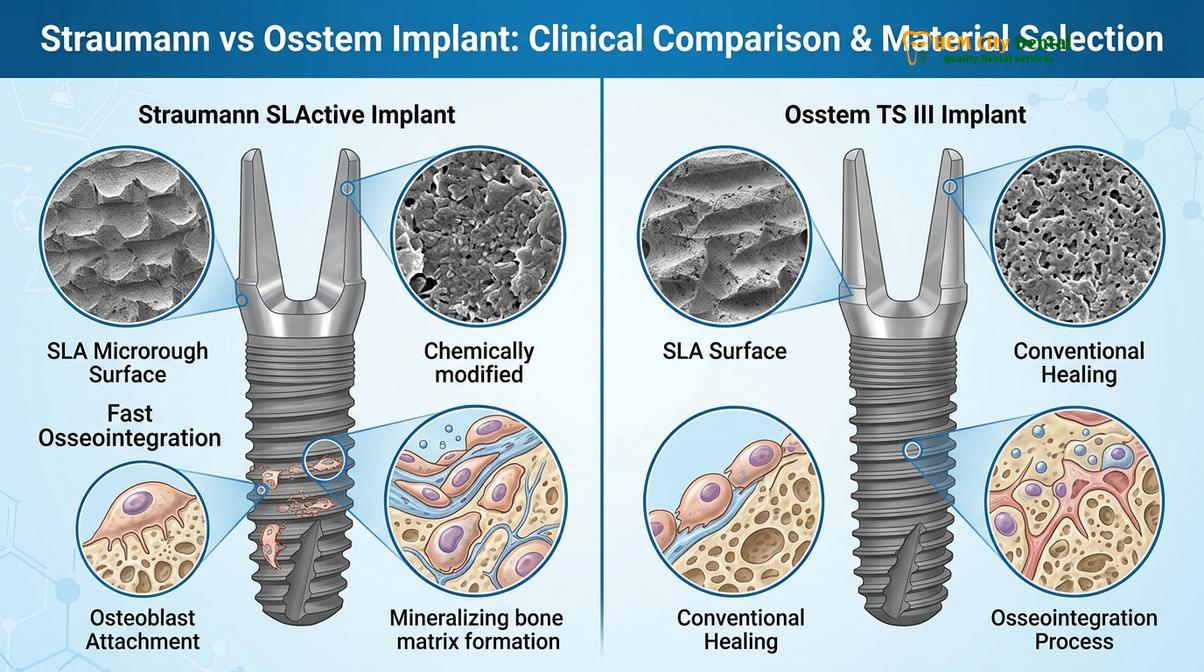
Once an implant is placed into the osteotomy (the surgically prepared site in the jawbone), a complex biological cascade begins. The speed and quality of bone healing—known as osseointegration—are heavily influenced by the microscopic topography and chemical properties of the implant surface. An accurate osseointegration comparison reveals significant differences in how these two brands engineer their surfaces.
Osstem utilizes a highly refined SA (Sandblasted and Acid-etched) surface, specifically the TS III system. This process creates a micro-rough topography that mimics the natural structure of cancellous bone, providing an excellent scaffold for osteoblasts (bone-forming cells) to attach and proliferate. Clinical studies demonstrate that Osstem’s surface technology yields highly predictable integration, typically requiring a standard healing period before the final crown can be safely loaded[2].
Straumann’s flagship surface technology is SLActive®. Building upon their traditional SLA (Sandblasted, Large-grit, Acid-etched) surface, SLActive introduces a chemically active, hydrophilic (water-attracting) layer. Because blood is primarily composed of water, the SLActive surface rapidly draws blood into the microscopic pores of the implant immediately upon placement. This accelerated protein binding and early vascularization can significantly reduce the critical healing phase. For patients with systemic conditions that may impair healing, this enhanced surface activity provides a crucial margin of safety.
“The selection between premium Swiss systems and value-focused Korean implants should be dictated by the patient’s bone density, systemic health profile, and the specific biomechanical demands of the restoration site, rather than brand prestige alone.”
Price and Warranty Comparison
Osstem implants offer a budget-friendly solution starting at $700, while premium Straumann implants begin at $1,200, reflecting their advanced material research and extensive global warranty networks.
Understanding the financial investment required for oral rehabilitation is a critical component of the treatment planning process. The cost of therapy can vary dramatically based on geographic location, clinic overhead, and the specific brand of fixture utilized. For international patients seeking high-quality care at a fraction of Western prices, Ho Chi Minh City has emerged as a premier destination for advanced restorative solutions.
Dental Implant Cost Breakdown in Ho Chi Minh City
When analyzing the straumann vs osstem price disparity, it is important to recognize what is included in the fee structure. A comprehensive implant quote should encompass the surgical placement of the titanium fixture, the connecting abutment, and the final prosthetic crown. In the medical hubs of Saigon, pricing is highly competitive while maintaining stringent international standards.
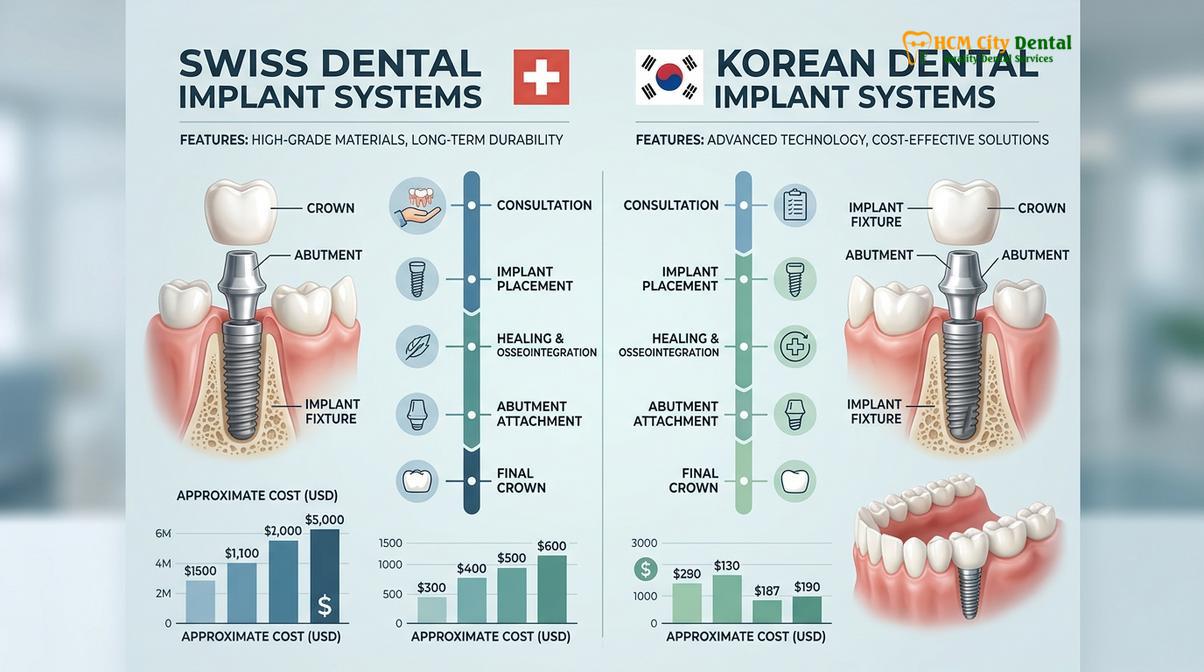
Currently, Korean implant systems, including renowned brands like Dentium and Osstem, represent the most cost-effective tier of reliable implantology. Patients can expect the total cost for a single Osstem implant (including the fixture, standard abutment, and a high-quality porcelain-fused-to-metal or basic zirconia crown) to range from $700 to $950. This accessible price point makes Osstem the preferred choice for full-mouth rehabilitations where multiple fixtures are required, significantly reducing the overall financial burden, a trend supported by recent economic analyses of implant therapies in Southeast Asia[4].
In contrast, Swiss systems command a premium due to their extensive research and development, proprietary materials, and global brand recognition. A complete Straumann implant restoration typically ranges from $1,200 to $1,500. Another premium alternative frequently utilized is Nobel Biocare, which generally falls between $1,100 and $1,400. While the initial investment is higher, patients benefit from the assurance of a globally recognized lifetime warranty on the fixture itself, ensuring that if a mechanical failure occurs, replacement parts can be sourced from virtually any major city worldwide.
Cost Comparison Matrix
The following table provides a clear overview of the primary implant systems utilized in top Vietnamese clinics, highlighting their origins, estimated costs, and ideal clinical applications.
| Implant Brand | Origin | Estimated Cost (USD) | Material Technology | Best Suited For |
|---|---|---|---|---|
| Osstem / Dentium | South Korea | $700 – $950 | Grade 4 Pure Titanium, SA Surface | Standard cases, adequate bone volume, budget-conscious full-mouth restorations. |
| Nobel Biocare | Switzerland / USA | $1,100 – $1,400 | TiUnite Surface, Cold-worked Titanium | All-on-4 full arch restorations, immediate function protocols. |
| Straumann | Switzerland | $1,200 – $1,500 | Roxolid® Alloy, SLActive® Surface | Complex cases, narrow ridges, compromised healing, premium aesthetic zones. |
Long-Term Value and Maintenance
While the upfront implant cost is a primary consideration, patients must also evaluate long-term value. Both Straumann and Osstem boast excellent survival rates over a 10-year period when placed in healthy bone and maintained with rigorous oral hygiene. The true differentiator often lies in the prosthetic ecosystem. Straumann’s extensive catalog of specialized abutments provides restorative dentists with unparalleled flexibility in achieving perfect emergence profiles in the highly visible anterior (front) regions of the mouth. Furthermore, pairing these premium fixtures with high-translucency zirconia crown restorations can help ensure a virtually seamless integration with natural dentition.
Clinical Adaptability and Surgical Workflows
Both implant systems support advanced surgical protocols, but Straumann is often preferred for immediate loading, while Osstem performs exceptionally well in staged approaches requiring standard healing periods.
The success of an implant procedure is not solely dependent on the hardware; it is equally reliant on the surgical workflow and the anatomical conditions of the patient. Modern implantology offers various treatment timelines, ranging from traditional staged approaches to accelerated protocols.
Same Day Dental Implants and Immediate Loading
The concept of same day dental implants has revolutionized patient expectations. This protocol involves extracting a failing tooth and placing the titanium fixture into the socket during the exact same surgical visit. In highly favorable cases, a temporary crown may even be attached immediately (immediate loading). This approach helps preserve the natural gum architecture and provides immediate psychological and aesthetic benefits.
However, immediate loading requires exceptional primary stability—the mechanical friction between the implant threads and the surrounding bone. Because Straumann’s Roxolid material allows for aggressive thread designs without risking fixture fracture, and its SLActive surface accelerates secondary biological stability, it is frequently the system of choice for immediate protocols[3]. Osstem can also be utilized for immediate placement, but clinicians often prefer a more conservative approach, burying the implant beneath the gum tissue to heal undisturbed for several months before attaching the final prosthesis.
Bone Grafting and Sinus Lift Considerations
A critical prerequisite for any implant is sufficient bone volume. When teeth are lost, the surrounding alveolar bone naturally resorbs (shrinks) over time. If a patient presents with a narrow or shallow ridge, adjunctive surgical procedures are required to rebuild the foundation.
Bone grafting, specifically Guided Bone Regeneration (GBR), involves placing particulate bone material around the implant site and covering it with a resorbable collagen membrane. In the upper posterior jaw, the maxillary sinus cavity often expands downward after tooth loss, leaving insufficient vertical bone height. In these instances, a sinus lift is necessary to elevate the sinus membrane and pack bone graft material beneath it to support the future implant[5].
These regenerative procedures add complexity, time, and expense to the treatment plan. Depending on the extent of the defect, bone grafting or a sinus lift can add between $400 and $800 to the total cost. Furthermore, extensive grafting typically precludes immediate implant placement, requiring a healing period before the fixture can be safely installed. When planning a surgical trip to Vietnam, patients must account for these potential variables. A standard trip requires a brief stay for initial placement, but if extensive grafting is needed, the overall timeline for final restoration will be extended.
When to Consult a Specialist & Important Clinical Considerations
Understanding the signs of potential complications and adhering to strict post-operative guidelines are essential steps in ensuring the long-term success of your dental implants.
While dental implants boast a remarkably high success rate, they are still medical devices placed within biological tissue. Patients must remain vigilant during the healing phase and throughout the lifespan of the restoration. According to the Vietnam Ministry of Health (MOH) guidelines on dental implantology and infection control standards, patients should seek immediate consultation if they experience prolonged swelling, severe pain, or signs of peri-implantitis (inflammation of the gum and bone surrounding the implant)[6].
It is crucial to understand that smoking, uncontrolled diabetes, and poor oral hygiene significantly increase the risk of implant failure, regardless of whether a premium Straumann or a reliable Osstem fixture is utilized. Regular professional cleanings and routine radiographic evaluations are mandatory to monitor bone levels and ensure the surrounding tissues remain healthy.
“Successful osseointegration relies not only on the choice of implant brand but also on meticulous surgical execution and strict adherence to post-operative maintenance protocols.”
Why Choose HCMC Dental Clinic in Ho Chi Minh City?
HCMC Dental Clinic combines international sterilization standards with decades of surgical expertise, ensuring optimal outcomes for both premium and value-focused implant restorations.
When selecting a qualified dental provider abroad, the expertise of the clinician and the safety protocols of the facility are paramount. Ho Chi Minh City has cultivated a reputation for medical excellence, drawing patients from Australia, the US, and Europe who are combining dental care with travel.
Clinical Expertise and Trust Signals
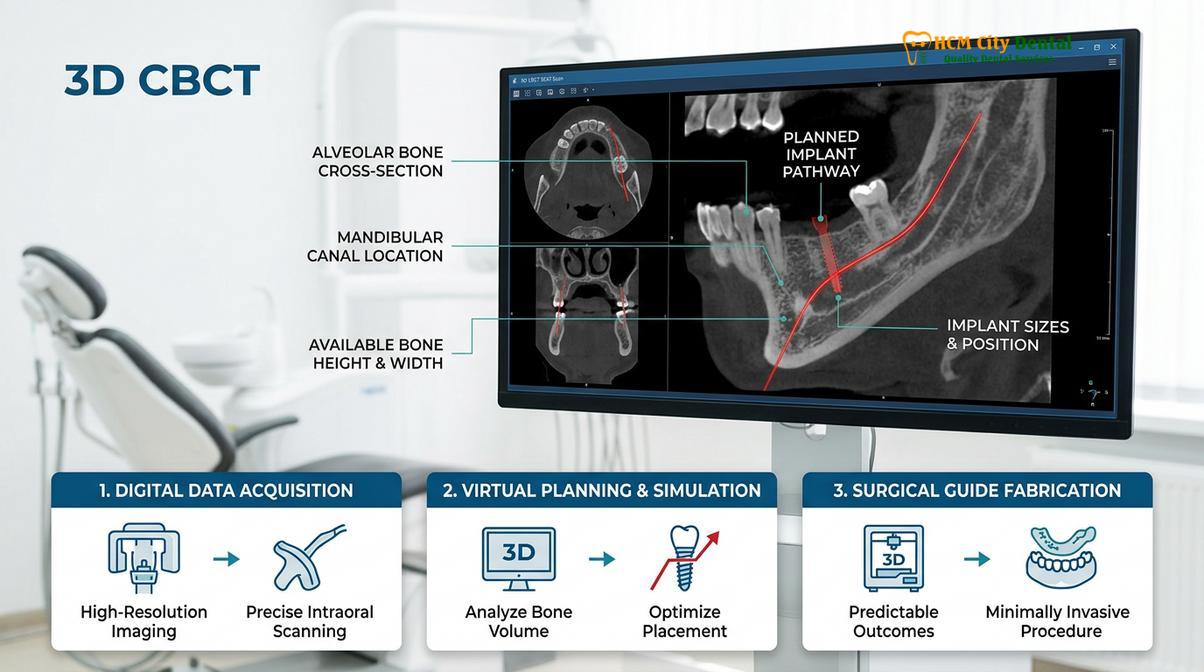
At the forefront of this clinical excellence is Dr. Nguyen Van Cuong, a highly respected implantologist with extensive surgical experience. Dr. Cuong meticulously plans each case using 3D CBCT imaging to help ensure optimal fixture placement and long-term stability. His dedication to patient education is reflected in comprehensive post-operative care protocols, ensuring every patient receives the highest standard of ongoing support throughout their healing journey.
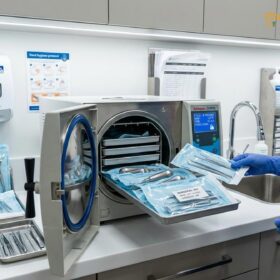
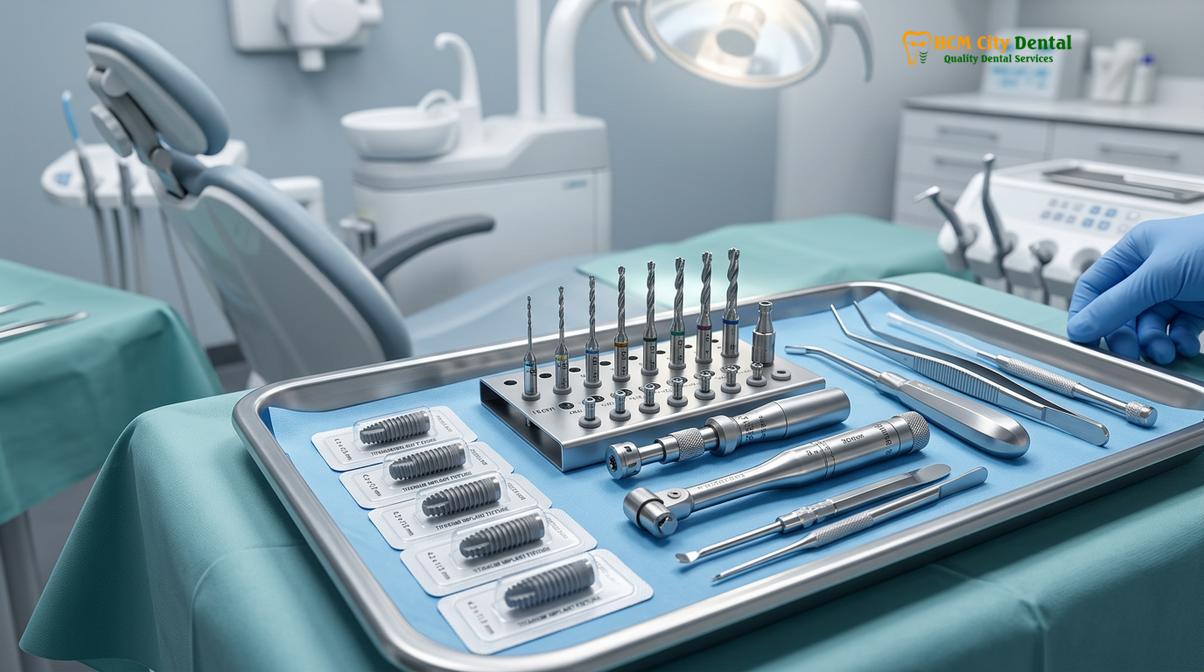
Patient safety at HCMC Dental Clinic is prioritized through uncompromising sterilization protocols. The facility utilizes Class B autoclaves—the highest European standard for sterilization—ensuring that all surgical instruments are subjected to fractionated vacuum cycles to eliminate microbial life. Furthermore, the clinic exclusively utilizes titanium Grade 5 and Grade 4 fixtures that carry European CE certification, providing patients with peace of mind regarding the biocompatibility and safety of their implants.
Clinical Case Study: Strategic Hybrid Implant Placement
A 58-year-old patient from Melbourne traveled to HCMC Dental Clinic in Ho Chi Minh City seeking a full-mouth rehabilitation. After a comprehensive CBCT evaluation, the clinical team developed a strategic treatment plan to optimize both clinical outcomes and financial investment. For the highly visible anterior maxilla (upper front teeth), where bone was thin and aesthetics were critical, Straumann Roxolid implants were utilized. For the posterior mandible (lower back teeth), where bone volume was abundant and bite forces were vertical, Osstem TS III implants were placed. This hybrid approach provided the patient with premium aesthetics and rapid healing in the smile zone, while leveraging the cost-effectiveness of Korean technology in the posterior, optimizing the overall treatment value.
Frequently Asked Questions
Is Straumann better than Osstem implant?
Straumann is generally considered highly advantageous for complex cases due to its proprietary Roxolid alloy and SLActive surface, which can help accelerate healing. However, Osstem provides excellent, highly reliable results for standard restorations at a more accessible price point, making it a viable option for many patients.
How long does the dental implant procedure take in Vietnam?
The initial surgical phase typically requires a brief trip to Ho Chi Minh City. This allows time for consultation, placement, and postoperative checks. The final crown placement requires a second visit after a standard healing period.
Do I need a bone graft before getting an implant?
A bone graft is typically necessary if your jawbone lacks sufficient volume or density to support the implant fixture securely. Your clinician will evaluate this by analyzing a 3D CBCT scan during your initial consultation to help ensure long-term stability.
Are dental implants placed in Ho Chi Minh City safe?
Yes, when performed at a reputable facility. Top clinics utilize European CE-certified materials, Class B autoclave sterilization protocols, and highly experienced surgeons to help ensure international standards of safety and clinical efficacy are maintained.
Can I get same-day dental implants with Osstem?
Same-day placement is often possible with Osstem implants if you have excellent bone density and primary stability. However, immediate loading (attaching the crown) is evaluated on a case-by-case basis to minimize micromovement and support successful osseointegration.
References
- International Journal of Oral & Maxillofacial Implants. Long-term survival rates of titanium-zirconium implants. (2021).
- Journal of Clinical Periodontology. Clinical efficacy of sandblasted and acid-etched implant surfaces. (2020).
- Clinical Implant Dentistry and Related Research. Biomechanical considerations in immediate implant loading. (2019).
- Journal of Prosthetic Dentistry. Economic analysis of implant therapies in Southeast Asia. (2022).
- European Journal of Oral Implantology. Guided bone regeneration and sinus floor elevation outcomes. (2018).
- Vietnam Ministry of Health (MOH). National guidelines on dental implantology and infection control standards. (2023).
Ready to restore your smile with world-class implant technology? Contact HCMC Dental Clinic in Ho Chi Minh City today to schedule your comprehensive consultation and explore our full range of general and preventive dentistry services tailored to your unique clinical needs.