Planning a dental tourism trip to Vietnam for inlays and onlays offers international patients world-class, conservative restorations at a fraction of Western costs. By combining advanced CAD/CAM technology with expert clinical care in Ho Chi Minh City, you can restore damaged teeth while enjoying a memorable travel experience.
Clinical Summary:
Dental inlays, onlays, and overlays are conservative, indirect restorations used to repair moderate to severe tooth decay or structural damage without the aggressive enamel reduction required for full crowns. In Vietnam, leading clinics utilize digital intraoral scanners and CAD/CAM milling to fabricate these restorations from premium biocompatible materials like Ivoclar IPS e.max and Dentsply Sirona Cercon HT. The treatment is typically completed in two visits over 4-5 days, making it an ideal procedure for dental tourists seeking high-end restorative care combined with a Southeast Asian travel itinerary.
Key Takeaways:
- Conservative Approach: Preserves maximum natural tooth structure compared to traditional 360-degree crown shaving.
- Advanced Technology: Utilizes digital scanning and CAD/CAM milling for precise marginal fit and aesthetics.
- Premium Materials: Completely metal-free, biocompatible lithium disilicate (e.max) and zirconia.
- Time Efficiency: Requires only two clinical visits spaced 2-3 days apart.
- Cost Savings: Pre-arrival bookings can secure significant discounts, making premium care highly accessible.
Why Choose Ho Chi Minh City for Dental Tourism?
Ho Chi Minh City combines internationally trained dental specialists, state-of-the-art digital laboratories, and highly competitive pricing, making it a premier destination for conservative dental restorations.
The landscape of global healthcare has shifted dramatically, with Southeast Asia emerging as a powerhouse for specialized medical travel. When considering Inlays & Onlays, Ho Chi Minh City stands out not just for its affordability, but for its uncompromising commitment to modern clinical standards. The city’s top-tier dental facilities rival those found in Sydney, London, or Los Angeles, offering a seamless blend of advanced medical technology and renowned Vietnamese hospitality. Clinical evaluations of CAD/CAM ceramic restorations consistently show that when performed with modern digital workflows, these indirect fillings offer exceptional longevity and marginal adaptation[1].
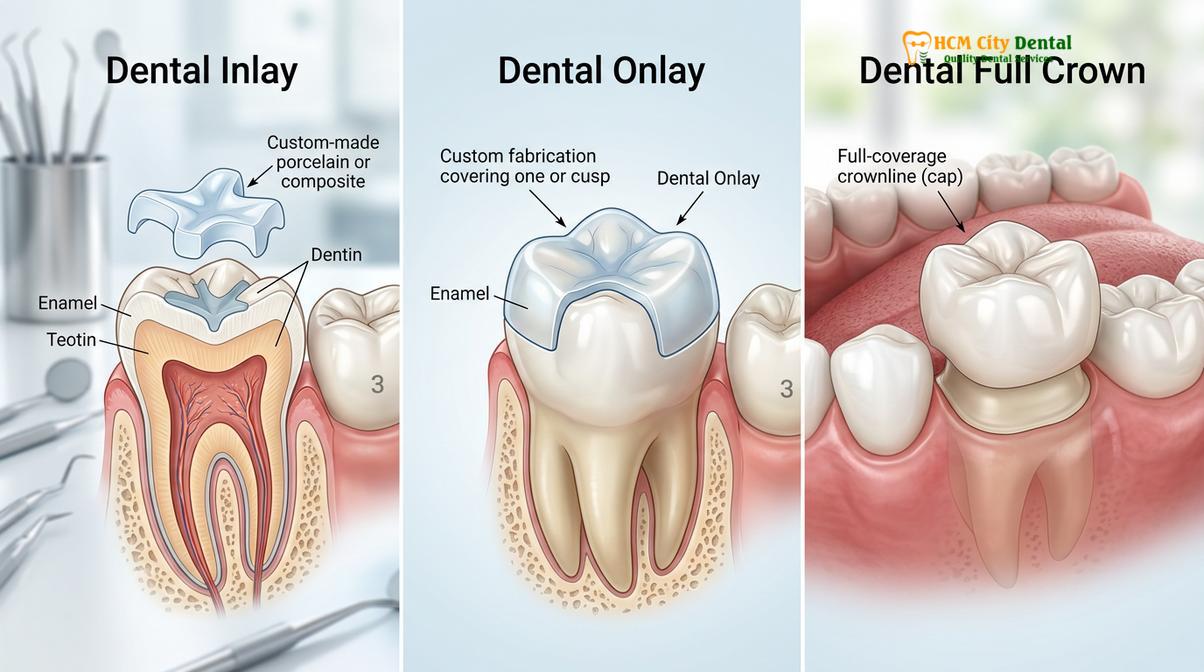
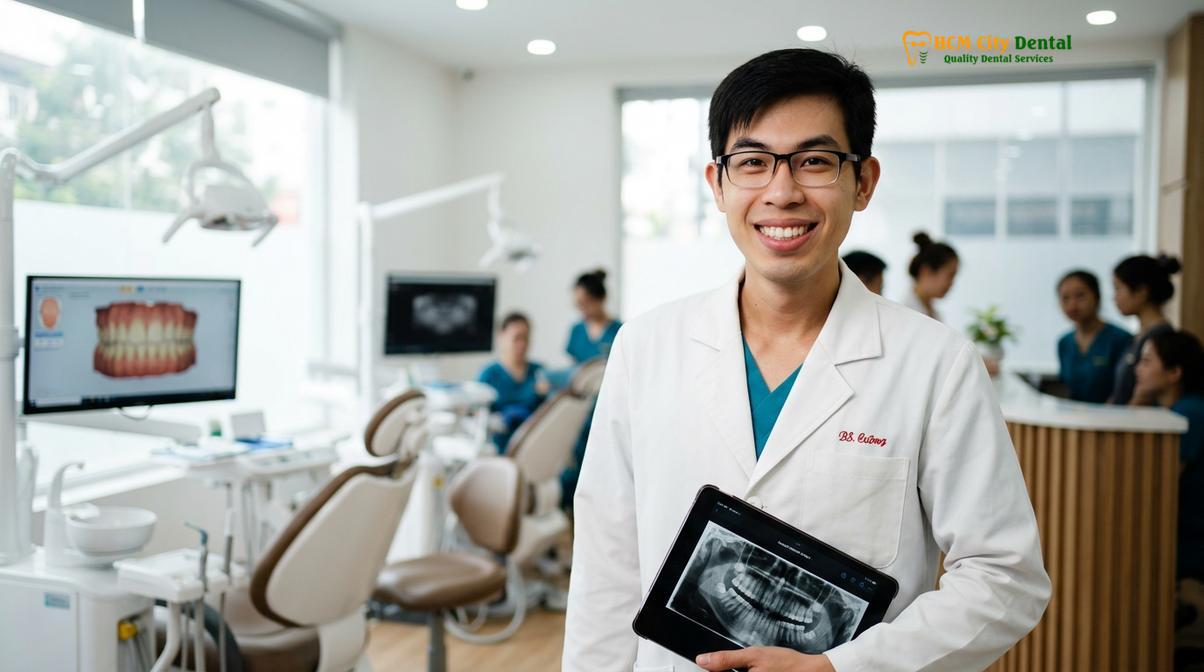
Dr. Nguyen Van Cuong, a leading restorative specialist at HCMC Dental Clinic, emphasizes the clinical perspective on conservative material selection. He notes that preserving natural tooth structure is always superior to aggressive reduction, a philosophy that guides every treatment plan and aligns with the latest guidelines from the Vietnam Odonto-Stomatology Association (VOSA) on conservative restorative dentistry[6]. By utilizing inlays and onlays, dentists can selectively replace only the damaged or decayed portions of the tooth, maintaining the structural integrity of the remaining natural cusps.
World-Class Materials and Direct Lab Partnerships
A major advantage of seeking treatment in HCMC is the access to premium, globally recognized dental materials. Reputable clinics maintain a direct partnership with premier dental laboratories, utilizing digital CAD/CAM milling to ensure an exact marginal fit. This precision is critical to prevent secondary decay and ensure the longevity of the restoration.
Material selection is tailored to the specific biomechanical needs of the patient. Ivoclar IPS e.max (Lithium Disilicate) is renowned for its lifelike translucency and exceptional bond strength, making it the gold standard for the anterior aesthetic zone and premolars. For patients with heavy posterior biting forces, high-translucency zirconia offers unparalleled fracture resistance. Furthermore, these materials are completely metal-free. This biocompatibility prevents the gum line irritation and dark margins historically associated with older materials. Utilizing these advanced ceramics also mitigates the polymerization shrinkage stress commonly seen in large direct composite restorations, which can lead to micro-leakage over time[4].
Transparent and Highly Competitive Pricing
The financial benefits of dental tourism in Vietnam are substantial, particularly when replacing multiple failing restorations. Clinics often provide transparent pricing structures that allow international patients to budget accurately before booking their flights. For example, at HCMC Dental Clinic, the pricing parameters are highly competitive, especially when utilizing pre-arrival booking incentives.
These significant savings allow patients to afford premium materials that might be cost-prohibitive in their home countries, all while enjoying a vacation in a vibrant, culturally rich city. Whether you are looking to compare an onlay vs a full dental crown or simply upgrade old fillings, the cost-to-quality ratio in Vietnam is exceptional.
Your Day-by-Day Treatment Itinerary
A standard inlay or onlay procedure in Vietnam requires just two clinical visits spaced three to four days apart, allowing ample time for local sightseeing.
One of the primary concerns for international patients is time management. A well-structured dental tourism itinerary ensures that your medical needs are met without monopolizing your entire vacation. Because indirect restorations require laboratory fabrication, there is a natural waiting period built into the process, which is perfect for tourism.
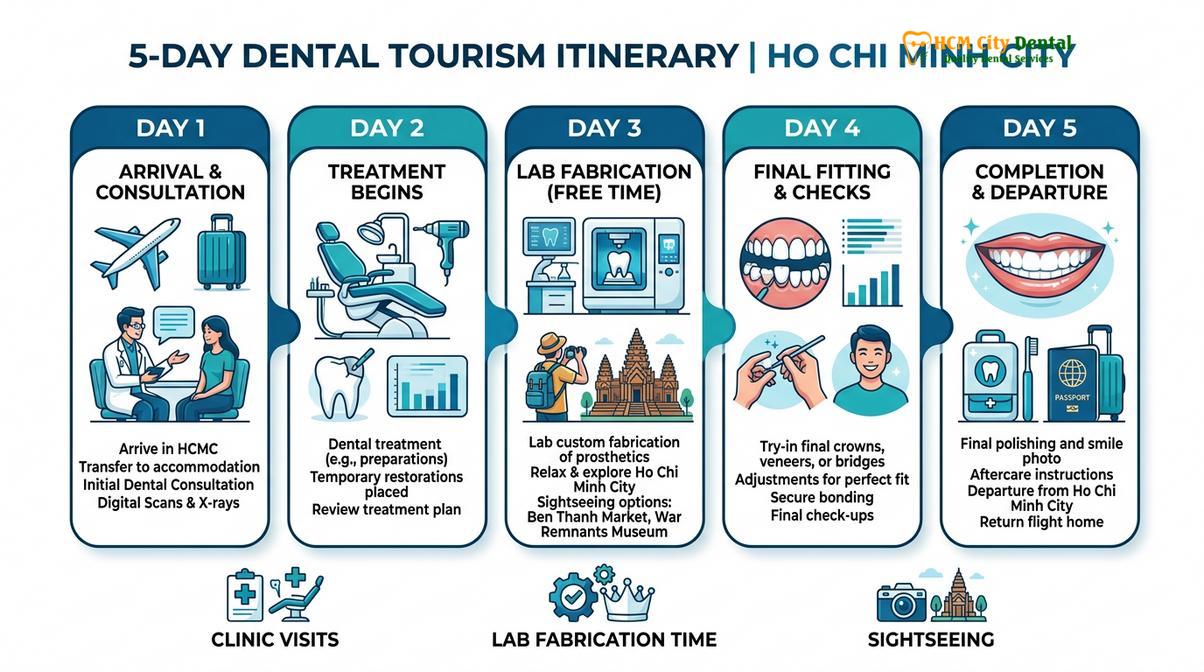
Below is a typical timeline for a patient traveling to Ho Chi Minh City for ceramic inlays or onlays:
| Day | Clinical Activity | Tourism / Leisure Activity |
|---|---|---|
| Day 1 | Arrival at Tan Son Nhat airport, hotel check-in. Optional clinic visit for initial consultation and 3D X-rays. | Settle into your accommodation in District 1, enjoy a light Vietnamese dinner. |
| Day 2 | Visit 1: Tooth preparation, decay removal, digital scanning, and placement of temporary restoration. | Explore local museums, visit the Saigon Central Post Office, or take a relaxing evening river cruise. |
| Day 3 | No clinical visit. The CAD/CAM laboratory mills and custom-shades your ceramic restorations. | Full-day excursion: Visit the Cu Chi Tunnels or take a day trip to the Mekong Delta. |
| Day 4 | Visit 2: Removal of temporaries, try-in, bite adjustment, and permanent resin-adhesive cementation. | Celebrate your new smile with a fine-dining experience or rooftop city views. |
| Day 5 | Final quick bite check (optional). Departure from Ho Chi Minh City. | Last-minute souvenir shopping at Ben Thanh Market before heading to the airport. |
This streamlined schedule highlights why planning a dental trip is so appealing; the medical intervention is highly efficient, leaving the majority of your trip open for relaxation and exploration.
Visit 1: Digital Consultation, Scan, and Temp Restoration
The initial appointment focuses on precise cavity preparation, removing decay, and capturing highly accurate 3D digital impressions using advanced intraoral scanners.
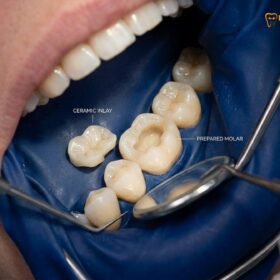
The clinical journey begins with a comprehensive diagnostic assessment. Upon arriving at the clinic, the dentist will review your 3D CBCT scans and intraoral photographs to evaluate the extent of the tooth damage. If you are looking to replace failing fillings with an onlay, the dentist will carefully assess the remaining healthy tooth structure to determine whether an inlay (fitting inside the cusps), an onlay (covering one or more cusps), or an overlay (covering all cusps) is the most appropriate conservative restoration.
Precision Cavity Preparation
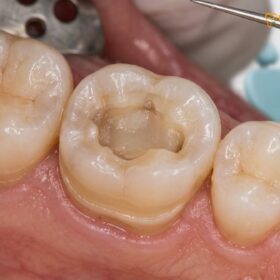
Once local anesthesia is administered, the clinical focus shifts to preparation. The dentist meticulously removes all active tooth decay and any old, compromised filling material. A critical aspect of this phase is establishing the correct cavity outline form. Unlike direct composite fillings, which are packed into undercuts, indirect ceramic restorations require a specific geometric preparation with divergent walls to allow the solid ceramic piece to seat perfectly into the tooth.
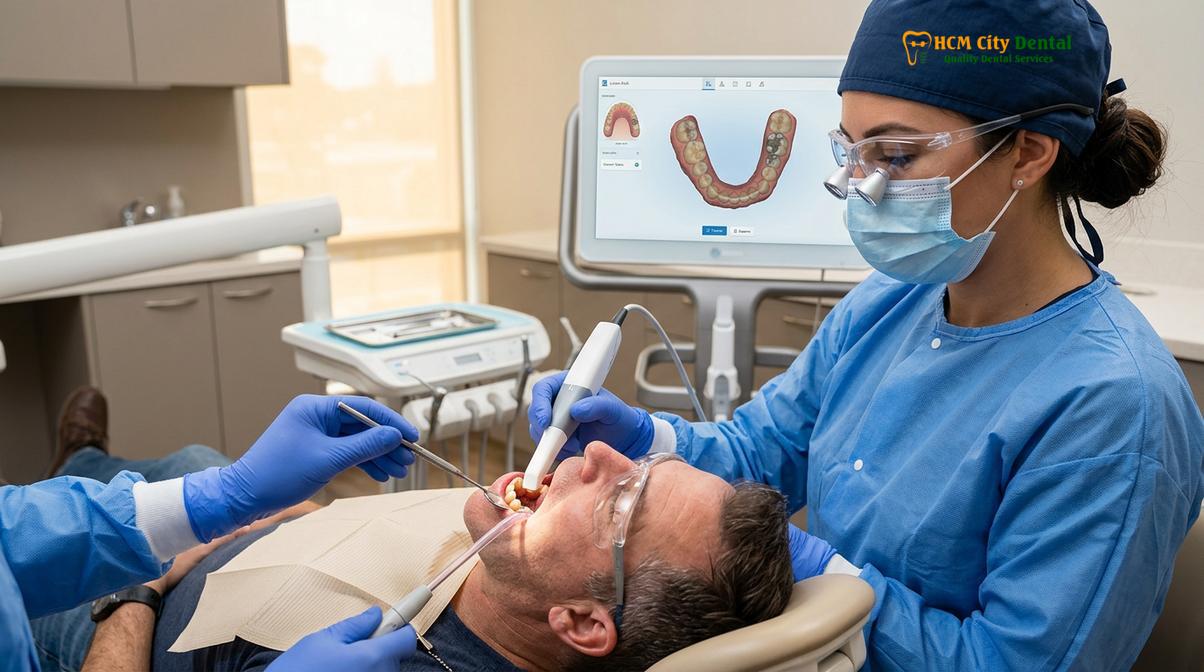
The Digital Scanning Revolution
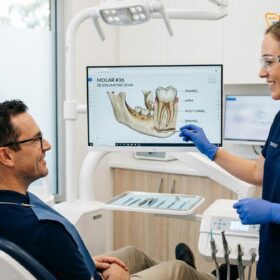
Perhaps the most significant upgrade in modern dental tourism is the elimination of traditional, messy silicone impression putty. Clinics in Vietnam utilize state-of-the-art intraoral scanners. These wand-like devices capture thousands of images per second, stitching them together to create a flawless, high-resolution 3D model of your teeth and bite alignment.
“The integration of digital scanning has revolutionized the patient experience. It not only provides unparalleled accuracy for the milling machine but also completely eliminates the discomfort and gag reflex associated with traditional impression materials.”
The accuracy of intraoral scanners in restorative dentistry has been proven to match or exceed traditional methods, ensuring the first visit is stress-free and highly efficient[2]. Once the digital impression is captured, it is instantly transmitted to the in-house or partnered dental laboratory. Before you leave the chair, the prepared tooth is sealed with a temporary resin restoration to protect the sensitive dentin.
Visit 2: Try-in, Adjustment, and Permanent Cementation
During the final visit, the custom-milled ceramic restoration is meticulously bonded to the tooth, ensuring a perfect marginal seal and optimal bite alignment.
After the laboratory has milled, sintered, and custom-stained your restoration, you will return to the clinic for the final delivery. This appointment is where the precision of digital dentistry and the artistry of the clinician truly converge.
Advanced Enamel Bonding Protocols
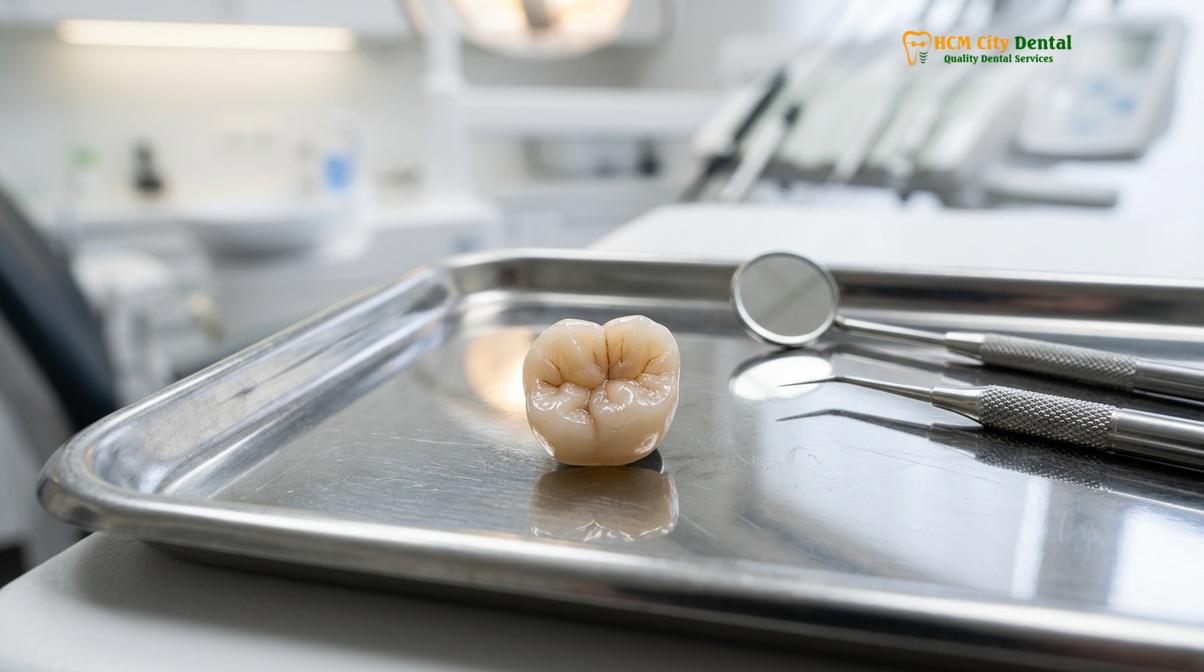
Unlike traditional crowns that are often cemented using mechanical retention and basic luting cements, ceramic inlays and onlays rely on advanced adhesive dentistry. The bonding protocol is a meticulous, multi-step biochemical process[3]. First, the tooth is isolated to keep it completely dry. The enamel and dentin are treated with an acidic etching gel to create microscopic pores. Simultaneously, the internal surface of the ceramic restoration is treated with hydrofluoric acid and a silane coupling agent, which prepares the ceramic to chemically fuse with the resin.
A dual-cure resin-adhesive cement is then applied, and the restoration is seated into place. A specialized curing light is used to harden the cement instantly. This adhesive integration creates a monoblock effect, essentially welding the ceramic to the tooth. Once bonded, the dentist will check your bite alignment using articulating paper. Minor occlusal adjustments are made to ensure that your teeth come together naturally. This is particularly crucial for patients receiving an onlay for bruxism protection, as restoring the vertical dimension of occlusion requires precise force distribution to prevent future fractures[5].
Important Clinical Considerations & When to See a Dentist
Understanding the signs of a failing filling or a cracked tooth can help you seek timely conservative treatment before a full crown becomes necessary.
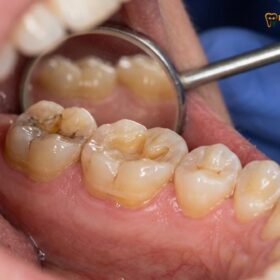
While inlays and onlays are highly durable, the underlying natural tooth structure can still be susceptible to damage if warning signs are ignored. Patients who have large, aging silver amalgam fillings are particularly at risk for micro-fractures, as metal expands and contracts differently than natural enamel under temperature changes.
“Patients experiencing sharp pain when chewing or sudden sensitivity to temperature should seek immediate evaluation, as these are classic signs of a compromised restoration or a cracked tooth requiring an onlay.”
If you suspect you have a fractured cusp, exploring an inlay or onlay for cracked tooth repair early on can save the tooth from needing root canal therapy. Even if endodontic treatment is required, an overlay after a root canal often serves as a highly effective, conservative alternative to a full crown, preserving the remaining cervical tooth structure.
Combining Dental Care with Sightseeing in Saigon
The brief waiting period during lab fabrication provides the perfect opportunity to explore the rich culture, cuisine, and historical landmarks of Ho Chi Minh City.
A major draw of traveling to Vietnam for dental care is the destination itself. Ho Chi Minh City is a dynamic metropolis that seamlessly blends historic French colonial architecture with modern skyscrapers and a world-renowned culinary scene. During the 2-3 days while your restorations are being milled, you are free to explore. Because you will be wearing a temporary restoration, it is advisable to stick to a softer diet. Fortunately, Vietnamese cuisine is incredibly accommodating. You can enjoy iconic dishes like Pho (noodle soup) and Banh Cuon (steamed rice rolls) without putting undue stress on your temporary seal.
The convenience of having world-class dental clinics located in the heart of the city means you are never far from your hotel or major tourist attractions, making the entire experience highly convenient and enjoyable.
How to Book Your Trip: The Pre-Arrival Protocol
Initiating your dental journey involves a remote consultation, securing your travel documents, and scheduling your clinic appointments before you fly.
To ensure a smooth and stress-free experience, top clinics in Vietnam have streamlined the onboarding process for international patients. The journey begins long before you board your flight, starting with a comprehensive pre-arrival consult.
Patient Success Story: Remote Planning
Sarah, a patient from Australia, needed to replace four large, failing amalgam fillings. By sending her recent panoramic X-rays via WhatsApp to HCMC Dental Clinic (Ho Chi Minh City), the clinical team provided a preliminary treatment plan and a fixed cost estimate within 24 hours. She secured her pre-booking discount, arranged her tourist visa online, and had her airport pickup from Tan Son Nhat airport coordinated by the clinic’s international patient coordinator. Her entire partial crown treatment was completed flawlessly within her 5-day vacation window.
If you are ready to restore your smile with premium, conservative ceramics while enjoying a vibrant Southeast Asian holiday, reach out to the international coordination team at HCMC Dental Clinic in Ho Chi Minh City today to begin your remote consultation.
Frequently Asked Questions
How many days do I need for inlays/onlays in Vietnam?
You typically need 4 to 5 days in Vietnam to complete an inlay or onlay procedure. This timeframe allows for the initial preparation and digital scanning on day one, followed by a 2-3 day lab fabrication period, and concludes with the final cementation and bite adjustment.
Can I travel around during lab fabrication?
Yes, you can freely travel and explore during the lab fabrication phase. While wearing a temporary restoration, you can enjoy sightseeing, shopping, and dining, provided you avoid extremely hard, sticky, or chewy foods that might dislodge the temporary seal.
Do I need a visa for dental treatment in Vietnam?
Most international visitors require a tourist visa to enter Vietnam for dental treatment. Citizens of many countries can easily apply for a 30-day or 90-day e-visa online before departure, which perfectly covers the duration needed for restorative dental care.
How do I get from the airport to the clinic?
Getting from Tan Son Nhat International Airport to central clinics is straightforward via ride-hailing apps like Grab, or official airport taxis. The drive to District 1 typically takes 30 to 45 minutes, and many clinics offer dedicated airport transfer services for pre-booked patients.
Are ceramic inlays and onlays biocompatible?
Yes, modern ceramic inlays and onlays are completely metal-free and highly biocompatible. Materials like lithium disilicate and zirconia do not typically cause allergic reactions or gum line irritation, making them an excellent holistic dentistry choice for replacing old silver amalgam fillings.
References
- Journal of Prosthetic Dentistry. Clinical evaluation of CAD/CAM ceramic inlays and onlays. (2021).
- International Journal of Computerized Dentistry. Accuracy of intraoral scanners in restorative dentistry. (2022).
- Journal of Esthetic and Restorative Dentistry. Bonding protocols for lithium disilicate restorations. (2020).
- Dental Materials. Polymerization shrinkage stress in large composite restorations vs indirect ceramics. (2019).
- Journal of Oral Rehabilitation. Restoring vertical dimension of occlusion in bruxism patients using ceramic overlays. (2023).
- Vietnam Odonto-Stomatology Association (VOSA). Guidelines on conservative restorative dentistry and CAD/CAM applications. (2022).