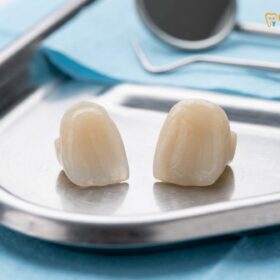
When comparing zirconia vs emax front teeth, the primary distinction lies in balancing strength and aesthetics. E.max (lithium disilicate) offers superior translucency for highly natural anterior restorations, while zirconia provides unmatched durability, making it ideal for patients with heavy bite forces or bruxism.
Clinical Summary:
The selection between zirconia and E.max for anterior (front) teeth restorations is a critical clinical decision in modern prosthodontics. E.max, a lithium disilicate glass-ceramic, is celebrated for its exceptional optical properties, closely mimicking the natural opalescence and translucency of human enamel. It is typically indicated for single crowns and veneers in the aesthetic zone where bite forces are moderate. Conversely, zirconia—particularly high-translucency variants like Zirconia HT—offers formidable flexural strength and fracture resistance. It is the material of choice for patients exhibiting parafunctional habits such as bruxism, for masking severely discolored underlying tooth structures, or for fabricating multi-unit dental bridges. Advanced digital workflows utilizing CAD/CAM milling and intraoral scanners ensure precise marginal adaptation for both materials. Ultimately, the optimal choice depends on a comprehensive clinical evaluation of the patient’s occlusal dynamics, aesthetic expectations, and underlying structural requirements.
Key Takeaways:
- E.max (lithium disilicate) provides unparalleled lifelike translucency, making it highly preferred for single anterior crowns and veneers.
- Zirconia delivers superior flexural strength, ideal for patients with heavy bite forces, bruxism, or those requiring multi-unit bridges.
- Modern High-Translucency Zirconia (Zirconia HT) bridges the gap, offering excellent aesthetics combined with robust durability.
- Digital dentistry, including advanced intraoral scanners, ensures precise marginal fit and optimal patient comfort during preparation.
- Material selection must be personalized based on occlusal clearance, underlying tooth shade, and functional demands.
Zirconia vs. E.max Crowns for Front Teeth
Both materials are premium ceramics used in modern dentistry, but E.max excels in lifelike light transmission, whereas zirconia is renowned for its exceptional flexural strength and structural resilience.
The evolution of restorative dentistry has introduced highly advanced materials designed to replicate the natural dentition while withstanding the rigorous demands of the oral environment. When patients require restorations in the aesthetic zone—the visible front teeth—the debate frequently centers around zirconia vs emax front teeth. Both materials represent metal-free, biocompatible dental prosthetics, yet they possess distinct microstructural properties that dictate their clinical indications.
E.max is a lithium disilicate glass-ceramic. Its crystalline structure allows it to be milled via CAD/CAM technology or pressed in a dental laboratory. The primary advantage of E.max is its remarkable ability to mimic the optical properties of natural enamel. Because it contains a high glass content, it interacts with light dynamically, scattering and reflecting it in a way that breathes life into the restoration. This makes it an exceptional choice for single crowns, inlays, onlays, and veneers where aesthetic demands are paramount.
On the other hand, zirconia (zirconium dioxide) is a polycrystalline ceramic known for its extreme toughness. Historically, traditional zirconia was highly opaque, making it more suitable for posterior (back) teeth where strength was prioritized over aesthetics. However, advancements in material science have led to the development of High-Translucency Zirconia. These modern formulations incorporate varying amounts of yttria to stabilize the crystal structure while allowing more light to pass through. Consequently, monolithic zirconia front teeth have become a highly viable option, offering a harmonious blend of beauty and brawn.
“The paradigm of anterior restorations has shifted from metal-based crowns to all-ceramic solutions. The choice between lithium disilicate and zirconia is no longer just about aesthetics versus strength, but rather about matching the specific biomechanical and optical needs of the individual patient.”
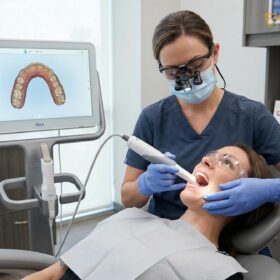
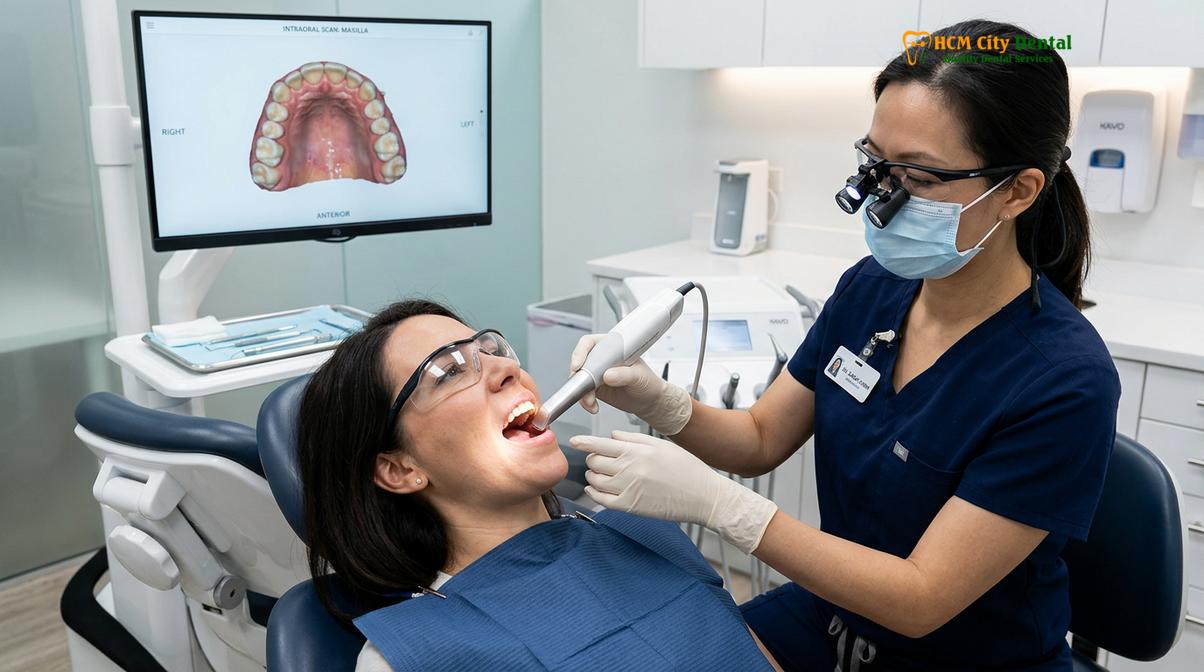
Clinical success with either material relies heavily on the precision of the digital workflow. At modern facilities, the use of state-of-the-art digital scanning technology has revolutionized the patient experience. These devices eliminate the need for messy, uncomfortable traditional silicone impressions. Instead, they capture highly accurate 3D models of the prepared teeth, ensuring that the final CAD/CAM milling process produces a crown with impeccable marginal adaptation, thereby reducing the risk of microleakage and secondary caries[1].
Aesthetic Comparison: Translucency and Light Reflection
E.max closely mimics natural enamel due to its glass-ceramic structure, allowing light to pass through seamlessly, whereas traditional zirconia is inherently more opaque but can be layered for improved aesthetics.
The aesthetic success of an anterior restoration is judged by its ability to blend seamlessly with the adjacent natural teeth. This integration is governed by three primary optical properties: hue (color), chroma (intensity), and value (brightness), along with translucency, opalescence, and fluorescence. When evaluating a translucency dental crown, E.max is widely considered the gold standard.
Lithium disilicate possesses a unique microstructure that allows light to penetrate the surface and scatter within the material, much like natural dentin and enamel. This depth of translucency prevents the crown from looking flat or artificial under different lighting conditions, such as natural sunlight or artificial indoor lighting. For patients seeking the most natural-looking smile makeover, especially when comparing an emax veneer vs crown for anterior teeth, the optical vitality of E.max is difficult to surpass[2].
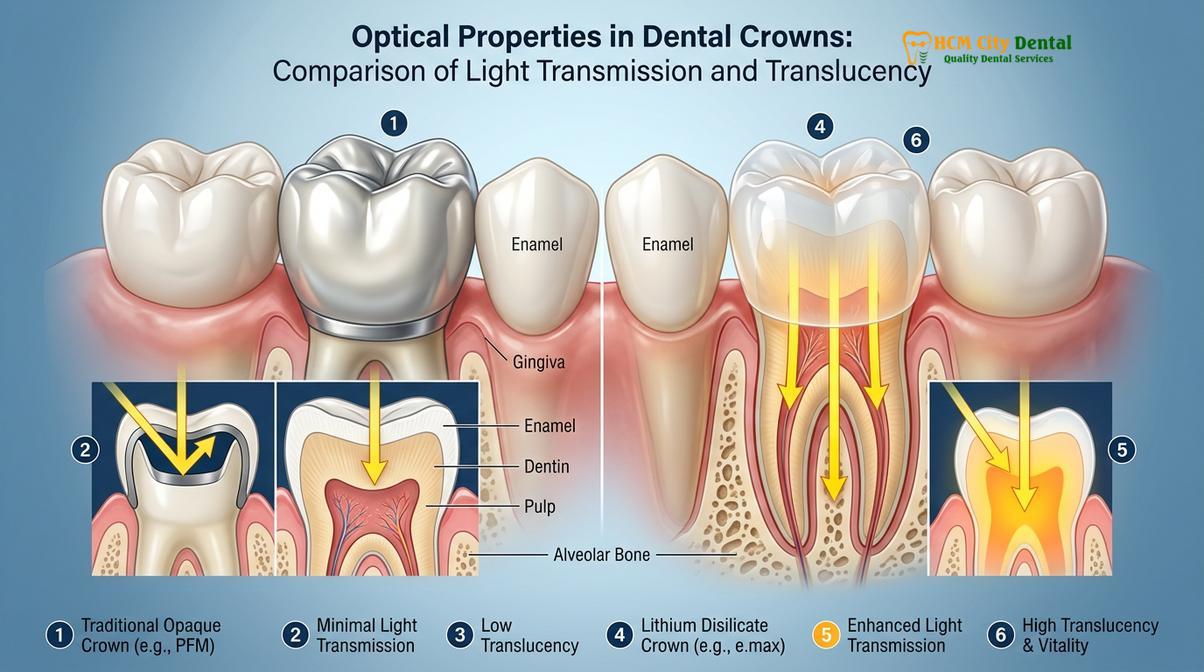
Zirconia, by its chemical nature, is denser and more opaque. While this opacity can be a disadvantage when trying to match a highly translucent adjacent incisor, it becomes a significant clinical advantage when the underlying tooth structure is severely discolored. For instance, if a tooth has darkened due to trauma, endodontic treatment (root canal), or tetracycline staining, the high value and opacity of zirconia can effectively mask the dark stump, preventing the discoloration from showing through the final restoration.
To enhance the aesthetics of zirconia front teeth, dental ceramists employ two main techniques:
- Monolithic High-Translucency Zirconia: The crown is milled from a single block of highly translucent zirconia and then characterized with surface stains and glazes. This approach maximizes strength while providing very good aesthetics.
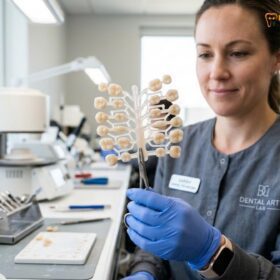
- Layered Zirconia (Porcelain-Fused-to-Zirconia): A strong zirconia coping (core) is milled, and then highly translucent feldspathic porcelain is manually layered and baked onto the facial surface. This technique combines the structural integrity of zirconia with the unparalleled beauty of layered porcelain, though it introduces a slight risk of the veneering porcelain chipping under heavy occlusal forces.
Strength and Durability for Anterior Restorations
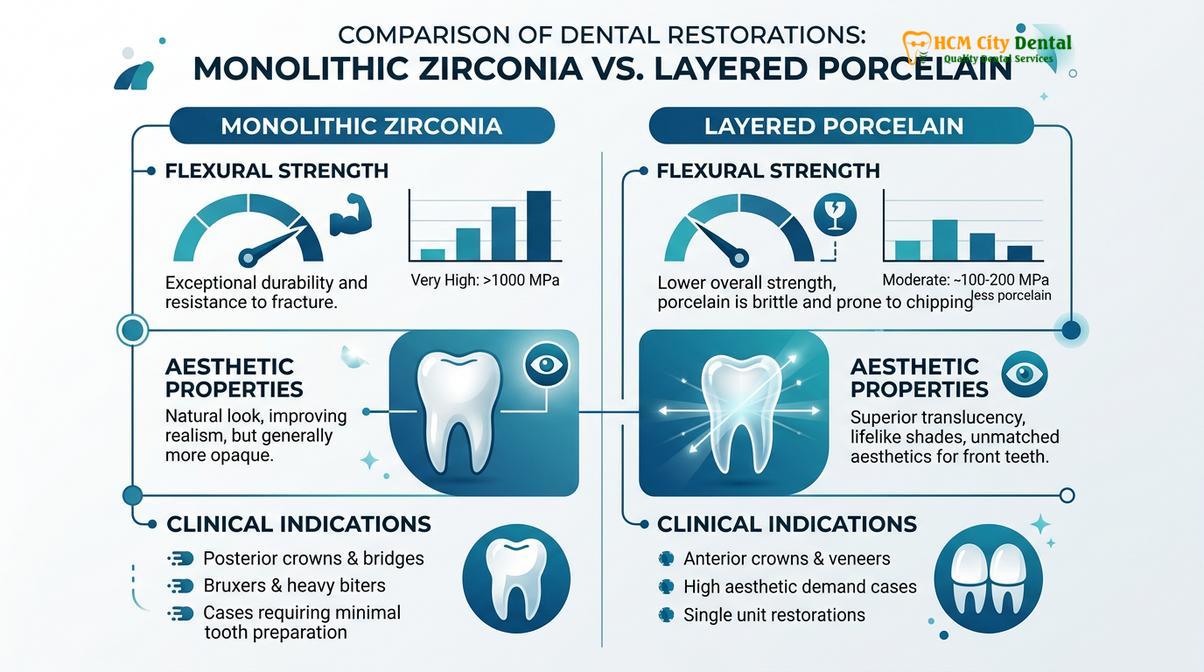
Zirconia boasts a flexural strength of up to 1200 MPa, making it highly resistant to fracture, while E.max provides around 500 MPa, which is generally sufficient for normal anterior biting forces.
While aesthetics often drive the patient’s desires, the clinician must prioritize biomechanical stability to ensure the longevity of the restoration. The anterior teeth are subjected to complex shearing forces during the incising (biting) of food and during excursive movements of the mandible (anterior guidance). Therefore, the chosen material must possess adequate flexural strength and fracture toughness.
Zirconia is often referred to as “ceramic steel” due to its extraordinary mechanical properties. Traditional yttria-stabilized tetragonal zirconia polycrystal exhibits a flexural strength ranging from 900 to 1200 MPa. Furthermore, it possesses a unique property known as transformation toughening; when a micro-crack begins to propagate through the material, the crystal structure locally transforms, expanding and effectively clamping the crack shut. This makes zirconia exceptionally resistant to catastrophic failure[3].
E.max, while incredibly strong for a glass-ceramic, has a flexural strength of approximately 400 to 500 MPa. Under normal physiological conditions, this is more than adequate for single anterior crowns and veneers. However, the clinical dynamic changes significantly if the patient exhibits parafunctional habits, such as bruxism (chronic teeth grinding or clenching). In such cases, the excessive occlusal forces can exceed the fracture toughness of lithium disilicate, leading to chipping or complete fracture of the restoration.
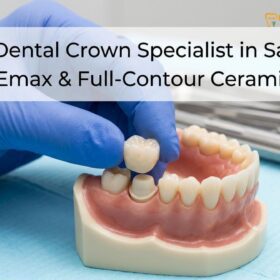
Another critical consideration is the span of the restoration. If a patient is missing a front tooth and requires a dental bridge, the material must withstand the bending moments applied across the pontic (the suspended false tooth). For a 3-unit or 4-unit bridge in the anterior region, Zirconia HT is often the preferred material. Its high flexural strength ensures the connectors between the units do not fracture under load, providing a reliable, long-term solution that E.max cannot safely support over longer spans.
Clinical Criteria for Front Teeth Selection
Selecting the right material depends on the underlying tooth structure, the presence of root canal posts, occlusal clearance, and whether the restoration is tooth-supported or implant-supported.
The decision-making process for selecting between zirconia and E.max extends beyond simple material properties; it requires a holistic evaluation of the patient’s unique oral anatomy and clinical history. A successful cosmetic material selection must respect the biological parameters of the periodontium and the structural realities of the abutment teeth.
One of the primary clinical criteria is the condition of the underlying tooth. Teeth that have undergone extensive decay or trauma often require endodontic therapy. Following a root canal, the tooth becomes brittle and loses significant coronal tooth structure. To rebuild the tooth before crowning, a root canal post and core buildup is often necessary. If a metal post or an opaque composite core is used, an E.max crown may allow the dark underlying structure to show through, compromising the aesthetic result. In these scenarios, an opaque zirconia coping is highly advantageous for masking the substructure.
The concept of biologic width is also paramount. The biologic width is the natural dimension of the soft tissue attached to the portion of the tooth above the alveolar bone. If a tooth is severely broken down near the gumline, placing a crown margin too deep can invade this space, leading to chronic gingival inflammation, bleeding, and eventual bone loss. The precision of CAD/CAM milling ensures that the margins of either E.max or zirconia crowns are smooth and biologically compatible, promoting healthy gingival contours.
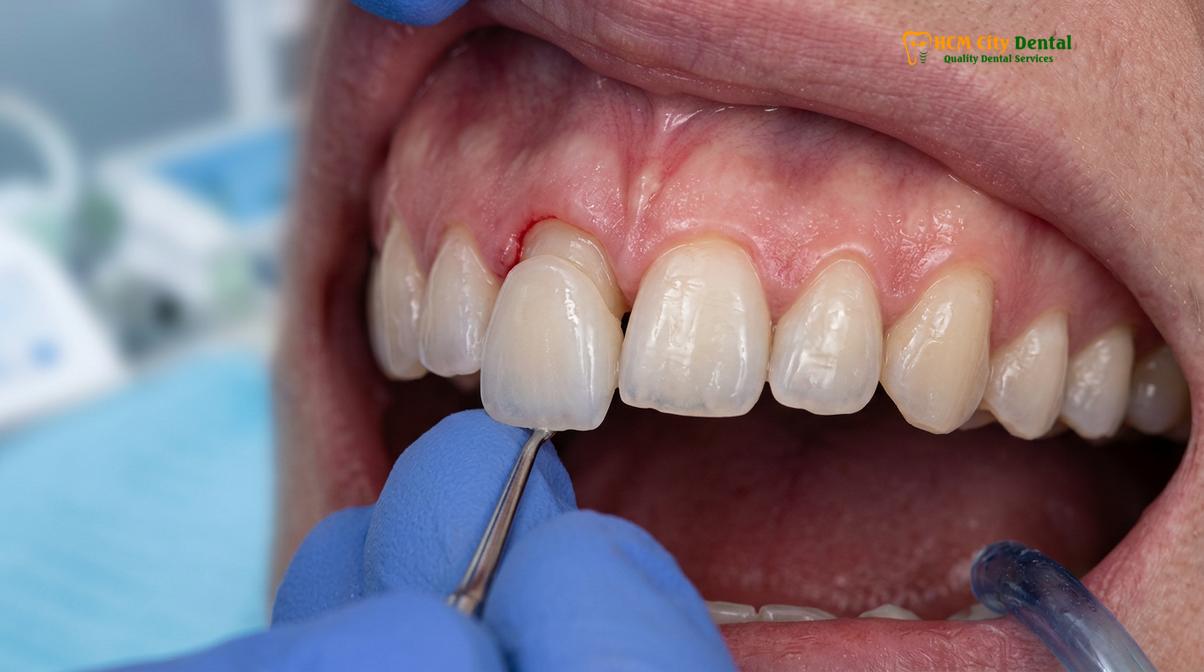
When restoring a missing front tooth with a dental implant, the choice of material for the implant crown and the underlying abutment is critical. Implant crowns can be either screw-retained or cement-retained. Screw-retained implant crowns are often preferred in the aesthetic zone because they eliminate the risk of excess cement being left below the gumline, which can cause peri-implantitis. For implant restorations, a zirconia abutment paired with a layered zirconia or E.max crown provides excellent soft tissue response and prevents the grayish hue of a titanium abutment from showing through the thin gingival biotype[4].
Tooth Preparation Differences
E.max typically requires a slightly thicker preparation with a rounded shoulder margin to ensure ceramic bulk, whereas high-strength zirconia allows for more conservative chamfer margins.
The principles of tooth preparation vary significantly depending on the restorative material chosen. The goal of any preparation is to remove enough tooth structure to allow for the appropriate thickness of the ceramic material while preserving as much healthy enamel and dentin as possible. This delicate balance is essential for maintaining the vitality of the dental pulp and ensuring the long-term retention of the crown.
For E.max restorations, the preparation must be meticulous. Because lithium disilicate relies on bulk for its strength, the clinician must ensure adequate reduction across all axial walls and the incisal edge. The preferred margin design for E.max is a heavy chamfer or a rounded shoulder. This design provides a distinct, flat seating surface that allows the glass-ceramic to be milled with sufficient thickness at the margin, preventing chipping during the manufacturing process and during clinical function.
Clinical Case Example: A patient visited HCMC Dental Clinic in Ho Chi Minh City presenting with a fractured upper central incisor. After a thorough clinical and radiographic evaluation, the tooth was prepared with a conservative rounded shoulder margin. Utilizing an advanced intraoral scanner, a digital impression was captured. An E.max crown was fabricated and adhesively bonded, resulting in a restoration that perfectly mimicked the adjacent natural incisor in both translucency and surface texture.
Conversely, tooth preparation for monolithic zirconia can be more conservative. Because of its immense flexural strength, zirconia can be fabricated in thinner cross-sections without compromising durability. The clinician can utilize a lighter chamfer margin, which preserves more cervical tooth structure. This minimal intervention approach is particularly beneficial for younger patients with large pulp chambers, reducing the risk of postoperative sensitivity or the need for elective endodontic therapy.
Material Comparison Table
A quick reference guide comparing the clinical properties of E.max and Zirconia for anterior applications.
| Property | E.max (Lithium Disilicate) | Zirconia (High-Translucency) |
|---|---|---|
| Translucency & Aesthetics | Excellent (Highly lifelike and opalescent) | Good to Very Good (Depending on formulation) |
| Flexural Strength | ~400 – 500 MPa | ~800 – 1200 MPa |
| Primary Clinical Indication | Single anterior crowns, veneers, inlays | Bridges, heavy bite forces, masking dark teeth |
| Preparation Requirement | Slightly thicker (rounded shoulder margin) | More conservative (chamfer margin) |
| Risk of Chipping | Low to Moderate (under heavy forces) | Very Low (Monolithic) |
When to Consult a Prosthodontist
Seeking professional evaluation is crucial when experiencing structural damage, severe discoloration, or functional issues with anterior teeth to determine the most appropriate restorative material.
Patients should schedule a consultation with a dental professional if they notice any signs of wear, chipping, or aesthetic degradation in their front teeth. Early intervention can often preserve more natural tooth structure and expand the range of viable restorative options.
Important Clinical Note: If you experience sudden pain, sensitivity to temperature, or notice a visible crack in a front tooth, seek immediate dental care. Delaying treatment can lead to pulpal involvement or further structural loss, making conservative options like veneers or highly translucent single crowns less viable.
According to the clinical guidelines for anterior ceramic restorations endorsed by the Vietnam Odonto-Stomatology Association (VOSA), patients should seek professional evaluation if they experience structural damage or aesthetic concerns with their front teeth to ensure optimal material selection and long-term success[5].
“Timely clinical intervention and precise material selection are the cornerstones of successful anterior restorations. Delaying treatment for compromised front teeth can lead to further structural loss, making conservative options like veneers or highly translucent single crowns less viable.”
During a consultation, the dentist will perform a comprehensive examination, including digital radiographs and an occlusal analysis, to determine whether E.max or zirconia is the most appropriate choice. Factors such as the patient’s bite force, the presence of parafunctional habits, and the underlying shade of the prepared tooth will all be carefully evaluated to formulate a customized treatment plan.
Dentist Recommendations for Smile Makeovers
A successful smile makeover integrates digital scanning, precise material selection, and expert laboratory fabrication to achieve functional harmony and lifelike aesthetics.
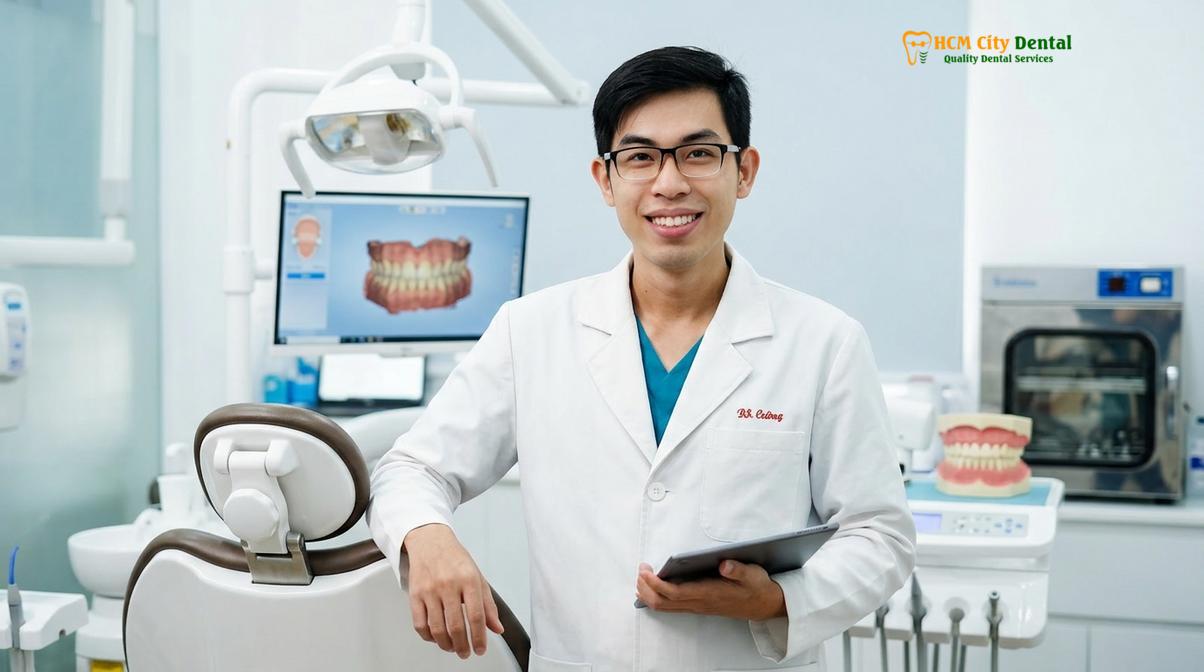
Dr. Nguyen Van Cuong, a leading specialist in restorative dentistry, emphasizes that material selection must be highly individualized. He notes that while E.max provides unparalleled translucency for single anterior crowns, modern high-translucency zirconia offers a robust alternative for patients with heavy bite forces. His clinical approach ensures that every restoration balances biomechanical stability with exceptional aesthetics, providing patients with a durable and beautiful smile.
Ultimately, the choice between zirconia and E.max should be made collaboratively between the patient and the dental provider. By leveraging advanced digital workflows and premium ceramic materials, modern dentistry can deliver restorations that are virtually indistinguishable from natural teeth. If you are considering a smile makeover or need to restore a damaged front tooth, contact HCMC Dental Clinic in Ho Chi Minh City today to explore your options for Dental Crowns & Bridges tại HCMC Dental Clinic.
References
- Journal of Prosthodontic Research. Flexural strength and fracture toughness of zirconia crowns. (2021).
- Journal of Esthetic and Restorative Dentistry. Optical properties and translucency of lithium disilicate. (2020).
- International Journal of Prosthodontics. Screw-retained versus cement-retained implant crowns in the aesthetic zone. (2019).
- Journal of Dentistry. CAD/CAM milling accuracy and marginal adaptation of ceramic restorations. (2022).
- Vietnam Odonto-Stomatology Association (VOSA). Clinical guidelines for anterior ceramic restorations and material selection. (2023).