Choosing between a dental crown vs veneer depends entirely on the structural integrity of your natural tooth. A veneer is a thin cosmetic shell bonded only to the front surface to enhance aesthetics, whereas a dental crown encases the entire tooth to restore strength after severe decay, trauma, or endodontic therapy.
Clinical Summary:
The primary distinction between a dental crown and a veneer lies in their clinical application and structural coverage. Veneers are ultra-thin ceramic layers (typically E.max lithium disilicate) bonded to the facial surface of anterior teeth, requiring minimal enamel reduction. They are the gold standard for cosmetic dentistry, correcting discoloration, minor chips, and mild misalignment. Conversely, dental crowns provide 360-degree coverage, acting as a protective cap for compromised teeth. Crowns are essential following endodontic therapy, extensive structural damage, or when replacing missing teeth via a dental bridge or dental implant. Both restorations utilize advanced CAD/CAM milling and digital impressions (iTero scanner, Medit i700) for precise shade matching and marginal fit. Treatment selection is dictated by the remaining healthy tooth structure, functional bite requirements, and the patient’s aesthetic goals.
Key Takeaways:
- Veneers cover only the front of the tooth for cosmetic enhancement, while crowns encase the entire tooth for structural protection.
- Crowns are mandatory for teeth with extensive decay, large fractures, or those that have undergone root canal therapy.
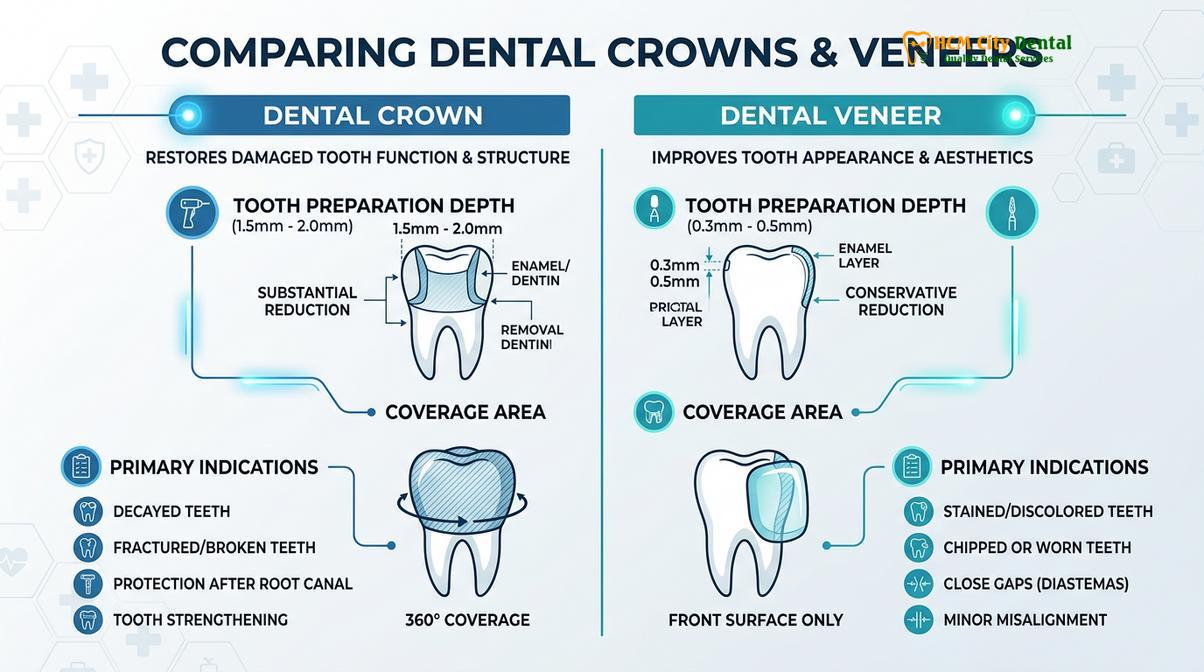
- Tooth preparation for veneers requires minimal enamel reduction (0.3mm to 0.5mm), whereas crowns require more substantial reshaping (1.5mm to 2.0mm).
- Advanced digital workflows using iTero and Medit i700 scanners ensure highly accurate, comfortable impressions for both restorations.
- Patients can combine both treatments in a single smile makeover, utilizing materials like Zirconia HT and E.max for seamless shade matching.
Structural Differences: 360° Coverage vs. Front-Face Only
The fundamental difference lies in coverage: veneers bond only to the visible front surface of a tooth, while crowns encase the entire tooth structure 360 degrees above the gumline.
Understanding the biomechanical differences between these two popular restorations is the first step in determining which treatment aligns with your clinical needs. A veneer acts much like a contact lens for your tooth. It is an ultra-thin shell, typically measuring between 0.3mm and 0.5mm in thickness, that is permanently bonded to the facial (front) surface of the tooth. Because it only covers the visible portion, the majority of the natural tooth structure remains intact. This makes veneers an exceptionally conservative approach when the primary goal is aesthetic improvement rather than structural reinforcement.
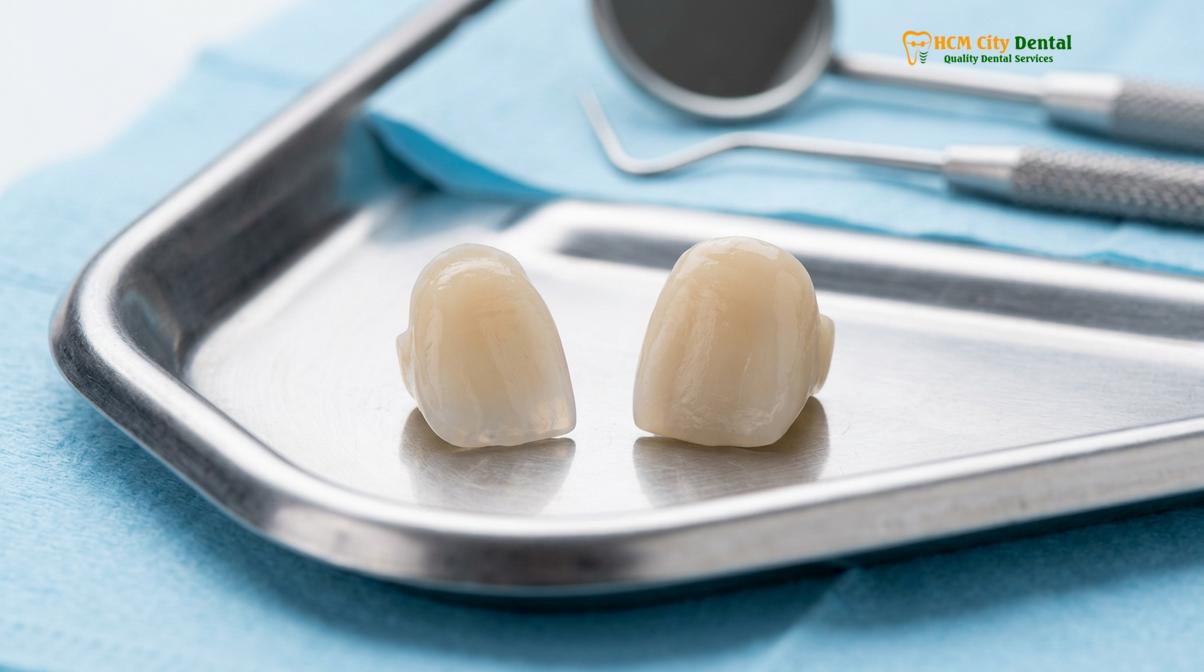
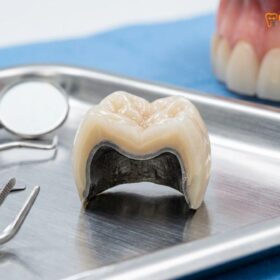
In contrast, a dental crown functions as a protective helmet. It is a full-coverage restoration that encapsulates the entire visible portion of the tooth down to the gingival margin (gumline). Because a crown must withstand the full force of mastication (chewing) while protecting the underlying compromised tooth, it requires a thicker material profile—usually between 1.5mm and 2.0mm. This 360-degree coverage provides unparalleled strength and stability, effectively holding a weakened tooth together and preventing catastrophic fractures [1].
The choice of material also plays a critical role in the structural integrity of these restorations. For veneers, highly translucent materials like E.max (lithium disilicate) are preferred because they mimic the light-reflecting properties of natural enamel beautifully. For crowns, especially those in the posterior (back) of the mouth, stronger materials are often required. Options include monolithic zirconia, layered zirconia, or a traditional PFM crown (Porcelain-Fused-to-Metal). Today, Dental Crowns & Bridges predominantly utilize advanced ceramics that offer both exceptional durability and lifelike aesthetics, eliminating the dark metal lines often associated with older PFM restorations.
When Do You Need a Crown? (Structural Damage, Root Canal)
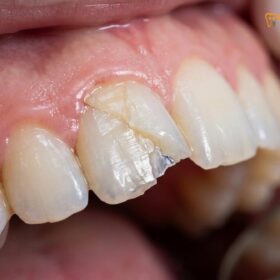
A dental crown is clinically necessary when a tooth has lost significant structural integrity due to deep decay, severe fractures, or following endodontic root canal therapy.
Dental crowns are the cornerstone of restorative dentistry. While they can certainly improve the appearance of a tooth, their primary function is to restore health, function, and structural stability. One of the most common indications for a crown is following a root canal. During endodontic therapy, the blood supply and nerve of the tooth are removed, leaving the remaining dentin brittle and highly susceptible to fracture. To prevent the tooth from splitting under chewing forces, a crown is placed over it. In cases where a significant amount of the tooth structure has been lost to decay, the dentist may first need to perform a root canal post and core buildup to create a solid foundation for the crown to adhere to.
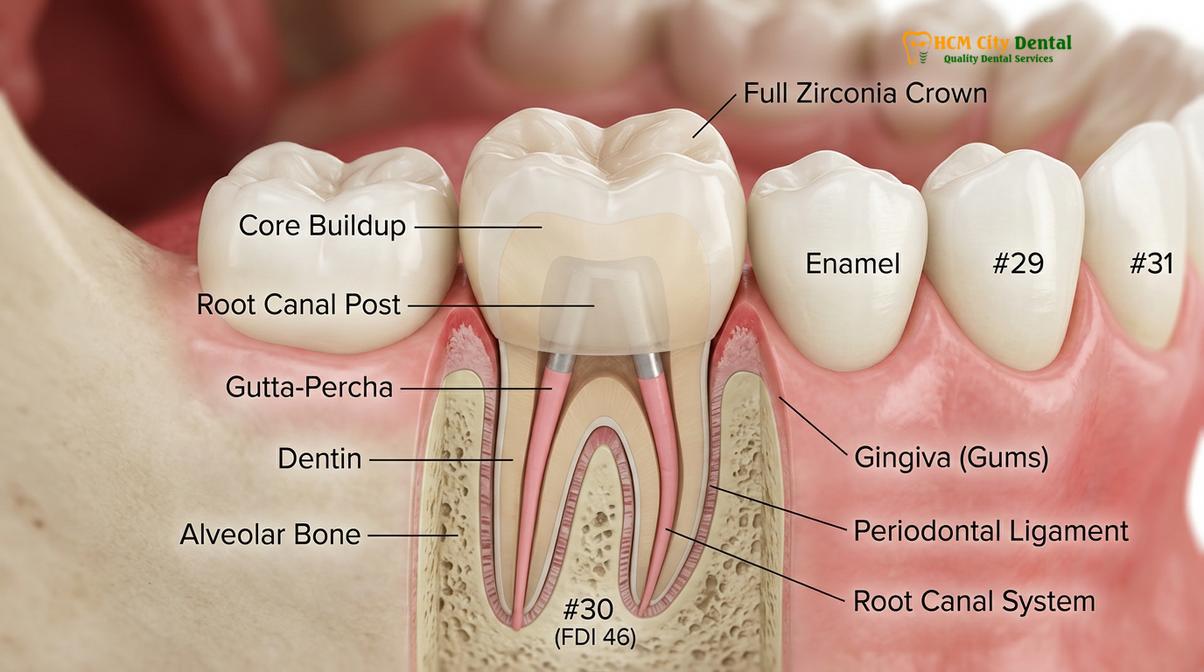
Another critical clinical concept in crown placement is the management of the biologic width. The biologic width is the natural dimension of the soft tissue attached to the portion of the tooth above the alveolar bone. If a cavity or fracture extends deep below the gumline, placing a crown margin too close to the bone can violate this space, leading to chronic inflammation, bone loss, and gum recession. In such cases, a minor surgical procedure known as functional crown lengthening is performed to gently recontour the bone and expose more healthy tooth structure, ensuring the crown fits perfectly without irritating the gums [2].
“The long-term success of a full-coverage restoration relies not only on the strength of the ceramic but on the precise management of the underlying tooth structure and surrounding periodontal tissues.”
Crowns are also integral components of larger restorative frameworks. For instance, if you are missing a single tooth, a 3-unit dental bridge can be fabricated. In this scenario, the teeth adjacent to the gap are prepared for crowns, and these crowns serve as anchors to hold a false tooth (pontic) in the middle. For larger gaps, a 4-unit bridge might be utilized. Furthermore, in modern implantology, crowns are the final step in replacing a missing tooth. Depending on the clinical situation, a prosthodontist will choose between a screw-retained or a cement-retained dental implant crown, each offering specific biomechanical advantages for long-term stability.
When Do You Choose a Veneer? (Cosmetic Enhancement)
Veneers are the treatment of choice for cosmetic enhancements, designed to correct superficial flaws like discoloration, minor chips, and slight misalignments without compromising healthy tooth structure.
If your teeth are structurally sound but you are unhappy with their appearance, veneers are generally the most appropriate and conservative option. When evaluating a dental veneer or crown front teeth scenario, the preservation of natural enamel is paramount. Enamel is the hardest substance in the human body, and once it is removed, it cannot regenerate. Because veneers require only a minimal reduction of the facial enamel, they allow the dentist to achieve dramatic cosmetic transformations while maintaining the tooth’s inherent strength.
Veneers are highly versatile authentic, certified materials used to address a wide array of aesthetic concerns. They can effectively mask severe intrinsic discoloration that does not respond to traditional teeth whitening, such as tetracycline staining or fluorosis. They can also close diastemas (gaps between teeth), restore the appearance of worn or chipped incisal edges, and correct mild crowding or misalignment—often referred to as “instant orthodontics.”
The success of a veneer case relies heavily on meticulous shade matching and material selection. E.max (Ivoclar, Liechtenstein) lithium disilicate is widely considered the premier material for anterior veneers due to its outstanding lifelike aesthetics and high flexural strength. The translucency of E.max allows light to penetrate the ceramic just as it would natural enamel, creating a vibrant, natural-looking smile rather than an opaque, artificial one [3]. During the design phase, the dentist and ceramist work closely together to customize the shape, length, surface texture, and color gradient of each veneer to complement the patient’s facial features and lip dynamics.
Tooth Preparation Comparison (Minimal vs. Full Reduction)
Veneer preparation is highly conservative, removing only a fraction of a millimeter of facial enamel, whereas crown preparation requires circumferential reduction to accommodate the thicker restorative material.
The clinical workflow for preparing a tooth differs significantly depending on whether a crown or a veneer is being placed. For a veneer, the dentist typically creates a very shallow chamfer margin at the gumline. A chamfer is a sloped, curved preparation that allows the thin ceramic shell to blend seamlessly into the natural tooth, providing a smooth exit profile that prevents plaque accumulation and gingival irritation. The reduction is usually confined entirely to the enamel layer, which ensures an incredibly strong bond when the veneer is eventually cemented in place.
Conversely, preparing a tooth for a crown requires a more aggressive approach. The dentist must reduce the tooth circumferentially (on all sides) as well as on the occlusal (biting) surface. This is necessary to create enough restorative space for the crown material to possess adequate thickness for strength. For crowns, a shoulder margin—a distinct, 90-degree ledge—is often prepared. This provides a flat seat for the crown to rest upon, allowing it to effectively resist heavy vertical chewing forces.
Clinical Warning: Tooth preparation is an irreversible procedure. Patients should undergo a thorough clinical and radiographic examination to ensure that the chosen restoration is the most conservative and appropriate option for their specific dental health needs.
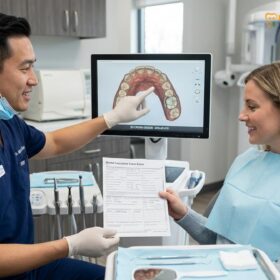
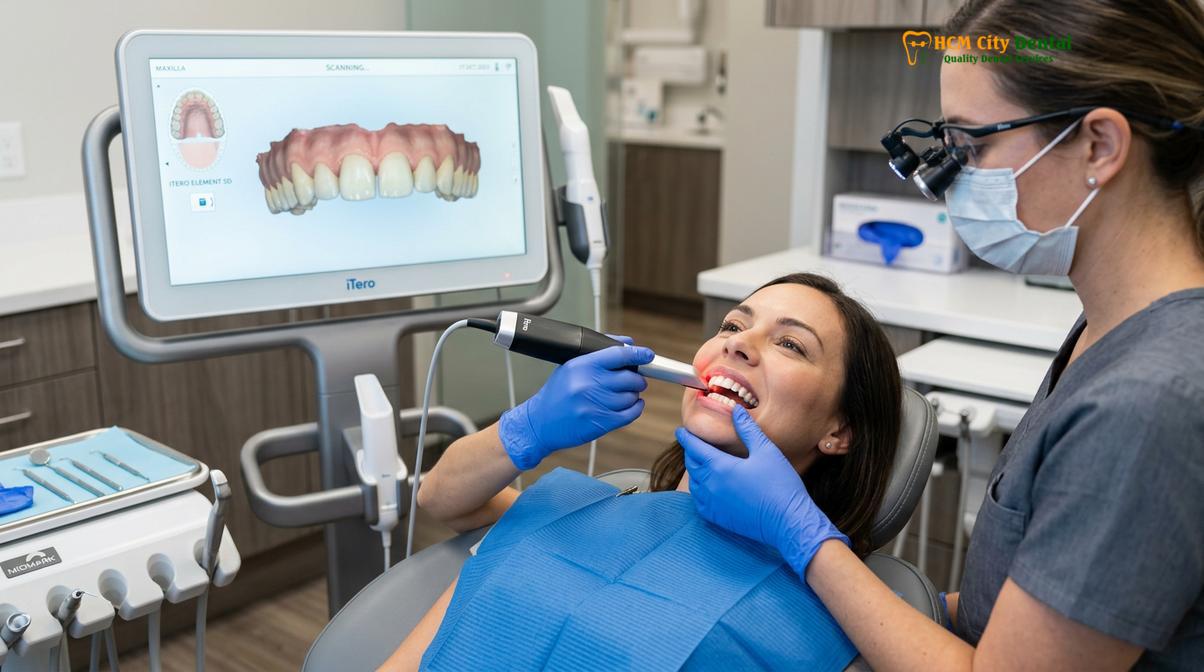
Historically, taking impressions of these delicate preparations involved messy, uncomfortable silicone putty. Today, state-of-the-art clinics utilize digital dentistry to enhance patient comfort and clinical accuracy. The use of iTero and Medit i700 Intraoral Scanners represents a paradigm shift in restorative workflows. These devices capture thousands of images per second to create a highly precise 3D model of the prepared teeth and the patient’s bite [4]. This digital scan is instantly transmitted to the laboratory, eliminating the gag reflex associated with traditional impressions and ensuring a flawless marginal fit for the final restoration. While the permanent restorations are being fabricated via CAD/CAM milling, a temporary crown or veneer is placed to protect the prepared teeth and maintain aesthetics.
Can You Have Both? Combining Crowns and Veneers in Smile Design
Yes, a comprehensive smile makeover often combines both crowns and veneers, utilizing advanced shade matching to ensure a uniform, natural appearance across teeth with varying levels of damage.
A common misconception among patients is that they must choose exclusively between crowns or veneers for their entire mouth. In reality, a customized smile makeover crown veneer combination is frequently the most clinically sound approach. Every tooth in the mouth has a unique history; some may be perfectly healthy but slightly discolored, while adjacent teeth may have large old fillings or previous root canals.
Dr. Nguyen Van Cuong, a leading restorative expert, emphasizes that the goal of a full mouth reconstruction is to be as conservative as possible while achieving functional harmony and aesthetic perfection. For example, a patient might receive ultra-thin E.max veneers on their healthy central incisors to improve their shape, while receiving full-coverage Zirconia HT crowns on their heavily restored premolars to provide necessary strength. The challenge in these complex cases lies in the optical integration of different materials.
Clinical Case Example: A patient presented with severe wear on the upper front teeth and large failing amalgam fillings on the back teeth. The treatment plan involved placing conservative porcelain veneers on the six anterior teeth for aesthetic enhancement, while utilizing durable zirconia crowns on the posterior teeth to restore vertical dimension and chewing function. Advanced digital shade matching ensured all restorations blended seamlessly.
Because zirconia and lithium disilicate reflect light differently, achieving a perfect color match requires the expertise of a master ceramist. Through a direct lab partnership, the prosthodontist and the ceramist collaborate closely, utilizing custom staining and glazing techniques to ensure that the crowns and veneers are indistinguishable from one another. Following the final cementation, meticulous bite adjustment is performed to ensure that the occlusal forces are evenly distributed, protecting the new restorations from premature wear or chipping.
“The art of modern prosthodontics lies in the seamless integration of diverse restorative materials, ensuring that a smile is not only structurally robust but visually indistinguishable from natural dentition.”
Cost and Longevity: Making the Right Investment
While the initial crown vs veneer cost varies based on material and clinical complexity, both restorations offer excellent long-term value when supported by proper oral hygiene and regular professional care.
When evaluating cosmetic and restorative options, understanding the financial investment and expected longevity is crucial. In many Western countries, the cost of premium dental work can be prohibitive. However, the rise of dental tourism has made world-class care highly accessible. Patients traveling for care often wonder how to prepare for dental tourism to maximize their time and investment.
At specialized centers, an Express 3-5 Day Turnaround is tailored specifically for international patients and expats, allowing complete smile makeovers or multiple crowns and bridges to be fabricated and fitted within a single week. This efficiency is made possible by direct lab partnerships, which enable complete quality control without the delays of outsourcing [5].
The pricing structure for these premium, certified materials (such as Zirconia HT from Germany and E.max from Liechtenstein) is highly transparent. According to the latest clinic fee schedules, patients who utilize WhatsApp pre-booking can access significant savings—often a 40% discount compared to walk-in rates.
Estimated Pricing Structure (Reflecting pre-arrival discounts):
| Restoration Type | Material / Origin | Estimated Cost (Pre-booked) |
|---|---|---|
| PFM Crown | Standard Alloy / Porcelain | From $84 |
| Zirconia Crown | Cercon (Germany) | From $120 |
| Zirconia HT Crown | Cercon HT (High Translucency) | From $156 |
| E.max Crown / Veneer | Ivoclar (Liechtenstein) | From $168 |
| 3-Unit Bridge | Zirconia HT | From $288 |
Beyond the initial cost, patients must consider the longevity of their investment. Both crowns and veneers are highly durable, routinely lasting 10 to 15 years, and often much longer with excellent oral hygiene. To protect this investment, clinics offer a global warranty policy with remote follow-up support via WhatsApp, utilizing photo and video assessment protocols to assist patients long after they have returned home. Additionally, flexible financials, including 0% interest monthly credit card installment plans, make comprehensive care more attainable.
When to See a Doctor (Important Clinical Considerations)
While dental crowns and veneers are highly successful and routine procedures, they require professional monitoring. You should schedule an immediate clinical evaluation if you experience any of the following symptoms: sudden pain or prolonged sensitivity to hot and cold temperatures, a feeling that your bite is uneven or “high” when you close your mouth, or if you notice inflammation, bleeding, or swelling of the gums around the margins of your restorations.
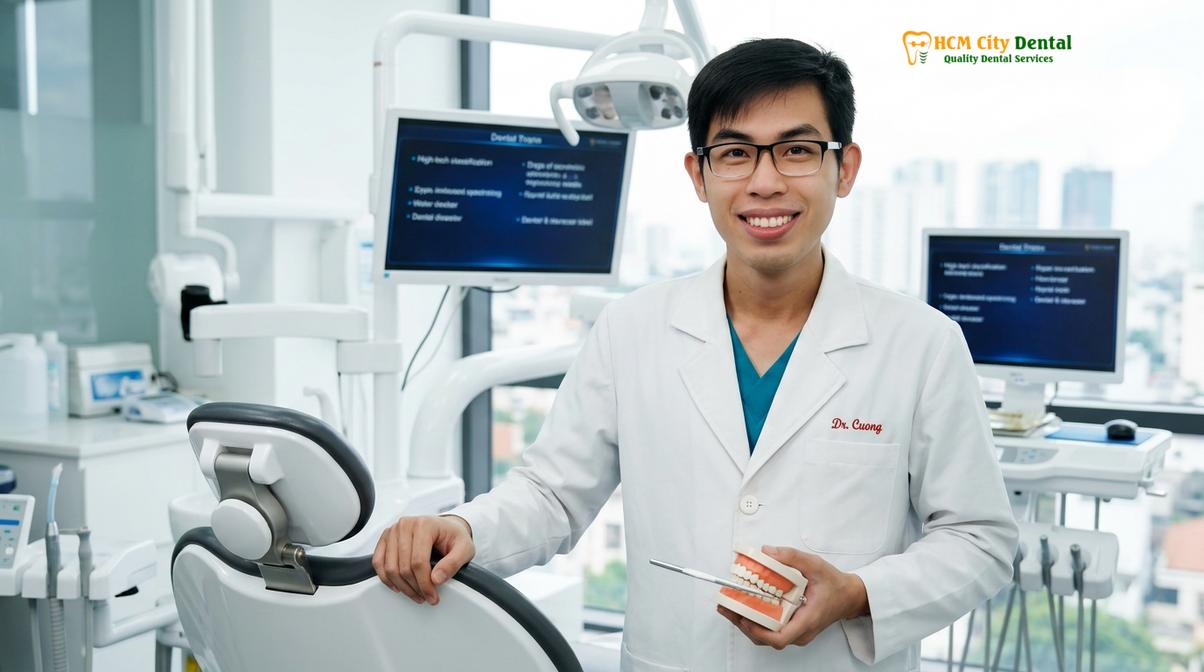
Furthermore, if you experience an emergency loose crown or if a veneer chips due to accidental trauma, do not attempt to reattach it yourself using household adhesives, as this can permanently damage the restoration and the underlying tooth. Keep the restoration safe and contact your dental provider immediately for professional recementation or replacement. Dr. Nguyen Van Cuong and the dedicated team at HCMC Dental Clinic in Ho Chi Minh City routinely handle complex restorative cases and emergency interventions, ensuring that your dental health and aesthetic investments are protected through evidence-based clinical care.
Frequently Asked Questions
What is the difference between a dental crown and a veneer?
The primary difference is coverage: a veneer is a thin shell bonded only to the front surface of a tooth for cosmetic purposes, while a dental crown encases the entire tooth structure to restore strength and function. Veneers require minimal enamel removal, whereas crowns require more extensive reshaping to accommodate the thicker protective material. Your dentist will recommend the appropriate option based on the structural integrity of your natural tooth.
Is a crown or veneer better for front teeth?
For front teeth with minor cosmetic flaws but healthy structure, a veneer is generally better because it is less invasive. However, if the front tooth is severely decayed, fractured, or has undergone a root canal, a dental crown is clinically necessary to provide adequate structural support. Advanced materials like E.max lithium disilicate can be used for both, ensuring a highly aesthetic, natural-looking result regardless of which restoration is chosen.
Are veneers cheaper than dental crowns?
Generally, the cost of a veneer is comparable to or slightly higher than a standard crown due to the meticulous cosmetic detailing required by the ceramist. However, pricing varies significantly based on the material used (e.g., composite vs. porcelain) and the clinic’s location. At specialized centers offering direct lab partnerships, patients can often access premium materials for both treatments at highly competitive rates compared to Western clinics.
Does the tooth preparation process hurt?
No, the tooth preparation process should not hurt, as it is performed under local anesthesia to ensure complete patient comfort. Following the procedure, you may experience mild, temporary sensitivity to hot or cold temperatures, which typically subsides within a few days. Modern digital scanning techniques also eliminate the discomfort associated with traditional impression materials, making the overall experience much more pleasant.
How long does it take to get a crown or veneer?
The standard timeline for receiving a custom crown or veneer is typically two to three weeks, involving an initial preparation visit and a final cementation appointment. However, clinics equipped with advanced CAD/CAM technology and direct laboratory partnerships can often expedite this process. For international patients, an express turnaround of 3 to 5 days is frequently available to accommodate travel schedules.
References
- Journal of Prosthetic Dentistry. Biomechanical principles of tooth preparation for complete crowns. (2020).
- International Journal of Periodontics & Restorative Dentistry. Biologic width and crown lengthening considerations. (2019).
- Journal of Esthetic and Restorative Dentistry. Clinical performance of lithium disilicate veneers. (2021).
- Journal of Dentistry. Accuracy of digital intraoral scanners in prosthodontics. (2022).
- American Dental Association. Clinical guidelines for indirect restorations and shade matching. (2018).