Navigating dental insurance for crowns in Ho Chi Minh City requires a clear understanding of your policy’s major restorative benefits. Many expat health plans cover a significant portion of ceramic restorations. By choosing a clinic with direct billing or comprehensive claim support, you can maximize your annual dental benefit limit efficiently.
Clinical Summary:
Dental crowns and bridges are classified as major restorative treatments under most international insurance policies. In Ho Chi Minh City, expats can leverage direct billing networks or submit detailed reimbursement claims to offset costs. Advanced CAD/CAM workflows, utilizing iTero and Medit i700 scanners, ensure precise margin adaptation and biologic width preservation. Combined with authentic materials like Zirconia HT and E.max, patients achieve durable, aesthetic results while optimizing their expat dental coverage Cigna Bupa or other global plans. Strategic treatment planning allows patients to maximize their benefits while receiving world-class prosthodontic care.
Key Takeaways:
- Major restorative insurance typically covers 50% to 80% of dental crown costs after mandatory waiting periods.
- Direct billing networks in Saigon streamline the financial process for international school staff and expatriates.
- Essential claim documents include a VAT invoice, pre- and post-operative X-rays, and a signed treatment plan.
- Pre-booking via WhatsApp unlocks a 40% discount on premium Zirconia and E.max crowns.
- Digital intraoral scanning (iTero/Medit i700) eliminates messy impressions for maximum patient comfort and precision.
Understanding Expat Dental Insurance Coverage
Expat dental insurance typically categorizes crowns and bridges as major restorative care, often covering 50% to 80% of the total cost after a mandatory waiting period.
For expatriates living and working in Vietnam, understanding the nuances of dental insurance is crucial for managing the costs of complex restorative treatments. Dental policies generally divide coverage into three tiers: preventative (exams, cleanings), basic restorative (fillings, simple extractions), and major restorative. Dental crowns, inlays, onlays, and bridges fall firmly into the major restorative category. Because these procedures require advanced laboratory fabrication and premium materials, insurance providers scrutinize these claims closely to ensure medical necessity.
Most international health policies impose a waiting period—often ranging from 6 to 12 months—before major restorative benefits become active. This prevents individuals from purchasing a policy solely to cover an immediate, pre-existing need for a crown. Once the waiting period is cleared, policies typically cover a percentage of the “usual, customary, and reasonable” (UCR) fee for the procedure. It is vital to review your policy documents to determine your specific co-insurance rate, which frequently sits between 50% and 80% for prosthodontic work[1].
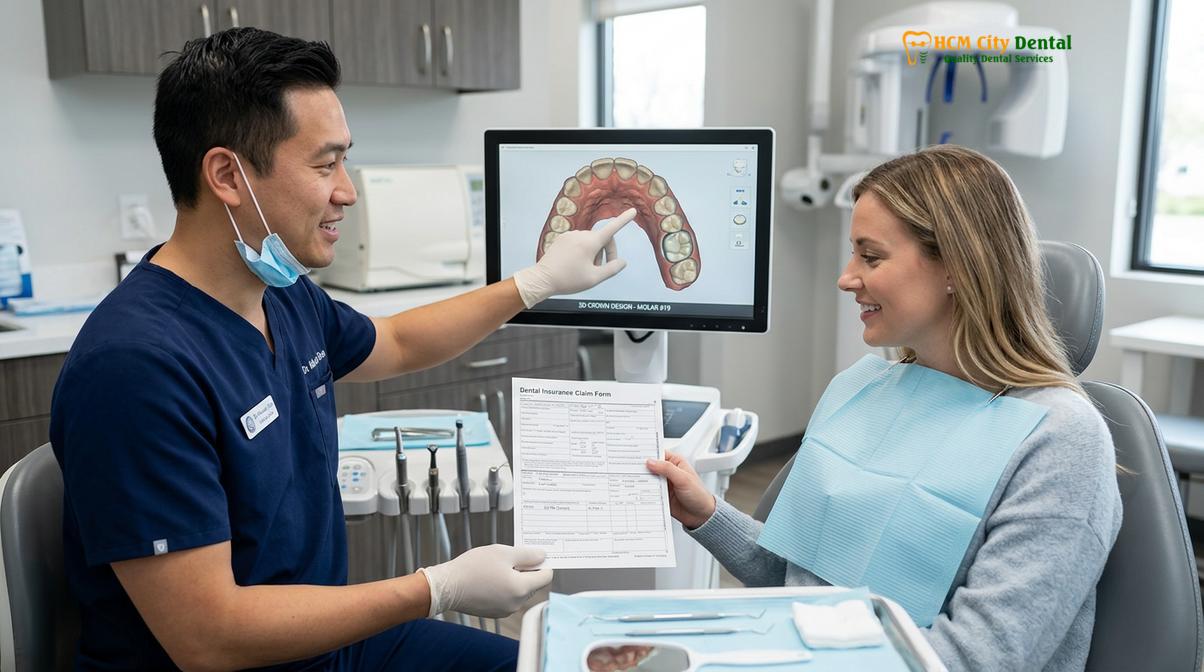
Furthermore, insurance companies differentiate between medically necessary restorations and purely cosmetic procedures. A crown required to restore a tooth with severe decay, a fractured cusp, or following root canal therapy is generally covered. Conversely, replacing intact teeth with crowns solely to change their shape or color (a cosmetic smile makeover) is almost universally excluded from standard insurance benefits. Clinical documentation, including diagnostic imaging and a detailed narrative from the dentist, is essential to prove the medical necessity of the treatment.
Direct Billing Partner Clinics in Ho Chi Minh
Direct billing partner clinics allow patients to bypass upfront out-of-pocket expenses by coordinating payments directly with global insurance providers like Cigna, Bupa, and Allianz.
One of the most significant advantages for expatriates seeking dental care is finding a direct billing dentist saigon. Direct billing, also known as cashless treatment, means the dental clinic has an established administrative relationship with the insurance provider. Instead of the patient paying the full cost of the crown upfront and waiting weeks for reimbursement, the clinic submits the invoice directly to the insurer. The patient is only responsible for paying their deductible and any co-insurance percentage not covered by the plan.
At HCMC Dental Clinic in Ho Chi Minh City, our international patient department is highly experienced in navigating the complexities of global insurance networks. We frequently work with major providers that offer expat dental coverage Cigna Bupa, Allianz, Aetna, and various specialized plans provided to international school teachers and corporate executives. This streamlined financial workflow significantly reduces the stress associated with major dental procedures.
“Establishing a direct billing protocol requires meticulous clinical coding and transparent communication between the dental provider and the insurance adjudicator. Our goal is to ensure that patients can focus entirely on their clinical recovery rather than administrative burdens.”
Before initiating treatment, our administrative team conducts a pre-determination of benefits. This involves sending the proposed treatment plan, complete with international dental codes (such as CDT or ICD equivalents), to the insurance company. The insurer then provides a formal breakdown of exactly what will be covered and what the patient’s out-of-pocket responsibility will be. This transparency is a cornerstone of our patient care philosophy, ensuring there are no financial surprises upon completion of the crown or bridge.
The Claim and Reimbursement Process
For policies without direct billing, patients must pay upfront and submit a comprehensive reimbursement claim, a process streamlined by our dedicated international patient coordinators.
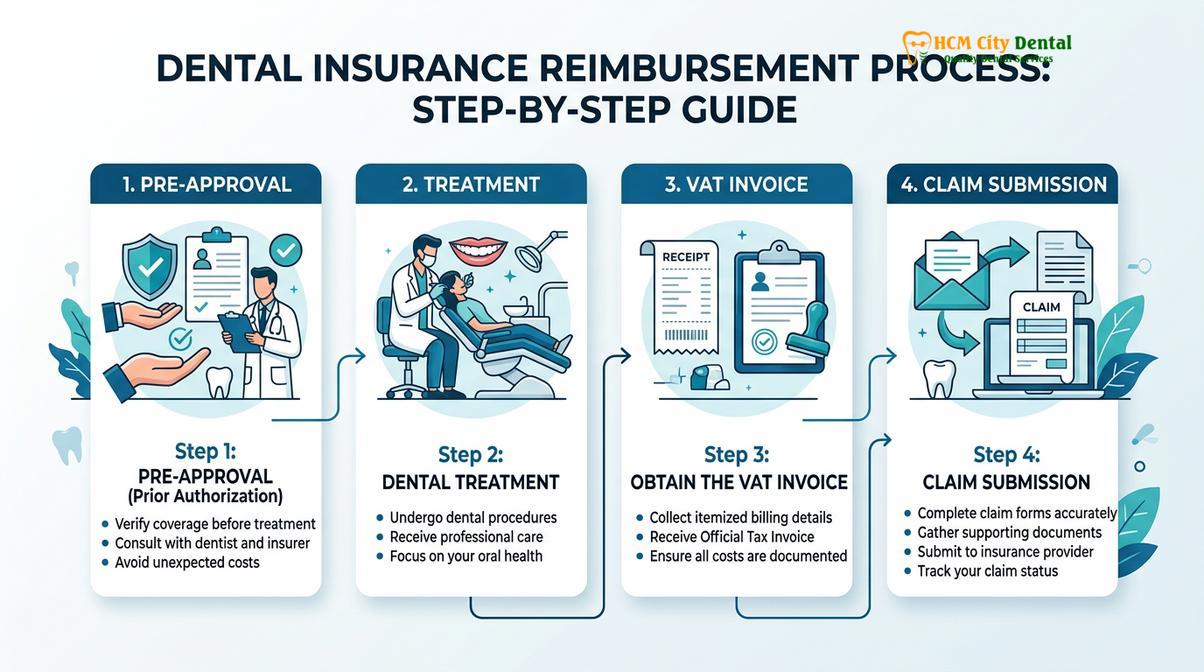
If your specific insurance provider does not have a direct billing agreement with the clinic, you will utilize the “pay-and-claim” method. While this requires an initial out-of-pocket payment, a well-prepared claim ensures a smooth and timely reimbursement. The success of a reimbursement claim hinges entirely on the accuracy and completeness of the clinical documentation provided by the dental office.
The workflow begins with a comprehensive clinical examination. During this phase, the dentist identifies the compromised tooth and formulates a treatment plan. If the cost of the crown is substantial, we highly recommend submitting a pre-treatment estimate to your insurer. While not always mandatory, this step guarantees that the insurance company agrees with the medical necessity of the procedure before any irreversible tooth preparation occurs.
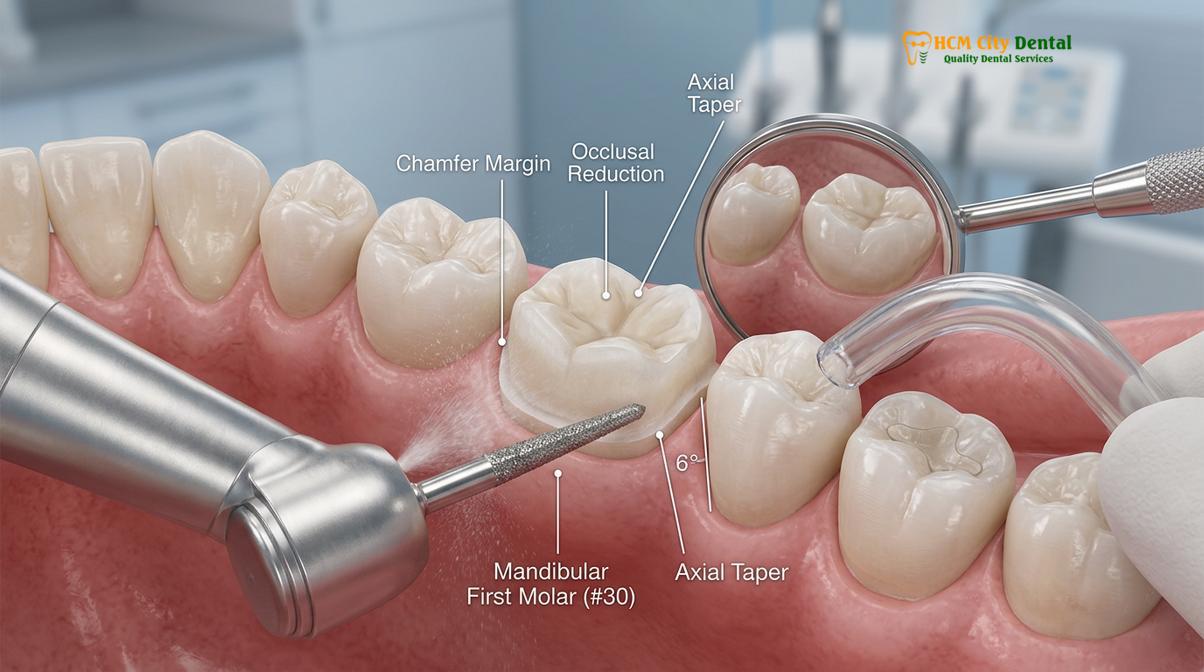
Once the treatment is completed, the patient must gather all necessary dental claim paperwork vietnam. This packet typically includes the insurer’s specific claim form, which must be signed and stamped by the treating dentist. It is crucial that the claim form accurately reflects the dates of service, the specific teeth treated (using the FDI World Dental Federation or Universal numbering system), and the exact procedures performed. Any discrepancy between the clinical notes and the claim form can result in delays or denials from the insurance adjudicator.
Required Documents (VAT Invoice, Treatment Plan)
A successful insurance claim requires a standardized set of documents, including a red VAT invoice, a detailed clinical treatment plan, and diagnostic imaging.
Insurance companies operate on strict evidentiary requirements to prevent fraud and ensure appropriate allocation of benefits. When submitting a claim for a dental crown or bridge, the documentation must be flawless. The most critical financial document in Vietnam is the official VAT invoice (often referred to as the “red invoice” or hóa đơn đỏ). A standard clinic receipt is rarely sufficient for international insurance providers; they require the government-issued electronic VAT invoice that proves the transaction is legally recorded.
Important Claim Notice: Always request your VAT invoice at the time of payment. Retroactively generating a VAT invoice across different tax months can be administratively complex and may delay your insurance reimbursement significantly.
In addition to the financial documentation, robust clinical evidence is mandatory. This includes:
- Diagnostic X-rays: Pre-operative periapical or panoramic X-rays clearly showing the decay, fracture, or existing failing restoration that necessitates the new crown.
- Post-operative X-rays: Radiographs taken after the crown is cemented to demonstrate proper marginal fit and the absence of overhangs.
- Intraoral Photographs: High-resolution photos of the tooth before, during, and after preparation can strongly support the narrative of medical necessity.
- Detailed Treatment Narrative: A written explanation from the dentist detailing why a more conservative treatment (like a filling) was insufficient, and why a full-coverage crown was required.
Our administrative team at HCMC Dental Clinic is meticulously trained to compile these comprehensive claim packets, ensuring that every requirement of your specific insurance provider is met before you leave the office.
Maximizing Your Annual Dental Limits
Strategic treatment planning across calendar years and utilizing clinic-specific discounts can help patients maximize their annual dental limits without compromising clinical quality.
Every dental insurance policy features an annual maximum—the absolute highest dollar amount the insurer will pay for your dental care within a 12-month period. Once this limit is reached, any further dental expenses must be paid entirely out-of-pocket until the policy resets (usually on January 1st, though some policies run on the policyholder’s anniversary date). Understanding how to navigate this annual dental benefit limit is key to affording extensive restorative work.
For patients requiring multiple crowns or a complex 4-unit bridge, the total cost may exceed the annual maximum. In these scenarios, strategic phasing of treatment is highly beneficial. If clinically appropriate, a dentist can prepare and place crowns on the most critically damaged teeth in November or December, utilizing the current year’s remaining benefits. The remaining teeth can then be treated in January, tapping into the newly refreshed annual maximum. This cross-year planning effectively doubles the available insurance coverage for a comprehensive rehabilitation plan.
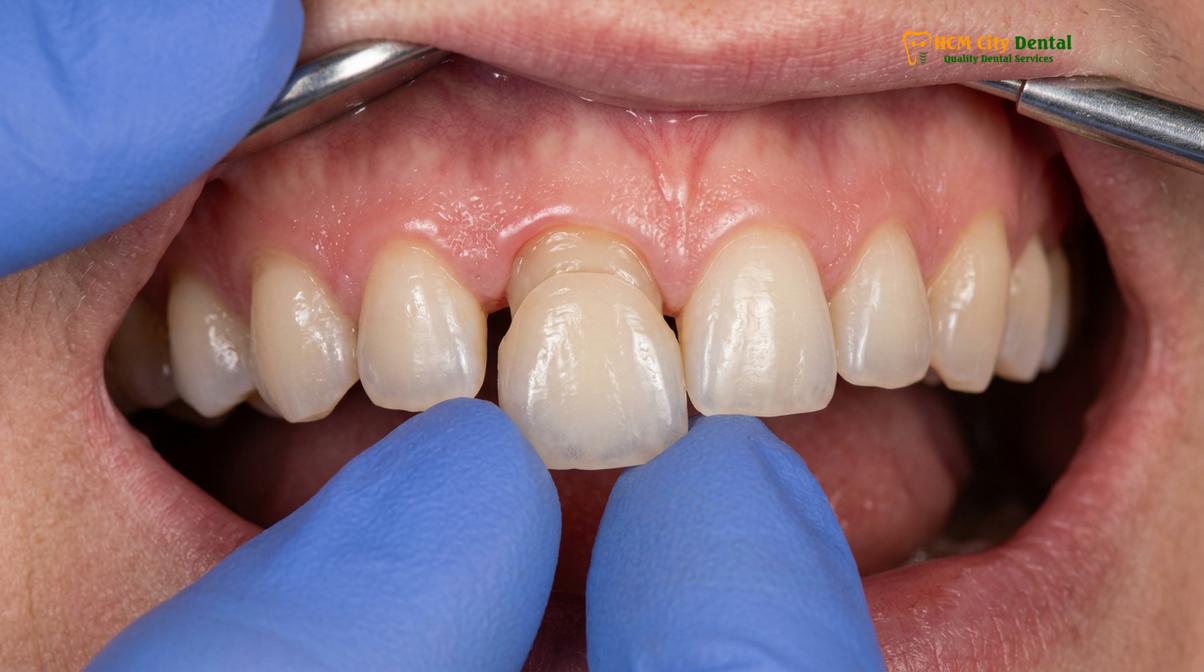
Furthermore, taking advantage of clinic promotions can significantly stretch your insurance dollars. By utilizing our WhatsApp pre-booking system, patients can secure a 40% discount on premium ceramic restorations. Because the insurance company pays a percentage of the *actual* fee charged, lowering the total invoice amount means less of your annual maximum is consumed per tooth, leaving more funds available for future dental needs or routine maintenance.
Clinical Workflow and Material Selection for Crowns
Modern prosthodontic workflows utilize digital intraoral scanners and premium ceramics to ensure precise margin adaptation, optimal biologic width, and long-lasting aesthetic outcomes.
Beyond the financial and insurance aspects, the clinical execution of a dental crown dictates its longevity and success. The process begins with meticulous tooth preparation. The dentist must remove enough tooth structure to create space for the restorative material while preserving the vitality of the underlying dental pulp. The design of the preparation margin—whether a chamfer or a shoulder—is dictated by the chosen material. A heavy chamfer is often preferred for monolithic zirconia to reduce stress concentration, while a distinct shoulder provides the necessary bulk for glass-ceramics like E.max.
Dr. Nguyen Van Cuong emphasizes the critical importance of respecting the biologic width during tooth preparation. The biologic width is the natural dimension of the soft tissue attached to the portion of the tooth above the alveolar bone. If a crown margin is placed too deeply beneath the gums, it invades this space, leading to chronic gingival inflammation, bone loss, and eventual failure of the restoration. In cases where decay extends below the gumline, a functional crown lengthening procedure may be required prior to crown fabrication to re-establish a healthy biologic width.
“The integration of digital dentistry has revolutionized prosthodontics. By replacing traditional silicone impressions with digital intraoral scanners, we eliminate dimensional distortion and provide the laboratory with a mathematically perfect replica of the prepared tooth.”
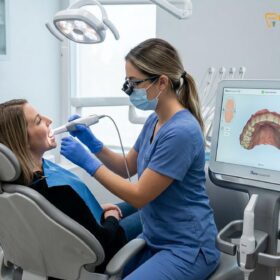
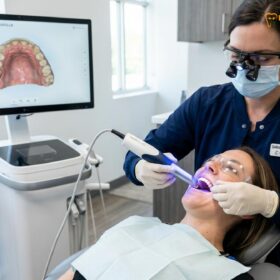
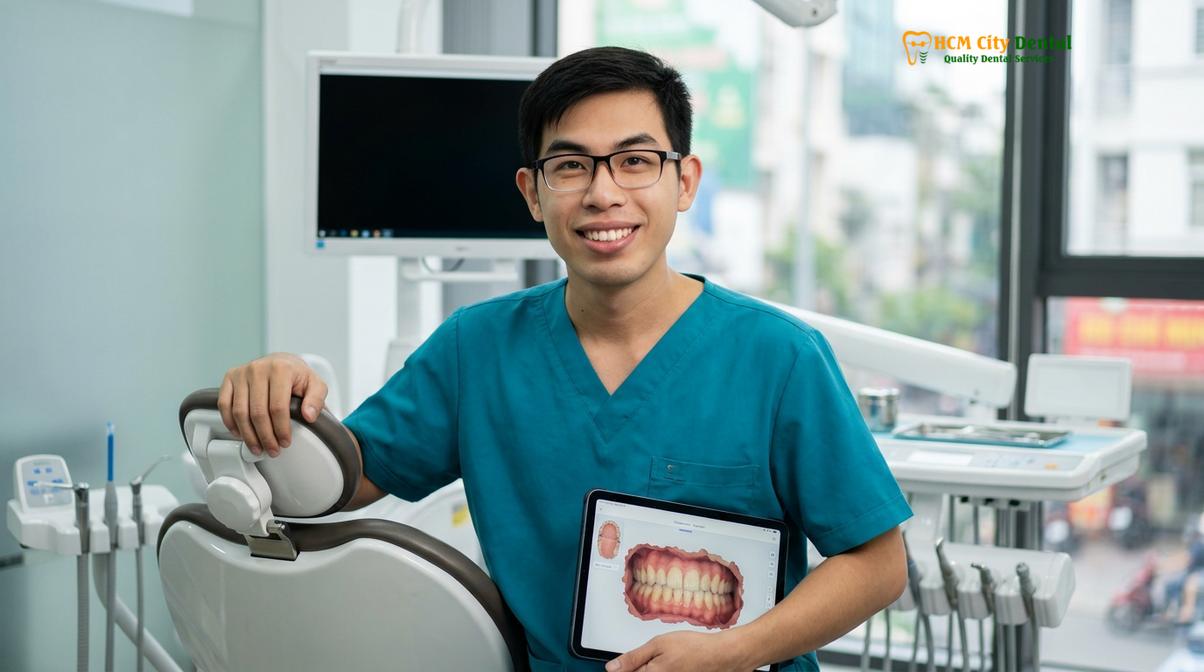
Our clinic utilizes state-of-the-art iTero and Medit i700 Intraoral Scanners. These devices capture thousands of images per second to create a highly accurate 3D model of the patient’s dentition. This digital workflow is not only vastly more comfortable for the patient—eliminating the gag reflex associated with messy impression materials—but it also allows for immediate digital transmission to our direct lab partnership in Ho Chi Minh City.
Material selection is equally critical. We utilize only authentic, certified materials from industry-leading manufacturers:
- Zirconia HT (Cercon HT, Germany): Known for its ultimate flexural strength and high translucency, monolithic zirconia is the gold standard for posterior (back) teeth and multi-unit bridges where immense chewing forces are present[2].
- E.max (Ivoclar, Liechtenstein): A lithium disilicate glass-ceramic that offers outstanding, lifelike aesthetics. Its ability to mimic the light-transmitting properties of natural enamel makes it the premier choice for anterior (front) teeth[3].
For teeth that have undergone root canal therapy, the remaining tooth structure is often brittle and insufficient to support a crown. In these instances, a root canal post and core buildup is required to provide a solid foundation. When restoring dental implants, the clinician must choose between screw-retained and cement-retained implant crowns. Screw-retained crowns are generally preferred for their retrievability and the elimination of the risk of residual subgingival cement, which can cause peri-implantitis[4].
Clinical Case Study: Insurance-Optimized Bridge Restoration
A 45-year-old expatriate presented with a fractured premolar and a missing adjacent molar, requiring a 3-unit bridge. The patient’s insurance covered 60% of major restorative work up to a $1,500 annual limit. Dr. Nguyen Van Cuong utilized the Medit i700 scanner to design a precision Zirconia HT bridge. By applying the 40% WhatsApp pre-booking discount, the total cost was reduced from $480 to $288. The insurance covered $172.80, leaving the patient with an out-of-pocket cost of just $115.20, while preserving the vast majority of their annual limit for future needs.
Pricing Structure and Express Turnaround
Our direct lab partnership enables an express 3-5 day turnaround for premium crowns, complemented by transparent pricing and a 40% pre-arrival WhatsApp discount.
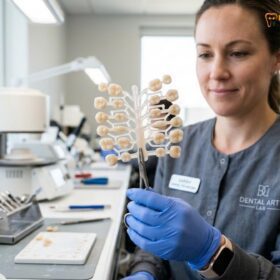
For dental tourists and busy expatriates, time is of the essence. Traditional crown fabrication can take weeks, requiring patients to wear fragile temporary crowns for extended periods. However, our direct lab partnership in Ho Chi Minh City allows for complete quality control and direct collaboration between the prosthodontist and the ceramist. This synergy enables an express 3-5 day turnaround. Within a single week, a patient can undergo tooth preparation, receive a custom-milled restoration, and have it permanently cemented with precise bite adjustment.
Understanding the financial commitment is crucial. We maintain a highly transparent pricing structure. Patients who proactively plan their treatment and book via WhatsApp receive a substantial 40% discount off the standard walk-in rates. This initiative is designed to make world-class Dental Crowns & Bridges accessible to a broader international audience.
| Restoration Type / Material | Standard Walk-in Price (Estimated) | WhatsApp Pre-booking Discount (-40%) |
|---|---|---|
| PFM Crown (Porcelain-Fused-to-Metal) | ~$140 (3.5M VND) | From $84 (2.1M VND) |
| Zirconia Crown (Cercon, Germany) | ~$200 (5.0M VND) | From $120 (3.0M VND) |
| Zirconia HT Crown (Cercon HT, Germany) | ~$260 (6.5M VND) | From $156 (3.9M VND) |
| E.max Crown (Ivoclar, Liechtenstein) | ~$280 (7.0M VND) | From $168 (4.2M VND) |
| 3-Unit Bridge (Zirconia HT) | ~$480 (12.0M VND) | From $288 (7.2M VND) |
| 4-Unit Bridge (Zirconia HT) | ~$640 (16.0M VND) | From $384 (9.6M VND) |
| Inlay / Onlay (Sứ Lab) | ~$180 (4.5M VND) | From $108 (2.7M VND) |
To further assist our patients, we offer 0% interest monthly credit card installment plans, allowing the cost of extensive full-mouth rehabilitations to be spread over time. Furthermore, every premium ceramic restoration is backed by a global warranty policy. Should you return to your home country, our team provides remote follow-up support via WhatsApp, utilizing specific photo and video assessment protocols to monitor the health of your restorations and address any concerns promptly.
When to See a Doctor
While modern dental crowns are highly durable, they are not impervious to complications. It is critical to seek immediate clinical evaluation if you experience any of the following symptoms, as early intervention can often save the underlying tooth structure:
- Pain on Biting: If a newly placed crown causes sharp pain when chewing, the bite (occlusion) may be slightly high, requiring a simple adjustment. If an older crown develops pain, it may indicate secondary caries (decay) under the margin or a failing root canal.
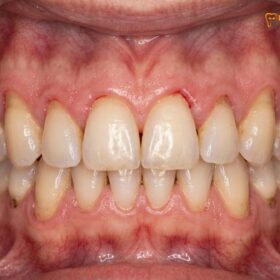
- Gingival Inflammation: Persistent redness, swelling, or bleeding around the margin of a crown can indicate a violation of the biologic width, an allergic reaction to base metals (in older PFM crowns), or inadequate oral hygiene leading to localized periodontitis.
- Loose or Dislodged Crown: If a crown feels mobile or falls off entirely, keep the crown safe and contact a dentist immediately. Emergency loose crown recementation is a straightforward procedure if the underlying tooth is intact. Do not attempt to glue the crown back yourself using household adhesives, as this is highly toxic and will destroy the precise fit of the restoration.
- Aesthetic Changes: A dark line appearing at the gumline of an older PFM crown indicates gum recession exposing the metal margin. While not a medical emergency, it is a common reason patients seek replacement with highly aesthetic all-ceramic materials.
Regular clinical examinations and professional prophylaxis every six months are essential to monitor the integrity of the cement seal and the health of the supporting periodontal tissues[5].
Frequently Asked Questions
Does expat health insurance cover dental crowns in Vietnam?
Yes, most comprehensive expat health insurance policies cover dental crowns under their major restorative benefits. Coverage typically ranges from 50% to 80% of the total cost, provided that any mandatory waiting periods have been served and the treatment is deemed medically necessary rather than purely cosmetic. It is essential to review your specific policy documents to understand your annual limits and co-pay requirements.
How do I claim dental crowns on my insurance overseas?
To claim dental crowns on your overseas insurance, you must submit a completed claim form along with specific clinical documentation. This includes pre-operative and post-operative X-rays, a detailed treatment plan with international tooth numbering, and an official red VAT invoice provided by your treating clinic. Our international patient coordinators assist in compiling this exact paperwork to ensure a smooth reimbursement process.
Which direct billing insurance partners do you accept?
We work with a wide network of global insurance providers to facilitate seamless direct billing. Common partners include major international networks that cater to expats and international school staff, allowing patients to undergo major restorative work with minimal upfront out-of-pocket expenses. Please contact our administrative team with your policy details to verify direct billing eligibility prior to your appointment.
How long does it take to get a dental crown in Ho Chi Minh City?
Thanks to our direct lab partnership, the standard turnaround time for a premium dental crown is an express 3 to 5 days. This rapid timeline includes the initial digital scan, temporary crown placement, custom fabrication, and the final precision fitting and cementation. This express service is specifically tailored to accommodate the schedules of dental tourists and busy expatriates.
What is the difference between Zirconia and E.max crowns?
Zirconia crowns offer exceptional flexural strength, making them ideal for posterior molars and multi-unit bridges that endure heavy chewing forces. E.max (lithium disilicate) provides superior translucency and light reflection, making it the preferred choice for highly aesthetic restorations on anterior (front) teeth. Your prosthodontist will recommend the optimal material based on the specific functional and aesthetic requirements of your case.
References
- Journal of Prosthodontic Research. Flexural strength and clinical performance of monolithic zirconia crowns. (2021).
- Journal of Esthetic and Restorative Dentistry. Optical properties and translucency of lithium disilicate ceramics. (2020).
- International Journal of Prosthodontics. Biomechanical considerations in screw-retained versus cement-retained implant restorations. (2019).
- Journal of Dentistry. Accuracy and marginal adaptation of CAD/CAM milled restorations using intraoral scanners. (2022).
- American Dental Association. Clinical guidelines for the preparation and cementation of dental bridges. (2018).