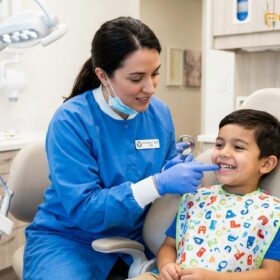
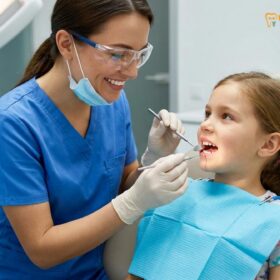
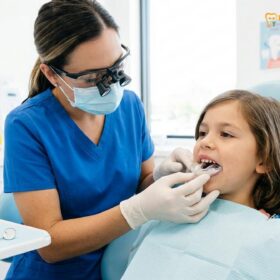
Nitrous oxide is a highly safe, mild inhalation sedative used in pediatric dentistry to reduce anxiety and discomfort. Administered via a nasal hood, it allows children to remain conscious and responsive while feeling relaxed, with effects wearing off within minutes after the procedure concludes.
Clinical Summary:
The administration of nitrous oxide (N2O), commonly known as laughing gas, is a cornerstone of modern pediatric dental care, offering a reliable method to manage dental anxiety and improve treatment outcomes. Clinical guidelines support its use as a safe, titratable analgesic and anxiolytic agent that preserves the patient’s protective reflexes. When combined with foundational behavioral management techniques like Tell-Show-Do, nitrous oxide significantly reduces the psychological trauma associated with dental visits. Dr. Nguyen Van Cuong emphasizes that comprehensive pediatric care extends beyond sedation, encompassing minimally invasive treatments like Silver Diamine Fluoride (SDF), biocompatible Glass Ionomer Cements (GIC), and early interceptive orthodontics to ensure optimal craniofacial development. Proper patient screening, adherence to scavenging protocols, and post-operative oxygenation ensure an exceptionally high safety profile for children undergoing restorative or preventive procedures.
Key Takeaways:
- Nitrous oxide provides rapid-onset conscious sedation, allowing children to remain awake and cooperative.
- It is safely eliminated from the body within minutes via the lungs, requiring no post-operative downtime.
- The technique is highly effective for children with strong gag reflexes, dental anxiety, or those needing lengthy procedures.
- Safety protocols include continuous monitoring and a mandatory 5-minute 100% oxygen flush to prevent diffusion hypoxia.
- Sedation is seamlessly integrated with minimally invasive treatments like SDF and GIC for comprehensive pediatric care.
Conscious Sedation in Pediatric Dentistry
Conscious sedation bridges the gap between basic behavioral guidance and general anesthesia, allowing anxious children to receive necessary dental care safely. It ensures the child remains awake, breathing independently, and responsive to verbal cues.
The primary goal of pediatric dentistry is not only to treat oral disease but to foster a positive, lifelong attitude toward dental health. Dental anxiety is a recognized barrier to care, often leading to avoidance behavior, worsening of early childhood caries, and the eventual need for more invasive interventions. To combat this, pediatric dental professionals employ a spectrum of behavior management techniques, ranging from non-pharmacological communication strategies to advanced pharmacological sedation. Conscious sedation, particularly via nitrous oxide and oxygen (N2O/O2) inhalation, occupies a critical middle ground in this spectrum. It provides a reliable method to achieve painless pediatric dentistry while maintaining the child’s physiological stability and protective airway reflexes[1].
Before any pharmacological intervention is considered, foundational behavioral management is established. The most universally applied technique is “Tell-Show-Do,” a psychological desensitization method designed to demystify the dental environment. In this approach, the clinical team walks children through procedures using age-appropriate, non-threatening terminology. For example, local anesthesia is introduced as “sleepy juice,” the rubber dam isolation system is called a “tooth raincoat,” and the high-speed ultrasonic handpiece is referred to as a “water whistle.” The dentist first tells the child what will happen, shows the instrument by demonstrating it on the child’s finger or hand, and only proceeds to do the procedure when the child is psychologically ready. Furthermore, a “stop on request” protocol is established, empowering the child to raise their hand if they feel overwhelmed, thereby granting them a sense of control over the environment.
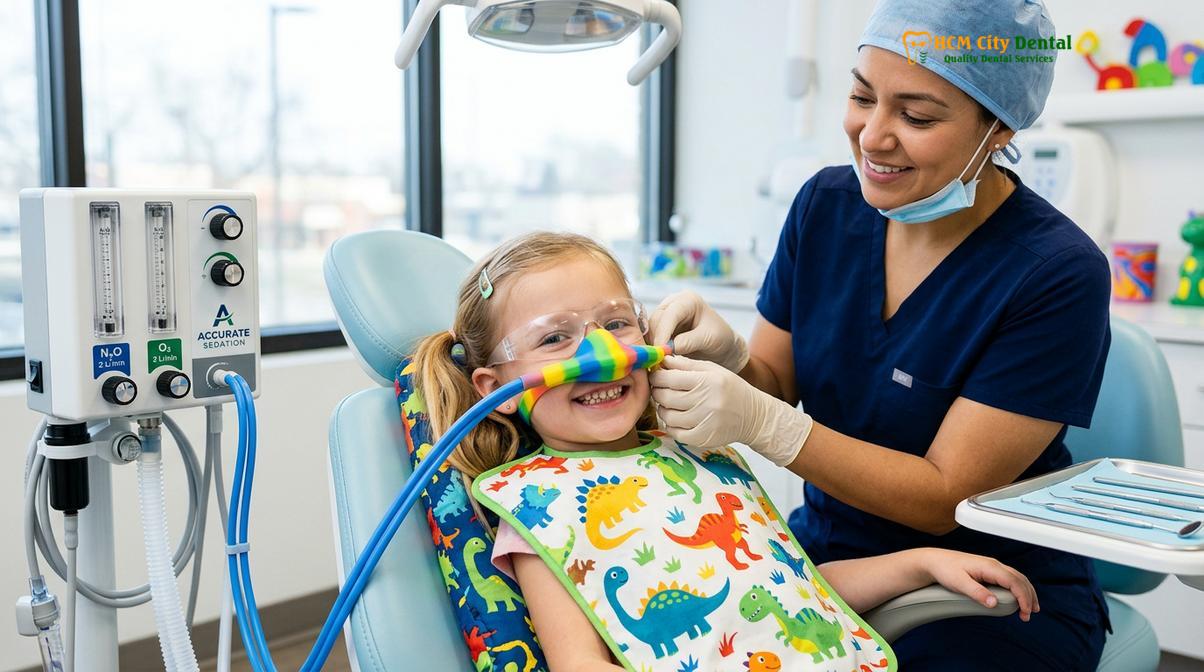
However, despite the efficacy of Tell-Show-Do, some children possess a baseline level of anxiety, neurodivergence, or a hyperactive gag reflex that precludes successful treatment using communication alone. In these scenarios, inhalation sedation child safety protocols are activated. Nitrous oxide serves as an adjunct to behavioral management, lowering the child’s defensive barriers and raising their pain threshold. Dr. Nguyen Van Cuong notes that the introduction of the nasal hood itself is integrated into the Tell-Show-Do workflow; it is often introduced as a “pilot’s mask” or an “astronaut nose,” allowing the child to acclimate to the equipment before the gas is introduced. This seamless integration of psychology and pharmacology is what defines high-quality Children & Pediatric Dentistry.
How Nitrous Oxide Works
Nitrous oxide functions by depressing the central nervous system and releasing endogenous opioids, creating a calming, euphoric effect. It is delivered alongside oxygen and is rapidly eliminated from the lungs without being metabolized by the body.
Understanding the pharmacokinetics and pharmacodynamics of nitrous oxide is essential for appreciating its safety and efficacy. Nitrous oxide (N2O) is a colorless, virtually odorless inorganic gas with a faintly sweet smell. In the clinical setting, it is never administered at 100% concentration; it is always titrated with a minimum of 30% oxygen to ensure the patient remains well-oxygenated, though typical pediatric maintenance levels hover between 30% and 50% N2O. The gas is delivered through a calibrated flowmeter that prevents the accidental delivery of hypoxic mixtures, a critical fail-safe mechanism in modern dental equipment.
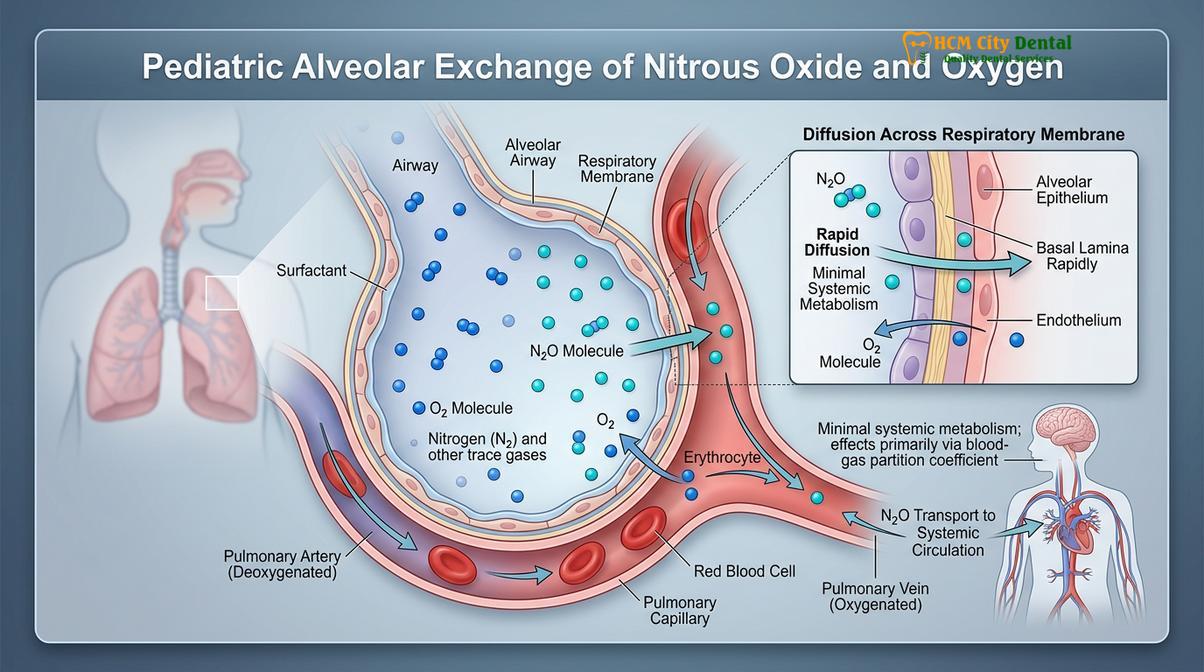
Upon inhalation through the nasal hood, nitrous oxide travels down the respiratory tract and into the alveoli of the lungs. Because it has a very low blood-gas partition coefficient (0.47), it is relatively insoluble in blood. This low solubility is a distinct clinical advantage: it means the gas rapidly saturates the blood and crosses the blood-brain barrier, resulting in a very fast onset of action—typically within two to three minutes. The exact mechanism of action involves multiple central nervous system pathways. The anxiolytic (anti-anxiety) effect is believed to be mediated by the activation of Gamma-aminobutyric acid type A (GABA-A) receptors, similar to the pathway utilized by benzodiazepines, though much milder. Simultaneously, the analgesic (pain-relieving) properties are initiated by the neuronal release of endogenous opioids, which modulate nociceptive processing at the spinal level, effectively raising the patient’s pain threshold[2].
“The unique pharmacokinetic profile of nitrous oxide—specifically its low tissue solubility—allows for rapid titration, immediate onset of clinical effects, and swift elimination, making it the ideal sedative agent for short-to-medium duration pediatric dental procedures.”
During the procedure, the child may experience a range of benign, pleasant sensations. Common reports include a feeling of floating, a warm tingling sensation in the hands and feet, and a general sense of euphoria or mild giggling, which earned it the colloquial name “laughing gas.” It is important to note that nitrous oxide does not produce skeletal muscle relaxation, nor does it significantly depress the cardiovascular or respiratory systems at clinical doses. The patient’s heart rate and blood pressure remain stable, and their laryngeal and pharyngeal reflexes (such as coughing to clear the airway) remain fully intact. Once the dental procedure is complete, the nitrous oxide flow is terminated, and the gas rapidly diffuses out of the blood and back into the alveoli to be exhaled, leaving no residual active metabolites in the child’s system.
Clinical Safety Profile for Children
Extensive clinical data confirms that nitrous oxide is exceptionally safe for pediatric patients when administered by trained professionals using modern scavenging equipment. Severe complications are exceedingly rare, though specific medical contraindications must be screened beforehand.
The safety record of nitrous oxide in pediatric dentistry is unparalleled when compared to other forms of procedural sedation. According to guidelines established by leading pediatric dental academies, it is considered the safest sedative agent available for dental use. However, ensuring this safety requires rigorous adherence to clinical protocols, comprehensive medical history screening, and the use of appropriate delivery systems equipped with active scavenging technology to protect both the patient and the dental team from ambient gas exposure.
While laughing gas kids side effects are minimal, they are not entirely absent. The most frequently reported adverse effect is post-operative nausea and vomiting (PONV), which occurs in approximately 0.5% to 1.2% of patients. This risk is slightly elevated if the child has consumed a heavy meal immediately prior to the appointment, if the nitrous oxide concentration fluctuates rapidly during administration, or if the procedure is excessively long. To mitigate this, clinicians recommend a light meal a few hours before the procedure and employ a slow, steady titration technique. Other rare and transient side effects include dizziness, dysphoria, or a mild headache, almost all of which can be prevented by proper oxygenation protocols at the conclusion of the treatment.
Despite its high safety margin, nitrous oxide is not universally applicable; there are specific medical contraindications that must be identified during the pre-operative assessment. Because nitrous oxide is a gas that can expand in closed, air-filled body spaces, it is contraindicated in patients with recent middle ear infections, recent tympanic membrane graft surgery, or certain rare bowel obstructions. Furthermore, successful administration relies entirely on nasal breathing. Children with severe upper respiratory infections, acute sinus congestion, or significantly enlarged adenoids that block the nasal airway will not receive the intended dose of the gas, rendering the sedation ineffective.
Another critical safety consideration is the prevention of diffusion hypoxia. Because nitrous oxide exits the bloodstream and enters the lungs so rapidly when the gas is turned off, it can temporarily dilute the volume of oxygen in the alveoli, potentially leading to a brief period of lowered oxygen saturation, headache, and lethargy. To completely eliminate this risk, standard clinical protocol dictates that the patient must be administered 100% pure oxygen for a minimum of three to five minutes immediately following the cessation of nitrous oxide[3]. This “oxygen flush” ensures the lungs are cleared of the sedative gas and the child returns to their baseline physiological state smoothly.
Indications: High Anxiety, Long Treatments
Nitrous oxide is indicated for children exhibiting moderate to high dental fear, those with strong gag reflexes, or patients requiring lengthy, complex restorative procedures. It facilitates cooperation during treatments that demand stillness.
The decision to utilize nitrous oxide is based on a careful evaluation of the child’s emotional maturity, the complexity of the required dental work, and their previous dental experiences. It is highly indicated for children who are cooperative but exhibit significant apprehension—the classic anxious child dental sedation saigon scenario. By dulling the perception of time and reducing the acute awareness of clinical stimuli (such as the vibration of the drill or the pressure of an extraction), nitrous oxide transforms a potentially traumatic event into a manageable, often forgettable experience.
One of the most common indications for inhalation sedation is the management of deep carious lesions requiring a pulpotomy. Primary teeth have proportionally larger pulp chambers and thinner enamel compared to permanent teeth, meaning decay can reach the nerve rapidly. A pulpotomy, often referred to as a baby root canal, involves the removal of the infected coronal pulp tissue, achieving hemostasis, and placing a medicament before sealing the tooth with a stainless steel crown. Because this procedure requires precise isolation and absolute stillness to prevent salivary contamination of the pulp chamber, nitrous oxide is invaluable. It keeps the child relaxed and still, allowing the clinician to work efficiently. For more details on this specific procedure, parents can review our guide on Pulpotomy Pain in Kids: Clinical Guide to Baby Root Canals.
Another strong indication is the placement of orthodontic space maintainers. When a primary molar is lost prematurely due to severe decay or trauma, the adjacent teeth tend to drift mesially (forward), closing the space intended for the erupting permanent tooth and causing severe orthodontic crowding later in life. To prevent this, a fixed appliance, such as a band-and-loop, is cemented onto the adjacent tooth. The fitting and cementation process requires the child to keep their mouth open and dry for an extended period. Nitrous oxide suppresses the gag reflex—which is often hyperactive in young children—making the fitting of bands and the taking of impressions significantly more comfortable. Parents seeking information on these appliances can explore Types of Space Maintainers for Kids: A Clinical Guide.
Furthermore, nitrous oxide is highly beneficial when multiple restorations are planned for a single visit. Rather than subjecting the child to numerous short appointments, which can increase anticipatory anxiety, a clinician can use sedation to comfortably complete multiple fillings in one quadrant, reducing the overall burden of care on both the child and the parents.
Comprehensive Pediatric Dental Care and Clinical Workflows
Beyond sedation, successful pediatric dentistry relies on biocompatible materials, early orthodontic intervention, and transparent treatment planning. We prioritize minimally invasive techniques like silver diamine fluoride and fluoride-releasing glass ionomer cements for primary teeth.
While nitrous oxide provides the necessary behavioral support, the actual clinical treatments performed must be tailored to the unique anatomy and lifecycle of primary dentition. At HCMC Dental Clinic, the pediatric workflow emphasizes minimally invasive dentistry, aiming to preserve tooth structure, arrest active disease, and guide proper craniofacial growth. This comprehensive approach requires a deep understanding of dental materials and pediatric airway diagnostics.
For very young or pre-cooperative children where traditional drilling is not feasible, even with sedation, Silver Diamine Fluoride (SDF) is a revolutionary treatment. SDF is a liquid medicament that provides non-invasive cavity arrest. The silver ions act as a potent antimicrobial agent, destroying the bacteria causing the decay, while the high concentration of fluoride promotes deep remineralization of the softened dentin. The application is entirely painless and requires no local anesthesia or drilling. The primary clinical consideration is aesthetic: SDF leaves a permanent, localized black stain on the active decay area, though healthy enamel remains unaffected. This trade-off is often highly acceptable to parents prioritizing disease control over aesthetics in posterior baby teeth[4].
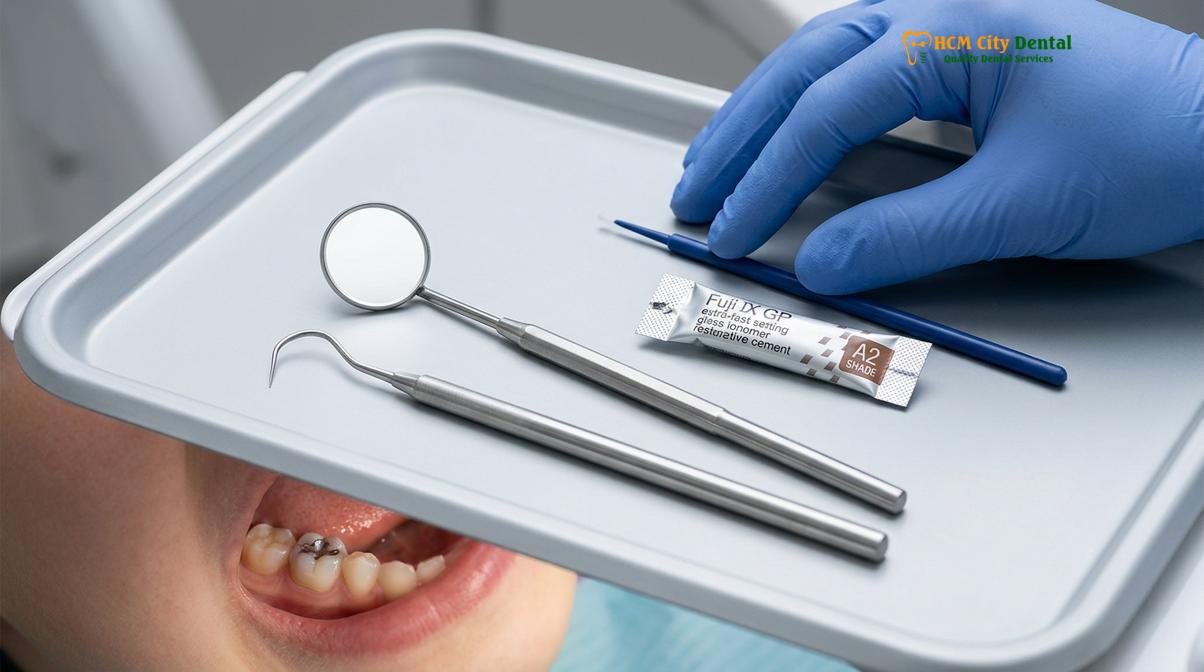
When restorative fillings are required, the choice of material is critical. In pediatric dentistry, there is a distinct clinical debate between Glass Ionomer Cements (GIC) and composite resins. For primary teeth, pediatric dentists frequently prioritize GIC. Unlike composite, which requires a perfectly dry field for micromechanical bonding, GIC chemically bonds directly to the dentin and is highly moisture-tolerant. This is a massive advantage when treating a squirming child where perfect isolation is challenging. Furthermore, GIC possesses a unique “fluoride recharge” capability; it continuously releases fluoride into the surrounding tooth structure and can absorb fluoride from toothpaste to release it again later, actively preventing recurrent decay at the margins of the filling. Composite resins are reserved for anterior teeth where perfect aesthetics are demanded, or for older children who can tolerate strict moisture control.
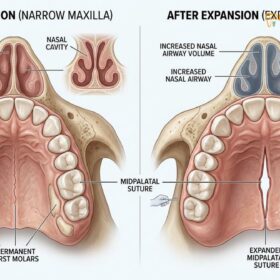
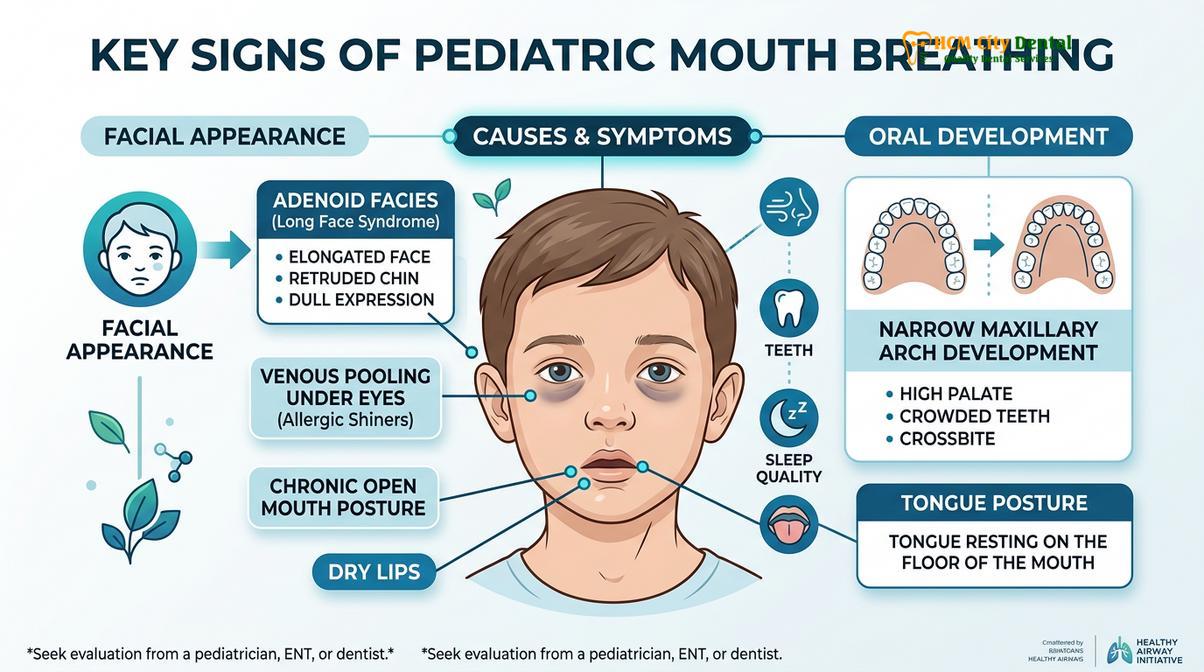
Beyond restorative care, Dr. Nguyen Van Cuong advocates for early interceptive orthodontics and comprehensive airway assessments during routine check-ups. Pediatric sleep disordered breathing and chronic mouth breathing can severely alter a child’s facial development. Mouth breathing often leads to a lowered tongue posture, which fails to expand the upper jaw, resulting in a narrow, V-shaped maxilla, a high palatal vault, and a condition known as “adenoid facies” or long-face syndrome. Clinical signs include venous pooling under the eyes (allergic shiners) and chronic open-mouth posture. Early intervention may involve Myofunctional Therapy for Kids: Clinical Guide & Exercises to retrain oral musculature, or addressing anatomical restrictions. For instance, a severe tongue-tie can restrict palatal development and speech; this is routinely treated with a painless diode laser procedure, detailed in our Tongue Tie Release for Kids: Clinical Guide to Laser Frenectomy. Parents concerned about their child’s breathing habits should review How Mouth Breathing Changes Kids’ Face Shape: Clinical Guide.
To ensure transparency and accessibility for families in Ho Chi Minh City, HCMC Dental Clinic maintains a clear pricing structure for pediatric services. The following table outlines the estimated costs for standard pediatric procedures, reflecting the high standard of materials and specialized care provided.
| Pediatric Dental Procedure | Standard Walk-in Fee (VND) | WhatsApp Booking Fee (-40%) | Estimated USD (Discounted) |
|---|---|---|---|
| Kids Consultation & Diagnostic Check-up | 500,000 – 800,000 | 300,000 – 500,000 | ~$12 – $20 |
| Fissure Sealant (per tooth) | 700,000 – 1,000,000 | 400,000 – 600,000 | ~$16 – $24 |
| Fluoride Varnish Application | 500,000 – 800,000 | 300,000 – 500,000 | ~$12 – $20 |
| Pediatric Glass Ionomer Filling (GIC) | 700,000 – 1,000,000 | 400,000 – 600,000 | ~$16 – $24 |
| Pediatric Composite Filling (per tooth) | 800,000 – 1,300,000 | 500,000 – 800,000 | ~$20 – $32 |
| Baby Root Canal (Pulpotomy) | 1,600,000 – 2,500,000 | 1,000,000 – 1,500,000 | ~$40 – $60 |
| Space Maintainer (fixed, band-and-loop) | 3,300,000 – 5,000,000 | 2,000,000 – 3,000,000 | ~$80 – $120 |
| Custom Pediatric Sports Mouthguard | 2,500,000 – 3,500,000 | 1,500,000 – 2,500,000 | ~$60 – $100 |
Note: For active children involved in contact sports, protecting the developing dentition is crucial. We highly recommend reviewing our guide on Custom Sports Mouthguard for Kids: Clinical Guide & Cost to prevent traumatic dental injuries.
What Parents Should Expect Post-Op
Recovery from nitrous oxide is virtually instantaneous once the gas is turned off and replaced with pure oxygen. Children can typically resume their normal daily activities, including returning to school, immediately after their appointment.
One of the most significant advantages of nitrous oxide over oral sedatives or general anesthesia is the lack of a prolonged recovery period. Because the gas is not metabolized by the liver or kidneys and is eliminated entirely through respiration, the child’s cognitive and motor functions return to baseline within minutes. The mandatory 5-minute administration of 100% oxygen at the end of the procedure ensures that all residual nitrous oxide is flushed from the lungs, preventing the mild headache or grogginess associated with diffusion hypoxia.
Parents are often surprised to find their child alert, cheerful, and ready to resume normal activities before they even leave the dental chair. There are no restrictions on physical activity or cognitive tasks post-sedation; a child can safely return to school or participate in sports immediately. However, post-operative care instructions will largely depend on the actual dental procedure performed rather than the sedation itself.
If local anesthesia (“sleepy juice”) was administered alongside the nitrous oxide, the child’s lip, cheek, and tongue will remain numb for 2 to 3 hours. This is the most critical post-operative monitoring phase. Children, especially those experiencing numbness for the first time, may inadvertently bite or chew on their anesthetized lip or cheek, causing severe traumatic ulcers. Parents must monitor the child closely and restrict their diet to soft foods and liquids until the local anesthesia completely wears off. Smoothies, yogurt, or lukewarm soup are excellent choices, while hard, chewy, or hot foods should be strictly avoided.
When to See a Doctor
While nitrous oxide is exceptionally safe, parents should be aware of when to seek further clinical advice following a pediatric dental appointment. You should contact your pediatric dentist or seek medical evaluation if your child experiences any of the following:
- Persistent Vomiting: While a single episode of mild nausea is a known, rare side effect, vomiting that persists for more than an hour after the procedure is abnormal and requires evaluation to prevent dehydration.
- Prolonged Lethargy: The effects of nitrous oxide should dissipate within 5 to 10 minutes. If your child remains excessively drowsy, disoriented, or difficult to rouse hours after the appointment, seek immediate medical attention.
- Severe Lip/Cheek Trauma: If the child has severely bitten their numb lip or cheek, resulting in significant swelling, bleeding, or a large white ulcer, contact the clinic for palliative care advice and monitoring for secondary infection.
- Signs of Allergic Reaction: Although nitrous oxide itself is non-allergenic, reactions to dental materials (like latex, if used, or specific bonding agents) can occur. Watch for hives, facial swelling, or difficulty breathing.
Always ensure that your child’s full medical history, including any genetic conditions or recent respiratory illnesses, is thoroughly discussed with the clinical team prior to any sedation procedure to ensure the highest standard of safety[5].

Frequently Asked Questions
Is laughing gas (nitrous oxide) safe for young children?
Yes, nitrous oxide is widely considered one of the safest sedatives in pediatric dentistry when administered by trained professionals. It is a mild, non-allergenic gas that allows the child to remain fully conscious, breathing independently, and responsive throughout the entire dental procedure. Modern delivery systems include fail-safe mechanisms that prevent the delivery of pure nitrous oxide, ensuring the child always receives adequate oxygen.
What are the side effects of nitrous oxide in kids?
The most common side effects are mild nausea or vomiting, occurring in roughly 0.5% to 1.2% of pediatric patients. Other rare, temporary effects include dizziness, shivering, or a slight headache, which are typically prevented by administering 100% oxygen at the end of the appointment. Because the gas is not metabolized by the body, long-term side effects are virtually non-existent in healthy children.
How long does it take for laughing gas to wear off in children?
The effects of nitrous oxide wear off almost immediately, usually within three to five minutes after the gas is turned off. Because it is not metabolized in the body and is exhaled rapidly, children can safely return to school or normal activities right away. The dentist will administer pure oxygen for five minutes post-procedure to ensure all gas is cleared from the lungs.
Does my child have to fast before receiving nitrous oxide?
Strict fasting is generally not required for mild nitrous oxide sedation, but a heavy meal should be avoided to prevent nausea. Clinical guidelines typically recommend a light meal, such as toast or clear liquids, about two hours prior to the scheduled dental appointment. Always follow the specific pre-operative instructions provided by your pediatric dental clinic.
Will nitrous oxide put my child to sleep?
No, nitrous oxide is a form of conscious sedation, meaning your child will remain awake and aware of their surroundings. It induces a deep state of relaxation and mild euphoria, helping to alleviate anxiety without the loss of protective airway reflexes associated with general anesthesia. Your child will still be able to hear, see, and respond to the dentist’s instructions.
References
- American Academy of Pediatric Dentistry. Best Practices: Use of Nitrous Oxide for Pediatric Dental Patients. (2023).
- Journal of Clinical Pediatric Dentistry. Pharmacokinetics and Safety Profile of Inhalation Sedation in Children. (2021).
- International Journal of Paediatric Dentistry. Behavioral Management Techniques and Tell-Show-Do Efficacy. (2020).
- Pediatric Dentistry Journal. Silver Diamine Fluoride and Glass Ionomer Cements in Early Childhood Caries. (2022).
- Journal of the American Dental Association. Early Interceptive Orthodontics and Pediatric Airway Assessment. (2019).