A thumb sucking habit appliance is a custom-fitted dental device designed to gently break persistent digital sucking habits in children. By physically blocking the thumb from resting against the palate, these appliances eliminate the soothing sensation, effectively stopping the habit and preventing severe orthodontic complications.
Clinical Summary:
Non-nutritive sucking is a natural reflex in infants, but when it persists into the mixed dentition phase, it can cause significant dentofacial deformities, including anterior open bites and constricted maxillas. Early intervention is critical to guide proper facial growth. Treatment workflows typically begin with behavioral desensitization, utilizing the Tell-Show-Do method and positive reinforcement. When behavioral modification is insufficient, pediatric dentists utilize a custom thumb sucking habit appliance—such as a fixed palatal crib or a Bluegrass roller. These devices act as non-punitive mechanical barriers, disrupting the suction seal and allowing the habit to extinguish naturally. Concurrently, comprehensive pediatric care addresses early childhood caries and ensures optimal oral health during the critical stages of jaw development.
Key Takeaways:
- Prolonged thumb sucking beyond age four can lead to skeletal changes, including anterior open bites and narrowed palates.
- Behavioral management, such as the Tell-Show-Do technique, is the first line of defense before mechanical intervention.
- A thumb sucking habit appliance, like a palatal crib or Bluegrass roller, physically prevents the thumb from creating a suction seal.
- Early interceptive orthodontics can often spontaneously correct minor bite discrepancies once the sucking habit is eliminated.
- Comprehensive pediatric care includes preventive measures to protect developing teeth while managing oral habits.
Developmental Impact of Prolonged Sucking (Ages 4+)
Prolonged thumb sucking beyond age four significantly alters maxillary growth, leading to narrowed dental arches, altered facial development, and potential airway obstruction.
Non-nutritive sucking is a deeply ingrained biological reflex that provides comfort and security to infants and toddlers. In the vast majority of cases, children naturally outgrow this habit between the ages of two and four. However, when the habit persists as the primary teeth begin to shed and the permanent incisors erupt, the constant mechanical pressure exerted by the thumb or fingers begins to warp the developing skeletal structures of the face and jaw[1].
The maxilla (upper jaw) is highly malleable during early childhood. The sustained upward and outward pressure of the thumb against the hard palate, combined with the inward pressure of the buccinator muscles (cheek muscles) during active sucking, causes the palate to become highly vaulted and narrow. This constriction of the upper arch frequently results in a posterior crossbite, where the upper teeth bite inside the lower teeth, leading to asymmetrical jaw growth if left untreated.

Furthermore, the developmental impact extends beyond dental alignment. A constricted maxilla directly reduces the volume of the nasal cavity, which sits immediately above the palate. Children with severe, prolonged sucking habits often develop compensatory mouth breathing. This chronic mouth breathing can lead to long-face syndrome, characterized by a narrow face, drooping eyes, and an open-mouth posture. Consequently, a thorough pediatric airway diagnosis is a mandatory component of evaluating a child with a persistent sucking habit, as it may be linked to pediatric sleep apnea and sleep-disordered breathing[2].
Anterior Open Bite & Speech Lisps
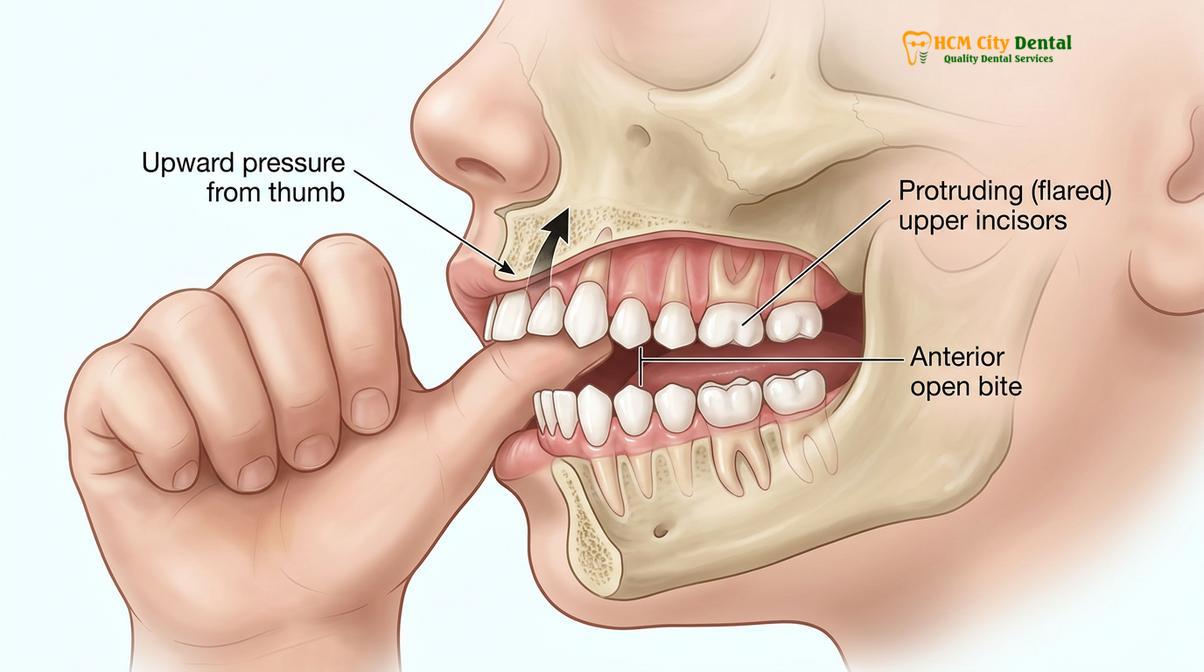
The constant upward and outward pressure from a thumb forces the upper front teeth to flare, creating a visible gap known as an anterior open bite and contributing to speech impediments.
The most visually apparent consequence of prolonged digital sucking is the development of an anterior open bite. When a child inserts their thumb into their mouth, it acts as a physical wedge between the upper and lower incisors. Over time, this wedge impedes the vertical eruption of the front teeth. Simultaneously, the active sucking force proclines (pushes forward) the maxillary incisors and retroclines (pushes backward) the mandibular incisors. The result is a distinct vertical gap between the upper and lower front teeth even when the back teeth are fully closed.
“An anterior open bite presentation is not merely an aesthetic concern; it fundamentally disrupts the child’s ability to incise food and establishes abnormal neuromuscular patterns, particularly tongue thrusting, which further exacerbates the malocclusion.”
When an anterior open bite is present, the child cannot create an anterior seal with their lips and teeth during swallowing. To compensate, the child develops a tongue thrust—pushing the tongue forward into the open space to seal the mouth so that swallowing can occur. This secondary myofunctional habit perpetuates the open bite even if the thumb sucking is occasionally paused. The presence of this gap also heavily impacts speech pathology, frequently resulting in a lisp or difficulty pronouncing sibilant sounds (like “s” and “z”) and alveolar consonants (like “t” and “d”)[3].
Addressing these complex biomechanical and neuromuscular issues requires a comprehensive approach. Often, once the habit is broken, minor open bites may close spontaneously. However, more severe cases will require phase 1 vs phase 2 braces to actively guide the skeletal growth and retract the flared incisors back into their proper physiological positions.
Gentle Behavioral Intervention Techniques
Before introducing physical appliances, pediatric dentists utilize behavioral desensitization, positive reinforcement, and the Tell-Show-Do method to encourage voluntary habit cessation.
The clinical approach to breaking a thumb sucking habit must always prioritize the psychological well-being of the child. Thumb sucking is often a coping mechanism for anxiety, fatigue, or overstimulation. Abruptly removing this coping mechanism through punitive measures can cause significant emotional distress. Therefore, the first line of therapy involves gentle behavioral intervention techniques.
Clinical Warning: Punitive measures, such as applying bitter-tasting polishes or forcibly removing a child’s thumb, can increase anxiety and inadvertently reinforce the sucking habit. Always prioritize positive reinforcement and professional behavioral management.
In the clinical setting, managing pediatric anxiety is paramount. Dentists employ the Tell-Show-Do behavioral management technique to build trust and cooperation. This protocol involves explaining the procedure using non-threatening language, demonstrating the instrument on the child’s finger or a model, and proceeding with the treatment only when the child is visibly comfortable and ready[4].
When advising parents on how to stop toddler sucking habits at home, positive reinforcement is highly effective. Sticker charts, verbal praise, and small rewards for thumb-free days can motivate the child. The child must be a willing participant in the process; if the child actively wants to stop but struggles with the subconscious habit (especially at night), they are an excellent candidate for a supportive appliance.
Palatal Crib & Bluegrass Appliances
When behavioral methods fail, fixed intraoral devices like the palatal crib or Bluegrass appliance provide a highly effective, non-punitive mechanical barrier to break the habit.
If behavioral modifications and positive reinforcement do not yield results after several months, and the child is approaching the age where permanent incisors are erupting, a mechanical thumb sucking habit appliance becomes necessary. These appliances are custom-fabricated by a dental laboratory based on precise digital scans or physical impressions of the child’s upper arch. They are typically cemented onto the upper primary second molars or permanent first molars, making them fixed devices that the child cannot remove at will.
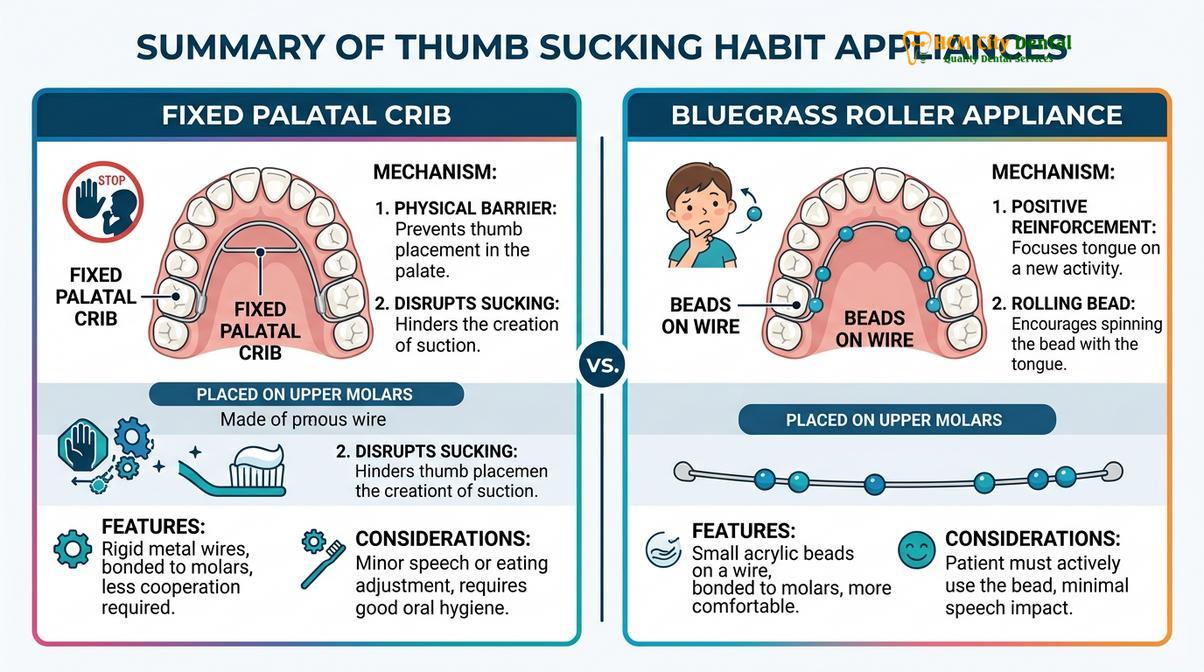
There are two primary types of fixed appliances used in pediatric interceptive orthodontics to manage digit sucking:
| Appliance Type | Mechanism of Action | Patient Compliance |
|---|---|---|
| Fixed Palatal Crib | Physical wire barrier blocking the thumb from the palate | High (fixed device, cannot be removed by the child) |
| Bluegrass Roller | Teflon roller providing positive tongue reinforcement | High (comfortable, non-punitive, and engaging) |
The Palatal Crib
The palatal crib consists of a stainless steel wire framework that extends from the molar bands and forms a cage-like barrier just behind the upper front teeth. This crib physically prevents the thumb from reaching the roof of the mouth. Without the ability to place the thumb against the palate, the child cannot create a suction seal. The habit immediately loses its soothing gratification, and the child typically stops attempting to suck within a few days. The crib also serves a dual purpose by acting as a barrier against tongue thrusting, allowing the anterior open bite to begin closing spontaneously.
The Bluegrass Appliance
The Bluegrass appliance is a highly favored alternative that operates on the principle of positive reinforcement rather than physical restriction. Instead of a wire cage, this appliance features a smooth, six-sided Teflon roller positioned near the anterior palate. When the child feels the urge to suck their thumb, they are instructed to use their tongue to spin the roller instead. This provides a substitute oral stimulation that is non-destructive to the dentition. Because it is less intrusive than a crib, it is exceptionally well-tolerated by younger patients.

Regardless of the type chosen, the appliance is typically left in place for six to ten months. Even if the habit ceases in the first week, premature removal often leads to a rapid relapse. The extended wear time ensures the neuromuscular habit is completely extinguished.
When to Consult a Pediatric Dentist
Parents should seek professional evaluation if a child’s sucking habit persists beyond age four, or if noticeable changes in tooth alignment and speech begin to occur.
Recognizing the right time to intervene is crucial for preventing long-term dental complications. According to guidelines from the Vietnam Odonto-Stomatology Association (VOSA), early evaluation allows for the most conservative treatment options[5]. Parents should schedule a consultation if they observe the child’s front teeth beginning to protrude, if the child develops a lisp, or if the habit is accompanied by chronic mouth breathing.
A comprehensive assessment will determine whether the child requires immediate intervention or if a period of monitored behavioral modification is more appropriate. The goal is always to support the child’s natural development while gently guiding them away from habits that could compromise their oral health.
Success Stories
Clinical case reviews demonstrate that custom habit appliances can resolve persistent sucking habits within weeks, allowing spontaneous bite correction and improved facial growth.
The efficacy of habit-breaking appliances is best illustrated through clinical outcomes. When a child is properly prepared and understands that the appliance is a helper rather than a punishment, the success rates are exceptionally high.
Clinical Case Review: Interceptive Habit Correction
Patient Profile: A 7-year-old female patient presented to HCMC Dental Clinic in Ho Chi Minh City with a persistent nocturnal thumb-sucking habit. Clinical examination revealed a 5mm anterior open bite, a constricted maxillary arch, and a noticeable lisp.
Treatment Protocol: After behavioral counseling, a fixed palatal crib was fabricated and cemented to the maxillary first molars. The patient adapted to the appliance within 48 hours.
Clinical Outcome: The thumb-sucking habit ceased completely within the first week. Over the next six months of appliance wear, the anterior open bite closed spontaneously by 3mm due to the elimination of the digit pressure and the blocking of the secondary tongue thrust. The patient was subsequently transitioned to a brief phase of braces for expat children to finalize arch expansion and alignment.
These success stories highlight the importance of timely intervention. By addressing the root cause of the malocclusion early, we frequently reduce or entirely eliminate the need for complex orthognathic surgery or prolonged orthodontic treatment in the teenage years.
Comprehensive Pediatric Dental Care
Beyond habit appliances, a complete pediatric dental approach includes preventive treatments and biocompatible restorations to ensure optimal oral health.
Managing a thumb sucking habit is just one facet of comprehensive pediatric dentistry. Children with prolonged oral habits are also at risk for other dental issues, particularly if mouth breathing has caused chronic dry mouth, which drastically increases the risk of early childhood caries. At our clinic, we prioritize minimally invasive and preventive care, utilizing treatments like kids dental cleaning & fissure sealants to protect vulnerable developing teeth.
“Preventive care, from fissure sealants to habit appliances, is an investment in a child’s long-term systemic health and facial development, far outweighing the costs of reactive, complex dental rehabilitation.”
When restorations are necessary, we carefully evaluate the best materials for the child’s specific needs. We prioritize fluoride-releasing glass ionomer cement for baby teeth due to its chemical bonding, moisture tolerance, and continuous fluoride release, which actively prevents recurrent decay around the filling margins.

Dr. Nguyen Van Cuong, a leading specialist in pediatric dental care, emphasizes the importance of early intervention. At HCMC Dental Clinic, Dr. Cuong routinely evaluates young patients to determine the best age for kids first orthodontic evaluation, ensuring that habits are addressed before permanent skeletal changes occur. His approach combines clinical excellence with compassionate behavioral management to create a positive experience for every child.
References
- American Academy of Pediatric Dentistry. Management of the Developing Dentition and Occlusion in Pediatric Dentistry. (2021).
- Journal of the American Dental Association. The effects of nonnutritive sucking habits on the developing dentition. (2018).
- International Journal of Paediatric Dentistry. Efficacy of palatal cribs and Bluegrass appliances in breaking digit-sucking habits. (2019).
- Pediatric Dentistry. Behavioral management techniques and Tell-Show-Do protocols in clinical practice. (2022).
- Vietnam Odonto-Stomatology Association (VOSA). National Guidelines on Pediatric Preventive Dentistry and Interceptive Orthodontics. (2023).
If you are concerned about your child’s oral habits or wish to explore options for a thumb sucking habit appliance, contact HCMC Dental Clinic in Ho Chi Minh City today to schedule a comprehensive pediatric evaluation.
For professional children’s dental care, preventive sealants, or to schedule a check-up, visit our Children & Pediatric Dentistry service page at HCMC Dental Clinic in Ho Chi Minh City.