Silver diamine fluoride (SDF) for kids is a non-invasive, FDA-cleared liquid medication used to halt active tooth decay without drilling or local anesthesia. By combining antimicrobial silver with remineralizing fluoride, it painlessly hardens cavities, making it an ideal early intervention for anxious children and toddlers.
Clinical Summary:
Silver diamine fluoride represents a paradigm shift in pediatric caries management. This topical medicament effectively arrests dentinal lesions by utilizing silver ions to eliminate cariogenic bacteria and fluoride to promote fluorapatite formation. While it leaves a permanent dark mark on the decayed structure, its ability to bypass the dental drill and local anesthesia makes it highly valuable for uncooperative or medically compromised pediatric patients. Dr. Nguyen Van Cuong emphasizes that integrating SDF with behavioral desensitization techniques significantly reduces dental anxiety, paving the way for future restorative success using biocompatible materials like glass ionomer cements.
Key Takeaways:
- SDF is a painless, drill-free liquid treatment that stops active tooth decay in primary and permanent teeth.
- The silver component kills bacteria, while the fluoride hardens the softened enamel and dentin.
- Treated cavities will turn permanently black, serving as a clinical indicator of successful caries arrest.
- It is highly recommended for toddlers, children with special healthcare needs, or those with severe dental anxiety.
- Treatment takes only minutes and requires no needles, making it a cornerstone of modern pediatric dental care.
What is Silver Diamine Fluoride?
Silver diamine fluoride is a topical liquid medication combining silver’s antibacterial properties with fluoride’s remineralizing power to painlessly stop tooth decay.
In the realm of Children & Pediatric Dentistry, managing early childhood caries (ECC) has historically relied on mechanical decay removal using dental drills, followed by the placement of restorative materials. However, the introduction of Silver Diamine Fluoride (SDF) has revolutionized this approach. SDF is a colorless liquid containing 38% silver diamine fluoride, which breaks down into approximately 25% silver, 8% ammonia, and 5% fluoride. This precise chemical formulation allows clinicians to manage active carious lesions medically rather than surgically.
The concept of using silver in medicine is not new; its antimicrobial properties have been documented for over a century. However, the specific formulation of SDF stabilizes the silver with ammonia, allowing it to remain in solution until it comes into contact with the tooth structure. When applied to a cavity, the liquid penetrates the porous, demineralized dentin. This approach is widely recognized as a cornerstone of non-invasive pediatric dentistry, offering a lifeline for parents seeking alternatives to traditional drilling and filling for their young children [1].
The Biochemistry of Caries Arrest
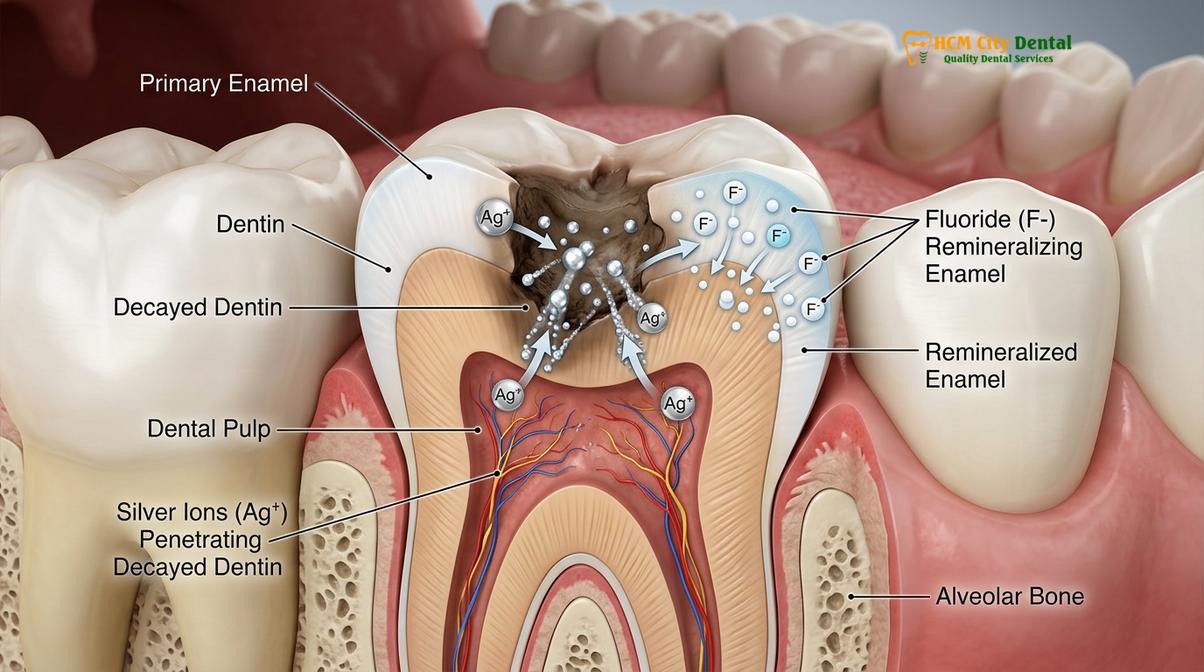
To understand why SDF is so effective, one must look at its dual-action mechanism at the molecular level. Tooth decay is fundamentally a bacterial infection caused primarily by Streptococcus mutans, which metabolizes dietary sugars into lactic acid. This acid strips calcium and phosphate from the tooth enamel, creating a cavity. When SDF is applied to this active lesion, two primary chemical reactions occur simultaneously.
First, the silver ions act as a potent antimicrobial agent. They bind to the bacterial cell walls, disrupting their structural integrity, and penetrate the cells to inhibit enzyme function and DNA replication. This effectively neutralizes the bacteria driving the decay process. Second, the fluoride ions react with the remaining calcium in the tooth to form fluorapatite. Fluorapatite is significantly more resistant to acidic attacks than the tooth’s original hydroxyapatite structure. The ammonia acts as a solvent, ensuring the deep penetration of these active ingredients into the dentinal tubules.
Comparing SDF to Traditional Restorations
Traditional cavity treatment requires the complete removal of infected tooth structure to prevent the decay from spreading beneath a filling. Because primary (baby) teeth have thinner enamel and larger pulp chambers than permanent teeth, decay can reach the nerve very quickly. Drilling out this decay often necessitates local anesthesia (numbing shots) to prevent pain. For a young child, the sensory overload of the needle, the noise of the drill, and the vibration can be deeply traumatic.
SDF bypasses this entire mechanical process. It does not restore the missing shape of the tooth, nor does it fill the hole. Instead, it chemically transforms the soft, active decay into a hard, arrested scar. This buys crucial time for the child to mature, improve their oral hygiene habits, and develop the coping skills necessary for future restorative work, should it be required.
How SDF Arrests Cavities Without Drilling
SDF works by penetrating the porous, decayed tooth structure, where silver ions destroy bacteria and fluoride creates decay-resistant fluorapatite crystals.
The clinical workflow for applying SDF is remarkably straightforward, which is why it is so well-tolerated by pediatric patients. The entire procedure can be completed in a matter of minutes, making it an ideal toddler cavity treatment. The primary goal is to arrest tooth decay without drilling, ensuring the child’s first experiences in the dental chair are positive and pain-free.
The Clinical Application Workflow
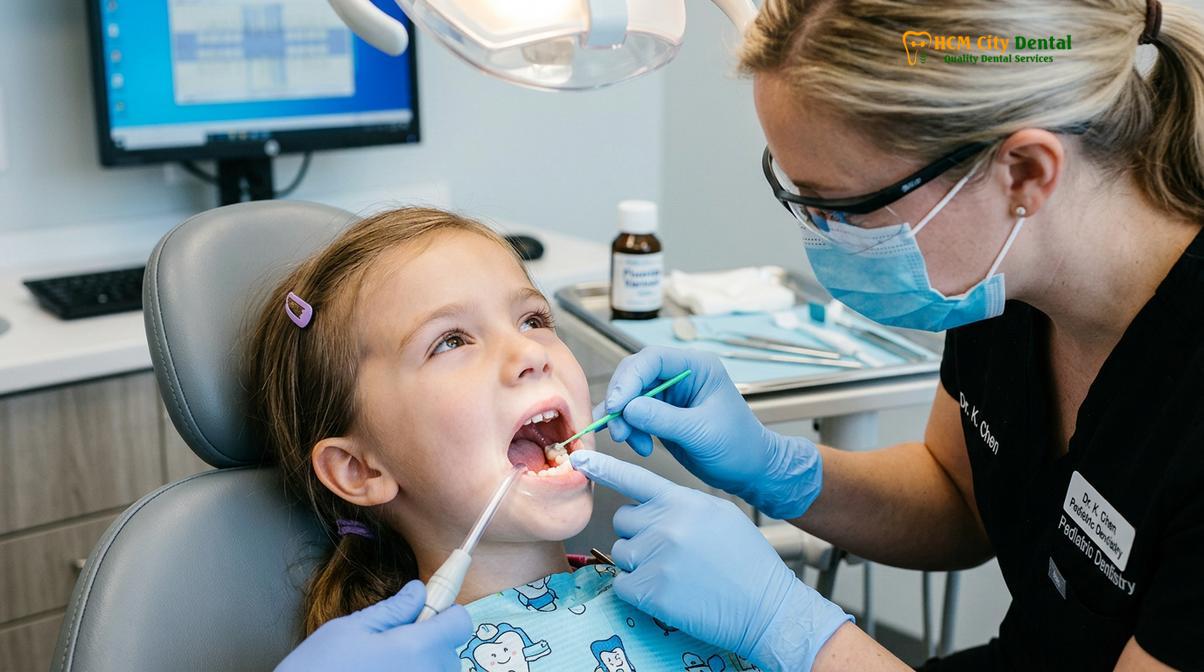
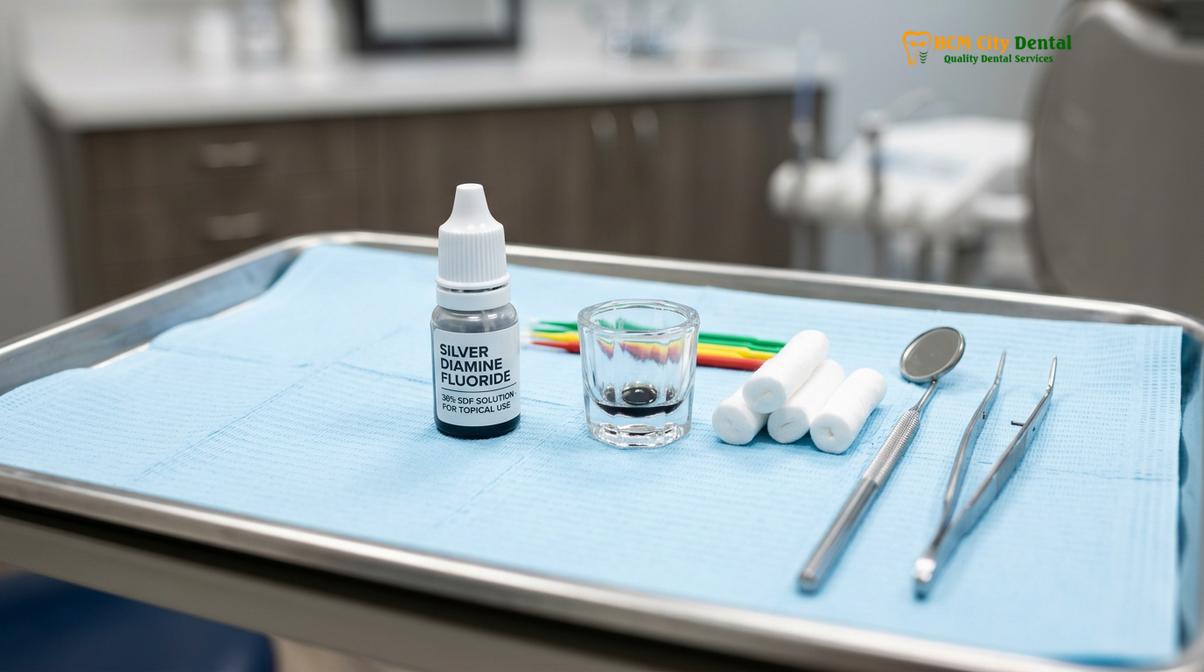
The application of SDF requires meticulous isolation but no mechanical preparation. The pediatric dentist will first clean the tooth surface to remove any food debris or heavy plaque, ensuring the medication can make direct contact with the carious lesion. Cotton rolls or dry angles are placed around the tooth to keep it isolated from saliva, as moisture control is essential for the medication to absorb properly.
Using a microbrush, the clinician applies a tiny drop of the SDF liquid directly onto the cavity. The liquid is allowed to soak into the lesion for approximately 60 seconds. During this time, the dentist may use a gentle stream of air to help the liquid penetrate deeper into the dentinal tubules and to dry the surface. Any excess liquid is carefully wiped away with a cotton pellet. Because the liquid is highly concentrated, only a fraction of a drop is needed to treat a single tooth [2].
Integration with Behavioral Management
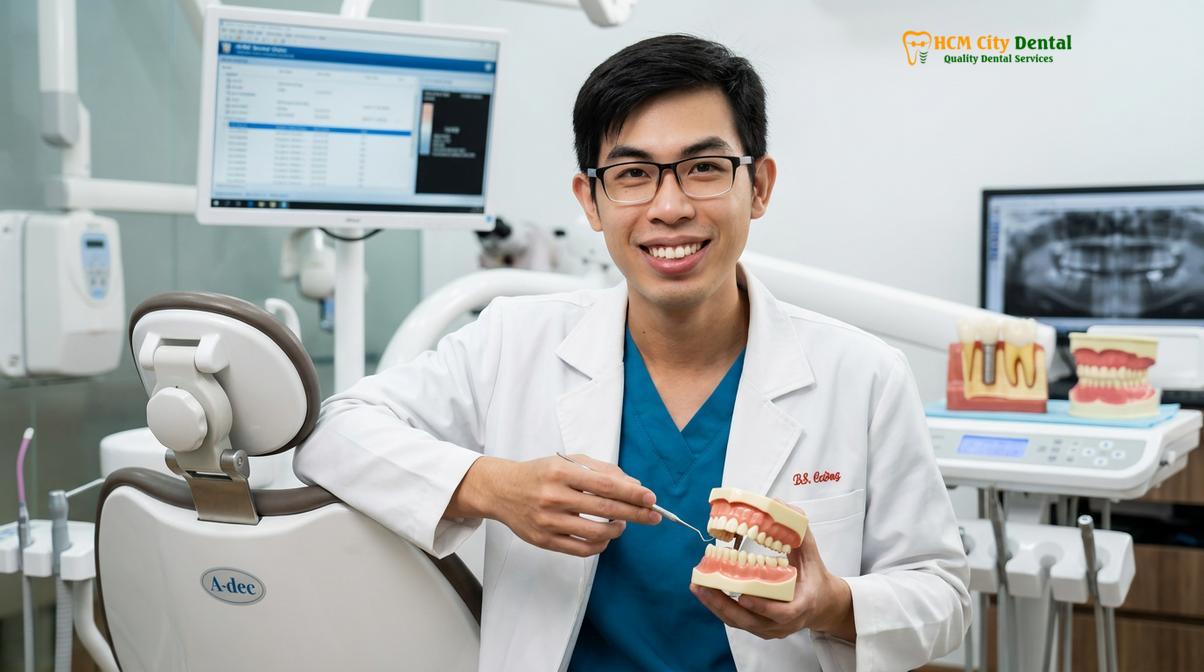
Even though the procedure is painless, the clinical environment can still be intimidating for a child. This is where advanced behavioral management techniques become crucial. Dr. Nguyen Van Cuong, a leading expert in pediatric dental care, emphasizes the importance of the “Tell-Show-Do” behavioral management technique when introducing SDF to young patients.
In the “Tell” phase, the dentist explains the procedure using child-friendly language. The SDF might be described as “magic cavity vitamins” or “tooth sleepy juice.” In the “Show” phase, the dentist demonstrates the microbrush on the child’s fingernail, proving that it is soft and tickles rather than hurts. Finally, in the “Do” phase, the medication is applied to the tooth. The clinician also utilizes a “stop on request” protocol, empowering the child to raise their hand if they need a break. This psychological desensitization builds immense trust and cooperation.
Post-Application Care and Monitoring
Following the application, patients are typically advised to avoid eating or drinking for 30 to 60 minutes to allow the medication to fully set and maximize its efficacy. The dentist will schedule a follow-up appointment, usually within 2 to 4 weeks, to evaluate the lesion. A successfully arrested cavity will feel hard and glassy when gently probed with a dental instrument, confirming that the active infection has been halted.
Pros and Cons: Enamel Staining vs. Painless Care
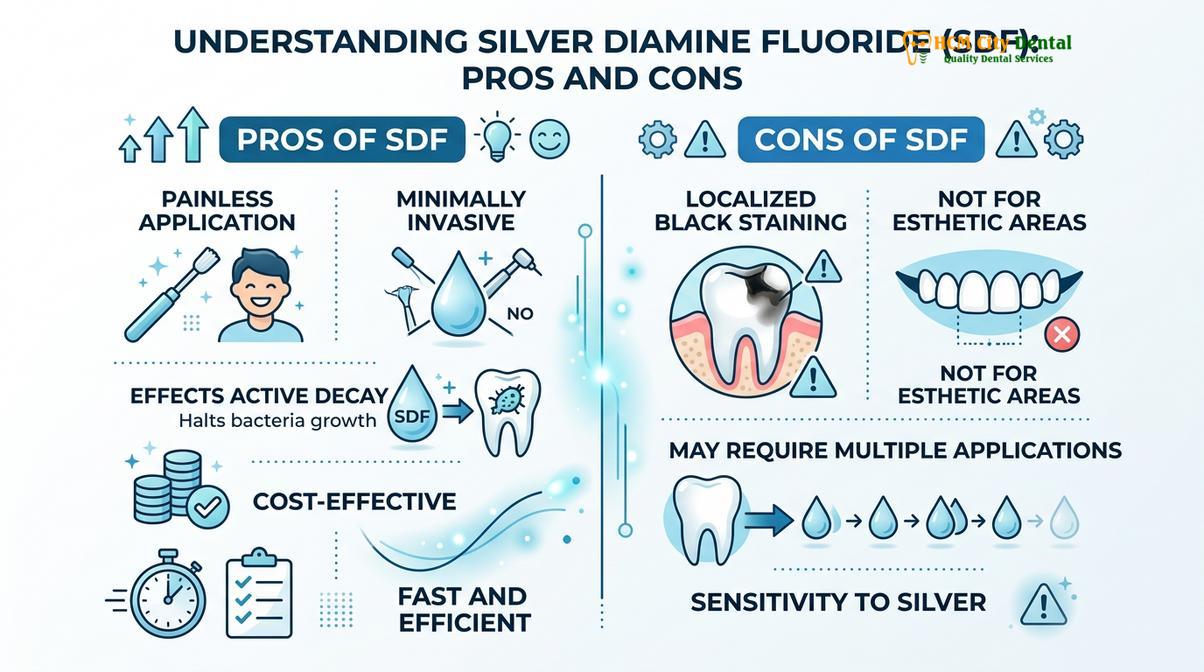
While SDF provides a painless, fast, and highly effective way to halt decay, its primary drawback is the permanent black discoloration of the treated cavity.
When discussing treatment options with parents, pediatric dentists must provide a transparent overview of the benefits and limitations of SDF. The decision to use this medicament is often a balancing act between aesthetic concerns and the desire to provide atraumatic, pain-free care.
The “Black Stain” Phenomenon
The most significant and unavoidable side effect of SDF is the visual change it causes to the tooth. As the silver ions react with the decayed tooth structure and ambient light, they precipitate into silver phosphate and silver sulfide. This chemical reaction turns the active, brownish decay into a stark, permanent black color. These silver fluoride black stains are a definitive clinical indicator that the treatment has worked, but they can be aesthetically displeasing, especially if the cavity is on a highly visible front tooth.
It is crucial to understand that SDF only stains the decayed portion of the tooth; healthy, intact enamel will not turn black. Furthermore, because this treatment is primarily used on primary (baby) teeth, the stained tooth will eventually fall out naturally, and the permanent tooth underneath will erupt completely unaffected and unstained [3].
Psychological Benefits of Atraumatic Care
Despite the aesthetic drawback, the psychological benefits of avoiding traditional drilling cannot be overstated. Dental anxiety is a significant barrier to care, often stemming from early traumatic experiences involving needles, pain, and physical restraint. By utilizing SDF, dentists can manage the disease medically, preserving the child’s psychological well-being.
“The true value of Silver Diamine Fluoride lies not just in its ability to harden decayed dentin, but in its power to protect a child’s developing psyche from the trauma of invasive dental surgery. A black spot on a baby tooth is a small price to pay for a lifetime of positive dental attitudes.”
Restorative Follow-Up: SMART Technique
For parents concerned about the black stain, or in cases where the cavity has created a large physical hole that traps food, SDF can be combined with restorative materials in a protocol known as SMART (Silver Modified Atraumatic Restorative Treatment). After the SDF has arrested the decay, the cavity can be filled without drilling.
When choosing filling materials for baby teeth, clinicians often weigh Glass Ionomer Fillings (GIC) vs. Composite resins. In the SMART technique, we prioritize fluoride-releasing glass ionomer cement (GIC). GIC chemically bonds to the tooth structure, is highly tolerant of the moisture found in a crying toddler’s mouth, and provides continuous fluoride release (fluoride recharge) to prevent recurrent decay around the filling margins. The opaque white GIC also helps to mask the black stain left by the SDF. Composite is generally reserved for older, cooperative children where perfect aesthetics and higher compressive strength are required.
Clinical Safety Guidelines
SDF is exceptionally safe when applied by a professional, with strict protocols ensuring precise dosage and preventing soft tissue irritation.
The safety profile of Silver Diamine Fluoride is well-documented in global dental literature. It has been used internationally for decades and received FDA clearance in the United States as a desensitizing agent, with its use for caries arrest widely accepted as an evidence-based off-label application, much like fluoride varnish.
Dosage and Toxicity Myths
A common concern among parents is the risk of fluoride toxicity or heavy metal exposure. However, the amount of SDF used in a clinical setting is microscopic. A single drop of SDF (approximately 25 microliters) is sufficient to treat up to five teeth. The total fluoride exposure from this single drop is significantly less than what a child might ingest from swallowing a standard amount of fluoridated toothpaste. Clinical studies have consistently shown that the systemic absorption of silver and fluoride from topical SDF application is well below any toxic thresholds [4].
Important Clinical Considerations: SDF should not be used in patients with a known silver allergy or those presenting with ulcerative gingivitis or stomatitis. If the decay has progressed into the tooth’s nerve (pulp), SDF is contraindicated, and a baby root canal (pulpotomy) or extraction will be required.
Soft Tissue Protection
While safe for teeth, SDF can cause temporary staining if it comes into contact with the skin, lips, or gums. This results in a harmless, temporary brown or white mark that typically fades within a few days to a week as the skin naturally exfoliates. To prevent this, pediatric dentists meticulously isolate the tooth and often apply a protective barrier, such as petroleum jelly, to the child’s lips and surrounding gingiva before application.
Holistic Pediatric Assessment
Applying SDF is just one component of a comprehensive pediatric dental visit. During the consultation, clinicians also conduct a thorough pediatric airway diagnosis and early interceptive orthodontic evaluation. Dr. Nguyen Van Cuong frequently assesses young patients for signs of mouth breathing, which can lead to “adenoid facies” or long-face syndrome, and evaluates the need for early interceptive orthodontic evaluation. Identifying tongue-ties—which can be treated painlessly with diode laser frenectomies—and screening for pediatric sleep apnea are critical steps in ensuring the child’s overall craniofacial development is on track.
Is Your Child a Candidate?
Ideal candidates for SDF include toddlers, children with extreme dental anxiety, special needs patients, and those with multiple cavities requiring immediate stabilization.
Determining whether a child is a suitable candidate for SDF involves a careful assessment of their medical history, behavioral profile, and the specific nature of their dental decay. Not every cavity can or should be treated with SDF, but for the right patient, it is a transformative option.
Ideal Patient Profiles
SDF is highly recommended for pre-cooperative toddlers who lack the cognitive maturity to sit still for a traditional filling. It is also an invaluable tool for children with special healthcare needs, neurodivergent patients (such as those with autism or sensory processing disorders), and individuals with severe dental phobias. By avoiding the need for conscious sedation, nitrous oxide, or general anesthesia, SDF drastically reduces the medical risks and financial burdens associated with treating these vulnerable populations.
Clinical Case Review: A 3-year-old patient visited HCMC Dental Clinic in Ho Chi Minh City presenting with early childhood caries on four primary molars. Due to severe anxiety, traditional drilling was impossible without general anesthesia. The clinical team applied SDF over two brief, painless visits. The decay was successfully arrested, the lesions hardened, and the child avoided the risks of sedation, allowing the teeth to naturally exfoliate years later without complication.
Contraindications and Alternative Treatments
SDF is only effective on cavities that are accessible to the microbrush and have not yet reached the dental pulp. If a child presents with spontaneous pain, facial swelling, or a dental abscess, the infection has progressed beyond the scope of SDF. In these cases, more extensive treatments are necessary. Depending on the severity, the dentist may recommend a baby root canal (pulpotomy) followed by a stainless steel crown. If the tooth must be extracted prematurely, a fixed space maintainer (such as a band-and-loop) is crucial to prevent the adjacent teeth from shifting and causing severe orthodontic crowding in the future [5].
Comprehensive Pediatric Dental Pricing Structure
Understanding the costs of pediatric dental care helps parents make informed decisions regarding preventive and restorative treatments for their children.
At HCMC Dental Clinic, we believe in transparent pricing for all pediatric procedures, from preventive fissure sealants to advanced restorative care. The following table outlines the estimated costs for standard pediatric treatments. Please note that patients booking in advance via WhatsApp are eligible for a -40% discount compared to standard walk-in rates.
| Pediatric Dental Treatment | Advance Booking (-40% WhatsApp) | Standard Walk-in Rate |
|---|---|---|
| Kids Consultation & Diagnostic check-up | 300,000 – 500,000 VND (~$12 – $20) | 500,000 – 800,000 VND |
| Fluoride Varnish Application | 300,000 – 500,000 VND (~$12 – $20) | 500,000 – 800,000 VND |
| Fissure Sealant (per tooth) | 400,000 – 600,000 VND (~$16 – $24) | 700,000 – 1,000,000 VND |
| Pediatric Glass Ionomer Filling (GIC) | 400,000 – 600,000 VND (~$16 – $24) | 700,000 – 1,000,000 VND |
| Pediatric Composite Filling (per tooth) | 500,000 – 800,000 VND (~$20 – $32) | 800,000 – 1,300,000 VND |
| Baby Root Canal (Pulpotomy, per tooth) | 1,000,000 – 1,500,000 VND (~$40 – $60) | 1,600,000 – 2,500,000 VND |
| Space Maintainer (fixed, band-and-loop) | 2,000,000 – 3,000,000 VND (~$80 – $120) | 3,300,000 – 5,000,000 VND |
| Custom Pediatric Sports Mouthguard | 1,500,000 – 2,500,000 VND (~$60 – $100) | 2,500,000 – 3,500,000 VND |
For families relocating to Vietnam, finding reliable dental care for expat children in Ho Chi Minh City is a top priority. Our clinic ensures that all treatments, including SDF applications and interceptive orthodontics, are performed to international standards, providing peace of mind for parents and comfortable experiences for children.
When to See a Pediatric Dentist
Early intervention is the key to successful pediatric dentistry. Parents should schedule their child’s first dental visit by their first birthday or when the first tooth erupts. If you notice chalky white spots on your child’s teeth (the earliest sign of demineralization) or brown/black pitting, it is imperative to seek professional evaluation immediately. Delaying care allows the decay to progress, potentially leading to severe pain, infection, and the need for invasive treatments.
“A proactive approach to pediatric oral health prevents minor issues from becoming major emergencies. By utilizing diagnostic tools and non-invasive treatments like SDF, we can protect the structural integrity of the primary dentition, ensuring proper space maintenance for the permanent teeth and fostering a positive relationship with dental care.”
Furthermore, if you observe your child consistently breathing through their mouth, struggling with thumb-sucking habits, or exhibiting signs of sleep-disordered breathing, a comprehensive evaluation is necessary. Addressing these myofunctional issues early can prevent complex orthodontic problems later in life. If you have concerns about your child’s oral health, contact the clinical team at HCMC Dental Clinic to schedule a thorough diagnostic check-up.
Frequently Asked Questions
Will SDF stain my child’s teeth black?
Yes, silver diamine fluoride will permanently stain the decayed portion of the tooth black. This discoloration is a clinical sign that the medication is actively halting the decay. However, it does not stain healthy enamel, and the black mark will naturally disappear when the baby tooth falls out. For aesthetic concerns, the stained area can often be covered later with a white glass ionomer filling.
Is Silver Diamine Fluoride safe for toddlers?
Yes, SDF is highly safe and FDA-cleared for use in toddlers and young children. Because it requires only a micro-drop of liquid to treat a cavity, the fluoride exposure is well below toxic limits, making it an excellent alternative to general anesthesia for uncooperative toddlers. The procedure is painless and fast, minimizing stress for both the child and the parents.
How long does SDF treatment take to dry?
The SDF liquid absorbs into the decayed tooth structure and dries within 60 seconds. Dentists typically use a gentle stream of air to accelerate the drying process. Once applied, children can usually resume eating and drinking within 30 to 60 minutes, depending on the clinician’s specific post-operative instructions to ensure maximum absorption and efficacy.
Can a tooth treated with SDF be filled later?
Absolutely. Once the decay is arrested and the child is older or more cooperative, the black-stained cavity can be covered with a tooth-colored filling. Pediatric dentists frequently use fluoride-releasing glass ionomer cement (GIC) to mask the stain and restore the tooth’s natural shape, a process known as the SMART technique.
Does SDF replace the need for regular brushing?
No, SDF does not replace daily oral hygiene. While it stops existing cavities from growing, it does not prevent new cavities from forming on other teeth. Parents must continue to enforce twice-daily brushing with fluoridated toothpaste, monitor dietary sugar intake, and ensure regular dental check-ups to maintain overall oral health and prevent future decay.
References
- American Academy of Pediatric Dentistry. Policy on the Use of Silver Diamine Fluoride for Pediatric Dental Patients. (2021).
- Journal of Dental Research. Mechanisms of Silver Diamine Fluoride on Arresting Caries. (2020).
- International Journal of Paediatric Dentistry. Clinical efficacy and safety of SDF in young children. (2019).
- Pediatric Dentistry. Behavioral management techniques and non-invasive caries treatment. (2022).
- Journal of the American Dental Association. Glass ionomer cements vs composite resins in pediatric restorations. (2018).