Experiencing sensitive teeth after scaling is a normal, temporary clinical response. When hardened calculus is removed, previously insulated dentin and microscopic tubules are exposed to temperature changes. This mild discomfort typically resolves within 24 to 48 hours as the enamel remineralizes and inflamed gingival tissues heal.
Clinical Summary:
Post-scaling tooth sensitivity occurs when calculus removal exposes dentinal tubules and receded root surfaces to oral stimuli. While standard ultrasonic scaling may cause mild, transient thermal sensitivity lasting a few days, deep scaling and root planing (SRP) can extend this recovery period. Utilizing advanced protocols like Guided Biofilm Therapy (GBT) with warm water and low-abrasive erythritol powder significantly minimizes patient discomfort. Management involves desensitizing agents, fluoride varnishes, and avoiding extreme dietary temperatures during the initial healing phase.
Key Takeaways:
- Calculus acts as an artificial insulator; its removal temporarily exposes sensitive dentinal tubules.
- Mild thermal sensitivity typically subsides within 24 to 48 hours after a routine prophylaxis.
- Desensitizing toothpastes containing potassium nitrate help block nerve pain signals effectively.
- Modern dual-scaler technologies and warm-water GBT protocols drastically reduce procedural discomfort.
- Severe, throbbing, or prolonged pain lasting over a week requires immediate clinical evaluation.
Why Teeth Are Sensitive After Calculus Removal
Removing heavy calculus uncovers microscopic dentinal tubules that were previously shielded, allowing hot and cold stimuli to directly trigger the tooth’s nerve endings.
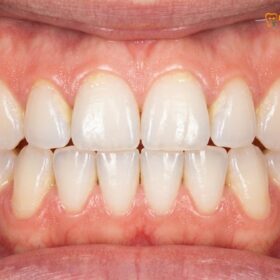
To understand the primary tooth sensitivity scaling reasons, one must first examine the anatomical structure of the human tooth and the pathological nature of dental calculus. A healthy tooth is protected by a dense, highly mineralized layer of enamel above the gumline and a layer of cementum below it. Beneath these protective layers lies the dentin, a porous tissue containing thousands of microscopic channels known as dentinal tubules. These tubules communicate directly with the dental pulp, which houses the tooth’s highly sensitive nerve endings.
When plaque is not adequately removed through daily oral hygiene, it calcifies into tartar, or calculus, due to the precipitation of calcium phosphate salts present in saliva. Over time, this calculus builds up along and beneath the gingival margin. While calculus is highly detrimental to periodontal health—harboring pathogenic bacteria that cause gingival inflammation and bone loss—it paradoxically acts as an artificial thermal insulator for the tooth.
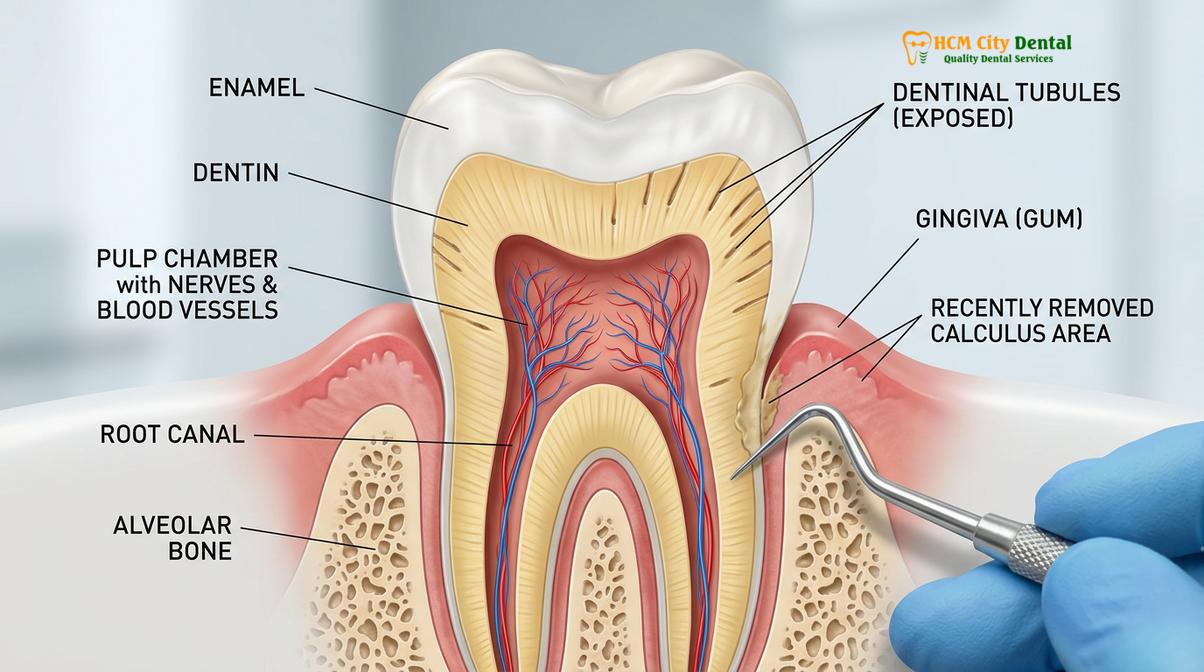
During a professional dental cleaning, the clinician meticulously fractures and removes this hardened calculus. Once the calculus is cleared away, the underlying dentin or root surfaces are suddenly exposed to the oral environment. According to Brännström’s hydrodynamic theory, when these exposed tubules encounter thermal changes (hot or cold fluids), osmotic changes (sugary foods), or tactile pressure, the fluid inside the tubules shifts rapidly. This fluid movement stimulates the mechanoreceptors in the pulp, registering as a sharp, sudden pain[1].
“Calculus acts as a pathological barrier. While it insulates the tooth from thermal shock, it simultaneously harbors aggressive bacteria that destroy the periodontium. Removing it is non-negotiable for oral health, even if it causes transient sensitivity.”
Furthermore, the mechanical action of scaling itself can contribute to temporary gingival tenderness. The gums, often already inflamed due to plaque-induced gingivitis, may feel sore as the clinician navigates subgingival areas to ensure complete biofilm eradication. The cavitation effect produced by ultrasonic scalers, while highly efficient at disrupting bacterial cell walls, also introduces acoustic micro-streaming and fluid dynamics that can temporarily heighten nerve excitability.
The Dual Scaler Advantage in Minimizing Trauma
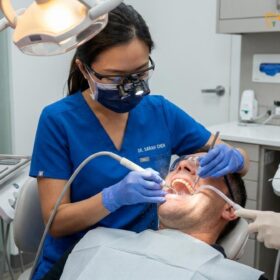
Modern clinical workflows have evolved to mitigate the trauma associated with calculus removal. At advanced practices, the implementation of a “Dual Scaler Advantage” allows clinicians to customize the treatment based on the patient’s specific periodontal phenotype and sensitivity threshold:
- Piezoelectric Scalers (e.g., Acteon/Satelec): These devices utilize a linear, back-and-forth motion operating at frequencies up to 32 kHz. Because only the lateral sides of the tip are active, they generate significantly less heat and are generally considered gentler. This technology is highly preferred for patients with a history of sensitive teeth, pediatric patients, and those undergoing orthodontic treatment.
- Magnetostrictive Scalers (e.g., Dentsply Cavitron): These units employ an elliptical motion, meaning all sides of the tip vibrate. Operating typically between 25-30 kHz, they are exceptionally efficient at breaking down heavy, tenacious calculus and performing full mouth debridement in cases of severe periodontitis.
By selecting the appropriate ultrasonic modality, clinicians can achieve thorough subgingival debridement while preserving enamel integrity and minimizing post-operative hypersensitivity[2].
How Long Does It Last?
Routine scaling sensitivity typically fades within two days, whereas deep scaling and root planing may cause mild tenderness lasting up to a few weeks.
The duration of post-scaling sensitivity is highly variable and depends heavily on the initial state of the patient’s oral health, the extent of gingival recession, and the specific type of cleaning performed. For a patient maintaining a regular six-month recall schedule, a standard prophylaxis usually results in very mild thermal sensitivity that dissipates within 24 to 48 hours. During this brief window, the salivary proteins begin to form a new acquired pellicle over the freshly cleaned enamel, providing a natural protective barrier.
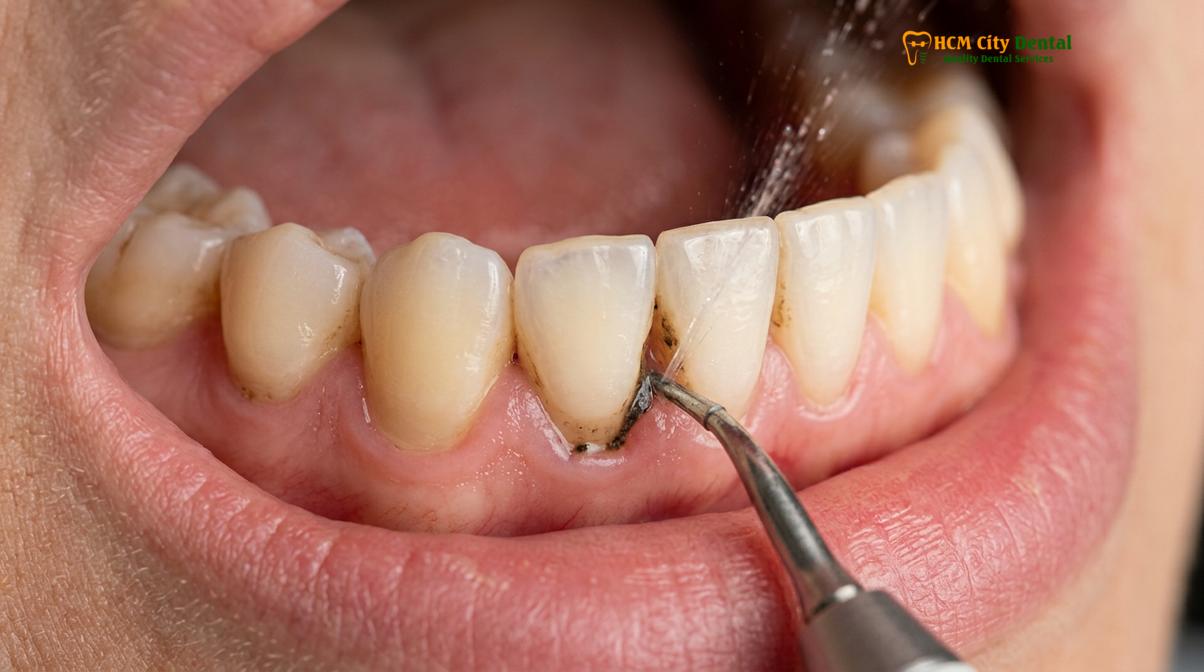
However, for patients diagnosed with periodontitis who require Scaling and Root Planing (SRP), the recovery timeline is extended. SRP is a meticulous procedure that involves reaching deep into the periodontal pockets to remove subgingival calculus and smoothing the root surfaces (planing) to prevent bacterial readherence. Because the root surfaces lack protective enamel and are covered only by a thin layer of cementum—which is often partially removed during the planing process—the dentinal tubules are heavily exposed.
According to Dr. Nguyen Van Cuong, a leading specialist at HCMC Dental Clinic, the duration of post-operative sensitivity directly correlates with the depth of the periodontal pockets and the volume of subgingival biofilm eradicated during the session. Dr. Cuong notes that while the gingival tissues begin to reattach to the clean root surfaces within a week, the dentinal hypersensitivity can linger for two to four weeks as the tubules gradually undergo natural sclerosis and occlusion[3].
During this healing phase, the gums may also exhibit slight swelling or minor bleeding when brushing, which is a normal part of the inflammatory resolution process. As the local immune response clears the remaining bacterial endotoxins, the gingival tissues will shrink, become firmer, and adopt a healthy stippled appearance. It is crucial for patients to maintain meticulous plaque control during this period, as the accumulation of new biofilm can delay healing and prolong sensitivity.
Home Remedies
Patients can manage temporary discomfort by using soft-bristled toothbrushes, avoiding extreme dietary temperatures, and applying specialized topical agents.
Managing post-scaling discomfort effectively at home is a critical component of the periodontal maintenance phase. While the sensitivity is transient, implementing specific home care strategies can significantly improve patient comfort and accelerate the natural healing process.
First and foremost, dietary modifications are essential during the initial 48 hours following a professional cleaning. Patients should avoid consuming foods and beverages with extreme temperatures, such as ice water, hot coffee, or hot soups. Additionally, highly acidic foods—including citrus fruits, tomatoes, and carbonated sodas—should be restricted. Acidic environments can temporarily demineralize the enamel surface and keep the dentinal tubules open, exacerbating the pain response.
The mechanical aspect of home care must also be adjusted. Patients are strongly advised to switch to an ultra-soft bristled toothbrush. Brushing should be performed using the modified Bass technique, which involves placing the bristles at a 45-degree angle to the gingival margin and using gentle, circular micro-vibrations. Aggressive horizontal scrubbing will not only irritate the healing gingiva but can also lead to further enamel abrasion and gingival recession.
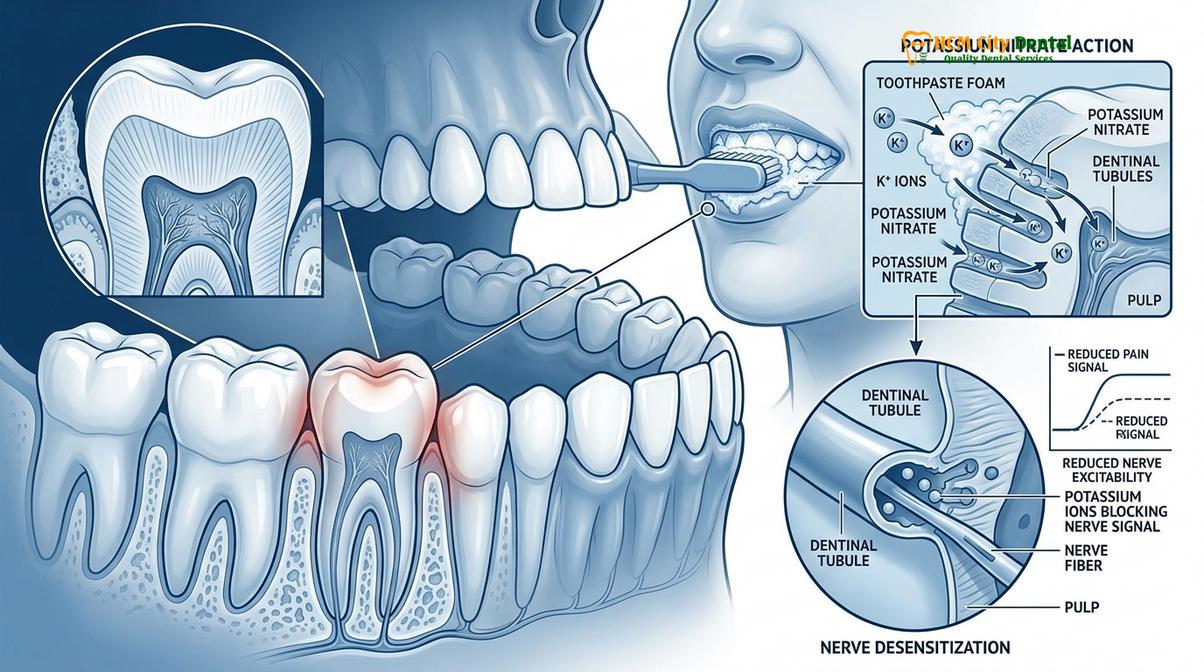
To directly address the neurological pain pathway, the use of a desensitizing toothpaste scaling protocol is highly recommended. These specialized dentifrices typically contain active ingredients such as potassium nitrate or stannous fluoride. Potassium nitrate works by penetrating the dentinal tubules and depolarizing the nerve synapses in the dental pulp, effectively blocking the transmission of pain signals. Stannous fluoride, on the other hand, works mechanically by precipitating over the open tubules, creating a robust smear layer that seals them off from external stimuli.
Clinical Case Observation:
A 45-year-old patient visited HCMC Dental Clinic in Ho Chi Minh City presenting with heavy supragingival calculus and generalized gingivitis after avoiding dental care for five years. Following a comprehensive full mouth debridement, the patient reported moderate thermal sensitivity. By strictly adhering to a regimen of warm saltwater rinses and applying a potassium nitrate-based desensitizing toothpaste twice daily, the patient’s sensitivity was completely resolved within 72 hours, allowing for a comfortable return to normal dietary habits.
Warm saltwater rinses (one-half teaspoon of salt dissolved in eight ounces of warm water) can be utilized two to three times daily. The hypertonic nature of the saline solution helps to draw out interstitial fluid from swollen gingival tissues, reducing edema and promoting a favorable environment for tissue repair.
Warm Water & Fluoride
Utilizing warm water during the cleaning process and applying professional fluoride treatments afterward significantly accelerates enamel remineralization and blocks pain pathways.
The integration of advanced clinical technologies has revolutionized the way dental cleanings are performed, shifting the focus toward maximum patient comfort and tissue preservation. One of the most significant advancements in modern prophylaxis is the Guided Biofilm Therapy (GBT) protocol, developed by Swiss EMS. This systematic approach fundamentally changes the patient experience, particularly for those prone to hypersensitivity.
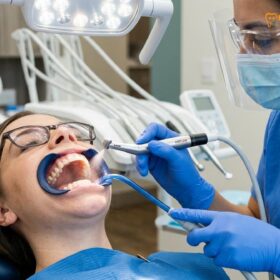
The GBT protocol utilizes Airflow technology combined with temperature-controlled warm water (typically heated to exactly 40°C). The use of warm water is a game-changer; it prevents the sudden thermal shock that cold water from traditional ultrasonic scalers often triggers in exposed dentin. Furthermore, GBT employs a specialized low-abrasive erythritol powder with a microscopic grain size of just 14 to 25μm. This ultra-fine powder is highly effective at eradicating biofilm, plaque, and early calculus without scratching the enamel, dentin, titanium implants, or delicate restorative margins like veneers and crowns[4].
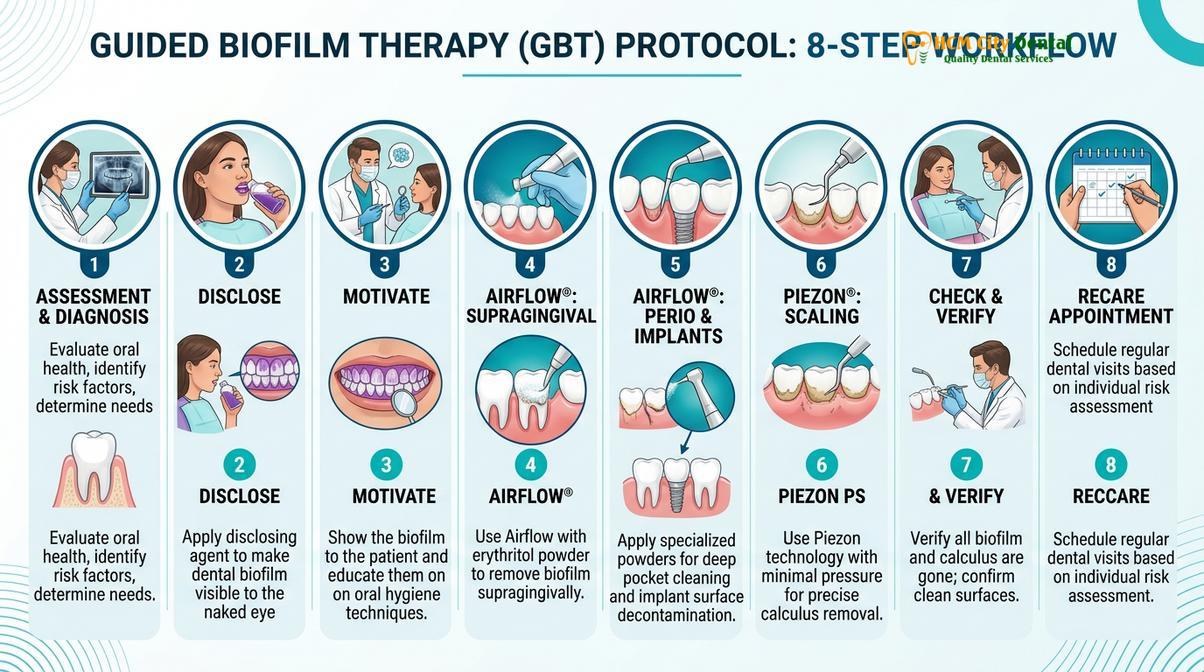
The GBT workflow follows a strict 8-step protocol:
- Assess: Comprehensive evaluation of the periodontal tissues and caries risk.
- Disclose: Application of a disclosing dye to make the invisible biofilm visible, guiding the targeted removal.
- Motivate: Patient education based on the disclosed biofilm patterns.
- Airflow: Removal of supragingival and subgingival biofilm using warm water and erythritol powder.
- Perioflow: Deep pocket biofilm removal for periodontal maintenance.
- Piezon: Targeted, minimally invasive removal of remaining hard calculus using a piezoelectric scaler.
- Check: Final clinical inspection to ensure all deposits are cleared.
- Recall: Scheduling the next maintenance visit based on individual risk assessment.
Following the mechanical removal of biofilm and calculus, the application of a professional fluoride varnish is a critical step in managing post-operative sensitivity. The relationship between fluoride varnish tooth sensitivity relief and enamel remineralization is well-documented. When a high-concentration fluoride varnish (typically 5% sodium fluoride) is painted onto the dried teeth, it reacts with the calcium and phosphate ions in the saliva to form fluorapatite. Fluorapatite is significantly more resistant to acid dissolution than natural hydroxyapatite.
More importantly for sensitivity relief, the fluoride varnish physically occludes the open dentinal tubules. It creates a durable, protective barrier that prevents fluid movement within the tubules, thereby neutralizing the hydrodynamic pain response. This professional application provides immediate relief that continues to strengthen the tooth structure over the following weeks.
Clinical Workflows and Pricing at HCMC Dental Clinic
Advanced dental cleanings are customized based on periodontal health, utilizing specific technologies ranging from standard ultrasonic scaling to comprehensive full mouth debridement.
Understanding the scope of professional dental cleanings helps patients make informed decisions regarding their oral healthcare investments. At HCMC Dental Clinic, the clinical approach is never one-size-fits-all. The selection of instruments, the duration of the appointment, and the specific protocols utilized are dictated by a thorough periodontal assessment, including pocket depth probing and radiographic evaluation.
Dr. Nguyen Van Cuong emphasizes that verifying the appropriate protocol—whether it be a standard prophylaxis or the comprehensive GBT workflow—is essential for achieving optimal clinical outcomes while ensuring patient comfort. The clinic maintains a transparent pricing structure that reflects the complexity of the required intervention and the advanced technology utilized.
Below is the current clinical fee schedule for periodontal maintenance and scaling procedures:
| Clinical Procedure | Description & Technology Used | Estimated Cost (VND) |
|---|---|---|
| Standard Ultrasonic Scaling & Polishing | Routine removal of supragingival calculus and plaque using Piezoelectric/Magnetostrictive scalers, followed by prophy paste polishing. | 500,000 – 800,000 (Walk-in: 800,000 – 1,300,000) |
| Airflow Prophylaxis / Guided Biofilm Therapy (GBT) | Premium Swiss EMS protocol using warm water and 25μm erythritol powder for painless biofilm and stain eradication. | 1,500,000 – 2,000,000 (Walk-in: 2,500,000 – 3,300,000) |
| Scaling & Root Planing (SRP) | Deep subgingival cleaning per quadrant under local anesthesia to treat active periodontitis and smooth root surfaces. | 1,000,000 – 1,500,000 (Walk-in: 1,600,000 – 2,500,000) |
| Full Mouth Debridement | Extensive removal of heavy, tenacious tartar in cases of severe neglect, often requiring multiple sessions. | 2,000,000 – 3,000,000 (Walk-in: 3,300,000 – 5,000,000) |
Note: Patients booking their appointments in advance via WhatsApp are eligible for a -40% discount on the standard walk-in rates, making advanced periodontal care highly accessible.
When It’s Serious
While mild thermal sensitivity and slight gingival tenderness are expected physiological responses to calculus removal, it is vital to distinguish between normal healing and signs of potential clinical complications. The oral cavity is a complex microbiome, and any invasive procedure carries a minimal, yet present, risk of localized infection or exacerbated pulpal pathology.
Important Clinical Considerations: When to See a Doctor
If you experience any of the following symptoms after a dental cleaning, contact your dental provider immediately for a clinical reassessment:
- Severe, throbbing pain that radiates to the jaw or ear and is not relieved by over-the-counter analgesics.
- Pain or thermal sensitivity that progressively worsens rather than improving after 48 to 72 hours.
- Visible swelling of the gingiva, facial asymmetry, or the presence of purulent exudate (pus) along the gumline.
- Prolonged, spontaneous bleeding that does not stop with gentle pressure.
- Systemic symptoms such as a fever or swollen submandibular lymph nodes.
Prolonged or severe pain may indicate an underlying issue that was previously masked by the heavy calculus deposits. For instance, removing tartar might expose an active carious lesion (cavity) on the root surface, a microscopic crack in the tooth structure, or a failing restorative margin. In these scenarios, the sensitivity is not merely a reaction to the cleaning, but a symptom of structural damage requiring restorative intervention, such as a composite filling or endodontic evaluation.
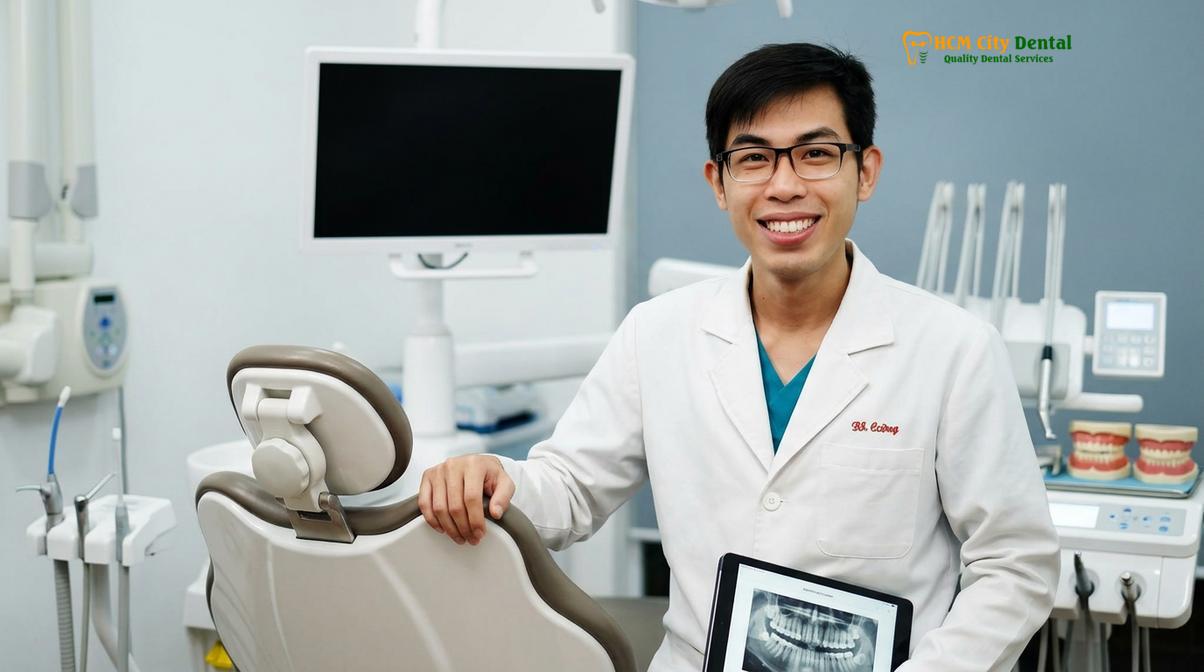
“Post-scaling discomfort should follow a predictable downward trajectory. Any sudden escalation in pain, or the onset of spontaneous throbbing, warrants an immediate clinical reassessment to rule out pulpal involvement or localized acute infection.”
Maintaining regular professional cleaning recall intervals—typically every six months for healthy patients and every three to four months for periodontal patients—is the most effective strategy to prevent heavy calculus accumulation. By addressing biofilm before it calcifies into massive deposits, subsequent cleanings become significantly faster, less invasive, and virtually pain-free[5].
Frequently Asked Questions
Is it normal for teeth to feel sensitive to cold after scaling?
Yes, it is a completely normal physiological response. Removing calculus exposes previously insulated dentinal tubules to temperature changes, causing temporary thermal sensitivity that typically resolves within a few days. The calculus acts as a barrier; once removed, the nerve endings inside the tooth are temporarily more reactive to cold stimuli until the enamel remineralizes.
How long does sensitivity last after a deep cleaning?
Sensitivity after a deep cleaning typically lasts between a few days to a couple of weeks. Because scaling and root planing (SRP) cleans below the gumline, the periodontal tissues require more time to heal and reattach. The root surfaces, which lack protective enamel, are exposed during this process, making them more susceptible to temperature variations until natural tubule occlusion occurs.
What toothpaste helps with post-scaling sensitivity?
Toothpastes containing potassium nitrate or stannous fluoride are highly effective. These active ingredients work by either depolarizing the nerve endings or physically blocking the exposed dentinal tubules to prevent pain signals. For optimal results, patients should use these desensitizing toothpastes twice daily and avoid rinsing vigorously with water immediately after brushing to allow the active ingredients to remain on the teeth.
Can I drink coffee immediately after a dental cleaning?
It is highly recommended to wait at least 24 to 48 hours before consuming hot or acidic beverages. Coffee can exacerbate thermal sensitivity and potentially stain freshly polished enamel before the pellicle layer reforms. If you must consume coffee, drinking it through a straw and at a lukewarm temperature can help minimize direct contact with the sensitive tooth surfaces.
Does Guided Biofilm Therapy reduce tooth sensitivity?
Yes, Guided Biofilm Therapy significantly minimizes sensitivity by utilizing temperature-controlled warm water and ultra-fine erythritol powder. This modern protocol removes biofilm gently without the abrasive scraping associated with traditional hand instruments. The warm water prevents the thermal shock that often triggers nerve pain, making it an ideal solution for patients with a history of dentin hypersensitivity.
References
- Journal of Clinical Periodontology. Hydrodynamic theory and dentin hypersensitivity mechanisms. (2021).
- International Journal of Dental Hygiene. Clinical efficacy of piezoelectric versus magnetostrictive ultrasonic scaling. (2020).
- Journal of Periodontology. Healing dynamics following scaling and root planing for periodontitis. (2019).
- Clinical Oral Investigations. Erythritol air-polishing powder safety and efficacy in periodontal maintenance. (2022).
- Journal of the American Dental Association. Professional cleaning recall intervals and fluoride varnish applications. (2018).