A dental hygiene appointment involves a systematic clinical workflow to eradicate plaque, tartar, and biofilm. The process includes periodontal screening, ultrasonic scaling, airflow polishing, and targeted fluoride application to halt plaque-induced gingivitis, preserve enamel health, and maintain optimal oral hygiene.
Clinical Summary:
Professional dental cleanings extend far beyond simple cosmetic polishing; they are critical medical interventions designed to prevent periodontal disease and systemic health complications. The modern clinical workflow begins with a thorough diagnostic assessment, including periodontal pocket charting and biofilm visualization. Advanced clinics utilize a dual-scaler approach—combining piezoelectric and magnetostrictive technologies—to safely shatter calculus without damaging the underlying tooth structure. Furthermore, the integration of Guided Biofilm Therapy (GBT) using low-abrasive erythritol powder ensures the complete eradication of subgingival biofilm. Regular maintenance not only preserves enamel remineralization but also mitigates the risks associated with chronic oral inflammation.
Key Takeaways:
- Periodontal screening establishes a baseline for gum health by measuring pocket depths and identifying inflammation.
- Dual scaler technology allows clinicians to customize treatment, using piezoelectric scalers for sensitive areas and magnetostrictive scalers for heavy calculus.
- Guided Biofilm Therapy (GBT) utilizes warm water and 25μm erythritol powder for painless, non-abrasive biofilm removal.
- Professional fluoride application promotes enamel remineralization and significantly reduces dentinal hypersensitivity.
- Routine appointments are essential for preventing plaque-induced gingivitis and managing long-term periodontal stability.
Periodontal Screening
Periodontal screening evaluates the health of your gums and supporting bone structure by measuring pocket depths and identifying early signs of inflammation or disease.
The foundation of any comprehensive dental hygiene appointment is a meticulous diagnostic evaluation. Before any physical cleaning begins, the clinician must establish a clear understanding of the patient’s current oral health status. This phase is critical for distinguishing between a healthy periodontium, reversible plaque-induced gingivitis, and irreversible periodontitis. The screening process dictates the specific instruments, power settings, and therapeutic protocols that will be utilized throughout the session.
Comprehensive Oral Examination
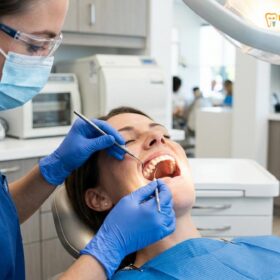
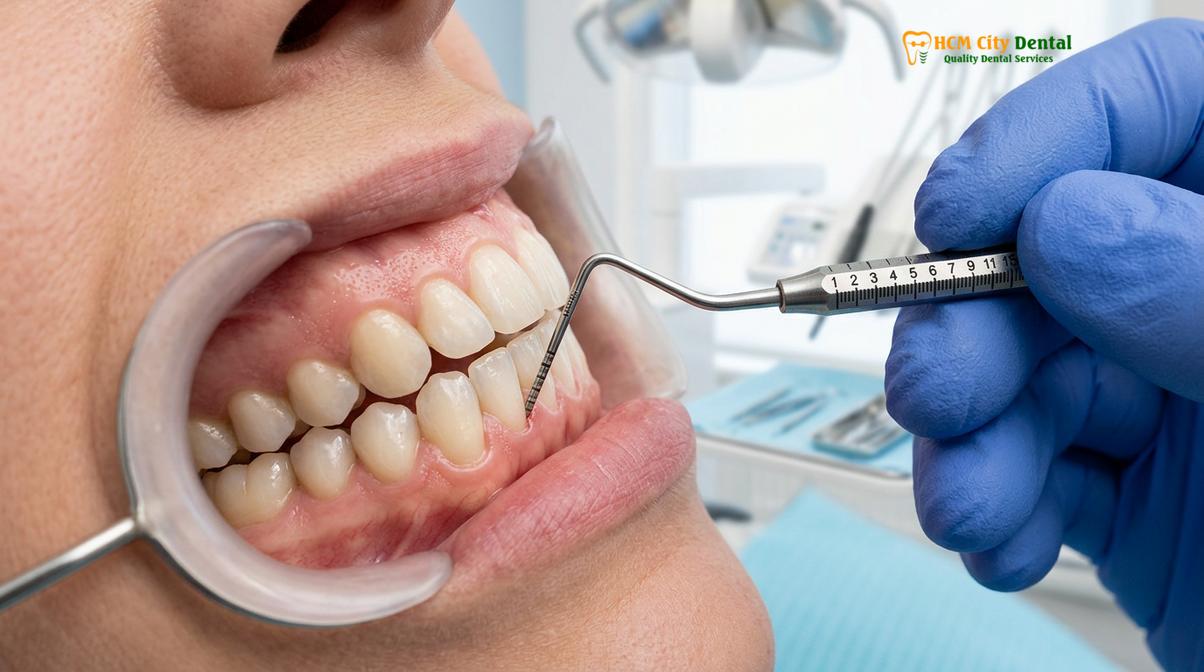
The appointment commences with a visual and tactile examination of the entire oral cavity. The clinician inspects the lips, buccal mucosa, tongue, floor of the mouth, and palate to screen for any oral pathologies, including precancerous lesions or abnormal tissue growths. Following the soft tissue exam, attention shifts to the hard tissues. The hygienist or dentist evaluates the integrity of existing restorations, such as crowns, veneers, and fillings, ensuring there are no marginal discrepancies where bacteria could harbor. They also assess the dentition for signs of primary decay, occlusal wear (bruxism), and structural micro-fractures.
During this phase, patients often present with common concerns such as bleeding gums or persistent bad breath. Bleeding gums are typically the first clinical sign of plaque-induced gingivitis, resulting from the ulceration of the sulcular epithelium due to chronic bacterial irritation. Halitosis, or bad breath, is frequently caused by volatile sulfur compounds (VSCs) produced by anaerobic bacteria thriving in deep periodontal pockets or on the posterior dorsal surface of the tongue. Identifying these symptoms early allows the clinician to tailor the educational and therapeutic components of the visit.
Periodontal Pocket Charting
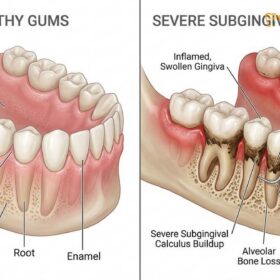
A critical component of the screening is periodontal pocket charting. Using a calibrated periodontal probe, the clinician gently measures the depth of the gingival sulcus—the natural space between the tooth and the surrounding gum tissue. In a healthy state, these pockets typically measure between 1 to 3 millimeters and do not bleed upon gentle probing. Depths of 4 millimeters or greater indicate clinical attachment loss, suggesting that the supportive alveolar bone and periodontal ligaments are degrading due to chronic inflammation.
Dr. Nguyen Van Cuong emphasizes that precise periodontal pocket charting is non-negotiable for accurate diagnosis. By recording these metrics at every visit, the clinical team can track disease progression or therapeutic success over time. If deep pockets are identified, the standard prophylaxis may be upgraded to a more intensive Scaling and Root Planing (SRP) procedure to address the subgingival infection adequately.
Plaque Detection (Intraoral Cameras)
High-definition intraoral cameras and disclosing agents are utilized to visually map out hidden plaque and biofilm before physical removal begins.
Understanding the difference between plaque and tartar is fundamental to the teeth cleaning process step by step. Plaque is a soft, sticky, colorless biofilm composed of salivary proteins and colonizing bacteria. If plaque is not mechanically disrupted through daily brushing and flossing within 48 to 72 hours, it absorbs calcium and phosphate ions from the saliva, mineralizing into a hard substance known as calculus (tartar). Once calculus forms, it cannot be removed by a standard toothbrush and requires professional intervention.
Visualizing Biofilm
To ensure no biofilm is left behind, modern clinics employ advanced visualization techniques. One highly effective method is the use of disclosing solutions or pellets. These harmless, food-grade dyes selectively bind to the bacterial biofilm, turning invisible plaque into a highly visible color (often pink for fresh plaque and blue/purple for mature plaque). This step is particularly crucial in the Guided Biofilm Therapy (GBT) protocol, as it provides a clear visual map for the clinician to target during the cleaning phase.
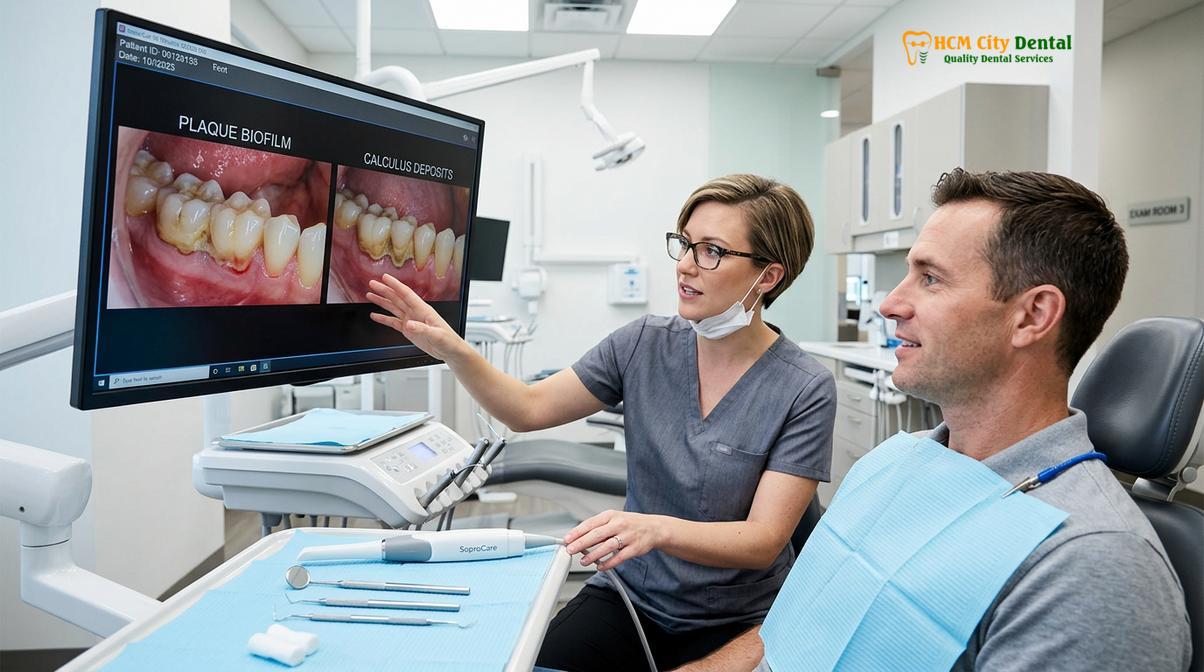
In addition to disclosing agents, high-definition intraoral cameras are frequently used. These pen-sized wands capture magnified, real-time images of the teeth and gums, displaying them on a monitor. This technology allows the clinician to inspect hard-to-reach areas, such as the distal surfaces of the third molars or the lingual surfaces of the lower incisors, where calculus accumulation is most prevalent due to the proximity of the submandibular salivary glands.
Patient Education and Baseline Metrics
The use of intraoral cameras and disclosing agents serves a dual purpose: clinical accuracy and patient education. By showing patients exactly where biofilm is accumulating, the clinician can provide highly personalized oral hygiene instruction. For instance, if heavy plaque is detected along the gingival margin, the hygienist may demonstrate the Modified Bass brushing technique, which involves angling the toothbrush bristles at 45 degrees to gently sweep beneath the gumline.
“Visualizing the enemy is the first step in eradicating it. When patients see the biofilm illuminated on a screen, it transforms their understanding of daily oral hygiene from a chore into a targeted medical necessity.”
Furthermore, discussing teeth staining habits is an integral part of this educational phase. Extrinsic stains caused by chromogenic foods and beverages—such as coffee, tea, red wine, and tobacco—readily bind to the acquired pellicle and mature plaque. By identifying these dietary patterns, the clinician can recommend specific lifestyle modifications or specialized home-care products to minimize future discoloration.
Scaling
Scaling utilizes advanced ultrasonic vibrations to safely shatter and flush away hardened calculus from both above and below the gumline without damaging the tooth structure.
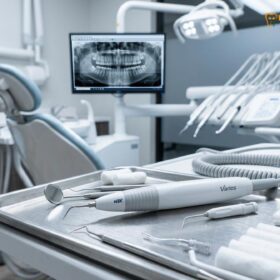
Once the diagnostic and visualization phases are complete, the physical removal of calculus begins. This step, known as scaling, is the core of the professional dental prophylaxis. Historically, scaling was performed entirely with manual hand instruments (curettes and scalers), which could be time-consuming and sometimes uncomfortable. Today, the gold standard involves the use of ultrasonic technology, which significantly enhances efficiency, patient comfort, and clinical outcomes [1].
The Dual Scaler Advantage (Piezoelectric vs. Magnetostrictive)
At premier facilities like HCMC Dental Clinic, the clinical team employs a “Dual Scaler Advantage,” utilizing both Piezoelectric and Magnetostrictive ultrasonic scalers to customize treatments based on the patient’s specific anatomical and periodontal needs.
- Piezoelectric Scalers (e.g., Acteon/Satelec): These devices utilize ceramic crystals that expand and contract when electrical energy is applied, producing a linear, back-and-forth motion at the tip. Operating at frequencies up to 32 kHz, piezoelectric scalers generate significantly less heat and require less water for cooling. The linear motion is exceptionally gentle, making it the preferred choice for patients with sensitive teeth, children, and individuals with orthodontic brackets or delicate restorative work.
- Magnetostrictive Scalers (e.g., Dentsply Cavitron): These units operate via a stack of metal strips that expand and contract in a magnetic field, creating an elliptical (figure-eight) motion at the tip. This means all sides of the tip are active and vibrating. Magnetostrictive scalers are highly efficient at breaking down heavy, tenacious calculus bridges, performing deep subgingival tartar removal, and executing full mouth debridement in cases of severe neglect.
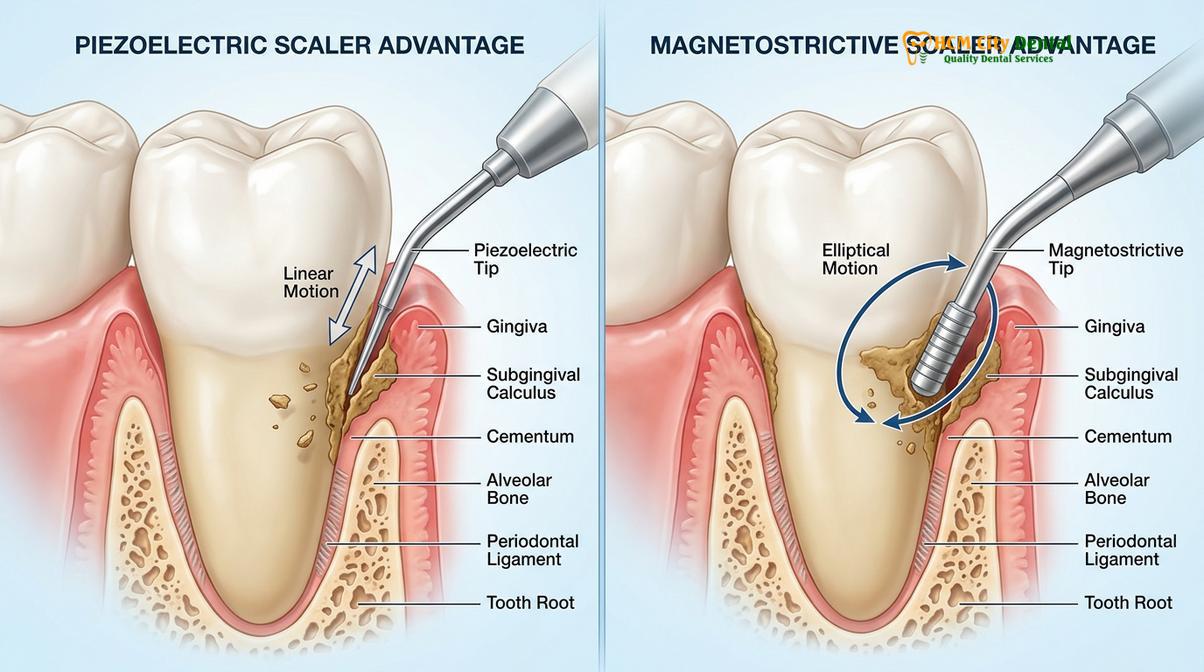
Dr. Cuong notes that the precise selection of ultrasonic power levels and tip designs is crucial for maximizing efficacy while ensuring enamel preservation safety. By seamlessly switching between these two technologies, the clinician can provide a highly tailored, comfortable experience.
Clinical Precaution: While modern ultrasonic scalers are exceptionally safe, patients with certain older, unshielded cardiac pacemakers may require the use of piezoelectric scalers or manual hand instruments exclusively, as the magnetic fields generated by magnetostrictive devices could theoretically cause electromagnetic interference. Always disclose your complete medical history prior to treatment.
Subgingival Calculus Removal
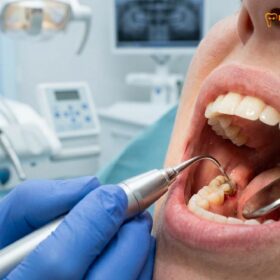
The primary mechanism of action for ultrasonic scalers is not just the physical chipping of calculus, but the physical phenomena of cavitation and acoustic microstreaming. As the tip vibrates at high frequencies, it creates millions of microscopic vacuum bubbles in the cooling water stream. When these bubbles collapse (cavitation effect), they release shockwaves that tear apart the bacterial cell walls of the biofilm [2]. Simultaneously, the acoustic microstreaming creates a powerful fluid vortex that flushes the disrupted bacteria, endotoxins, and debris out of the periodontal pocket.
This subgingival calculus removal is critical for halting the progression of periodontal disease. By thoroughly debriding the root surfaces, the clinician creates a biologically acceptable environment that allows the inflamed gingival tissues to heal and reattach to the tooth structure.
Airflow Polishing
Airflow polishing employs a pressurized stream of warm water and ultra-fine powder to gently eradicate residual biofilm and surface stains across all dental surfaces.
Following the removal of hard calculus, the next phase targets the soft biofilm and extrinsic stains. Traditional polishing involves a rubber cup and gritty prophylaxis paste, which can be abrasive to the enamel if used excessively and often fails to reach deep into the interproximal spaces (between the teeth). The modern alternative is Airflow Polishing, a highly advanced kinetic energy technology.
Guided Biofilm Therapy (GBT) Protocol
We feature the premium Swiss EMS Guided Biofilm Therapy (GBT) protocol, a paradigm shift in professional oral care. GBT is a systematic, evidence-based approach that prioritizes patient comfort and tissue preservation. The protocol utilizes a precisely calibrated mixture of warm water, compressed air, and specialized powder to gently wash away biofilm, early calculus, and stains.
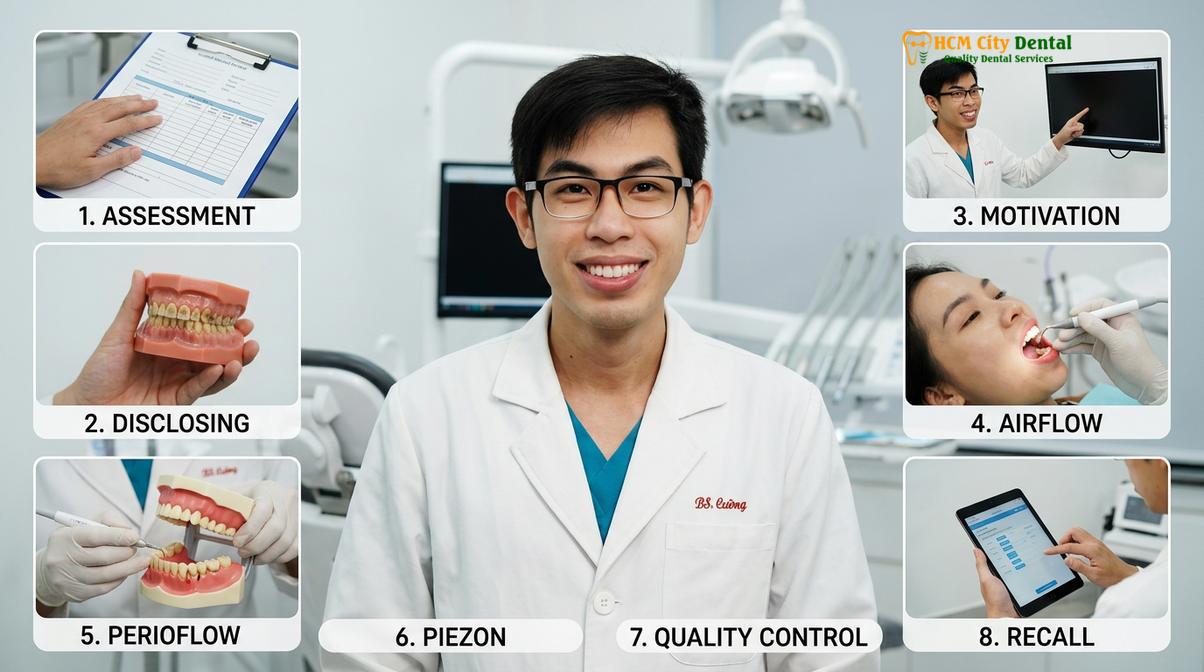
The GBT 8-step protocol includes:
- Assess: Comprehensive evaluation of the oral cavity.
- Disclose: Applying dye to make biofilm visible.
- Motivate: Patient education based on disclosed areas.
- Airflow: Removing supra- and subgingival biofilm (up to 4mm) using erythritol powder.
- Perioflow: Deep pocket biofilm removal (up to 9mm) using specialized flexible nozzles.
- Piezon: Targeted removal of remaining hard calculus using piezoelectric technology.
- Check: Final quality control to ensure all deposits are removed and diagnosing any hidden cavities.
- Recall: Scheduling the next appropriate maintenance visit.
Erythritol Powder and Enamel Preservation
The cornerstone of the GBT protocol is the use of low-abrasive erythritol powder. With a microscopic grain size of just 14 to 25μm, erythritol is significantly finer and softer than traditional sodium bicarbonate powders. This ultra-fine consistency allows it to remove biofilm and stains painlessly and safely without scratching natural tooth enamel, exposed dentin, titanium implants, porcelain crowns, or delicate composite veneers [3].
“The integration of erythritol-based air polishing has revolutionized periodontal maintenance. It allows us to achieve absolute biofilm eradication in the deepest pockets while maintaining the pristine integrity of the tooth surface.”
Furthermore, the use of warm water (typically heated to exactly 40°C) eliminates the sharp, shocking sensation often associated with cold water sprays, making the procedure exceptionally comfortable even for patients with severe dentinal hypersensitivity.
Clinical Case Review: A 45-year-old patient visited HCMC Dental Clinic in Ho Chi Minh City presenting with heavy extrinsic staining from decades of coffee consumption and moderate subgingival calculus. Traditional scaling had previously caused them severe anxiety due to sensitivity. By implementing the Swiss EMS GBT protocol with warm water and erythritol powder, the clinical team successfully eradicated all biofilm and stains with zero reported discomfort, restoring the natural brightness of the enamel in a single session.
Professional Flossing & Fluoride
The final phase involves meticulous interdental flossing and the application of concentrated fluoride varnish to remineralize enamel and protect against future decay.
Even with the advanced reach of airflow technology, the physical act of passing dental floss or interdental brushes between the teeth remains a vital step in the teeth cleaning process step by step. This ensures that any residual powder, dislodged calculus fragments, or stubborn interproximal plaque is completely cleared from the contact points.
Interdental Cleaning
During this stage, the hygienist will carefully navigate the interdental spaces, checking for any rough margins on existing fillings that might be catching food or fraying the floss. This tactile feedback is essential for identifying micro-cavities or failing restorations that may not be immediately visible on x-rays. The clinician will also use this opportunity to demonstrate proper flossing techniques, emphasizing the “C-shape” method to hug the curve of the tooth and clean beneath the papilla without snapping the floss into the delicate gum tissue.
Enamel Remineralization with Fluoride Varnish
The culmination of the hygiene appointment is often the application of a professional-grade fluoride treatment. After scaling and polishing, the microscopic pores of the enamel are clean and highly receptive. Applying a fluoride varnish at this exact moment maximizes its therapeutic benefits [4].
Fluoride works by interacting with the hydroxyapatite crystals in the tooth enamel, replacing the hydroxyl ion to form fluorapatite. Fluorapatite is significantly more resistant to the acidic byproducts produced by cariogenic bacteria, thereby lowering the risk of future tooth decay. Additionally, fluoride varnish acts as a powerful desensitizing agent. It physically occludes (blocks) the microscopic dentinal tubules that may have been exposed during the removal of heavy calculus, providing immediate relief from post-procedural temperature sensitivity.
The varnish is painted onto the teeth using a small brush and sets rapidly upon contact with saliva. Patients are typically advised to avoid eating hot foods, drinking alcohol, or brushing their teeth for at least 4 to 6 hours to allow the fluoride to fully integrate into the enamel matrix.
Comprehensive Pricing Structure at HCMC Dental Clinic
Transparent pricing ensures patients understand the investment required for various levels of professional dental prophylaxis and deep cleaning therapies.
Understanding the financial aspect of your oral healthcare is just as important as understanding the clinical procedures. At HCMC Dental Clinic, we maintain a transparent pricing structure based on the complexity of the treatment and the technologies utilized. According to the latest clinic fee schedule, patients can choose from several tiers of hygiene services tailored to their specific periodontal needs.
| Treatment Type | Clinical Indication | Estimated Cost (VND) | Walk-in Price (VND) |
|---|---|---|---|
| Standard Ultrasonic Scaling & Polishing | Routine maintenance, mild plaque, healthy gums. | 500,000 – 800,000 | 800,000 – 1,300,000 |
| Airflow Prophylaxis / GBT | Heavy staining, orthodontic patients, implant maintenance. | 1,500,000 – 2,000,000 | 2,500,000 – 3,300,000 |
| Scaling & Root Planing (SRP) | Deep cleaning per quadrant for active periodontitis. | 1,000,000 – 1,500,000 | 1,600,000 – 2,500,000 |
| Full Mouth Debridement | Heavy tartar removal, severe neglect, pre-surgical prep. | 2,000,000 – 3,000,000 | 3,300,000 – 5,000,000 |
Note: Patients who book their appointments in advance via our official channels can take advantage of a -40% WhatsApp booking discount, making premium periodontal care highly accessible.
When to See a Doctor
While routine dental hygiene appointments are designed to be preventive, certain clinical signs indicate that you should seek immediate evaluation by a dental professional rather than waiting for your next scheduled visit. If you experience spontaneous or severe bleeding from the gums that does not stop after normal brushing, this could be a sign of acute periodontal infection or an underlying systemic issue.
Additionally, if you notice increased tooth mobility, shifting of your teeth, or the sudden appearance of spaces between your teeth, you must be evaluated for advanced periodontitis. Persistent halitosis (bad breath) that does not improve with mouthwash or brushing, a constant metallic taste in the mouth, or localized swelling and pus discharge along the gumline are clear indicators of a periodontal abscess requiring urgent intervention. Do not ignore extreme sensitivity to hot or cold that lingers for minutes after the stimulus is removed, as this may indicate deep decay or nerve involvement that a standard cleaning cannot resolve. Always consult with a qualified dentist to receive an accurate diagnosis and a personalized treatment plan.
To explore more about our comprehensive approach to oral health, visit our General & Preventive Dentistry hub, or learn more about the specific benefits of professional dental prophylaxis.
Frequently Asked Questions
What is the first step of a dental cleaning?
The first step of a dental cleaning is a comprehensive periodontal screening and oral examination. During this phase, the clinician evaluates the health of your gums, checks for signs of plaque-induced gingivitis, measures pocket depths, and identifies any areas of concern before initiating the physical removal of biofilm and calculus. This diagnostic baseline is crucial for determining the appropriate ultrasonic power settings and treatment protocols required for your specific oral anatomy.
How does a hygienist check for gum disease?
A hygienist checks for gum disease by performing periodontal pocket charting using a calibrated dental probe. They gently measure the space between the tooth and the surrounding gum tissue; depths exceeding 3 millimeters, combined with bleeding on probing, typically indicate active periodontal inflammation or early stages of gum disease. Radiographs (X-rays) may also be reviewed to assess the underlying alveolar bone levels and detect any hidden subgingival calculus.
Is fluoride treatment necessary at every cleaning?
Fluoride treatment is not strictly mandatory at every cleaning, but it is highly recommended for patients at moderate to high risk of dental caries. The application of fluoride varnish helps facilitate enamel remineralization, neutralizes acidic bacterial byproducts, and significantly reduces post-scaling dentinal hypersensitivity. It is especially beneficial for children, elderly patients with receding gums, and individuals undergoing orthodontic treatment.
Does the teeth cleaning process step by step cause pain?
The modern teeth cleaning process is generally painless, especially when utilizing advanced technologies like piezoelectric scalers and warm-water airflow polishing. Patients with severe gingival inflammation or extreme dentinal hypersensitivity may experience mild discomfort, which can be easily managed with topical numbing gels or local anesthesia. The use of Guided Biofilm Therapy (GBT) further enhances comfort by minimizing the need for abrasive scraping.
How often should I schedule an oral hygiene visit saigon?
For most individuals with healthy gums, scheduling an oral hygiene visit twice a year is sufficient to maintain optimal oral health. However, patients with a history of periodontitis, heavy calculus accumulation, or orthodontic appliances may require periodontal maintenance visits every three to four months. Your dentist will recommend a personalized recall schedule based on your specific clinical metrics and home-care efficacy [5].
References
- Journal of Clinical Periodontology. Guided Biofilm Therapy clinical efficacy and patient comfort. (2021).
- International Journal of Dental Hygiene. Ultrasonic scaling vs hand scaling in periodontal maintenance. (2020).
- Journal of Periodontology. Scaling and root planing protocols for chronic periodontitis management. (2019).
- Clinical Oral Investigations. Erythritol air-polishing powder safety on dental enamel and restorations. (2022).
- Journal of the American Dental Association. Evidence-based clinical recommendations for professional cleaning recall intervals. (2018).