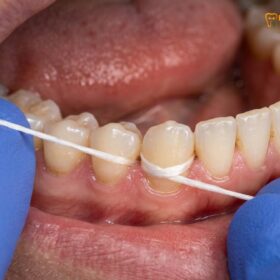
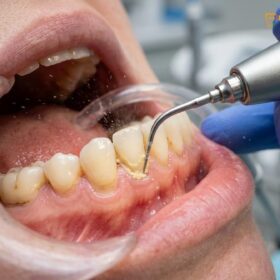
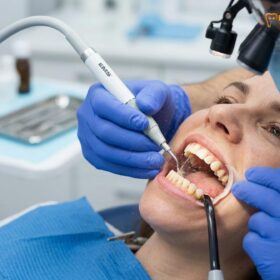
A full mouth debridement (FMD) is a comprehensive clinical procedure designed to remove heavy tartar and plaque buildup that obstructs a standard dental examination. It is typically required when extensive calculus prevents the accurate assessment of periodontal pocket depth and enamel health.
Clinical Summary:
Full mouth debridement is a critical preliminary intervention for patients presenting with massive calculus accumulation, often following years without professional dental care. The procedure utilizes advanced dual scaler technology—combining the heavy-duty elliptical motion of magnetostrictive scalers with the gentle, linear precision of piezoelectric devices—to safely fracture and remove calcified deposits. Modern workflows frequently integrate the Swiss EMS Guided Biofilm Therapy (GBT) protocol, employing warm water and low-abrasive erythritol powder (25μm) to eradicate subgingival biofilm without damaging enamel or restorative materials. By clearing these visual and physical barriers, clinicians can accurately diagnose underlying periodontal conditions, measure pocket depths, and establish a personalized roadmap for periodontal maintenance and enamel remineralization.
Key Takeaways:
- FMD is essential when heavy calculus prevents a comprehensive oral examination and accurate periodontal probing.
- Dual scaler technology allows clinicians to customize ultrasonic power, ensuring efficient tartar removal while preserving enamel.
- Guided Biofilm Therapy (GBT) offers a virtually painless method to remove biofilm and stains using ultra-fine erythritol powder.
- The procedure may be completed in a single extended session or divided into multiple visits depending on tissue inflammation.
- Post-debridement care focuses on reducing gingival inflammation and utilizing fluoride varnish for enamel remineralization.
What is FMD?
Full mouth debridement is a preliminary therapeutic intervention that eradicates massive calculus deposits, allowing clinicians to properly diagnose underlying periodontal conditions.
When oral hygiene is neglected over an extended period, the soft, sticky bacterial biofilm known as plaque begins to mineralize. Through a biochemical process involving calcium and phosphate ions from saliva, this plaque hardens into calculus, commonly referred to as tartar. Once calculus forms, it bonds tightly to the enamel and cementum surfaces of the teeth, making it impossible to remove with standard at-home brushing or flossing. A full mouth debridement heavy tartar procedure is specifically designed to address this severe accumulation, clearing the biological debris so that a dentist can accurately evaluate the health of the teeth and the surrounding periodontium[1].
The clinical execution of a full mouth debridement relies heavily on advanced ultrasonic technology. At modern practices, clinicians utilize a “Dual Scaler Advantage” to optimize patient comfort and clinical outcomes. This approach involves the strategic use of both Magnetostrictive and Piezoelectric ultrasonic scalers, depending on the specific nature of the calculus and the patient’s sensitivity levels.
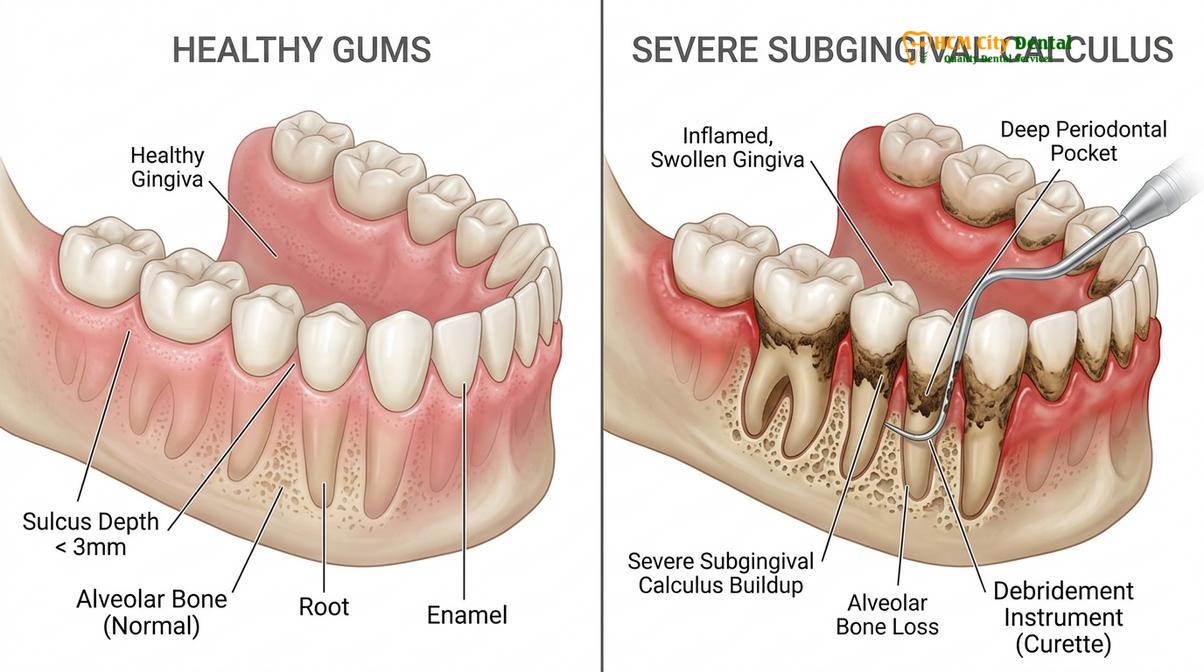
Magnetostrictive scalers, such as the Dentsply Cavitron, operate by generating an elliptical motion at the tip, vibrating all sides of the instrument simultaneously. This multidirectional energy is highly effective for fracturing and dislodging dense, heavy calculus and deep subgingival tartar. The robust cavitation effect produced by these scalers creates microscopic bubbles in the water coolant that implode, disrupting bacterial cell walls and flushing debris from periodontal pockets.
Conversely, Piezoelectric scalers, such as the Acteon/Satelec systems, utilize a linear, back-and-forth motion, operating at frequencies up to 32 kHz. Because only the lateral sides of the tip are active, piezoelectric scaling generates significantly less heat and is generally perceived as gentler by the patient. This technology is preferred for sensitive teeth, pediatric patients, and individuals undergoing orthodontic treatment, as it allows for meticulous debridement with minimal tissue trauma[2].
“The integration of dual scaler technology allows us to approach extreme tartar buildup removal with surgical precision. By selecting the appropriate ultrasonic frequency and tip motion, we can efficiently clear massive calculus deposits while strictly preserving the integrity of the underlying enamel and root surfaces.”
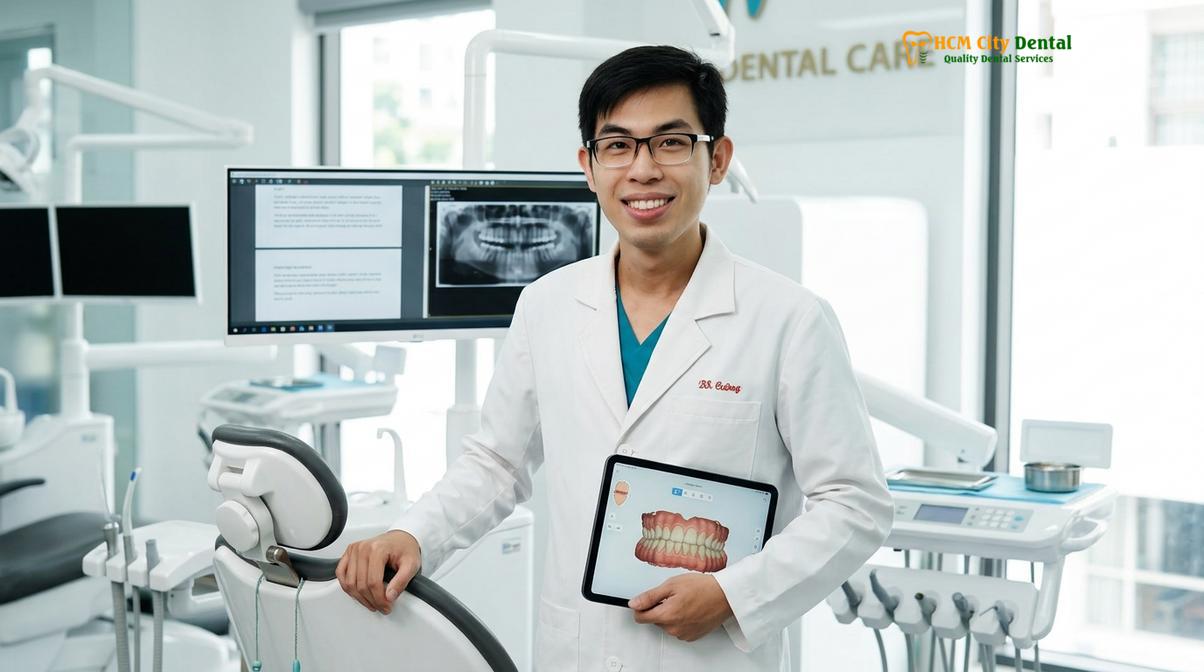
— Dr. Nguyen Van Cuong, Clinical Director
Clinical Indicators (2+ Years No Dentist)
Patients returning for a dental visit after a long absence often present with severe gingival inflammation and hardened calculus that require immediate professional debridement.
It is not uncommon for individuals to delay dental care due to anxiety, financial constraints, or competing life responsibilities. When a patient schedules a first dental visit years after their last appointment, the clinical presentation is often characterized by generalized, heavy calculus bridging across multiple teeth. This extreme tartar buildup removal is not merely a cosmetic necessity; it is a critical medical intervention to halt the progression of periodontal disease.
The primary clinical indicator for a full mouth debridement is the inability of the dentist to perform a comprehensive oral evaluation. When calculus covers the cervical margins of the teeth and extends subgingivally, it physically blocks the periodontal probe. Without accurate probing depths, a clinician cannot determine the extent of bone loss or diagnose the severity of periodontitis. Furthermore, heavy tartar obscures the enamel, hiding potential carious lesions (cavities) that require restorative treatment.
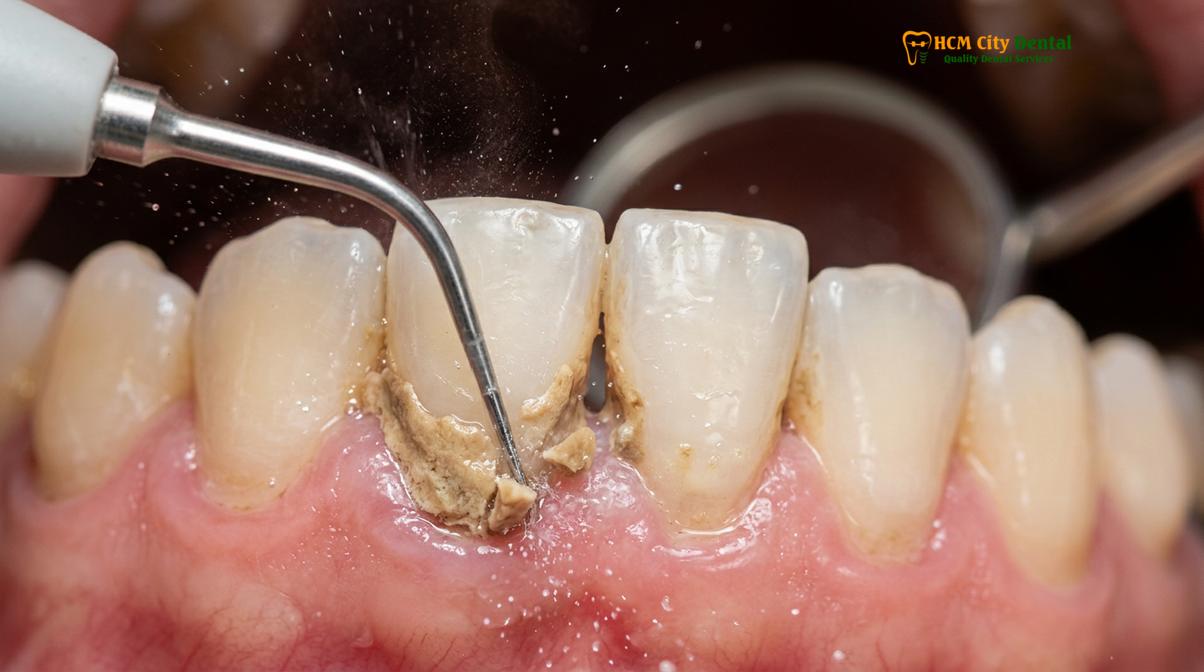
Patients requiring this level of intervention frequently exhibit symptoms of severe plaque-induced gingivitis. These symptoms include erythematous (red), edematous (swollen) gingival tissues that bleed easily upon provocation, a condition clinically documented as Bleeding on Probing (BOP). Additionally, the porous nature of calculus provides an ideal breeding ground for anaerobic bacteria, leading to chronic halitosis (bad breath) and a persistent bad taste in the mouth. Addressing these symptoms through a comprehensive dental cleaning protocol is the first step toward restoring oral homeostasis.
FMD vs. Deep Cleaning
While FMD clears generalized heavy buildup to enable a proper exam, deep cleaning specifically targets active periodontal disease beneath the gumline.
A common point of confusion among patients is the distinction between a full mouth debridement and a deep cleaning, clinically known as Scaling and Root Planing (SRP). While both procedures utilize similar ultrasonic and hand instrumentation, their clinical objectives, scope, and timing within a treatment plan differ significantly.
Full mouth debridement is considered a preliminary procedure. Its sole purpose is the gross removal of plaque and calculus that is interfering with the dentist’s ability to see the teeth and measure the gums. It is a generalized procedure applied to the entire mouth to establish a baseline for diagnosis. Once the debridement is complete and the gingival inflammation has had time to subside (usually 2 to 4 weeks), the patient returns for a comprehensive evaluation.
If the subsequent evaluation reveals periodontal pockets deeper than 4 millimeters, accompanied by bone loss and active infection, Scaling and Root Planing is prescribed. SRP is a definitive, therapeutic procedure targeting specific quadrants of the mouth. It involves meticulous subgingival calculus removal and the smoothing (planing) of the root cementum to remove bacterial toxins and promote the reattachment of the gingival tissues to the tooth structure[3].
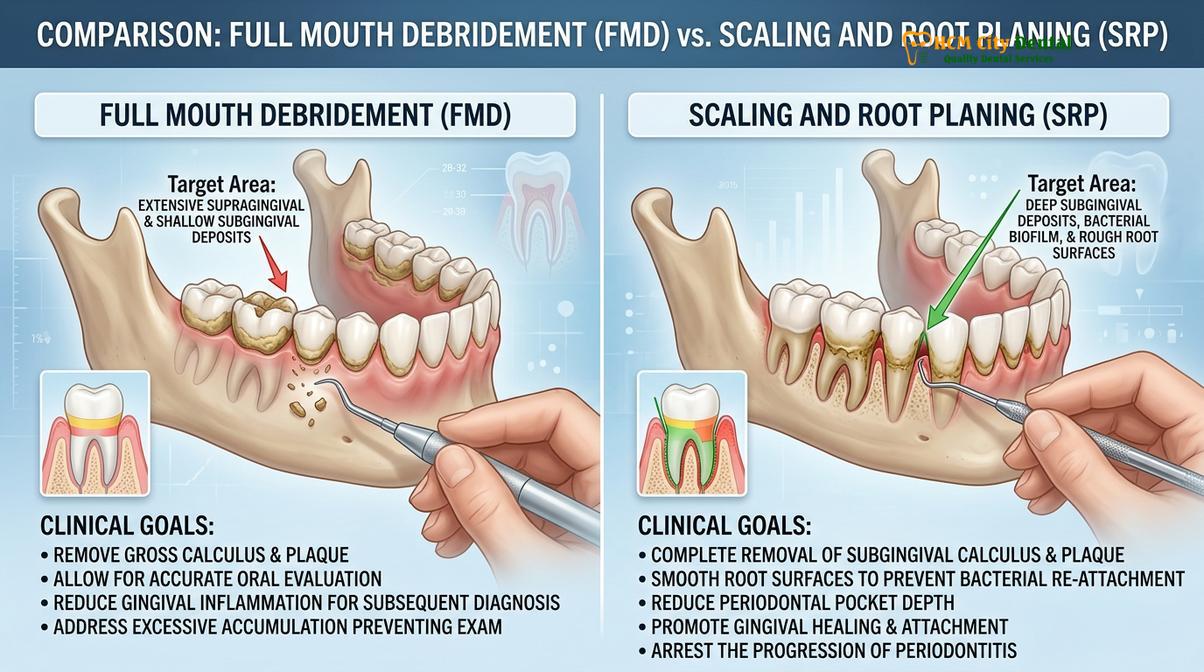
To clarify the distinctions, the following table outlines the primary differences between the two procedures:
| Clinical Parameter | Full Mouth Debridement (FMD) | Scaling and Root Planing (SRP) |
|---|---|---|
| Primary Objective | Gross removal of heavy calculus to enable diagnosis. | Therapeutic treatment of active periodontal disease. |
| Target Area | Generalized; entire mouth, primarily supragingival and shallow subgingival. | Localized by quadrant; deep subgingival pockets and root surfaces. |
| Timing | Preliminary step before a comprehensive exam. | Definitive treatment following a periodontal diagnosis. |
| Anesthesia | Often performed with topical or mild local anesthesia. | Requires profound local anesthesia (numbing injections). |
| Root Planing | No intentional smoothing of the root surface. | Meticulous smoothing of cementum to promote reattachment. |
Single vs. Multiple Sessions
Depending on the severity of the calculus and tissue inflammation, debridement may be completed in a single extended visit or divided into multiple appointments for optimal healing.
The decision to perform a heavy calculus debridement in a single session versus multiple sessions depends on several clinical factors, including the volume and tenacity of the calculus, the patient’s tolerance for the procedure, and the degree of gingival hemorrhage (bleeding). In cases of moderate buildup, a single, extended appointment of 60 to 90 minutes may be sufficient to clear the debris.
However, when a patient presents for a dental visit after long absence with extreme, rock-hard calculus, attempting to remove everything in one sitting can be counterproductive. The extensive use of ultrasonic scalers can cause temporary tissue trauma, and profound bleeding can obscure the clinician’s visual field, making it difficult to ensure all subgingival deposits have been removed. In these scenarios, the procedure is often split into two sessions spaced a few days apart. The first session focuses on gross debridement, removing the bulk of the calculus. The second session allows the clinician to perform fine scaling once the initial inflammation has subsided and visibility has improved.
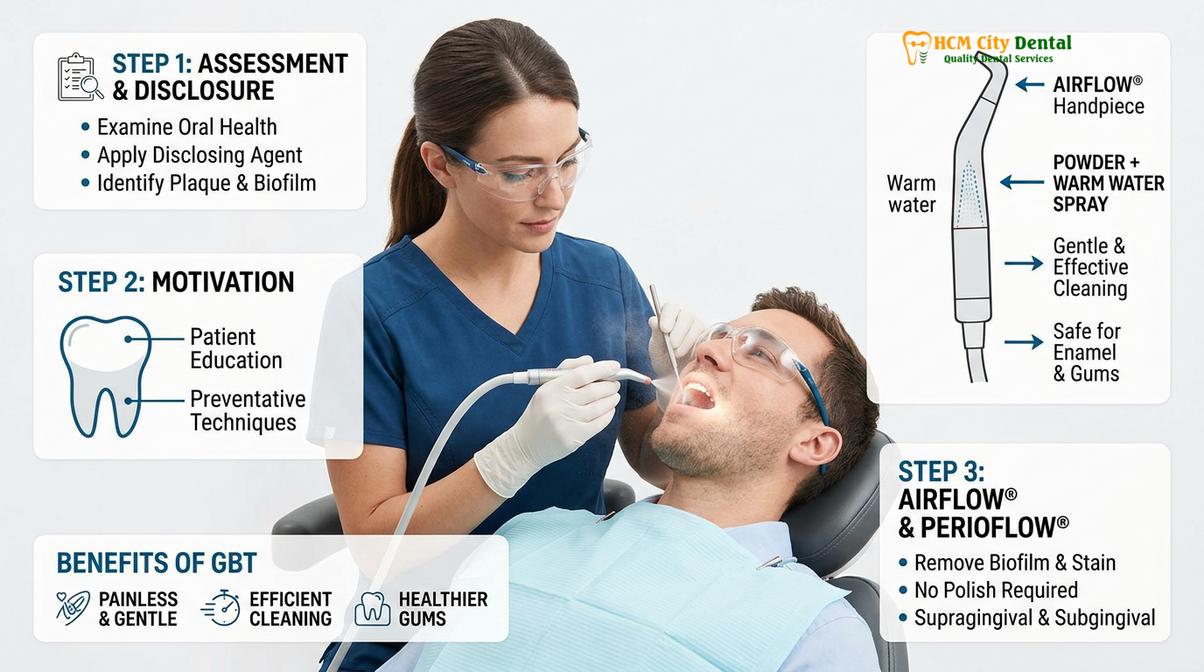
Modern debridement workflows are highly enhanced by the integration of Guided Biofilm Therapy (GBT). Developed by Swiss EMS, the GBT 8-step protocol represents the gold standard in professional prophylaxis. GBT utilizes warm water and low-abrasive erythritol powder, which has a microscopic grain size of just 25μm. This ultra-fine powder is delivered via an Airflow device, creating a kinetic energy spray that safely and painlessly eradicates biofilm, early calculus, and extrinsic stains without scratching natural enamel, titanium implants, crowns, or porcelain veneers[4].
Clinical Case Review: Extreme Tartar Management
A 45-year-old patient visited HCMC Dental Clinic in Ho Chi Minh City after avoiding dental care for over seven years due to severe dental anxiety. Clinical examination revealed massive calculus bridges across the lower anterior teeth, severe gingival erythema, and halitosis. Dr. Nguyen Van Cuong initiated a two-stage full mouth debridement protocol. During the first session, a magnetostrictive scaler was used to fracture the heavy calculus bridges, followed by the application of a soothing antimicrobial rinse. One week later, the patient returned with significantly reduced inflammation. Dr. Cuong then utilized the Swiss EMS GBT protocol with erythritol powder to gently eradicate the remaining subgingival biofilm. The patient reported zero pain during the GBT phase and was successfully transitioned into a regular periodontal maintenance program.
Recovery & Next Steps
Post-debridement recovery focuses on reducing gingival inflammation, implementing periodontal maintenance, and utilizing enamel remineralization therapies to protect exposed tooth surfaces.
Following a full mouth debridement, patients often experience a transition period as their oral tissues heal. It is entirely normal for the gums to feel tender and for the teeth to exhibit mild thermal sensitivity to hot and cold stimuli. This sensitivity occurs because the calculus, which acted as an artificial (albeit highly infected) insulating layer, has been removed, exposing the underlying root surfaces and cervical enamel.
To manage this sensitivity and promote healing, clinicians strongly emphasize enamel remineralization protocols. The application of a professional-grade fluoride varnish immediately following the debridement helps to occlude open dentinal tubules, rapidly reducing sensitivity while strengthening the enamel against bacterial acid attacks. Patients are also advised to use desensitizing toothpastes containing potassium nitrate or stannous fluoride at home, and to rinse with a warm saltwater solution to soothe inflamed gingival tissues.
The most critical “next step” after an FMD is the follow-up comprehensive examination. Typically scheduled 4 to 6 weeks post-debridement, this appointment allows the dentist to accurately probe the periodontal pockets now that the calculus barrier is gone and the tissue swelling has resolved. Based on these precise measurements, the dentist will determine if the patient requires further localized Scaling and Root Planing, or if they can be placed on a standard periodontal maintenance schedule (usually every 3 to 4 months) to prevent the recurrence of heavy buildup[5].
“The success of a full mouth debridement is not measured on the day of the procedure, but in the weeks that follow. Patient compliance with meticulous home care and adherence to customized recall intervals are the true determinants of long-term periodontal stability.”
— Clinical Periodontology Guidelines
Understanding the financial investment in your oral health is important. At HCMC Dental Clinic, we maintain a transparent pricing structure tailored to the specific technology and time required for your care. According to the latest clinic fee schedule, a Standard Ultrasonic Scaling & Polishing ranges from 500,000 to 800,000 VND (~$20 to $32 USD), while walk-in rates are 800,000 to 1,300,000 VND. For patients opting for the premium Airflow Prophylaxis / Guided Biofilm Therapy (GBT), the cost is 1,500,000 to 2,000,000 VND (~$60 to $80 USD), with walk-in rates at 2,500,000 to 3,300,000 VND.
If deep cleaning is required, Scaling & Root Planing (SRP deep cleaning per quadrant) is priced at 1,000,000 to 1,500,000 VND (~$40 to $60 USD), compared to walk-in rates of 1,600,000 to 2,500,000 VND. For cases requiring extensive intervention, a Full Mouth Debridement (Heavy Tartar Removal) ranges from 2,000,000 to 3,000,000 VND (~$80 to $120 USD), with walk-in rates between 3,300,000 and 5,000,000 VND. Patients are encouraged to utilize our -40% WhatsApp booking discount to secure these preferred rates prior to their visit.
When to See a Doctor
Important Clinical Considerations
While mild sensitivity and slight gum bleeding are normal after a heavy debridement, certain symptoms require immediate clinical evaluation. You should contact your dentist promptly if you experience:
- Severe, throbbing pain that is not relieved by over-the-counter analgesics.
- The presence of purulent exudate (pus) draining from the gumline.
- Extreme tooth mobility where a tooth feels as though it may fall out.
- Significant facial swelling or a fever, which may indicate an acute periodontal abscess.
Always seek a personalized clinical examination to differentiate between normal post-operative healing and signs of an active infection.
Frequently Asked Questions
How painful is a full mouth debridement?
A full mouth debridement is generally not painful, as clinicians use topical or local anesthetics to numb the gums before the procedure. While you may feel pressure and vibration from the ultrasonic scaler, the use of advanced piezoelectric technology and warm water systems significantly minimizes discomfort. Post-procedure, mild gum tenderness is common but resolves quickly as the inflammation subsides.
How long does a full mouth debridement take?
A full mouth debridement typically takes between 45 to 90 minutes, depending on the volume and density of the calculus buildup. In cases of extreme tartar accumulation, the procedure may be divided into two separate sessions to ensure thorough removal without causing excessive tissue trauma or patient fatigue. Your clinician will assess the optimal workflow during your initial consultation.
Can I get a dental cleaning in one visit after years?
Yes, you can receive a comprehensive cleaning in one visit after years away, provided the tartar buildup has not caused severe periodontal disease. However, if heavy calculus obscures the teeth, a full mouth debridement is performed first, followed by a secondary evaluation and fine scaling appointment a few weeks later to ensure all subgingival deposits are cleared once the gums have healed.
Will my teeth feel loose after heavy tartar removal?
Your teeth may temporarily feel slightly mobile after heavy tartar removal because the calculus that was artificially binding them together has been cleared. This is a normal part of the healing process. As the gingival inflammation subsides and the gums reattach to the clean root surfaces, tooth stability typically improves. If severe bone loss has occurred, your dentist will discuss splinting or other stabilization options.
Is Guided Biofilm Therapy safe for dental implants and crowns?
Guided Biofilm Therapy (GBT) is exceptionally safe for dental implants, crowns, and veneers. The protocol utilizes a highly specialized, low-abrasive erythritol powder with a microscopic grain size of 25μm. This ensures that biofilm and stains are eradicated effectively without scratching or damaging delicate restorative materials or natural enamel, making it the preferred maintenance therapy for complex dental work.
References
- Journal of Clinical Periodontology. Efficacy of ultrasonic scaling and periodontal debridement. (2021).
- International Journal of Dental Hygiene. Magnetostrictive versus piezoelectric ultrasonic scalers in clinical practice. (2020).
- Journal of Periodontology. Clinical guidelines for scaling and root planing in periodontitis. (2019).
- Clinical Oral Investigations. Safety and efficacy of erythritol air-polishing powder in Guided Biofilm Therapy. (2022).
- Journal of the American Dental Association. Recall intervals and maintenance protocols for periodontal health. (2018).