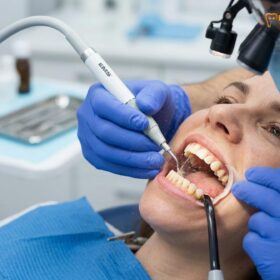
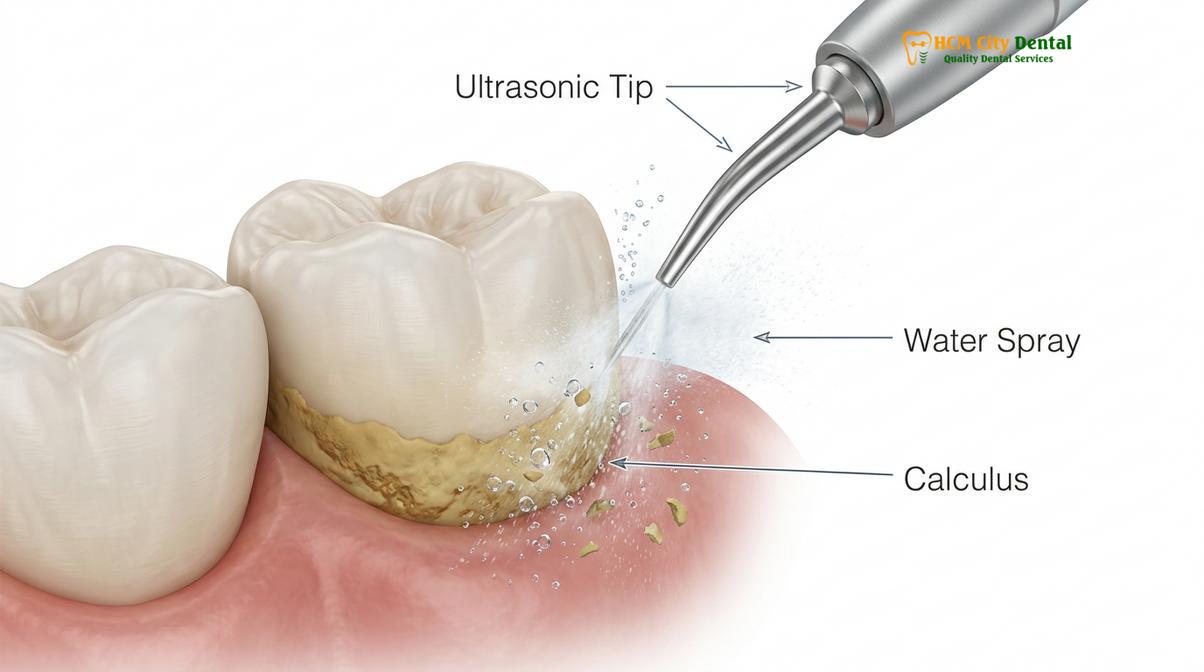
An ultrasonic dental scaler works by converting high-frequency electrical energy into rapid mechanical vibrations to shatter hardened calculus. Simultaneously, a continuous water stream creates a cavitation effect, flushing away subgingival biofilm and bacteria without requiring the heavy scraping forces associated with traditional manual instruments.
Clinical Summary:
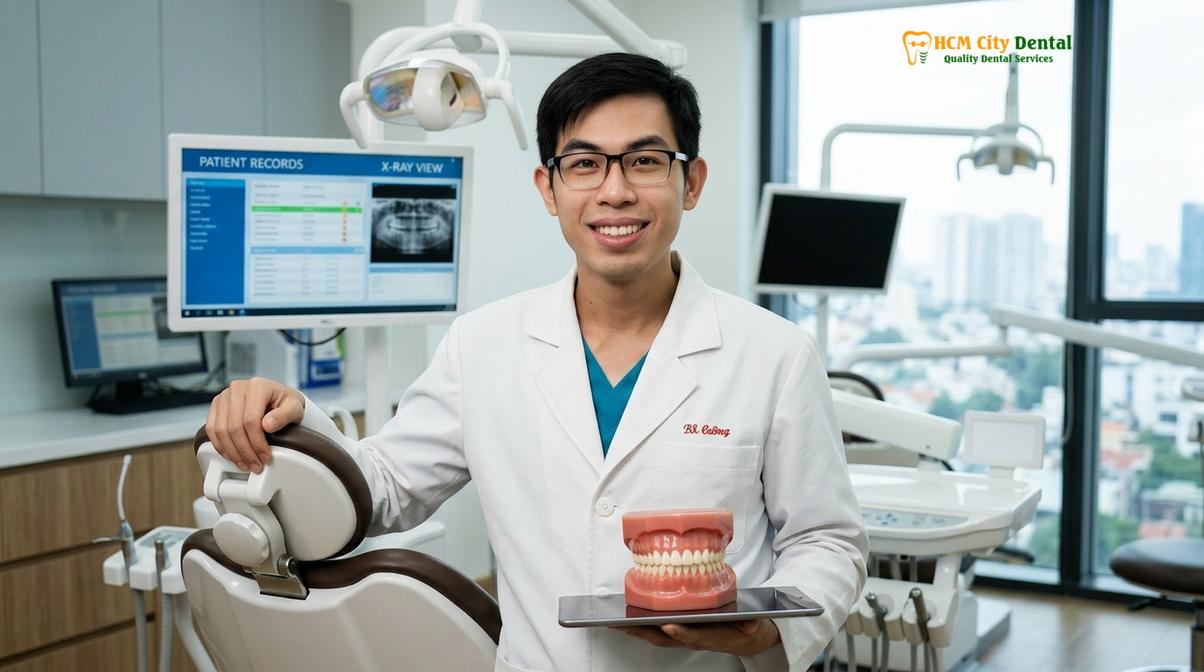
Understanding the mechanics of ultrasonic debridement is essential for patients seeking advanced periodontal care. Modern dentistry has largely transitioned from aggressive manual scraping to sophisticated ultrasonic technology, which utilizes high-frequency sound waves and fluid dynamics to eradicate plaque and tartar. At HCMC Dental Clinic, Dr. Nguyen Van Cuong emphasizes the clinical superiority of the dual scaler advantage, combining both piezoelectric and magnetostrictive technologies to customize treatment based on calculus density and patient sensitivity. Furthermore, the integration of the Swiss EMS Guided Biofilm Therapy (GBT) protocol ensures that biofilm is removed painlessly using warm water and low-abrasive erythritol powder, preserving enamel integrity while achieving unparalleled subgingival disinfection.
Key Takeaways:
- High-Frequency Vibration: Ultrasonic scalers operate between 20,000 and 40,000 Hz to efficiently fracture hardened tartar.
- Cavitation Dynamics: Imploding water bubbles disrupt bacterial cell walls and flush deep periodontal pockets.
- Dual Technology: Piezoelectric scalers offer gentle linear motion, while magnetostrictive scalers provide powerful elliptical motion for heavy buildup.
- Enamel Preservation: When used with proper water flow and angulation, ultrasonic instruments are significantly safer for tooth enamel than manual scraping.
- Advanced Protocols: Guided Biofilm Therapy (GBT) utilizes 25μm erythritol powder for virtually painless, non-abrasive cleaning.
The Physics of Dental Scaling
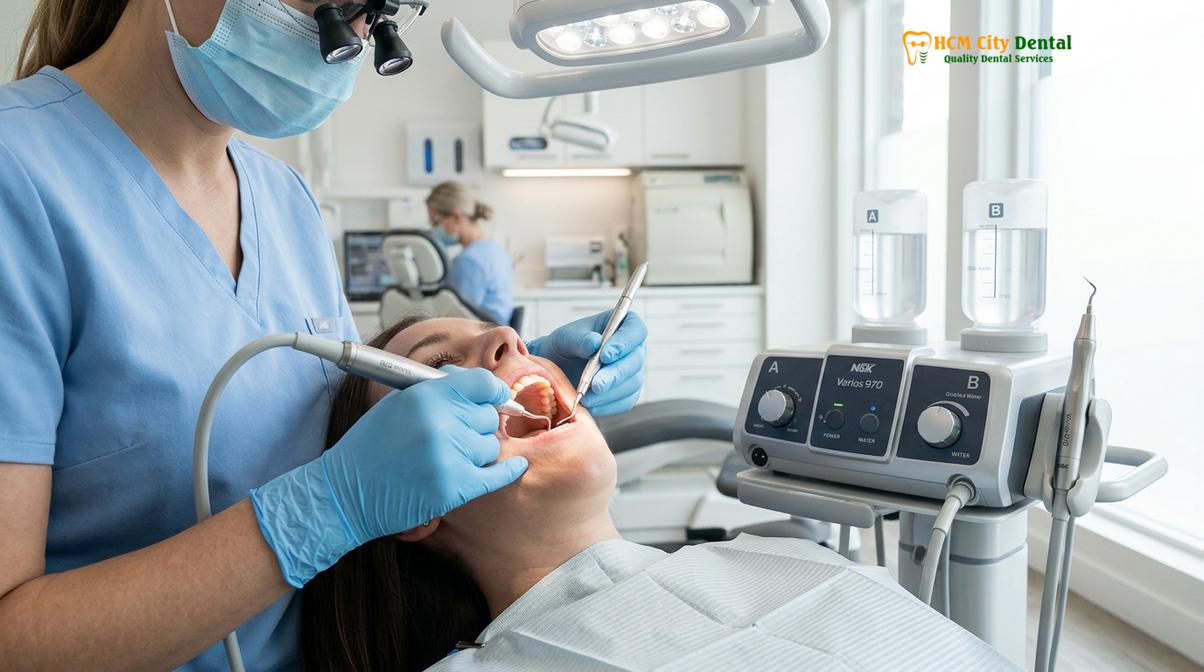
The physics of dental scaling relies on a transducer converting electrical power into rapid mechanical tip vibrations, utilizing either piezoelectric or magnetostrictive technology to dislodge calculus.
To fully grasp the mechanics of modern periodontal therapy, one must look at the underlying physics of the equipment. An ultrasonic scaler is not merely a vibrating piece of metal; it is a highly calibrated medical device that relies on the principles of electromechanical energy conversion. The core component of the device is the generator, which delivers high-frequency alternating current to a transducer located inside the handpiece. This transducer then converts the electrical energy into mechanical energy, causing the specialized metal tip to vibrate at incredibly high speeds.
In modern clinical practice, there are two primary types of ultrasonic technologies utilized for calculus removal, each with distinct physical properties and clinical indications. Understanding this “Dual Scaler Advantage” is crucial for optimal patient outcomes.
Piezoelectric Scalers
Piezoelectric scalers, such as those manufactured by Acteon or Satelec, utilize ceramic crystals within the handpiece. When an electrical current is applied, these crystals undergo dimensional changes, expanding and contracting rapidly. This creates a linear, back-and-forth motion at the tip of the scaler. Operating at frequencies up to 32 kHz, piezoelectric scalers are highly efficient yet remarkably gentle. Because the motion is strictly linear, only the lateral sides of the tip are active. This precise movement makes piezoelectric technology the preferred choice for patients with sensitive teeth, children, and individuals undergoing orthodontic treatment. Dr. Nguyen Van Cuong frequently highlights the clinical perspective on dental scaling technique, noting that the linear motion of piezoelectric devices allows for exceptional control and minimal tissue trauma during delicate subgingival procedures.
Magnetostrictive Scalers
Conversely, magnetostrictive scalers, such as the Dentsply Cavitron, operate using a stack of metal strips or a ferrite rod inside the handpiece. An alternating magnetic field causes these metal components to constrict and expand, generating an elliptical or figure-eight motion at the tip. This means that all surfaces of the tip—front, back, and sides—are active. Operating typically between 25 kHz and 30 kHz, the elliptical motion is incredibly powerful and is considered ideal for breaking down heavy, tenacious calculus, deep subgingival tartar, and performing full mouth debridement. By utilizing both technologies, clinicians can tailor the physical forces applied to the specific density of the patient’s calculus, ensuring both efficacy and comfort.[1]
The Cavitation Effect
The cavitation effect occurs when rapid ultrasonic vibrations create microscopic water bubbles that implode, releasing localized energy to disrupt bacterial cell walls and flush periodontal pockets.
While the mechanical vibration of the metal tip is responsible for fracturing the hard, calcified deposits of tartar, the true microbiological power of the ultrasonic scaler lies in fluid dynamics. During operation, a continuous stream of water is directed over the vibrating tip. This water serves a dual purpose: it acts as a vital coolant to prevent frictional heat from damaging the tooth pulp, and it facilitates a phenomenon known as acoustic microstreaming and cavitation.
As the tip vibrates at tens of thousands of cycles per second, it creates intense pressure waves within the water coolant. These pressure waves cause the formation of millions of microscopic vacuum bubbles. Within milliseconds, these bubbles collapse or implode inward. This implosion releases a localized burst of energy and shockwaves. When this occurs within the confined space of a periodontal pocket, the results are highly destructive to the subgingival biofilm.
“The implosion of cavitation bubbles generates sufficient shear forces to tear apart the lipid bilayers of gram-negative anaerobic bacteria, effectively neutralizing periodontal pathogens without requiring direct mechanical contact with the root surface.”
This process, often referred to as cavitation dental scaling, is a cornerstone of modern periodontal maintenance. The acoustic microstreaming creates a powerful flushing action that washes away the disrupted bacteria, bacterial endotoxins, and loose calculus fragments. This continuous irrigation ensures a clean working field for the clinician and significantly reduces the bacterial load within the gingival sulcus, promoting faster tissue healing and reattachment.[2]
Safer Than Manual: The Clinical Shift
Ultrasonic instruments are generally safer than manual hand scalers because they require significantly less lateral pressure, minimizing the risk of unintended enamel or cementum abrasion.
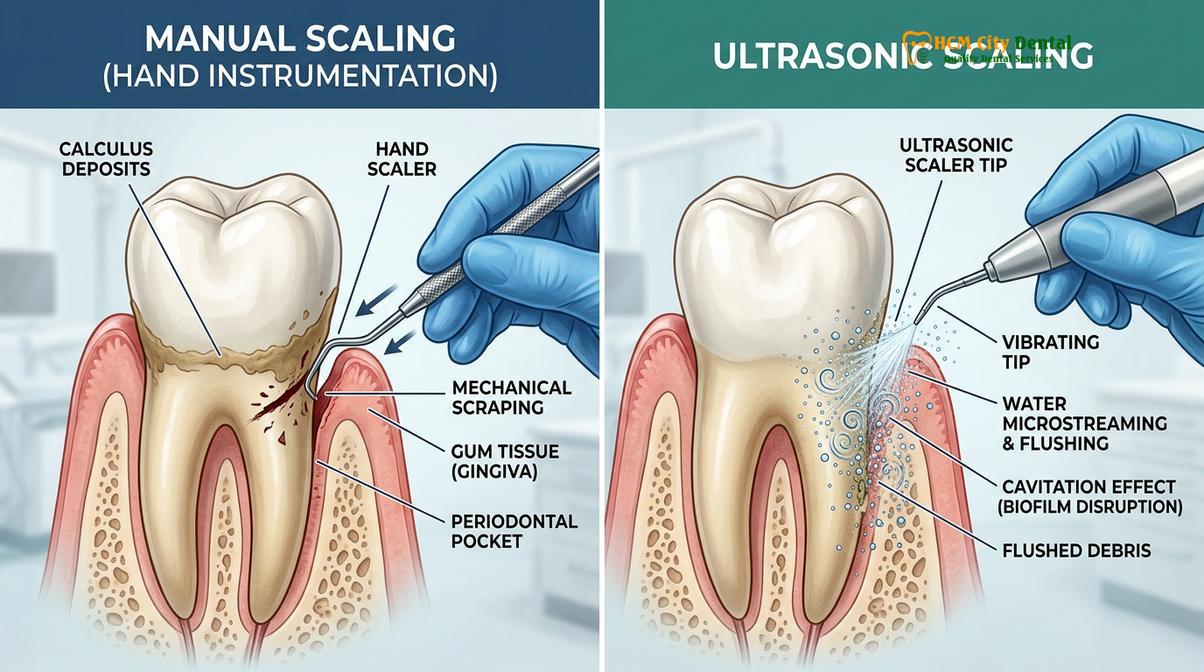
For decades, the standard of care in dental hygiene relied heavily on manual hand instruments, such as curettes and sickles. While these tools remain important, the paradigm has shifted dramatically toward ultrasonic debridement. When comparing a hand scaler vs ultrasonic device, the primary difference lies in the application of force.
Manual scaling requires the clinician to apply significant lateral pressure—often between 500 to 1000 grams of force—to physically scrape the calculus off the tooth surface. This repetitive scraping can inadvertently remove microscopic layers of cementum (the tissue covering the tooth root) and can cause hand fatigue for the operator. In contrast, an ultrasonic scaler requires a feather-light touch, typically less than 100 grams of pressure. The clinician simply guides the vibrating tip over the calculus, allowing the mechanical energy and cavitation to do the work.
This reduction in applied force translates directly to increased patient comfort and better preservation of the natural tooth structure. Furthermore, the slim design of modern ultrasonic tips allows for superior access into deep, narrow periodontal pockets where bulky manual curettes cannot reach without causing tissue distension and discomfort.[3]
| Feature | Manual Hand Scaling | Ultrasonic Scaling |
|---|---|---|
| Mechanism of Action | Physical scraping and cutting | High-frequency vibration and cavitation |
| Lateral Pressure Required | High (500g – 1000g) | Very Low (<100g) |
| Fluid Irrigation | None (dry field) | Continuous water lavage |
| Biofilm Disruption | Mechanical removal only | Acoustic microstreaming destroys cell walls |
| Tissue Trauma Risk | Moderate (depends on operator skill) | Low (gentle sweeping motion) |
Myth Busting: Enamel Damage?
A common misconception is that ultrasonic vibrations scratch teeth; however, when used correctly with proper water flow, they preserve enamel integrity far better than aggressive manual scraping.
One of the most persistent myths surrounding professional dental cleanings is the fear that the high-pitched vibrating metal tip will scratch or permanently damage the tooth enamel. This concern regarding dental scaling safety is understandable but clinically unfounded when the equipment is operated by a trained professional.
Tooth enamel is the hardest substance in the human body, ranking a 5 on the Mohs hardness scale, heavily composed of hydroxyapatite crystals. Dental calculus, while hard, is significantly softer than enamel. The tips of ultrasonic scalers are designed with smooth, rounded edges rather than sharp cutting blades. When the tip is adapted correctly—kept parallel to the tooth surface at an angle no greater than 15 degrees—the vibrational energy is directed into the calculus, not into the tooth.
Clinical Warning: Ultrasonic scaler tips must never be applied at a 90-degree perpendicular angle to the tooth surface. Improper angulation or operating the device without adequate water coolant can cause frictional heat, potentially leading to micro-grooving of the enamel or thermal damage to the underlying dental pulp.
Enamel preservation is a primary focus during any prophylactic procedure. The continuous flow of water acts as a protective lubricant, preventing the metal tip from aggressively gripping the tooth surface. When comparing the microscopic surface topography of teeth after treatment, studies consistently show that proper ultrasonic instrumentation leaves a smoother surface with less structural loss than aggressive manual root planing.[4]
What to Expect: The Clinical Workflow
Patients can expect a systematic, highly comfortable cleaning process that integrates advanced ultrasonic debridement with the comprehensive Guided Biofilm Therapy protocol.
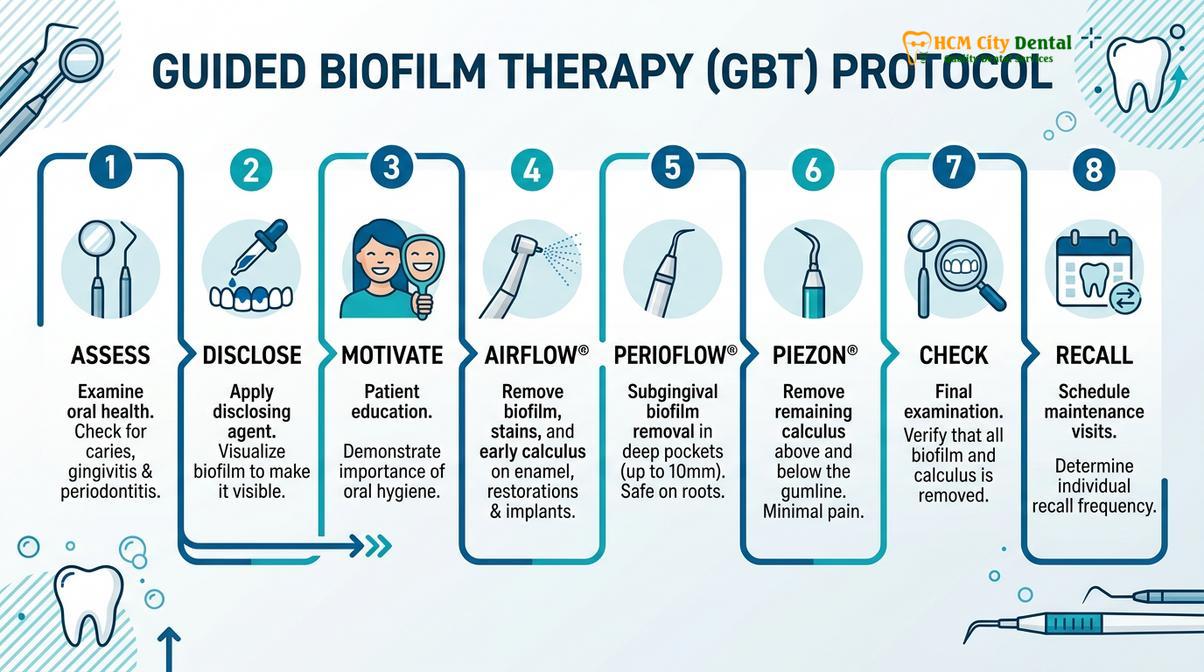
Modern dental cleanings have evolved far beyond a simple “scrape and polish.” Today, elite clinics utilize structured workflows designed to maximize both clinical efficacy and patient comfort. At the forefront of this evolution is Guided Biofilm Therapy (GBT), a premium protocol developed by Swiss EMS. This systematic approach ensures that every aspect of oral hygiene is addressed safely and thoroughly.
The GBT protocol consists of eight distinct steps, fundamentally changing how a dental cleaning is performed. First, the clinician assesses the oral cavity, evaluating periodontal pocket depth and identifying areas of concern. Next, a disclosing solution is applied to the teeth. This harmless dye stains the invisible plaque biofilm, making it clearly visible to both the patient and the clinician. This visual aid is crucial for the third step: motivating and educating the patient on proper home care techniques.
The actual cleaning begins with Airflow polishing. Utilizing warm water and a low-abrasive erythritol powder with a microscopic grain size of just 25μm, the clinician gently air-polishes the teeth. This step removes the disclosed biofilm, early calculus, and extrinsic stains painlessly. Because erythritol is so fine, it is completely safe for natural enamel, titanium implants, porcelain crowns, and delicate veneers. For deeper pockets, a specialized PerioFlow nozzle is used to eradicate subgingival biofilm.
Only after the biofilm is removed does the clinician utilize the ultrasonic scaler. By this stage, only the hard, calcified tartar remains. Dr. Cuong emphasizes that by removing the sticky biofilm first, the clinician has perfect visibility of the calculus, allowing for targeted, minimal use of the piezoelectric scaler. This targeted approach significantly reduces the time the vibrating tip is in contact with the teeth, further enhancing comfort. Finally, the clinician performs a final check for any remaining deposits and schedules the appropriate recall appointment based on the patient’s individual risk profile.
Comprehensive Oral Health Overview
Understanding the progression from soft plaque to hardened tartar is essential for preventing bad breath, bleeding gums, and irreversible periodontal disease.
To fully appreciate the necessity of ultrasonic scaling, one must understand the biological processes that occur daily within the oral cavity. The mouth is a complex ecosystem hosting billions of bacteria. Within minutes of brushing, a thin, acellular protein layer called the acquired pellicle forms over the enamel. This pellicle acts as an adhesive base for primary bacterial colonizers. If not disrupted by mechanical brushing and flossing, these bacteria multiply, creating a sticky, colorless matrix known as dental plaque.
The Calcification Process: Plaque to Tartar
Plaque is soft and easily removed with a toothbrush. However, if plaque is allowed to remain undisturbed for 24 to 72 hours, it begins to absorb calcium and phosphate ions from the saliva and gingival crevicular fluid. This mineralization process hardens the soft plaque into dental calculus (tartar). Once calculus forms, it creates a rough, porous surface that attracts even more plaque, creating a vicious cycle of accumulation. Because calculus is firmly bonded to the tooth structure, it cannot be removed by home care methods; it requires professional intervention using an ultrasonic scaler.
Etiology of Halitosis and Bleeding Gums
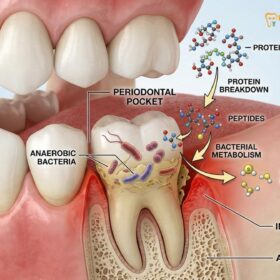
The accumulation of plaque and tartar is the primary catalyst for several common oral health issues. Bad breath, or halitosis, is frequently caused by the metabolic byproducts of anaerobic bacteria thriving in deep periodontal pockets and on the rough surface of tartar. These bacteria produce volatile sulfur compounds (VSCs), which emit a distinct, unpleasant odor.
Furthermore, the presence of bacterial toxins triggers an immune response from the body. The gingival tissues become inflamed, swollen, and highly vascularized—a condition known as plaque-induced gingivitis. This inflammation causes the sulcular epithelium to ulcerate, leading to bleeding gums during brushing or flossing. If left untreated, this inflammation can progress to periodontitis, resulting in the destruction of the alveolar bone and eventual tooth loss.
Clinical Case Example: A 45-year-old patient visited HCMC Dental Clinic in Ho Chi Minh City complaining of persistent bad breath and gums that bled easily. Clinical examination revealed heavy subgingival calculus and localized 5mm periodontal pockets. Following a comprehensive full mouth debridement utilizing dual-scaler technology and the GBT protocol, the bacterial load was eradicated. Within two weeks, the gingival inflammation subsided, pocket depths reduced to a healthy 3mm, and the halitosis was completely resolved.
Extrinsic Staining and Optimal Home Care
In addition to bacterial concerns, lifestyle habits significantly impact the aesthetic appearance of the teeth. Frequent consumption of coffee, tea, red wine, and tobacco introduces chromogens that bind to the pellicle and tartar, causing extrinsic teeth staining. While whitening toothpastes attempt to scrub these stains away, they are often highly abrasive and can damage enamel over time. Professional airflow polishing, integrated with ultrasonic scaling, safely lifts these stains without scratching the tooth surface.
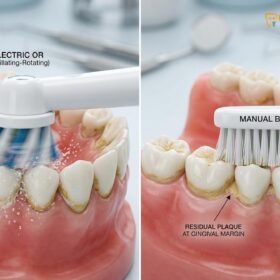
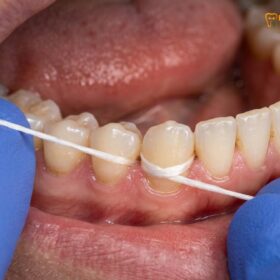
To maintain the results of a professional cleaning, optimal home care is non-negotiable. Clinicians strongly recommend the Modified Bass brushing technique, which involves angling the toothbrush bristles at 45 degrees toward the gumline and using short, vibratory strokes to disrupt plaque within the sulcus. Combined with daily interdental cleaning and the use of a fluoride varnish or remineralizing toothpaste, patients can significantly slow the rate of calculus formation.
Pricing and Treatment Options at HCMC Dental Clinic
We offer transparent, tiered pricing for dental cleanings, ranging from standard ultrasonic prophylaxis to advanced full mouth debridement and Guided Biofilm Therapy.
Understanding the cost of periodontal care is important for patients planning their oral health maintenance. At HCMC Dental Clinic, we provide a range of professional cleaning services tailored to the specific clinical needs of each patient. The pricing structure reflects the complexity of the procedure, the technology utilized, and the time required to achieve optimal clinical endpoints.
- Standard Ultrasonic Scaling & Polishing: This preventive procedure is ideal for patients with healthy gums and minimal tartar buildup. The estimated cost ranges from 500,000 to 800,000 VND (Walk-in: 800,000 to 1,300,000 VND).
- Airflow Prophylaxis / Guided Biofilm Therapy (GBT): Utilizing the premium Swiss EMS protocol with 25μm erythritol powder, this treatment offers superior stain removal and painless biofilm eradication. The fee ranges from 1,500,000 to 2,000,000 VND (Walk-in: 2,500,000 to 3,300,000 VND).
- Scaling & Root Planing (SRP): Also known as a deep cleaning, this procedure targets subgingival calculus in patients with active periodontitis. It is typically priced per quadrant, ranging from 1,000,000 to 1,500,000 VND (Walk-in: 1,600,000 to 2,500,000 VND).
- Full Mouth Debridement: Designed for patients with heavy, tenacious tartar accumulation that obscures the clinical evaluation of the teeth. This comprehensive removal ranges from 2,000,000 to 3,000,000 VND (Walk-in: 3,300,000 to 5,000,000 VND).
Patients are encouraged to inquire about our current promotions, including a -40% WhatsApp booking discount, which makes premium periodontal care highly accessible. For a detailed consultation and to determine which level of care is appropriate for your oral health, we invite you to schedule a professional dental cleaning with our experienced team.
When to See a Doctor
While ultrasonic scaling is a routine and highly safe procedure for the vast majority of patients, there are specific clinical considerations and contraindications that require professional evaluation prior to treatment. It is imperative to disclose your complete medical history to your dental provider.
Patients with certain types of older, unshielded cardiac pacemakers may need to avoid magnetostrictive ultrasonic scalers, as the electromagnetic field could potentially interfere with the device’s function. However, modern piezoelectric scalers and shielded pacemakers generally pose no risk. Additionally, individuals with severe respiratory conditions, such as advanced asthma or chronic obstructive pulmonary disease (COPD), should consult their dentist, as the aerosols generated by the water spray may cause breathing difficulties during the procedure.
“Routine periodontal maintenance is not merely a cosmetic procedure; it is a critical medical intervention that prevents systemic inflammation and preserves the structural foundation of the dentition.”
From an oral perspective, areas of severe enamel demineralization, exposed dentinal tubules, or newly erupted primary teeth in children require cautious instrumentation. The clinician may opt to use manual scaling in these specific areas to prevent sensitivity or structural damage. If you experience persistent bleeding gums, chronic bad breath, or notice visible hard deposits on your teeth, it is time to schedule a clinical examination.[5]
Frequently Asked Questions
How does cavitation help clean teeth?
Cavitation helps clean teeth by creating microscopic water bubbles that rapidly implode, releasing energy that shatters bacterial cell walls. This acoustic microstreaming effect flushes out the periodontal pocket, removing subgingival biofilm and toxins far more effectively than mechanical scraping alone. The continuous fluid dynamics ensure that the treatment area is constantly irrigated, promoting a healthier gingival environment.
Can ultrasonic scaling loosen my teeth?
No, ultrasonic scaling cannot loosen healthy teeth. If teeth feel slightly mobile after a deep cleaning, it is because the heavy calculus that was artificially binding the teeth together has been removed, revealing the true state of the underlying bone loss caused by periodontitis. The removal of this tartar is essential to halt further bone destruction and allow the gums to heal and reattach.
Is manual hand scaling obsolete?
Manual hand scaling is not obsolete; it remains a vital complementary technique in modern dentistry. While ultrasonic scalers perform the bulk of heavy calculus removal efficiently, dentists still use manual curettes for fine tactile exploration, precise root planing in deep periodontal pockets, and carefully navigating around complex restorative margins where ultrasonic tips might be contraindicated.
Does ultrasonic scaling hurt?
Ultrasonic scaling is generally highly comfortable and causes significantly less discomfort than traditional manual scraping. The use of modern piezoelectric technology and warm water irrigation minimizes tooth sensitivity. While patients with severe gingivitis or exposed tooth roots may experience mild, temporary tenderness, the procedure is widely considered to be virtually painless, especially when combined with the GBT protocol.
How often should I get an ultrasonic dental cleaning?
Most patients benefit from an ultrasonic dental cleaning every six months to maintain optimal oral health. However, individuals with a history of periodontal disease, heavy tartar accumulation, systemic conditions like diabetes, or those wearing orthodontic appliances may require professional maintenance every three to four months to prevent the recurrence of destructive biofilm and calculus.
References
- International Journal of Dental Hygiene. Ultrasonic scaling vs hand scaling efficacy. (2020).
- Journal of Clinical Periodontology. Guided Biofilm Therapy and cavitation dynamics. (2021).
- Journal of Periodontology. Scaling and root planing for periodontitis management. (2019).
- Clinical Oral Investigations. Erythritol air-polishing powder safety on enamel. (2022).
- Journal of the American Dental Association. Professional cleaning recall intervals and protocols. (2018).