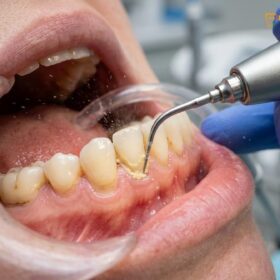
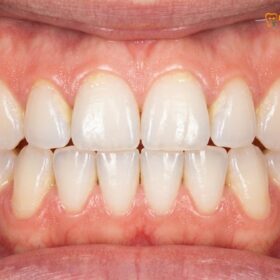
When comparing an electric toothbrush vs manual plaque removal, clinical evidence shows powered brushes remove significantly more biofilm and reduce gingival inflammation faster. However, neither device can eliminate hardened subgingival calculus, which requires professional ultrasonic scaling and guided biofilm therapy to prevent periodontal disease.
Clinical Summary:
The debate between electric and manual toothbrushes centers on the mechanical efficiency of biofilm disruption. While manual brushing relies entirely on user dexterity and technique, powered toothbrushes utilize oscillating-rotating or sonic technologies to deliver thousands of micro-movements per minute, significantly enhancing plaque clearance. Despite these advancements in home care, daily brushing only addresses soft, uncalcified plaque. Once biofilm mineralizes into calculus, it creates a porous sanctuary for pathogenic bacteria that cannot be brushed away. Comprehensive oral health requires a synergistic approach: optimized daily plaque control using powered devices combined with biannual professional interventions. Modern clinical protocols, such as Guided Biofilm Therapy (GBT) and dual-scaler ultrasonic debridement, are essential to eradicate subgingival calculus, preserve enamel integrity, and maintain long-term periodontal stability.
Key Takeaways:
- Powered toothbrushes consistently outperform manual brushes in reducing plaque indices and gingival bleeding scores across both short and long-term clinical trials.
- Sonic and oscillating-rotating technologies offer distinct mechanisms of action, but both provide superior interproximal cleaning compared to traditional manual brushing.
- Even perfect home brushing techniques cannot remove mineralized tartar; professional ultrasonic scaling is a non-negotiable requirement for periodontal health.
- Advanced clinical protocols like Guided Biofilm Therapy (GBT) utilize low-abrasive erythritol powder to safely remove biofilm without scratching enamel or restorative work.
- Maintaining optimal oral hygiene requires a combination of effective daily mechanical disruption and routine professional periodontal maintenance.
Clinical Trials Data
Extensive meta-analyses demonstrate that powered toothbrushes yield a statistically significant reduction in both plaque indices and gingival bleeding compared to manual brushing over short and long-term periods.
The foundation of preventive dentistry relies on the mechanical disruption of dental plaque, a complex, structurally organized multispecies biofilm that adheres tenaciously to the pellicle-coated tooth surface. When evaluating the efficacy of an electric toothbrush vs manual plaque removal, clinical trials and systematic reviews provide compelling evidence favoring powered devices. The primary objective of any oral hygiene regimen is to prevent the maturation of this biofilm, which, if left undisturbed, shifts from a predominantly Gram-positive aerobic flora to a highly pathogenic Gram-negative anaerobic community responsible for periodontal tissue destruction.
Extensive meta-analyses evaluating thousands of patients have consistently shown that powered toothbrushes provide superior clinical outcomes. In short-term studies (spanning one to three months), electric toothbrushes demonstrate an 11% to 21% greater reduction in plaque scores compared to manual brushing [1]. Furthermore, these devices achieve a 6% to 11% greater reduction in gingival bleeding indices, a critical clinical marker for localized inflammation and early-stage gingivitis. The superiority of powered brushes is largely attributed to their ability to deliver consistent, high-frequency mechanical action that compensates for the inherent variability in human brushing technique, pressure application, and duration.
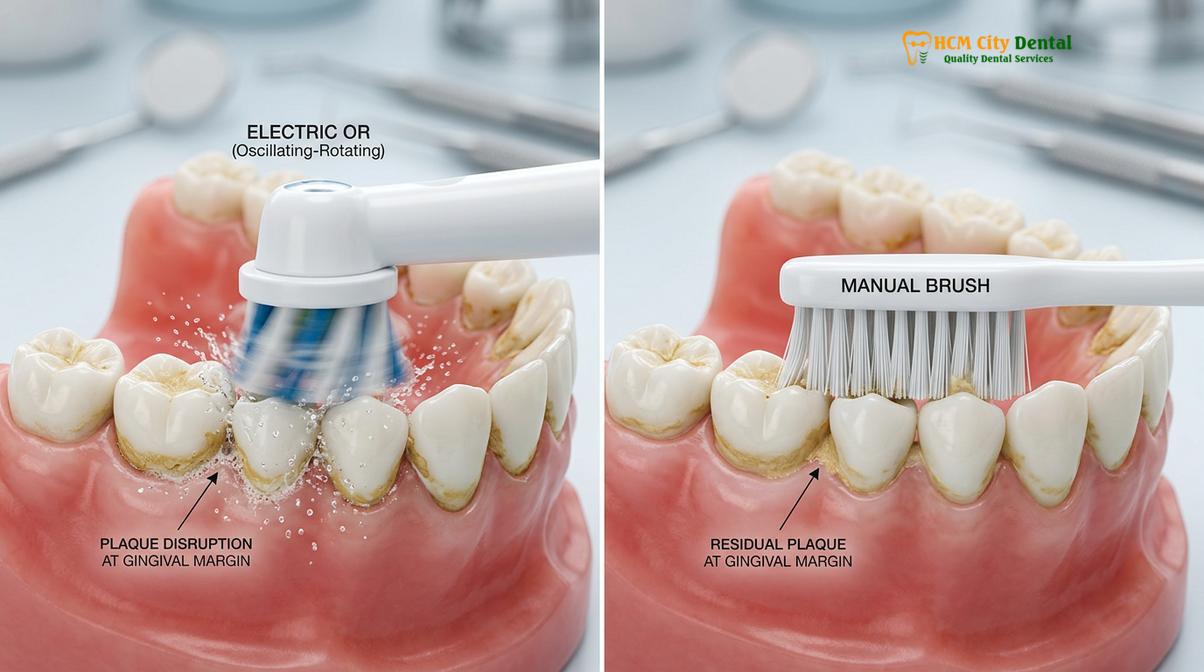
The pathophysiology of plaque-induced gingivitis begins with the accumulation of biofilm at the gingival margin. Manual brushing requires a high degree of manual dexterity to effectively clean the cervical third of the tooth and the interproximal spaces. Unfortunately, clinical observations indicate that the average patient brushes for less than 45 seconds and applies highly variable pressure, often neglecting lingual and posterior surfaces. Powered toothbrushes mitigate these user errors through built-in timers, pressure sensors, and automated bristle movements that ensure a standardized level of biofilm disruption across all quadrants of the mouth.
“The transition from manual to powered toothbrushing represents a significant upgrade in daily biofilm management. By standardizing the mechanical disruption of plaque, powered devices drastically reduce the incidence of marginal gingivitis and provide a critical first line of defense against periodontal disease progression.”
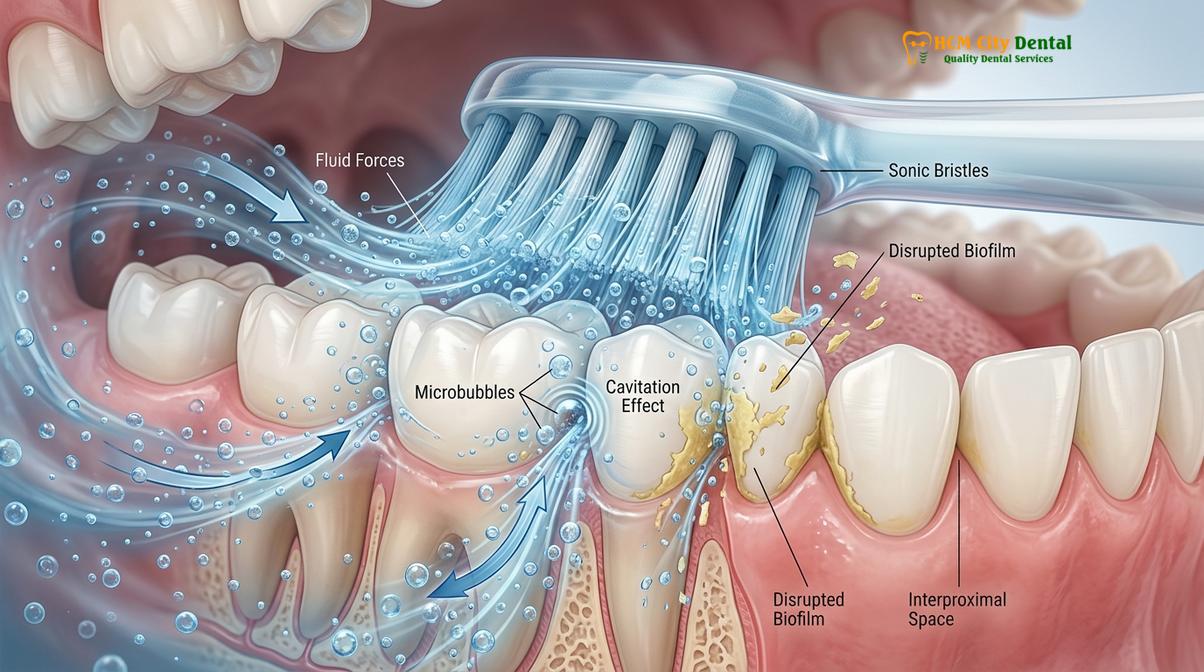
Beyond simple mechanical scrubbing, advanced electric toothbrushes generate secondary fluid dynamics. The rapid movement of the bristles creates a cavitation effect—the formation and implosion of microscopic bubbles in the saliva and toothpaste slurry. This hydrodynamic shear force extends the cleaning zone slightly beyond the actual physical reach of the bristles, helping to disrupt loosely adherent plaque in shallow subgingival areas and interproximal niches that are notoriously difficult to access with a standard manual brush.
Sonic vs. Oscillating
Oscillating-rotating heads physically scrub the tooth surface with high-speed circular motions, while sonic toothbrushes utilize high-frequency vibrations to create fluid dynamics that disrupt plaque beyond the bristle tips.
When patients decide to upgrade to a powered device, they are immediately faced with a choice between two dominant technologies: oscillating-rotating and sonic. Understanding the biomechanical differences between these two modalities is essential for optimizing daily oral care. An oral-b vs sonicare comparison frequently highlights how these distinct engineering approaches tackle the same clinical challenge: the eradication of sticky, resilient bacterial biofilm.
Oscillating-rotating toothbrushes feature a small, circular brush head that rapidly pulsates in and out while simultaneously rotating back and forth in a sweeping arc. This technology is designed to cup each individual tooth, adapting to the natural curvature of the crown. The pulsating action serves to break the physical bonds of the plaque matrix, while the oscillating motion sweeps the disrupted debris away from the enamel surface. Clinical studies often cite oscillating-rotating technology as highly effective for localized, site-specific cleaning, particularly in patients with crowded dentition where adapting a standard brush head is challenging [2].
Conversely, sonic toothbrush plaque removal relies on a completely different mechanism of action. Sonic brushes feature a traditional, elongated brush head resembling a manual toothbrush, but the bristles vibrate at exceptionally high frequencies—typically between 31,000 and 62,000 brush strokes per minute. This intense lateral vibration physically sweeps plaque away while simultaneously generating the aforementioned hydrodynamic cavitation effect. The high-velocity fluid dynamics propel oxygenated fluids deep into interproximal spaces and slightly below the gingival margin, creating an environment hostile to anaerobic periodontal pathogens.
| Feature | Oscillating-Rotating | Sonic Technology |
|---|---|---|
| Brush Head Shape | Small, circular (cups individual teeth) | Elongated, traditional shape |
| Mechanism of Action | Pulsation and rapid back-and-forth rotation | High-frequency lateral vibration and fluid dynamics |
| Speed/Frequency | Up to 8,800 oscillations & 40,000 pulsations/min | 31,000 to 62,000 brush strokes/min |
| Primary Advantage | Excellent site-specific mechanical scrubbing | Hydrodynamic shear forces for interproximal reach |
| Learning Curve | Requires moving tooth-by-tooth slowly | Similar sweeping motion to manual brushing |
The choice between sonic and oscillating technologies often comes down to patient preference and specific anatomical considerations. Patients with extensive restorative work, such as bridges or orthodontic appliances, may benefit significantly from the fluid dynamics of a sonic brush, which can flush debris from intricate hardware. Meanwhile, patients who struggle with heavy, localized plaque buildup on the lingual surfaces of lower incisors may find the cupping action of an oscillating head more effective. Regardless of the technology chosen, both represent a monumental improvement over manual brushing when used consistently and correctly.
Proper Manual Technique (Bass Method)
The modified Bass technique involves angling bristles at 45 degrees toward the gumline with gentle vibratory motions, effectively cleaning the cervical margins where plaque accumulation is most concentrated.
Despite the proven superiority of powered devices, millions of individuals continue to rely on manual toothbrushes. If a patient chooses to use a manual brush, mastering the correct biomechanical technique is absolutely critical to prevent dental caries and periodontal breakdown. The most widely recommended and clinically validated approach is the bass method brushing technique, specifically the Modified Bass technique, which targets the most vulnerable area of the tooth: the gingival sulcus.
The gingival sulcus is the shallow, V-shaped crevice between the tooth and the surrounding gum tissue. This area is the primary staging ground for plaque-induced gingivitis. When plaque accumulates in the sulcus, the bacteria release endotoxins that trigger a localized inflammatory immune response, leading to the classic signs of gingivitis: erythema (redness), edema (swelling), and bleeding upon probing. The Bass method is specifically designed to disrupt biofilm within this critical junction.
To execute the Bass method correctly, the patient must hold the toothbrush so that the bristles are angled at exactly 45 degrees toward the gingival margin. The bristles should rest partially on the enamel and partially on the gum tissue. Using light pressure, the patient applies a short, vibratory, back-and-forth motion—moving the brush no more than a millimeter or two. This micro-vibration forces the tips of the bristles gently into the sulcus to dislodge the biofilm. After several seconds of vibration, the Modified Bass technique incorporates a sweeping or rolling stroke away from the gums, pulling the disrupted plaque toward the biting surface of the tooth.
The primary reason manual brushing fails for the average patient is the adoption of an aggressive, horizontal scrubbing motion. Horizontal scrubbing not only fails to clean the sulcus effectively but also causes severe iatrogenic damage over time. Aggressive brushing with a hard-bristled manual brush leads to gingival recession, exposing the softer root dentin. Furthermore, it causes mechanical abrasion of the enamel, particularly at the cementoenamel junction (CEJ), resulting in non-carious cervical lesions (NCCLs) and acute dentinal hypersensitivity.
Therefore, while manual plaque removal can be effective, it demands a high level of patient compliance, precise angulation, controlled pressure, and adequate time. For patients lacking the dexterity or patience to meticulously apply the Bass method to every surface of all 32 teeth, transitioning to an electric toothbrush is the most pragmatic clinical recommendation to safeguard their oral health.
Why Neither Replaces Scaling
Even optimal home care cannot remove mineralized subgingival calculus; professional intervention utilizing ultrasonic technology and advanced air-polishing is mandatory to arrest periodontal disease progression and restore gingival health.
A common and dangerous misconception among patients is that rigorous home care—even with the most advanced electric toothbrush—can substitute for professional dental cleanings. This is biologically impossible. To understand why, one must understand the lifecycle of dental plaque and the biochemical process of calculus formation. While toothbrushes are highly effective at removing soft, uncalcified biofilm, they are completely powerless against tartar.
If dental plaque is not thoroughly removed within 24 to 72 hours, it begins to mineralize. Calcium and phosphate ions naturally present in human saliva precipitate into the plaque matrix, calcifying the bacterial mass into a hard, porous substance known as calculus (tartar). Calculus bonds intimately with the microscopic irregularities of the tooth enamel and root cementum. Once this calcification occurs, no amount of brushing, flossing, or water-piking can dislodge it [3]. The rough, porous surface of calculus acts as an ideal retentive scaffold for further plaque accumulation, creating a vicious cycle of bacterial proliferation and localized inflammation.
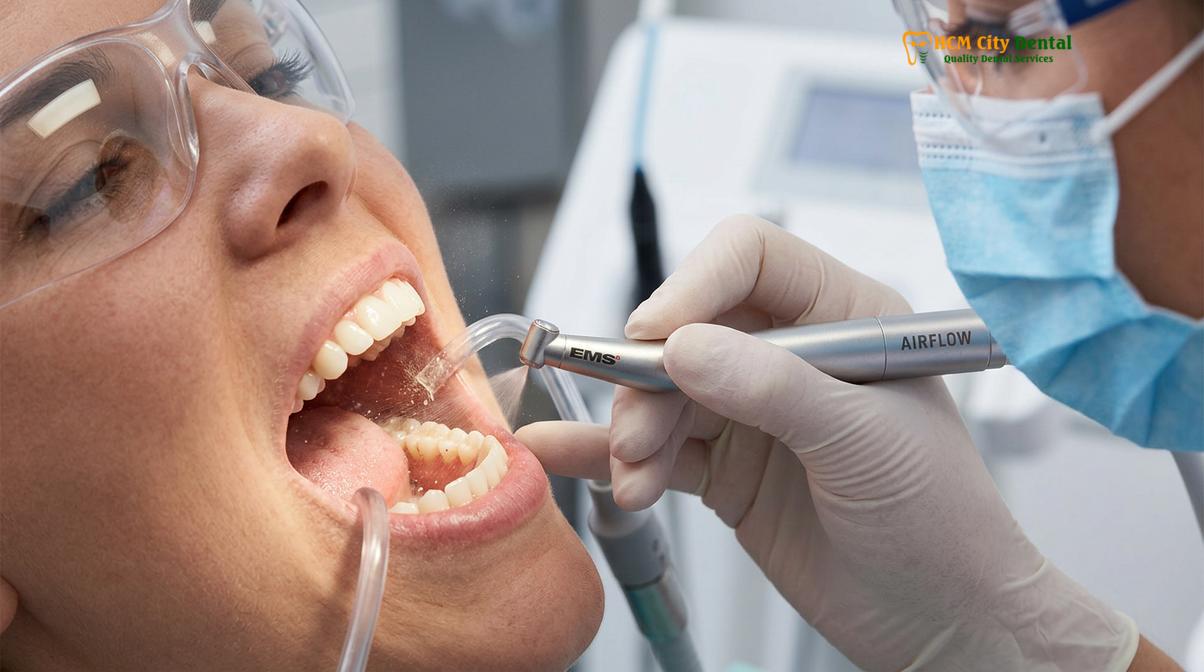
When calculus forms below the gumline (subgingival calculus), the clinical situation becomes critical. The bacteria harbored within subgingival calculus are protected from oxygen and home hygiene efforts. They release toxins that destroy the periodontal ligament and alveolar bone, leading to increased periodontal pocket depth, tooth mobility, and eventually, tooth loss. Eradicating this subgingival threat requires professional Dental Cleaning utilizing specialized instrumentation.
At HCMC Dental Clinic, we employ a highly sophisticated approach to periodontal debridement known as the Dual Scaler Advantage. Recognizing that different clinical scenarios require different biophysics, our specialists utilize both Piezoelectric and Magnetostrictive ultrasonic scalers to customize treatments for optimal efficacy and patient comfort.
- Piezoelectric Scalers (e.g., Acteon/Satelec): These devices utilize ceramic discs that expand and contract when electrical energy is applied, producing a linear, back-and-forth motion at the tip. Operating at frequencies up to 32 kHz, piezoelectric scalers generate very little heat and require minimal water coolant. Because only the lateral sides of the tip are active, they offer a highly precise, gentle debridement that is exceptionally well-tolerated by patients with sensitive teeth, pediatric patients, and those undergoing orthodontic treatment.
- Magnetostrictive Scalers (e.g., Dentsply Cavitron): These units employ a stack of metal strips that change dimension under a magnetic field, creating an elliptical, figure-eight motion at the tip. This means all surfaces of the tip (front, back, and sides) are active. Operating between 25 and 30 kHz, magnetostrictive scalers are incredibly powerful and are the instrument of choice for breaking down heavy, tenacious calculus bridges, deep subgingival tartar, and performing comprehensive full mouth debridement.
Clinical Case Review: Subgingival Debridement
A 45-year-old patient visited HCMC Dental Clinic in Ho Chi Minh City presenting with generalized bleeding gums, halitosis, and localized periodontal pocket depths of 5mm, despite using a premium electric toothbrush daily. Clinical examination revealed heavy bands of dark subgingival calculus. The patient underwent a comprehensive Scaling and Root Planing (SRP) utilizing our Magnetostrictive ultrasonic scalers to shatter the calcified deposits, followed by Guided Biofilm Therapy to eradicate residual endotoxins. At the 4-week reassessment, pocket depths had reduced to a healthy 2-3mm, and gingival bleeding was completely resolved, demonstrating that mechanical home care must be supplemented with professional ultrasonic debridement to manage periodontitis.
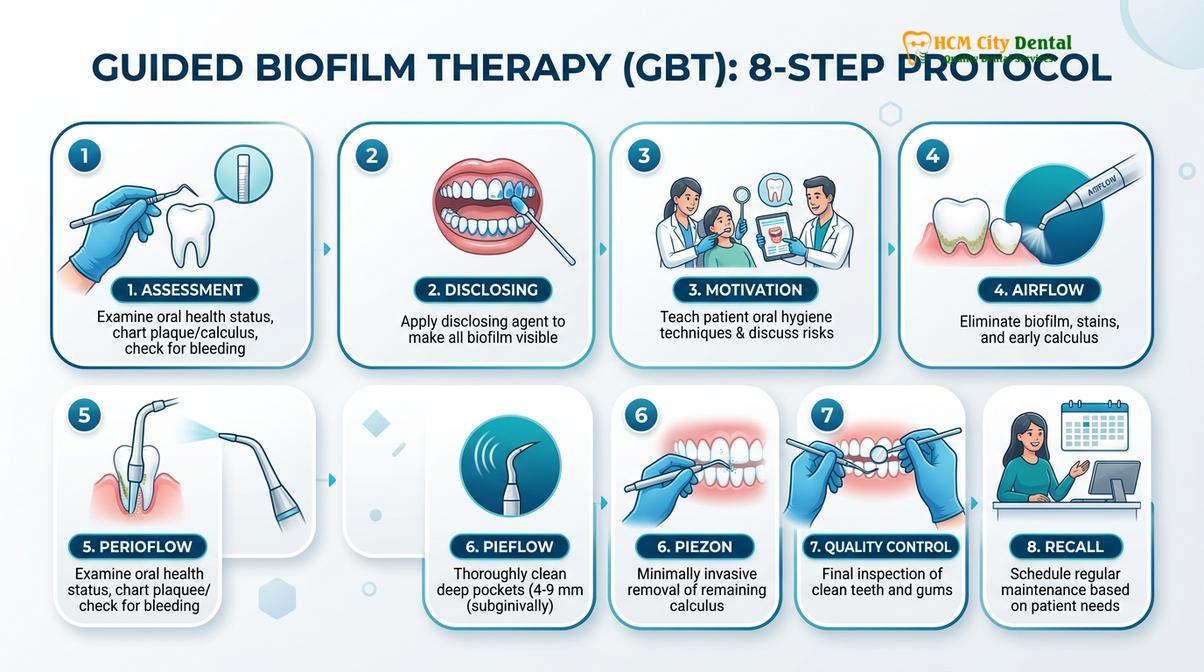
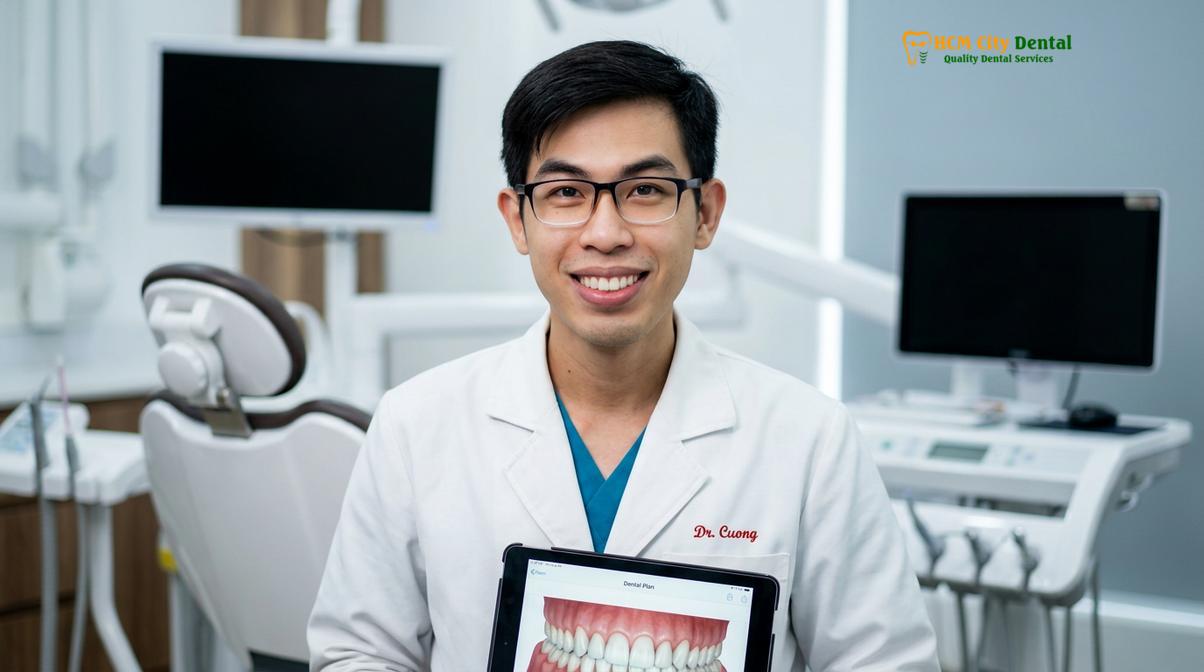
Following the removal of hard calculus, the modern standard of care dictates the complete eradication of residual biofilm and surface stains. Dr. Nguyen Van Cuong emphasizes the clinical importance of adopting minimally invasive protocols to protect the tooth structure during this phase. To achieve this, we feature the premium Swiss EMS Guided Biofilm Therapy (GBT) protocol. GBT represents a paradigm shift in professional prophylaxis, moving away from abrasive rubber cups and gritty pumice pastes.
The GBT protocol utilizes a specialized Airflow device that delivers a precisely controlled, warm water spray mixed with ultra-fine erythritol powder. With a microscopic grain size of just 14 to 25μm, erythritol is highly effective at disrupting biofilm and removing extrinsic stains caused by coffee, tea, and tobacco, yet it is completely safe for the tooth structure [4]. Dr. Cuong notes that the GBT protocol verification ensures that the procedure is entirely painless and will not scratch natural enamel, delicate titanium implants, porcelain crowns, or aesthetic veneers. The warm water integration further eliminates the sharp, cold sensitivity traditionally associated with dental cleanings.
Golden Formula for Maintenance
A comprehensive oral hygiene regimen combines twice-daily powered brushing, interdental cleaning, and biannual professional prophylaxis to maintain optimal enamel remineralization and prevent plaque-induced gingivitis.
Achieving and maintaining lifelong oral health requires a strategic, dual-pronged approach: meticulous daily home care and disciplined professional oversight. The “golden formula” for periodontal maintenance is not a secret, but it does require consistency. The foundation of this formula is the disruption of the bacterial biofilm every 12 to 24 hours. Patients must brush twice daily for a full two minutes, ideally utilizing an electric toothbrush to maximize plaque clearance. However, brushing alone only cleans 60% of the tooth surface; the remaining 40% lies in the interproximal spaces.
Interdental cleaning—whether through traditional string floss, interdental brushes, or water flossers—is non-negotiable. Failure to clean between the teeth is the primary cause of interproximal caries and localized periodontal pockets. When interproximal plaque is left undisturbed, it leads to chronic bleeding gums and is one of the leading bad breath causes, as anaerobic bacteria produce volatile sulfur compounds (VSCs) as a byproduct of metabolizing food debris and dead cellular matter.
Furthermore, patients must be mindful of their dietary and lifestyle choices. Frequent consumption of fermentable carbohydrates fuels bacterial acid production, leading to enamel demineralization. Similarly, teeth staining habits, such as the heavy consumption of dark teas, coffee, red wine, and tobacco use, not only compromise the aesthetic appearance of the smile but also create a rougher pellicle surface that facilitates faster plaque accumulation.
“Preventive dentistry is a partnership between the patient and the clinician. The patient’s daily mechanical plaque control sets the baseline, but it is the clinician’s role to reset the biological environment through professional debridement, ensuring that localized inflammation never progresses to irreversible bone loss.”
The second half of the golden formula is the professional recall interval. For patients with a healthy periodontium, a biannual (every six months) professional cleaning is the standard recommendation to remove the inevitable buildup of calculus that occurs despite good home care [5]. During these visits, the application of professional-grade fluoride varnish is highly recommended. Fluoride varnish plays a critical role in enamel remineralization, drawing calcium and phosphate back into weakened areas of the tooth structure, thereby reversing early microscopic decay and significantly reducing dentinal hypersensitivity.
Dr. Nguyen Van Cuong frequently advises patients on the importance of enamel preservation safety during these maintenance visits. By utilizing the low-abrasive GBT protocol with erythritol powder, the clinic ensures that repeated professional cleanings over a patient’s lifetime do not thin the enamel or dull the finish of expensive restorative work, preserving both the health and the brilliance of the smile.
When to See a Doctor
Immediate clinical evaluation is required if you experience persistent gingival bleeding, chronic halitosis, visible calculus buildup, or increasing tooth mobility, as these indicate active periodontal infection.
While optimizing your home care routine with an electric toothbrush is highly beneficial, certain clinical signs indicate that home care is no longer sufficient and professional medical intervention is urgently required. Periodontal disease is often described as a “silent disease” because it can progress significantly without causing acute pain. Therefore, patients must be vigilant in recognizing the early warning signs of gingival and periodontal distress.
You should schedule an immediate consultation with a dental professional if you notice persistent bleeding gums when brushing or flossing. Healthy gums do not bleed. Bleeding is a definitive sign of active ulceration within the gingival sulcus caused by bacterial endotoxins. Additionally, if you experience chronic bad breath that does not resolve with brushing, notice your gums receding and exposing the roots of your teeth, or feel that your teeth are becoming loose or shifting in your bite, you are likely experiencing advanced periodontitis.
Clinical Warning: Periodontal Pocketing
If a dental professional measures your periodontal pocket depth and finds pockets exceeding 3mm, standard brushing and flossing can no longer reach the base of the infection. Pockets of 4mm or greater require immediate professional Scaling and Root Planing (SRP) to remove deep subgingival calculus and halt the destruction of the alveolar bone. Delaying treatment will inevitably lead to irreversible bone loss and eventual tooth extraction.
For patients seeking expert periodontal care, HCMC Dental Clinic in Ho Chi Minh City offers comprehensive diagnostic and therapeutic services. Our transparent pricing structure ensures patients can access the highest standard of care:
- Standard Ultrasonic Scaling & Polishing: Currently estimated at 500,000 to 800,000 VND (Walk-in: 800,000 to 1,300,000 VND).
- Airflow Prophylaxis / Guided Biofilm Therapy (GBT): 1,500,000 to 2,000,000 VND (Walk-in: 2,500,000 to 3,300,000 VND).
- Scaling & Root Planing (SRP deep cleaning per quadrant): 1,000,000 to 1,500,000 VND (Walk-in: 1,600,000 to 2,500,000 VND).
- Full Mouth Debridement (Heavy Tartar Removal): 2,000,000 to 3,000,000 VND (Walk-in: 3,300,000 to 5,000,000 VND).
Patients who book their consultation in advance via our official channels can benefit from a -40% WhatsApp booking discount, making premium periodontal maintenance highly accessible. Do not wait for pain to dictate your oral health decisions; proactive professional care is the only way to ensure a lifelong, healthy smile.
Frequently Asked Questions
Is an electric toothbrush really better than a manual one?
Yes, clinical studies consistently show that electric toothbrushes remove significantly more plaque and reduce gingival inflammation faster than manual brushes. The automated oscillating or sonic movements compensate for poor brushing technique, ensuring a more consistent and thorough disruption of the bacterial biofilm across all tooth surfaces. Furthermore, built-in timers and pressure sensors help patients brush for the correct duration without causing iatrogenic damage to the enamel or gums.
Can an electric toothbrush remove tartar?
No, an electric toothbrush cannot remove tartar (calculus) once it has mineralized and hardened on the tooth surface. Tartar removal requires professional intervention using ultrasonic scaling and specialized dental instruments, as the calcified deposits are too firmly bonded to the enamel for any toothbrush bristles to dislodge. Attempting to aggressively brush away tartar will only result in severe enamel abrasion and gingival recession.
How long should I brush with an electric toothbrush?
You should brush for a full two minutes, dedicating approximately 30 seconds to each quadrant of your mouth. Most modern electric toothbrushes feature built-in timers and quad-pacers that pulse every 30 seconds, ensuring you distribute your brushing time evenly and achieve comprehensive plaque removal. Rushing through the process leaves significant amounts of biofilm behind, particularly on the lingual (tongue-facing) surfaces of the lower teeth.
Does brushing harder remove more plaque?
No, applying excessive pressure does not remove more plaque and can actually cause severe damage to your oral tissues. Brushing too hard leads to enamel abrasion, gingival recession, and increased tooth sensitivity; electric brushes with pressure sensors help prevent this by alerting you when you press too firmly. Plaque is a soft biofilm that requires gentle, high-frequency disruption, not aggressive mechanical scrubbing.
How often should I replace my electric toothbrush head?
You should replace your electric toothbrush head every three to four months, or sooner if the bristles become frayed or splayed. Worn bristles lose their structural integrity, drastically reducing their plaque-removing efficacy and potentially harboring harmful bacteria that can compromise your daily oral hygiene routine. Patients recovering from a severe illness, such as strep throat, should replace their brush head immediately upon recovery to prevent reinfection.
References
- Journal of Clinical Periodontology. Efficacy of powered toothbrushes in plaque removal: A systematic review. (2021).
- International Journal of Dental Hygiene. Sonic versus oscillating-rotating power toothbrushes: A meta-analysis. (2020).
- Journal of Periodontology. The role of subgingival calculus in periodontal disease progression. (2019).
- Clinical Oral Investigations. Safety and efficacy of erythritol air-polishing powder in Guided Biofilm Therapy. (2022).
- Journal of the American Dental Association. Professional prophylaxis and periodontal maintenance recall intervals. (2018).