Maintaining dental implants, crowns, and bridges requires specialized professional cleaning to prevent prosthetic failure and gum disease. Unlike natural teeth, restorative materials demand non-abrasive techniques like Guided Biofilm Therapy and plastic scalers to safely remove plaque and tartar without scratching delicate titanium or ceramic surfaces.
Clinical Summary:
Professional dental cleaning for patients with complex restorations—such as implants, crowns, and bridges—differs significantly from standard prophylaxis. Natural teeth possess a protective periodontal ligament and highly mineralized enamel, whereas titanium implants and porcelain prosthetics are highly susceptible to surface scratching and peri-implant diseases. Utilizing advanced protocols like Guided Biofilm Therapy (GBT) with ultra-fine erythritol powder, alongside specialized plastic or carbon-fiber instruments, ensures the complete eradication of subgingival biofilm without compromising the integrity of the restorative materials. Regular, customized periodontal maintenance is the cornerstone of preserving these significant dental investments and preventing irreversible bone loss.
Key Takeaways:
- Specialized Instruments: Traditional metal scalers must never be used on titanium implants; plastic or carbon-fiber curettes are mandatory to prevent surface damage.
- Advanced Technology: Guided Biofilm Therapy (GBT) uses low-abrasive erythritol powder to safely clean crowns, bridges, and implants without scratching.
- Peri-Implantitis Risk: Implants lack a periodontal ligament, making them highly vulnerable to rapid, destructive bone loss if plaque is not meticulously managed.
- Bridge Maintenance: Sub-pontic areas (underneath the false tooth) require daily use of floss threaders and water flossers to prevent abutment decay.
- Dual Scaler Advantage: Modern clinics utilize both Piezoelectric and Magnetostrictive ultrasonic scalers to customize the cleaning power based on patient sensitivity and tartar density.
The Fundamentals of Plaque, Tartar, and Prosthetic Care
Plaque is a sticky bacterial film that hardens into tartar, causing bad breath, bleeding gums, and staining if not removed through proper brushing and professional scaling.
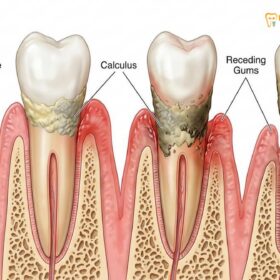
To fully understand the necessity of specialized cleaning protocols for dental restorations, one must first examine the biological mechanisms of oral biofilm. The human mouth is a complex ecosystem harboring hundreds of bacterial species. When salivary proteins mix with food debris, they form a sticky, colorless pellicle on the surfaces of both natural teeth and dental prosthetics. Within hours, bacteria colonize this pellicle, creating a structured biofilm known as plaque. If this plaque is not mechanically disrupted through meticulous brushing and interdental cleaning, minerals from saliva—primarily calcium and phosphate—precipitate into the biofilm, calcifying it into a hardened substance called calculus, or tartar [1].
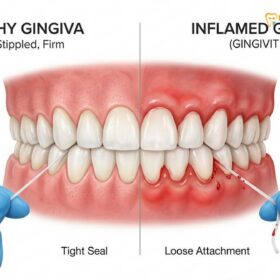
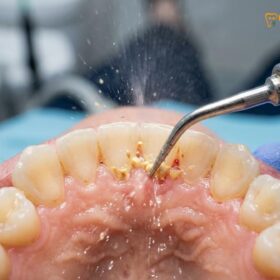
Calculus cannot be removed by a toothbrush; it requires professional ultrasonic scaling. The presence of calculus acts as a porous reservoir for further bacterial accumulation, leading to plaque-induced gingivitis. This early stage of gum disease is characterized by bleeding gums, localized inflammation, and persistent bad breath causes linked to the volatile sulfur compounds produced by anaerobic bacteria. Furthermore, the porous nature of both plaque and early calculus readily absorbs chromogenic agents from coffee, tea, tobacco, and red wine, leading to severe teeth staining habits that compromise the aesthetic value of expensive porcelain crowns and veneers.
For natural teeth, the ultimate goal of professional cleaning is not just the removal of these deposits, but also the facilitation of enamel remineralization. Following a thorough debridement, the application of fluoride varnish helps to fortify the enamel matrix against acid attacks. However, when a patient has Dental Implants, crowns, or bridges, the clinical approach must shift dramatically. Restorative materials do not remineralize, and their surfaces can be permanently damaged by the aggressive techniques traditionally used on natural enamel.
According to the clinical perspective of Dr. Nguyen Van Cuong at HCMC Dental Clinic, the selection of ultrasonic power levels and the choice of polishing agents must be strictly tailored to the patient’s specific restorative profile. Applying a universal, aggressive scaling approach to a mouth containing delicate ceramics and titanium fixtures is a critical clinical error that can drastically reduce the lifespan of the prosthetics.
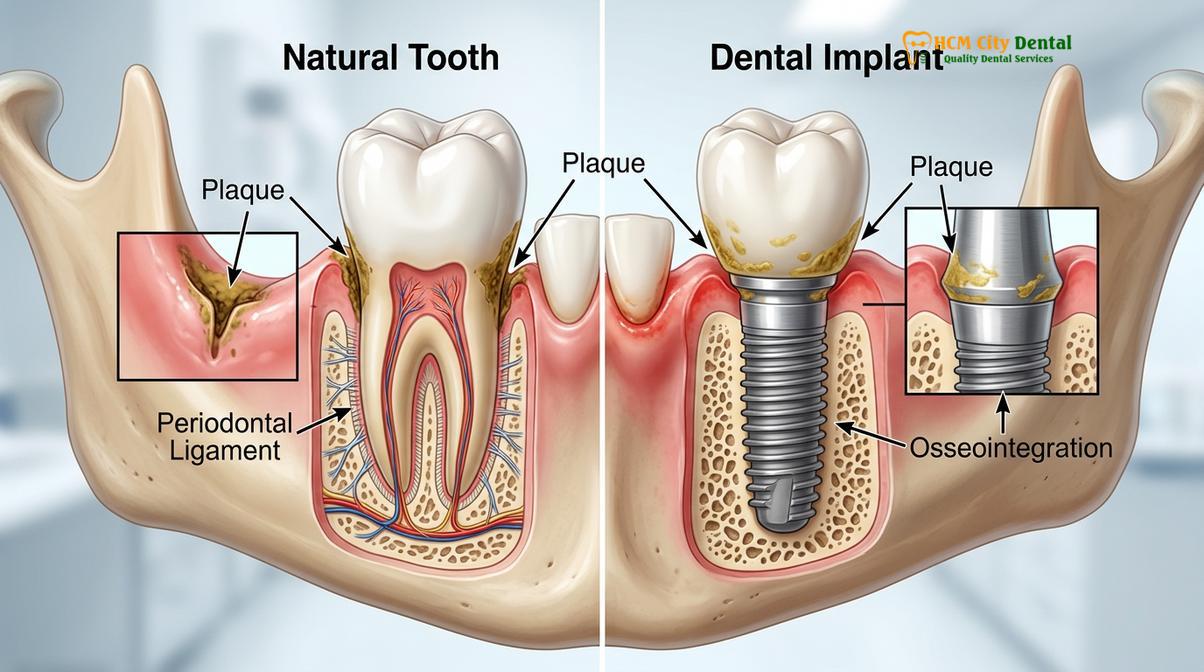
Peri-Implantitis Risk
Peri-implantitis is a destructive inflammatory condition affecting the soft and hard tissues around dental implants, leading to rapid bone loss and potential implant failure if untreated.
The anatomical relationship between a dental implant and the surrounding human tissue is fundamentally different from that of a natural tooth. A natural tooth is suspended in the bony socket by the periodontal ligament (PDL), a complex network of connective tissue fibers that acts as a shock absorber and provides a robust blood supply. This rich vascular network equips natural teeth with a strong immunological defense mechanism against bacterial invasion. Dental implants, however, are osseointegrated—meaning the titanium surface is fused directly to the jawbone without an intervening PDL [2].
Because implants lack this protective ligament and its associated blood supply, the mucosal seal around the titanium abutment is inherently more fragile. When bacterial biofilm accumulates at the implant-mucosa interface, the resulting inflammation can progress much more rapidly than it would around a natural tooth. The initial, reversible stage of this inflammation is known as peri-implant mucositis. If left unaddressed, it quickly escalates into peri-implantitis, a severe condition characterized by the irreversible destruction of the supporting alveolar bone.
Effective peri-implantitis prevention scaling is therefore the most critical component of implant aftercare. The goal is to meticulously eradicate subgingival calculus and biofilm from the peri-implant pocket without disrupting the delicate biological seal. Because the progression of bone loss around an implant is often painless and asymptomatic in its early stages, patients may remain entirely unaware of the impending failure until the implant becomes clinically mobile.
Clinical Warning: Peri-implantitis is often a “silent” disease. By the time a patient notices pain, swelling, or mobility in their dental implant, severe and often irreversible bone loss has already occurred. Strict adherence to a 3-to-6-month professional maintenance schedule is non-negotiable for implant longevity.
Why Metal Scalers NEVER Touch Titanium
Traditional stainless steel scalers can create microscopic scratches on titanium implant surfaces, creating ideal retention areas for destructive bacterial biofilm to colonize.
In traditional dental prophylaxis, hygienists rely heavily on stainless steel hand instruments (scalers and curettes) and high-powered ultrasonic tips to fracture and dislodge tenacious calculus from natural enamel. Enamel is the hardest substance in the human body, ranking high on the Mohs hardness scale, allowing it to withstand the friction of metal instruments without sustaining significant structural damage. Titanium, however, possesses a completely different metallurgical profile.
While titanium is exceptionally strong and biocompatible—making it the gold standard for osseointegration—its surface is relatively soft compared to stainless steel. If a traditional metal scaler is used to clean a titanium implant abutment or the exposed threads of an implant body, the harder steel will inevitably gouge and scratch the softer titanium [3]. These microscopic striations dramatically increase the surface roughness (Ra value) of the implant.
Cleaning titanium implants safely is a matter of microscopic physics. A roughened titanium surface acts as a microscopic scaffolding, providing an ideal, sheltered environment for pathogenic bacteria to adhere, multiply, and form highly resistant biofilm colonies. Once the surface is scratched, it becomes virtually impossible for the patient to keep the implant clean using standard home care methods. The increased bacterial load directly triggers the inflammatory cascade that leads to peri-implantitis.
“The preservation of the pristine, factory-machined surface of a titanium implant is paramount. A single scratch from an improper metal instrument can irreversibly alter the surface topography, transforming a highly successful restoration into a magnet for destructive periodontal pathogens.”
To prevent this iatrogenic damage, dental professionals must exclusively use instruments fabricated from materials softer than titanium. These include specialized curettes made from high-grade plastics, carbon-fiber composites, or instruments coated with titanium nitride. These specialized tools are designed to flex and adapt to the cylindrical contours of the implant, safely shearing away calculus deposits without leaving a single mark on the underlying metal.
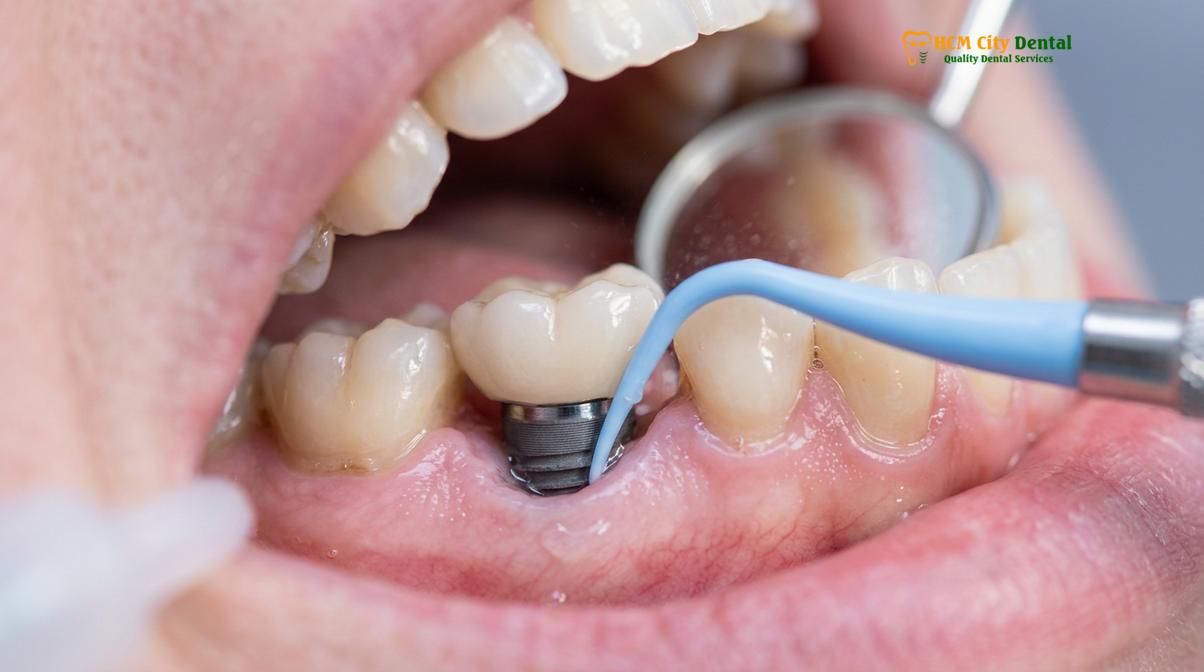
Plastic Scalers & Erythritol Airflow
Modern implant maintenance utilizes specialized plastic or carbon-fiber curettes alongside low-abrasive erythritol airflow to gently eradicate biofilm without damaging prosthetic surfaces.
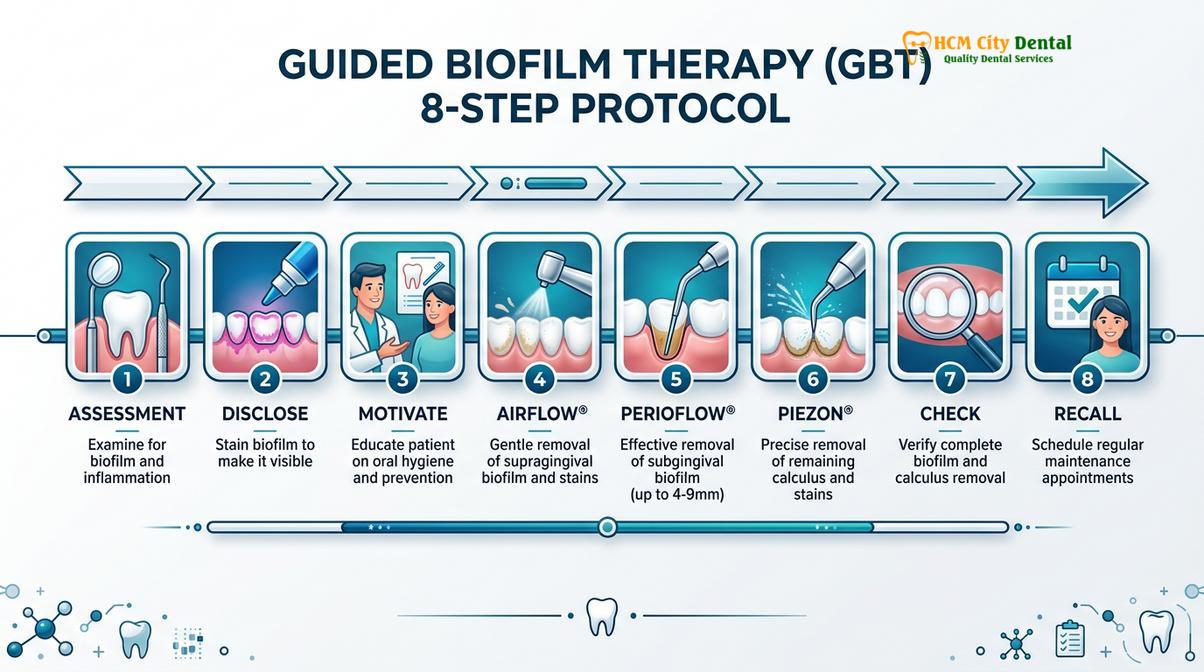
The evolution of dental prophylaxis has culminated in the development of Guided Biofilm Therapy (GBT), a paradigm shift in how we approach the maintenance of complex dental restorations. At the heart of this protocol is the use of advanced airflow technology, specifically utilizing erythritol powder. Erythritol is a minimally abrasive sugar alcohol with a microscopic grain size of just 14 to 25 microns. When propelled by a precisely calibrated mixture of warm water and compressed air, this fine powder creates a kinetic energy spray that instantly dissolves biofilm, soft plaque, and extrinsic stains [4].
The application of airflow on implant surface areas is revolutionary because it allows for the complete decontamination of the titanium without any physical friction from hard instruments. The erythritol spray safely penetrates deep into the peri-implant pockets, neutralizing bacteria in areas that are entirely inaccessible to traditional curettes. Furthermore, this low-abrasive powder is completely safe for use on the highly polished surfaces of porcelain crowns, ceramic veneers, and the delicate margins where these restorations meet the natural tooth structure.
| Feature | Traditional Scaling & Polishing | Guided Biofilm Therapy (GBT) |
|---|---|---|
| Primary Instruments | Stainless steel scalers, abrasive prophy paste | Erythritol Airflow, specialized plastic curettes |
| Safety on Titanium | High risk of scratching and surface damage | 100% safe, non-abrasive to titanium |
| Safety on Porcelain | Paste can dull the ceramic glaze over time | Preserves high-gloss ceramic finish |
| Subgingival Reach | Limited by instrument size and tissue tension | Airflow penetrates deep periodontal pockets |
| Patient Comfort | Often causes sensitivity and vibration discomfort | Warm water and gentle spray ensure high comfort |
The GBT protocol is a systematic, 8-step approach that begins with the application of a disclosing solution. This harmless dye stains the invisible biofilm, making it clearly visible to both the clinician and the patient. By visually guiding the cleaning process, the hygienist can target the airflow spray precisely where it is needed, ensuring 100% biofilm removal while minimizing unnecessary instrumentation on clean surfaces. Following the airflow stage, any remaining hard calculus is gently removed using specialized, implant-safe ultrasonic tips or plastic hand instruments.
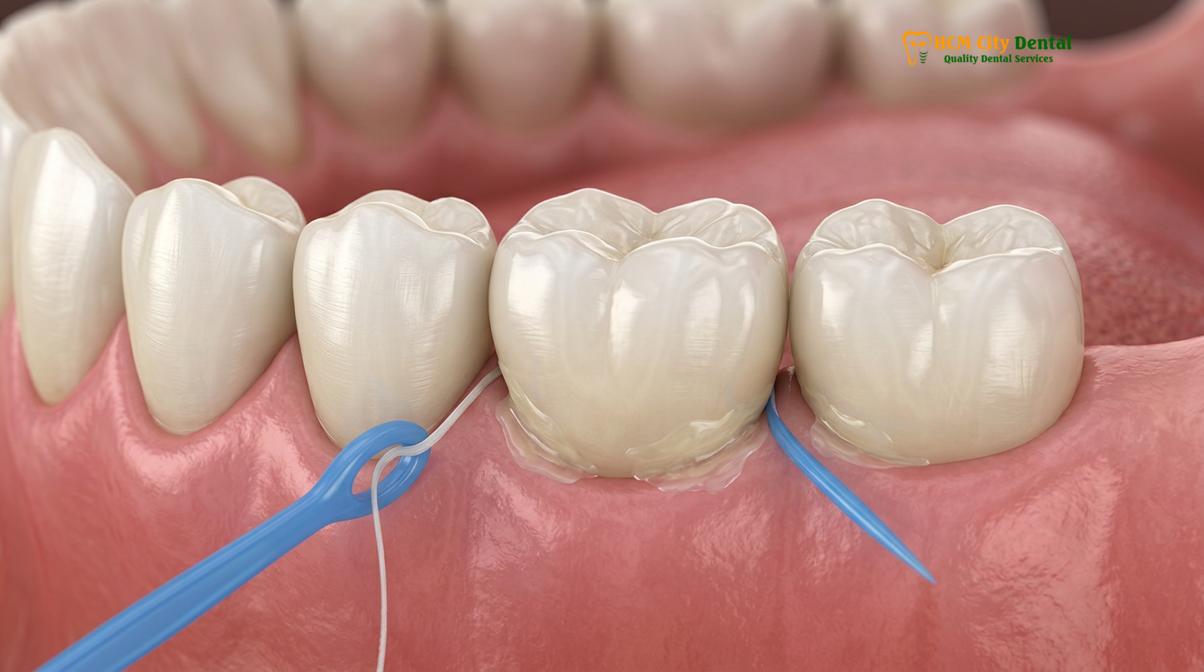
Cleaning Under Bridges
Dental bridges require meticulous sub-pontic cleaning using specialized floss threaders, interdental brushes, and targeted ultrasonic irrigation to prevent decay on supporting abutment teeth.
A dental bridge is a fixed prosthetic device used to span the gap created by one or more missing teeth. It consists of two primary components: the abutments (the crowns placed on the natural teeth or implants adjacent to the gap) and the pontic (the artificial tooth that “bridges” the empty space). While bridges are highly effective for restoring function and aesthetics, their anatomical design creates unique challenges for oral hygiene.
The most critical area of a dental bridge is the tissue-facing surface of the pontic, known as the intaglio surface. Because the pontic rests directly against the gum ridge, it creates a sheltered concavity where food particles and bacterial biofilm easily become trapped. Standard dental floss cannot be pulled down through the connected crowns, making traditional flossing impossible. If the sub-pontic space is not cleaned daily, the stagnant bacteria will cause severe inflammation of the underlying gum tissue and, more dangerously, initiate aggressive decay at the margins of the supporting abutment teeth.
To effectively clean under a dental bridge, patients must utilize specialized tools. A floss threader—a flexible plastic loop—is used to guide a piece of spongy “super floss” underneath the pontic. Once threaded, the spongy section of the floss is swept back and forth against the base of the bridge and around the abutment margins to physically wipe away the plaque. Additionally, appropriately sized interdental brushes should be used to clean the embrasure spaces (the triangular gaps between the teeth) at both ends of the bridge.
During a professional cleaning, the clinician will use specialized ultrasonic tips to flush the sub-pontic areas with antimicrobial solutions, ensuring that any calcified deposits hidden beneath the bridge are safely and thoroughly removed without damaging the porcelain framework.
Long-Term Maintenance
A customized periodontal maintenance schedule, combining daily at-home care with professional bi-annual debridement, is essential for the lifelong success of dental restorations.
The longevity of dental implants, crowns, and bridges is not solely determined by the skill of the surgeon or the quality of the materials used; it is heavily dependent on the patient’s commitment to long-term maintenance. Restorative dentistry is an investment, and like any significant investment, it requires ongoing protection. A robust maintenance protocol bridges the gap between daily home care and professional clinical oversight.
At home, patients must adopt advanced brushing techniques, such as the modified Bass method, which involves angling the soft bristles of the toothbrush at a 45-degree angle toward the gumline to gently sweep plaque out of the sulcus. The integration of a high-quality water flosser is strongly recommended for patients with extensive bridgework or full-arch implant prosthetics (such as All-on-4). The pulsating hydraulic pressure of a water flosser is highly effective at flushing out non-adherent bacteria and food debris from deep pockets and complex prosthetic architectures where traditional floss cannot reach.
Clinical Case Review: A 55-year-old patient presented to HCMC Dental Clinic in Ho Chi Minh City with generalized bleeding around a full-arch implant-supported bridge. Diagnostic imaging revealed early peri-implant mucositis due to inadequate sub-prosthetic cleaning. The clinical team initiated a strict Guided Biofilm Therapy protocol and instructed the patient on the proper use of a water flosser and interdental brushes. Within four weeks, the tissue inflammation completely resolved, halting any potential bone loss and securing the long-term stability of the implant bridge.
Professionally, patients with complex restorations should adhere to a strict recall schedule. While a standard prophylaxis every six months is sufficient for healthy natural teeth, patients with a history of periodontal disease or those supporting multiple implants may require professional periodontal maintenance every three to four months. These frequent visits allow the dental team to monitor the integrity of the prosthetic margins, assess the health of the peri-implant tissues, and intercept any inflammatory processes before they cause irreversible structural damage [5].
Clinical Technology and Pricing at HCMC Dental Clinic
Our clinic utilizes advanced Dual Scaler technology and Guided Biofilm Therapy to provide customized, painless cleaning protocols for natural teeth and complex restorations.
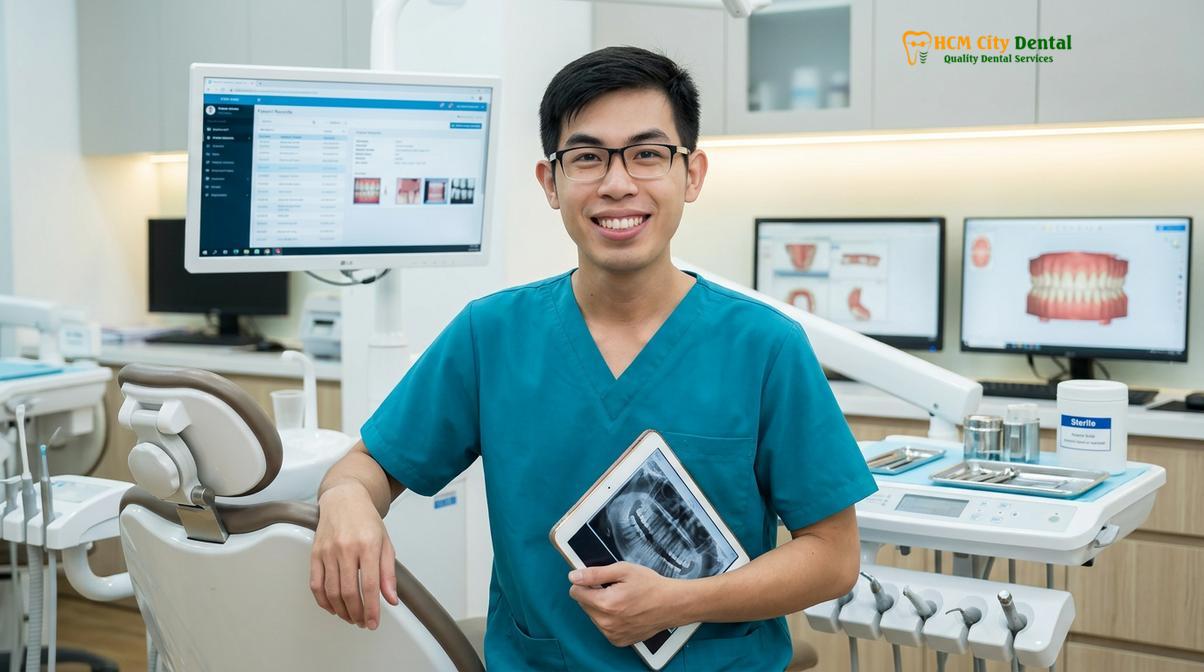
At HCMC Dental Clinic, we recognize that a “one-size-fits-all” approach to dental cleaning is clinically obsolete, especially when managing delicate implants and ceramics. To provide the highest standard of care, we employ a “Dual Scaler Advantage,” equipping our treatment rooms with both Piezoelectric and Magnetostrictive ultrasonic technologies. This allows our clinicians to customize the mechanical debridement process based on the specific density of the calculus and the patient’s individual sensitivity threshold.
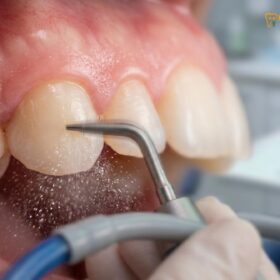
Piezoelectric Scalers (such as Acteon/Satelec systems) utilize ceramic crystals to generate linear, back-and-forth tip movements at frequencies up to 32 kHz. This linear motion is highly precise, generates minimal heat, and is exceptionally gentle on the tooth structure, making it the preferred choice for patients with sensitive teeth, exposed root surfaces, or delicate restorative margins. Conversely, Magnetostrictive Scalers (such as the Dentsply Cavitron) utilize a metal stack to create an elliptical, figure-eight motion, vibrating all sides of the tip simultaneously. This multi-directional energy is ideal for the rapid breakdown of heavy, tenacious calculus and comprehensive full-mouth debridement.
“The true power of modern ultrasonic scaling lies in the cavitation effect—the rapid formation and collapse of microscopic water bubbles at the instrument tip. This localized hydraulic energy physically tears apart bacterial cell walls, providing a profound antimicrobial effect deep within the periodontal pocket without requiring aggressive scraping.”
Dr. Cuong emphasizes that the integration of the Swiss EMS Guided Biofilm Therapy (GBT) protocol represents the pinnacle of our preventive care. By utilizing warm water and 25μm erythritol powder, GBT ensures that biofilm is eradicated painlessly and safely, preserving the microscopic integrity of every implant, crown, and veneer we treat.
Transparent Pricing Structure:
- Standard Ultrasonic Scaling & Polishing: 500,000 to 800,000 VND (~$20 to $32 USD). (Walk-in: 800,000 to 1,300,000 VND).
- Airflow Prophylaxis / Guided Biofilm Therapy (GBT): 1,500,000 to 2,000,000 VND (~$60 to $80 USD). (Walk-in: 2,500,000 to 3,300,000 VND).
- Scaling & Root Planing (SRP deep cleaning per quadrant): 1,000,000 to 1,500,000 VND (~$40 to $60 USD). (Walk-in: 1,600,000 to 2,500,000 VND).
- Full Mouth Debridement (Heavy Tartar Removal): 2,000,000 to 3,000,000 VND (~$80 to $120 USD). (Walk-in: 3,300,000 to 5,000,000 VND).
Note: Patients who book their appointment in advance via WhatsApp are eligible for a -40% discount off the standard walk-in rates. According to the latest clinic fee schedule, these prices reflect our commitment to accessible, premium dental care in Ho Chi Minh City.
When to See a Doctor
Immediate clinical evaluation is necessary if you experience bleeding around implants, mobility of crowns or bridges, persistent bad breath, or localized gum swelling.
While diligent home care and scheduled professional cleanings form the foundation of oral health, certain clinical signs demand immediate professional intervention. Dental restorations are designed to be stable and asymptomatic. Any deviation from this baseline indicates a potential underlying pathology that requires prompt diagnostic imaging and clinical assessment.
You should schedule an immediate consultation at a qualified dental facility if you experience any of the following symptoms:
- Bleeding upon brushing or flossing around an implant: This is the primary indicator of peri-implant mucositis and must be treated before it progresses to bone loss.
- Mobility or shifting of a crown or bridge: A loose prosthetic indicates either a failure of the underlying cement seal or, more severely, structural damage to the supporting abutment tooth or implant fixture.
- Purulent exudate (pus) or localized swelling: Swelling around the gumline of a restoration is a clear sign of an active, acute bacterial infection that requires immediate drainage and antimicrobial therapy.
- Persistent bad breath or a metallic taste: These symptoms often point to stagnant bacteria trapped beneath a poorly fitting bridge or deep within a periodontal pocket.
Early detection is the key to preserving your dental restorations. A comprehensive clinical examination, utilizing digital radiography and periodontal probing, allows the dental team to accurately diagnose the issue and implement targeted, conservative treatments to save the prosthetic.
Frequently Asked Questions
Can you scale a dental implant?
Yes, but only using specialized non-metallic instruments such as plastic, carbon-fiber, or titanium-coated scalers. Traditional stainless steel scalers must never be used on implants, as they can scratch the delicate titanium surface, creating microscopic grooves that harbor destructive bacteria and increase the risk of peri-implantitis. Modern clinics prefer using Guided Biofilm Therapy with low-abrasive powders to safely clean the implant surface without any physical scraping.
What happens if titanium implants are scratched?
Scratched titanium implants suffer from increased surface roughness, which exponentially accelerates bacterial biofilm accumulation. This compromised surface makes it nearly impossible to keep the implant clean at home, inevitably leading to chronic tissue inflammation, progressive bone loss, and potentially the complete failure of the dental implant. Once the factory-machined surface is damaged, the risk of untreatable peri-implantitis rises dramatically.
How do you clean under a dental bridge?
Cleaning under a dental bridge requires the daily use of floss threaders, specialized spongy floss, or interdental brushes to physically sweep away plaque from the pontic (false tooth). Additionally, utilizing a water flosser provides targeted hydraulic pressure to flush out trapped food debris and bacteria from hard-to-reach subgingival areas. Standard brushing alone cannot access the critical space between the bridge and the gum tissue.
Is Guided Biofilm Therapy safe for porcelain crowns?
Yes, Guided Biofilm Therapy (GBT) is exceptionally safe and highly recommended for porcelain crowns and veneers. By utilizing ultra-fine, low-abrasive erythritol powder and warm water, GBT effectively removes stubborn stains and biofilm without scratching the ceramic glaze or degrading the delicate margins where the crown meets the natural tooth. This preserves the high-gloss aesthetic finish of the restoration.
How often should I get a professional cleaning if I have dental implants?
Patients with dental implants should undergo professional periodontal maintenance every three to six months, depending on their individual clinical risk factors. Frequent monitoring allows the dental team to detect early signs of peri-implant mucositis, safely debride the restorations, and ensure the long-term stability of the supporting jawbone. A standard six-month recall may not be sufficient for patients with complex full-mouth rehabilitations.
References
- Journal of Periodontology. The pathogenesis and treatment of peri-implant diseases. (2021).
- Clinical Oral Implants Research. Surface alterations of titanium implants after scaling. (2020).
- International Journal of Dental Hygiene. Efficacy of erythritol air-polishing in periodontal maintenance. (2022).
- Journal of Clinical Periodontology. Guided Biofilm Therapy versus traditional scaling: A clinical review. (2019).
- American Dental Association (ADA). Clinical guidelines for the maintenance of dental restorations. (2023).
To ensure the lifelong success of your dental restorations, contact HCMC Dental Clinic today to schedule your customized Guided Biofilm Therapy session. Our expert team is dedicated to providing safe, painless, and highly effective maintenance for all your implant and cosmetic needs.