If your gums bleed during flossing, it is typically a clinical sign of plaque-induced gingivitis, not a normal reaction to dental floss. Healthy gingival tissue is resilient and does not bleed under normal flossing pressure. Bleeding indicates underlying inflammation caused by bacterial biofilm and subgingival calculus accumulation.
Clinical Summary:
Bleeding gums during flossing primarily indicate periodontal inflammation triggered by bacterial biofilm and hardened calculus. While flossing effectively removes soft plaque, it cannot dislodge calcified tartar. Professional intervention utilizing advanced ultrasonic scaling and Guided Biofilm Therapy (GBT) is required to eradicate subgingival pathogens, halt disease progression, and restore gingival health without damaging the underlying enamel or periodontal attachment.
Key Takeaways:
- Healthy gums do not bleed during routine flossing; bleeding is a primary indicator of gingival inflammation.
- Flossing only removes soft bacterial biofilm, not hardened subgingival calculus.
- Plaque-induced gingivitis is completely reversible with professional dental cleaning and proper home care.
- Advanced treatments like Guided Biofilm Therapy (GBT) use low-abrasive erythritol powder to painlessly remove biofilm.
- Persistent bleeding despite good hygiene may signal advancing periodontitis, requiring immediate clinical evaluation.
Why Healthy Gums Don’t Bleed
Healthy gingival tissue forms a tight, resilient seal around the teeth that easily withstands the mechanical friction of daily flossing without hemorrhaging.
To understand why gums bleed, it is essential to first understand the anatomy of healthy periodontal tissue. Healthy gingiva is typically firm, pale pink (though pigmentation varies by genetics), and exhibits a stippled texture similar to the surface of an orange. The gingival margin forms a tight, protective collar around the cervical portion of each tooth, preventing bacteria from invading the deeper periodontal ligaments and alveolar bone.
The outermost layer of healthy gum tissue is composed of keratinized epithelium. This specialized cellular layer is tough and highly resistant to mechanical stress, much like the skin on the palms of your hands. When you glide dental floss between your teeth and curve it in a C-shape against the tooth surface, this keratinized tissue easily absorbs the friction. Furthermore, the underlying vascular network in healthy gums is well-regulated and protected by dense collagen fibers[1].
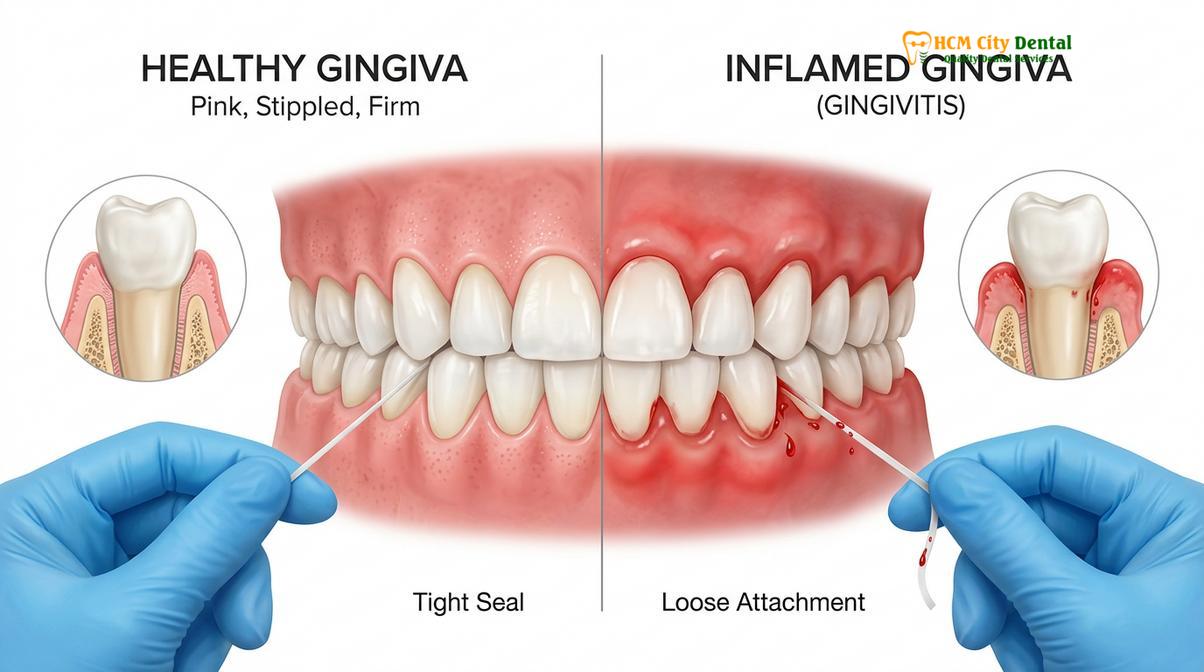
Conversely, when bacterial biofilm is allowed to accumulate along the gumline, the body initiates an immune response. The localized immune system dilates the blood vessels in the gums to deliver white blood cells to fight the bacterial toxins. This vasodilation causes the gums to become engorged with blood, swelling and losing their firm, stippled texture. The protective keratinized layer thins out, and the micro-capillaries become fragile and migrate closer to the surface. Consequently, even the slight pressure of dental floss is enough to rupture these delicate, engorged capillaries, resulting in the bleeding you see in the sink.
Plaque-Induced Gingivitis
Plaque-induced gingivitis is the most common cause of bleeding gums, resulting from an inflammatory immune response to bacterial biofilm accumulating at the gingival margin.
The human mouth is a complex microbiome housing hundreds of species of bacteria. Within minutes after brushing, a thin, acellular protein layer called the acquired pellicle forms over the enamel. Bacteria rapidly adhere to this pellicle, multiplying and secreting an extracellular matrix to form a sticky, organized colony known as dental plaque or biofilm. If this biofilm is not mechanically disrupted every 12 to 24 hours through brushing and flossing, it matures and shifts from predominantly harmless aerobic bacteria to highly pathogenic anaerobic bacteria.
These anaerobic bacteria produce metabolic byproducts, including endotoxins, hydrogen sulfide, and destructive enzymes like collagenase. When these toxins seep into the gingival sulcus (the shallow crevice between the tooth and the gum), they trigger an acute inflammatory response. This condition is clinically diagnosed as plaque-induced gingivitis. The classic signs of this condition include erythema (redness), edema (swelling), and bleeding upon probing or flossing.
“The presence of bleeding upon probing or flossing is the earliest and most reliable clinical indicator of gingival inflammation, often preceding visual signs of redness or swelling by several days.”
It is crucial to understand that plaque-induced gingivitis is entirely reversible. Because the inflammation is confined to the soft tissues and has not yet destroyed the underlying bone or periodontal ligaments, removing the bacterial irritant allows the tissues to heal completely. However, many patients mistakenly believe they should stop flossing when their gums bleed. Avoiding flossing only allows the pathogenic biofilm to flourish, exacerbating the inflammation and accelerating the progression of the disease.
Flossing Can’t Remove Calculus
While dental floss is highly effective at disrupting soft bacterial plaque, it is completely ineffective against calcified tartar, which requires professional ultrasonic instrumentation to remove.
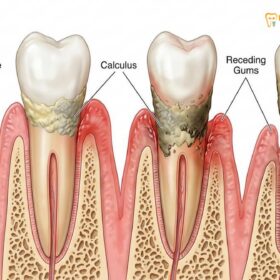
A common frustration among patients is that their gums continue to bleed despite adopting a rigorous daily flossing routine. In these cases, the culprit is almost always subgingival calculus (tartar). If soft bacterial plaque is left undisturbed on the teeth for 48 to 72 hours, it begins to mineralize. Calcium phosphate and other mineral salts naturally present in human saliva precipitate into the biofilm matrix, hardening it into a cement-like substance.
Once plaque has calcified into calculus, it becomes physically impossible to remove with a toothbrush or dental floss. Calculus has a highly porous and rough microscopic surface, which acts as an ideal retention site for even more living bacterial biofilm. This creates a vicious cycle: the calculus harbors bacteria directly against the delicate gingival tissue, perpetuating chronic inflammation and continuous bleeding.
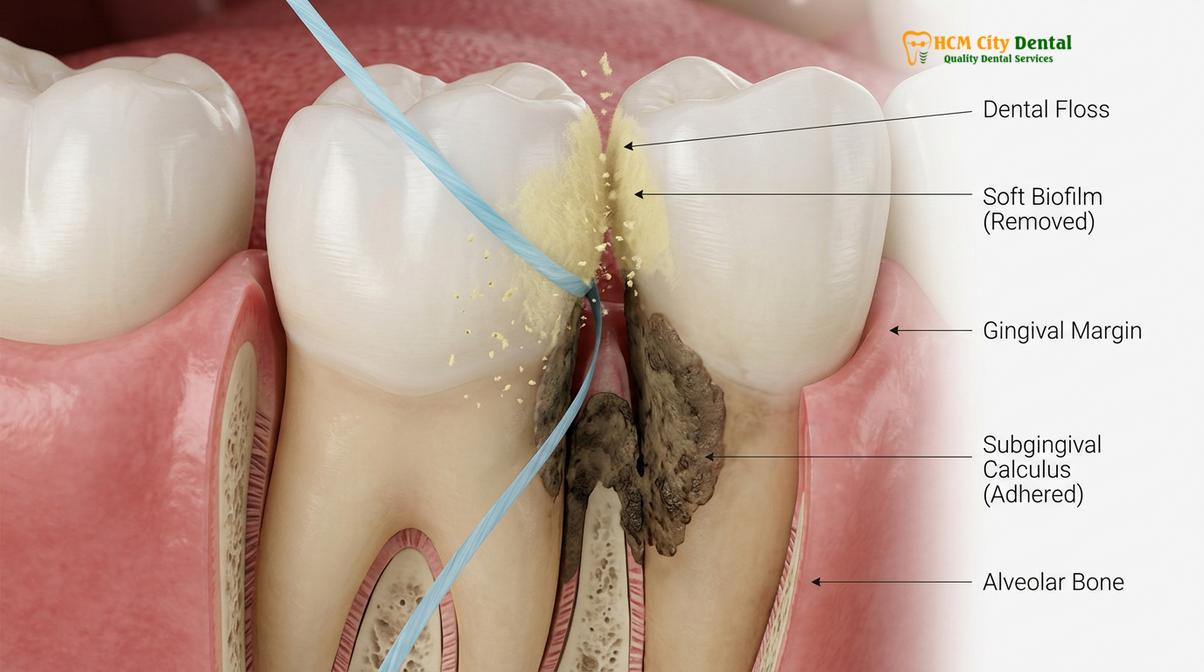
Attempting to remove calculus with dental floss is not only futile but can also be harmful. The floss will simply glide over the hardened deposits or shred against the rough edges, failing to clean the actual tooth surface. The only way to break this cycle of inflammation is through professional intervention to physically shatter and remove the calcified deposits.
Clinical Warning: Do not attempt to forcefully floss or use sharp metal tools to scrape away hardened calculus at home. Aggressive mechanical force against tartar deposits can cause severe gingival lacerations, accelerate gum recession, and permanently damage the delicate periodontal attachment.
How Hygienist Heals Gums
Professional dental hygiene protocols utilize advanced ultrasonic technology and targeted air-polishing to eradicate subgingival pathogens, allowing inflamed gingival tissues to heal and reattach.
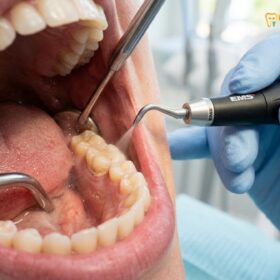
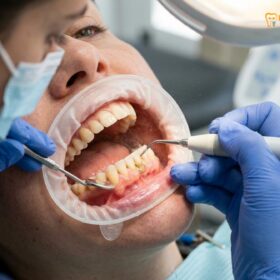
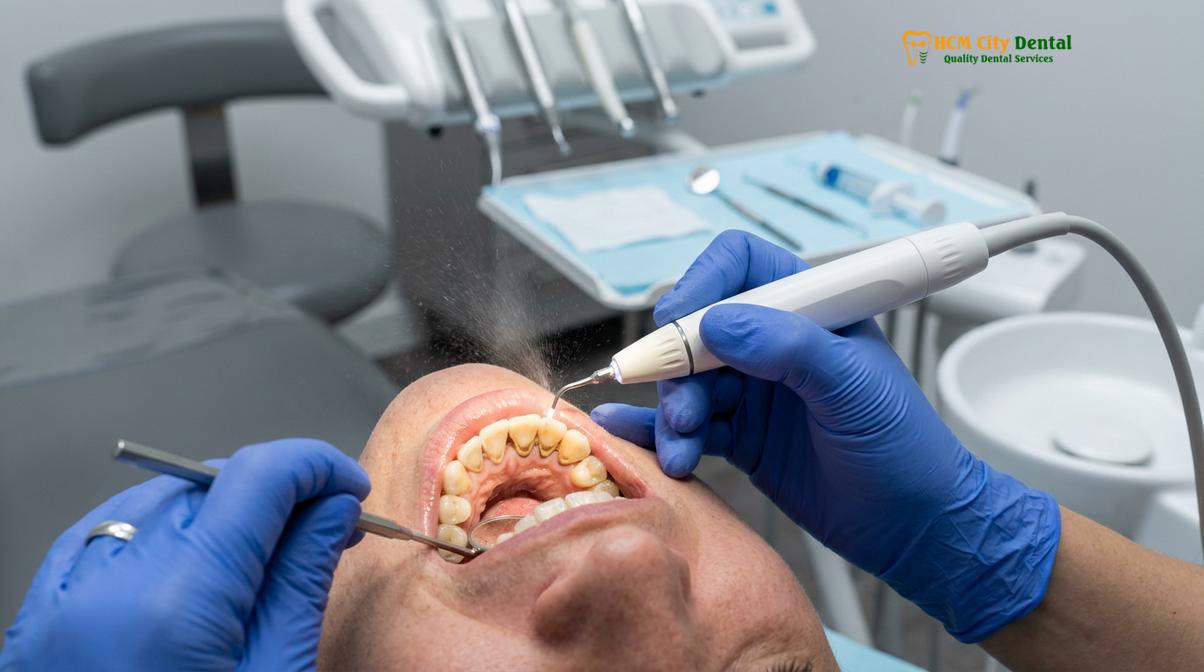
To resolve bleeding gums and restore periodontal health, patients require a comprehensive professional dental cleaning. Modern dental clinics have moved far beyond the traditional, uncomfortable scraping with hand instruments. Today, the gold standard of care involves sophisticated ultrasonic technology and specialized biofilm eradication protocols.
The Dual Scaler Advantage
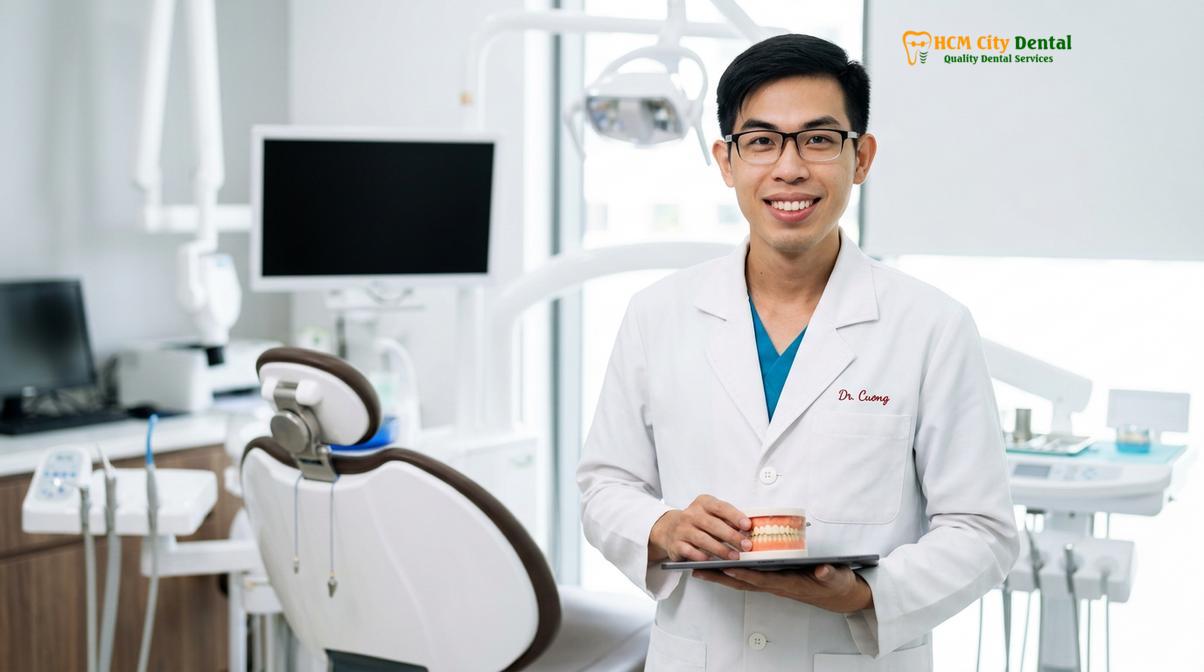
At HCMC Dental Clinic, our clinical team employs a “Dual Scaler Advantage,” utilizing both Piezoelectric and Magnetostrictive ultrasonic scalers to customize treatments based on the patient’s specific calculus density and tissue sensitivity. Dr. Nguyen Van Cuong emphasizes that selecting the appropriate ultrasonic frequency is critical for maximizing calculus removal while ensuring absolute enamel preservation and patient comfort.
- Piezoelectric Scalers (e.g., Acteon/Satelec): These devices utilize ceramic crystals to generate linear, back-and-forth tip movements, operating at frequencies up to 32 kHz. Because they produce less heat and operate with a highly precise linear motion, piezoelectric scalers are significantly gentler. They are the preferred choice for patients with sensitive teeth, children, and those undergoing orthodontic treatment.
- Magnetostrictive Scalers (e.g., Dentsply Cavitron): These scalers use a stack of metal strips to create an elliptical, figure-eight motion, vibrating all sides of the tip simultaneously. This multi-directional energy is exceptionally powerful, making it ideal for breaking down heavy calculus bridges, deep subgingival tartar, and performing full mouth debridement.
Both technologies rely on the “cavitation effect.” As the scaler tip vibrates at ultrasonic speeds, it creates microscopic bubbles in the cooling water stream. When these bubbles implode, they release shockwaves that effectively lyse (burst) the cell walls of pathogenic bacteria, flushing the periodontal pockets clean[2].
Guided Biofilm Therapy (GBT)
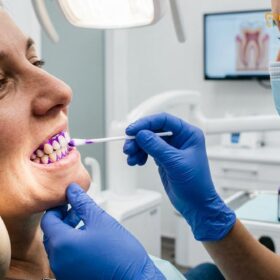
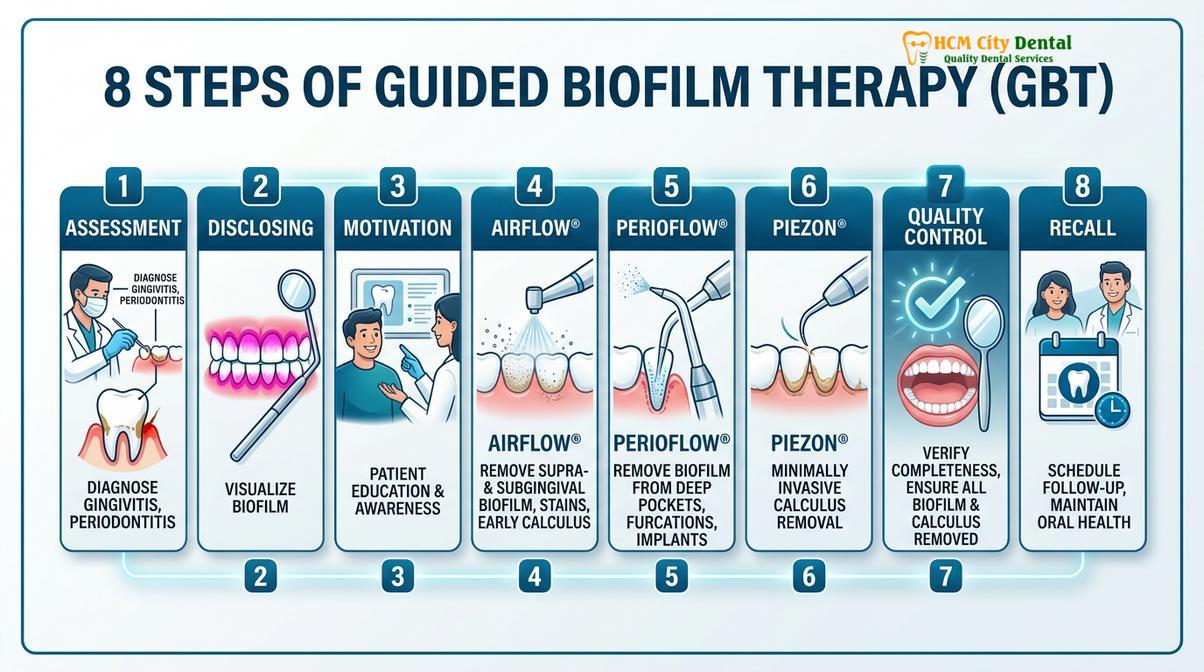
For the ultimate in gentle and effective cleaning, we feature the premium Swiss EMS Guided Biofilm Therapy (GBT) protocol. GBT represents a paradigm shift in preventive dentistry. Instead of scaling first and polishing last, GBT uses a disclosing solution to make invisible plaque visible, followed immediately by Airflow technology.
The Airflow system utilizes a precisely calibrated mixture of warm water, air, and low-abrasive erythritol powder (with an ultra-fine 25μm grain size). This combination painlessly blasts away biofilm, early calculus, and extrinsic stains from the enamel, dentin, and soft tissues. Because erythritol is softer than enamel, titanium implants, crowns, and veneers, it cleans flawlessly without causing microscopic scratches. The GBT 8-step protocol ensures 100% biofilm removal, creating the optimal environment for inflamed, bleeding gums to heal rapidly[3].
Clinical Pricing Structure
Understanding the investment in your periodontal health is important. According to the latest clinic fee schedule at HCMC Dental Clinic, our transparent pricing structure is designed to accommodate various clinical needs:
- Standard Ultrasonic Scaling & Polishing: 500,000 to 800,000 VND (~$20 to $32 USD) (Walk-in: 800,000 to 1,300,000 VND).
- Airflow Prophylaxis / Guided Biofilm Therapy (GBT): 1,500,000 to 2,000,000 VND (~$60 to $80 USD) (Walk-in: 2,500,000 to 3,300,000 VND).
- Scaling & Root Planing (SRP deep cleaning per quadrant): 1,000,000 to 1,500,000 VND (~$40 to $60 USD) (Walk-in: 1,600,000 to 2,500,000 VND).
- Full Mouth Debridement (Heavy Tartar Removal): 2,000,000 to 3,000,000 VND (~$80 to $120 USD) (Walk-in: 3,300,000 to 5,000,000 VND).
Note: Patients booking directly via WhatsApp are eligible for a -40% discount on the walk-in rates listed above.
| Technology | Mechanism of Action | Primary Clinical Indication | Patient Comfort Level |
|---|---|---|---|
| Piezoelectric Scaler | Linear vibration (up to 32 kHz) via ceramic crystals | Sensitive teeth, precise subgingival scaling, orthodontics | High (Low heat, gentle linear motion) |
| Magnetostrictive Scaler | Elliptical vibration via metal stacks | Heavy calculus removal, full mouth debridement | Moderate (Requires more water cooling) |
| Airflow (GBT) | Warm water + Erythritol powder (25μm) kinetic energy | Biofilm eradication, stain removal, implant maintenance | Very High (Virtually painless, warm water) |
When It Signals Periodontitis
If left untreated, gingivitis can progress into periodontitis, a severe and irreversible infection that destroys the periodontal ligaments and alveolar bone supporting the teeth.
While bleeding gums are often a sign of reversible gingivitis, chronic and ignored bleeding can be a harbinger of a much more destructive disease: periodontitis. When the bacterial biofilm is allowed to persist subgingivally for extended periods, the chronic inflammatory response begins to turn against the body’s own tissues. The immune system, in its attempt to wall off the bacterial infection, releases enzymes that inadvertently break down the periodontal ligaments and resorb the alveolar bone that anchors the teeth in the jaw.
As the bone recedes, the gingival sulcus deepens, forming a “periodontal pocket.” A healthy sulcus is typically 1 to 3 millimeters deep. In periodontitis, these pockets can deepen to 4, 6, or even 8 millimeters or more. These deep pockets create an oxygen-deprived environment where highly aggressive, tissue-destroying anaerobic bacteria thrive. At this stage, standard brushing and flossing cannot reach the base of the pocket, making home care entirely ineffective at stopping the disease progression[4].
Clinical Case Study: A 42-year-old patient visited HCMC Dental Clinic in Ho Chi Minh City seeking bleeding gums treatment saigon after experiencing persistent bleeding and mild tooth mobility. Upon examination, Dr. Nguyen Van Cuong recorded periodontal pocket depths of 5-6mm and identified significant subgingival calculus on radiographic imaging. The diagnosis was localized moderate periodontitis. The patient underwent comprehensive gum inflammation scaling (Scaling and Root Planing) combined with the GBT protocol. Following a strict periodontal maintenance schedule, the tissue inflammation resolved, pocket depths reduced to a healthy 3mm, and the bleeding ceased entirely.
“Periodontitis is a silent disease; by the time a patient notices tooth mobility or severe gingival recession, significant and often irreversible alveolar bone destruction has already occurred.”
Treating periodontitis requires advanced clinical workflows, specifically Scaling and Root Planing (SRP). This deep cleaning procedure involves meticulously removing calculus from the root surfaces deep within the periodontal pockets and smoothing the root dentin to prevent bacterial reattachment. Following SRP, patients are placed on a strict periodontal maintenance schedule, typically requiring professional cleanings every 3 to 4 months to prevent disease relapse[5].
When to See a Doctor
Persistent bleeding that does not resolve after two weeks of diligent oral hygiene requires immediate professional evaluation to rule out advanced periodontal disease or systemic health issues.
While occasional bleeding after a long hiatus from flossing can be normal for a few days, chronic bleeding is a definitive red flag. You should schedule a clinical examination with a dental professional if you experience any of the following symptoms:
- Persistent Bleeding: Gums that bleed consistently during brushing or flossing for more than 14 consecutive days.
- Spontaneous Bleeding: Gums that bleed unprovoked, such as finding blood on your pillow in the morning or tasting blood throughout the day.
- Purulent Exudate (Pus): The presence of a yellowish or white discharge between the teeth and gums when pressure is applied.
- Severe Halitosis: Chronic bad breath or a persistent metallic taste in the mouth that does not improve with brushing or mouthwash.
- Gingival Recession: Gums that appear to be pulling away from the teeth, making the teeth look longer or exposing the sensitive root surfaces.
- Tooth Mobility: Any noticeable shifting, looseness, or changes in the way your upper and lower teeth fit together when you bite.
Furthermore, bleeding gums can sometimes be an oral manifestation of systemic health conditions. Uncontrolled diabetes, autoimmune disorders, leukemia, and vitamin deficiencies (such as Vitamin C or K) can all exacerbate gingival bleeding. Hormonal fluctuations during pregnancy, puberty, or menopause can also cause an exaggerated inflammatory response to minimal plaque. A thorough clinical evaluation at HCMC Dental Clinic will help differentiate between localized plaque-induced issues and potential systemic contributing factors, ensuring you receive the safest and most effective personalized care.
Frequently Asked Questions
Should I stop flossing if my gums bleed?
No, you should not stop flossing if your gums bleed. Bleeding is a sign of inflammation caused by plaque buildup, and continuing to floss gently daily is essential to remove the bacterial biofilm and allow the gingival tissues to heal. Stopping will only allow the bacteria to multiply, worsening the infection and increasing the bleeding over time.
How long after a cleaning will gums stop bleeding?
Gums typically stop bleeding within three to seven days after a professional dental cleaning. Once the hardened calculus and subgingival bacteria are removed, the inflammatory response subsides, allowing the gingival tissues to reattach and heal completely. Maintaining excellent home care during this recovery period is crucial for optimal healing.
Can gingivitis be reversed completely?
Yes, plaque-induced gingivitis is completely reversible. Because the inflammation has not yet destroyed the underlying alveolar bone or periodontal ligaments, professional scaling combined with excellent daily oral hygiene can restore the gums to a perfectly healthy state without any permanent structural damage.
Is an electric toothbrush better for bleeding gums?
An electric toothbrush equipped with a pressure sensor is highly beneficial for bleeding gums. It prevents aggressive brushing that can lacerate delicate tissues, while the sonic or oscillating action disrupts bacterial plaque more effectively than manual brushing, promoting faster resolution of gingival inflammation.
Does warm saltwater help bleeding gums?
Rinsing with warm saltwater can temporarily soothe bleeding gums and reduce mild inflammation. The hypertonic solution helps draw out excess fluid from swollen tissues and creates a less hospitable environment for bacteria, though it cannot replace professional calculus removal or daily mechanical flossing.
References
- Journal of Clinical Periodontology. Pathogenesis of plaque-induced gingivitis and periodontal disease. (2021).
- International Journal of Dental Hygiene. Efficacy of piezoelectric versus magnetostrictive ultrasonic scaling. (2020).
- Clinical Oral Investigations. Guided Biofilm Therapy and the safety of erythritol air-polishing powder. (2022).
- Journal of Periodontology. Clinical parameters of scaling and root planing in periodontitis therapy. (2019).
- Journal of the American Dental Association. Evidence-based clinical practice guidelines for periodontal maintenance. (2018).