Chewing gum while wearing Invisalign aligners is strongly discouraged by orthodontic professionals. The sticky texture adheres aggressively to the SmartTrack plastic, while the repetitive mechanical force of chewing can warp the trays, disrupting your orthodontic treatment. Always remove your aligners before eating or chewing gum to protect your appliances and maintain optimal oral hygiene.
Clinical Summary:
This comprehensive Invisalign chewing gum eating guide outlines the strict clinical protocols for managing diet and oral habits during clear aligner therapy. Orthodontic experts emphasize that chewing gum, consuming hot beverages, or eating with aligners in place severely compromises the structural integrity of the polyurethane material. Patients must adhere to a strict removal protocol before meals or gum chewing to prevent aligner plastic damage, bacterial entrapment, and treatment delays. Proper post-meal oral hygiene, including brushing, flossing, and rinsing before reinsertion, is critical to preventing tray staining, enamel decalcification, and periodontal inflammation. Adhering to these guidelines ensures that the precise biomechanical forces designed for tooth movement remain uninterrupted.
Key Takeaways:
- Never chew gum with aligners inserted; the elastomers cause severe adhesion and structural warping.
- Remove trays before consuming any food or beverage other than plain, unheated water.
- Hot liquids permanently distort the thermoplastic material, altering the prescribed orthodontic forces.
- Brush and floss teeth thoroughly after eating before reinserting the aligners to prevent decalcification.
- Store aligners safely in their designated hard case during meals to prevent accidental loss or damage.
Why Chewing Gum with Aligners is a Major Risk
Chewing gum with aligners in place exerts excessive occlusal forces and introduces sticky residues that can permanently deform the thermoplastic material and derail your orthodontic progress.
The fundamental mechanics of clear aligner therapy rely on the precise, continuous application of light forces to the periodontal ligament (PDL). When a patient engages in chewing gum with Invisalign trays inserted, they introduce a chaotic and heavy dynamic force into this carefully calibrated system. The human jaw can exert up to 150 pounds per square inch (psi) of bite force during mastication. While natural teeth are supported by the shock-absorbing properties of the PDL, the clear aligner plastic is not designed to withstand this repetitive, high-impact grinding against a resilient, sticky bolus like chewing gum[1].
Modern clear aligners are manufactured from advanced thermoplastic polyurethanes, such as SmartTrack material. This material is engineered for elasticity and shape memory, allowing it to gently push teeth into their new positions over a period of one to two weeks. However, the chemical composition of chewing gum—which includes synthetic elastomers, resins, and waxes—has a high affinity for this specific type of plastic. When you chew gum with your aligners in, the gum base binds microscopically to the surface of the tray. This adhesion is incredibly difficult to break, often resulting in a smeared, unhygienic mess that cannot be removed with standard brushing.
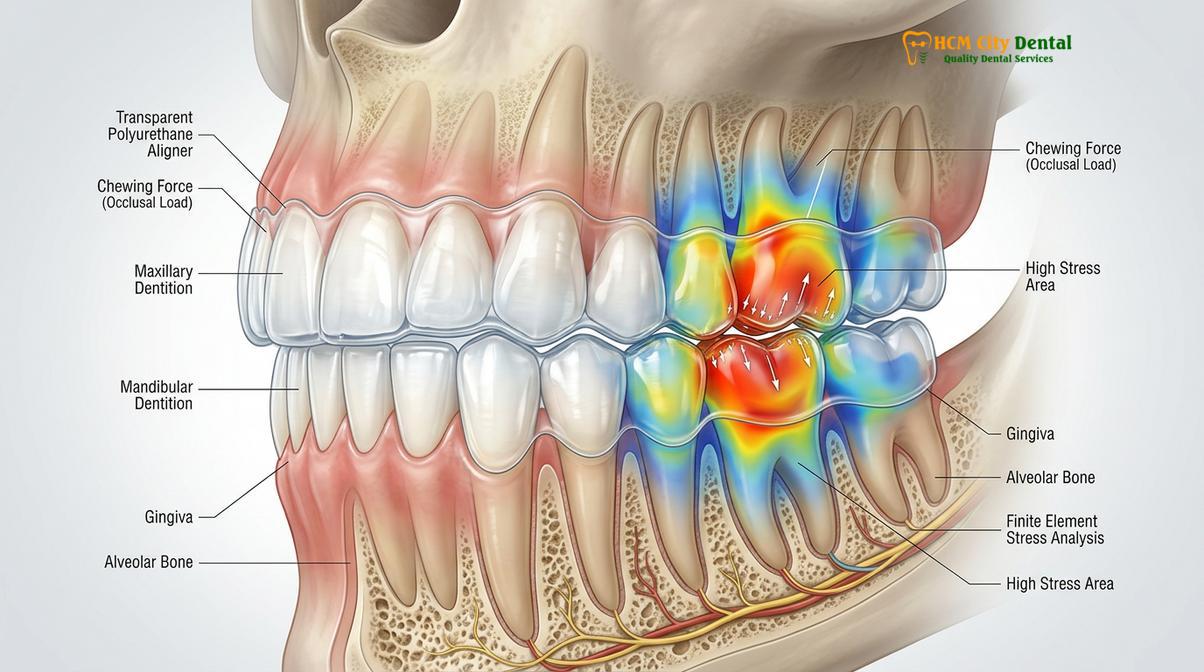
Furthermore, the act of chewing generates localized heat and friction. This combination of mechanical stress and thermal energy can push the aligner plastic past its elastic limit, leading to permanent deformation. Even a microscopic warp in the aligner can alter the vector of force applied to the teeth. If the force vector is incorrect, the teeth will not track properly according to the digital treatment plan, leading to a phenomenon known as “loss of tracking.” When teeth stop tracking, the aligner will exhibit visible air gaps (halos) between the plastic and the incisal edges of the teeth, necessitating a clinical intervention and potentially a mid-course correction or refinement scan.
Beyond the mechanical risks of aligner plastic damage, there is a significant biological risk. If the chewing gum contains sugar, the repetitive chewing action forces the sugary saliva under the margins of the aligner. The aligner acts as a physical barrier, preventing the natural buffering capacity of saliva from reaching the enamel. This creates a highly acidic, sugar-rich microenvironment that rapidly accelerates the proliferation of cariogenic bacteria, such as Streptococcus mutans. This trapped acid can lead to rapid enamel demineralization, presenting clinically as opaque white spot lesions on the facial surfaces of the teeth.
The Impact of Hot Drinks and Food on SmartTrack Plastic
Consuming hot beverages or heated foods while wearing aligners elevates the intraoral temperature past the plastic’s glass transition point, causing immediate and irreversible warping.
A critical component of this Invisalign chewing gum eating guide is understanding the thermal vulnerabilities of orthodontic polymers. Thermoplastic materials are defined by their glass transition temperature (Tg)—the specific temperature range where the polymer transitions from a hard, glassy state to a soft, rubbery state. The polyurethane used in clear aligners is specifically formulated to remain rigid at normal human body temperature (approximately 37°C or 98.6°F) while maintaining enough elasticity to snap over the undercuts of the teeth[2].
However, the temperature of hot coffee, tea, hot chocolate, or soup frequently exceeds 60°C (140°F). When a patient makes the error of drinking coffee with aligners in place, the sudden influx of thermal energy rapidly heats the plastic. As the material approaches or exceeds its glass transition temperature, the polymer chains relax, and the aligner loses its programmed shape memory. Because the aligner is under tension while seated on the teeth, this thermal relaxation causes the plastic to warp and conform to the current, incorrect position of the teeth, rather than pulling the teeth toward their future, desired position.
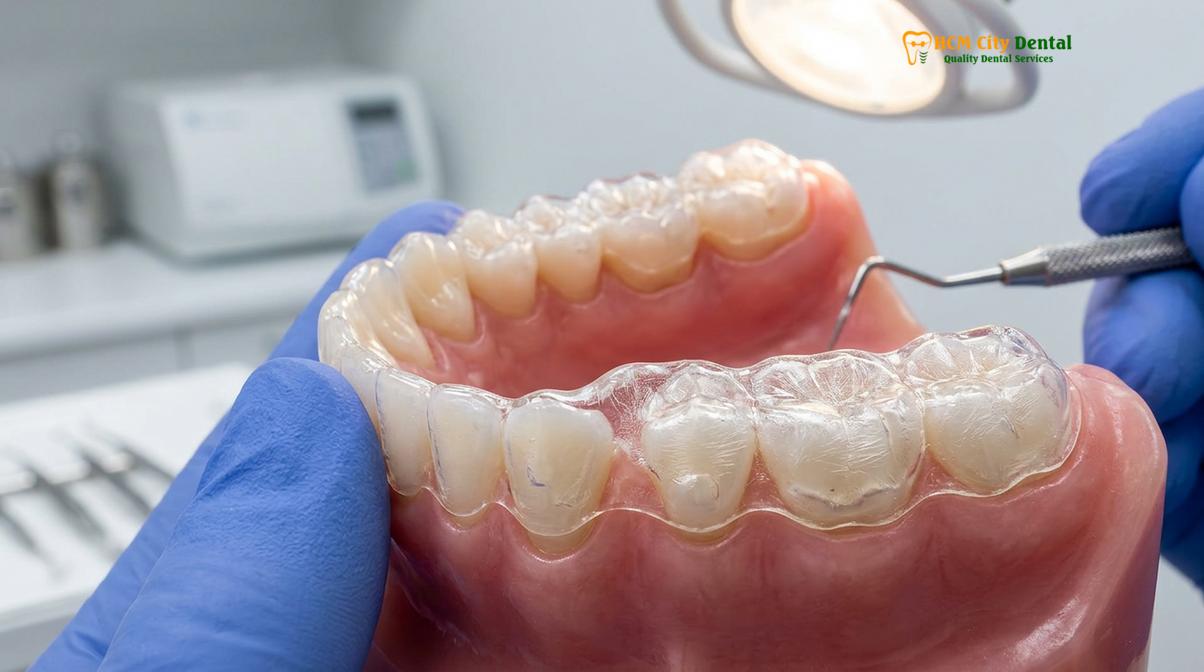
This thermal distortion is entirely irreversible. Once the aligner cools back down to body temperature, it will harden in its new, warped configuration. The patient may not immediately notice the damage, as the aligner might still fit over the teeth, but it will no longer deliver the active orthodontic forces required for treatment. This silent failure can result in weeks of lost progress, as the teeth remain stagnant or even begin to relapse toward their original malocclusion.
In addition to thermal damage, hot beverages like coffee and tea contain high concentrations of chromogens and tannins. These dark pigments are notorious for causing severe discoloration. While the aligner plastic is relatively non-porous, the micro-abrasions accumulated through daily wear and removal create microscopic retention sites for these pigments. Drinking dark, hot liquids will rapidly stain the transparent plastic, turning it a cloudy, unesthetic yellow or brown, entirely defeating the purpose of choosing a “clear” orthodontic appliance.
Rules for Eating: What to Do with Your Trays at Mealtime
Strict adherence to removing your trays before every meal ensures that your aligners remain intact, hygienic, and capable of delivering the precise forces required for tooth movement.
The most significant advantage of clear aligner therapy over traditional fixed Orthodontics is the ability to remove the appliance during meals. This feature allows patients to maintain a completely unrestricted diet, free from the worries of breaking brackets or snapping archwires. However, this freedom requires a high degree of patient compliance and discipline. The golden rule of eating with clear aligners is absolute: the trays must be removed before consuming anything other than plain, unheated water.
The protocol for removal should be practiced until it becomes second nature. Patients should always begin removing the aligner from the lingual (tongue) side of the posterior molars, gently dislodging it from the attachments before working their way to the anterior teeth. Pulling forcefully from the front can cause the plastic to crack or tear, particularly in areas where the aligner is engineered to be thinner for flexibility. Once removed, the aligners must be immediately rinsed with cool water to remove residual saliva, which can dry and form a calcified, malodorous plaque film on the plastic.
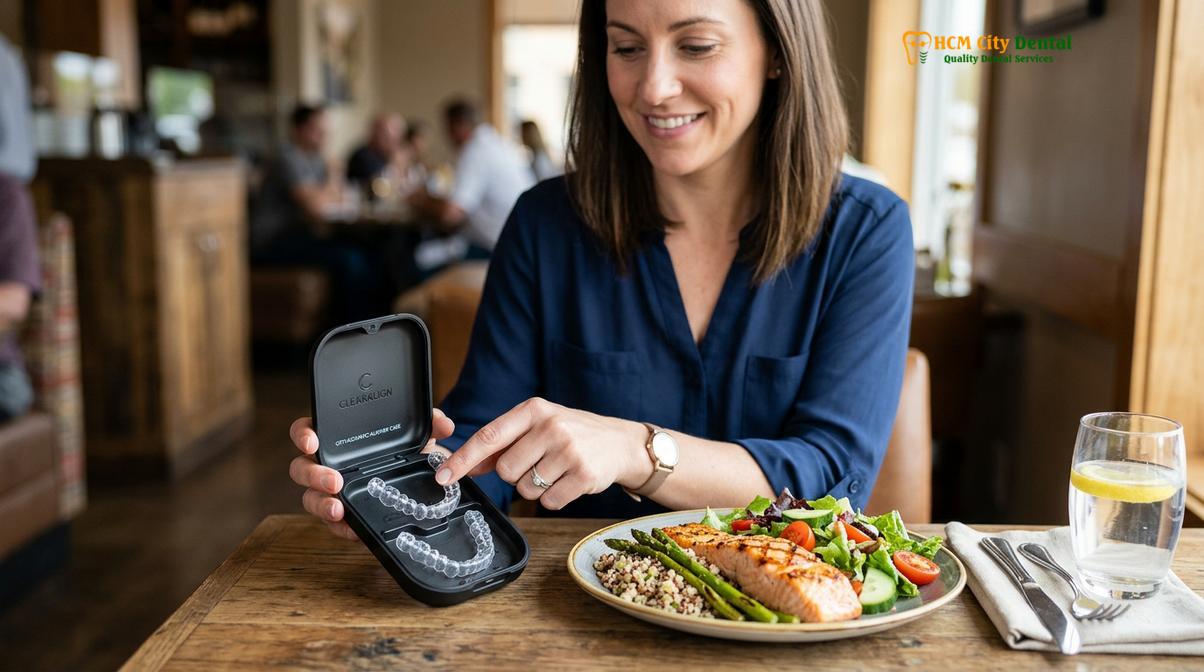
Proper storage during meals is a critical point of failure for many patients. Aligners should never be placed directly on a table, placed in a pocket, or, most dangerously, wrapped in a paper napkin. The “napkin trap” is the leading cause of lost aligners worldwide. A clear plastic tray wrapped in white tissue is virtually invisible and is routinely thrown away by well-meaning restaurant staff or the patients themselves at the end of a meal.
If an aligner is lost or severely damaged during a meal, patients must contact their orthodontist immediately. Depending on where the patient is in their wear cycle, the clinician may advise them to move forward to the next tray prematurely or to step back into the previous tray to hold the teeth in place while a replacement is ordered. Leaving the teeth without any retention for even a few days can result in rapid periodontal ligament relaxation and orthodontic relapse, similar to the risks discussed in our guide on lost retainer replacement protocols.
Safe Drinks to Consume While Wearing Invisalign
Plain, unheated water is the only beverage clinically approved for consumption while wearing clear aligners to prevent material degradation, enamel demineralization, and severe discoloration.
Hydration is essential, but the choice of beverage while wearing clear aligners requires careful consideration. The oral cavity is a delicate ecosystem governed by pH levels and salivary flow. Normal resting saliva has a neutral pH of approximately 6.8 to 7.2. When you consume acidic or sugary beverages, the pH of the mouth drops rapidly. According to the Stephan Curve, a well-documented concept in cariology, enamel demineralization begins when the oral pH drops below the critical threshold of 5.5[3].
Under normal circumstances, the buffering capacity of saliva neutralizes this acid and washes away the sugars within 20 to 30 minutes. However, clear aligners fit snugly over the clinical crowns of the teeth, creating a physical barrier that restricts salivary flow to the enamel surfaces. If a patient drinks soda, sports drinks, flavored water, or alcohol while wearing their trays, the liquid seeps under the plastic margins through capillary action. The aligner then acts as a reservoir, trapping the acidic, sugary fluid directly against the enamel for hours. This drastically accelerates the rate of tooth decay and erosion.
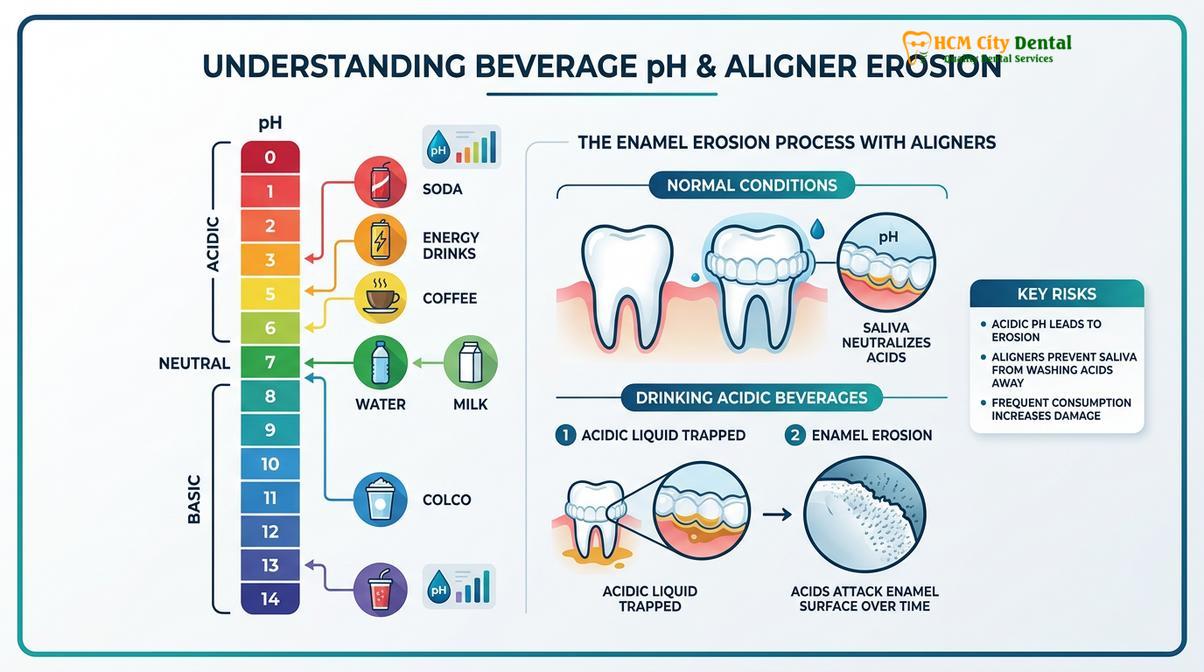
To assist patients in making safe choices and preventing tray staining, we have categorized common beverages based on their clinical safety profile during aligner wear:
| Beverage Type | Safety Status (With Aligners In) | Clinical Rationale & Risks |
|---|---|---|
| Plain, Unheated Water | Safe | Neutral pH, no sugars, no chromogens. Helps maintain hydration and natural salivary flow. |
| Sparkling Water (Unflavored) | Caution | Carbonation creates carbonic acid, slightly lowering pH. Safe in moderation, but plain water is superior. |
| Coffee & Tea (Hot or Iced) | Unsafe | Hot temperatures warp plastic. Tannins cause severe staining. Often contains added sugars. |
| Sodas & Sports Drinks | Highly Unsafe | High acidity (pH 2.5-3.5) and high sugar content. Causes rapid enamel decalcification when trapped. |
| White Wine & Clear Alcohol | Unsafe | Despite being clear, alcohol is highly acidic and dehydrating, reducing protective salivary flow. |
If a patient accidentally consumes an unsafe beverage while wearing their aligners, they should remove the trays as soon as possible, rinse both their mouth and the aligners thoroughly with water, and brush their teeth before reinsertion. This rapid response helps to neutralize the trapped acids and mitigate the risk of irreversible enamel damage.
Post-Meal Cleanup: Maintaining Oral Health on the Go
Thoroughly cleaning both your teeth and your aligners after every meal is non-negotiable to prevent plaque accumulation, enamel decalcification, and malodor.
The success of clear aligner therapy is heavily dependent on the patient’s commitment to rigorous oral hygiene after eating. Because the aligners cover the teeth for 20 to 22 hours a day, any food debris, plaque, or bacteria left on the teeth after a meal will be sealed tightly against the enamel. This creates an anaerobic environment that is highly conducive to the development of gingivitis, periodontal inflammation, and dental caries[4].
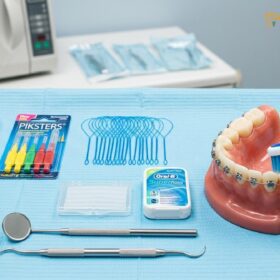
The ideal post-meal protocol involves a comprehensive mechanical cleaning. Patients should carry a travel-sized oral hygiene kit containing a soft-bristled toothbrush, fluoride toothpaste, and dental floss or interdental brushes. After eating, the patient must floss to remove interproximal food debris—which aligners will otherwise press painfully into the gingival papilla—and brush thoroughly to remove the sticky biofilm from the smooth surfaces of the teeth. The aligners themselves should be gently brushed with a separate, soft toothbrush and rinsed with cool water before being placed back into the mouth.
“Maintaining a pristine environment between the aligner and the enamel surface is the most critical factor in preventing white spot lesions and gingival hyperplasia during clear aligner therapy. Mechanical plaque removal prior to tray reinsertion is an absolute clinical necessity.”
However, orthodontic professionals understand that brushing immediately after every meal or snack is not always practically feasible, especially when dining out or traveling. In situations where brushing is impossible, patients must employ a harm-reduction strategy. The first step is to rinse the mouth vigorously with plain water to dislodge loose food particles and dilute residual sugars.
Following the water rinse, chewing a piece of sugar-free xylitol gum for 10 to 15 minutes—strictly while the aligners are removed—can be highly beneficial. Xylitol is a naturally occurring sugar alcohol that cariogenic bacteria cannot metabolize. Chewing xylitol gum stimulates a massive increase in salivary flow, which helps to naturally wash the teeth, buffer oral acids, and deliver calcium and phosphate ions back to the enamel surface[5]. Once the chewing session is complete, the gum must be disposed of, and the aligners can be safely reinserted. This technique provides a temporary hygienic bridge until the patient can properly brush and floss.
When to See a Doctor (Clinical Considerations)
While clear aligner therapy is generally smooth and predictable, certain dietary indiscretions or accidents require professional clinical evaluation. Patients must be vigilant in monitoring the fit and condition of their aligners, as well as the health of their teeth and gums. Ignoring signs of damage or poor fit can lead to significant setbacks in the treatment timeline and may require complex interventions, similar to the protocols used for broken fixed retainer repair.
You should schedule an immediate consultation with your orthodontist if you experience any of the following clinical scenarios:
- Visible Warping or Poor Fit: If you accidentally consumed a hot beverage or chewed gum with your aligners in, and the tray now feels loose, fails to snap onto the attachments, or shows visible air gaps (halos) at the incisal edges, the plastic has been compromised. Do not attempt to force a warped aligner onto your teeth, as it will apply incorrect biomechanical forces.
- Severe Gingival Inflammation: If trapped food debris has caused your gums to become red, swollen, or bleed easily upon brushing, you may be developing localized gingivitis. The aligner margins can exacerbate this inflammation if the tissues are swollen.
- Persistent Pain or Sensitivity: While mild pressure is normal when switching to a new tray, sharp pain, extreme thermal sensitivity, or pain upon biting may indicate an underlying carious lesion caused by trapped sugars, or excessive occlusal trauma from a distorted aligner.
- Rough or Sharp Edges: If mechanical damage from chewing has created micro-tears or sharp edges on the aligner plastic, it can cause severe ulcerations on the buccal mucosa or tongue. A clinician can safely polish these edges or order a replacement tray.
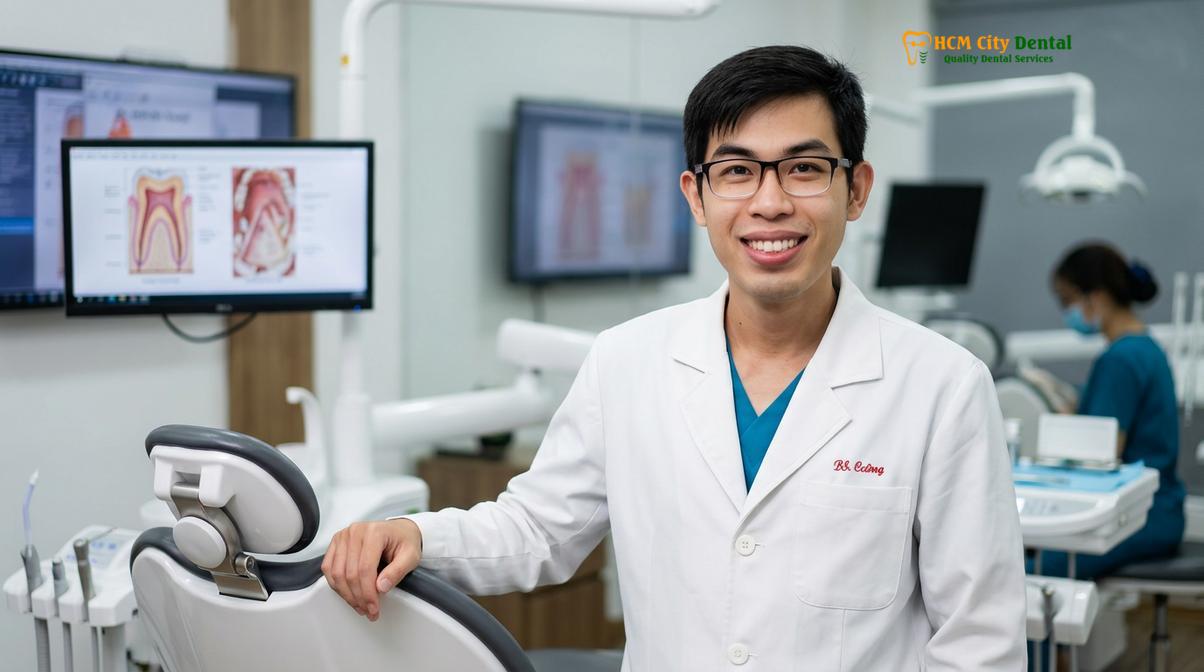
“Patients who notice a loss of retention or a sudden lack of pressure from their aligners after a dietary indiscretion must seek immediate clinical evaluation. Continuing to wear a structurally compromised tray will inevitably lead to orthodontic relapse and prolonged treatment times.”
At HCMC Dental Clinic, our orthodontic team emphasizes proactive communication. Dr. Nguyen Van Cuong advises all patients that reporting an accident—such as warping a tray with hot coffee or damaging it with chewing gum—immediately is far better than waiting for the next scheduled appointment. Early intervention allows the clinician to adjust the treatment plan, perhaps by extending the wear time of the current tray or expediting the fabrication of a replacement, ensuring that your journey to a perfect smile remains on track. Understanding the financial implications of lost or damaged appliances is also important; patients can review our comparative guides, such as the retainer cost analysis, to understand the value of protecting their orthodontic investments.
Frequently Asked Questions
What happens if I chew sugar-free gum with aligners in?
Chewing sugar-free gum with aligners in will cause the gum base to adhere stubbornly to the plastic and potentially warp the trays. Even without sugar, the mechanical force of chewing and the sticky elastomers in the gum will degrade the SmartTrack material, making the aligners unhygienic, structurally compromised, and incapable of delivering the precise forces needed to move your teeth.
Can I drink iced tea or white wine with Invisalign?
No, you should not drink iced tea or white wine while wearing Invisalign because both beverages are highly acidic and can cause invisible enamel erosion. The acidic liquid seeps under the aligner margins, trapping the acid against your teeth and preventing your natural saliva from neutralizing the pH, which rapidly accelerates tooth decay and decalcification.
How should I clean my teeth after eating out?
You should brush with fluoride toothpaste and floss your teeth in the restroom before reinserting your aligners. If brushing is absolutely impossible, vigorously rinse your mouth with water and chew xylitol gum for ten minutes (with aligners removed) to stimulate saliva flow and clear food debris before putting the trays back in.
How long can I leave my aligners out to eat and chew gum?
You can leave your aligners out for a maximum of two hours per day, which must be divided among all your meals and snacks. Leaving them out for longer periods allows the periodontal ligaments to relax, potentially causing your teeth to shift back toward their original positions and significantly delaying your overall treatment timeline.
Will chewing gum help seat my aligners better?
No, chewing gum will not help seat your aligners and will instead cause damage; you should use designated orthodontic chewies for this purpose. Chewies are made of a dense, non-sticky medical-grade silicone designed specifically to provide the correct vertical force needed to eliminate air gaps and seat the aligner properly without adhering to or warping the plastic.
References
- American Journal of Orthodontics and Dentofacial Orthopedics. Biomechanical properties of thermoplastic aligner materials under occlusal stress. (2021).
- Journal of Clinical Orthodontics. The effects of thermal distortion on polyurethane clear aligner efficacy. (2020).
- International Journal of Dental Hygiene. Salivary clearance and enamel demineralization during clear aligner therapy. (2022).
- Journal of Dentistry. Plaque accumulation and periodontal health in removable orthodontic appliances. (2019).
- European Journal of Orthodontics. The role of xylitol in caries prevention during orthodontic treatment. (2023).