Do wisdom teeth cause crowding after orthodontic treatment? Modern clinical evidence overwhelmingly suggests that wisdom teeth do not exert enough forward pressure to push other teeth out of alignment. Instead, late-stage crowding is typically the result of natural physiological changes in the jaw and the failure to wear retainers consistently.
Clinical Summary:
The relationship between wisdom teeth crowding and orthodontic relapse has been a subject of intense debate in dentistry for decades. Historically, it was believed that erupting third molars pushed anterior teeth forward, causing lower incisor crowding. However, contemporary longitudinal studies have debunked this theory, demonstrating that anterior crowding occurs due to a natural phenomenon known as late mesial shift, which affects individuals regardless of whether they have wisdom teeth. Orthodontic relapse is primarily driven by the natural remodeling of the jawbone, changes in the periodontal ligament, and poor compliance with retainer wear. While impacted wisdom teeth can cause localized pathology such as pericoronitis, root resorption of adjacent second molars, or cyst formation, they are rarely the primary biomechanical cause of full-arch shifting. Consequently, the prophylactic extraction of wisdom teeth solely to prevent anterior crowding is no longer a standard evidence-based practice. Instead, extraction is recommended based on specific clinical indications, such as active infection, lack of eruptive space, or the need to distalize molars during active orthodontic treatment.
Key Takeaways:
- Wisdom teeth do not generate sufficient force to push the entire dental arch forward and cause anterior crowding.
- Late mesial shift is a natural aging process that causes teeth to drift forward, independent of third molar presence.
- Orthodontic relapse is almost exclusively caused by the failure to wear prescribed retainers after braces or aligners.
- Wisdom teeth should be extracted if they are impacted, infected, or causing damage to adjacent second molars.
- Comprehensive 3D CBCT imaging is essential for evaluating the position and potential risks of erupting third molars.
The Debate: Do Wisdom Teeth Actually Push Other Teeth?
Extensive clinical research confirms that erupting wisdom teeth do not possess the biomechanical force required to push anterior teeth and cause dental crowding.
For many years, patients and dental professionals alike operated under the assumption that the eruption of third molars was the primary culprit behind late-stage dental crowding. This belief was largely popularized in the mid-20th century, notably following a 1961 study by Dr. Leroy Vego, which suggested a correlation between the presence of wisdom teeth and an increase in lower incisor crowding. Because wisdom teeth are the last to erupt—typically between the ages of 17 and 25—their arrival coincides perfectly with the time many young adults notice their previously straight teeth beginning to shift. This temporal coincidence cemented the myth that wisdom teeth act like a bulldozer, pushing all the teeth forward.
However, modern dentistry relies on evidence-based biomechanics. To understand why the “bulldozer” theory is flawed, one must examine the anatomy of the dental arch and the forces required to move teeth. Teeth are anchored into the alveolar bone by the periodontal ligament (PDL), a complex network of collagen fibers. Moving a single tooth requires sustained, continuous pressure over a prolonged period. The idea that a single erupting molar at the back of the jaw could generate enough force to push a row of 14 tightly interlocked teeth forward, overcoming the resistance of dense cortical bone and established root systems, defies the laws of orthodontic physics [1].
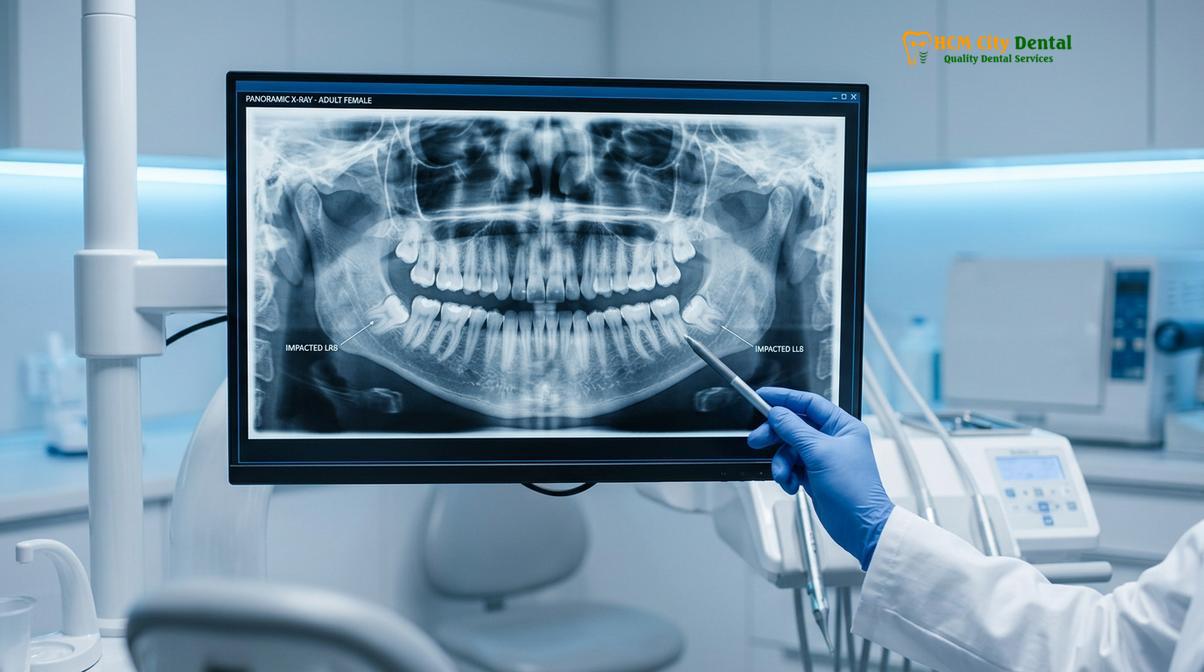
When patients ask, do wisdom teeth cause crowding, the clinical answer is rooted in longitudinal studies. Researchers have tracked patients who had their wisdom teeth extracted early, patients who never developed wisdom teeth (congenital agenesis), and patients who retained their impacted wisdom teeth. The findings consistently show that lower anterior crowding occurs at similar rates across all three groups. If wisdom teeth were the primary cause of crowding, individuals born without them would maintain perfectly straight lower incisors throughout their lives. Clinical reality shows this is not the case.
Furthermore, the eruptive force of a tooth is relatively weak. Eruption is a complex biological process involving the resorption of overlying bone and the deposition of bone at the base of the tooth crypt. It is not a mechanical pushing mechanism. When a wisdom tooth lacks space to erupt, it becomes impacted. Instead of pushing the adjacent second molar forward, the wisdom tooth simply remains trapped in the jawbone, sometimes causing localized inflammation or damage to the immediate adjacent tooth, but it does not transmit a domino effect of pressure to the front of the mouth.
Understanding Late Mesial Shift vs Wisdom Tooth Pressure
Late mesial shift is the natural, lifelong tendency of teeth to drift forward toward the midline, driven by chewing forces and jaw remodeling, not by wisdom teeth.
If wisdom teeth are not to blame for the shifting of teeth in late adolescence and adulthood, what is the true cause? The answer lies in a combination of physiological phenomena, primarily the “anterior component of force” and “late mesial shift.” Understanding these concepts is crucial for any patient concerned about their dental alignment.
The human jaw is not a static structure; it is dynamic and continuously remodeling throughout a person’s life. When we chew, the upper and lower teeth meet in occlusion. Because the teeth are set in the jaw at slight angles, the vertical forces of chewing are translated into a slight forward (mesial) vector. Over millions of chewing cycles, this anterior component of force causes the teeth to gradually drift toward the front of the mouth. This is a natural evolutionary mechanism designed to keep teeth tightly in contact as the enamel wears down at the contact points between teeth over time [2].
In addition to chewing forces, the transseptal fibers—a band of connective tissue that runs between adjacent teeth—constantly pull the teeth together. As the lower jaw continues to grow slightly forward during late adolescence (often after the upper jaw has stopped growing), the lower incisors are pushed against the upper incisors. To accommodate this skeletal change, the lower incisors often tip backward and crowd together. This process, known as late mandibular growth, perfectly coincides with the age at which wisdom teeth typically erupt, leading to the false association between the two events.
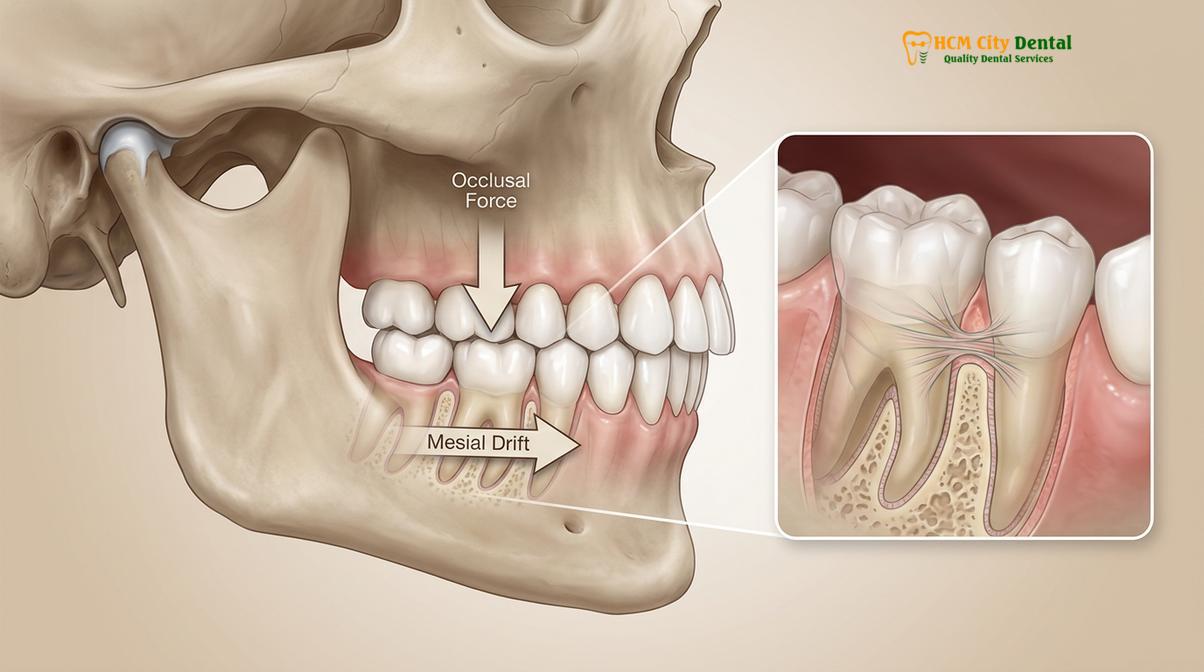
Patients often search for information regarding teeth shifting wisdom teeth, hoping that extracting the third molars will halt the shifting process. Unfortunately, because the shifting is driven by anterior occlusal forces and jaw growth, removing the wisdom teeth will not stop late mesial shift. The table below highlights the distinct differences between these two concepts.
| Clinical Factor | Late Mesial Shift | Wisdom Tooth Eruption |
|---|---|---|
| Primary Cause | Chewing forces, transseptal fiber contraction, and late jaw growth. | Root development and bone remodeling in the posterior maxilla/mandible. |
| Direction of Force | Continuous forward (mesial) pressure across the entire dental arch. | Vertical or angled eruptive force localized to the posterior jaw. |
| Effect on Anterior Teeth | Directly causes crowding and overlapping of lower incisors over time. | No significant biomechanical effect on anterior teeth. |
| Presence in Patients | Occurs in almost all humans, regardless of third molar presence. | Only occurs in patients who develop third molars. |
| Treatment/Prevention | Lifelong use of orthodontic retainers. | Surgical extraction if impacted or causing localized pathology. |
By understanding that teeth are naturally programmed to drift forward, patients can better appreciate why orthodontic retention is a lifelong commitment, rather than viewing wisdom tooth extraction as a magical cure for dental crowding.
Can Wisdom Teeth Cause Braces Relapse?
Orthodontic relapse is caused by the elastic memory of gingival fibers and natural jaw changes, not by the presence or eruption of wisdom teeth.
One of the most frustrating experiences for a patient is investing years of time and financial resources into orthodontic treatment, only to watch their teeth slowly become crooked again in their early twenties. This phenomenon is known as orthodontic relapse. Because this relapse frequently occurs during the exact window when third molars are developing, the concept of orthodontic relapse wisdom teeth has become a deeply ingrained myth among the general public.
To understand relapse, we must look at what happens to the tissues surrounding the teeth during and after braces. When an orthodontist moves a tooth, the bone on the pressure side of the root breaks down (resorption), and new bone builds up on the tension side (apposition). However, the gingival fibers—particularly the supracrestal and transseptal fibers—do not remodel as quickly as the bone. These fibers act like tiny rubber bands. When braces are removed, these “rubber bands” have an elastic memory and immediately try to pull the teeth back to their original, crooked positions [3].
“The stability of orthodontic treatment relies entirely on mechanical retention until the periodontal tissues have fully reorganized. Blaming wisdom teeth for anterior relapse ignores the fundamental histology of the periodontal ligament and the natural forward drifting forces of the human dentition.”
If a patient fails to wear their retainer, the elastic recoil of the gingival fibers, combined with the late mesial shift discussed earlier, will inevitably cause the teeth to move. The presence of wisdom teeth in the back of the mouth is merely a bystander to this process. Even if a patient has all four wisdom teeth surgically removed the day their braces come off, their front teeth will still relapse if they do not wear their retainers.
That being said, there are specific scenarios where wisdom teeth can complicate orthodontic outcomes, though not by pushing the whole arch. If a patient has a severe space deficiency (arch length discrepancy), the eruption of wisdom teeth can cause localized crowding in the posterior segments. For example, an erupting third molar might become impacted against the second molar, causing the second molar to tip or rotate. While this does not cause the front teeth to crowd, it does disrupt the posterior bite alignment. Therefore, while wisdom teeth do not cause anterior relapse, their management is still a critical component of comprehensive post-orthodontic care.
When to Extract Wisdom Teeth for Orthodontic Reasons
Wisdom teeth are extracted for orthodontic purposes when space is needed to move molars backward or when impaction threatens the health of adjacent teeth.
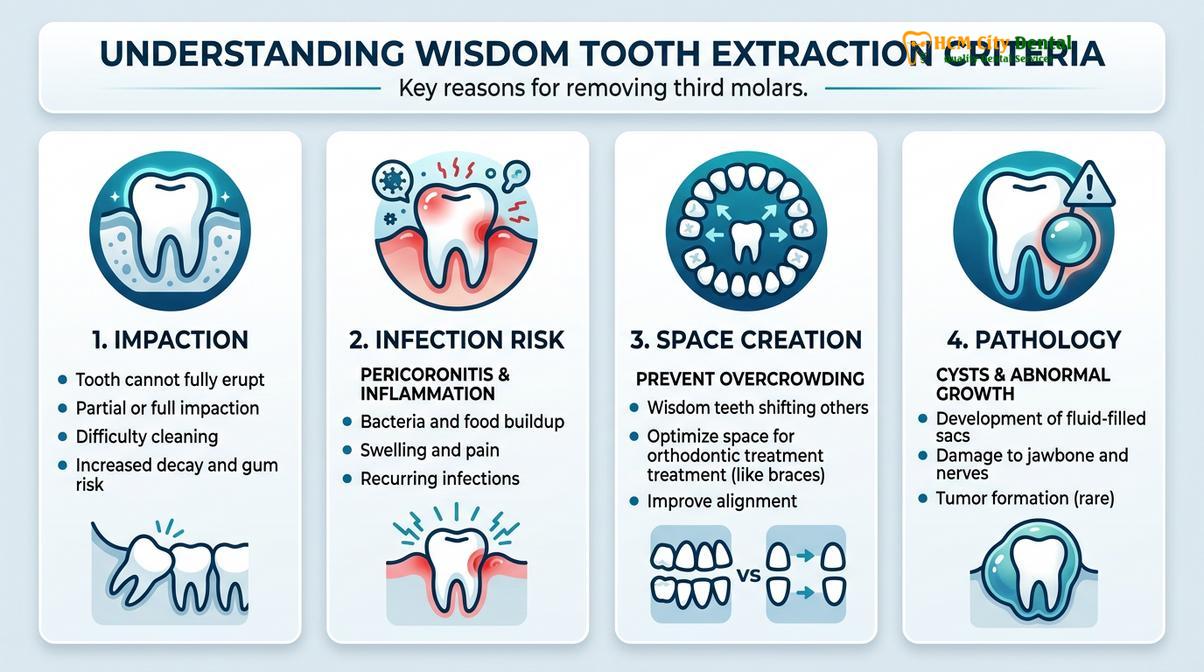
While we have established that wisdom teeth do not cause anterior crowding, there are still many valid, evidence-based reasons why an orthodontist or oral surgeon might recommend their removal. The decision to extract is based on a careful analysis of the patient’s jaw size, tooth size, and the trajectory of the erupting molars. The relationship between braces and wisdom teeth is highly individualized.
One of the primary orthodontic indications for wisdom tooth extraction is the need for “distalization.” In cases where a patient has mild to moderate crowding but the orthodontist wants to avoid extracting premolars, they may choose to move the entire upper or lower arch backward (distally). This is frequently done using clear aligners or specialized orthodontic appliances. However, if the wisdom teeth are present at the back of the jaw, they act as a physical roadblock. In these cases, the wisdom teeth must be extracted to create the necessary space for the first and second molars to be moved backward.
Another critical factor is the angle of impaction. Wisdom teeth can be impacted in several ways:
- Mesioangular Impaction: The tooth is angled forward, pushing directly into the back of the second molar. This is the most common type of impaction and poses a high risk of damaging the adjacent tooth.
- Vertical Impaction: The tooth is straight up but trapped under the gums or bone due to a lack of space in the jaw.
- Horizontal Impaction: The tooth is lying completely on its side, growing perpendicular to the other teeth. This requires complex surgical removal.
- Distoangular Impaction: The tooth is angled backward, away from the second molar, often becoming embedded deep in the ascending ramus of the jawbone.
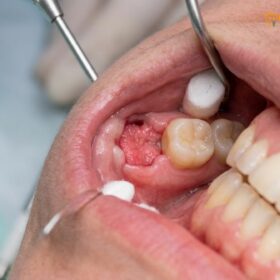
Clinical Warning: Partially erupted wisdom teeth create a deep periodontal pocket that is nearly impossible to clean. This frequently leads to pericoronitis (a painful infection of the gum tissue) and can cause irreversible decay or root resorption on the adjacent second molar, necessitating the extraction of both teeth if left untreated.
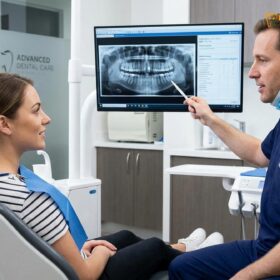
Prophylactic extraction—removing wisdom teeth before they cause problems—is a nuanced topic. While the routine removal of disease-free, fully erupted, and functional wisdom teeth is no longer recommended, the removal of impacted wisdom teeth that have a high probability of causing future pathology is considered standard care [4]. An oral surgeon will evaluate the patient’s panoramic X-ray to assess the proximity of the tooth roots to the inferior alveolar nerve and the maxillary sinus before recommending wisdom tooth removal procedures.
The Importance of Wearing Retainers Post-Braces
Consistent retainer wear is the only scientifically proven method to maintain orthodontic alignment and counteract the natural shifting forces of the jaw.
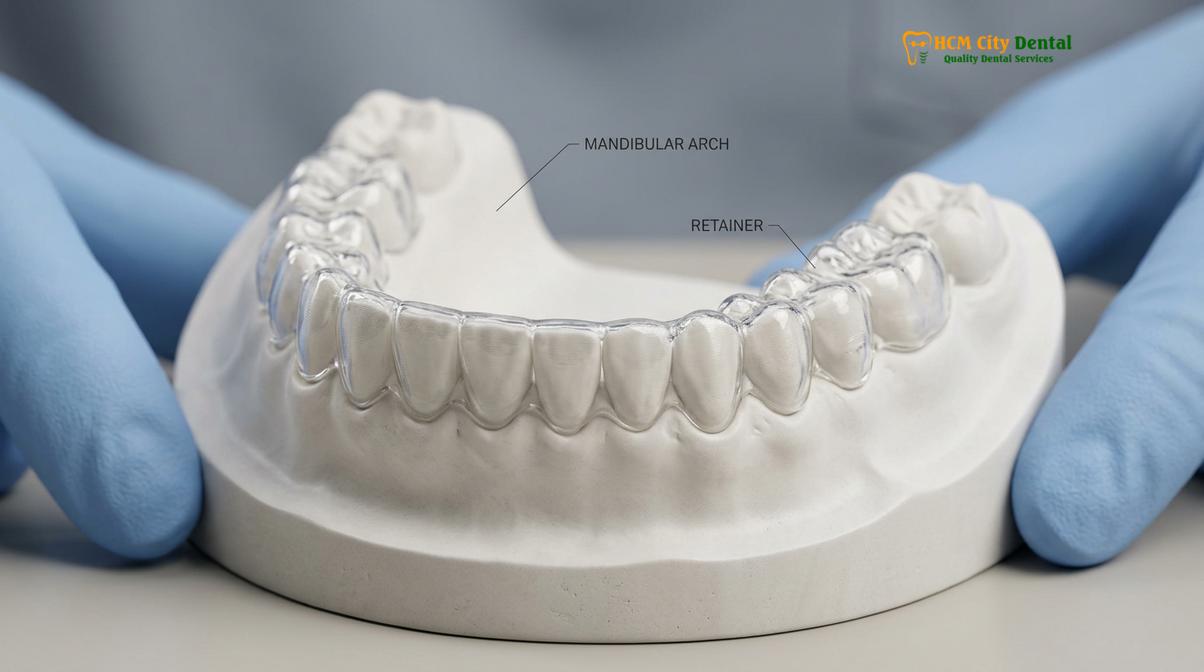
If extracting wisdom teeth is not the solution to preventing dental crowding, what is? The answer is simple, though it requires lifelong compliance: orthodontic retainers. Retainers are custom-made devices designed to hold the teeth in their new, corrected positions while the surrounding bone and periodontal ligaments stabilize.
There are three main types of retainers used in modern Orthodontics:
- Vacuum-Formed Retainers (Essix): These are clear plastic trays that fit snugly over the entire dental arch. They are highly aesthetic and excellent at holding the exact position of the teeth, but they must be removed for eating and drinking.
- Hawley Retainers: Made of acrylic and a metal wire that wraps around the front teeth. They are durable, adjustable, and allow the upper and lower teeth to settle into a natural bite, though they are more visible than clear retainers.
- Fixed Lingual Retainers: A custom-fitted wire permanently bonded to the back (lingual) surfaces of the front teeth. This is often the best defense against late mesial shift and lower incisor crowding, as it requires no daily compliance from the patient. However, it requires meticulous flossing to prevent calculus buildup.
The bone remodeling phase after active orthodontic treatment takes approximately 6 to 12 months. During this initial period, retainers must typically be worn full-time (20-22 hours a day). After the bone has calcified and stabilized around the new root positions, patients are usually transitioned to nighttime-only wear. However, because the human body is constantly changing and late mesial shift is a lifelong force, “nighttime for a lifetime” is the current clinical mantra for retainer wear.
“Patients often ask when they can stop wearing their retainers. The clinical reality is that you should wear your retainers for as long as you want your teeth to remain straight. The dentition is dynamic, and without mechanical retention, physiological drift is inevitable.”
When a patient visits the clinic complaining that their teeth have shifted and blaming their wisdom teeth, the first question the dentist will ask is, “Have you been wearing your retainer?” In almost every case, the answer is no. Educating patients on the critical importance of retention is just as important as the active phase of moving the teeth.
Preventive Wisdom Tooth Removal in Ho Chi Minh City
At HCMC Dental Clinic, the decision to extract wisdom teeth is based on advanced 3D imaging and a comprehensive assessment of each patient’s unique oral anatomy.
For patients residing in or visiting Ho Chi Minh City, navigating the complexities of wisdom tooth management requires expert clinical guidance. At HCMC Dental Clinic, the approach to third molars is highly conservative and evidence-based. The clinical team does not extract wisdom teeth simply because they are present; instead, every decision is tailored to the patient’s specific anatomical and orthodontic needs.
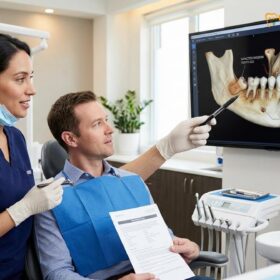
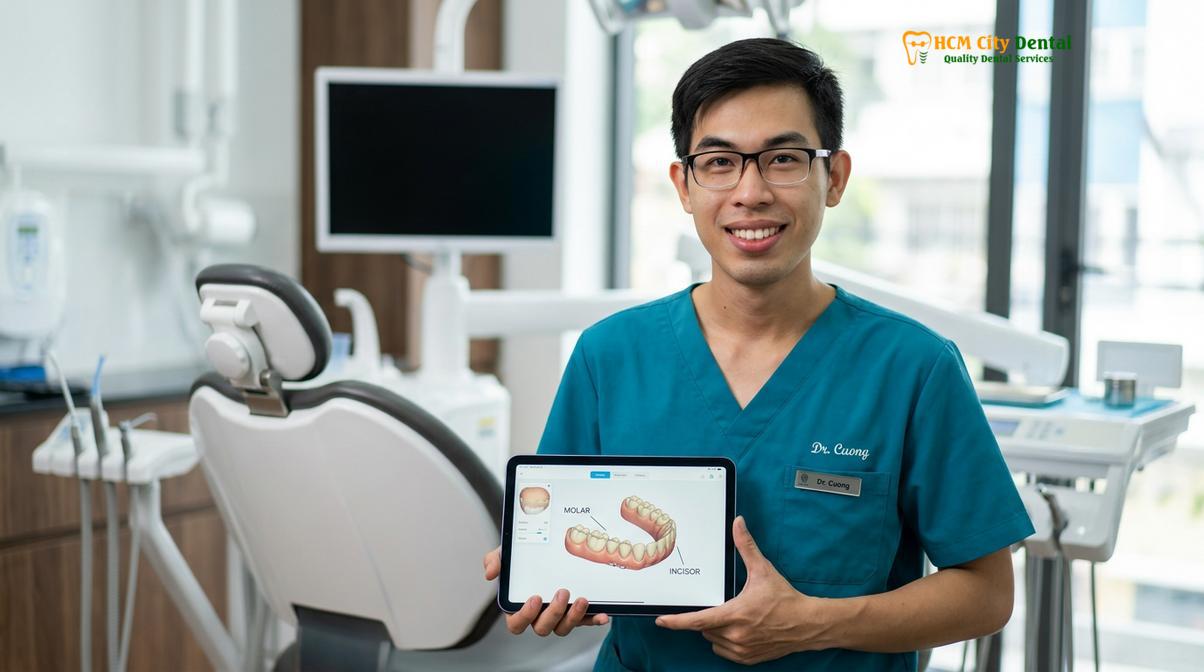
Dr. Nguyen Van Cuong emphasizes the importance of advanced diagnostics in this process. “We cannot rely solely on two-dimensional panoramic X-rays to make surgical decisions, especially when the roots of the wisdom teeth are in close proximity to the mandibular nerve,” explains Dr. Cuong. “By utilizing 3D Cone Beam Computed Tomography (CBCT), we can visualize the exact position of the tooth in three dimensions, allowing us to accurately predict whether the tooth will erupt safely or if it poses a risk of impaction and pathology.”
Clinical Case Study: A 20-year-old patient presented to HCMC Dental Clinic in Ho Chi Minh City with concerns that her erupting lower wisdom teeth were causing her previously straightened lower incisors to crowd. A comprehensive clinical examination and CBCT scan revealed that her wisdom teeth were indeed impacted mesioangularly, but her anterior crowding was due to a lost Essix retainer 18 months prior. Dr. Nguyen Van Cuong performed a minimally invasive surgical extraction of the impacted third molars to prevent damage to the second molars, and subsequently provided a short course of clear aligners to correct the anterior relapse, followed by the placement of a fixed lingual retainer for long-term stability.
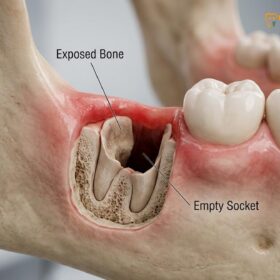
The surgical protocols at HCMC Dental Clinic utilize modern techniques, such as piezoelectric surgery (using ultrasonic vibrations to cut bone while preserving soft tissue) and the application of Platelet-Rich Fibrin (PRF) to accelerate healing and reduce the risk of dry socket. This ensures that if preventive or therapeutic extraction is deemed necessary, the procedure is as comfortable and seamless as possible for the patient.
When to See a Doctor
Immediate dental evaluation is required if you experience pain, swelling, or difficulty opening your mouth, as these may indicate an infected or impacted wisdom tooth.
While wisdom teeth may not cause your front teeth to crowd, they can still be the source of significant dental emergencies. You should schedule a clinical evaluation if you experience any of the following symptoms:
- Persistent Pain or Throbbing: Pain at the back of the jaw that radiates to the ear or neck is a classic sign of an impacted or infected third molar.
- Swollen, Red, or Bleeding Gums: Inflammation of the gum tissue overlying a partially erupted wisdom tooth (pericoronitis) can quickly escalate into a severe infection.
- Difficulty Opening the Mouth (Trismus): Muscle stiffness and inability to fully open the jaw indicate that an infection may be spreading into the surrounding fascial spaces.
- Foul Taste or Odor: Bacteria trapped under the gum flap of a wisdom tooth can produce a persistent bad taste or chronic halitosis.
- Changes in Your Bite: If you feel that your back teeth are no longer meeting correctly, an erupting wisdom tooth may be interfering with your occlusion.
Early diagnosis is critical. A thorough examination, including digital imaging, will allow your dentist to determine the exact cause of your symptoms and recommend the appropriate intervention, whether that involves localized cleaning, antibiotic therapy, or surgical extraction [5].
Frequently Asked Questions
Can wisdom teeth ruin my straight teeth after braces?
No, wisdom teeth alone do not exert enough force to ruin straight teeth after braces. The primary cause of teeth shifting post-treatment is the natural physiological process called late mesial shift and the failure to wear prescribed retainers consistently. While third molars can cause localized issues, they are rarely the sole culprit for anterior crowding.
Do I need to remove my wisdom teeth before getting braces?
You do not always need to remove wisdom teeth before getting braces unless they are impacted, infected, or blocking the movement of other molars. Your orthodontist will evaluate your panoramic X-rays and 3D CBCT scans to determine if extraction is necessary to create space or prevent future pathology during your treatment.
How do I know if my wisdom teeth are crowding my teeth?
You cannot definitively know if wisdom teeth are causing crowding without a clinical examination and radiographic imaging. Symptoms like pressure at the back of the jaw, pain, or shifting of the front teeth often prompt concern, but a dentist must perform a comprehensive space analysis to identify the true cause of the shifting.
Will my teeth go back to normal after extracting wisdom teeth?
No, extracting wisdom teeth will not cause your teeth to automatically shift back to their previous straight positions. Once teeth have shifted due to natural drifting or lack of retainer wear, active orthodontic intervention, such as clear aligners or traditional braces, is required to realign them properly.
Is a retainer enough to stop wisdom teeth from shifting my teeth?
Yes, wearing a retainer as prescribed is highly effective at preventing teeth from shifting, regardless of whether your wisdom teeth are present. Retainers hold the teeth in their corrected positions, counteracting the natural forward drifting forces of the jaw and maintaining the stability of your orthodontic results over time.
References
- American Journal of Orthodontics and Dentofacial Orthopedics. The effect of third molars on mandibular incisor crowding. (2019).
- Journal of Oral and Maxillofacial Surgery. Late mesial shift and its relationship to third molar eruption. (2020).
- Angle Orthodontist. Long-term stability of orthodontic treatment and the role of retention. (2021).
- International Journal of Oral and Maxillofacial Surgery. Prophylactic extraction of third molars: A clinical review. (2018).
- British Dental Journal. Periodontal implications of impacted mandibular third molars. (2022).