Can you get implants with gum disease? Yes, but active infection must be treated first. Dental implants require a healthy foundation of bone and gum tissue. Placing implants into an infected site significantly increases failure risks, making periodontal disease management the critical first step before any surgery.
Clinical Summary:
Patients with a history of periodontal disease can successfully receive dental implants, provided the active infection is fully eradicated prior to surgical placement. The oral microbiome responsible for gum disease can easily colonize titanium implant surfaces, leading to peri-implantitis and rapid bone loss. A comprehensive clinical protocol involves deep periodontal therapy, targeted bone grafting to restore lost architecture, and strict long-term maintenance. By stabilizing the periodontal environment first, implantologists can achieve survival rates comparable to those in periodontally healthy patients, ensuring the long-term biomechanical and aesthetic success of the prosthesis.
Key Takeaways:
- Active gum disease must be completely resolved before any dental implant surgery begins to prevent immediate bacterial contamination.
- Periodontal pathogens can migrate from natural teeth to implant sites, causing peri-implantitis and early implant failure.
- Bone grafting is frequently required to repair jawbone defects caused by chronic periodontal destruction.
- Strict daily oral hygiene and frequent professional cleanings are mandatory for the long-term survival of the implant.
- With proper pre-surgical infection control and maintenance, patients with past gum disease enjoy exceptionally high implant success rates.
The Link Between Periodontitis and Implant Success
Periodontitis and implant success are deeply interconnected because the same aggressive bacteria that destroy natural tooth structures can also attack the bone supporting titanium implants. Establishing a disease-free oral environment is mandatory to ensure proper osseointegration.
To fully grasp the relationship between Dental Implants tại HCMC Dental Clinic and gum disease, one must understand the complex microbiology of the human mouth. The oral cavity hosts hundreds of bacterial species, most of which exist in a harmonious, symbiotic relationship with the host. However, when oral hygiene is neglected, or systemic factors alter the host’s immune response, this balance shifts. A dysbiotic microbiome emerges, dominated by highly virulent, anaerobic gram-negative bacteria such as Porphyromonas gingivalis, Treponema denticola, and Tannerella forsythia—collectively known as the “red complex” pathogens. These bacteria are the primary architects of periodontitis, a chronic inflammatory disease that systematically destroys the gingival tissues, the periodontal ligament, and the alveolar bone that anchors the teeth in the jaw.
When a patient considers implant therapy, the presence of these pathogens poses a severe threat. Dental implants are essentially artificial tooth roots made of biocompatible titanium or zirconia. For an implant to be successful, it must undergo osseointegration—a biological process where living bone cells (osteoblasts) grow directly onto the microscopic surface of the implant, locking it firmly in place. This process requires a pristine, sterile healing environment. If active periodontal pathogens are present in the mouth, they can easily translocate from the deep pockets of infected natural teeth to the newly created surgical site of the implant [1]. The bacteria colonize the titanium surface, forming a dense, impenetrable biofilm.
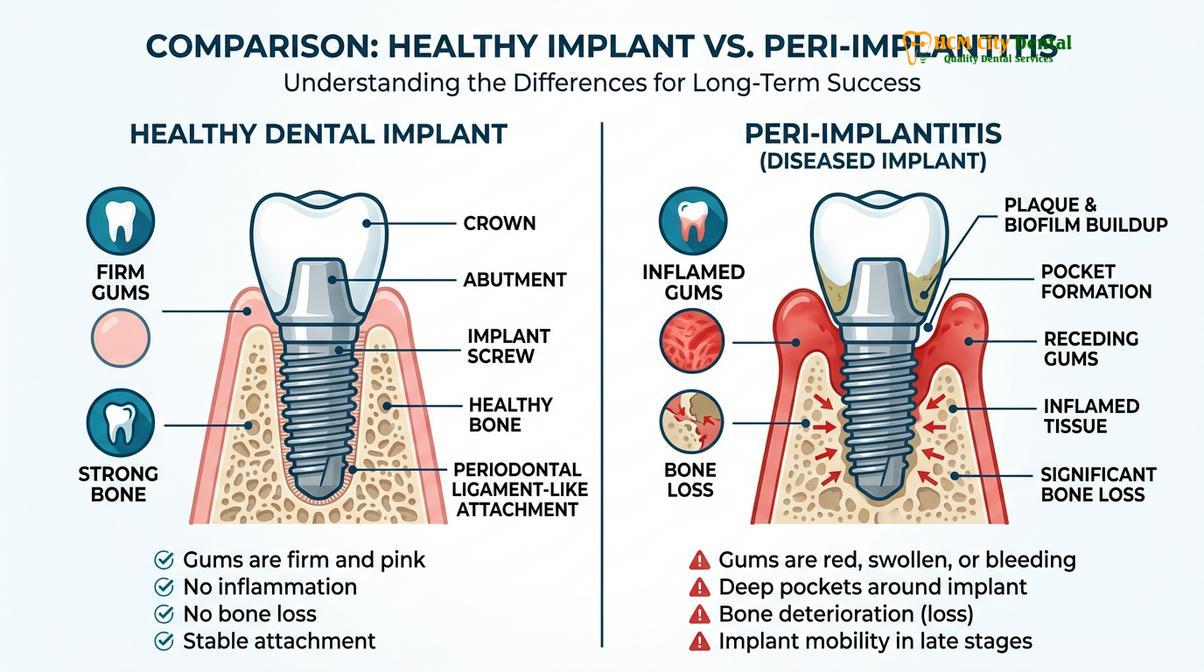
Once the biofilm is established on the implant, the body’s immune system recognizes the bacterial invasion and launches a massive inflammatory response. White blood cells, particularly neutrophils and macrophages, flood the area, releasing powerful inflammatory cytokines like Interleukin-1 beta (IL-1β) and Tumor Necrosis Factor-alpha (TNF-α). While intended to destroy the bacteria, these cytokines inadvertently trigger osteoclasts—cells that break down bone tissue. Because implants lack the protective barrier of a natural periodontal ligament, this inflammatory cascade leads to rapid and aggressive bone destruction around the implant, a condition known as peri-implantitis. Therefore, the success of an implant in a periodontally compromised patient hinges entirely on the clinician’s ability to eradicate these pathogens before surgery begins.
Why Untreated Gum Disease is the Leading Cause of Early Failure
Placing an implant into an infected jawbone almost guarantees early failure, as active periodontal pathogens disrupt the cellular healing process required for the titanium root to fuse with the bone.
Implant failure is broadly categorized into two distinct phases: early failure and late failure. Early failure occurs before the implant has successfully integrated with the bone, typically within the first few weeks or months after surgical placement. Late failure occurs years after successful integration, usually due to biomechanical overload or poor long-term maintenance. When discussing untreated gum disease, we are primarily concerned with early failure, which is almost exclusively driven by bacterial contamination and an impaired host healing response.
When an implant is surgically threaded into the jawbone, the initial stability is purely mechanical, relying on the friction between the titanium threads and the surrounding bone. Over the following weeks, a complex biological symphony must occur. A blood clot forms around the implant, releasing growth factors that stimulate angiogenesis (the formation of new blood vessels) and the migration of osteoprogenitor cells to the site. These cells differentiate into osteoblasts, which begin laying down new woven bone directly onto the titanium surface. This is the essence of osseointegration.
“Attempting to build a beautiful prosthetic smile on a foundation of active periodontal disease is akin to building a house on a swamp. Eradicating the infection is the non-negotiable first step to ensure the longevity of any dental implant.”
However, if the surgical site is contaminated by active periodontal pathogens, this delicate healing cascade is violently disrupted. The bacteria produce endotoxins and enzymes that degrade the blood clot and inhibit the proliferation of osteoblasts. Instead of bone-forming cells dominating the site, fast-growing fibroblasts (soft tissue cells) rush in to fill the void. This results in a phenomenon known as fibrous encapsulation [2]. The implant becomes surrounded by a thick layer of scar tissue rather than solid bone. Clinically, the implant will fail to integrate; it will become mobile, painful upon pressure, and will ultimately need to be surgically removed.
Moreover, untreated gum disease often correlates with other systemic risk factors that further compromise healing. For instance, patients with uncontrolled diabetes are highly susceptible to severe periodontitis due to impaired neutrophil function and poor microcirculation. When uncontrolled diabetes is combined with active gum disease, the risk of early implant failure skyrockets. The high blood sugar levels provide an ideal feeding ground for bacteria, while the compromised blood flow prevents essential immune cells and nutrients from reaching the surgical site. Therefore, addressing untreated gum disease is not just about cleaning the teeth; it is about fundamentally altering the patient’s local and systemic inflammatory profile to create an environment conducive to bone healing.
The Treatment Protocol: Managing Active Infection Before Surgery
The pre-implant protocol focuses on active infection elimination through deep scaling, root planing, and sometimes targeted antibiotic therapy to create a sterile, stable foundation for the incoming implant.
Transforming a periodontally diseased mouth into a healthy foundation suitable for implant therapy requires a meticulous, phased treatment protocol. The goal is not merely to reduce symptoms, but to achieve complete active infection elimination. This process, known as Phase I Periodontal Therapy, is the cornerstone of successful implantology in compromised patients. It requires patience, precision, and strict compliance from the patient.
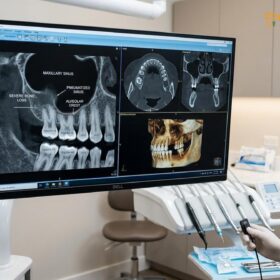
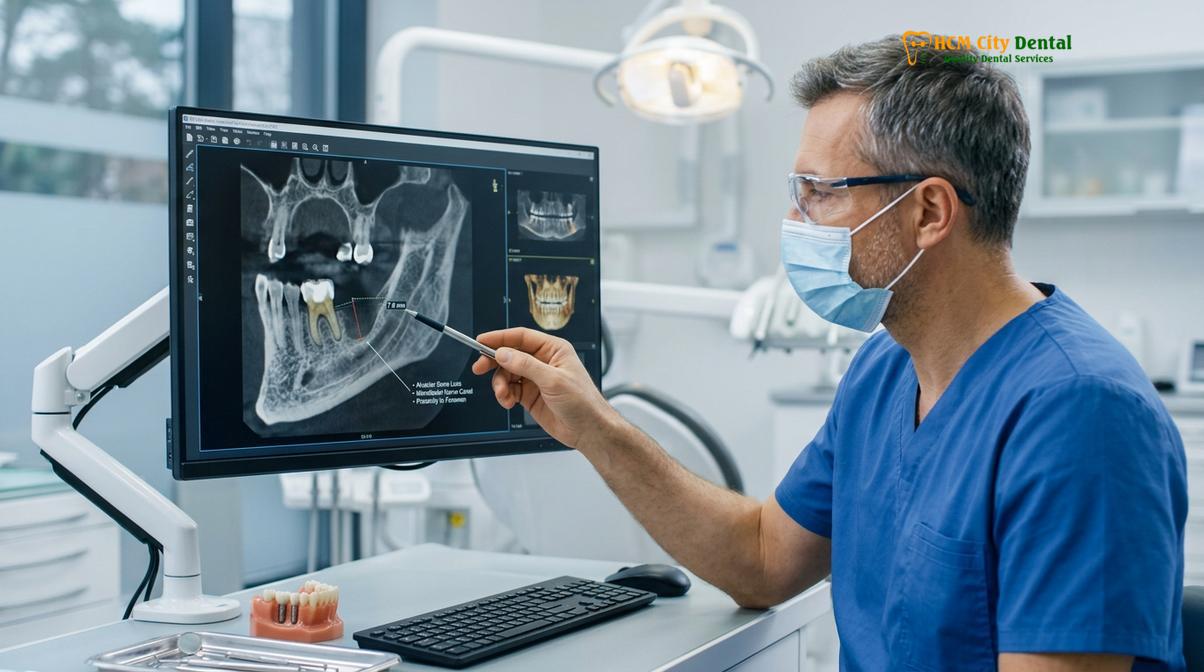
The first step in the protocol is a comprehensive periodontal charting and radiographic assessment. The clinician measures the depth of the gum pockets around every single tooth using a calibrated periodontal probe. Healthy pockets typically measure between 1 to 3 millimeters. Pockets measuring 4 millimeters or deeper, especially those that bleed upon probing, indicate active disease. A full-mouth series of X-rays or a 3D CBCT scan is taken to evaluate the extent of bone loss and to identify any teeth that have a hopeless prognosis. Teeth that have lost more than 70% of their supporting bone, exhibit severe mobility, or have complex furcation involvements are often deemed unsalvageable. These teeth act as massive bacterial reservoirs and must be strategically extracted to protect the remaining healthy bone and prepare the site for future implants.
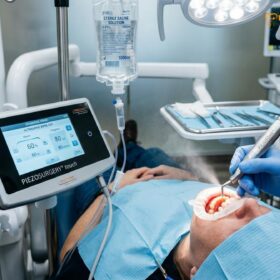
Once the hopeless teeth are removed and the treatment plan is established, the core of Phase I therapy begins: Scaling and Root Planing (SRP). This is a highly detailed, non-surgical procedure performed under local anesthesia. Using specialized ultrasonic instruments and hand curettes, the clinician meticulously removes the hardened calculus (tartar) and bacterial biofilm from the crown and root surfaces of the teeth, reaching deep into the periodontal pockets [3]. The root surfaces are then smoothed (planed) to remove bacterial toxins embedded in the cementum and to create a clean surface that encourages the gum tissue to reattach to the tooth. In Vietnam, clinical guidelines from the Vietnam Odonto-Stomatology Association (VOSA) strongly emphasize achieving a bleeding-on-probing score of less than 10% before proceeding with any implant surgery [6].
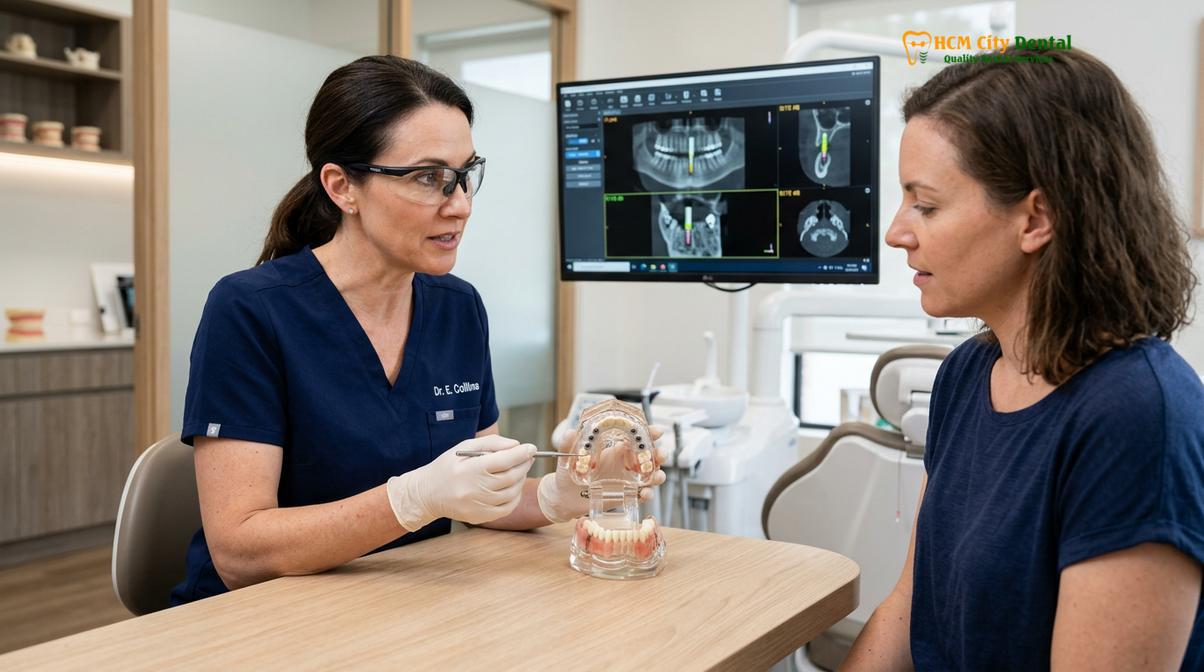
Following the completion of Phase I therapy, the patient enters a critical healing period. During this time, the patient must maintain impeccable home care. The clinician then performs a re-evaluation appointment to assess the tissue response. The pockets are probed again, and the bleeding indices are recorded. If the tissues are firm, pink, and the pockets have reduced to manageable depths without bleeding, the active infection is considered controlled, and the patient is cleared for the surgical phase of implant placement. If deep, bleeding pockets persist, Phase II surgical periodontal therapy may be required before any implants can be safely introduced.
Guided Tissue Regeneration (GTR) and Bone Rebuilding
Because severe gum disease destroys the alveolar ridge, guided tissue regeneration and bone grafting are often necessary to rebuild the structural volume required to securely anchor a dental implant.
One of the most devastating consequences of advanced periodontitis is the irreversible destruction of the alveolar bone. When teeth are lost to gum disease, the bone that once supported them rapidly resorbs, shrinking in both height and width. This presents a significant biomechanical challenge for the implantologist. A dental implant must be completely surrounded by at least 1.5 to 2 millimeters of healthy bone on all sides to withstand the immense forces of chewing and to prevent the overlying gums from receding. When the bone volume is insufficient, the clinician must employ advanced reconstructive techniques, primarily guided tissue regeneration and bone grafting, to rebuild the foundation.
| Clinical Parameter | Healthy Implant Site | Periodontally Compromised Site (Untreated) |
|---|---|---|
| Bacterial Flora | Symbiotic, aerobic bacteria | Aggressive, anaerobic pathogens |
| Tissue Response | Firm, pink gingiva | Inflamed, bleeding, swollen gums |
| Bone Integration | Rapid osseointegration | High risk of fibrous encapsulation |
Guided tissue regeneration is a sophisticated surgical technique based on a fundamental principle of cellular biology. When a bone defect is created by disease or tooth extraction, different types of cells race to fill the void. Epithelial cells (gum tissue) migrate much faster than osteoblasts (bone cells). If left to heal naturally, the gum tissue will collapse into the bony defect, preventing new bone from forming. GTR solves this problem by using a biocompatible barrier membrane [4]. The clinician places a bone graft material—often a mix of the patient’s own bone (autograft) and sterilized donor bone (allograft or xenograft)—into the defect. The barrier membrane is then secured over the graft, physically blocking the fast-growing gum cells and creating a protected space where the slower-growing bone cells can proliferate and regenerate the lost architecture.
Depending on the severity of the bone loss, this grafting procedure may be performed several months before implant placement (a staged approach) or simultaneously with the implant surgery. The staged approach is generally preferred for large vertical or horizontal defects, as it allows the clinician to ensure a robust, fully consolidated bony foundation before introducing the titanium fixture. While bone grafting adds time and complexity to the treatment plan, it is an indispensable step for patients with a history of periodontitis, ensuring that the final implant is both functionally stable and aesthetically pleasing.
Clinical Case Study: Overcoming Severe Periodontitis
Real-world clinical applications demonstrate that with rigorous infection control and advanced bone grafting, patients with severe periodontitis can achieve fully restored, functional smiles.
Clinical Case Study: Restoring Function After Bone Loss
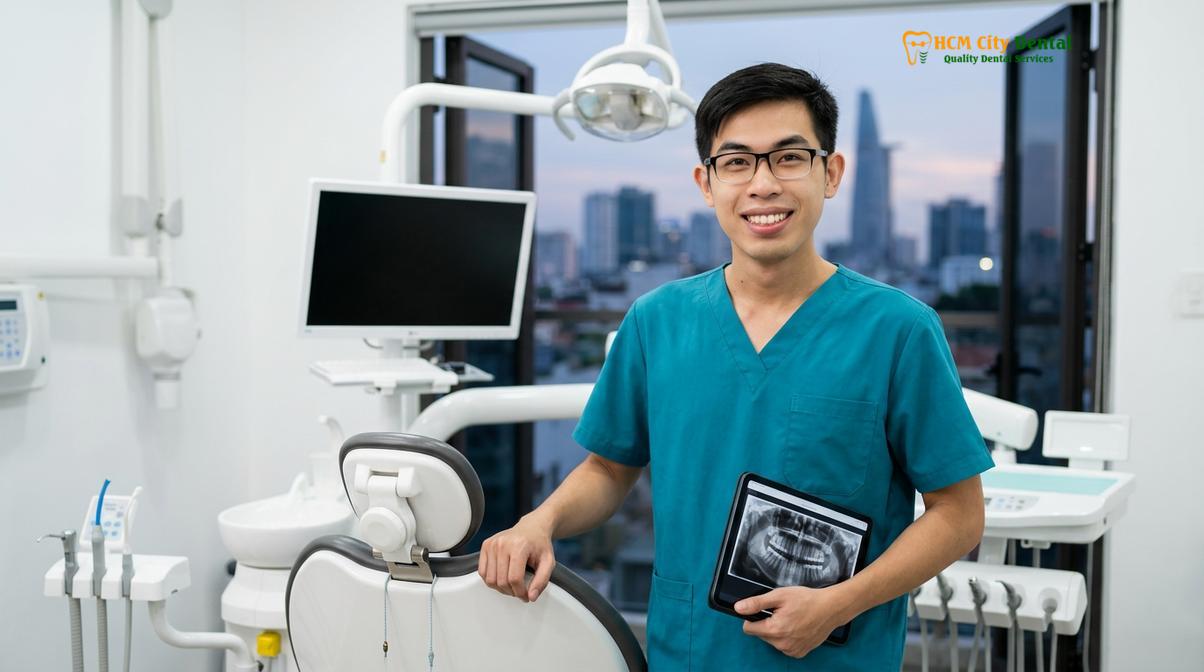
A patient recently visited HCMC Dental Clinic in Ho Chi Minh City presenting with advanced tooth mobility and chronic gum bleeding. After a thorough 3D CBCT assessment, it was determined that severe periodontitis had compromised the lower arch. Dr. Nguyen Van Cuong, a leading specialist in complex oral rehabilitation, emphasizes that stabilizing the foundation is paramount before any surgical intervention. According to his clinical approach detailed in Dental Implants: Transform Your Smile Today! [Expert Tips] | Dr. Cuong, meticulous pre-surgical periodontal therapy ensures the titanium fixtures integrate perfectly without bacterial interference. Following a phased protocol of deep scaling, targeted extractions, and guided bone regeneration, the patient successfully received multiple implants with excellent osseointegration and no signs of recurrent infection.
When to Consult a Specialist
Recognizing the early warning signs of implant complications is vital for patients with a history of gum disease, as prompt intervention can often save a failing implant.
Patients who have undergone implant therapy after treating gum disease must remain vigilant. Because the oral environment has previously demonstrated a susceptibility to periodontal pathogens, the risk of developing peri-implant mucositis (inflammation of the soft tissues around the implant) is elevated. If left unchecked, this can rapidly progress to peri-implantitis, involving irreversible bone loss.
Important Clinical Warning: If you notice bleeding when brushing around an implant, persistent bad breath, or a metallic taste, seek immediate clinical evaluation. Unlike natural teeth, implants lack nerve endings, meaning severe bone loss can occur without any pain. Early intervention is critical to halting peri-implantitis.
Long-Term Maintenance: Preventing Peri-Implantitis
After successful implant placement, rigorous long-term maintenance is required to prevent the recurrence of periodontal pathogens and protect the implant from peri-implantitis.
Patients with a history of gum disease remain susceptible to future infections even after their natural teeth have been replaced with implants. The microbiological profile of peri-implantitis closely mirrors that of chronic periodontitis, meaning the same bacteria that caused the initial tooth loss can return to attack the implant [5]. Therefore, a proactive and aggressive maintenance protocol is essential.
“Implant dentistry does not end when the crown is attached; it begins. Lifelong periodontal maintenance is the only proven strategy to protect your investment from the silent threat of peri-implantitis.”
This maintenance phase, often referred to as Supportive Periodontal Therapy (SPT), involves professional cleanings every three to four months. During these visits, the hygienist or periodontist will carefully debride the implant surfaces using specialized titanium or plastic instruments that do not scratch the implant collar. They will also monitor probing depths and take periodic radiographs to ensure the bone levels remain stable. At home, patients must commit to an uncompromising daily oral hygiene routine, utilizing interdental brushes, water flossers, and antimicrobial rinses to disrupt biofilm formation before it can calcify into tartar.
If you are considering restoring your smile but have a history of gum disease, contact HCMC Dental Clinic in Ho Chi Minh City for a comprehensive evaluation. Our specialists can help you determine the safest path forward. Learn more by reading Are Dental Implants Right For You? Pros & Cons Guide | Dr. Cuong.
References
- American Academy of Periodontology. Consensus report on peri-implant diseases and conditions.
- Journal of Clinical Periodontology. Impact of periodontitis on implant survival and complication rates.
- International Journal of Oral & Maxillofacial Implants. Guided bone regeneration in periodontally compromised sites.
- Clinical Oral Implants Research. Long-term maintenance protocols for patients with a history of periodontitis.
- Journal of Periodontology. Microbiological profile of peri-implantitis versus chronic periodontitis.
- Vietnam Odonto-Stomatology Association (VOSA). Clinical guidelines on periodontal management prior to oral surgery and implantology.