Finding a qualified TMJ specialist Ho Chi Minh City is crucial for resolving chronic jaw pain, clicking joints, and restricted mouth opening. A dedicated specialist utilizes advanced diagnostics and custom occlusal therapy to address the root cause of temporomandibular joint disorders rather than just masking the symptoms.
Clinical Summary:
Temporomandibular Joint (TMJ) disorders require specialized clinical intervention to restore proper jaw function and alleviate chronic facial pain. A dedicated TMJ specialist in Ho Chi Minh City employs comprehensive diagnostic protocols, including 3D CBCT imaging and joint auscultation, to accurately map joint pathology. Treatment typically follows a conservative, phased approach, prioritizing custom occlusal splints, physical therapy, and bite realignment to achieve long-term neuromuscular stability without immediate surgical intervention. Early diagnosis is critical to preventing irreversible degenerative changes within the joint complex.
Key Takeaways:
- Accurate TMJ diagnosis relies heavily on 3D CBCT scans and detailed muscle palpation to evaluate both bone and soft tissue health.
- Conservative treatments, particularly custom occlusal splints, are the primary and most effective intervention for joint inflammation and bruxism.
- Specialized care focuses on the intricate relationship between dental occlusion (your bite) and jaw joint stability.
- Early clinical intervention can prevent irreversible degenerative changes in the temporomandibular joint cartilage and articular disc.
- Surgical options are rarely the first step and are reserved only for severe cases unresponsive to conservative rehabilitation.
Why Choose a Dedicated TMJ Specialist in Saigon?
A dedicated TMJ specialist possesses advanced training in gnathology and orofacial pain, ensuring that complex jaw joint dysfunctions are treated at their root cause rather than just managing surface-level symptoms.
The temporomandibular joint is arguably the most complex joint in the human body. Unlike a simple hinge joint, such as the knee or elbow, the TMJ is a ginglymoarthrodial joint. This means it performs two distinct movements: a rotational (hinge) movement when you first open your mouth, followed by a translational (gliding) movement as you open wider. Because both the left and right joints are connected to a single bone—the mandible—they must operate in perfect synchrony. Any disruption in this delicate balance can lead to Temporomandibular Joint Disorder (TMD).
When seeking relief from chronic jaw pain, choosing a dedicated TMJ specialist Ho Chi Minh City over a general practitioner is a critical decision. General dentistry primarily focuses on the health of the teeth and gums. While a general dentist can identify signs of teeth grinding (bruxism) and may offer basic mouthguards, a TMJ specialist delves much deeper into the biomechanics of your bite, the health of your masticatory muscles, and the structural integrity of the joint itself. At HCMC Dental Clinic, our approach to specialized TMJ treatment protocols involves a comprehensive understanding of how your dental occlusion interacts with your neuromuscular system.
The complexity of TMD requires a multidisciplinary approach. Symptoms often mimic other conditions, leading patients to consult ENT doctors for earaches, neurologists for tension headaches, or general physicians for neck pain, only to find that the root cause lies in their jaw joint. A dedicated specialist is trained to differentiate between myogenous (muscle-related) pain and arthrogenous (joint-related) pain, which is fundamental to prescribing the correct therapy[1].
“The temporomandibular joint’s unique dual-hinge and gliding mechanism makes it highly susceptible to micro-trauma from malocclusion. Treating TMD requires not just addressing the joint, but harmonizing the entire stomatognathic system.”
Furthermore, a specialized clinic is equipped with the specific diagnostic tools necessary for a thorough TMD assessment Saigon. This includes advanced imaging technologies and computerized occlusal analysis systems that are not typically found in standard dental practices. By choosing a specialist, you are ensuring that your treatment plan is based on precise, objective data rather than guesswork, significantly increasing the likelihood of long-term clinical success and pain relief.
What Happens During Your First TMJ Clinical Consultation?
Your initial consultation involves a comprehensive clinical evaluation, including a detailed medical history review, cranial nerve assessment, and precise measurement of your jaw’s range of motion.
The foundation of successful TMJ therapy is an accurate and exhaustive diagnosis. When you visit a specialist for the first time, the consultation is significantly more detailed than a standard dental check-up. The process begins with a deep dive into your medical and dental history. The specialist will ask specific questions about the onset of your pain, its character (dull, aching, sharp, throbbing), its duration, and any factors that exacerbate or relieve it. They will also inquire about your stress levels, sleep quality, and history of facial trauma, as these are common contributing factors to TMD.
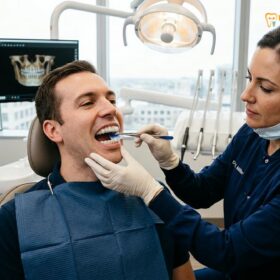
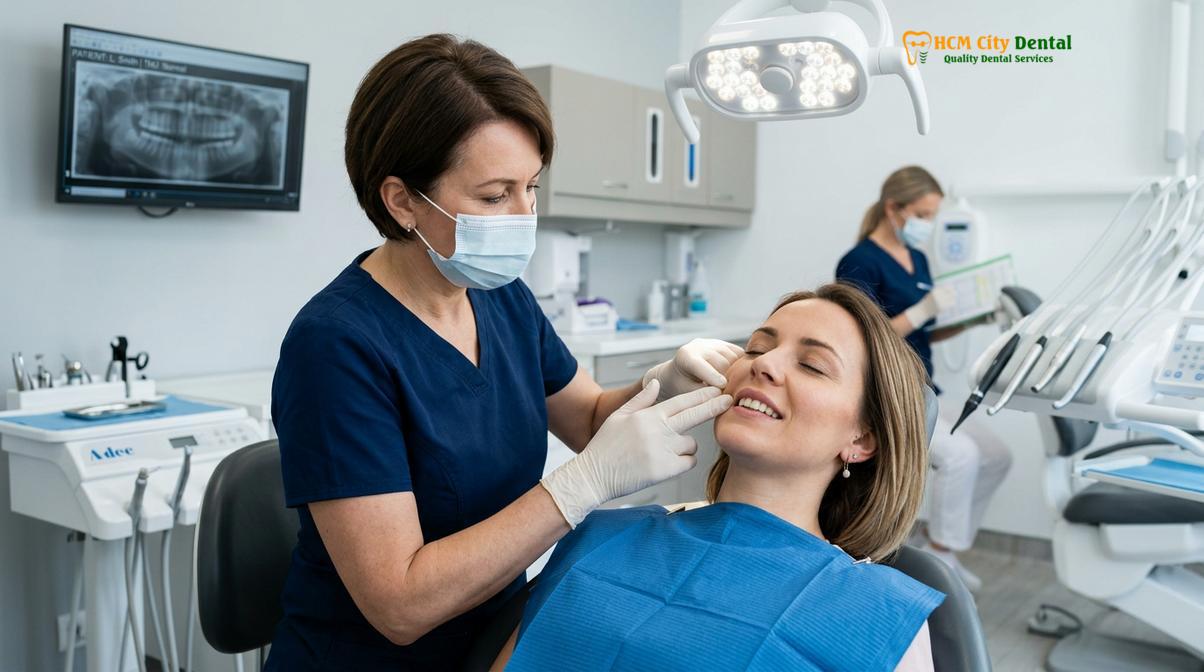
Following the history review, the clinical examination commences. Dr. Nguyen Van Cuong, a leading expert in orofacial pain, emphasizes that a meticulous physical examination is non-negotiable. A core component of this exam is a thorough jaw palpation HCMC protocol. The specialist will systematically apply firm pressure to the muscles of mastication, including the masseter, temporalis, medial pterygoid, and lateral pterygoid muscles. This palpation helps identify trigger points, muscle spasms, and areas of localized hypertrophy (enlargement) caused by chronic clenching or grinding.
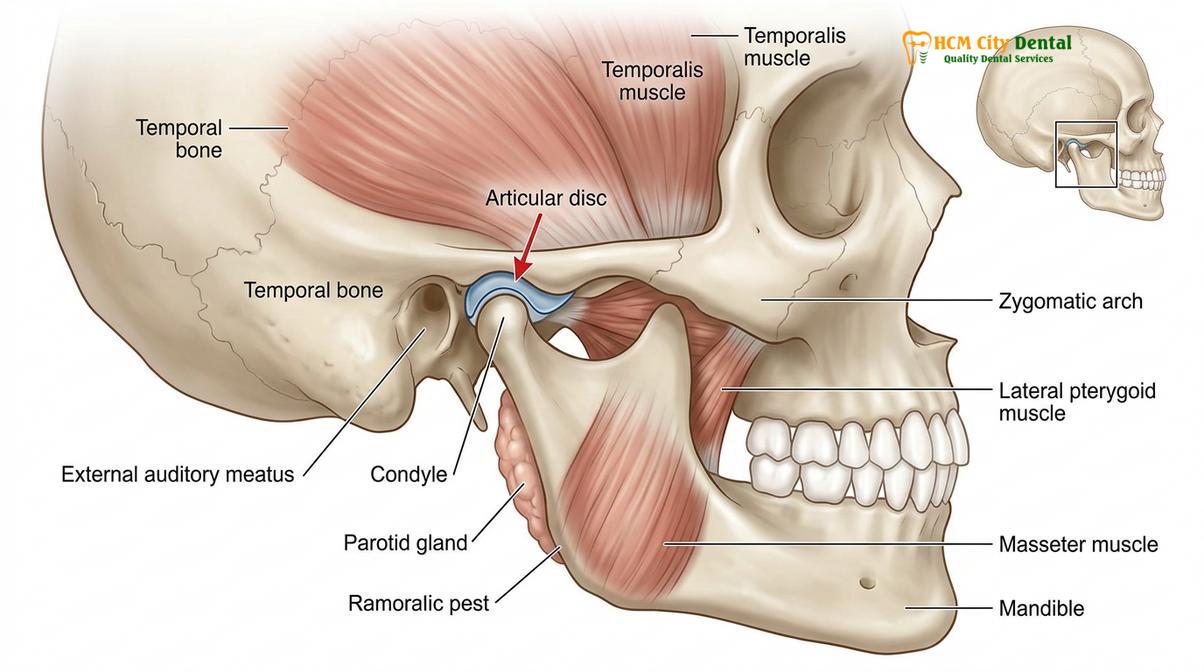
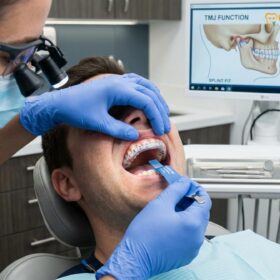
Next, the specialist will evaluate your jaw’s range of motion. Using a specialized ruler (TheraBite or similar), they will measure your maximum incisal opening (how wide you can open your mouth), as well as your lateral (side-to-side) and protrusive (forward) movements. Normal maximum opening is typically between 40mm and 50mm. Restricted opening, or a deviation of the jaw to one side upon opening, provides critical clues about the status of the articular disc within the joint space[2].
To provide a clear overview of the diagnostic process, the following table outlines the key components of a comprehensive TMJ clinical examination:
| Examination Component | Clinical Objective | Diagnostic Significance |
|---|---|---|
| Muscle Palpation | Assess masseter, temporalis, and pterygoid muscles. | Identifies myogenous pain, trigger points, and muscle spasms indicative of bruxism. |
| Range of Motion (ROM) | Measure maximum opening, lateral, and protrusive movements. | Detects joint restriction, disc displacement, and capsular fibrosis. |
| Joint Auscultation | Listen for clicking, popping, or crepitus during movement. | Differentiates between disc displacement with reduction and degenerative osteoarthritis. |
| Occlusal Analysis | Evaluate the relationship between upper and lower teeth. | Identifies premature contacts, malocclusion, and loss of vertical dimension. |
| Cranial Nerve Screening | Basic assessment of facial nerve function. | Rules out neurological disorders that may mimic TMJ pain (e.g., Trigeminal Neuralgia). |
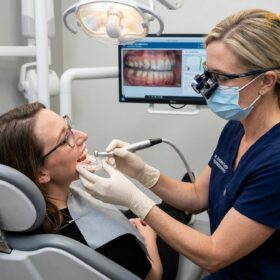
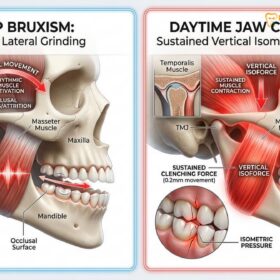
Finally, the specialist will perform a detailed occlusal analysis. They will examine how your teeth come together (your bite) and look for signs of wear, such as flattened cusps, abfractions at the gumline, or fractured restorations. These dental signs are often the physical evidence of nocturnal bruxism, a primary driver of TMJ inflammation. This comprehensive data collection forms the baseline for your personalized treatment strategy.
Diagnostic Technologies: 3D CBCT Scans & Joint Auscultation
Advanced diagnostics, such as 3D Cone Beam Computed Tomography (CBCT) and joint auscultation, allow specialists to visualize bone degeneration and detect abnormal joint friction with pinpoint accuracy.
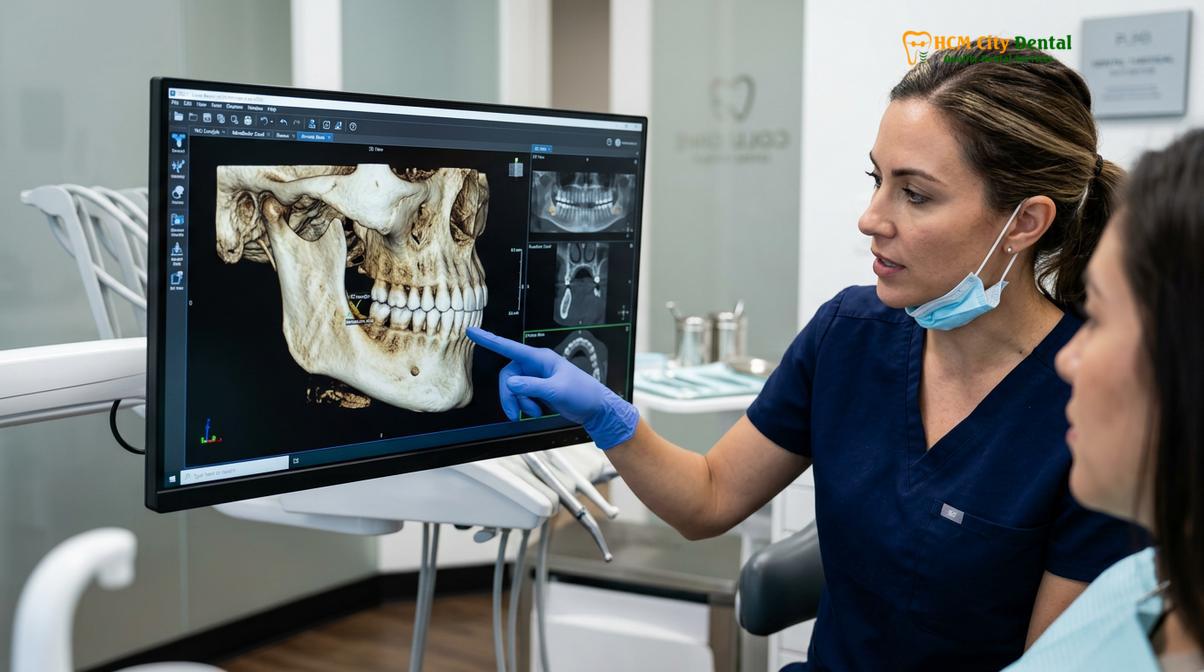
While a clinical examination provides invaluable information, looking inside the joint requires advanced imaging. Standard 2D panoramic X-rays, while useful for general dentistry, suffer from distortion and superimposition, making them inadequate for a detailed TMJ assessment. This is where 3D Cone Beam Computed Tomography (CBCT) becomes indispensable. A CBCT scan captures high-resolution, three-dimensional images of the maxillofacial region with significantly less radiation than a conventional medical CT scan.
At a specialized facility like the Dr. Cuong jaw clinic, CBCT imaging is used to evaluate the bony structures of the TMJ. The specialist can examine the shape and integrity of the mandibular condyle and the glenoid fossa (the socket in the skull). They look for signs of osteoarthritis, such as cortical bone erosion, osteophyte (bone spur) formation, or subchondral cysts. Furthermore, the CBCT allows the specialist to assess the position of the condyle within the fossa when the teeth are fully clenched. A condyle that is pushed too far back or too far up often indicates a loss of joint space, usually due to a displaced articular disc[3].
In addition to imaging, joint auscultation is a critical diagnostic tool. Using a specialized stethoscope or a Doppler ultrasound device, the specialist listens to the sounds produced by the joint during movement. A healthy TMJ is silent. A “clicking” or “popping” sound typically indicates disc displacement with reduction—meaning the cartilage disc slips out of place when the mouth is closed but pops back into place as the mouth opens. Conversely, a grinding or crunching sound, known as “crepitus,” is a strong indicator of bone-on-bone friction resulting from advanced cartilage degradation and osteoarthritis.
In complex cases where soft tissue evaluation is paramount, the specialist may refer the patient for Magnetic Resonance Imaging (MRI). Unlike CBCT, which shows bone, an MRI provides clear images of the articular disc, the retrodiscal tissues, and the presence of joint effusion (inflammatory fluid). By combining the findings from the clinical exam, CBCT, and auscultation, the specialist can formulate a highly accurate diagnosis, categorizing the disorder as primarily muscular, structural, or a combination of both.
Formulating Your Custom TMJ Treatment Plan
A customized treatment plan typically follows a phased approach, beginning with reversible therapies like occlusal splints and progressing to permanent bite correction only if neuromuscular stability is achieved.
Once a definitive diagnosis is established, the TMJ specialist Ho Chi Minh City will design a customized, phased treatment plan. The overarching philosophy in modern TMJ management is to begin with the most conservative, reversible therapies and only progress to irreversible or surgical options if absolutely necessary. The primary goals are to reduce pain, decrease joint loading, restore normal function, and improve the patient’s quality of life.
Phase 1: Acute Management and Stabilization
The first phase of treatment focuses on immediate pain relief and joint stabilization. This is almost always achieved through occlusal splint therapy. A custom-fabricated splint, often referred to as a stabilization appliance or a Michigan splint, is designed to fit precisely over the upper or lower teeth. Unlike soft, over-the-counter mouthguards, a clinical splint is made of hard acrylic and is meticulously adjusted to provide a perfectly balanced bite. When worn, it slightly separates the teeth, decompressing the jaw joint and preventing the masticatory muscles from fully contracting. This allows the inflamed retrodiscal tissues to heal and breaks the cycle of muscle spasms[4].
Alongside splint therapy, Phase 1 often includes pharmacological support. Short courses of non-steroidal anti-inflammatory drugs (NSAIDs) can help reduce joint inflammation, while muscle relaxants may be prescribed to alleviate severe muscle spasms. In cases of chronic, localized muscle pain, trigger point injections or Botox (onabotulinumtoxinA) injections into the masseter and temporalis muscles can provide profound relief by temporarily reducing muscle hyperactivity.
Clinical Case Study: Phase 1 Success
A 34-year-old female patient presented at HCMC Dental Clinic in Ho Chi Minh City with severe morning jaw pain, restricted opening (28mm), and chronic tension headaches. CBCT imaging revealed a compressed joint space, and clinical exam confirmed severe masseter hypertrophy due to nocturnal bruxism. The patient was fitted with a hard acrylic stabilization splint and prescribed a two-week course of muscle relaxants. Within four weeks of compliant splint usage, her maximum opening improved to 42mm, and her morning pain was reduced by 80%, demonstrating the efficacy of conservative stabilization.
Phase 2: Rehabilitation and Physiotherapy
As the acute pain subsides, treatment moves into the rehabilitation phase. Physical therapy plays a crucial role here. The specialist may recommend specific jaw exercises, such as Rocabado’s 6×6 program, to improve joint mobility, stretch tight muscles, and strengthen the stabilizing muscles of the jaw and neck. Modalities such as low-level laser therapy (LLLT), ultrasound, or transcutaneous electrical nerve stimulation (TENS) may also be utilized to promote tissue healing and further relax the musculature.
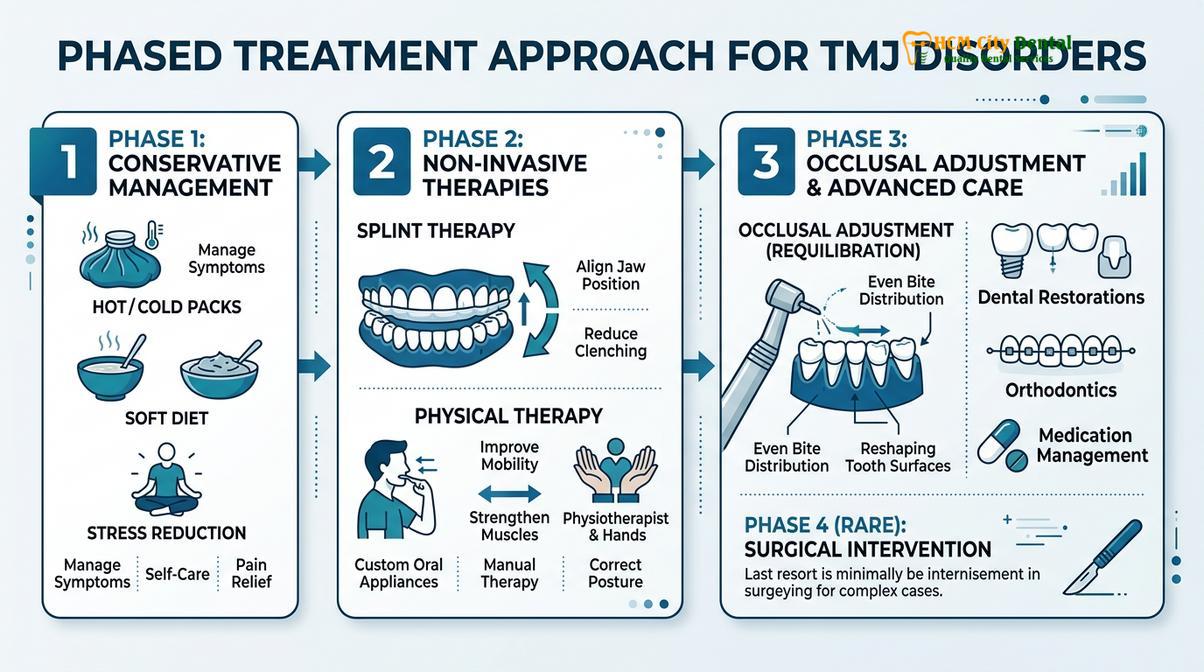
Phase 3: Definitive Occlusal Therapy (If Required)
For many patients, Phase 1 and Phase 2 are sufficient to manage their TMD long-term, provided they continue to wear their splint at night. However, if the patient’s natural bite is significantly misaligned and is identified as the primary driver of the joint instability, Phase 3 may be recommended. This phase involves irreversible changes to the teeth to create a permanently stable bite. Options may include orthodontic treatment (braces or clear aligners) to move the teeth into a harmonious position, or restorative dentistry (crowns, onlays, or bridges) to rebuild worn teeth and establish proper vertical dimension and canine guidance.
Surgical intervention, such as arthrocentesis (flushing the joint space), arthroscopy, or open joint surgery, is considered a last resort. It is strictly reserved for cases involving severe structural damage, such as a non-reducing displaced disc, severe osteoarthritis, or ankylosis (fusion of the joint), that have failed to respond to all conservative measures.
The Role of Custom Nightguards and Occlusal Splints
Custom-fabricated nightguards and stabilization splints are the cornerstone of conservative TMJ therapy, designed to decompress the joint space and protect teeth from nocturnal bruxism.
It is vital to distinguish between a simple sports mouthguard, an over-the-counter nightguard, and a clinical occlusal splint. While all are worn over the teeth, their functions and designs are vastly different. When undergoing jaw joint therapy, the precise calibration of the appliance is what dictates its success or failure.
Over-the-counter “boil-and-bite” guards are made of soft, compressible materials. While they may protect the teeth from the physical wear of grinding, they often exacerbate TMJ pain. The soft material can actually stimulate the chewing reflex, causing the patient to clench harder during sleep, thereby increasing the load on the temporomandibular joint and the masticatory muscles.
Clinical Warning: Avoid Soft OTC Guards for TMD
Using soft, over-the-counter boil-and-bite mouthguards can worsen TMJ disorders. The spongy texture often encourages increased nocturnal clenching, leading to greater muscle fatigue and joint compression. Always consult a specialist for a hard, custom-calibrated acrylic splint if you experience jaw pain.
In contrast, protective dental splints fabricated by a specialist are made of hard, durable acrylic. The biting surface of the splint is meticulously adjusted using articulating paper and sometimes computerized T-Scan technology to ensure that all teeth contact the splint simultaneously and with equal force. Furthermore, the splint is designed to provide “canine guidance”—meaning that when the jaw moves side to side, only the canine teeth touch the splint, causing the back teeth to separate instantly. This specific design shuts down the powerful elevator muscles (masseter and temporalis), drastically reducing the forces applied to the joint during sleep[5].
The fabrication process involves taking highly accurate digital impressions of your teeth, capturing your bite in a relaxed, “centric relation” position, and utilizing a dental articulator to simulate your jaw movements. This level of precision is what makes temporomandibular joint rehabilitation effective and safe for long-term use.
When to See a Doctor for Jaw Pain
Occasional, mild jaw discomfort after chewing tough food or a period of high stress is common and often resolves on its own with rest and soft diet. However, certain symptoms indicate a more serious underlying issue that requires prompt evaluation by a TMJ specialist Ho Chi Minh City. Ignoring these warning signs can lead to progressive joint damage, chronic pain syndromes, and permanent changes to your facial structure and bite.
You should seek immediate clinical evaluation if you experience any of the following “red flag” symptoms:
- Jaw Locking: If your jaw frequently gets stuck in an open or closed position, or if you have to manipulate your jaw with your hands to open it fully.
- Severe, Radiating Pain: Pain that originates in the jaw but radiates to the neck, shoulders, or temples, particularly if it disrupts your sleep or daily activities.
- Sudden Changes in Your Bite: If your upper and lower teeth suddenly do not fit together correctly, or if you feel like you are only biting on one side.
- Painful Clicking or Grinding: While painless clicking is common, clicking accompanied by sharp pain, or a gritty, grinding sound (crepitus) during movement, indicates active joint pathology.
- Associated Ear Symptoms: Unexplained tinnitus (ringing in the ears), ear fullness, or earaches that have been cleared by an ENT specialist as not being ear-related.
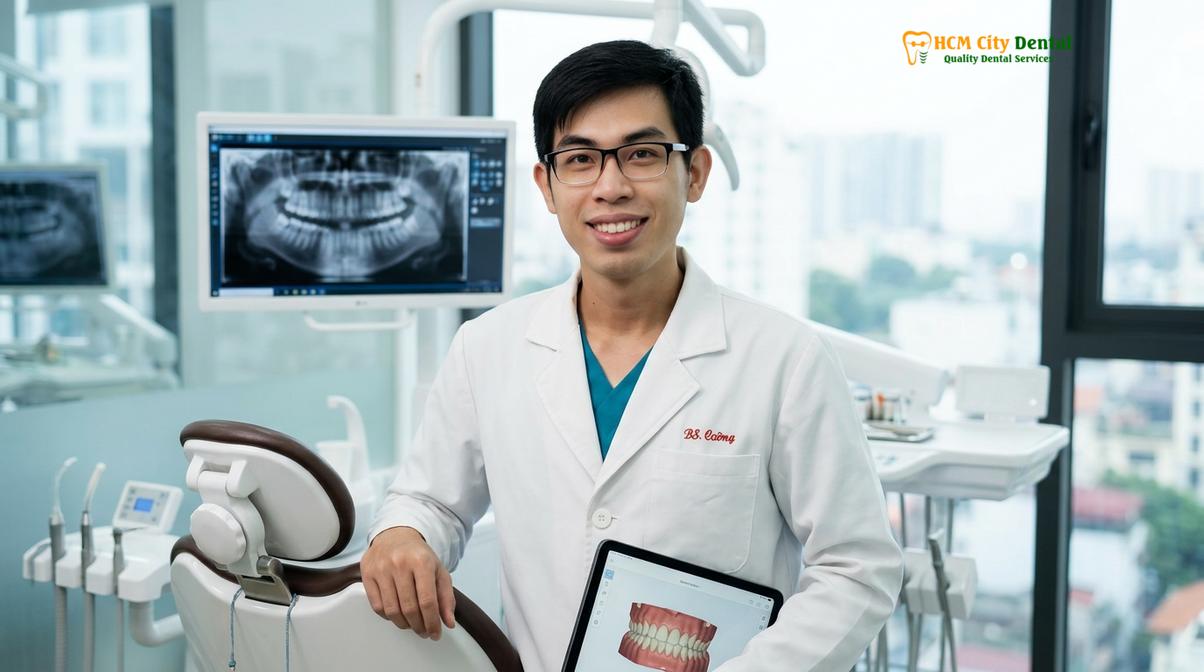
Dr. Nguyen Van Cuong strongly advises against delaying treatment. The temporomandibular joint relies on a delicate avascular disc (lacking blood supply) for smooth movement. Once this disc is severely damaged or perforated, the healing capacity is extremely limited.
“Early intervention in TMJ disorders is not just about pain relief; it is about preserving the structural integrity of the joint. A conservative splint provided early can prevent the need for complex, invasive joint surgery years down the line.”
If you are experiencing persistent jaw discomfort, do not rely on temporary home remedies. A thorough clinical assessment is the only way to accurately diagnose the condition and implement a treatment plan that protects your joint health and restores your quality of life.
Frequently Asked Questions
Do I need a referral to see a TMJ specialist in HCMC?
No, you do not need a medical referral to schedule a consultation with a TMJ specialist in HCMC. Patients experiencing jaw pain, clicking, or restricted movement can book an appointment directly with our specialized dental team for a comprehensive evaluation. Early direct access ensures faster diagnosis and intervention.
How long does the initial jaw joint examination take?
The initial clinical examination for TMJ disorders typically takes between 45 to 60 minutes. This extended timeframe allows the specialist to conduct a thorough medical history review, perform detailed muscle palpation, measure jaw range of motion, and analyze 3D imaging to formulate an accurate diagnosis.
Can I get a consultation in English?
Yes, comprehensive TMJ consultations are fully available in English. Our specialists and clinical staff are highly proficient in English medical terminology, ensuring clear communication regarding your diagnosis, treatment options, and customized rehabilitation plan without any language barriers.
Are TMJ disorders permanently curable?
While many TMJ disorders can be effectively managed and stabilized, the concept of a permanent ‘cure’ depends on the underlying cause. Structural joint damage may require ongoing management, whereas muscle-related TMD can often be fully resolved with proper occlusal therapy and physiotherapy.
How quickly will an occlusal splint relieve my jaw pain?
Many patients experience a noticeable reduction in jaw pain and muscle tension within the first two to three weeks of consistent occlusal splint usage. However, severe cases involving chronic inflammation or disc displacement may require several months of phased therapy to achieve optimal relief.
References
- Journal of the American Dental Association. Occlusal splint therapy for temporomandibular disorders: a clinical review. (2020).
- Journal of Oral Rehabilitation. Efficacy of Michigan repositioning splints in TMD patients. (2019).
- Journal of Prosthetic Dentistry. Computerized occlusal analysis and bite mapping in TMJ therapy. (2021).
- Clinical Oral Investigations. Masseter Botox injections for chronic jaw pain and bruxism. (2018).
- International Journal of Oral and Maxillofacial Surgery. TMJ arthrocentesis and hyaluronic acid injections. (2022).