Obstructive Sleep Apnea (OSA) and chronic snoring represent far more than mere nocturnal nuisances; they are complex sleep-disordered breathing conditions that induce severe oxidative stress, cardiovascular strain, and profound daytime fatigue. For decades, Continuous Positive Airway Pressure (CPAP) therapy has been the gold standard for maintaining airway patency. However, due to the bulkiness of the equipment, mask discomfort, and noise, CPAP intolerance remains remarkably high, particularly among frequent travelers and expatriates. In response, the field of Dental Sleep Medicine has advanced rapidly, establishing the custom mandibular advancement device sleep apnea mouthguard in Vietnam as a highly efficacious, scientifically validated, and travel-friendly alternative.
At HCMC Dental Clinic in District 1, Ho Chi Minh City, we specialize in the digital fabrication of custom, titratable oral appliances designed to mechanically stent the pharyngeal airway open during sleep. By utilizing 3D CBCT airway volumetric analysis, digital intraoral scanning, and precision CAD/CAM milling, our clinical team delivers world-class sleep apnea solutions. For international patients seeking a CPAP Alternatives: Clinical Guide to Oral Appliances for Sleep Apnea, Vietnam offers an unparalleled combination of advanced digital dentistry, rigorous clinical protocols, and highly transparent, accessible pricing.
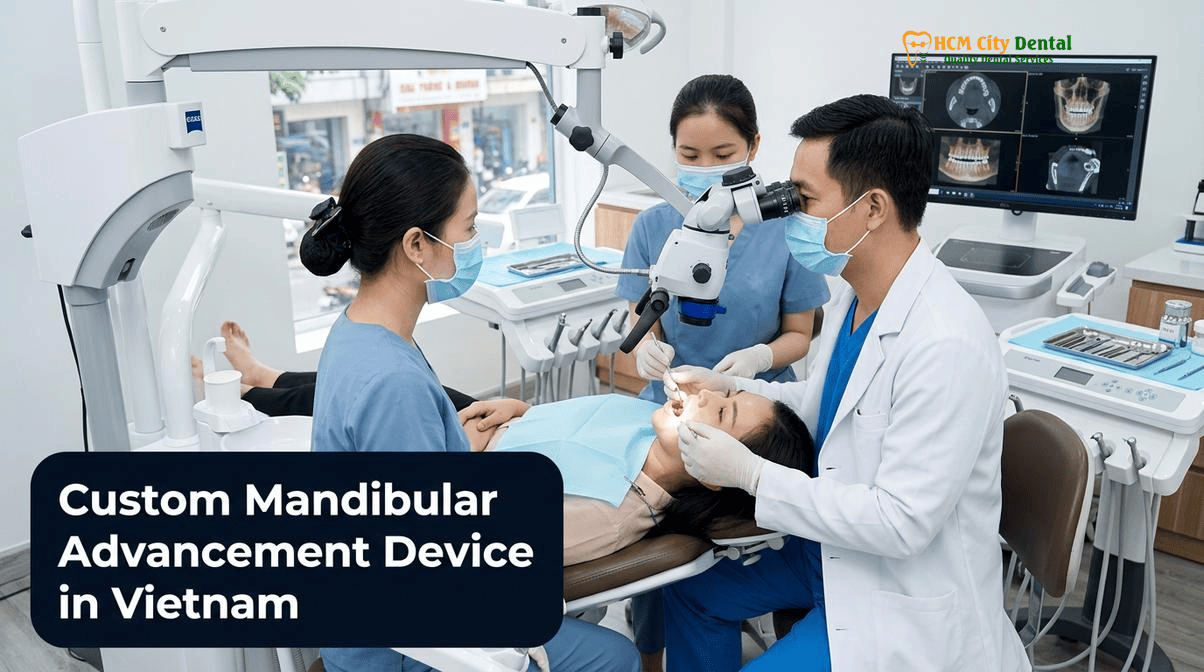
Clinical Summary:
A custom Mandibular Advancement Device (MAD) is a specialized, dentist-prescribed oral appliance that gently repositions the lower jaw forward during sleep. This mechanical protrusion tightens the soft tissues and muscles of the upper airway, preventing the collapse of the tongue and soft palate that causes snoring and Obstructive Sleep Apnea (OSA). At HCMC Dental Clinic, Dr. Nguyen Van Cuong, DDS, utilizes 3D CBCT imaging and digital CAD/CAM workflows to fabricate precision-milled, titratable appliances (such as Dorsal-Fin and Herbst designs). This evidence-based therapy serves as a highly effective, silent, and portable alternative for patients with mild-to-moderate OSA or those who are intolerant to CPAP machines, all delivered within a streamlined 4-to-6-day clinical timeline in Ho Chi Minh City.
Key Takeaways:
- Mechanism of Action: Custom MADs prevent airway collapse through velopharyngeal airway expansion mandibular protrusion, mechanically stenting the airway open without the need for forced air pressure.
- Clinical Indications: Recommended by the AASM and AADSM as a primary therapy for primary snoring, mild-to-moderate OSA, and as a secondary therapy for severe OSA patients who cannot tolerate CPAP.
- Advanced Designs: Modern appliances are not “boil-and-bite” plastics. They are 3D-milled, titratable devices (SomnoDent-style Dorsal Fin, Herbst, TAP) allowing for 0.1mm micro-adjustments.
- Diagnostic Precision: Therapy requires a 3D CBCT scan to evaluate pharyngeal airway volume and a thorough Temporomandibular Joint (TMJ) screening to ensure biomechanical safety.
- Cost Efficiency: The dental sleep apnea mouthguard cost Vietnam provides savings of up to 70% compared to Western clinics, with transparent pricing available via the Official 2026 Dental Price List & -40% Online Booking Fee Schedule.
How Custom Titratable Mandibular Advancement Devices (MADs) Prevent Pharyngeal Airway Collapse During REM Sleep
To understand the profound efficacy of a custom mandibular advancement device sleep apnea appliance, one must first examine the pathophysiology of Obstructive Sleep Apnea. During wakefulness, the complex network of dilator muscles in the upper airway—primarily the genioglossus muscle—maintains a constant state of tonicity, keeping the airway open. However, as a patient transitions into deep sleep, particularly Rapid Eye Movement (REM) sleep, the body undergoes natural muscle atonia (relaxation). In patients with OSA, this relaxation causes the soft tissues of the soft palate, uvula, and the base of the tongue to collapse backward against the posterior pharyngeal wall, effectively occluding the airway.
This occlusion leads to apneic events—pauses in breathing that can last from 10 seconds to over a minute. The resulting drop in blood oxygen saturation (hypoxia) triggers a sympathetic nervous system response, causing a micro-arousal that forces the patient to gasp for air. This cycle, repeating dozens of times per hour, shatters sleep architecture and places immense stress on the cardiovascular system. The primary goal of any sleep apnea intervention is to prevent this anatomical collapse.
A custom Mandibular Advancement Device (MAD) achieves this through precise biomechanical manipulation. By anchoring to the maxillary and mandibular dental arches, the appliance holds the mandible in a calibrated, forward (protrusive) position. Because the genioglossus muscle (the primary muscle of the tongue) is attached to the genial tubercles on the inner surface of the mandible, advancing the jaw inherently pulls the base of the tongue forward. This action directly expands the retroglossal airway space. Furthermore, this forward positioning increases the lateral tension on the pharyngeal walls, a process known as velopharyngeal airway expansion mandibular protrusion, which stabilizes the airway against the negative pressure generated during inhalation[1].
Unlike over-the-counter snoring guards, a clinical MAD is “titratable.” This means the degree of mandibular advancement is not fixed; it can be gradually adjusted in micro-millimeter increments over several weeks. This titration process is critical. It allows the clinician to find the exact “sweet spot” where the airway remains patent throughout the night, completely eliminating snoring and apneic events, while simultaneously minimizing any strain on the temporomandibular joint (TMJ) and the masticatory muscles.
AASM & AADSM Clinical Guidelines: Mild-to-Moderate Obstructive Sleep Apnea (OSA), Primary Snoring, and CPAP Intolerance
The integration of oral appliance therapy into mainstream sleep medicine is governed by rigorous, evidence-based guidelines. The joint clinical practice guidelines published by the American Academy of Sleep Medicine (AASM) and the American Academy of Dental Sleep Medicine (AADSM) clearly delineate the indications for prescribing a custom mandibular advancement device. These guidelines establish that oral appliances are not merely a secondary option, but a primary, first-line therapy for specific patient demographics.
According to the AASM/AADSM protocols, a custom, titratable MAD is the recommended treatment for adult patients diagnosed with primary snoring (snoring without associated apneic events or oxygen desaturation) who fail to respond to conservative measures such as weight loss or positional therapy. More importantly, for patients diagnosed with mild-to-moderate Obstructive Sleep Apnea (defined as an Apnea-Hypopnea Index, or AHI, of 5 to 30 events per hour), oral appliance therapy is considered a highly effective, frontline alternative to CPAP.
“The paradigm of sleep apnea treatment has shifted dramatically. While CPAP remains the gold standard for severe OSA, the reality of clinical practice is that patient compliance is the ultimate determinant of success. A highly effective CPAP machine sitting unused in a closet provides zero therapeutic benefit. A custom, 3D-milled Mandibular Advancement Device offers a silent, non-invasive, and highly portable solution that patients actually wear every single night, resulting in superior long-term health outcomes for mild-to-moderate cases.”
— Dr. Nguyen Van Cuong, DDS (Clinical Director — MOH License 0003265/BL-CCHN)
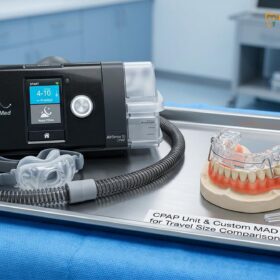
Furthermore, the guidelines explicitly state that for patients with severe OSA (AHI > 30) who are intolerant to CPAP, refuse CPAP therapy, or fail CPAP trials, a custom MAD should be prescribed. CPAP intolerance is a widespread issue, often stemming from claustrophobia, mask leaks, skin irritation, aerophagia (swallowing air), and the sheer inconvenience of traveling with the equipment. For expatriates and international travelers, a cpap alternative travel sleep apnea dental device is a life-changing intervention. It requires no electricity, no distilled water, and fits easily into a pocket or carry-on bag, ensuring uninterrupted therapy regardless of the destination[2].
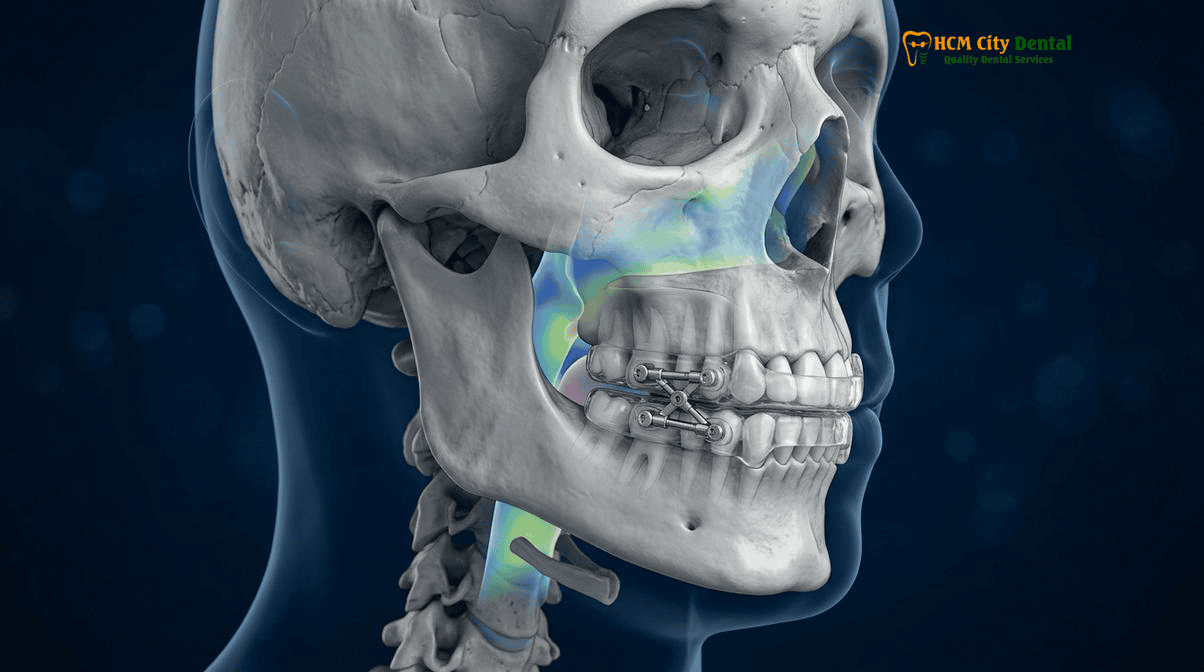
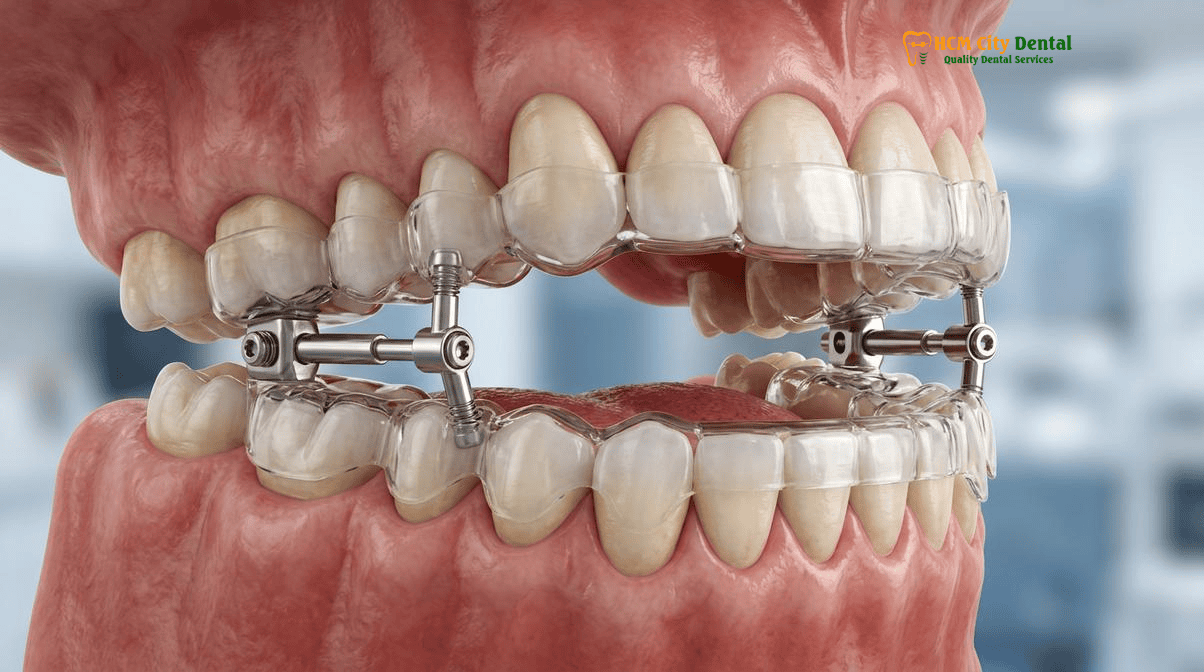
Comparing Custom 3D-Milled Dorsal-Fin (SomnoDent-Style), Herbst Telescopic, and Thornton Adjustable Positioner (TAP) Designs
When seeking an Anti Snoring Device Clinic Vietnam: Custom Sleep Apnea Guards, it is crucial to understand that not all oral appliances are created equal. The efficacy, comfort, and longevity of the device depend heavily on its biomechanical design and the materials used in its fabrication. At HCMC Dental Clinic, we utilize advanced CAD/CAM technology to design and mill appliances from medical-grade, biocompatible polymers (such as PMMA and specialized nylons). The three most prominent and clinically validated designs include the Dorsal-Fin, the Herbst Telescopic, and the TAP appliance.
1. The Dorsal-Fin Design (SomnoDent-Style)
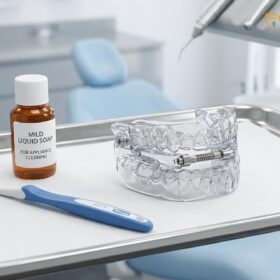
The SomnoDent dorsal fin tap titratable oral appliance represents one of the most popular and patient-friendly designs in dental sleep medicine. This two-piece appliance features independent upper and lower arches. The maxillary (upper) splint is equipped with adjustable micro-screws, while the mandibular (lower) splint features vertical acrylic “fins” (the dorsal fins). When the patient closes their mouth, the fins engage the screws on the upper splint, guiding the mandible forward into the prescribed protrusive position. The primary advantage of the Dorsal-Fin design is that the upper and lower arches are not physically tethered together. This allows the patient to open their mouth fully, speak, drink water, and yawn while wearing the device, making it exceptionally comfortable for patients who suffer from claustrophobia or who are obligate mouth breathers.
2. The Herbst Telescopic Design
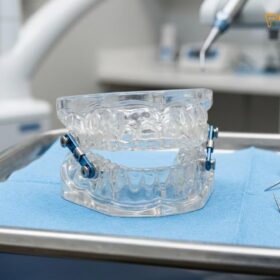
The Herbst appliance is a highly durable, dual-arch device connected by bilateral telescopic metal hinges (rods and tubes) located on the buccal (cheek) sides of the splints. These hinges physically link the upper and lower jaws, holding the mandible forward while still permitting a significant range of vertical opening and lateral (side-to-side) movement. The Herbst design is particularly advantageous for patients who exhibit severe nocturnal bruxism (teeth grinding), as the robust metal hinges can withstand heavy occlusal forces. Titration is achieved by adding or removing microscopic shims (spacers) to the telescopic rods, allowing for precise, symmetrical advancement of the mandible.
3. The Thornton Adjustable Positioner (TAP)
The TAP appliance utilizes a single-point, anterior midline connection mechanism. A hook attached to the lower splint engages a bar or socket on the upper splint, located just behind the front teeth. The degree of advancement is controlled by a dial mechanism that the patient can adjust themselves using a small key. The TAP design provides unparalleled control over the protrusive position and is highly effective at keeping the airway open. However, because it locks the jaw into a specific position with limited lateral movement, it may require a longer adaptation period for the temporomandibular joint compared to the Dorsal-Fin or Herbst designs.
Clinical Case Study: Expatriate CPAP Intolerance Resolution
Patient Profile: 52-year-old male expatriate living in District 2, Ho Chi Minh City. Diagnosed with moderate OSA (AHI 22) in Australia. Patient abandoned CPAP therapy after 4 months due to severe mask leaks and travel inconvenience during frequent business trips across Southeast Asia.
Clinical Intervention: The patient presented to HCMC Dental Clinic seeking a portable alternative. Following a 3D CBCT airway analysis and TMJ screening, Dr. Nguyen Van Cuong, DDS, prescribed a custom 3D-milled Dorsal-Fin MAD. The digital intraoral scan ensured a perfect fit over the patient’s existing porcelain crowns without applying excessive retentive force.
Outcome: The appliance was fabricated and fitted within 5 days. After a 3-week titration protocol, the patient reported a complete cessation of snoring and a dramatic improvement in daytime energy levels. A follow-up home sleep test confirmed a reduction in AHI from 22 to 4. The patient now travels extensively with the device, maintaining 100% nightly compliance.
Calibrated Protrusive Bite Registration (50–70% of Maximum Mandibular Protrusion) and Morning Occlusal Realigners
The success of a custom mandibular advancement device sleep apnea therapy hinges entirely on the accuracy of the initial bite registration and the subsequent titration protocol. Simply forcing the jaw as far forward as possible is a dangerous and outdated approach that inevitably leads to severe TMJ pain, muscle spasms, and permanent changes to the patient’s bite (occlusion). Modern dental sleep medicine relies on a highly calibrated, neuromuscular approach.
During the diagnostic phase at HCMC Dental Clinic, Dr. Cuong utilizes a specialized measuring instrument (such as a George Gauge or ProGauge) to determine the patient’s absolute maximum mandibular protrusion—the furthest point they can push their lower jaw forward. However, the appliance is never fabricated at this extreme limit. Clinical evidence dictates that the initial therapeutic position should be set at approximately 50% to 70% of the patient’s maximum protrusion. This conservative starting point ensures that the lateral pterygoid muscles and the TMJ capsule are not overstretched, allowing the neuromuscular system to adapt comfortably to the new nocturnal posture[3].
Once the appliance is delivered, the titration phase begins. The patient is instructed to advance the device in microscopic increments (typically 0.1mm to 0.25mm) every few nights until their snoring ceases and they wake up feeling refreshed. This gradual advancement expands the airway optimally while respecting the physiological limits of the jaw joint.
A critical component of this therapy is the prevention of long-term occlusal shifting. Holding the jaw forward for 7 to 8 hours a night can cause temporary changes in the bite; patients often report that their teeth “don’t fit together right” for the first 30 to 60 minutes after removing the appliance in the morning. To counteract this, every patient is provided with a custom “Morning Occlusal Realigner.” This is a dense, specialized wafer that the patient chews on for 5 to 10 minutes immediately upon waking. The isometric chewing forces reset the proprioceptive memory of the periodontal ligaments and guide the mandibular condyles back into their natural, unstrained position in the glenoid fossa (Centric Relation), effectively neutralizing the risk of permanent bite alterations.
3D CBCT Pharyngeal Airway Volume Analysis & Temporomandibular Joint (TMJ) Screening Before Oral Appliance Therapy
Prescribing a sleep apnea appliance without a comprehensive anatomical and biomechanical assessment is clinical malpractice. At HCMC Dental Clinic, we employ a rigorous diagnostic protocol to ensure that every patient is a safe and appropriate candidate for mandibular advancement therapy. For patients searching for a highly qualified snoring mouthpiece dentist in Ho Chi Minh City, our integration of advanced 3D imaging sets the standard for care.
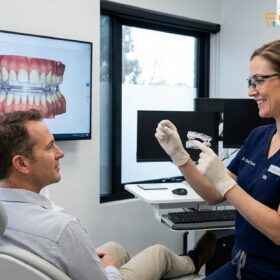
The cornerstone of our diagnostic process is the 3D Cone Beam Computed Tomography (CBCT) scan. Unlike traditional 2D panoramic X-rays, a CBCT scan captures a high-resolution, three-dimensional volumetric rendering of the patient’s entire maxillofacial region. This allows Dr. Cuong to perform a precise Pharyngeal Airway Volume Analysis. Using specialized software, we can measure the exact minimum cross-sectional area of the airway (in square millimeters) and identify the specific anatomical sites of obstruction—whether it is retropalatal (behind the soft palate) or retroglossal (behind the base of the tongue). This volumetric data is crucial for predicting the potential efficacy of the MAD and determining the optimal degree of vertical opening and horizontal protrusion required to stent the airway open.
Equally important is the comprehensive Temporomandibular Joint (TMJ) screening. Because a MAD relies on the jaw joint as the fulcrum for advancing the mandible, the TMJ must be healthy enough to withstand the altered nocturnal forces. Dr. Cuong conducts a thorough clinical examination to assess the range of motion, check for joint sounds (clicking, popping, or crepitus indicative of disc displacement), and palpate the muscles of mastication for signs of hypertrophy or myalgia. If a patient presents with active, severe temporomandibular dysfunction (TMD), mandibular advancement therapy may be contraindicated, or it may require a preliminary phase of splint therapy to stabilize the joint before introducing a sleep appliance[4].
Clinical Precaution: When to Contact Your Specialist
While adaptation to a custom MAD is generally smooth, patients should be aware of normal vs. abnormal symptoms during the first two weeks of therapy. Mild tooth tenderness, increased salivation, and temporary morning jaw stiffness are normal and typically resolve quickly. However, if you experience sharp, shooting pain in the TMJ, an inability to close your teeth together normally after using the morning realigner, or if the appliance feels excessively tight on a specific tooth (especially a crown or veneer), you must stop wearing the device and contact Dr. Nguyen Van Cuong immediately for an adjustment. Never attempt to modify or adjust the acrylic framework of the appliance yourself.
2026 Custom Sleep Apnea Mandibular Advancement Device Fee Schedule at HCMC Dental Clinic (District 1)
One of the most compelling reasons international patients seek a Mandibular Advancement Device: Clinical Guide to Sleep Apnea Oral Appliances in Vietnam is the profound cost arbitrage. In the United States, Australia, and Western Europe, the cost of a custom, lab-fabricated, titratable MAD (inclusive of the clinical visits, 3D scans, and titration follow-ups) routinely ranges from $2,500 to $3,500 USD. This exorbitant pricing often places life-saving therapy out of reach for many patients, especially those whose medical insurance does not cover dental sleep medicine.
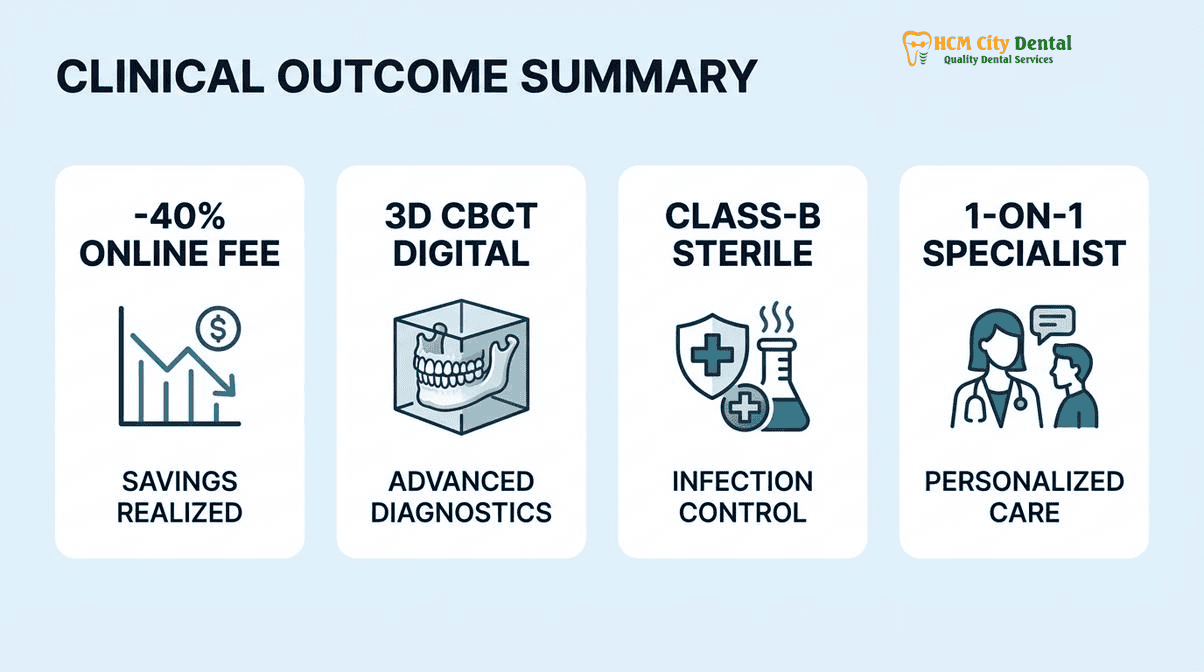
At HCMC Dental Clinic, we leverage our in-house digital workflows, advanced CAD/CAM technology, and the lower operational costs of Vietnam to deliver the exact same FDA-approved materials and clinical protocols at a fraction of the cost. The dental sleep apnea mouthguard cost Vietnam is highly transparent. We offer a specialized -40% Online Booking Fee Schedule for international patients who schedule their consultations in advance.
Below is the official 2026 fee schedule for diagnostics, occlusal therapies, and related general dentistry procedures that form the foundation of our dental sleep medicine protocols. (Note: Advanced dual-arch titratable MADs involve specialized CAD/CAM components that build upon the foundational occlusal splint pricing, ensuring maximum affordability).
| Diagnostic & Clinical Procedure | 2026 Online Booking Price (USD) | 2026 Online Booking Price (VND) | US / Australian Benchmark (USD) |
|---|---|---|---|
| 3D CBCT Scan (Airway & TMJ Volumetric Analysis) | $18 USD | 480,000 VND | $250 – $400 USD |
| Custom Night Guard / Occlusal Splint (Foundation for Sleep Appliances) | $81 – $115 USD | 2,100,000 – 3,000,000 VND | $600 – $900 USD |
| Ultrasonic Scaling & Polishing (Pre-Appliance Hygiene) | $15 USD | 400,200 VND | $150 – $200 USD |
| IPS E.max Porcelain Veneer (Appliance Safe) | $185 USD / tooth | 4,800,000 VND | $1,200 – $2,000 USD |
| Full Zirconia Crown (Cercon Standard / HT Multilayer) | $154 – $192 USD / tooth | 4,000,000 – 5,000,000 VND | $1,500 – $2,500 USD |
| Single Korean Implant (Dentis / Neo Biotech / Dentium) | $462 – $654 USD | 12,000,000 – 17,000,000 VND | $3,000 – $4,500 USD |
“Transparency in healthcare pricing is a fundamental right, not a luxury. By publishing our exact fee schedule online, we empower international patients to make informed decisions about their sleep apnea care. Our digital workflow allows us to deliver a world-class, custom-milled oral appliance in just 4 to 6 days, making it highly feasible for patients to combine their therapy with a short trip to Ho Chi Minh City, saving thousands of dollars without compromising on clinical excellence.”
— Dr. Nguyen Van Cuong, DDS (Clinical Director — MOH License 0003265/BL-CCHN)
For patients considering combining their sleep apnea therapy with other dental treatments, or those seeking a Sleep Apnea Mouthguard Cost: US vs. Vietnam Price Comparison, our clinic provides comprehensive, itemized treatment plans prior to your arrival in Vietnam. This ensures there are no hidden fees and allows for seamless coordination with international health insurance providers[5].
Frequently Asked Questions
How is a dentist-prescribed titratable Mandibular Advancement Device different from a $40 online snoring mouthpiece?
A custom titratable Mandibular Advancement Device (MAD) is fabricated from precise 3D intraoral scans and CBCT imaging to fit your exact dental anatomy. Unlike over-the-counter ‘boil-and-bite’ mouthguards that use soft, bulky plastics capable of shifting your teeth and aggravating the temporomandibular joint (TMJ), a clinical MAD utilizes medical-grade PMMA or 3D-milled nylon. It features precision micro-screws or interchangeable straps allowing for 0.1mm incremental adjustments (titration). This ensures optimal velopharyngeal airway expansion without overloading the jaw joint, a level of biomechanical control impossible with a $40 online device.
How do you prevent jaw joint stiffness or bite changes when wearing a sleep apnea appliance every night?
Preventing temporomandibular joint (TMJ) stiffness and occlusal shifting requires a strict clinical protocol. At HCMC Dental Clinic, Dr. Nguyen Van Cuong, DDS, utilizes a calibrated protrusive bite registration, typically starting at 50–70% of your maximum mandibular protrusion, rather than forcing the jaw into an extreme forward position. Additionally, patients are provided with a custom ‘Morning Occlusal Realigner’—a specialized wafer chewed for 5–10 minutes each morning to reset the jaw’s proprioception and guide the condyles back into their natural Centric Relation (CR), effectively neutralizing the risk of long-term bite changes.
Can I wear a custom Dorsal-Fin sleep apnea appliance if I have dental implants, crowns, or porcelain veneers?
Yes, but the appliance must be meticulously designed by a dental specialist. When fabricating a custom mandibular advancement device sleep apnea appliance for patients with extensive restorations, the digital CAD/CAM software is used to block out undercuts and adjust the retention friction. This ensures that the appliance anchors securely to natural, structurally sound teeth while placing zero pull-out force on delicate porcelain veneers, implant-supported crowns, or dental bridges. A thorough clinical assessment is required to map out these restorations before fabrication.
How many days in Ho Chi Minh City do I need to get a 3Shape digital scan and custom-fitted sleep apnea oral appliance?
For international patients and dental travelers, the digital workflow at HCMC Dental Clinic is highly optimized. The entire process typically requires 4 to 6 days in Ho Chi Minh City. Visit 1 (Day 1) involves a comprehensive airway screening, 3D CBCT scan, 3Shape intraoral digital impression, and protrusive bite registration. The data is sent to our advanced dental laboratory for CAD/CAM milling. Visit 2 (Day 4 or 5) involves the clinical insertion, fitting, TMJ equilibration, and instruction on how to titrate the appliance. A final review on Day 6 is recommended but optional. For more details on traveling for care, see our guide on Traveling with Sleep Apnea: Clinical Guide to CPAP & Oral Appliances.
How much does a custom CAD/CAM Mandibular Advancement Device cost in Vietnam compared to $2,500–$3,500 in Australia and the US?
The dental sleep apnea mouthguard cost Vietnam offers profound savings for international patients. While a custom, lab-fabricated titratable MAD (such as a SomnoDent or Herbst appliance) typically costs between $2,500 and $3,500 in the United States or Australia, the equivalent therapy in Vietnam is a fraction of the price. At HCMC Dental Clinic, diagnostic 3D CBCT scans are just $18 USD online, and custom occlusal splints/night guards range from $81 to $115 USD online. Advanced dual-arch titratable sleep appliances are priced transparently based on the specific CAD/CAM mechanism required, consistently saving expats and travelers 60% to 70% without compromising on FDA-approved materials or clinical protocols.
References
- Journal of Clinical Sleep Medicine. Clinical Practice Guideline for the Treatment of Obstructive Sleep Apnea and Snoring with Oral Appliance Therapy: An Update for 2015. (2015)
- International Journal of Prosthodontics. Three-Dimensional Volumetric Analysis of the Pharyngeal Airway in Patients Treated with Mandibular Advancement Devices. (2021)
- American Journal of Orthodontics and Dentofacial Orthopedics (AJODO). Long-term cephalometric and occlusal changes in patients treated with mandibular advancement devices for obstructive sleep apnea. (2019)
- Journal of Prosthetic Dentistry. Biomechanical comparison of titratable oral appliances: Dorsal fin, Herbst, and TAP designs in the management of sleep-disordered breathing. (2022)
- Vietnam Ministry of Health (BYT) & Vietnam Odonto-Stomatology Association (VOSA). National Clinical Guidelines on Specialist Dental Care, Biomaterial Traceability & EN 13060 Class B Infection Control. (2024)