Gingivitis is a mild, reversible inflammation of the gums caused by plaque buildup, whereas periodontitis is a severe, irreversible infection that destroys the bone and tissues supporting your teeth. Understanding this distinction is critical for preventing permanent tooth loss and maintaining optimal systemic health.
Clinical Summary:
The primary distinction between gingivitis and periodontitis lies in the extent of tissue damage and reversibility. Gingivitis involves superficial gum inflammation without bone loss and can be completely reversed with professional cleaning and improved oral hygiene. Conversely, periodontitis involves the irreversible destruction of the periodontal ligament and alveolar bone, requiring advanced mechanical debridement, such as scaling and root planing, or surgical intervention to halt disease progression. Early clinical diagnosis is essential to prevent tooth mobility and systemic inflammatory complications.
Key Takeaways:
- Gingivitis is the earliest stage of gum disease and is entirely reversible with proper care.
- Periodontitis causes irreversible damage to the alveolar bone and periodontal ligaments.
- Bleeding gums are a primary indicator of gingivitis, while gum recession and loose teeth indicate periodontitis.
- Clinical intervention for periodontitis requires deep cleaning procedures like scaling and root planing.
- Untreated periodontal disease is a leading cause of adult tooth loss globally.
Gingivitis vs Periodontitis: What Is the Difference?
The main difference is that gingivitis is a reversible inflammation confined to the gum tissue, while periodontitis is an advanced, irreversible infection that destroys the underlying bone supporting the teeth.
When patients notice bleeding while brushing or flossing, they are often witnessing the initial signs of periodontal disease. The oral cavity is a complex ecosystem harboring hundreds of bacterial species. In a healthy state, these bacteria exist in harmony with the host’s immune system. However, when oral hygiene is neglected, a sticky, colorless film known as dental plaque biofilm accumulates on the tooth surfaces, particularly along the gingival margin. This biofilm is the primary etiological factor in both gingivitis and periodontitis.
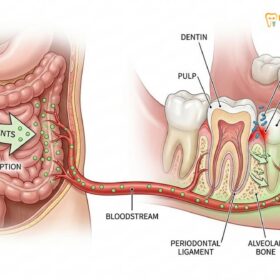
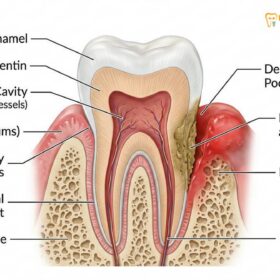
To fully grasp the difference between gingivitis and periodontitis, one must look at the structural anatomy of the periodontium—the specialized tissues that both surround and support the teeth. The periodontium consists of the gingiva (gums), the periodontal ligament, the cementum (root surface covering), and the alveolar bone. Gingivitis is strictly an inflammatory response limited to the gingiva. The underlying bone and connective tissue attachments remain completely intact. Because no structural damage has occurred, the condition is highly responsive to treatment and can be entirely reversed.
In stark contrast, periodontitis represents a profound shift in both the bacterial flora and the body’s immune response. As plaque matures, the bacterial composition shifts from predominantly aerobic (oxygen-dependent) bacteria to highly aggressive anaerobic pathogens, such as Porphyromonas gingivalis and Treponema denticola. These pathogens migrate beneath the gumline, triggering a hyperactive immune response. The body’s own inflammatory cells, in an attempt to eradicate the infection, release enzymes and cytokines that inadvertently break down the periodontal ligament and resorb the alveolar bone[1]. This structural destruction is the defining hallmark of periodontitis.
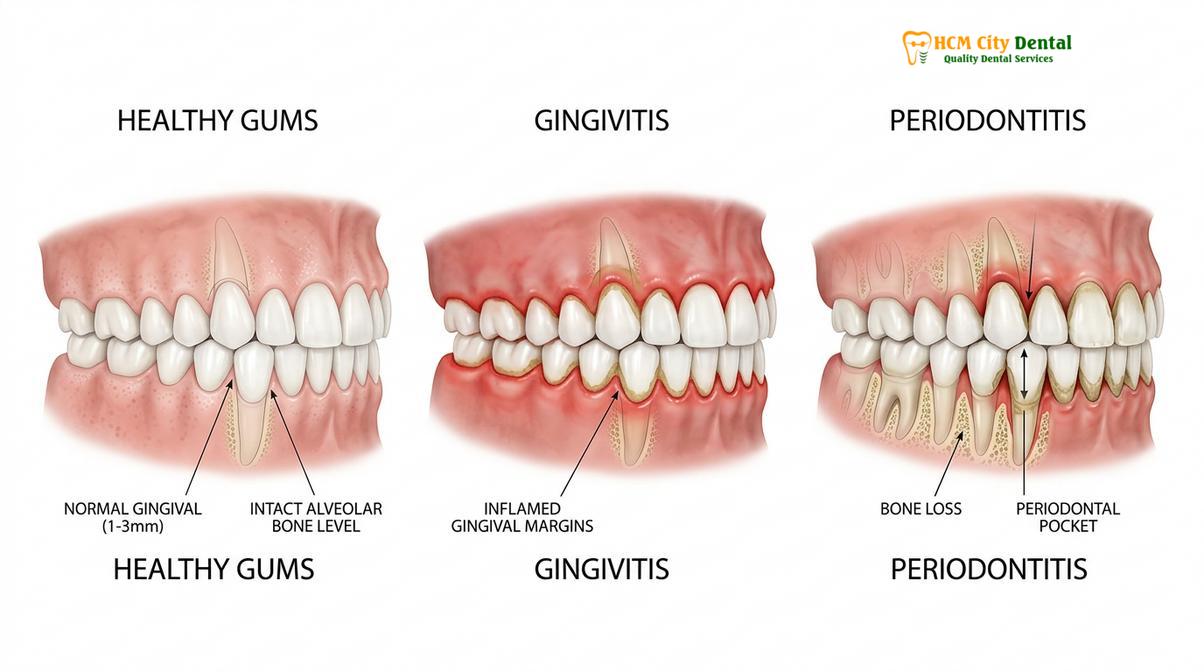
According to Dr. Nguyen Van Cuong, a leading expert in periodontal care, “Patients often ignore early bleeding because it is painless. However, understanding periodontitis vs gingivitis is crucial. Once the inflammation breaches the soft tissue and begins eroding the bone, we transition from a simple cleaning to complex disease management. Early intervention is the absolute key to preserving the natural dentition.”
Stage 1: Gingivitis (Reversible Inflammation)
Gingivitis represents the initial stage of periodontal disease, characterized by red, swollen, and bleeding gums without any underlying structural bone loss.
Gingivitis is the most common and mildest form of periodontal disease. It is estimated that a vast majority of adults will experience some degree of gingivitis during their lifetime. The pathogenesis of gingivitis begins with the accumulation of dental plaque. Within days of inadequate brushing and flossing, the plaque biofilm matures and begins to calcify into calculus (tartar) through the precipitation of minerals from saliva. Calculus provides a rough, porous surface that harbors even more bacteria, creating a vicious cycle of accumulation.
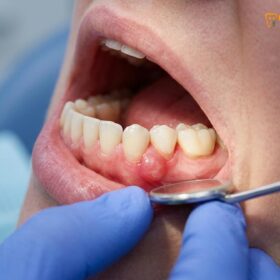
The bacteria within the biofilm release metabolic byproducts, toxins, and enzymes that irritate the gingival epithelium. In response, the body increases blood flow to the area to deliver immune cells, leading to the classic clinical signs of inflammation: erythema (redness), edema (swelling), and a tendency to bleed upon gentle provocation, such as brushing or probing[2]. Healthy gums are typically pale pink, firm, and stippled (resembling the texture of an orange peel). In gingivitis, the gums become glossy, soft, and dark red or purplish.
Despite these alarming visual changes, gingivitis is generally painless. This lack of discomfort is precisely why it frequently goes unnoticed or ignored by patients. It is vital to understand that at this stage, the epithelial attachment to the tooth remains at its original level, and there is zero loss of alveolar bone. The architecture of the periodontium is intact.
“The insidious nature of gingivitis lies in its painlessness. Patients often equate a lack of pain with a lack of disease, allowing a highly treatable and reversible condition to silently progress into irreversible tissue destruction.”
Because the structural integrity of the tooth’s support system is uncompromised, gingivitis is 100% reversible. A professional dental prophylaxis (routine cleaning) to remove the offending plaque and calculus, coupled with a rigorous home care routine of twice-daily brushing and daily interdental cleaning, will typically resolve the inflammation within one to two weeks. The gums will return to their firm, pink, and healthy state.
Stage 2 to 4: Periodontitis (Irreversible Damage)
As the disease progresses into periodontitis, bacterial infection penetrates below the gumline, triggering an immune response that irreversibly breaks down connective tissue and alveolar bone.
If gingivitis is left untreated, the chronic inflammation alters the local environment, favoring the proliferation of virulent anaerobic bacteria. This marks the critical transition point. Many patients ask, is gingivitis periodontitis? The answer is no, but gingivitis is the mandatory precursor. Without intervention, the inflammatory infiltrate extends deeper into the connective tissue, causing the gingival fibers to detach from the tooth surface. This detachment creates a space between the tooth and the gum, known as a periodontal pocket.
These pockets become ideal incubators for anaerobic bacteria, as they are shielded from oxygen and inaccessible to a toothbrush or dental floss. As the bacteria multiply within the pocket, the immune system escalates its response. Macrophages and fibroblasts release pro-inflammatory cytokines, matrix metalloproteinases (MMPs), and prostaglandins. While intended to fight the infection, these biochemical mediators stimulate osteoclasts—cells that break down bone tissue. Consequently, the alveolar bone that anchors the tooth begins to resorb[3].
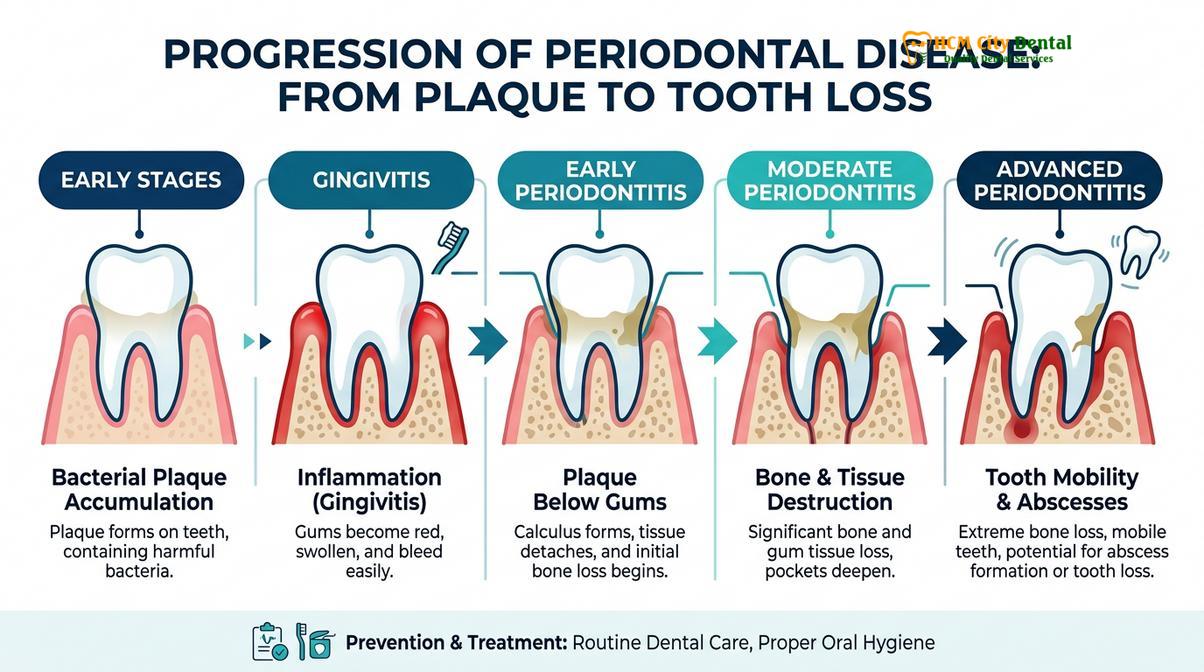
The progression of periodontitis is categorized into different gum disease stages based on severity:
- Early Periodontitis (Stage 2): The gums begin to recede, and periodontal pockets measure between 4 to 5 millimeters in depth. Early clinical attachment loss occurs, and initial bone loss is visible on dental radiographs.
- Moderate Periodontitis (Stage 3): Pocket depths increase to 6 millimeters. The destruction of the periodontal ligament and bone becomes more pronounced. Teeth may begin to lose their structural support, and the infection can spread into the furcation (the area where the roots divide in multi-rooted teeth).
- Advanced Periodontitis (Stage 4): Pocket depths exceed 7 millimeters. Severe bone loss occurs, often leading to significant tooth mobility (looseness). Chewing function is compromised, and without aggressive intervention, tooth extraction becomes inevitable.
Systemic Health Warning: Periodontitis is not isolated to the mouth. The chronic systemic inflammation caused by severe gum disease has been clinically linked to an increased risk of cardiovascular disease, poorly controlled diabetes, respiratory infections, and adverse pregnancy outcomes. Managing periodontal health is a critical component of overall medical wellness.
Comparing Symptoms: Bleeding vs Bone Loss
While both conditions may present with bleeding gums, periodontitis uniquely features gum recession, deep periodontal pockets, chronic bad breath, and eventual tooth mobility.
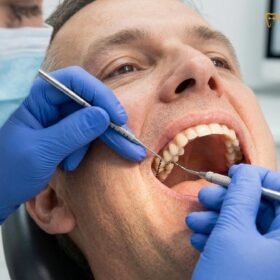
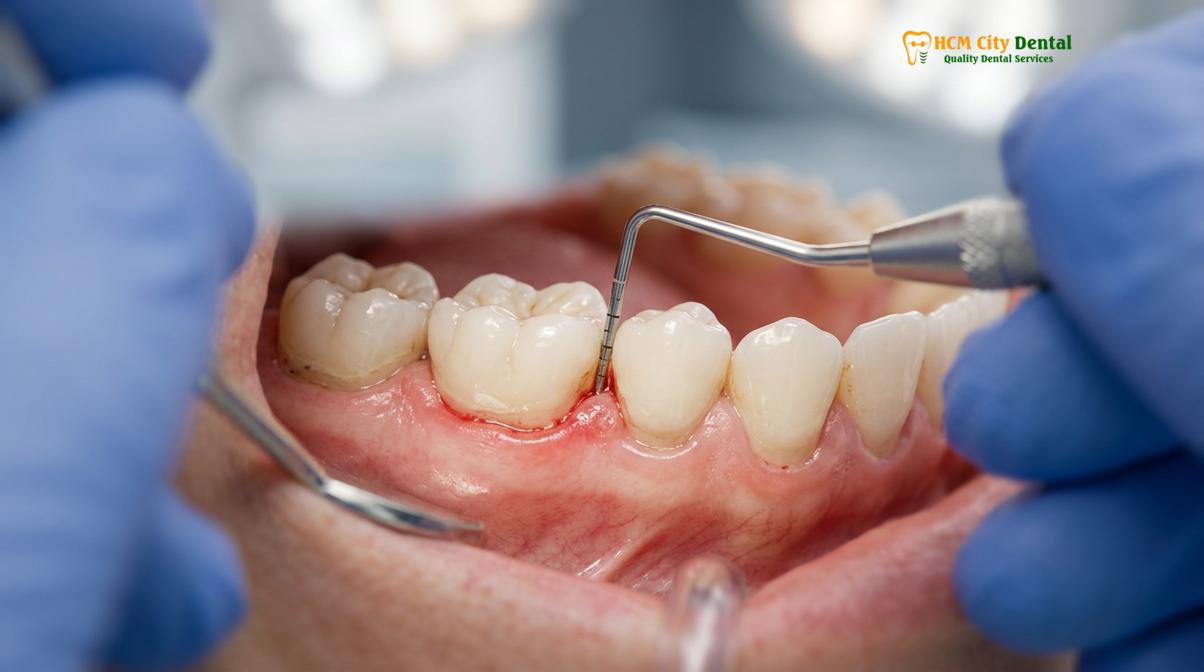
Accurate diagnosis relies on a comprehensive clinical and radiographic examination. While a patient may notice bleeding in both conditions, a dental professional looks for specific markers to differentiate between the two. The primary diagnostic tool is the periodontal probe, a specialized instrument used to measure the depth of the sulcus (the crevice between the tooth and gum). In a healthy state or in gingivitis, probing depths are typically 1 to 3 millimeters. In periodontitis, probing depths of 4 millimeters or greater indicate clinical attachment loss and pocket formation.
Furthermore, dental radiographs (X-rays) are indispensable for assessing the alveolar bone levels. Gingivitis shows normal bone height, whereas periodontitis reveals a distinct reduction in bone mass surrounding the roots of the teeth[4]. The pattern of bone loss can be horizontal (even reduction across multiple teeth) or vertical (angular defects alongside a specific tooth).
To clearly illustrate the clinical differences, the following table outlines the distinct presentations of both conditions:
| Clinical Feature | Gingivitis | Periodontitis |
|---|---|---|
| Gum Appearance | Red, swollen, glossy, inflamed margins | Receding gums, blunted papillae, purplish hue |
| Bleeding | Frequent bleeding upon brushing or probing | Spontaneous bleeding, possible pus exudate |
| Probing Depths | 1 to 3 mm (pseudo-pockets due to swelling) | 4 mm or greater (true periodontal pockets) |
| Bone Loss | None (intact alveolar bone) | Irreversible bone resorption visible on X-rays |
| Tooth Mobility | Teeth remain firmly anchored | Teeth may become loose or shift position |
| Reversibility | 100% reversible with proper care | Irreversible damage; requires disease management |
Another distinguishing symptom is halitosis (chronic bad breath). While poor oral hygiene can cause temporary bad breath, the deep periodontal pockets in periodontitis harbor volatile sulfur compounds (VSCs) produced by anaerobic bacteria, resulting in a persistent, foul odor that cannot be masked by mouthwash or mints.
Reversibility and Treatment Pathways
Gingivitis is treated with standard professional prophylaxis and improved home care, whereas periodontitis requires intensive therapies like scaling and root planing, antibiotics, or periodontal surgery.
The treatment philosophy differs fundamentally between the two conditions. Because gingivitis involves no permanent damage, the goal of treatment is complete resolution of inflammation and restoration of baseline health. This is achieved through a standard dental prophylaxis, where a hygienist or dentist uses ultrasonic scalers and hand instruments to meticulously remove supragingival (above the gumline) plaque and calculus. Following the cleaning, the patient is educated on proper brushing techniques and interdental cleaning methods. Within weeks, the gingival tissues heal, and the disease is reversed.
Periodontitis, however, requires a more aggressive, multi-phased approach. Because the damage is irreversible, the clinical objective shifts from “curing” the disease to halting its progression, reducing pocket depths, and maintaining the remaining bone structure. The gold standard non-surgical treatment for periodontitis is Scaling and Root Planing (SRP), commonly referred to as a “deep cleaning.”
During an SRP procedure, local anesthesia is administered to ensure patient comfort. The clinician uses specialized instruments, such as Gracey curettes and ultrasonic devices, to access the deep periodontal pockets. Scaling removes the bacterial biofilm, calculus, and toxins from the root surfaces below the gumline. Root planing involves smoothing the rough cementum on the roots, which discourages further bacterial attachment and provides a clean surface for the gingival tissues to reattach[5].
In advanced cases where non-surgical therapy is insufficient to reduce pocket depths, surgical interventions may be necessary. Periodontal flap surgery involves gently lifting the gum tissue to allow direct visualization and thorough cleaning of the root surfaces and bone defects. In some instances, guided tissue regeneration (GTR) or bone grafting may be utilized to regenerate lost bone and connective tissue.
Clinical Case Review:
A 45-year-old patient visited HCMC Dental Clinic in Ho Chi Minh City presenting with severe bleeding, chronic halitosis, and slight mobility in the lower incisors. Clinical examination by Dr. Cuong revealed probing depths of 5-7mm and moderate horizontal bone loss on radiographs, confirming Stage 3 Periodontitis. The patient underwent a comprehensive protocol of full-mouth scaling and root planing under local anesthesia, supplemented with localized antimicrobial therapy. Following a strict 3-month periodontal maintenance schedule, the patient’s pocket depths reduced to manageable 3-4mm levels, tissue tone improved dramatically, and tooth mobility was stabilized, successfully avoiding extractions.
For patients requiring comprehensive periodontal therapy, modern advancements such as diode laser therapy are often integrated into the treatment plan. Lasers can selectively target and vaporize diseased tissue lining the periodontal pocket while simultaneously decontaminating the area, promoting faster healing and reducing post-operative discomfort.
Preventing the Progression of Gum Disease
Halting the progression from mild inflammation to severe bone loss requires meticulous daily oral hygiene, regular professional cleanings, and the management of systemic risk factors.
Prevention is undeniably the most effective strategy in periodontal care. The transition from a healthy periodontium to gingivitis, and subsequently to periodontitis, is entirely preventable through consistent, evidence-based oral hygiene practices. The foundation of prevention lies in the mechanical disruption of the plaque biofilm every 12 to 24 hours.
Patients must adopt a rigorous home care routine. Brushing twice daily with a soft-bristled toothbrush and fluoridated toothpaste is essential, but brushing alone only cleans 60% of the tooth surface. The interproximal areas (between the teeth) are highly susceptible to plaque accumulation and are often the starting point for periodontal pockets. Therefore, daily use of dental floss, interdental brushes, or water flossers is non-negotiable for maintaining gingival health.
“Periodontal disease is largely a behavioral disease. The success of any clinical treatment, no matter how advanced, is ultimately dependent on the patient’s daily commitment to meticulous plaque control at home.”
Professional maintenance is equally critical. For individuals with a healthy mouth or mild gingivitis, a routine dental care visit every six months is generally sufficient. However, patients who have been treated for periodontitis require a more frequent recall schedule, known as Periodontal Maintenance Therapy. Because the bacterial biofilm repopulates the pockets within 90 to 120 days, these patients must undergo professional cleanings every 3 to 4 months to disrupt the bacteria before they can cause further bone destruction.
Furthermore, managing systemic risk factors plays a vital role in prevention. Smoking is one of the most significant risk factors for periodontitis, as it impairs blood flow to the gums, masks the early signs of bleeding, and severely compromises the immune system’s ability to fight infection. Smoking cessation is highly recommended. Additionally, patients with diabetes must maintain strict glycemic control, as elevated blood sugar levels increase inflammation and impair wound healing in the oral cavity.
When to See a Doctor
Gum disease is often silent in its early stages, making professional evaluation crucial. You should schedule a clinical examination immediately if you experience any of the following red flags:
- Gums that bleed consistently when brushing, flossing, or eating hard foods.
- Gums that are visibly receding, making your teeth appear longer than before.
- Persistent bad breath or a constant metallic taste in your mouth.
- Pus or exudate visible between the teeth and gums when pressure is applied.
- Teeth that feel loose, wobble, or a noticeable change in the way your teeth fit together when you bite.
Early diagnosis is the most powerful tool in preventing tooth loss. If you suspect you are experiencing symptoms of gum disease, a thorough periodontal evaluation based on clinical diagnostics is essential to determine the appropriate intervention.
Frequently Asked Questions
Is gingivitis the same as periodontitis?
No, gingivitis is not the same as periodontitis. Gingivitis is an early, reversible inflammation of the gums caused by plaque, whereas periodontitis is a severe, irreversible infection that destroys the bone and tissues supporting the teeth. Without treatment, gingivitis can progress into periodontitis. Gingivitis only affects the soft tissue, while periodontitis compromises the structural foundation of your smile.
Can periodontitis be reversed?
Periodontitis cannot be completely reversed, as the bone and tissue loss is permanent. However, the disease progression can be successfully halted and managed through deep cleaning procedures, such as scaling and root planing, and rigorous ongoing periodontal maintenance therapy. With proper professional intervention and excellent home care, patients can maintain their remaining bone levels and keep their natural teeth for a lifetime.
How long does it take for gingivitis to turn into periodontitis?
The transition from gingivitis to periodontitis varies significantly among individuals, ranging from a few months to several years. Factors such as oral hygiene habits, genetic predisposition, smoking, and systemic conditions like diabetes heavily influence the speed of this disease progression. In some aggressive forms of the disease, rapid attachment loss can occur in a very short timeframe, emphasizing the need for regular dental check-ups.
What does a dentist do for periodontitis?
A dentist treats periodontitis by performing a deep cleaning known as scaling and root planing to remove bacterial toxins from below the gumline. In advanced cases, they may recommend laser therapy, localized antibiotics, or surgical interventions like flap surgery to restore periodontal health. The specific treatment protocol is tailored to the depth of the periodontal pockets and the extent of bone loss observed on X-rays.
How do I know if I have gingivitis or periodontitis?
You can distinguish between the two through clinical symptoms: gingivitis typically presents with red, swollen, and bleeding gums without pain. Periodontitis includes these symptoms but also features receding gums, persistent bad breath, deep periodontal pockets, and eventually loose or shifting teeth. However, a definitive diagnosis requires a professional dental examination using a periodontal probe and dental radiographs to assess bone levels.
References
- Journal of Periodontology. Pathogenesis of periodontal diseases and the immune response. (2021).
- International Dental Journal. The role of dental plaque biofilm in gingival inflammation. (2020).
- Clinical Advances in Periodontics. Diagnostic criteria for staging and grading periodontitis. (2019).
- Journal of Clinical Periodontology. Radiographic assessment of alveolar bone loss in periodontal disease. (2022).
- American Academy of Periodontology. Non-surgical and surgical management of advanced periodontal disease. (2018).