The All on 4 cost Vietnam typically ranges from $5,000 to $8,500 per arch, depending heavily on the selected implant brand and the final prosthetic material. This advanced full-arch rehabilitation offers patients a permanent, biomechanically stable solution while providing substantial financial savings compared to standard Western clinical fees.
Clinical Summary:
Full-arch implant rehabilitation utilizing the All-on-4 protocol provides a fixed, highly functional solution for edentulous patients or those with terminal dentition. The cost of this procedure in Vietnam remains highly competitive due to lower regional operational overhead, not a reduction in clinical standards or material quality. Patients receive premium titanium fixtures from global manufacturers such as Nobel Biocare and Straumann, paired with advanced prosthetics ranging from high-impact acrylic to monolithic zirconia. Comprehensive treatment packages generally encompass 3D CBCT diagnostics, surgical placement, temporary immediate-load prostheses, and the final hybrid bridge. Long-term clinical success relies on precise surgical execution, adequate bone density, and rigorous post-operative maintenance.
Key Takeaways:
- The average investment per arch ranges from $5,000 to $8,500, offering profound global savings.
- Premium implant systems (e.g., Nobel Biocare, Straumann) are standard in top-tier Vietnamese dental facilities.
- Treatment encompasses a surgical phase with an immediate temporary bridge and a restorative phase for the final prosthesis.
- Final prosthetic materials, such as acrylic, porcelain, or Pekkton, significantly influence the total financial investment.
- Comprehensive packages typically cover 3D imaging, surgery, and prosthetics without hidden administrative fees.
The True Cost of Full-Arch Dental Restorations
The total investment for an All-on-4 procedure reflects the surgical complexity, the quality of titanium fixtures, and the advanced laboratory fabrication required for a complete full mouth restoration cost.
Understanding the financial investment required for full-arch implant rehabilitation requires a deep dive into the clinical components of the procedure. The All-on-4 protocol is not merely the placement of four titanium screws; it is a complex, multi-disciplinary medical procedure that involves oral surgery, advanced prosthodontics, and precise biomechanical engineering. When patients evaluate the full-arch implant therapies available, they must consider the rigorous clinical standards maintained by top-tier facilities.
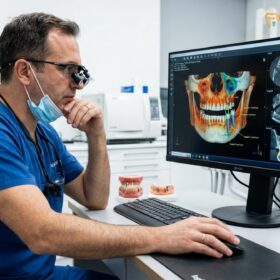
The foundation of the procedure relies on the strategic angulation of the posterior implants. By tilting the distal implants up to 45 degrees, the surgeon can maximize the use of available anterior bone, often bypassing the need for extensive sinus lifts in the maxilla or nerve repositioning in the mandible. This surgical efficiency reduces both the overall treatment time and the supplementary costs associated with complex bone grafting procedures [1]. However, this technique requires immense surgical precision, guided by 3D Cone Beam Computed Tomography (CBCT) and often utilizing computer-generated surgical stents.
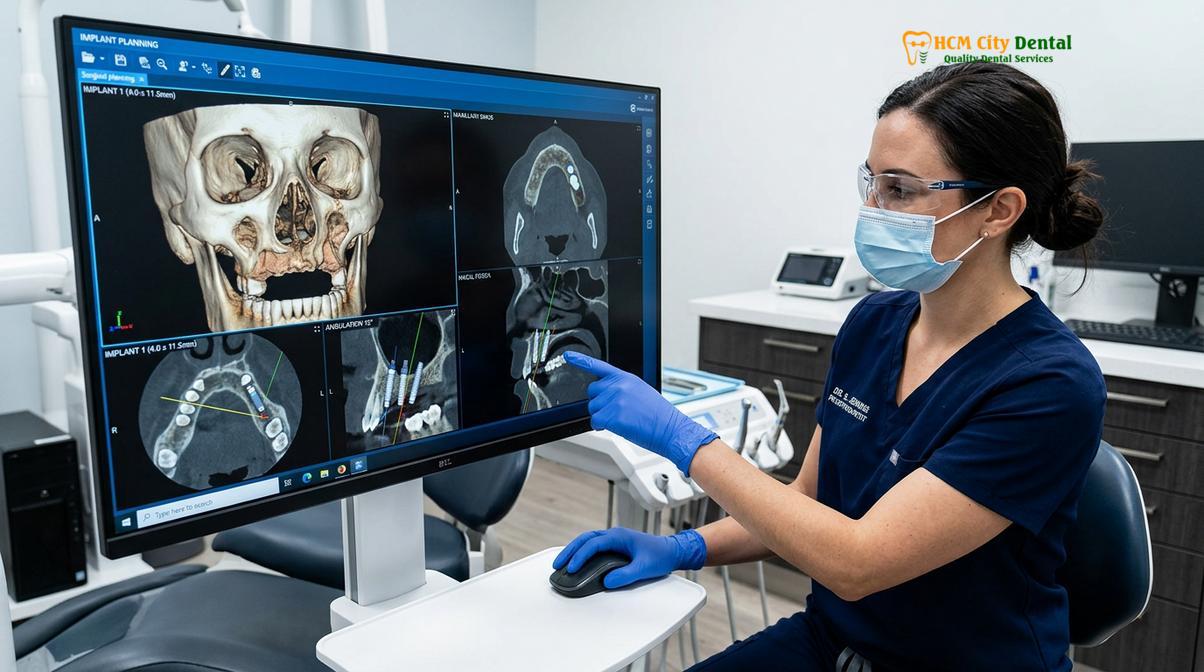
“The true value of a full-arch restoration lies not just in the hardware, but in the precise biomechanical distribution of occlusal forces. A poorly engineered prosthesis will fail regardless of the implant brand used.”
Dr. Nguyen Van Cuong emphasizes that the initial surgical phase is only half of the equation. The restorative phase—where the temporary and final prostheses are designed, milled, and calibrated to the patient’s unique temporomandibular joint (TMJ) parameters—requires hundreds of hours of specialized laboratory work. The full mouth restoration cost encompasses the expertise of the implantologist, the prosthodontist, and the master ceramist who collaboratively ensure that the final result is both functionally robust and aesthetically indistinguishable from natural teeth.
Price Breakdown: Implants, Temporary Bridge, and Final Hybrid Bridge
A transparent pricing structure divides the cost into the surgical placement of four implants, the immediate provisional denture, and the fabrication of the permanent hybrid prosthesis.
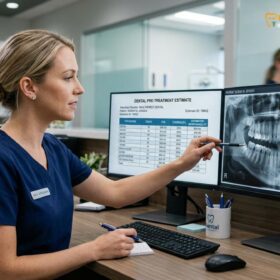
To fully comprehend the hybrid prosthesis pricing, it is essential to break down the treatment into its distinct clinical phases. Reputable clinics in Ho Chi Minh City provide itemized treatment plans that clearly delineate the costs associated with diagnostics, surgery, and prosthetics. This phased approach not only clarifies the financial commitment but also aligns with the biological healing timeline required for successful osseointegration.
Phase 1: Diagnostics and Surgical Placement
The initial phase accounts for approximately 50% to 60% of the total treatment cost. This includes the comprehensive 3D CBCT scans, digital smile design, extraction of any remaining failing teeth, alveolectomy (bone leveling to hide the transition line between the prosthesis and natural gums), and the surgical placement of the four titanium implants. Premium fixtures from brands like Nobel Biocare or Straumann carry a higher initial cost but offer decades of proven clinical data regarding bone preservation and primary stability [2].
Phase 2: Immediate Provisional Restoration
Following surgery, an immediate-load temporary acrylic bridge is attached to the implants. This provisional prosthesis is crucial; it splints the implants together, minimizing micro-movements during the critical healing phase, and allows the patient to leave the clinic with fixed, functional teeth on the same day. The cost of this temporary bridge is usually bundled into the surgical phase.
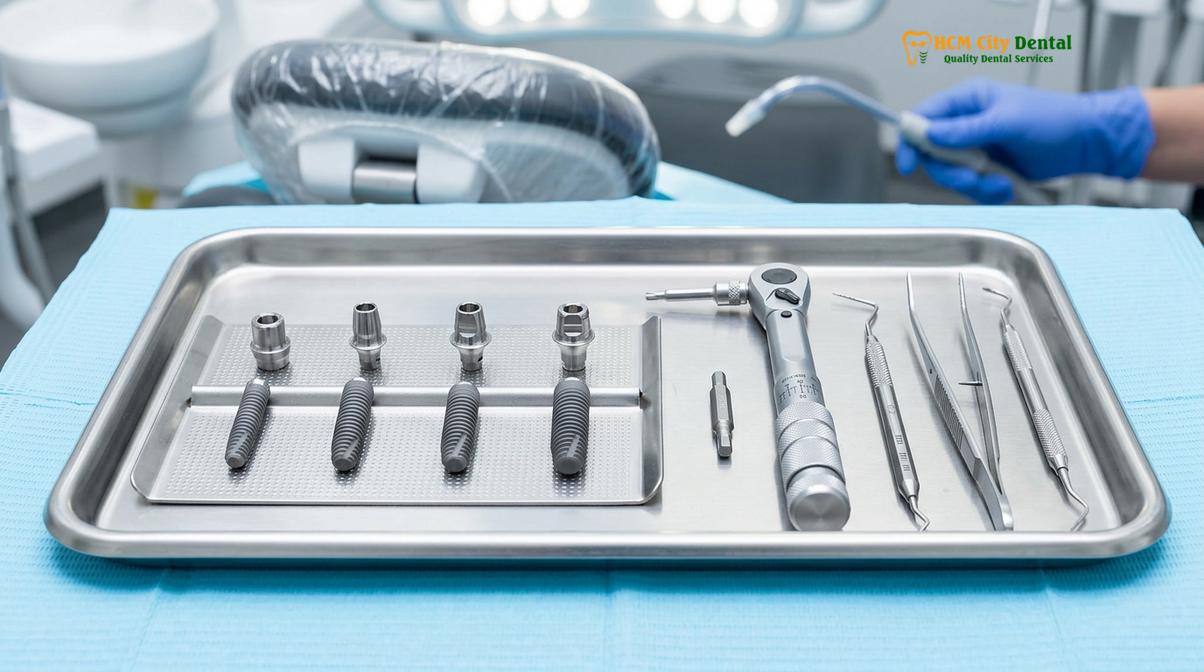
Phase 3: The Final Permanent Prosthesis
After a healing period of four to six months, the implants have fully fused with the jawbone. The patient returns for the fabrication of the final permanent bridge. This phase accounts for the remaining 40% to 50% of the cost, heavily dependent on the materials chosen. The final prosthesis must be meticulously engineered to withstand maximum bite forces while providing optimal aesthetics.
| Treatment Phase | Clinical Components Included | Estimated % of Total Cost |
|---|---|---|
| Phase 1: Surgery | CBCT, Extractions, Bone Leveling, 4 Implants, Multi-unit Abutments | 50% – 60% |
| Phase 2: Provisional | Immediate-load temporary acrylic bridge, bite registration | Included in Surgery |
| Phase 3: Final Prosthesis | Final impressions, CAD/CAM milling, framework try-in, final delivery | 40% – 50% |
Patients exploring advanced implantology solutions must recognize that the quality of the final prosthesis dictates the long-term success and maintenance requirements of the entire rehabilitation.
Global Pricing Comparison: Vietnam vs. USA, Australia, and UK
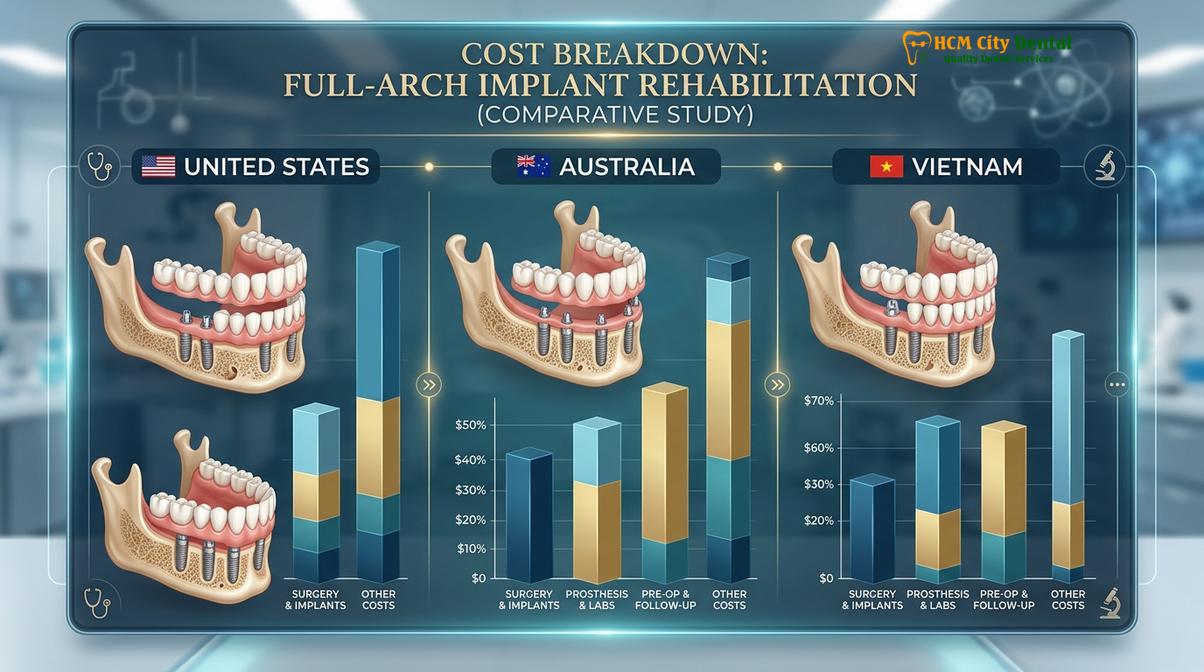
Patients traveling to Vietnam can expect savings of 60% to 70% on full-arch implant therapies compared to standard clinical fees in the United States, Australia, and the United Kingdom.
The primary catalyst for the surge in dental tourism is the profound discrepancy in healthcare costs between Western nations and Southeast Asia. When analyzing the savings compared to australia, the United States, or the UK, patients often question how such a significant price reduction is possible without compromising clinical quality. The answer lies entirely in macroeconomic factors rather than medical shortcuts.
In the United States and Australia, a single arch All-on-4 procedure can easily exceed $25,000 to $35,000. These exorbitant fees are driven by high commercial real estate costs, massive malpractice insurance premiums, inflated laboratory fees, and high labor costs for specialized staff. In contrast, clinics in Vietnam operate within a vastly different economic structure. The overhead costs for maintaining a state-of-the-art facility in Ho Chi Minh City are a fraction of those in Sydney or Los Angeles [3].
Clinical Case Review: International Patient Rehabilitation
A 62-year-old patient from Melbourne presented to HCMC Dental Clinic with severe periodontal disease and failing upper dentition. Quoted over $30,000 AUD in Australia for a maxillary All-on-4, the patient opted for treatment in Ho Chi Minh City. Utilizing Nobel Biocare implants and a final monolithic zirconia bridge, the total clinical fee was approximately $8,000 USD. The procedure was completed over two visits, resulting in optimal osseointegration, restored masticatory function, and savings exceeding 65%, even after accounting for international flights and premium accommodation.
Furthermore, leading Vietnamese clinics utilize the exact same materials, CAD/CAM milling machines, and sterilization protocols as their Western counterparts. The titanium implants are imported directly from Switzerland, Sweden, or South Korea. Therefore, the cost reduction is passed directly to the patient through lower operational margins, making cost-effective full mouth protocols highly accessible without sacrificing the longevity or safety of the treatment.
Material Options Affecting Cost: Acrylic vs. Porcelain vs. Pekkton
The choice of final prosthetic material—ranging from standard acrylic over titanium to premium monolithic zirconia or Pekkton frameworks—is the primary variable in the overall treatment cost.
Once the surgical phase is complete and osseointegration is confirmed, the patient must select the material for their final permanent bridge. This decision is the most significant variable in the overall cost and dictates the durability, aesthetics, and maintenance schedule of the new teeth. When comparing fixed prosthetics versus removable appliances, the material science behind fixed hybrid bridges is remarkably advanced.
Acrylic with a Titanium Framework:
This is the standard, most cost-effective option. High-impact acrylic teeth are processed over a custom-milled titanium bar that provides rigid support across the implants. Acrylic is relatively lightweight and has a low modulus of elasticity, meaning it acts as a shock absorber, dampening the occlusal forces transferred to the implants and bone. However, acrylic is porous; it can stain over time and the teeth may wear down after 5 to 7 years, requiring replacement of the acrylic portion (while the titanium bar remains intact) [4].
Monolithic Zirconia:
Zirconia represents the premium tier of full-arch prosthetics. Milled from a single block of solid crystal, zirconia is exceptionally strong, highly resistant to fractures, and completely impervious to staining. It offers unparalleled aesthetics, mimicking the natural translucency of human enamel. Because zirconia is extremely rigid, it transfers bite forces directly to the implants. Therefore, Dr. Cuong advises that zirconia is best suited for patients with excellent bone density and a precisely calibrated bite to prevent opposing tooth wear.
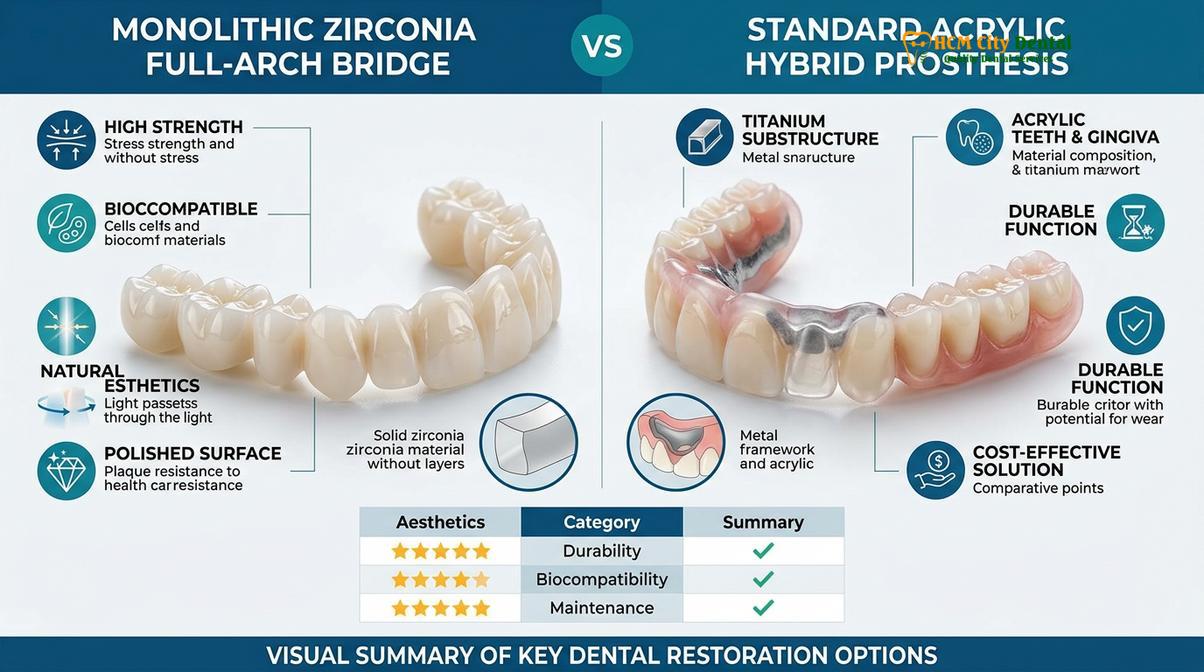
“Selecting the right prosthetic material is a delicate balance between biomechanical requirements and aesthetic desires. A rigid zirconia bridge offers unmatched durability, but requires flawless occlusal engineering to prevent excessive stress on the supporting bone.”
Pekkton (High-Performance Polymer):
Pekkton is an advanced, biocompatible polymer framework that mimics the natural elasticity of human bone. It is lighter than titanium and zirconia, offering excellent shock absorption while maintaining high fracture resistance. Individual porcelain or composite crowns are cemented onto the Pekkton framework, allowing for easy repair if a single tooth chips. This material is often recommended for patients with heavy bruxism (teeth grinding) or those requiring implant rehabilitation for older adults where bone preservation is paramount.
Zero-Interest Installment Plans and Financing Options
Many leading clinics offer structured payment plans and phased billing to help patients manage the financial investment of full-arch implant rehabilitation over the course of their treatment.
To further enhance accessibility, top dental institutions in Vietnam prioritize billing transparency saigon, ensuring patients fully understand their financial commitments before any surgical intervention begins. Because the All-on-4 protocol inherently requires two separate visits spaced several months apart, the payment structure is naturally phased, alleviating the burden of a single lump-sum payment.
Typically, patients are required to pay for the surgical phase (approximately 50% to 60% of the total cost) during their first visit. This covers the implants, the surgery, and the temporary bridge. The remaining balance for the final permanent prosthesis is only due during the second visit, months later, when the final bridge is fabricated and delivered [5]. This phased approach acts as an inherent installment plan, allowing international patients to budget effectively between trips.
Additionally, for local residents or expatriates, many clinics partner with regional banks to offer zero-interest installment plans spread over 6 to 12 months. When evaluating premium titanium fixtures, patients should discuss these financing options during their initial consultation to ensure the treatment plan aligns with their financial capabilities without compromising on the necessary clinical quality.
When to See a Doctor for Full-Arch Rehabilitation
Determining candidacy for an All-on-4 procedure requires a comprehensive clinical evaluation. Patients should seek a consultation with a qualified implantologist if they are experiencing terminal dentition, severe and progressive periodontal disease, or if they are currently wearing traditional removable dentures that cause pain, bone loss, or functional impairment.
Important Clinical Considerations:
Full-arch implant surgery is a major medical procedure. It is contraindicated for patients with uncontrolled diabetes, severe osteoporosis treated with intravenous bisphosphonates, active radiation therapy to the head and neck, or severe immunosuppression. Heavy smoking significantly increases the risk of implant failure and must be addressed prior to surgery. Always undergo a thorough medical and 3D radiographic evaluation to determine your specific surgical candidacy.
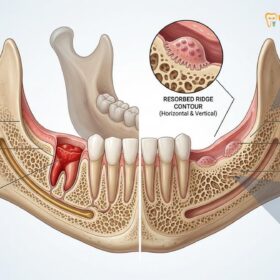
During the consultation, the specialist will evaluate the volume and density of the jawbone using a CBCT scan. If the bone atrophy is too severe even for angled implants, alternative protocols such as zygomatic implants (which anchor into the cheekbone) or extensive bone grafting may be required. Early intervention is critical; the longer a patient remains edentulous, the more the jawbone resorbs, increasing the complexity and cost of future rehabilitation.
Frequently Asked Questions
What does the $7,500 All-on-4 package include?
A standard $7,500 package typically includes 3D CBCT diagnostics, surgical placement of four titanium implants, an immediate temporary acrylic bridge, and the final permanent hybrid prosthesis. This comprehensive fee covers the core clinical requirements for a full-arch restoration. However, if a patient presents with severe bone loss requiring specialized grafting, or opts to upgrade the final bridge to monolithic zirconia, these additions will be quoted separately prior to treatment.
Are there any hidden costs in the All-on-4 treatment?
Reputable clinics provide a transparent, all-inclusive quote after the initial clinical assessment, ensuring no hidden fees. The written treatment plan will detail every component, from the surgical facility fees to the laboratory costs. Patients should, however, budget for their own travel, accommodation, and potential supplementary treatments like complex extractions or sinus lifts if their specific anatomy demands it.
Does dental insurance cover All-on-4 in Vietnam?
Most international dental insurance plans do not fully cover the All-on-4 procedure, classifying it as an elective or major restorative treatment. Nevertheless, some comprehensive policies may reimburse a portion of the preliminary diagnostics, extractions, or provide a basic allowance for the prosthetic phase. Patients are advised to request detailed, itemized clinical invoices from their Vietnamese clinic to submit for partial out-of-network claims.
How long do I need to stay in Vietnam for the procedure?
Patients typically require two separate visits: an initial 7 to 10-day stay for the surgical placement and temporary bridge delivery, followed by a 5 to 7-day stay several months later. The first visit allows time for the surgery and initial post-operative monitoring. The patient then returns home for 4 to 6 months to allow the implants to osseointegrate before returning for the fabrication and fitting of the final permanent bridge.
What happens if an implant fails after I return home?
Premium implant fixtures from brands like Nobel Biocare and Straumann come with international manufacturer warranties that are honored globally. If a clinical failure occurs (which is statistically rare), the clinic in Vietnam will typically replace the fixture at no additional surgical cost. However, patients must account for their own travel expenses to return to the clinic, and adherence to strict post-operative hygiene protocols is required to maintain the warranty.
References
- Journal of Oral Implantology. Biomechanical considerations in full-arch implant-supported prostheses. (Volume 45).
- International Journal of Prosthodontics. Immediate loading of four interforaminal implants: A clinical review. (Volume 32).
- Clinical Implant Dentistry and Related Research. Economic evaluation of full-arch rehabilitation protocols globally. (Volume 21).
- Journal of Prosthetic Dentistry. Material selection for implant-supported fixed complete dentures: Zirconia vs. Acrylic. (Volume 124).
- Journal of Dental Economics. Patient financing and cost transparency in international dental tourism. (Volume 110).
For a personalized assessment of your full-arch rehabilitation needs and a precise cost breakdown, schedule a comprehensive CBCT consultation with the specialists at HCMC Dental Clinic in Ho Chi Minh City.