Experiencing a dental emergency with a child in Vietnam requires immediate, calm action. Whether dealing with a knocked-out tooth, severe toothache, or facial swelling, prompt first aid and locating a reputable pediatric dental clinic in Ho Chi Minh City or Hanoi are critical to preserving your child’s oral health.
Clinical Summary:
Managing a dental emergency child vietnam involves rapid clinical decision-making to prevent long-term oral health complications. Acute pediatric dental issues generally present as either traumatic injuries (such as avulsions, luxations, or fractures) or infectious processes (such as deep caries leading to pulpitis or abscesses). Immediate first aid—such as preserving a knocked-out permanent tooth in milk or administering weight-appropriate analgesics for a toothache—significantly improves the prognosis. Accessing specialized pediatric dental care in major urban centers like Ho Chi Minh City ensures that children receive appropriate diagnostic imaging, pain management, and anxiety-reducing behavioral guidance. Understanding the critical differences between treating primary (baby) teeth and permanent teeth is essential for parents navigating a pediatric dental emergency saigon.
Key Takeaways:
- Never attempt to re-implant a knocked-out baby tooth, as this can permanently damage the developing adult tooth beneath the gums.
- A knocked-out permanent tooth must be re-implanted or stored in milk (never tap water) and treated by a dentist within 30 to 60 minutes for the best survival rate.
- Severe, throbbing toothaches accompanied by facial swelling or fever indicate a spreading bacterial infection requiring immediate antibiotic therapy and clinical intervention.
- Pediatric pain management should rely on weight-appropriate doses of ibuprofen or acetaminophen; never apply aspirin directly to the oral tissues.
- Reputable dental clinics in major Vietnamese cities offer international-standard infection control, digital radiography, and English-speaking pediatric specialists.
Common Pediatric Dental Emergencies
Pediatric dental emergencies typically fall into two main categories: acute physical trauma from falls or accidents, and sudden, severe pain caused by deep bacterial decay or localized infections.
When traveling or living abroad, encountering a dental emergency child vietnam can be highly stressful for both the parent and the patient. Children’s oral anatomy differs significantly from adults. Primary teeth (baby teeth) possess thinner enamel and relatively larger pulp chambers, meaning that bacterial decay can progress from a minor cavity to a severe pulpal infection much more rapidly than in an adult tooth [1]. Understanding the clinical presentation of common emergencies is the first step in providing effective care.
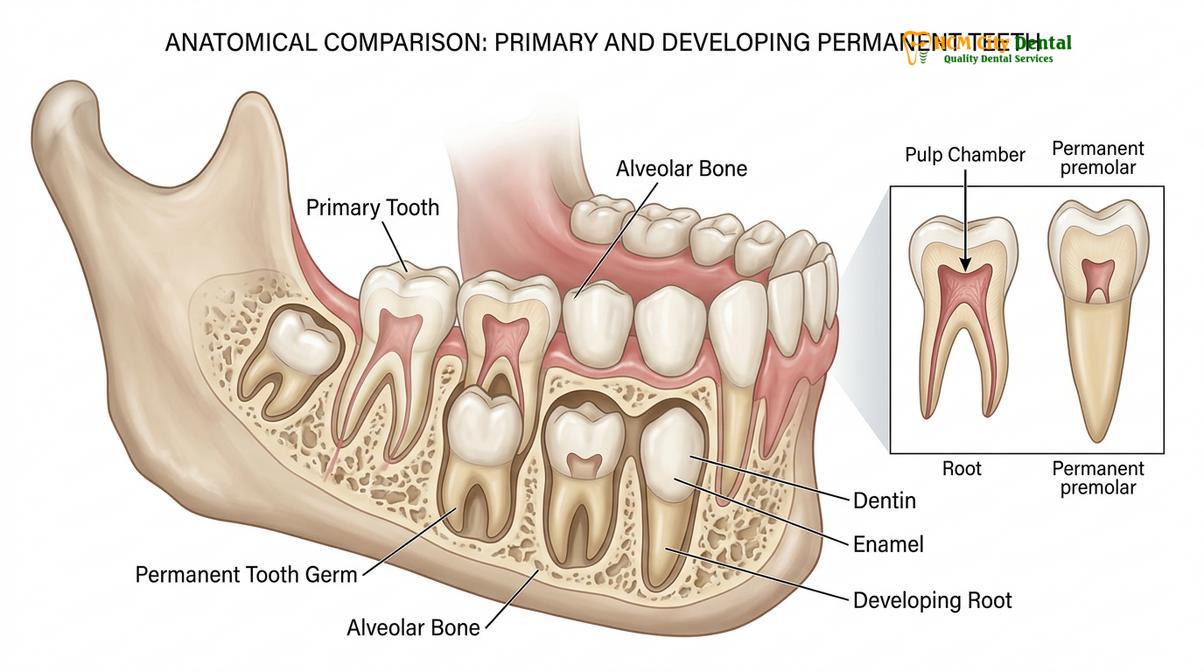
Acute Pulpitis and Dental Abscesses
A sudden, unprovoked toothache that wakes a child from sleep is a classic symptom of irreversible pulpitis—an inflammation of the dental pulp usually caused by deep, untreated caries. If the bacteria penetrate the root canal system and enter the surrounding jawbone, a dental abscess forms. This presents as a localized swelling on the gums (often resembling a pimple), severe throbbing pain, and potentially systemic symptoms like a low-grade fever. Because pediatric bone is less dense, infections can spread rapidly into the facial spaces. If you notice swelling extending to the child’s cheek or eye, this is a critical medical situation. For detailed protocols on managing spreading infections, refer to our Swollen Face Tooth Infection Emergency Guide.
Traumatic Dental Injuries
Children are naturally active, making baby tooth trauma highly prevalent. Falls, sports collisions, and playground accidents frequently result in chipped, displaced, or completely knocked-out teeth. The clinical classification of these injuries dictates the treatment workflow:
- Uncomplicated Crown Fractures: Only the enamel or dentin is chipped. The tooth may be sensitive to cold, but there is no spontaneous pain.
- Complicated Crown Fractures: The fracture exposes the red, bleeding dental pulp. This is extremely painful and requires immediate endodontic intervention (such as a pulpotomy) to save the tooth and prevent infection [2].
- Luxation Injuries: The tooth is pushed out of its normal alignment—either laterally, extruded (pulled down), or intruded (pushed up into the gum). Intrusion of a primary tooth is particularly concerning as the root tip can crush the developing permanent tooth germ.
First Aid: Baby Tooth vs Permanent Tooth Injuries
The clinical protocol for dental trauma depends entirely on whether the injured tooth is primary or permanent; re-implanting a baby tooth is strictly contraindicated due to the risk of damaging the underlying adult tooth.
Immediate, correct first aid at the scene of the accident drastically alters the long-term prognosis of a traumatized tooth. Parents must quickly assess the situation, control bleeding, and determine the type of tooth involved. If a child is involved in a more severe accident, such as a traffic collision, comprehensive medical assessment takes precedence over dental injuries. For broader trauma management, consult our Dental Trauma Motorcycle Accident Vietnam: Clinical Guide.
Clinical Warning: Avulsed Primary Teeth
If a child under the age of 6 completely knocks out a front tooth, it is almost certainly a primary (baby) tooth. Do not attempt to push it back into the socket. The root of the baby tooth sits directly adjacent to the developing permanent tooth. Forcing the baby tooth back in can cause severe developmental defects, hypoplasia, or impaction of the permanent tooth. Control the bleeding with sterile gauze and seek pediatric dental care for an evaluation.
Managing an Avulsed (Knocked-Out) Permanent Tooth
If a kid tooth knocked out is a permanent tooth (typically occurring in children aged 7 and older), it is a true, time-sensitive dental emergency. The periodontal ligament (PDL) cells attached to the root surface begin to die immediately upon exposure to air. The goal is to keep these cells viable so the tooth can successfully reattach to the jawbone [3].
- Find the tooth immediately. Pick it up strictly by the white crown. Never touch the yellowish root, as this destroys the fragile PDL cells.
- Assess for debris. If the tooth is visibly dirty, rinse it very gently with cold milk or saline for no more than 10 seconds. Do not scrub it, and do not use soap, chemicals, or tap water. Tap water is hypotonic and will cause the root cells to burst and die.
- Attempt immediate re-implantation. If the child is calm and cooperative, gently push the tooth back into its socket facing the correct way. Have the child bite down softly on a clean handkerchief or gauze to hold it in place.
- Alternative storage. If re-implantation is impossible, place the tooth in a container of cold milk, Hank’s Balanced Salt Solution (Save-A-Tooth), or the child’s own saliva (they can spit into a cup).
- Seek immediate care. You have a critical 30 to 60-minute window to reach a dentist for professional splinting.
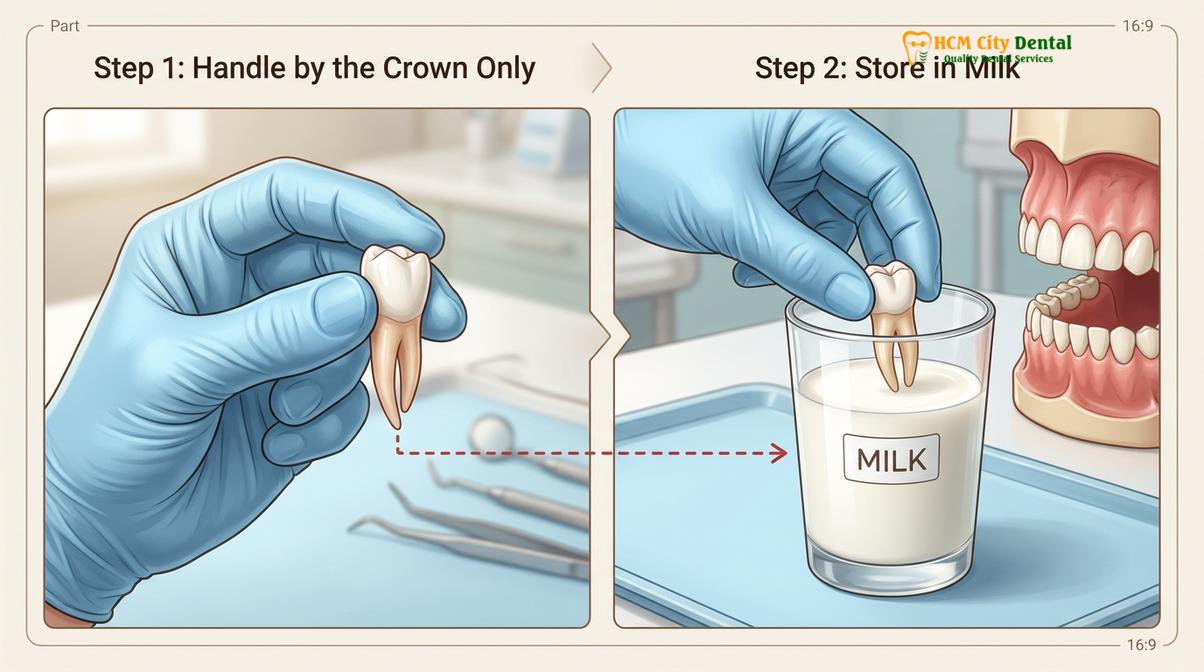
Handling Chipped and Fractured Teeth
For a fractured tooth, locate the broken fragment if possible and store it in milk or water. Modern dental bonding techniques can sometimes reattach the natural tooth fragment seamlessly. Rinse the child’s mouth with warm water to remove dirt and blood. Apply a cold compress to the outside of the lip or cheek to minimize swelling. If the fracture exposes the pink or red pulp tissue inside the tooth, the child will likely experience acute pain when breathing in cold air. Cover the tooth with a piece of sugar-free chewing gum or orthodontic wax as a temporary physical barrier while en route to the clinic.
How to Manage a Child’s Toothache While Traveling
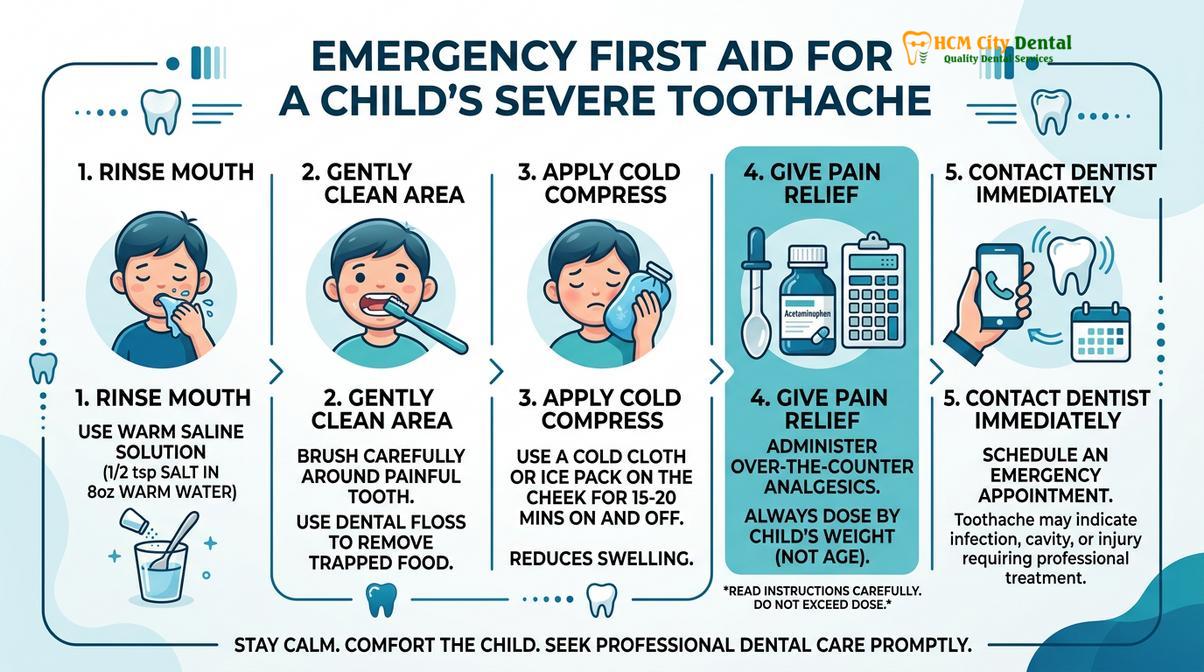
Temporary pain management during travel involves administering weight-appropriate pediatric analgesics, utilizing warm saline rinses, and avoiding extreme temperatures until professional dental care is accessible.
A child toothache hcmc can disrupt a family vacation and cause significant distress. When a toothache strikes, usually due to deep decay or food impaction, immediate palliative care is necessary to keep the child comfortable until you can reach a dental professional. It is vital to differentiate between a minor irritation and a severe infection. For a comprehensive understanding of pain severity, review When Is Toothache an Emergency? Clinical Red Flags.
“When managing acute pediatric dental pain, parents must prioritize systemic anti-inflammatory medication over topical home remedies. A severe toothache indicates pulpal inflammation that cannot be cured by external gels alone. Proper weight-based dosing of ibuprofen is the most effective bridge to professional clinical care.”
— Dr. Nguyen Van Cuong, Lead Dental Surgeon
Step-by-Step Palliative Care
First, gently clean the affected area. Use a soft-bristled toothbrush and dental floss to carefully remove any trapped food debris between the teeth, which is a common cause of sudden, sharp pain in children. Next, have the child rinse their mouth with a warm saline solution (half a teaspoon of salt dissolved in eight ounces of warm water). The osmotic pressure of the salt water helps draw out fluid from swollen gingival tissues, reducing pressure and providing mild relief [4].
For pharmacological management, administer a pediatric dose of ibuprofen or acetaminophen based strictly on the child’s weight, not their age. Ibuprofen is generally preferred for dental pain due to its excellent anti-inflammatory properties. Never place aspirin or any painkiller directly against the gums or the aching tooth; the high acidity will cause a severe chemical burn on the delicate oral mucosa, compounding the child’s pain.
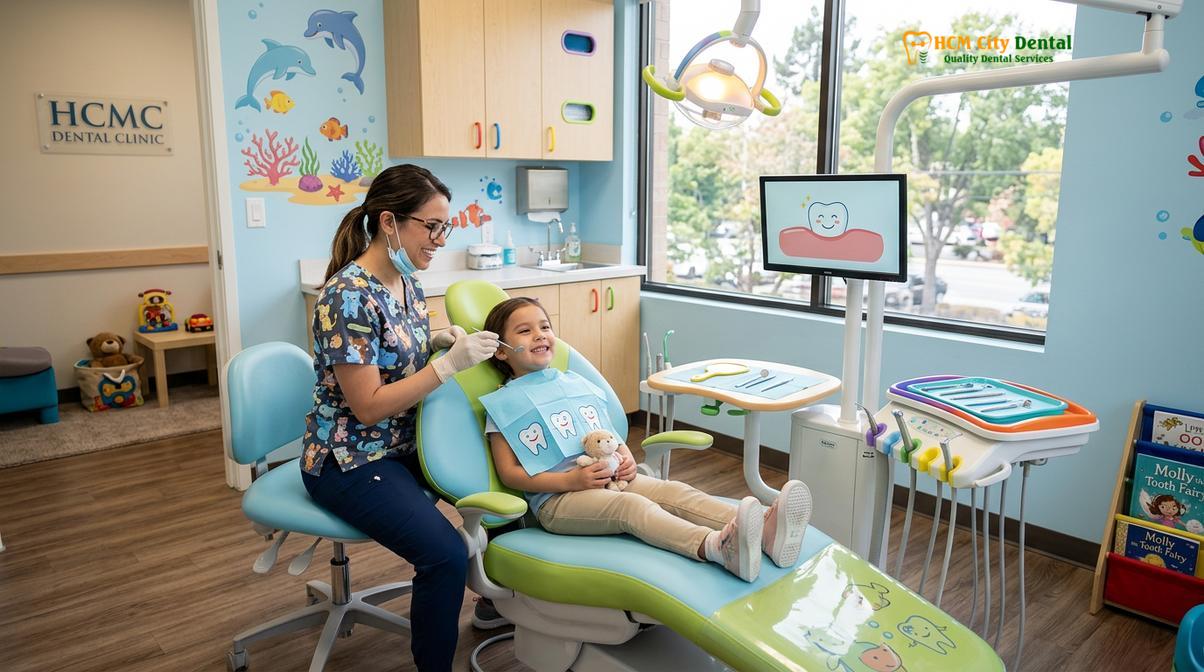
Finding a Pediatric Dentist in Ho Chi Minh City
Locating a qualified pediatric dentist in Vietnam involves seeking clinics with English-speaking staff, modern diagnostic imaging, and specialized behavioral management techniques tailored for children.
Navigating healthcare in a foreign country can be daunting, but major urban centers in Vietnam boast world-class medical and dental facilities. When dealing with a pediatric dental emergency saigon, it is crucial to select a clinic that is equipped not only with the right technology but also with the right clinical approach for treating minors. At HCMC Dental Clinic in Ho Chi Minh City, the clinical workflow is specifically adapted to accommodate the physiological and psychological needs of pediatric patients.
Clinical Case Review: Managing Pediatric Trauma Abroad
Patient Profile: An 8-year-old tourist visiting Ho Chi Minh City suffered a fall, resulting in a complicated crown fracture of the maxillary right central incisor (permanent front tooth) with pulp exposure.
Clinical Intervention: The patient was brought to HCMC Dental Clinic within two hours of the injury. Dr. Nguyen Van Cuong performed a partial pulpotomy (Cvek pulpotomy) using MTA (Mineral Trioxide Aggregate) to preserve the vitality of the remaining root pulp, allowing the root to continue developing. The tooth was then restored using a highly aesthetic composite resin.
Outcome: The child experienced immediate pain relief. The vital pulp therapy successfully maintained the tooth’s blood supply, and the family was provided with detailed digital radiographs and clinical notes to transfer to their home pediatric dentist for long-term monitoring.
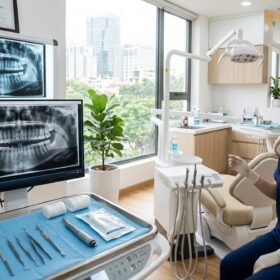
When selecting a clinic, ensure they utilize digital radiography (which emits significantly less radiation than traditional X-rays, adhering to the ALARA principle—As Low As Reasonably Achievable). Furthermore, the clinic should maintain strict, internationally recognized infection control protocols, including Class B autoclaving for all instruments and the use of disposable barriers.
What to Expect at a Kid-Friendly Dental Clinic
A specialized pediatric dental visit prioritizes the child’s psychological comfort alongside clinical treatment, utilizing tell-show-do techniques and minimally invasive procedures to ensure a positive experience.
The environment and approach of a pediatric dental visit differ vastly from adult dentistry. The primary objective, beyond resolving the immediate medical issue, is to prevent the development of dental phobia. A traumatic experience in the dental chair during childhood can lead to a lifetime of dental avoidance. Therefore, pediatric specialists employ specific behavioral management strategies.
The Clinical Workflow for Children
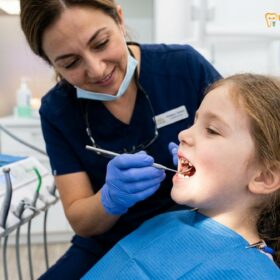
Upon arrival, the dental team will conduct a rapid but gentle assessment. If the child is in acute pain, the immediate focus is on stabilization and analgesia. The dentist will use the “Tell-Show-Do” technique: explaining the procedure in child-friendly terms (Tell), demonstrating the instruments on a model or the child’s finger (Show), and then performing the action (Do). This demystifies the process and builds trust [5].
| Clinical Aspect | Standard Adult Care | Pediatric Dental Care |
|---|---|---|
| Communication | Direct medical terminology and clinical explanations. | Child-friendly language, Tell-Show-Do technique, positive reinforcement. |
| Anesthesia Delivery | Standard syringe injection with topical gel. | Computer-controlled local anesthesia delivery (wand) to eliminate the “pinch” sensation. |
| Restorative Materials | Standard composite or ceramic restorations. | Fluoride-releasing Glass Ionomer Cements (GIC) or pediatric stainless steel crowns for durability. |
| Radiography | Standard adult-sized intraoral sensors. | Pediatric-sized digital sensors with minimal radiation exposure protocols. |
| Pulp Therapy | Complete root canal therapy (pulpectomy). | Pulpotomy (partial nerve removal) to preserve root development in primary teeth. |
If a primary tooth is severely infected or damaged beyond repair, extraction may be necessary. In such cases, the dentist will discuss space management. Primary molars hold the physical space in the jaw for the developing permanent premolars. If lost prematurely, the adjacent teeth can drift, causing severe orthodontic crowding later in life. A space maintainer—a small, custom-made metal appliance—may be fabricated to hold the gap open. If your child already wears a removable dental appliance that is lost or broken during travel, you can review our guide on Lost Denture Abroad in Vietnam: Emergency Care for insights on replacing removable prosthetics.
Managing Children’s Dental Pain and Anxiety
Effective pediatric pain management combines safe, weight-appropriate local anesthesia with psychological reassurance and distraction techniques to prevent long-term dental phobia.
The fear of the dentist is often more challenging to manage than the dental injury itself. Modern pediatric dentistry relies heavily on advanced pharmacological and psychological techniques to ensure the child remains comfortable and cooperative. Before any injection, a high-strength topical anesthetic gel (often fruit-flavored) is applied to the mucosa to numb the surface tissue completely. Dentists may also use vibration devices near the injection site; the vibration signals travel to the brain faster than pain signals, effectively blocking the sensation of the injection (the Gate Control Theory of Pain).
“Our primary clinical goal during a pediatric emergency is twofold: eradicate the acute infection or pain, and protect the child’s psychological well-being. A successful emergency visit is one where the child leaves the clinic smiling, having learned that the dentist is a helper, not a source of fear.”
— Dr. Nguyen Van Cuong, HCMC Dental Clinic
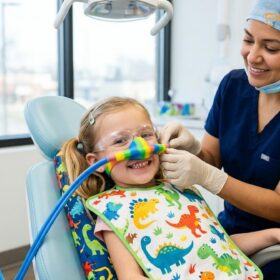
For highly anxious children or those requiring extensive emergency treatment, conscious sedation options such as Nitrous Oxide (laughing gas) may be utilized. Nitrous oxide is extremely safe, takes effect rapidly, and leaves the child’s system within minutes of removing the mask, allowing them to return to their normal activities almost immediately.
When to See a Doctor Immediately
While many dental issues can be managed with a scheduled emergency appointment, certain clinical signs indicate a severe, potentially life-threatening condition that requires immediate medical or dental intervention. You must seek urgent care at a hospital emergency department or an emergency dental clinic if your child exhibits any of the following red flags:
- Facial Swelling Approaching the Eye or Neck: Swelling that crosses the mandibular border into the neck can threaten the child’s airway (Ludwig’s Angina). Swelling moving upward toward the eye can risk cavernous sinus thrombosis.
- High Fever and Lethargy: A dental infection accompanied by a high fever, chills, nausea, or extreme fatigue indicates that the localized bacterial infection has become systemic.
- Difficulty Swallowing or Breathing: Any compromise to the airway due to intraoral swelling is an absolute medical emergency.
- Uncontrolled Bleeding: If bleeding from a traumatic dental injury does not stop after 15 minutes of continuous, firm pressure with sterile gauze, immediate clinical intervention is required.
It is also important to differentiate between normal physiological changes and trauma. For instance, a loose tooth in a 6-year-old is usually a natural part of exfoliation. However, a loose permanent tooth following an impact requires splinting. For a broader understanding of tooth mobility, adults traveling with children can reference our Loose Tooth Adult Emergency: Causes & Care guide.
If you are currently facing a dental emergency child vietnam, do not delay care. Contact Emergency Dental Care at HCMC Dental Clinic for immediate triage, expert pediatric consultation, and compassionate clinical treatment designed to protect your child’s smile.
Frequently Asked Questions
What do I do if my child knocks out a baby tooth?
Never attempt to re-implant a knocked-out baby tooth, as this can severely damage the developing permanent tooth underneath. Control the bleeding with sterile gauze, apply a cold compress to the face to minimize swelling, and visit a pediatric dentist immediately for a clinical evaluation and space management assessment.
Can a chipped baby tooth wait until we get home?
A minor chip without pain or bleeding may wait, but any fracture exposing the yellow dentin or red pulp requires immediate attention. Exposed pulp in a baby tooth can quickly lead to severe infection, abscess formation, and damage to the underlying permanent tooth germ, necessitating urgent clinical care.
How much does pediatric emergency dentistry cost in HCMC?
Emergency pediatric dental care in Ho Chi Minh City is generally highly affordable compared to Western countries, typically ranging from a basic consultation fee to moderate costs for extractions or pulpotomies. Most reputable international clinics provide transparent fee schedules and detailed medical receipts for travel insurance reimbursement.
Is it safe to give my child local painkillers in Vietnam?
Yes, standard pediatric analgesics like paracetamol (acetaminophen) and ibuprofen are widely available and safe when dosed correctly by your child’s weight. Always purchase medications from reputable, large-chain pharmacies in Vietnam and consult a pharmacist or dentist to ensure correct pediatric dosing and avoid contraindications.
How do I soothe a child’s toothache at night?
Elevate your child’s head with an extra pillow to reduce blood pressure in the jaw, administer weight-appropriate pediatric ibuprofen, and have them gently rinse with warm salt water. Avoid placing aspirin directly on the gums, and schedule an emergency dental appointment first thing in the morning.
References
- International Association of Dental Traumatology (IADT). Guidelines for the management of traumatic dental injuries. (2020).
- American Academy of Pediatric Dentistry (AAPD). Best Practices on Management of Acute Dental Trauma. (2021).
- Journal of Endodontics. Pathophysiology of pediatric dental abscesses and space infections. (2019).
- Pediatric Dentistry Journal. Pharmacological management of acute dental pain in children. (2022).
- World Health Organization (WHO). Oral health and emergency dental care protocols for minors. (2021).
For professional children’s dental care, preventive sealants, or to schedule a check-up, visit our Children & Pediatric Dentistry service page at HCMC Dental Clinic in Ho Chi Minh City.