The cost of a dental crown in Vietnam typically ranges from $150 to $350 per tooth, depending on the ceramic material and clinical complexity. Patients receive world-class CAD/CAM restorations, such as Zirconia or E.max, at a fraction of Western prices without compromising on marginal fit or aesthetic quality.
Clinical Summary:
Understanding the economics and clinical workflows behind dental restorations in Southeast Asia reveals why international patients consistently seek out these services. The affordability of a dental crown in Vietnam is not a result of inferior materials, but rather the economic advantages of localized laboratory labor and reduced clinical overhead. Modern clinics in Ho Chi Minh City utilize the exact same imported ceramic blocks—such as Ivoclar Vivadent’s E.max and 3M’s Lava Zirconia—as top-tier practices in the United States and Australia. By integrating advanced intraoral scanning and CAD/CAM milling technologies, prosthodontists can deliver restorations with exceptional marginal integrity, optimal biocompatibility, and superior aesthetics. Comprehensive treatment planning ensures that whether a patient requires a single posterior monolithic zirconia crown or a complex anterior aesthetic rehabilitation, the clinical outcomes meet stringent international standards of excellence.
Key Takeaways:
- Premium ceramic crowns in Vietnam cost significantly less than in Western countries due to lower operational overhead, not compromised material quality.
- Clinics utilize globally recognized materials, including Y-TZP Zirconia and Lithium Disilicate, ensuring maximum durability and aesthetic vitality.
- Digital dentistry, including intraoral scanning and CAD/CAM milling, guarantees precise marginal adaptation and faster turnaround times.
- Authentic restorations are accompanied by international warranty cards, providing long-term peace of mind for traveling patients.
- Comprehensive clinical evaluation, including CBCT imaging and periodontal assessment, is mandatory prior to any permanent prosthetic placement.
Cost Breakdown: Why Ceramic Crowns Are Highly Affordable in Vietnam
Dental crowns in Vietnam are highly affordable due to lower operational overhead and localized laboratory labor costs, even though clinics utilize the exact same imported premium ceramic blocks and digital milling technologies found in Western countries.
When analyzing the economics of restorative dentistry, it is crucial to separate the cost of raw materials from the cost of clinical operations. The primary driver behind the highly competitive pricing of dental prosthetics in Southeast Asia is the significantly lower cost of living and operational overhead. Clinic leasing, administrative staffing, and localized laboratory technician fees are substantially lower than those in North America, Europe, or Australia. This economic environment allows premier facilities like HCMC Dental Clinic to offer advanced restorative treatments at a fraction of the global average, passing the financial benefits directly to the patient.
However, the affordability does not extend to the raw materials themselves. Reputable clinics import their ceramic blocks, bonding agents, and clinical instrumentation directly from global dental manufacturers in Germany, Switzerland, and the United States. Materials such as yttria-stabilized tetragonal zirconia polycrystal (Y-TZP) and lithium disilicate are subject to international pricing standards. Therefore, the physical crown placed in a patient’s mouth in Ho Chi Minh City is chemically and structurally identical to one placed in New York or Sydney. The integration of these premium materials ensures that the restorations exhibit optimal biocompatibility, preventing adverse gingival reactions and promoting long-term periodontal health[1].
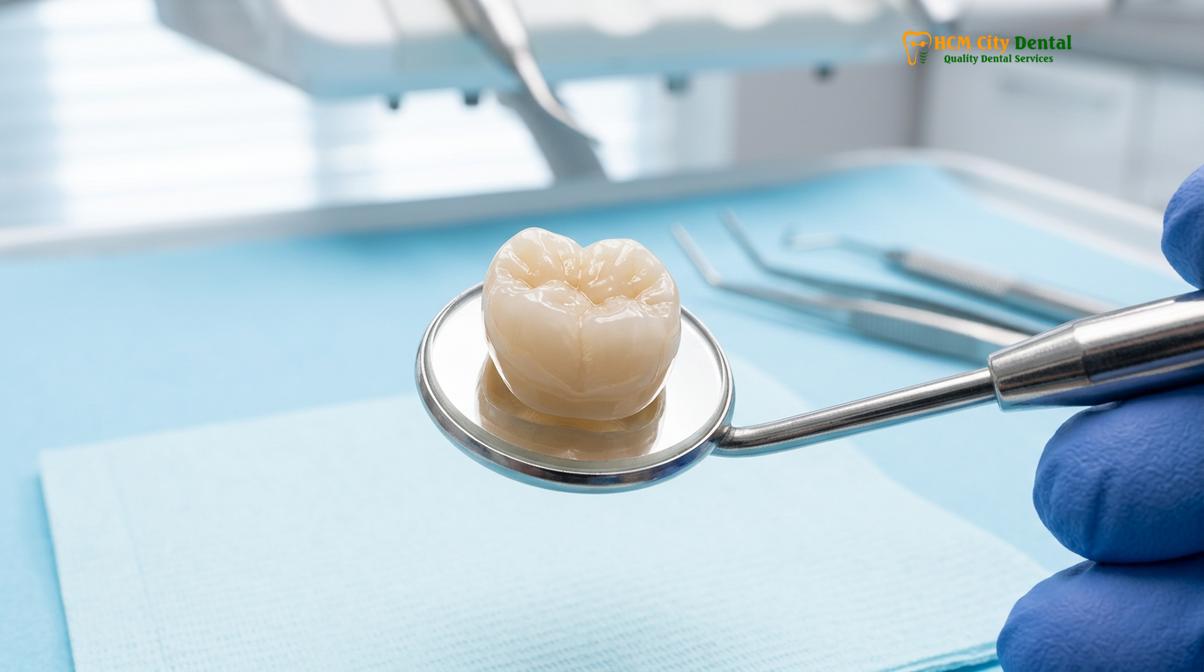
Dr. Nguyen Van Cuong, a leading restorative specialist, frequently emphasizes to international patients that successful prosthodontics relies as much on the clinician’s skill as on the material. The preparation of the tooth—specifically the creation of a precise chamfer or shoulder margin—dictates the long-term success of the crown. A meticulously prepared margin ensures that the ceramic restoration seats perfectly, minimizing the cement gap and preventing microleakage, which is the primary cause of secondary caries beneath a crown. The lower clinical overhead in Vietnam allows dentists to dedicate ample chair time to these critical preparation phases without the pressure of high-volume patient turnover.
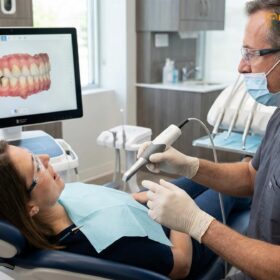
Furthermore, the investment in digital dentistry has streamlined the workflow, reducing the need for multiple physical impression materials and external shipping costs. By utilizing intraoral scanners and in-house or localized CAD/CAM milling units, the entire process from preparation to final cementation is optimized for both clinical accuracy and economic efficiency. This seamless integration of technology and skilled labor forms the foundation of the exceptional value proposition offered by the Vietnamese dental sector.
Comparative Table: Price of Zirconia and E.max Crowns (Vietnam vs. US/Australia/Europe)
Patients traveling to Vietnam can save between 60% and 80% on premium Zirconia and E.max crowns compared to standard pricing in the United States, Australia, or Europe, making dental tourism highly cost-effective.
To fully appreciate the financial advantages of seeking restorative treatment abroad, a direct comparison of the most commonly prescribed premium ceramic materials is necessary. The two dominant materials in modern fixed prosthodontics are Zirconia (known for its immense flexural strength) and E.max (renowned for its lifelike translucency). The table below outlines the estimated cost per unit across different global regions, highlighting the stark contrast in pricing for identical clinical products.
| Region / Country | Estimated Cost: Zirconia Crown (USD) | Estimated Cost: E.max Crown (USD) | Typical Lab Turnaround Time |
|---|---|---|---|
| United States | $1,200 – $2,500 | $1,400 – $2,800 | 2 – 3 Weeks |
| Australia | $1,100 – $2,000 | $1,300 – $2,200 | 2 – 3 Weeks |
| United Kingdom | $900 – $1,500 | $1,000 – $1,800 | 2 – 3 Weeks |
| Vietnam (HCMC) | $200 – $350 | $250 – $400 | 3 – 5 Days |
As demonstrated, the zirconia crown price Saigon offers represents a profound reduction in out-of-pocket expenses, particularly for patients requiring multiple restorations or full-mouth rehabilitation. When a patient requires four or more crowns, the savings easily offset the cost of international flights and premium accommodation in Ho Chi Minh City. Beyond the financial aspect, the accelerated turnaround time is a significant clinical advantage. Because premium dental laboratories are concentrated within the city and often work directly with the clinics, the fabrication process is expedited without sacrificing precision.
It is important to note that these price ranges reflect monolithic and layered ceramic options. Monolithic zirconia, milled from a single block, is incredibly resistant to fracture and is ideal for patients with bruxism (teeth grinding). Layered zirconia, which features a strong zirconia core overlaid with highly aesthetic feldspathic porcelain, commands a slightly higher fee due to the intensive labor required by the master ceramist to hand-paint and characterize the final layers. Regardless of the specific variant, the cost-to-quality ratio remains exceptionally favorable for the patient.
Understanding Ceramic Materials and Lab Warranties (Cercon, Lava, E.max)
Selecting the correct ceramic material depends on functional load and aesthetic demands; E.max offers superior translucency for anterior teeth, while Cercon and Lava Zirconia provide unmatched flexural strength for posterior molars, all backed by comprehensive lab warranties.
The success of a dental crown is heavily dependent on the biomechanical properties of the chosen material. Modern dentistry has largely moved away from porcelain-fused-to-metal (PFM) crowns due to their tendency to expose an unsightly dark metal margin at the gumline over time. Today, all-ceramic restorations dominate the field, offering superior aesthetics and excellent tissue compatibility. Understanding the distinctions between the leading brands—such as Cercon, Lava, and E.max—is essential for making an informed clinical decision.
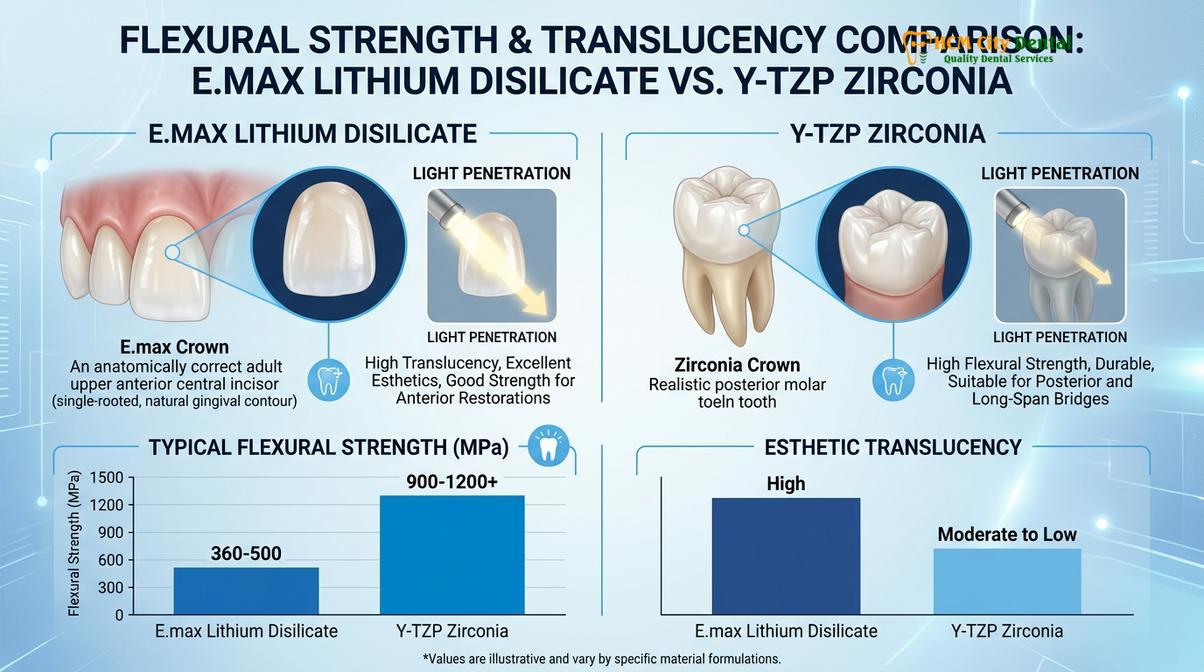
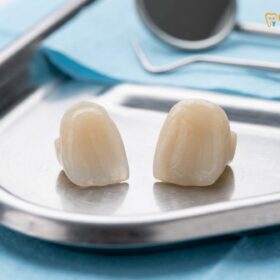
Lithium disilicate, commercially known as IPS E.max (manufactured by Ivoclar Vivadent), is celebrated for its exceptional optical properties. It mimics the natural light transmission, opalescence, and fluorescence of natural enamel better than almost any other material. Clinically, E.max is the material of choice for anterior (front) teeth and premolars, where aesthetics are paramount. It boasts a flexural strength of approximately 400 to 500 MPa, which is more than sufficient for the biting forces exerted in the front of the mouth. Furthermore, E.max can be adhesively bonded to the underlying tooth structure using resin cements, creating a monoblock effect that reinforces the remaining natural tooth[2]. For patients seeking ultra-thin porcelain restorations, lithium disilicate is frequently the preferred medium.
n “The evolution of yttria-stabilized zirconia has revolutionized posterior restorations, allowing clinicians to provide metal-free solutions that withstand extreme occlusal forces while maintaining excellent biocompatibility with the surrounding gingival architecture.”n
Conversely, Zirconia is the undisputed champion of strength. Brands like Cercon (Dentsply Sirona) and Lava (3M) utilize yttria-stabilized tetragonal zirconia polycrystal, which undergoes a phase transformation toughening process when subjected to stress, effectively stopping crack propagation. Traditional high-strength zirconia exhibits a flexural strength exceeding 1,000 to 1,200 MPa, making it virtually indestructible under normal physiological chewing forces. This makes it the ideal choice for posterior molars, particularly in patients who exhibit parafunctional habits like clenching or grinding. Recent advancements have also introduced highly translucent (HT) zirconia, which bridges the gap between the strength of traditional zirconia and the aesthetics of lithium disilicate.
A critical component of the value offered by top clinics is the provision of a dental crown lifetime warranty VN or extensive multi-year international warranties. When a patient receives an authentic Cercon, Lava, or E.max crown, the restoration is accompanied by a physical or digital warranty card containing a unique barcode or serial number. This code can be verified on the manufacturer’s global portal. The warranty typically covers structural failures, such as material fracture or delamination, ensuring that the patient’s investment is protected regardless of their geographic location.
Sourcing from In-House vs. External Premium CAD/CAM Dental Labs in Saigon
In-house CAD/CAM laboratories allow for immediate chairside shade adjustments and faster turnaround times, whereas partnering with external premium labs in Saigon provides access to highly specialized master ceramists for complex full-mouth rehabilitations.
The fabrication of a dental crown is a complex interplay between the clinician’s preparation and the laboratory’s execution. In Ho Chi Minh City, the dental laboratory infrastructure is highly advanced, heavily relying on Computer-Aided Design and Computer-Aided Manufacturing (CAD/CAM) workflows. Clinics typically adopt one of two models: maintaining an in-house milling laboratory or partnering with specialized external premium labs. Both approaches offer distinct clinical advantages depending on the specific needs of the case.
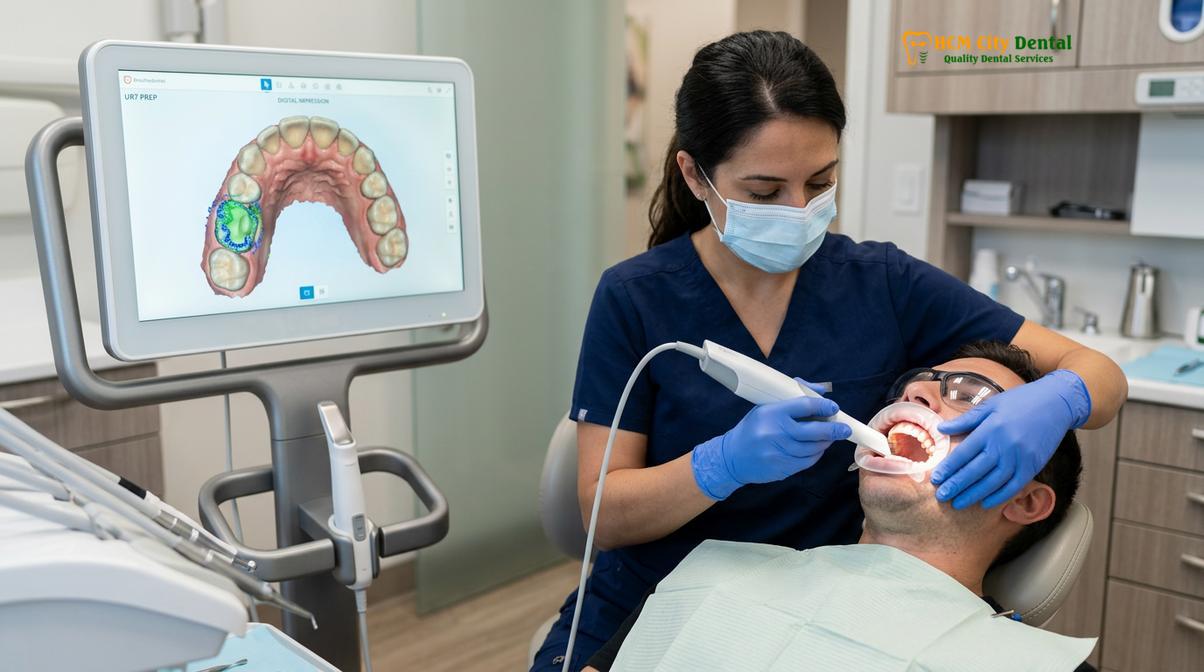
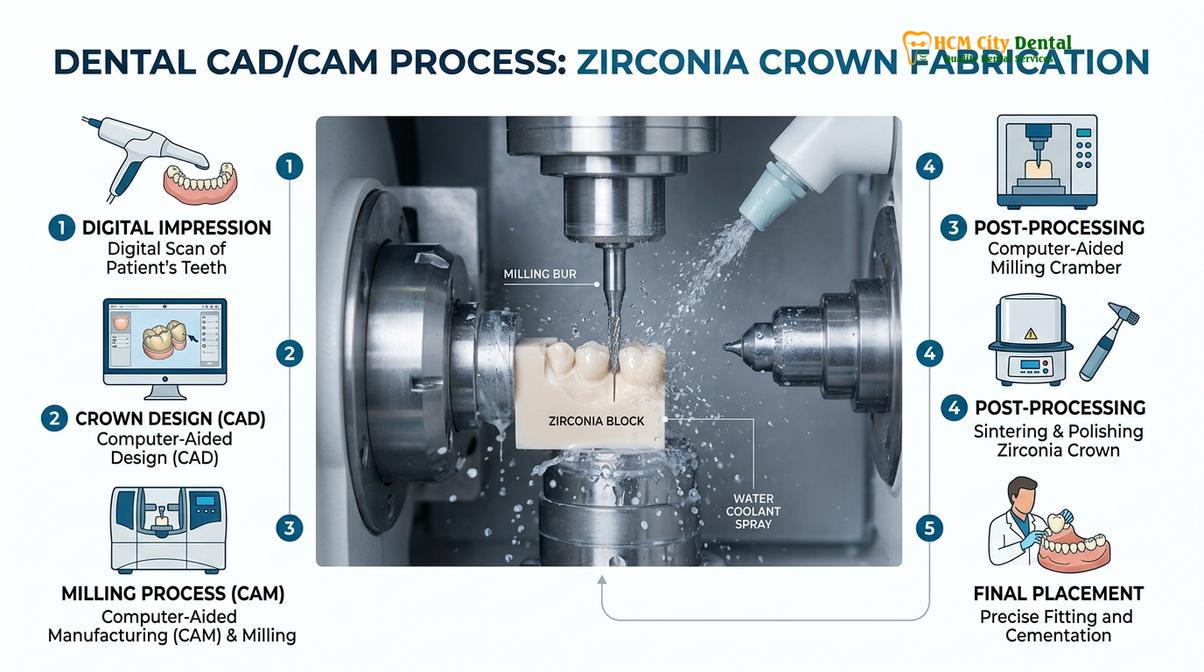
Clinics equipped with in-house CAD/CAM systems (such as CEREC by Dentsply Sirona or Amann Girrbach units) offer unparalleled convenience. Following the tooth preparation, the prosthodontist uses an intraoral scanner to capture a highly accurate 3D digital impression. This data is immediately transferred to the design software, where the crown’s margins, contacts, and occlusion are virtually engineered. The design is then sent to the in-house milling machine, which carves the restoration from a solid ceramic block in a matter of minutes. The primary advantage here is speed; single-unit restorations can often be completed in a single visit, eliminating the need for temporary crowns and a second injection of local anesthesia. Furthermore, if minor shade or contour adjustments are required, they can be performed chairside immediately.
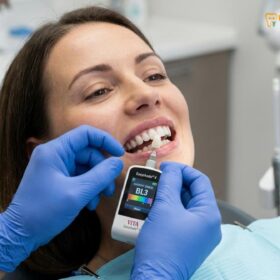
However, for highly complex cases—such as anterior aesthetic makeovers involving multiple teeth, or full-arch implant prosthetics—partnering with an external premium dental laboratory is often preferred. These specialized labs employ master ceramists who possess an artistic eye for micro-aesthetics. While a milling machine can create perfect anatomy, it cannot replicate the subtle internal characterizations, mamelons, and incisal translucency of a natural tooth. Master ceramists achieve this by manually layering feldspathic porcelain over a milled zirconia or lithium disilicate coping, firing the restoration in a ceramic furnace multiple times to achieve depth and vitality. The metal-free crown cost HCMC remains highly competitive even when utilizing these elite external laboratories, providing patients with bespoke, artisan-level restorations[3].
Clinical Case Study: Anterior Aesthetic Rehabilitation
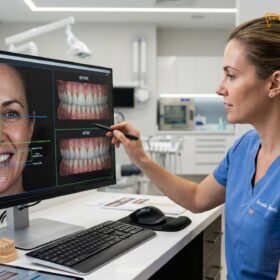
A 45-year-old international patient presented to HCMC Dental Clinic in Ho Chi Minh City with severely worn and discolored maxillary incisors due to acid erosion and bruxism. After a comprehensive digital smile design (DSD) protocol, the clinical team prepared the four anterior teeth for full-coverage restorations. Utilizing a premium external laboratory, custom-layered E.max crowns were fabricated to match the patient’s natural lower dentition. The digital workflow ensured perfect marginal adaptation, while the master ceramist’s hand-layering provided lifelike translucency. The entire treatment was completed in five days, restoring both optimal anterior guidance and the patient’s confident smile.
Package Savings: Molar Root Canal + Zirconia Crown Combo Options
Combining endodontic therapy with a protective Zirconia crown is a standard clinical protocol for structurally compromised molars, and bundled treatment packages in Vietnam offer significant financial predictability for these multi-step procedures.
One of the most common clinical scenarios requiring a dental crown is the restoration of a tooth following endodontic therapy. When a tooth’s pulp becomes irreversibly inflamed or necrotic due to deep decay or trauma, a root canal procedure is necessary to remove the infected tissue, disinfect the canal system, and seal it with an inert material like gutta-percha. While this procedure saves the tooth from extraction, it inherently alters the tooth’s biomechanical properties. The removal of the internal dentin roof, combined with the loss of moisture, renders the remaining tooth structure significantly more brittle and susceptible to catastrophic vertical root fractures under occlusal loading.
For this reason, it is a universally accepted standard of care in endodontics and prosthodontics that posterior teeth (premolars and molars) must receive full-coverage cuspal protection—namely, a dental crown—following root canal treatment. To ensure the longevity of the restoration, the clinician must evaluate the “ferrule effect.” A ferrule is a band of solid, healthy tooth structure (ideally at least 1.5 to 2.0 mm in height) that extends above the gumline. The crown grasps this ferrule, distributing functional forces down the root rather than concentrating them on the core build-up, thereby preventing fracture[4].
If the remaining tooth structure is insufficient to provide an adequate ferrule, Dr. Nguyen Van Cuong advises that a post and core build-up may be required. A fiber post is cemented into one of the treated root canals to provide retention for the composite resin core, which replaces the missing dentin and provides a foundation for the final crown. Because this sequence—root canal, post and core, and final crown—involves multiple complex steps, many clinics offer comprehensive package pricing. These bundled options provide international patients with transparent, predictable costs, avoiding the stress of itemized billing for each phase of the rehabilitation.
Clinical Warning: Delaying Crown Placement
Patients are strongly advised against delaying the placement of a permanent crown following root canal therapy. Leaving a root-canal-treated molar protected only by a temporary or permanent filling significantly increases the risk of coronal microleakage (re-infection of the root canal system) and catastrophic vertical root fracture, which inevitably leads to the extraction of the tooth.
Important Clinical Considerations Before Traveling for Crowns (When to See a Doctor)
While the financial and technological benefits of receiving dental crowns in Vietnam are clear, patients must undergo a rigorous clinical evaluation to determine their candidacy for fixed prosthodontics. Not every compromised tooth can or should be saved with a crown. A comprehensive diagnostic workup, including 3D Cone Beam Computed Tomography (CBCT) and a thorough periodontal charting, is essential before initiating irreversible tooth preparation.
Patients should seek immediate consultation if they experience spontaneous pain, prolonged sensitivity to hot or cold, or pain upon biting, as these are classic signs of pulpal involvement that may necessitate endodontic intervention prior to crown placement. Furthermore, the health of the surrounding periodontium (gums and bone) is critical. Active periodontal disease, characterized by deep pocketing, bleeding on probing, and bone loss, is an absolute contraindication for immediate crown placement. The margins of a new crown placed in an inflamed environment will inevitably fail, and the ongoing bone loss will compromise the abutment tooth. The periodontal condition must be fully treated and stabilized before any restorative work begins[5].
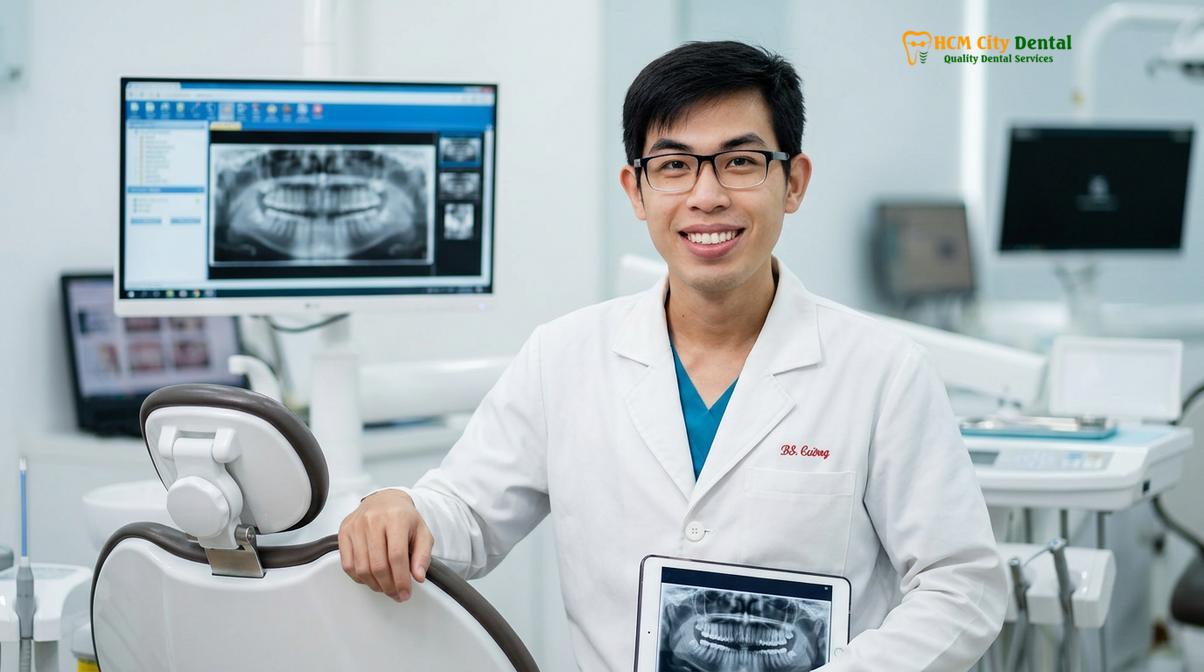
Additionally, patients with severe bruxism or temporomandibular joint (TMJ) disorders require careful material selection and occlusal management. In such cases, monolithic zirconia is often the material of choice due to its high fracture toughness, and the patient may be prescribed a custom occlusal guard (night guard) to protect the new restorations from excessive nocturnal grinding forces. A personalized clinical examination at a reputable facility like HCMC Dental Clinic ensures that all biological and biomechanical factors are addressed, resulting in a restoration that is not only aesthetically pleasing but functionally enduring.
For a comprehensive evaluation of your restorative needs and to explore personalized treatment options, we encourage you to contact our clinical team to schedule a detailed diagnostic consultation.
Frequently Asked Questions
How much does a Zirconia crown cost in Ho Chi Minh City?
A premium Zirconia crown in Ho Chi Minh City typically ranges from $200 to $350 per tooth. This cost includes the clinical preparation, digital scanning, custom CAD/CAM milling, and final cementation, utilizing the exact same high-grade ceramic blocks used in Western dental practices. The exact price may fluctuate slightly depending on whether standard monolithic zirconia or highly aesthetic layered zirconia is selected for the restoration.
Why is there a wide range in dental crown prices in Vietnam?
Dental crown prices vary based on the specific ceramic material used, the brand of the ceramic block (such as Ivoclar E.max or 3M Lava), the technology utilized for fabrication, and the clinical expertise of the prosthodontist performing the tooth preparation and margin design. Clinics that invest heavily in advanced 3D imaging, intraoral scanners, and master ceramists will naturally charge slightly more than those using traditional impression techniques and standard laboratory processing.
Are dental crown warranties valid internationally?
Yes, premium dental crowns crafted from authentic materials like Cercon or E.max come with a manufacturer’s warranty card that features a unique global tracking code. This allows patients to verify the authenticity of their restoration and seek warranty support internationally if structural material failure occurs. It is important to note that warranties typically cover the material integrity of the crown itself, not biological failures such as new decay or gum disease.
How long does the dental crown procedure take in Vietnam?
The entire dental crown procedure usually requires two to three appointments spanning over three to five days. This timeframe allows for meticulous tooth preparation, digital impression taking, precision laboratory milling, and the final try-in and permanent bonding of the restoration. Clinics with in-house CAD/CAM milling units may be able to expedite this process, sometimes offering single-visit crowns for less complex posterior restorations.
Can I get a crown if I have severe gum disease?
No, active periodontal disease must be fully treated and stabilized before any fixed prosthodontics can be placed. Placing a crown on a tooth with compromised periodontal support can lead to rapid attachment loss, margin failure, and the eventual loss of the abutment tooth. A thorough periodontal assessment and necessary therapies, such as scaling and root planing, must be completed to ensure a healthy foundation for the new crown.
References
- Journal of Prosthetic Dentistry. Clinical outcomes of monolithic zirconia crowns. (2021).
- Dental Materials. Flexural strength and optical properties of lithium disilicate. (2020).
- International Journal of Prosthodontics. Marginal adaptation in CAD/CAM restorations. (2019).
- Journal of Endodontics. The ferrule effect and post-endodontic restorations. (2022).
- Clinical Oral Investigations. Biocompatibility of modern dental ceramics and gingival response. (2018).
For premium porcelain crowns, bridges, and advanced smile reconstructions, visit our Dental Crowns & Bridges service page at HCMC Dental Clinic in Ho Chi Minh City.