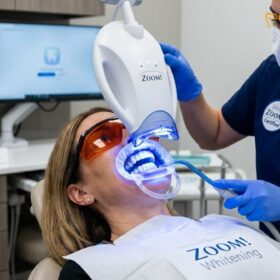
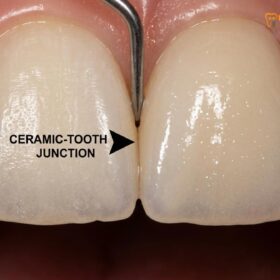
If you are planning a smile makeover, you must perform teeth whitening before veneers or crowns are placed. Prosthetic materials do not respond to bleaching agents. By brightening your natural enamel first, your dentist can accurately match the new restorations to your lighter, rejuvenated smile.
Clinical Summary:
Cosmetic dentistry sequencing dictates that natural teeth must be bleached prior to receiving permanent restorations. Dental ceramics and composite resins are color-stable and impervious to peroxide-based whitening gels. Whitening first establishes a brighter baseline shade. A mandatory two-week color stabilization period follows, allowing the enamel shade to settle and oxygen to dissipate, ensuring optimal bond strength and a flawless porcelain shade match for your final veneers or crowns.
Key Takeaways:
- Whitening must precede restorations because dental porcelain and composite resin cannot be bleached.
- A two-week waiting period is required after whitening to allow the final enamel color to stabilize.
- Residual oxygen from bleaching gels can compromise the adhesive bond of new veneers if not given time to dissipate.
- In-office LED systems offer rapid, predictable shade improvement.
- Custom take-home trays provide excellent maintenance for your new baseline shade.
The Golden Rule of Cosmetic Smile Design
The foundational principle of cosmetic dentistry sequencing is establishing your desired tooth color before fabricating any permanent restorations to ensure seamless aesthetic harmony.
When embarking on a journey to transform your smile, the order in which treatments are performed is just as critical as the treatments themselves. In the realm of cosmetic dentistry sequencing, the universal protocol requires that any desired lightening of the natural dentition occurs before the fabrication of permanent prosthetics[1]. The American Dental Association emphasizes this sequential approach to ensure that the final result exhibits perfect aesthetic harmony across both natural teeth and artificial restorations[5].
Many patients mistakenly assume they can place a crown or veneer first and simply whiten their surrounding teeth later to match. However, this reverse approach often leads to severe color discrepancies. Because dental restorations are fabricated in a laboratory to match the exact shade of your teeth on the day the impression is taken, altering the color of your natural teeth afterward will leave the restoration looking noticeably darker or mismatched.
By prioritizing professional teeth whitening treatments at the beginning of your treatment plan, you establish a bright, rejuvenated baseline. Once this new baseline is achieved, the ceramist can craft your custom restorations to blend invisibly with your enhanced smile, ensuring a highly predictable and natural-looking outcome.
Why Slipped Restorations Do Not Respond to Bleaching Gels
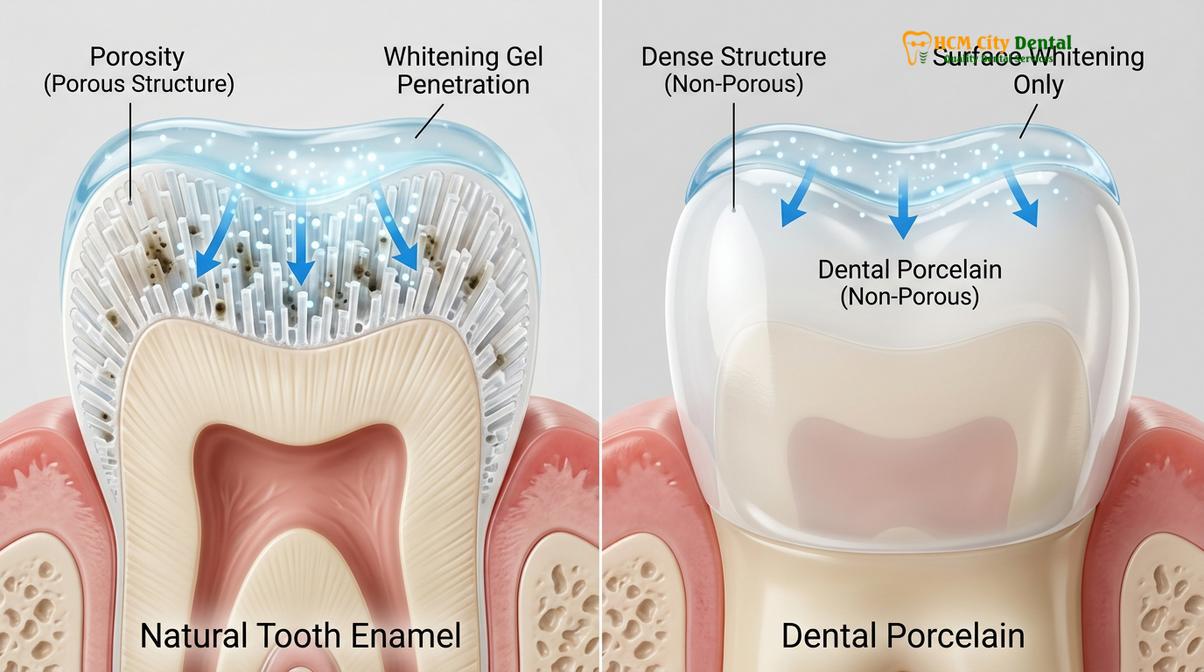
Dental ceramics and composite resins lack the porous dentinal tubules found in natural teeth, making them completely resistant to the oxidation process of bleaching agents.
To understand why whitening must come first, it is essential to explore the microscopic anatomy of natural teeth compared to the structure of prosthetic materials. Natural tooth enamel is composed of a crystalline rod structure that, while incredibly hard, is semi-permeable. Beneath the enamel lies the dentin, which contains thousands of microscopic dentin tubules. Over time, chromogens (pigmented molecules from food, drinks, and tobacco) penetrate the enamel and become trapped within these tubules, causing intrinsic discoloration.
Professional whitening agents work through a chemical process called oxidation. When the peroxide breaks down, oxygen molecules penetrate the enamel rod structure and enter the dentin tubules, breaking the double bonds of the chromogenic molecules and rendering them colorless.
In stark contrast, prosthetic materials such as porcelain, zirconia, and composite resin are dense, non-porous, and structurally inert. They possess inherent bleaching resistance. When peroxide gels are applied to a crown or veneer, the chemical simply rests on the surface without penetrating or altering the color matrix of the material.
“The fundamental limitation of dental ceramics is their inability to undergo oxidation. Once a porcelain restoration is glazed and fired in the laboratory, its shade is permanently locked. Attempting to bleach a ceramic crown is chemically impossible and will only result in a mismatched smile.”
| Material Type | Response to Bleaching Gels | Porosity & Stain Susceptibility |
|---|---|---|
| Natural Tooth Enamel | Highly responsive (oxidation lightens intrinsic stains) | Semi-permeable (absorbs chromogens over time) |
| Dental Porcelain / Ceramics | Completely resistant (no color change) | Non-porous (highly resistant to staining) |
| Composite Resin | Completely resistant (no color change) | Slightly porous (can accumulate surface stains) |
Therefore, if you have existing restorations that appear dark, no amount of bleaching gel will lighten them. The only clinical solution to brighten an old, dark crown or veneer is complete replacement, which underscores the importance of achieving your ideal shade before any new restorative work begins.
Color-Matching Protocol: Finding the Perfect Harmony
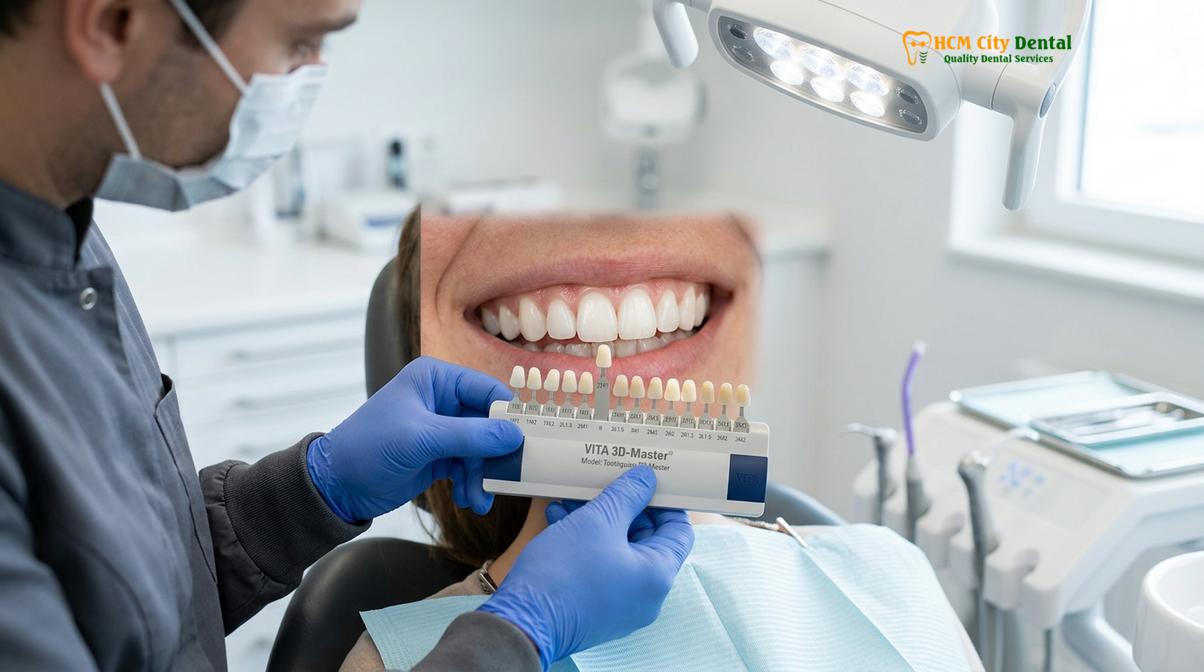
Achieving a flawless porcelain shade match requires evaluating the stabilized natural tooth color under specialized clinical lighting using standardized shade guides.
The process of shade matching involves meticulous attention to detail. Dentists utilize standardized tools, such as the VITA Classical shade guide, to communicate exact color parameters to the dental laboratory. This process evaluates not just the brightness (value) of the tooth, but also its hue (color family) and chroma (intensity)[3].
Because natural teeth are polychromatic—meaning they exhibit different shades from the gumline to the biting edge—the ceramist must replicate this gradient in the porcelain. If the natural teeth are whitened first, the ceramist has a brilliant, clean canvas to match. The Vietnam Odonto-Stomatology Association (VOSA) also highlights the importance of this step in their national guidelines on cosmetic dental sequencing, ensuring that the final porcelain shade match is virtually seamless for patients undergoing restorative care[6].
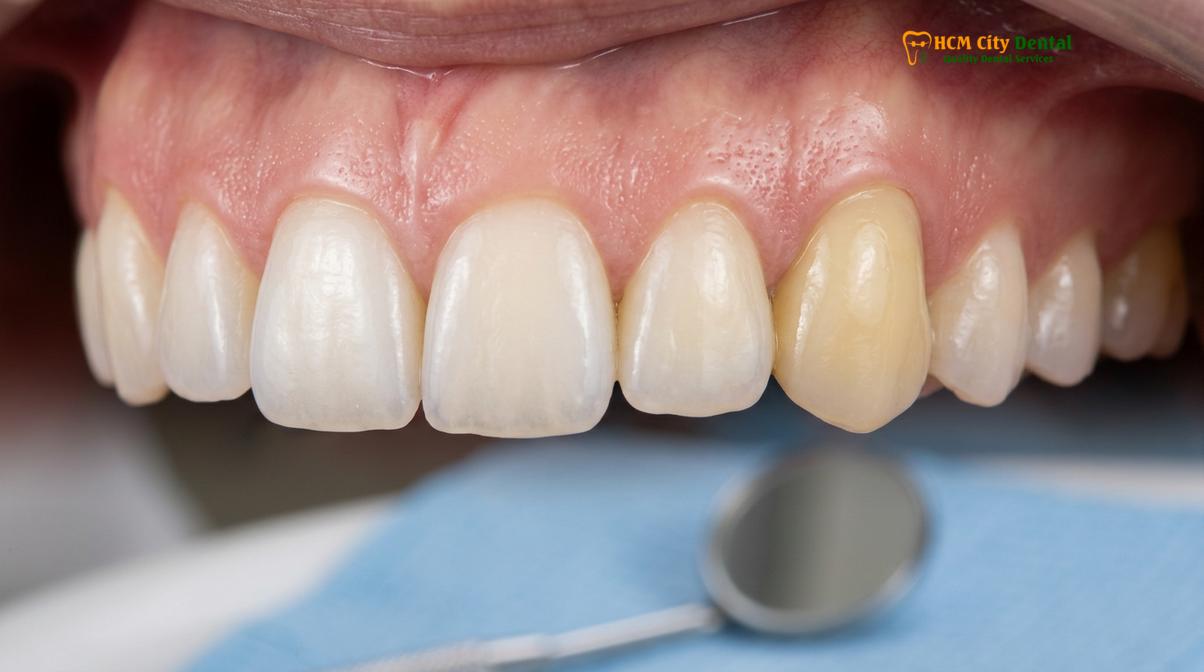
By utilizing advanced clinical systems, patients can achieve a significantly brighter baseline, setting the stage for a highly successful restorative phase.
Waiting Period: Allowing Enamel Shade to Stabilize
A mandatory two-week color stabilization period allows the enamel shade to settle and residual oxygen to dissipate, ensuring optimal adhesive bonding for restorations.
One of the most critical, yet frequently overlooked, steps in cosmetic dentistry sequencing is the color stabilization period. Immediately after a whitening session, teeth often appear artificially bright due to temporary dehydration of the enamel. Over the following weeks, the teeth rehydrate, and the shade slightly settles into its true, permanent color.
If a dentist takes an impression and selects a shade immediately after whitening, the resulting crown or veneer will likely be too light once the natural teeth settle, leading to a mismatched appearance. Waiting two weeks ensures the ceramist is matching the final, stable color of your natural dentition.
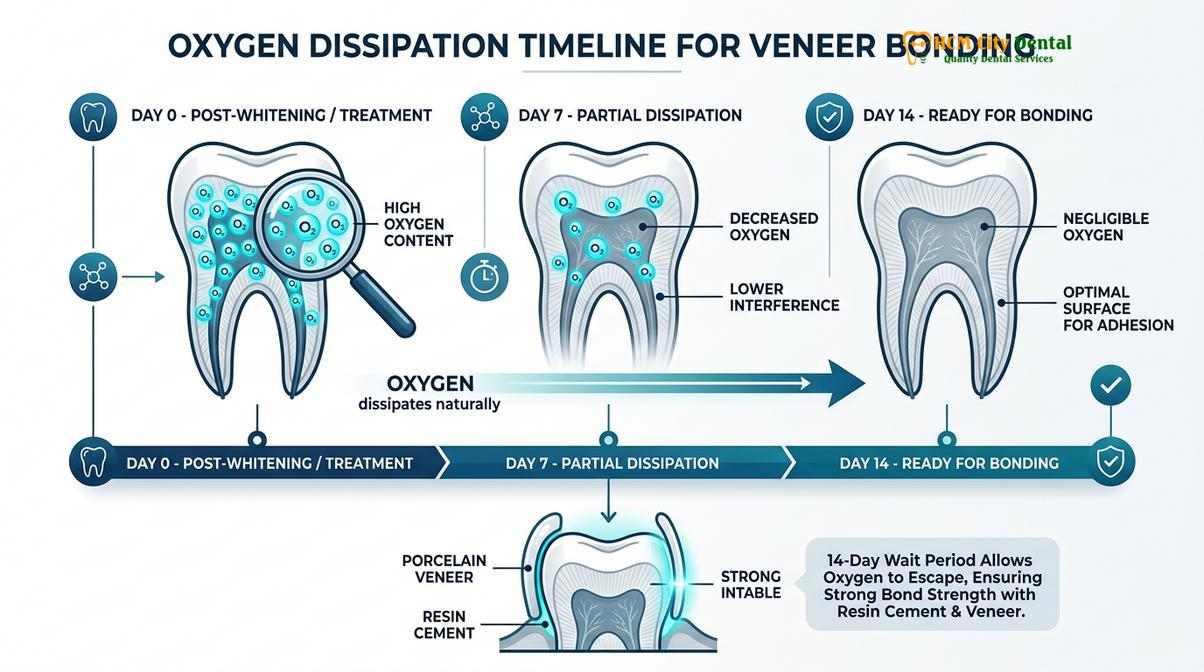
Important Clinical Warning: Attempting to bond veneers or composite resin immediately after a bleaching session significantly increases the risk of restoration failure. Residual oxygen within the tooth structure inhibits the polymerization of dental adhesives. A strict two-week waiting period is mandatory.
Furthermore, there is a profound chemical reason for this waiting period. The oxidation process leaves residual oxygen molecules trapped within the enamel and dentin structure. If composite bonding or veneer cementation is attempted too soon, this residual oxygen interferes with the polymerization (curing) of the dental adhesives[2]. This phenomenon, known as oxygen inhibition, severely compromises the bond strength, increasing the risk of the restoration debonding or failing prematurely.
During this crucial recovery window, the enamel pellicle—a protective protein layer on the surface of the teeth—is reforming. Patients must strictly adhere to a white diet post-treatment for the first few days, avoiding staining pigments, chromogens, and tannins found in coffee, red wine, tea, soy sauce, and dark berries.
Custom Planning with Dr. Cuong at HCMC Dental
Comprehensive smile design involves personalized diagnostic mockups, advanced LED whitening technology, and precise treatment sequencing tailored to your unique clinical needs.
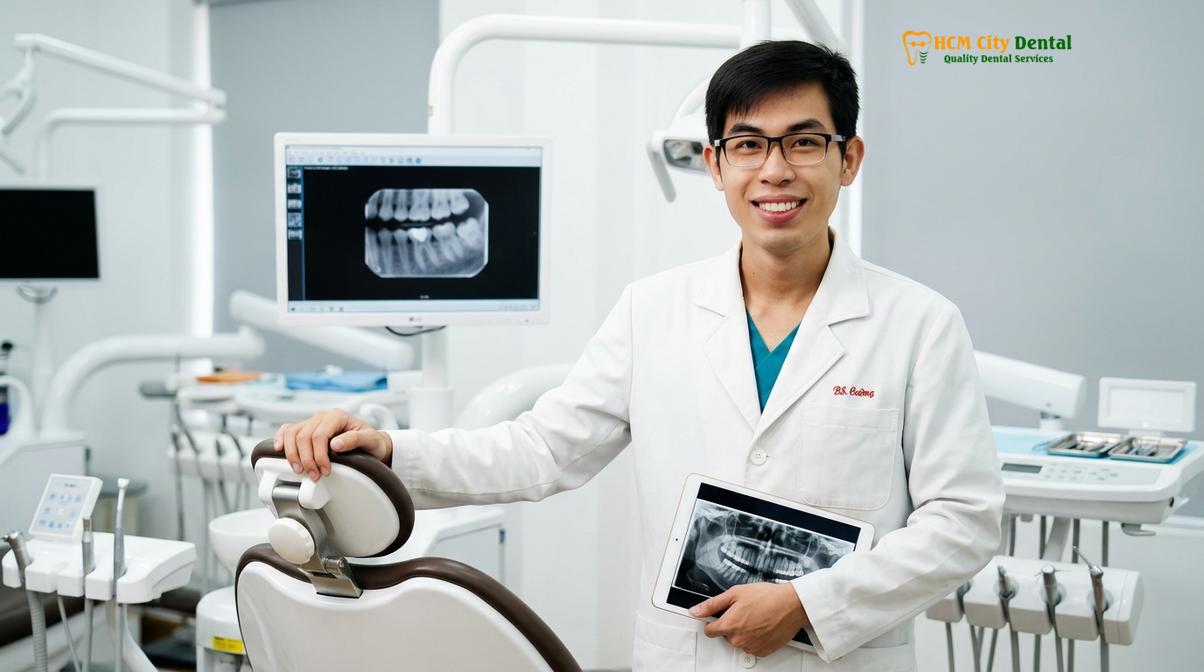
At HCMC Dental Clinic in Ho Chi Minh City, the approach to cosmetic restorations is highly individualized. Dr. Nguyen Van Cuong emphasizes that a successful smile makeover is not just about placing white porcelain; it is about comprehensive facial aesthetics and biological harmony. Dr. Cuong meticulously plans each phase, ensuring that patients achieve their desired brightness before moving on to permanent Dental Crowns & Bridges. This careful sequencing guarantees that the final restorations blend flawlessly with the newly enhanced natural dentition.
When planning the bleaching phase, top-tier technology is utilized to ensure patient comfort and safety. The integration of Amorphous Calcium Phosphate (ACP) within the whitening gel actively fills dentinal tubules in real-time during the procedure, rebuilding enamel and significantly reducing transient sensitivity[4].
“The integration of ACP technology in our whitening protocols has revolutionized patient comfort. By actively remineralizing the enamel during the oxidation process, we can achieve profound shade improvements without the debilitating transient pulpitis historically associated with high-concentration peroxides.”
This meticulous planning ensures that the underlying natural teeth are healthy, bright, and structurally prepared to receive high-quality ceramic restorations, providing complete peace of mind for every patient.
Case Studies: Successful Sequential Smile Makeovers
Clinical case reviews demonstrate how proper sequencing of whitening followed by ceramic restorations yields highly predictable, natural-looking, and long-lasting aesthetic outcomes.
The efficacy of proper cosmetic sequencing is best illustrated through clinical outcomes. Patients traveling for dental tourism often require efficient yet biologically sound treatment plans. By coordinating care meticulously, clinics can deliver transformative results without compromising the necessary biological healing times.
Clinical Case Review: Sequential Smile Makeover
Patient Profile: A patient visited HCMC Dental Clinic in Ho Chi Minh City seeking to correct a chipped, discolored central incisor and generally yellowed dentition. The patient desired a single porcelain crown for the damaged tooth but wanted an overall brighter smile.
Clinical Sequence: 1. Initial Phase: The patient underwent an in-office whitening session, lifting the overall dentition by several shades on the standardized guide.2. Stabilization: A temporary crown was placed on the damaged incisor, and the patient observed a strict two-week color stabilization period.3. Restorative Phase: After the waiting period, the final shade was recorded. The dental laboratory fabricated a highly translucent ceramic crown perfectly matched to the newly stabilized, brightened natural teeth.4. Outcome: The final restoration blended seamlessly with the adjacent natural teeth, ensuring long-term aesthetic harmony.
This case highlights the necessity of the stabilization period and the value of a structured clinical approach for international patients seeking premium care.
When to See a Doctor
Professional evaluation is necessary if you experience severe tooth discoloration, prolonged sensitivity, or if you have existing dental restorations that appear mismatched or are failing.
While teeth whitening is highly safe under professional supervision, certain clinical conditions require a doctor’s evaluation before proceeding with any cosmetic sequencing:
- Severe Intrinsic Staining: Discoloration caused by certain medications or severe fluorosis may not respond adequately to standard bleaching and may require alternative restorative approaches.
- Transient Pulpitis: If you experience sharp, shooting pain that lasts longer than a few days after a whitening session, a clinical examination is required to rule out exposed dentin or micro-cracks.
- Failing Restorations: Old crowns or composite fillings that are leaking, decayed, or severely mismatched must be evaluated. Whitening over active decay can cause severe pain and pulpal damage.
- Gum Inflammation: Active periodontal disease or gingivitis must be treated and stabilized before applying high-concentration peroxide gels to avoid severe tissue irritation.
Always consult with a qualified dental professional to receive a personalized diagnostic assessment before beginning any smile makeover journey.
Frequently Asked Questions
Can you whiten porcelain veneers or dental crowns?
No, you cannot whiten porcelain veneers or dental crowns. Dental ceramics and composite resins are non-porous and completely resistant to bleaching agents. If your natural teeth stain over time, whitening will only lighten the natural enamel, potentially creating a mismatched appearance with your existing restorations.
How long should I wait after whitening to get veneers?
You must wait a minimum of two weeks after your final whitening session before getting veneers. This color stabilization period allows the enamel shade to settle and ensures that residual oxygen from the bleaching gel dissipates, which is critical because oxygen interferes with the adhesive bonding process.
What happens if I whiten my teeth after getting a crown?
If you whiten your teeth after a crown is placed, your natural teeth will become lighter while the crown remains its original shade. This creates a noticeable color discrepancy, often requiring the costly replacement of the crown to match your newly brightened natural smile.
Should I whiten before composite bonding?
Yes, you should always whiten your teeth before undergoing composite bonding. Like porcelain, composite resin does not respond to whitening gels. By establishing your desired baseline shade first, your dentist can select the exact composite resin color to blend seamlessly with your brightened teeth.
Is teeth whitening safe before getting dental crowns?
Yes, professional teeth whitening is generally safe before getting dental crowns when supervised by a qualified dentist. Using advanced systems with desensitizers protects the enamel and minimizes transient sensitivity, ensuring your teeth are healthy and ready for restorative work.
References
- Journal of Esthetic and Restorative Dentistry. The effect of bleaching on the color and translucency of dental ceramics. (2021).
- Operative Dentistry. Oxygen inhibition of resin composites and adhesive bonding post-bleaching. (2020).
- Journal of Prosthetic Dentistry. Clinical protocols for shade matching in anterior restorations. (2019).
- Journal of Dentistry. Efficacy of Amorphous Calcium Phosphate in reducing bleaching sensitivity. (2022).
- American Dental Association. Clinical guidelines for professional teeth whitening and cosmetic sequencing. (2018).
- Vietnam Odonto-Stomatology Association (VOSA). National guidelines on cosmetic dental sequencing and restorative shade matching. (2023).
Ready to begin your smile transformation? Contact HCMC Dental Clinic in Ho Chi Minh City today to schedule your comprehensive consultation. Our expert team will guide you through the ideal sequencing of whitening and Dental Crowns & Bridges to ensure a flawless, radiant result.