For international patients and dental travelers arriving in Ho Chi Minh City with severe tooth wear, chronic jaw pain, or failing dental restorations, the root cause of the problem rarely lies in the teeth themselves. Instead, the destruction is almost always driven by an underlying dysfunction in the temporomandibular joint (TMJ) and the powerful muscles of mastication. When evaluating the clinical efficacy of a Kois Deprogrammer vs. Michigan occlusal splint for TMJ bruxism treatment protocols, it is critical to understand that these two appliances serve entirely different, yet highly complementary, roles in modern neuromuscular dentistry. Attempting to rebuild a worn dentition with porcelain veneers or dental implants without first stabilizing the jaw joint is akin to building a luxury home on a shifting foundation.
At HCMC Dental Clinic in District 1, our approach to complex restorative dentistry and TMJ management is rooted in evidence-based biomechanics. Led by Dr. Nguyen Van Cuong, DDS (Clinical Director — MOH License 0003265/BL-CCHN), our clinical team utilizes advanced digital diagnostics to differentiate between muscle-driven pain (myalgia) and joint-driven pathology (arthralgia). By strategically deploying short-term anterior deprogrammers to erase destructive muscle memory, followed by long-term full-arch stabilization splints to protect the newly established bite, we provide a comprehensive pathway out of chronic orofacial pain. This definitive guide explores the neurophysiology of bruxism, the distinct mechanical advantages of the Kois and Michigan appliances, and how these tools are integrated into world-class full-mouth rehabilitation protocols in Vietnam.
Clinical Summary:
The management of temporomandibular disorders (TMD) and severe sleep bruxism requires a precise, phased approach to occlusal therapy. A Kois Deprogrammer is a short-term, diagnostic appliance featuring a single anterior contact platform that disengages the posterior teeth, effectively shutting down masseter and lateral pterygoid hyperactivity to allow the condyle to seat into Centric Relation (CR). Conversely, a Michigan Stabilization Splint is a long-term, full-arch therapeutic device fabricated from hard CAD/CAM milled PMMA. It provides even, simultaneous bilateral contacts and mutually protected canine guidance to shield the dentition and TMJ from nocturnal grinding forces. At HCMC Dental Clinic, these appliances form the diagnostic and protective foundation for complex biomimetic full-mouth reconstructions, ensuring long-term restorative success and the elimination of chronic facial pain.
Key Takeaways:
- Neuromuscular Reset: The Kois Deprogrammer removes posterior proprioceptive feedback, erasing habitual muscle engrams and allowing the jaw to relax into its true anatomical position (Centric Relation) within days.
- Long-Term Protection: The Michigan Splint (and its lower-arch counterpart, the Tanner Splint) utilizes a flat occlusal plane with precise canine guidance to distribute forces evenly and prevent joint compression during sleep bruxism.
- The Danger of Soft Guards: Over-the-counter, boil-and-bite soft EVA night guards act as a proprioceptive trigger, often increasing nocturnal clenching forces by up to 30% and exacerbating TMJ pain.
- Foundation for Reconstruction: Establishing a repeatable CR bite using a deprogrammer is a mandatory prerequisite before initiating Biomimetic Full-Mouth Reconstruction & VDO Rehabilitation in Vietnam.
- Digital Precision: Modern splints at HCMC Dental Clinic are designed via 3D intraoral scans and 5-axis milled from solid medical-grade PMMA for zero-shrinkage accuracy and maximum durability.
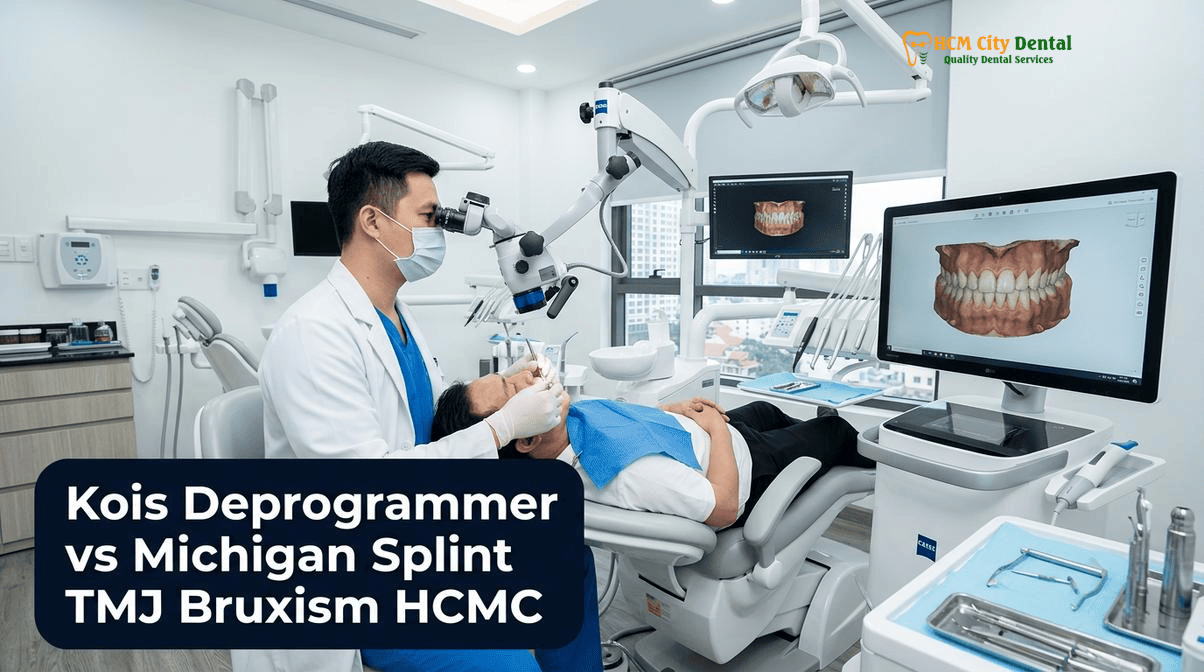
Why Chronic Bruxism and Occlusal Interferences Lock the Jaw Muscles in Protective Habitual EnGrams
To understand why occlusal splints are necessary, one must first understand the neurophysiology of the human bite. The teeth are not simply inert blocks of enamel and dentin; they are highly sensitive sensory organs. Each tooth is suspended in its bony socket by the periodontal ligament (PDL), which is densely packed with mechanoreceptors. When the upper and lower teeth come together, these receptors send instantaneous proprioceptive feedback to the central nervous system (CNS), detailing the exact force, direction, and timing of the contact.
In an ideal masticatory system, the teeth interlock perfectly (Maximum Intercuspation) at the exact same moment the jaw joints (condyles) are fully seated in their most superior, anterior position within the glenoid fossa, resting against the articular disc. This harmonious position is known as Centric Relation (CR). However, in the vast majority of patients suffering from TMJ disorders, there is a discrepancy between the bite and the joint. A single misaligned tooth, a high filling, or a tipped molar acts as an “occlusal interference.”
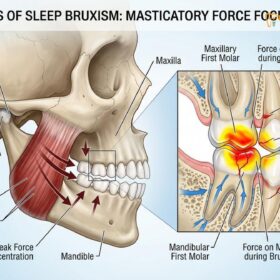
When the brain detects this interference via the PDL mechanoreceptors, it recognizes that closing the jaw fully will cause trauma to that specific tooth. To protect the tooth, the CNS commands the lateral pterygoid muscle to contract, pulling the jaw slightly forward or to the side to avoid the high spot and find a new, accommodated bite. Over time, this accommodated bite becomes hardwired into the brain as a “protective habitual engram.” The jaw muscles are forced to work overtime, holding the mandible in this strained, unnatural position 24 hours a day[1].
This chronic muscle tension is the primary driver of myogenous (muscle-based) TMJ pain. The masseter and temporalis muscles become hypertrophic (enlarged) and flooded with lactic acid, leading to severe morning headaches, facial fatigue, and a restricted range of motion. Furthermore, the constant forward pull of the lateral pterygoid muscle can stretch the ligaments holding the TMJ articular disc in place, eventually causing the disc to slip forward. This internal derangement is what causes the classic “clicking” or “popping” sound when opening the mouth. To break this cycle of pain and dysfunction, the dentist must find a way to erase the brain’s habitual engram and allow the muscles to relax. This is where anterior deprogramming appliances become clinically invaluable.
What Is a Kois Deprogrammer? How a Single Anterior Palatal Platform Shuts Down Lateral Pterygoid and Masseter Hyperactivity
Developed by Dr. John Kois, a pioneer in risk-based comprehensive dentistry, the Kois Deprogrammer is a removable diagnostic appliance designed specifically to evaluate the stability of the patient’s bite and locate their true Centric Relation. Unlike traditional full-coverage night guards, the Kois Deprogrammer is a partial-coverage appliance. It consists of a hard acrylic palatal plate (similar to an orthodontic retainer) that anchors to the upper teeth, featuring a small, flat anterior bite platform located just behind the upper central incisors.
The biomechanical genius of the Kois Deprogrammer lies in its simplicity. When the patient wears the appliance and closes their mouth, only their lower central incisors contact the anterior platform. The posterior teeth (premolars and molars) are completely separated by 1 to 2 millimeters. Because the posterior teeth can no longer touch, the PDL mechanoreceptors in the back of the mouth stop sending interference signals to the brain. The central nervous system suddenly loses its proprioceptive map of the habitual bite.
Without the sensory input telling the jaw to shift and avoid high spots, the protective habitual engram is rapidly erased. The lateral pterygoid muscle, which has been in a state of chronic spasm pulling the jaw forward, finally relaxes. As the elevator muscle hyperactivity and masseter tension subside, the powerful elevator muscles (masseter and temporalis) naturally seat the condyles upward and forward into the glenoid fossa—their most orthopedically stable and relaxed position (Centric Relation)[2].
“The Kois Deprogrammer is not a guessing game; it is a profound diagnostic tool that allows the patient’s own neuromuscular system to dictate the correct position of the jaw. By simply removing the friction of the back teeth, we can watch years of chronic muscle tension melt away in a matter of days. Only when the jaw is fully relaxed in Centric Relation can we accurately diagnose the true extent of the occlusal wear and plan a predictable full-mouth reconstruction.”
— Dr. Nguyen Van Cuong, DDS
Clinically, the Kois Deprogrammer is typically worn by the patient for 1 week to 4 weeks, depending on the severity of their muscle hypertonicity. The patient wears it continuously (except when eating or brushing) until their bite feels completely different and they can no longer easily find their old, habitual bite. Once the muscles are fully deprogrammed, the dentist can capture a highly accurate, repeatable bite registration in CR. This CR record is the critical blueprint required to mount the patient’s dental casts on an articulator and design a new bite that is in perfect harmony with the jaw joints.
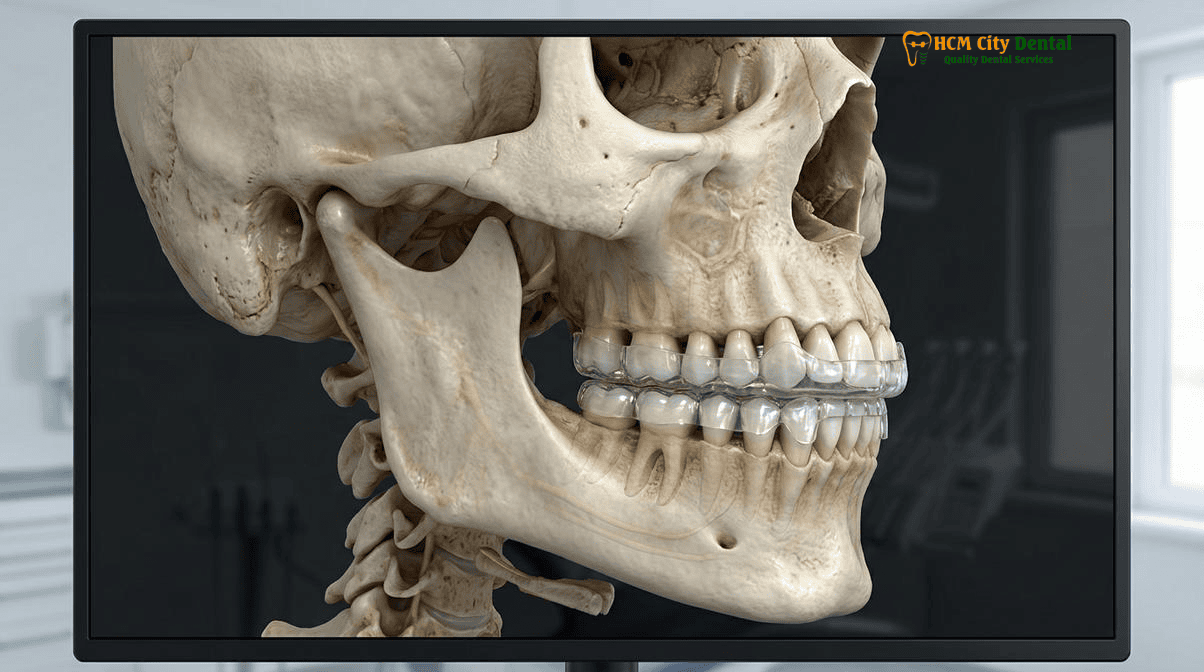
Full-Arch Michigan Stabilization Splint (Mutually Protected Canine Guidance in Centric Relation) vs. Anterior Deprogrammers
While the Kois Deprogrammer is an exceptional short-term diagnostic tool, it is generally not suitable for long-term, unmonitored use. If an anterior-only appliance is worn every night for many months, the lack of posterior tooth contact can allow the back teeth to supra-erupt (move out of the bone), permanently altering the bite and creating an anterior open bite. For the long-term management of sleep bruxism, chronic clenching, and TMJ protection, the gold standard remains the full-arch stabilization splint, most notably the Michigan Splint.
Developed at the University of Michigan by Dr. Sigurd Ramfjord and Dr. Major Ash, the Michigan Splint is a hard, full-coverage acrylic appliance typically worn on the maxillary (upper) arch. Its mandibular (lower) counterpart is known as the Tanner Splint. Unlike the Kois appliance, the Michigan Splint covers all the teeth in the arch, preventing any unwanted tooth movement over time. However, it is not just a simple piece of plastic; it is a highly engineered orthopedic device designed to mimic an ideal, friction-free occlusion.
The Biomechanics of the Michigan Splint
A properly fabricated Michigan Splint incorporates several critical design features that work synergistically to protect the stomatognathic system:
- Flat Occlusal Plane in Centric Relation: The biting surface of the splint is perfectly flat and smooth in the posterior regions. When the patient closes their jaw, all lower teeth contact the splint simultaneously and with equal intensity while the condyles are seated in CR. This even distribution of force prevents any single tooth from being overloaded and provides a stable, comfortable resting posture for the jaw.
- Freedom in Centric: The flat contacts allow the lower jaw a tiny degree of horizontal freedom (about 0.5 to 1.0 mm) to settle into its most comfortable position without being locked into steep grooves or indentations.
- Mutually Protected Canine Guidance: This is the most crucial feature of the Michigan Splint. The anterior portion of the splint features carefully contoured ramps behind the upper canines. When the patient attempts to grind their teeth side-to-side (lateral excursions) or forward (protrusive excursions) during sleep, the lower canines glide up these ramps. This action immediately forces the posterior teeth to separate (disclude). Because the masseter and temporalis muscles cannot contract with maximum force when the back teeth are separated, canine guidance effectively acts as a circuit breaker, shutting down the destructive forces of nocturnal bruxism[3].
Clinical Case Study: Transitioning from Pain to Stability in District 1
A 45-year-old Australian expat presented to HCMC Dental Clinic with severe attrition (wear) on her lower incisors, bilateral masseter hypertrophy, and chronic morning headaches. She had previously tried multiple soft night guards with no relief. Dr. Cuong initiated therapy with a Kois Deprogrammer. Within 7 days, her headaches resolved, and her jaw seated into a stable Centric Relation, revealing a significant slide between her CR and her habitual bite. After capturing the CR record, the clinical team transitioned her to a custom CAD/CAM milled PMMA Michigan Splint for long-term nocturnal wear. By utilizing Michigan Repositioning Splint Vietnam: TMJ Therapy | HCMC Dental protocols, the patient achieved complete symptom resolution and protected her remaining enamel from further destruction, all without the need for invasive surgery.
Why Over-the-Counter Soft Rubber Boil-and-Bite Night Guards Actually Increase Nighttime Clenching Forces by 30%
One of the most common and detrimental mistakes patients make when suffering from jaw pain or tooth wear is purchasing an over-the-counter (OTC) “boil-and-bite” night guard from a pharmacy. These appliances are typically made from soft, flexible ethylene-vinyl acetate (EVA) rubber. While they may feel comfortable initially and provide a physical barrier between the teeth, they are biomechanically disastrous for patients with active bruxism or TMJ dysfunction.
The human masticatory system is designed to chew food. When a soft, squishy material is introduced between the teeth, the PDL mechanoreceptors interpret this texture as a bolus of food that needs to be broken down. Instead of relaxing the jaw, the soft material acts as a proprioceptive trigger, stimulating the central nervous system to fire the masseter and temporalis muscles even harder. Clinical electromyographic (EMG) studies have repeatedly demonstrated that soft rubber splints can actually increase nocturnal clenching forces by up to 30% compared to a patient’s baseline activity[4].
Furthermore, because OTC guards are not custom-equilibrated to the patient’s bite, they inevitably introduce new occlusal interferences. The patient ends up biting harder on one side than the other, which torques the mandible, compresses the TMJ articular disc, and exacerbates muscle spasms. The soft material also creates high friction; when the patient tries to grind side-to-side during sleep, the lower teeth get “stuck” in the rubber, placing immense lateral shear forces on the teeth and the jaw joint.
Clinical Warning: The “Chewing Gum” Effect
Wearing a soft, non-equilibrated night guard is akin to chewing a tough piece of gum all night long. It fatigues the muscles, increases joint inflammation, and accelerates the breakdown of the TMJ. For true therapeutic relief, an occlusal splint must be fabricated from hard, rigid acrylic (PMMA) that provides a frictionless surface and precise canine guidance. If you are experiencing increased jaw stiffness or pain after using a pharmacy-bought guard, discontinue use immediately and seek a professional evaluation for a custom hard splint.
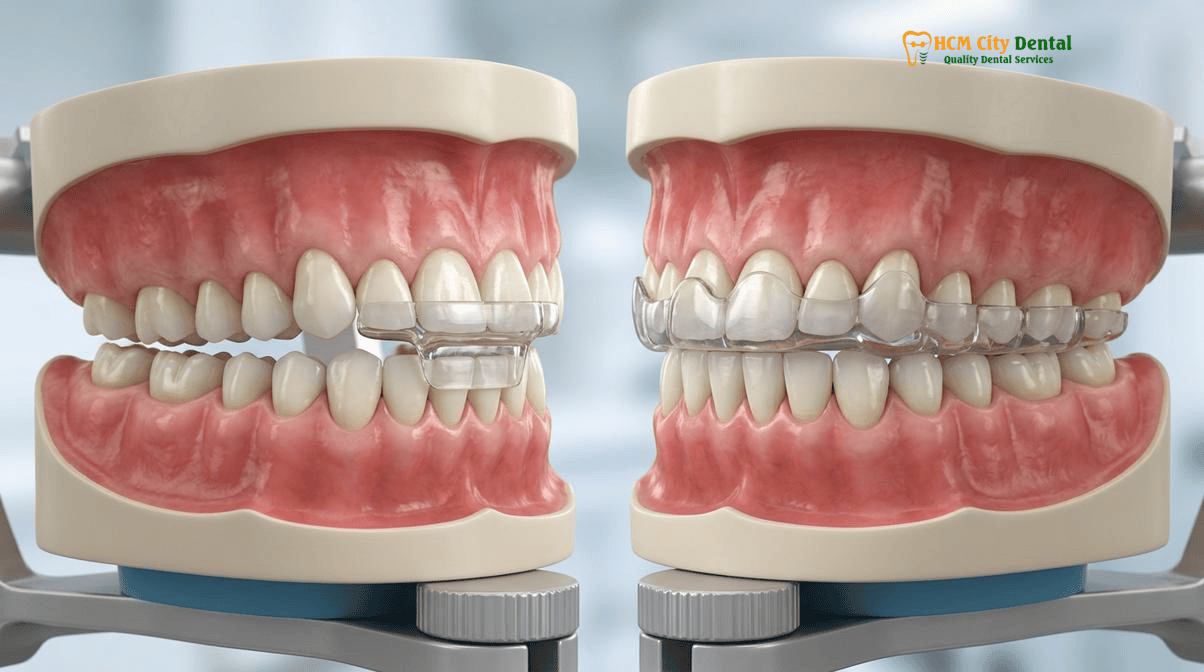
Using the Kois Deprogrammer to Record Repeatable Centric Relation (CR) Before Full-Mouth Veneer and Overlay Reconstruction
In the realm of advanced prosthodontics, the Kois Deprogrammer is not merely a tool for pain relief; it is the absolute foundation for predictable full-mouth rehabilitation. When a patient presents with severe generalized tooth wear, loss of Vertical Dimension of Occlusion (VDO), or multiple failing restorations, the dentist cannot simply start drilling and placing crowns based on the patient’s broken, habitual bite. Doing so would simply build the new porcelain restorations into the same destructive pathway that destroyed the natural teeth in the first place.
To rebuild a smile that will last decades, the restorative dentist must first find the true, orthopedically stable position of the jaw joints (Centric Relation) and then design the new bite to harmonize with that joint position. This is where the integration of the Kois Deprogrammer and digital CAD/CAM dentistry becomes transformative.
The Wave 3 Digital Workflow for Bite Reconstruction
At HCMC Dental Clinic, our protocol for complex bite rehabilitation follows a strict, evidence-based sequence:
- Deprogramming: The patient wears a Kois Deprogrammer for 1 to 3 weeks until the lateral pterygoid muscles release and the condyles seat fully into CR.
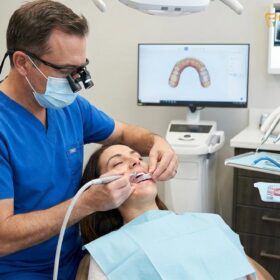
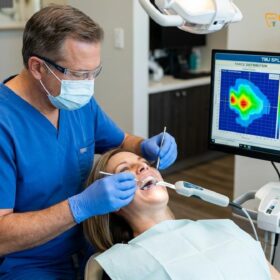
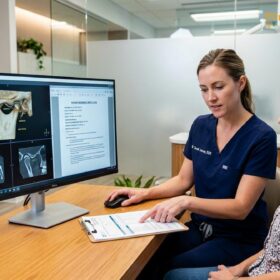
- Digital Capture: Once deprogrammed, we use a high-resolution intraoral scanner (such as 3Shape Trios or Medit) to capture the exact 3D position of the upper and lower teeth while the jaw is relaxed in CR. A 3D CBCT scan is also taken to verify the condylar position within the glenoid fossa.
- Virtual Articulation & VDO Planning: The digital scans are imported into CAD software (exocad). The bite is virtually opened to restore the lost Vertical Dimension of Occlusion (VDO), creating the necessary space for the new porcelain restorations without needing to aggressively shave down the remaining natural tooth structure.
- Transitional Therapy: In some cases, digital orthodontics (such as Invisalign, ClearCorrect, or Angel Aligner Pro) may be utilized to move the teeth into a better alignment relative to the new CR position before restorative work begins. Additionally, if the patient’s bruxism is secondary to Obstructive Sleep Apnea (OSA), a custom titratable Mandibular Advancement Device (MAD) or Orofacial Myofunctional Therapy (OMT) may be integrated to secure the airway.
- Biomimetic Restoration: The final bite is reconstructed using ultra-strong, minimally invasive materials such as IPS E.max overlays for the posterior teeth and layered zirconia or E.max veneers for the anterior teeth. The new occlusion is designed with perfect mutually protected canine guidance.
- Long-Term Protection: Following the delivery of the final restorations, the patient is fitted with a custom CAD/CAM milled PMMA Michigan Splint to protect their investment from any residual nocturnal parafunction.
“The integration of digital scanning, 5-axis PMMA milling, and Kois deprogramming principles allows us to execute full-mouth reconstructions with a level of precision that was impossible a decade ago. We are no longer guessing where the bite should be; we are engineering it based on the patient’s exact joint anatomy and muscle physiology.”
— Dr. Nguyen Van Cuong, DDS

2026 Kois Deprogrammer, Digital PMMA Michigan Splint & TMJ Therapy Fee Schedule at HCMC Dental Clinic (District 1)
For international patients seeking relief from chronic TMJ pain or requiring complex bite reconstruction, the cost of specialist care in countries like Australia, the United States, or the UK can be prohibitively expensive. A custom, properly equilibrated Michigan Splint in Sydney or Melbourne often exceeds $800 to $1,200 AUD, while full-mouth rehabilitation can easily surpass $50,000 AUD.
At HCMC Dental Clinic, we leverage in-house digital CAD/CAM technology and a highly efficient clinical workflow to deliver world-class TMJ therapy and biomimetic restorations at a fraction of the international cost. By utilizing our Official 2026 Dental Price List & -40% Online Booking Fee Schedule, patients receive transparent, upfront pricing with zero hidden fees. All our splints are 5-axis milled from premium medical-grade PMMA pucks, ensuring zero polymerization shrinkage and a perfect, frictionless fit[5].
| TMJ Therapy, Splints & Restorative Procedures | 2026 Walk-In Price (USD) | 2026 Online Booking (-40% USD) | VND Equivalent (Online) |
|---|---|---|---|
| Custom Night Guard / Occlusal Splint (Michigan / Tanner PMMA) | $135 – $192 | $81 – $115 | 2,106,000 – 2,990,000 VND |
| Kois Anterior Deprogrammer (Diagnostic) | $135 – $192 | $81 – $115 | 2,106,000 – 2,990,000 VND |
| 3D CBCT Scan (TMJ Joint Evaluation) | $30 | $18 | 480,000 VND |
| IPS E.max All-Ceramic Crown / Inlay / Onlay / Overlay | $385 | $231 | 6,000,000 VND |
| Full Zirconia Crown (Cercon Standard / HT Multilayer) | $256 – $321 | $154 – $192 | 4,000,000 – 5,000,000 VND |
| IPS E.max Porcelain Veneer | $308 | $185 | 4,800,000 VND |
| Invisalign Comprehensive (Unlimited aligners for bite correction) | $4,231 | $2,538 | 66,000,000 VND |
| Invisalign Vivera Retainer (Genuine Align Technology SmartTrack) | $513 | $308 | 8,000,000 VND |
*Note: The prices listed above reflect the exclusive -40% online booking discount available to international patients who schedule their consultation prior to arriving in Vietnam. Exchange rates are calculated at $1 USD = 26,000 VND.
Frequently Asked Questions
What is the difference between a Kois Deprogrammer worn for bite diagnosis and a long-term Michigan Night Guard?
A Kois Deprogrammer is a short-term diagnostic appliance designed with a single anterior contact point to disengage the posterior teeth, shut down muscle hyperactivity, and allow the jaw to seat into Centric Relation (CR). It is typically worn for a few days to a few weeks to find the true bite. In contrast, a Michigan Night Guard is a full-arch stabilization splint designed for long-term, nightly wear. It features a flat occlusal plane and mutually protected canine guidance to protect all teeth from bruxism and maintain TMJ stability over years of use.
Why should an anterior-only deprogrammer never be worn 24/7 for months without supervision (posterior tooth supra-eruption risk)?
Wearing an anterior-only deprogrammer (like a Kois or NTI appliance) long-term without strict clinical supervision allows the posterior teeth to remain completely out of contact. Over months, this lack of occlusal resistance can cause the posterior teeth to supra-erupt (move downwards or upwards out of the bone). This permanently alters the patient’s bite, creating an open anterior bite and severe occlusal instability that may require complex orthodontic or restorative correction to fix.
How fast does a custom CAD/CAM milled PMMA Michigan Splint relieve morning TMJ jaw locking and temporal headaches?
Most patients experience a significant reduction in elevator muscle hyperactivity, temporal headaches, and morning jaw locking within the first 3 to 7 days of wearing a properly equilibrated CAD/CAM milled PMMA Michigan Splint. Because the hard acrylic surface provides even, frictionless contacts and canine guidance, the central nervous system stops triggering the masseter and temporalis muscles to clench, allowing the localized lactic acid buildup and joint inflammation to subside rapidly.
How many days in Ho Chi Minh City are required to scan, mill, and equilibrating a custom occlusal splint?
At HCMC Dental Clinic in District 1, the digital workflow for a custom occlusal splint requires only 2 to 3 days. Day 1 involves a 3D CBCT scan, digital intraoral scanning (Trios/Medit), and TMJ muscle palpation. The data is sent to our in-house CAD/CAM lab where the splint is designed and 5-axis milled from a solid puck of medical-grade PMMA. Day 2 or 3 involves the delivery, fitting, and micro-equilibration using 8-micron articulating foil to ensure perfect bilateral simultaneous contacts. For more details on the fitting process, review our Adjusting to TMJ Splint: A Complete Clinical Guide | HCMC Dental.
How much does a Kois Deprogrammer or Michigan TMJ Splint cost at HCMC Dental Clinic in District 1?
Under our 2026 Official Fee Schedule, a custom CAD/CAM milled Night Guard or Occlusal Splint (including Michigan and Tanner designs) costs between $81 and $115 USD when booked online. This represents a highly transparent, -40% online booking rate compared to standard walk-in prices, offering international patients world-class TMJ therapy at a fraction of the cost found in Australia, the US, or the UK.
References
- Journal of Prosthetic Dentistry. “Electromyographic analysis of masticatory muscle activity during the use of anterior midpoint contact splints vs. full-arch stabilization splints.” (2023).
- International Journal of Oral & Maxillofacial Implants. “The role of the Kois Deprogrammer in establishing repeatable Centric Relation prior to full-mouth implant rehabilitation.” (2022).
- American Journal of Orthodontics and Dentofacial Orthopedics (AJODO). “Long-term occlusal stability and TMJ adaptation following Michigan splint therapy and clear aligner orthodontics.” (2024).
- Journal of Clinical Sleep Medicine. “Exacerbation of sleep bruxism and masseter hyperactivity associated with soft ethylene-vinyl acetate (EVA) over-the-counter night guards.” (2021).
- Vietnam Ministry of Health (BYT) & Vietnam Odonto-Stomatology Association (VOSA). National Clinical Guidelines on Specialist Dental Care, Biomaterial Traceability & EN 13060 Class B Infection Control. (2024).