
✈ HCMC Dental · District 1 · Trusted by 500+ International Patients
All-on-6 Dental Implants in Vietnam
From $8,655/arch — Maximum Stability, Fixed Forever

Replace your entire arch with a fixed bridge supported by 6 premium titanium implants. Superior stability. Same-day temporary teeth. Save 60–75% vs USA prices. Lifetime implant warranty.
📸 Send your X-ray via WhatsApp — get a free remote assessment within 24 hours. No obligation.
What Are All-on-6 Dental Implants?
Clinical definition, anatomy, and how the procedure works
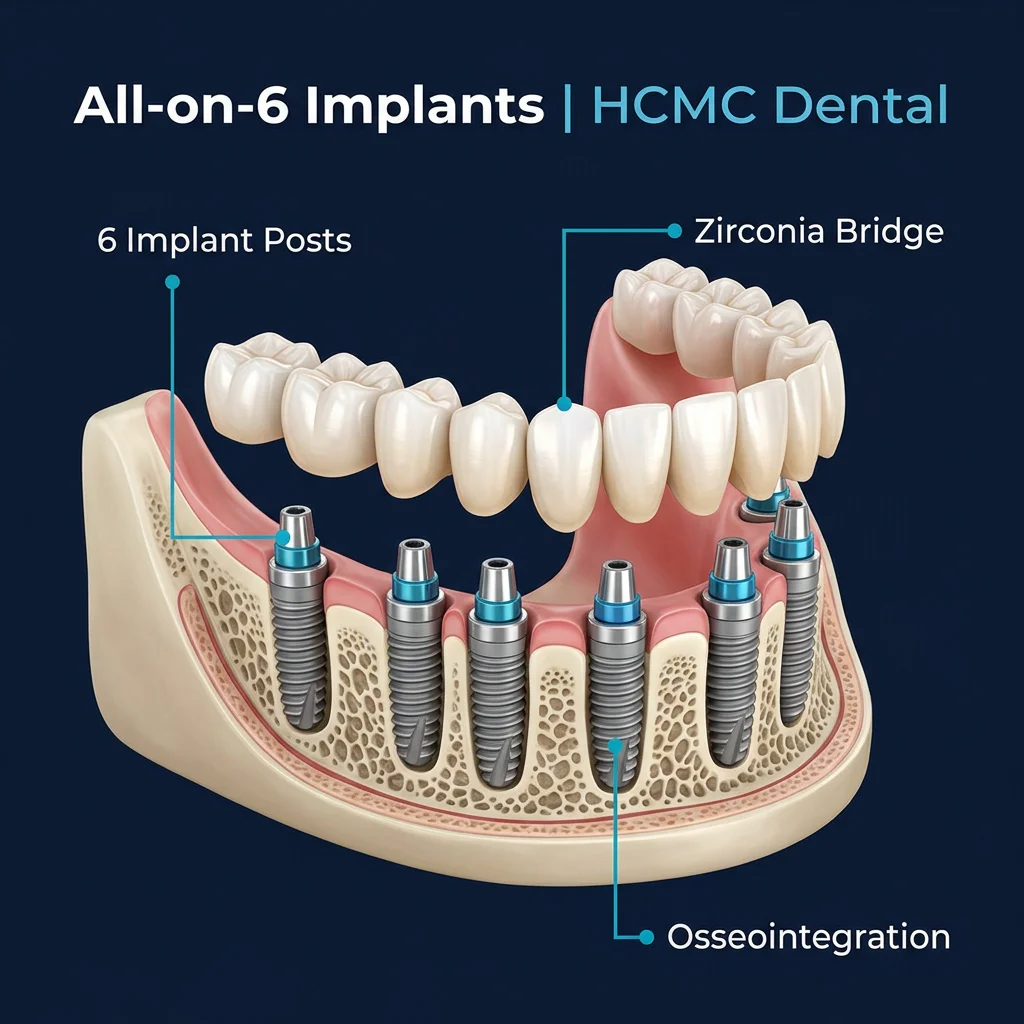
All-on-6 is a full-arch dental restoration technique that replaces all teeth in one jaw (upper or lower) using 6 titanium implants. These implants are surgically placed into the jawbone and act as permanent roots, supporting a fixed bridge of 10–14 porcelain or zirconia teeth. Unlike removable dentures, All-on-6 is non-removable, stimulates jawbone, and restores full chewing function. Same-day temporary teeth are typically placed on surgery day, with permanent zirconia bridge delivered 5–6 months later.
The All-on-6 System — What Exactly Is It?
All-on-6 is one of the most advanced solutions in modern implant dentistry. The name is straightforward: all of your missing teeth in a jaw are replaced using 6 titanium implants as the foundation.
These 6 implants serve as permanent artificial tooth roots, osseointegrating (fusing) with your jawbone over 5–6 months. Once integrated, a permanent full-arch bridge — typically made from monolithic zirconia — is screwed onto all 6 implants, giving you a complete, beautiful, and fully functional set of teeth that you never remove.
What Makes All-on-6 Different from Traditional Implants?
Traditional implant dentistry requires one implant per missing tooth — meaning 8–12 implants for a full arch, complex staging, and significantly higher costs. All-on-6 achieves the same functional result with just 6 strategically positioned implants, dramatically reducing:
- Surgery complexity and duration — one surgical session, not multiple stages
- Total cost — 6 implants instead of 8–12 significantly reduces component costs
- Healing time — single osseointegration phase instead of staged healing
- Need for bone grafting — strategic placement often works with available bone
What Are the "Teeth"? — The Bridge Explained
The bridge that attaches to your 6 implants is a full arch of 10–14 teeth. At HCMC Dental, Dr. Cuong provides a two-phase bridge approach:
- Trip 1 — Temporary Bridge (PMMA): A high-strength acrylic bridge placed on surgery day. Looks natural, functions for soft eating, and protects healing implants during osseointegration.
- Trip 2 — Permanent Bridge (Monolithic Zirconia): The gold standard in implant prosthetics. Extremely strong (1,200 MPa — stronger than natural tooth enamel), natural translucency, stain-resistant. You can eat anything — steak, apples, corn on the cob. Milled in-house via CAD/CAM for perfect fit.
How All-on-6 Works — The Biomechanical Advantage
Understanding why 6 implants outperforms 4 for certain cases
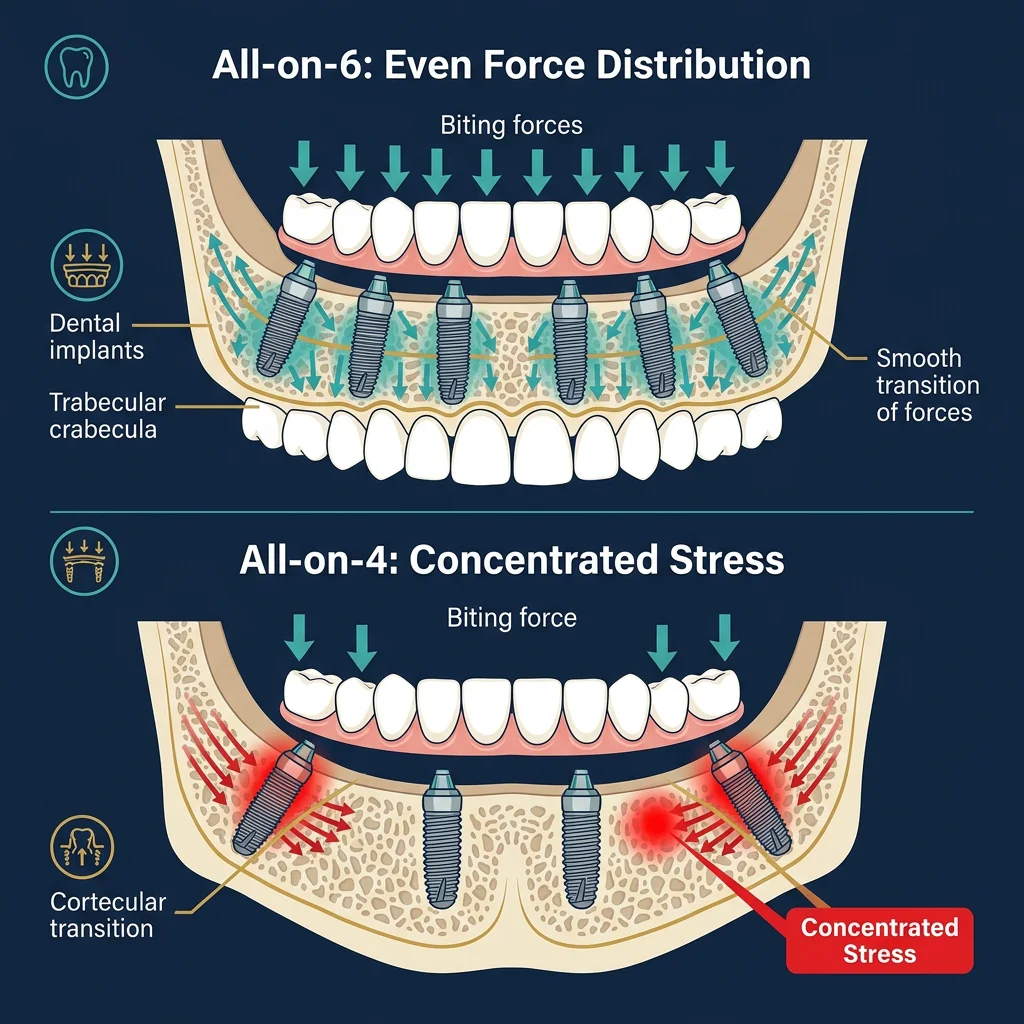
All-on-6 distributes biting forces across 6 implant posts instead of 4, reducing stress per implant by approximately 30–40%. The 2 additional implants reduce the span between supports (shorter cantilever), decreasing leverage stress on the prosthetic bridge. This makes All-on-6 mechanically superior for upper jaw cases, high bite-force patients, and those requiring long-term maximum stability.
The Engineering Principle: Force Distribution
Think of a bridge over a river: a bridge supported by 6 pylons distributes weight more evenly than one supported by 4 pylons. Each pylon bears less load, reducing the risk of structural failure over time. All-on-6 applies this same principle to your jaw:
- Stress per implant reduced ~30–40%: With 6 anchorage points vs 4, each titanium post endures significantly less cyclical loading from chewing — extending lifespan
- Shorter prosthetic spans: The 2 extra implants reduce the distance between support points, minimising the lever-arm effect (cantilever) that can cause micro-fractures in bridges over time
- Better posterior support: All-on-6 positions implants further back in the arch, providing support closer to where molar chewing forces are generated
- Redundancy safety factor: If one implant were to fail (rare — under 2% lifetime risk per implant), the restoration remains functional on 5 remaining posts
The Upper Jaw Challenge — Why All-on-6 Excels in the Maxilla
The upper jaw (maxilla) presents unique challenges for implant dentistry:
- Softer bone density: The maxillary bone is naturally more porous and less dense than the mandible (lower jaw) — D3/D4 vs D2/D3 bone classification
- Sinus proximity: The maxillary sinuses limit vertical bone height in posterior regions
- Higher failure rates: Upper jaw implants historically have slightly higher failure rates than lower jaw — the extra 2 implants in All-on-6 compensate for this
For these reasons, Dr. Cuong more frequently recommends All-on-6 for upper jaw cases than lower jaw cases, where All-on-4 often provides sufficient stability.
💬 Unsure whether you need All-on-4 or All-on-6? Send your X-ray to Dr. Cuong for a personalised assessment.
📸 Send X-ray — Free Remote AssessmentAll-on-6 vs All-on-4 — Complete Clinical Comparison
Head-to-head analysis to help you and Dr. Cuong make the right decision
All-on-4 (4 implants, 2 angled) is optimal for most patients — excellent stability with less surgery. All-on-6 (6 implants, all placed more vertically) provides superior load distribution and is preferred for: upper jaw treatment, high bite force/bruxism, borderline bone density, or patients seeking maximum long-term stability. Both produce identical final results aesthetically. All-on-6 costs approximately 20–30% more.
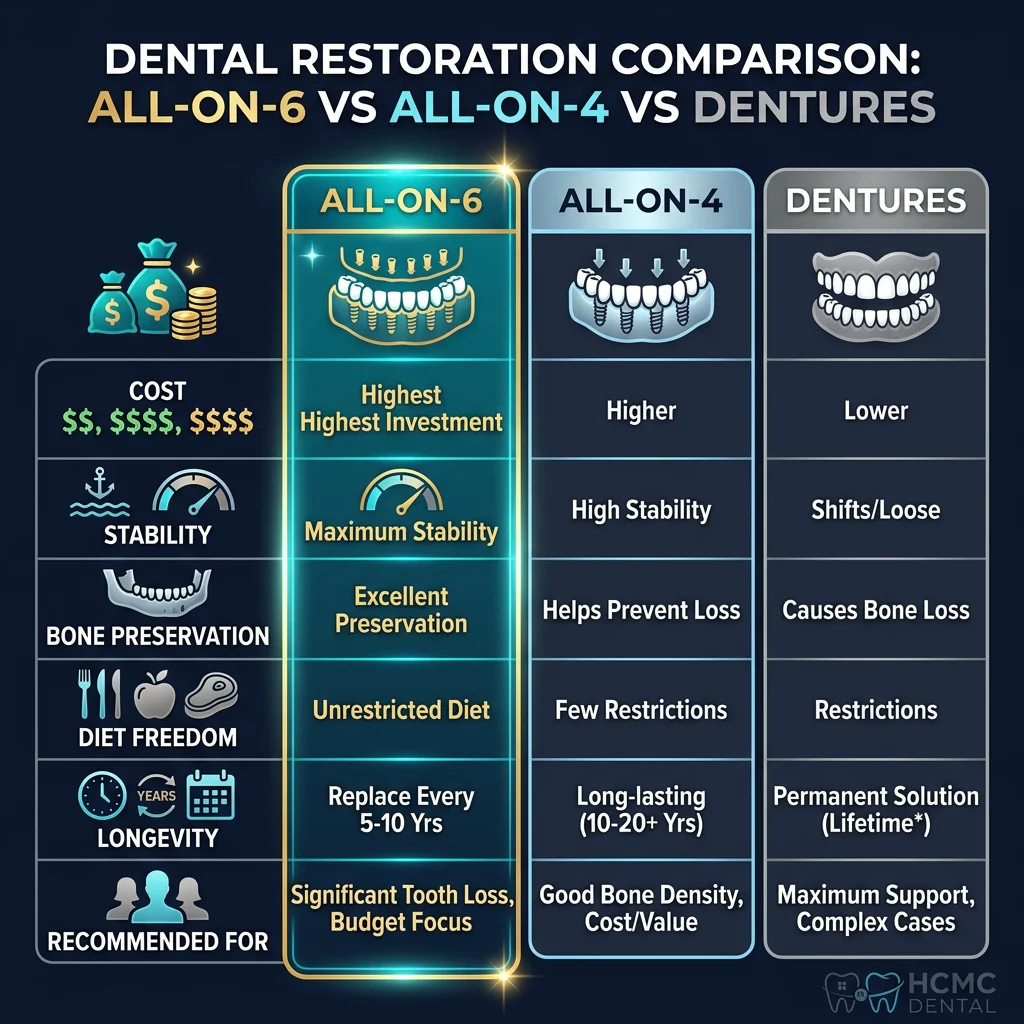
| Feature | All-on-4 | All-on-6 ★ | Traditional Dentures |
|---|---|---|---|
| Number of implants | 4 per arch | 6 per arch | 0 (no implants) |
| Force distribution | 4 anchorage points | 6 points — 30–40% less per implant | Gum surface only |
| Ideal jaw location | Lower jaw preferred | Upper OR lower jaw | Either (no bone requirement) |
| Bruxism suitability | Moderate | Excellent — handles high forces | Poor (rapid wear) |
| Same-day teeth | ✅ Usually | ✅ Usually | ✅ Yes (removable) |
| Bone grafting needed | Often avoided (angled implants) | Sometimes needed (vertical placement) | Not applicable |
| Prevents bone loss | ✅ Yes | ✅ Yes (superior stimulation) | ❌ Accelerates bone loss |
| Redundancy (implant failure) | Moderate (3 remaining) | High (5 remaining) | Not applicable |
| HCMC Dental WhatsApp price | From $6,345/arch | From $8,655/arch | See denture pricing |
| Implant warranty | ✅ Lifetime | ✅ Lifetime | 1–2 years |
When Dr. Cuong Recommends All-on-6 Over All-on-4
Dr. Cuong's clinical decision framework for recommending All-on-6:
- ✅ Upper jaw (maxilla) treatment — softer maxillary bone benefits significantly from 2 extra anchors
- ✅ Bruxism (teeth grinding) — higher occlusal forces require more support points
- ✅ Borderline bone density — when CBCT shows D3/D4 bone where All-on-4 primary stability may be marginal
- ✅ Patients who are heavy eaters — those who frequently eat hard foods (bones, crunchy foods)
- ✅ Peace of mind preference — some patients simply want maximum stability regardless of clinical necessity
- ✅ Full-mouth rehabilitation — when doing both arches, often upper = All-on-6, lower = All-on-4
🔗 Read our complete All-on-4 treatment guide →
💬 Dr. Cuong will personally review your CBCT and recommend whether All-on-4 or All-on-6 is best for your anatomy.
💬 Ask Dr. Cuong: All-on-4 or All-on-6?8 Clinical Advantages of All-on-6
Why patients and clinicians choose 6 implants for premium full-arch restoration
Am I a Candidate for All-on-6 Implants?
Use this quick self-assessment — then confirm with Dr. Cuong via free remote review
Most adults with failing, missing, or all-removed teeth are candidates for All-on-6. The key requirements are: sufficient bone density in at least 6 sites (assessed by CBCT scan), good general health, non-smoker (or willing to quit temporarily), and commitment to oral hygiene aftercare. Send your panoramic X-ray to Dr. Cuong for a free preliminary assessment before booking flights.
How many teeth are you missing or need replacing?
This helps determine if All-on-6 is appropriate for your situation
Do you have any of these conditions?
These affect treatment planning but rarely prevent treatment
What is your main priority?
This helps Dr. Cuong personalise his recommendation
✅ You sound like an excellent All-on-6 candidate!
Based on your answers, All-on-6 aligns well with your needs. Dr. Cuong can confirm suitability by reviewing your X-ray — free, no obligation.
📸 Send X-ray for Free Assessment✅ All-on-6 may be a great option for you
Your answers suggest you could be a candidate. Dr. Cuong will review your specific situation — including any medical factors — to provide a personalised recommendation.
💬 Discuss With Dr. Cuong🤔 Let Dr. Cuong assess your specific case
Every patient is unique. A 5-minute WhatsApp conversation with Dr. Cuong — along with a quick X-ray review — will give you a clear answer tailored to your anatomy and health profile.
📸 Free Remote AssessmentClinical Candidacy Criteria
- All teeth missing or failing in one/both arches
- Adequate bone density (D1–D3) at 6 sites
- Age 21 or older
- Non-smoker (or willing to quit temporarily)
- Controlled systemic conditions
- Committed to aftercare & hygiene
- Bruxism / high bite force patients
- Upper jaw (maxilla) full-arch cases
- Significant bone loss (may need graft)
- Active smokers (elevated failure risk)
- Uncontrolled diabetes (HbA1c > 8)
- Current bisphosphonate therapy
- Recent radiation to head/neck area
- Severe immune system suppression
- Teenagers (bone still developing)
- Active periodontal infection
Clinical Indications — When Dr. Cuong Recommends All-on-6
6 specific clinical scenarios where All-on-6 is the superior choice
Upper Jaw (Maxillary) Treatment
The maxilla's naturally softer bone (D3/D4 classification) has lower density than the mandible. Extra 2 implants in All-on-6 compensate for reduced bone-to-implant contact, achieving equivalent osseointegration strength to All-on-4 in denser lower jaw bone.
Bruxism (Teeth Grinding)
Bruxers generate 2–4× normal occlusal forces (up to 900N in severe cases vs normal 200–400N). All-on-6 distributes these extreme forces across 6 implants, protecting both the implant-bone interface and the prosthetic bridge from excessive mechanical stress.
Borderline Bone Density (D3/D4)
When CBCT analysis shows marginal bone density — adequate for All-on-6 but potentially insufficient for reliable All-on-4 primary stability — adding 2 more implants provides the torque redundancy (>35 Ncm across more posts) needed for safe immediate loading.
Full-Mouth Bilateral Rehabilitation
Patients rehabilitating both arches simultaneously often receive All-on-6 on the upper jaw (softer bone, more complex anatomy) and All-on-4 on the lower jaw (denser bone, simpler placement). This optimises the cost-stability balance across both arches.
Age-Related Bone Resorption
Elderly patients often experience significant bone resorption over years of tooth loss. All-on-6's 2 additional implants compensate for the reduced osseointegration surface area in resorbed ridges, achieving the stability needed for fixed full-arch loading.
Maximum Redundancy Preference
Some patients simply prefer the additional security of 6 implants — whether as a precautionary measure for active lifestyles, contact sport participation, or simply the peace of mind of knowing their restoration has maximum engineering redundancy built in.
All-on-6 Surgery Day — 10-Step Procedure
A minute-by-minute guide to what happens on your surgery day at HCMC Dental
All-on-6 surgery at HCMC Dental takes 2.5–3.5 hours per arch under local anaesthesia or IV sedation. Using 3D surgical guides for precision, Dr. Cuong places 6 titanium implants and — if primary stability is achieved (≥35 Ncm) — attaches a temporary fixed bridge on the same day. You leave the clinic smiling. Permanent zirconia bridge is delivered on Trip 2, 5–6 months later.
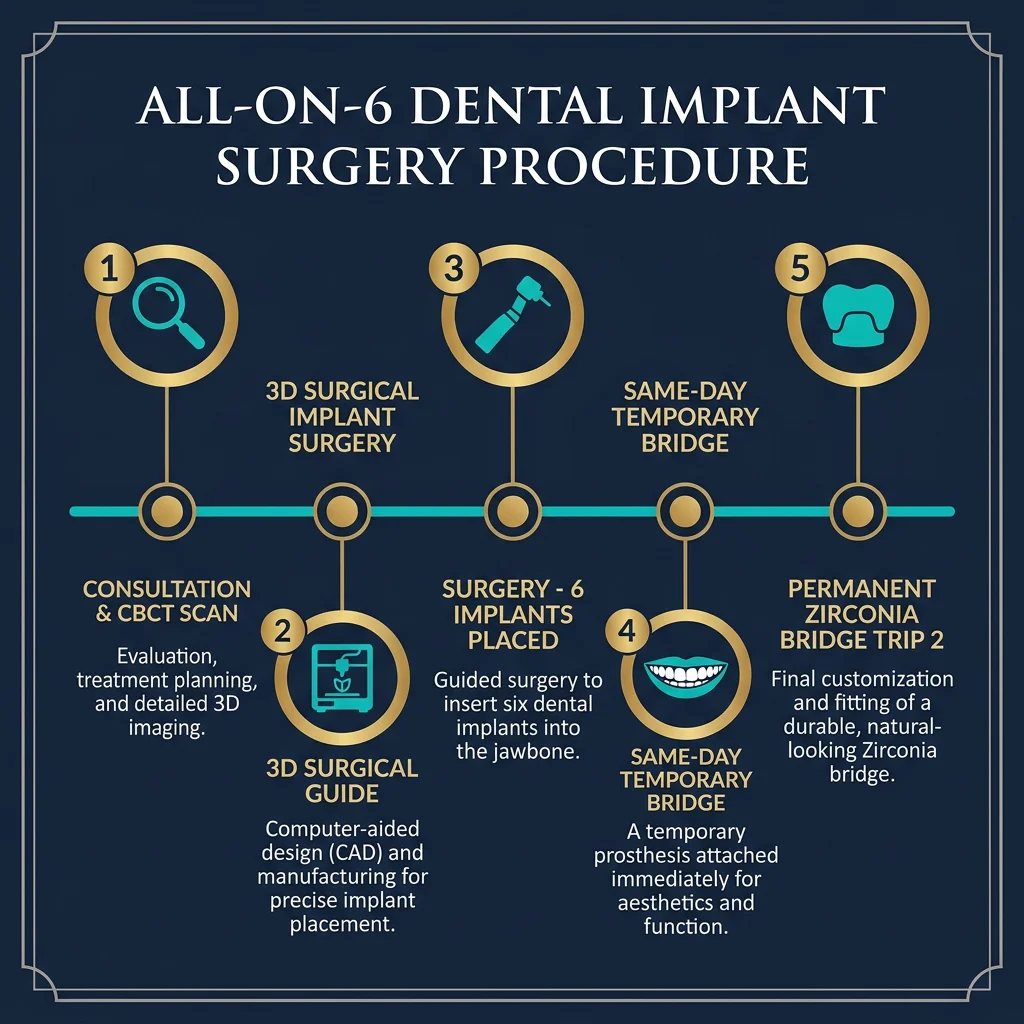
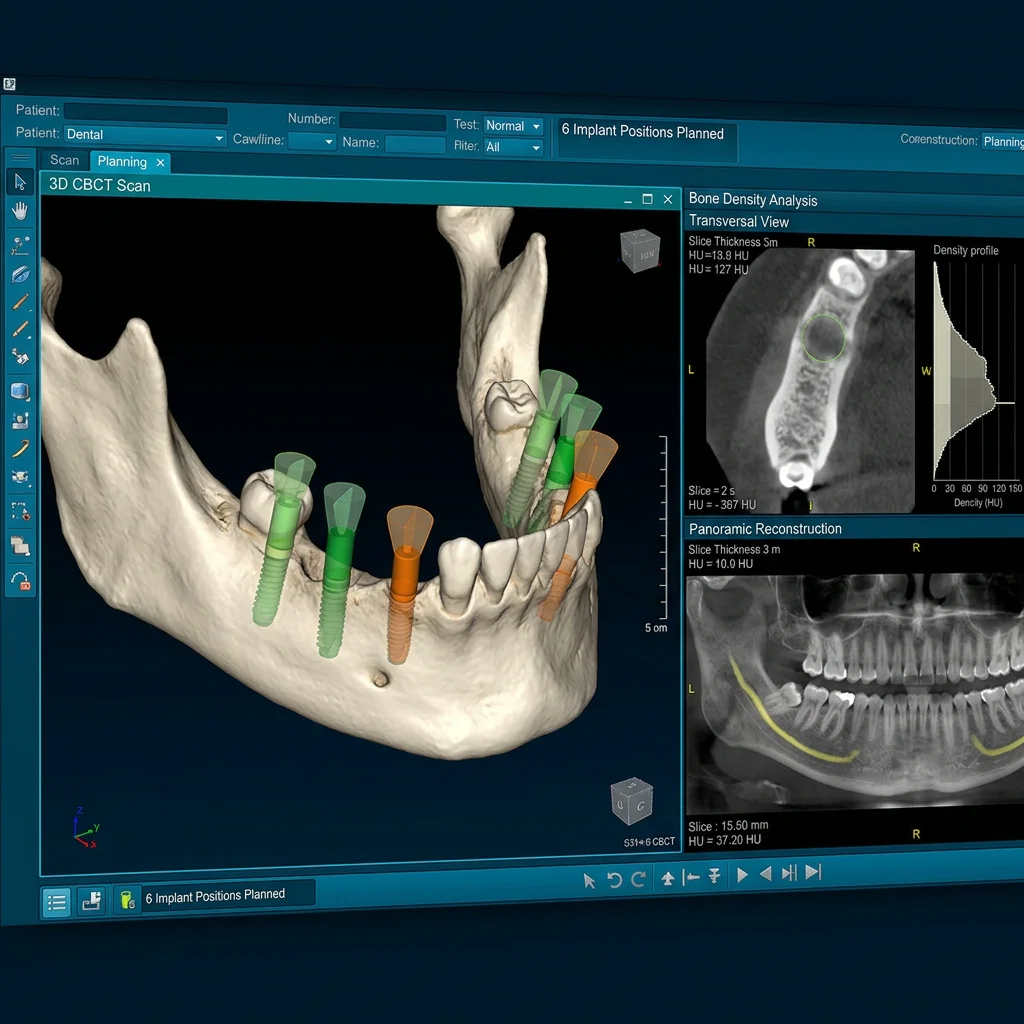
Dr. Cuong reviews your 3D CBCT scan and virtual treatment plan with you on screen. You see exactly where each of the 6 implants will be placed and approve the final plan. Questions answered, consent signed.
Vital signs checked. IV line established if sedation is chosen. Local anaesthetic injections administered — complete numbness achieved within 5–10 minutes. You feel no pain throughout the procedure.
Any remaining failing or hopeless teeth are removed using atraumatic extraction technique — specially designed to preserve as much bone as possible for implant placement. Extraction sites prepared simultaneously.
The gum tissue is carefully reflected to expose the underlying bone ridge. Any irregularities in the bone surface are smoothed (alveoloplasty) to create an optimal foundation for the 6 implants and ensure the bridge sits cleanly at the gumline.
The 3D-printed surgical guide — manufactured from your CBCT data — is positioned over your jaw. This precision guide ensures each implant is placed at exactly the planned angle, depth, and position, accurate to within 0.5mm. No freehand placement.
Using sequential drills of increasing diameter, 6 precise osteotomies (implant beds) are prepared through the surgical guide. All 6 titanium implants are then threaded into position. This is the core of the procedure — precise, methodical, and fully controlled.
Each of the 6 implants is tested with a calibrated torque wrench. A minimum of 35 Newton-centimetres (Ncm) is required for safe immediate loading. If all 6 implants pass this threshold, the same-day temporary bridge protocol proceeds.
The pre-fabricated PMMA temporary bridge is connected to all 6 implants. Bite is carefully checked and adjusted using articulating paper. This temporary bridge is designed for the healing period — strong enough for soft foods, beautiful enough to smile with confidence.
Gum tissue closed with fine absorbable sutures around each implant. Digital periapical X-rays confirm implant position and seating. Surgical site inspected for haemostasis. You now have a complete, fixed smile.
Dr. Cuong personally reviews medications, diet instructions, and warning signs with you (and your companion). Dr. Cuong's direct WhatsApp confirmed for remote monitoring. You leave the clinic smiling — with a full fixed arch of temporary teeth.
💬 Have questions about the surgery process? Dr. Cuong answers every question personally via WhatsApp — before, during planning, and after treatment.
💬 Book Your ConsultationThe 2-Trip Treatment Protocol — Your Complete Journey
Everything you need to know about planning your All-on-6 treatment from overseas
All-on-6 at HCMC Dental requires two trips to Ho Chi Minh City: Trip 1 (~12–16 days for surgery + temporary teeth), then a 5–6 month gap at home for osseointegration, then Trip 2 (~7–10 days for the permanent zirconia bridge delivery). Total Vietnam time: ~20–26 days across two visits. Remote monitoring by Dr. Cuong via WhatsApp throughout.
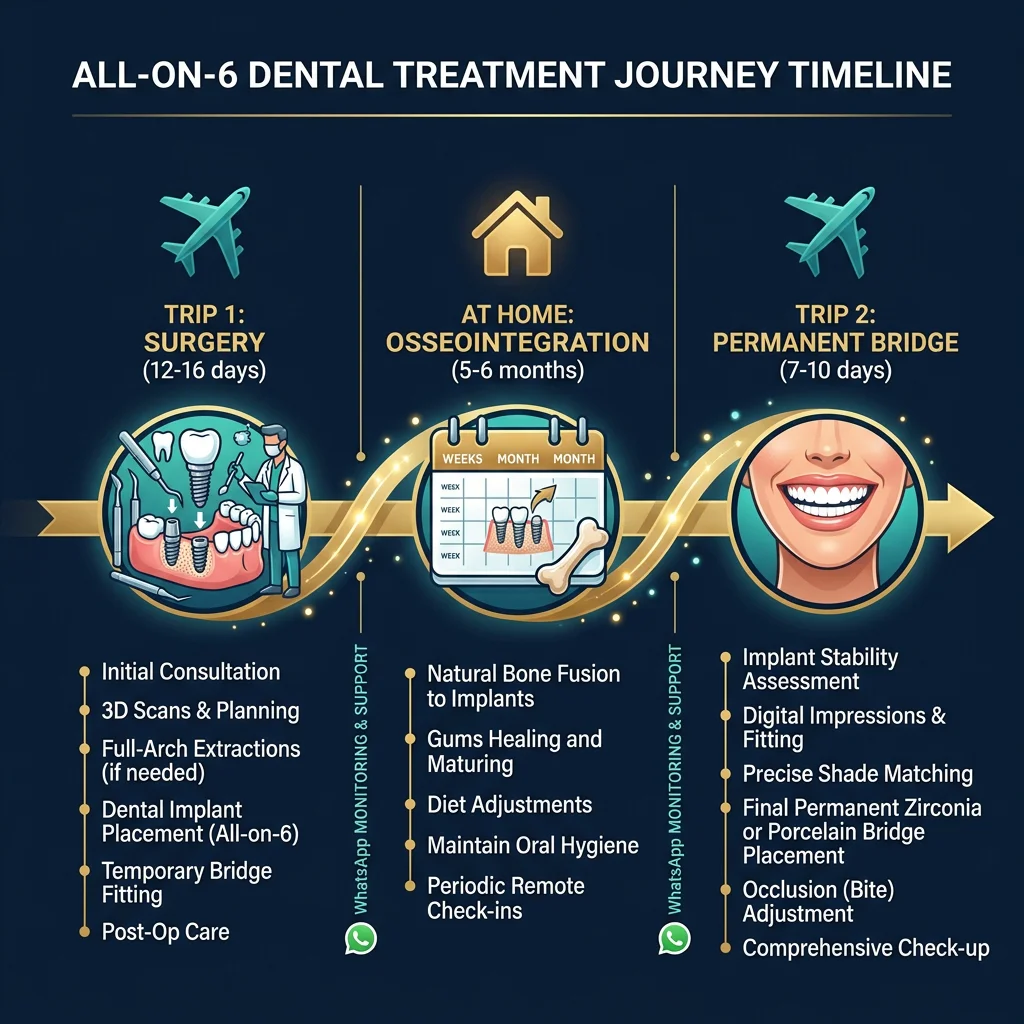
Trip 1 — Surgery & Temporary Teeth
12–16 days in Ho Chi Minh City · Recommended 2–3 months before your target date
Arrive in Ho Chi Minh City. Visit clinic for welcome consultation. 3D CBCT scan performed ($0 — included in package). Dr. Cuong reviews scan, discusses treatment plan, answers all questions. Blood tests ordered if required.
Digital treatment planning finalised. 3D surgical guide manufactured from CBCT data. Pre-fabricated temporary bridge prepared. Final pre-surgical review and consent appointment.
All-on-6 surgery performed (2.5–3.5 hours). 6 implants placed using 3D guide. Temporary fixed bridge attached same day. You leave with a full, fixed smile and eat soft foods that evening.
Swelling peaks Day 2–3 then consistently reduces. Follow-up check at clinic on Day 5 — suture inspection, implant stability check, bite adjustment if needed. Medications reviewed. Ice therapy and rest. Light sightseeing possible from Day 5–6.
Swelling largely resolved. Temporary bridge comfortable. Soft diet continues. Many patients explore HCMC's restaurants, museums, and day trips during this period. Final pre-departure check on Day 12–14. Cleared to fly home.
At Home — Osseointegration Phase
5–6 months at home · WhatsApp monitoring with Dr. Cuong throughout
Titanium implants begin fusing with jawbone — a biological process called osseointegration. Temporary bridge in full function (soft diet). Daily water flossing and gentle brushing. WhatsApp check-in with Dr. Cuong at 4 weeks.
Osseointegration progressing well. Diet gradually expands to include semi-soft foods. Photo check-in with Dr. Cuong at 3 months. Planning for Trip 2 begins at Month 4 — Dr. Cuong advises on optimal return window.
CBCT scan at local clinic (optional — can be done Day 1 of Trip 2) confirms complete osseointegration. All 6 implants fully fused. Permanent zirconia bridge manufacturing begins remotely using digital files. Book flights for Trip 2.
Trip 2 — Permanent Zirconia Bridge
7–10 days in Ho Chi Minh City · Your final smile delivery
Welcome back! CBCT scan confirms all 6 implants fully osseointegrated. Temporary bridge removed, implants and abutments inspected. Digital impressions (iTero scanner) taken for precision zirconia bridge manufacturing.
Monolithic zirconia bridge milled in-house from CAD/CAM files. Trial fit performed — bite checked, aesthetics approved by patient. Minor adjustments made. Final firing and polishing. Bridge glazed for optimal surface finish.
The moment you have been waiting for. Permanent zirconia bridge screwed onto all 6 implants with calibrated torque. Screw access holes sealed with composite. Final bite check, occlusion balanced. Photographs taken. Smile revealed. 🦷✨
Post-delivery check to confirm comfort and function. Maintenance kit provided. Full aftercare protocol reviewed. Warranty documentation issued in English. Enjoy Ho Chi Minh City with your new smile before flying home. Eat whatever you want!
"I was nervous about the 2-trip concept but Dr. Cuong made the whole process so smooth. Between trips, he replied to every WhatsApp message within hours. When I came back for my permanent bridge — seeing myself in the mirror for the first time with a full, beautiful smile — I honestly cried. Best decision I ever made."
Implant Systems — 3 Premium Tiers
Korean precision, German engineering, or Swiss luxury — Dr. Cuong works with the world's best
HCMC Dental offers All-on-6 in four implant tiers: Economy (Dentis/Dentium) from $8,655/arch; Standard (Neodent/B&B) from $10,190/arch; Premium (Straumann SLA) from $12,305/arch; and High-End (Straumann Active) from $13,460/arch. All include lifetime warranty on implant posts.
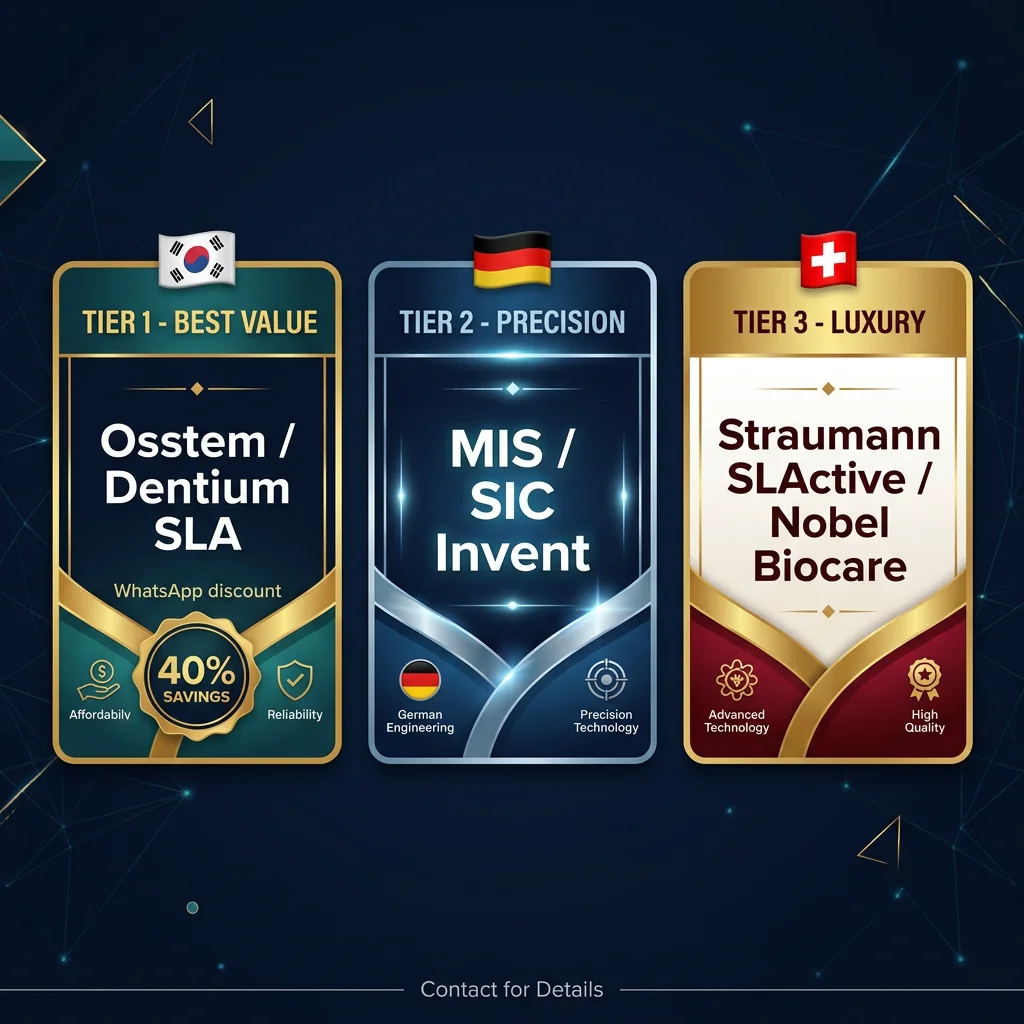
Dentis / Dentium
ISO 13485 certified · 15+ year track record
Excellent osseointegration (95%+ success)
Neodent / B&B
CE marked · High reliability
Excellent stability for mid-range budget
Straumann SLA
Lifetime international warranty
Highly predictable, premium standard
Straumann Active
Reduce healing time by ~30%
Best for diabetics, smokers, compromised bone
💬 Ask Dr. Cuong which implant brand is best for your specific case.
💬 Get Brand RecommendationThe Zirconia Bridge — Your Permanent Teeth
From PMMA temporary to monolithic zirconia — the science of your new smile
All-on-6 at HCMC Dental provides two bridges: a temporary PMMA bridge (placed surgery day) and a permanent monolithic zirconia bridge (delivered Trip 2). Monolithic zirconia is the current gold standard — strength of 1,200 MPa (3× stronger than tooth enamel), biocompatible, stain-resistant, and milled in-house for perfect precision fit. You can eat anything with it — steak, apples, crusty bread.
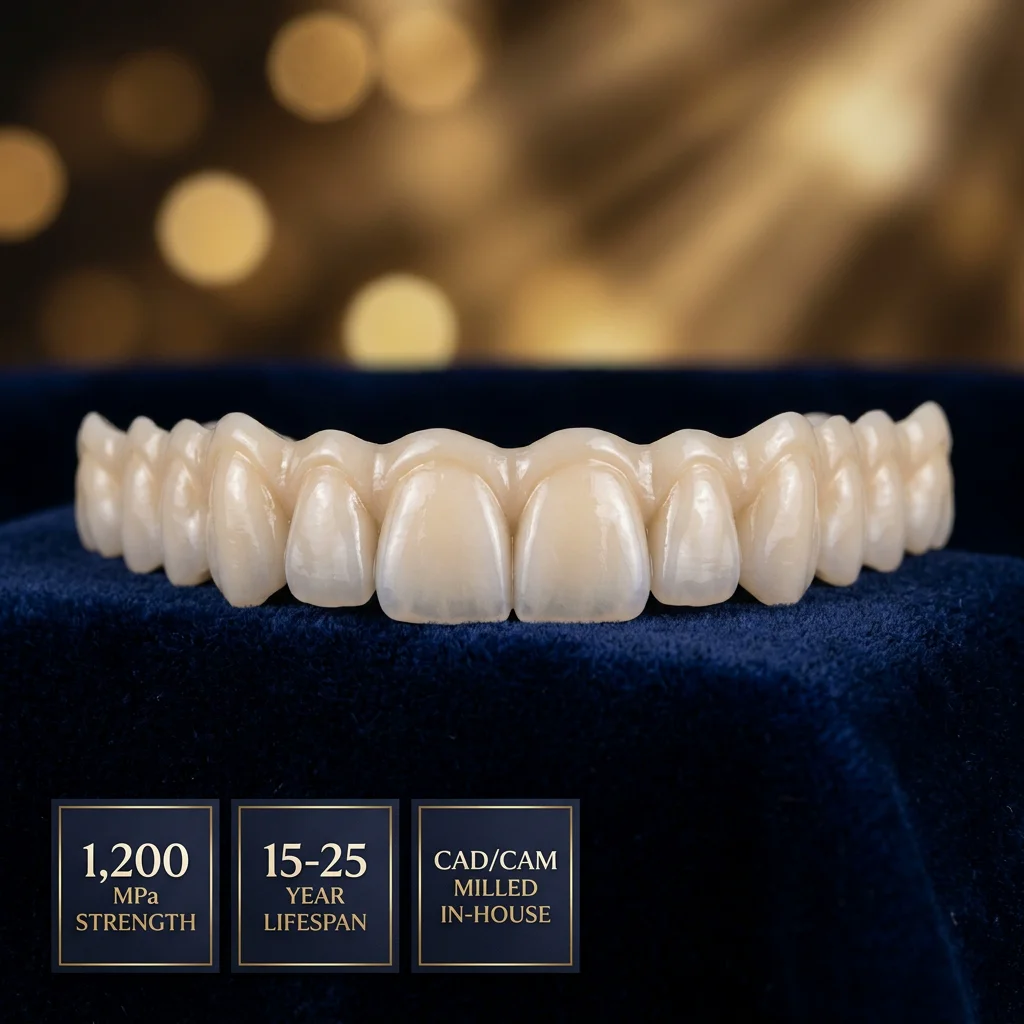
🦷 Temporary Bridge (PMMA Acrylic)
- Placed on surgery day
- High-strength PMMA acrylic material
- Strength: ~80 MPa
- Natural appearance — looks like real teeth
- Functions for soft eating during healing
- Protects implants during osseointegration
- Non-removable — screwed to implants
- 1-year warranty
- Duration: 5–6 months
- Replaced by zirconia bridge on Trip 2
💎 Permanent Bridge (Monolithic Zirconia)
- Delivered Trip 2 (5–6 months later)
- Monolithic zirconia — CAD/CAM milled in-house
- Strength: 1,200 MPa (3× natural enamel)
- Natural translucency & colour matching
- Stain, chip, and fracture resistant
- Full diet restored — eat anything
- Non-removable — screwed to all 6 implants
- 5-year warranty on bridge
- Expected lifespan: 15–25 years
- 10–14 teeth in natural arch form
Why Monolithic Zirconia Is the Gold Standard
- Unmatched strength: 1,200 MPa makes it virtually fracture-proof under normal chewing forces
- Biocompatibility: Zirconia is completely inert and does not interact with body tissues — no metal sensitivity
- Aesthetic excellence: Modern translucent zirconia mimics the light transmission properties of natural teeth
- Hygienic surface: Highly polished ceramic surface resists bacterial adhesion better than acrylic or metal-ceramic
- In-house milling advantage: HCMC Dental mills zirconia in our own CAD/CAM facility — reducing cost, improving accuracy, and allowing on-the-spot adjustments
Digital Technology at HCMC Dental
How advanced technology makes your All-on-6 safer, faster, and more predictable
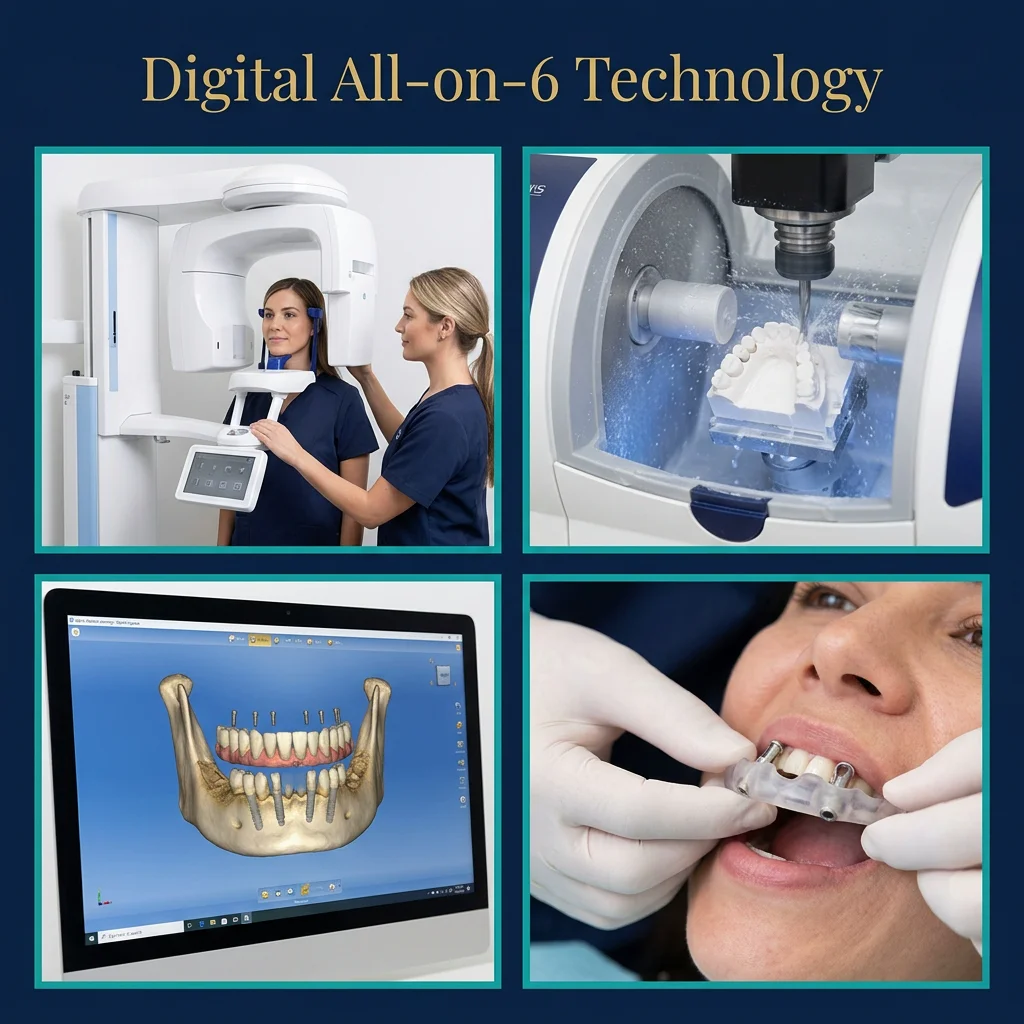
📡 3D CBCT Scanning
Cone Beam CT scanning creates a full 3D model of your jaw, bone density, nerve pathways, and sinus anatomy. Essential for safe All-on-6 planning — identifies the precise bone volume available at each of 6 implant sites. Included in your package at no extra charge.
🖥️ Digital Treatment Planning
Using implant planning software (Nobel Clinician / coDiagnostiX), Dr. Cuong digitally places all 6 implants in your 3D jaw model, optimising position, angle, and depth before any surgery begins. You can view and approve the plan on screen during your Day 1 consultation.
🎯 3D-Printed Surgical Guides
From the digital plan, a precision surgical guide is 3D-printed. This guide fits over your jaw and restricts implant drills to exact planned positions — accuracy within 0.5mm. Eliminates human error, reduces surgery time by 30–40%, and significantly reduces post-operative swelling.
🏭 In-House CAD/CAM Milling
HCMC Dental operates its own CAD/CAM milling centre. Digital impressions are taken with an iTero intraoral scanner (no messy impression materials). Your zirconia bridge is milled in-house from a solid block, ensuring perfect fit, optimal bite, and rapid turnaround without third-party laboratory delays.
🔗 Learn about our sterilization and safety standards →
Bone Grafting & Sinus Lift — When Are They Needed?
Understanding supplementary procedures and how they affect your treatment
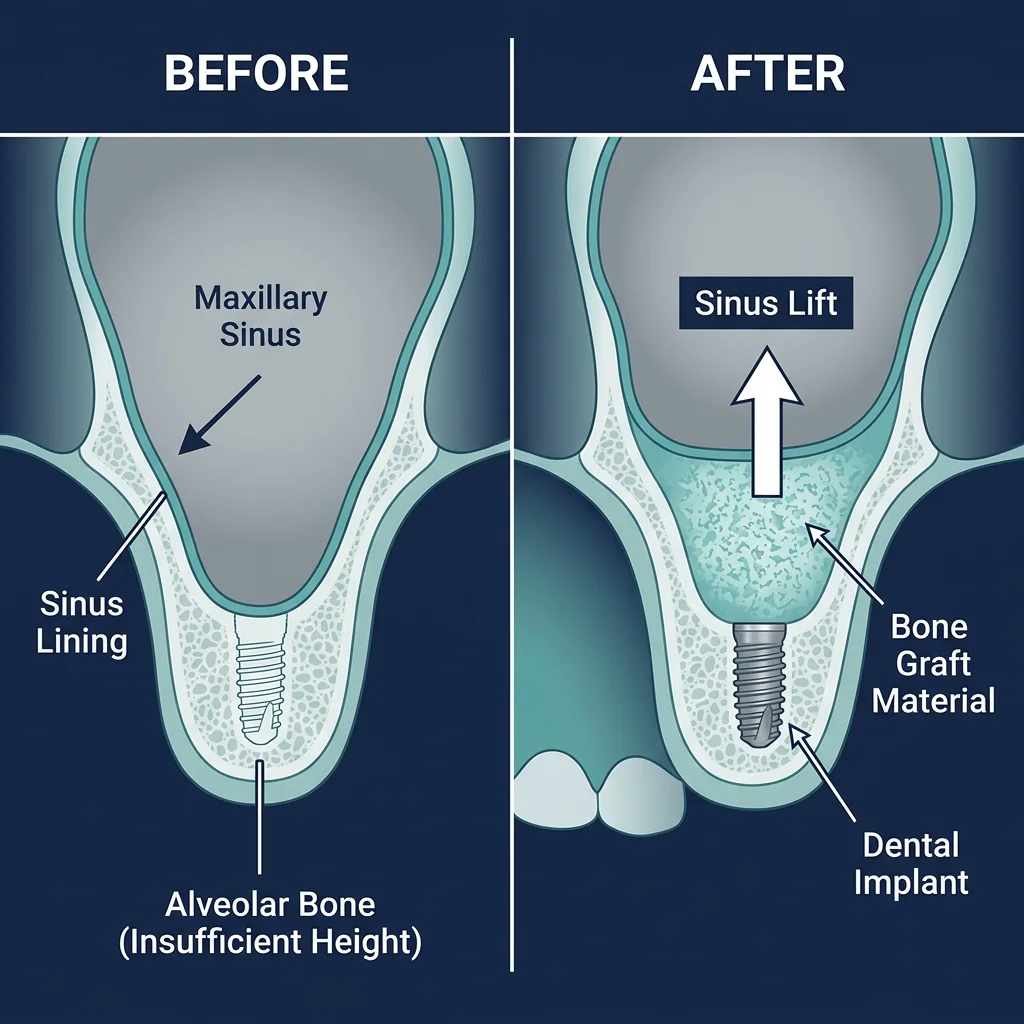
Bone grafting or sinus lifting may be needed when insufficient bone exists at one or more of the 6 planned implant sites. For All-on-6, strategic positioning often avoids the need for grafting — but if the upper jaw sinuses are too low or bone height is inadequate, a sinus lift (adding bone to the sinus floor) may be required. Dr. Cuong performs this assessment from your CBCT scan before surgery.
🦴 Bone Grafting
When needed: Insufficient bone height or width at one or more implant sites, often from years of tooth loss and bone resorption.
Procedure: Bone graft material (autograft, allograft, or synthetic) placed at deficient sites. Heals over 3–4 months before implants can be placed. In some cases, simultaneous grafting + implant placement is possible.
Materials used: Bio-Oss (bovine xenograft), synthetic hydroxyapatite, or patient's own bone from the chin or extraction sites.
🫁 Sinus Lift (Upper Jaw)
When needed: Upper jaw posterior implants require adequate bone below the maxillary sinus. If sinus has pneumatised (expanded) into the alveolar bone, a sinus lift is required.
Two approaches: Lateral window technique (more extensive, 4–6 month healing) or osteotome technique (minimally invasive, simultaneous implant placement possible).
Recovery: Mild nasal congestion for 1–2 weeks. Avoid blowing nose forcefully for 4 weeks. Full healing 3–4 months.
How All-on-6 Minimises the Need for Bone Grafting
Strategic All-on-6 implant placement can often avoid bone grafting by:
- Anterior positioning: Placing all 6 implants in the anterior/premolar regions where bone is typically more abundant
- Angling posterior implants: Tilting the most posterior implants up to 30° to reach denser bone and bypass the sinus floor
- Leveraging available bone: The 3D CBCT plan identifies the exact bone volumes available, allowing Dr. Cuong to optimise all 6 positions for best natural bone support
During your free remote assessment, Dr. Cuong can review your X-ray and give you a preliminary opinion on whether bone grafting or sinus lifting will be needed — before you travel.
📸 Send your X-ray to Dr. Cuong to find out if bone grafting will be needed for your case.
📸 Free Bone AssessmentPain Management & Sedation Options
What to expect before, during, and after All-on-6 surgery
All-on-6 surgery is performed under local anaesthesia — you feel no pain during the procedure (only pressure). IV sedation is available for anxious patients. Post-operative discomfort (days 2–5) is similar to wisdom tooth removal — manageable with ibuprofen 400mg and paracetamol 500mg alternating every 3 hours. Most patients rate the experience a 3–4/10 on the pain scale and describe it as significantly easier than anticipated.
💉 Option 1: Local Anaesthesia (Standard)
Injections numb the entire surgical area completely. You remain fully conscious but feel zero pain — only pressure, vibration, and movement.
- No fasting required
- Can drive yourself home
- Most cost-effective option
- Dr. Cuong communicates with you throughout
- Recommended for most patients
😴 Option 2: IV Sedation (Anxious Patients)
Administered by a qualified anaesthesiologist. You remain in a deeply relaxed or sleep-like state throughout the procedure.
Related Guide: conscious sedation for full-arch procedures →
- Fast 8 hours beforehand
- Companion needed to drive you home
- Additional cost applies
- You wake up with teeth already in place
- Perfect for severe dental anxiety
Post-Operative Pain Reality
Prescribed Medications (Standard Protocol)
- Ibuprofen 400mg — anti-inflammatory, every 8 hours with food, 5–7 days
- Paracetamol 500mg — analgesic, every 6 hours, alternating with ibuprofen
- Amoxicillin 500mg (or Clindamycin if penicillin allergy) — antibiotic, 5 days
- Chlorhexidine 0.12% mouthwash — antiseptic rinse, twice daily for 2 weeks
- Ice pack protocol — 20 min on/20 min off for first 24 hours to reduce swelling
All medications prescribed with full English instructions. Dr. Cuong available via WhatsApp 24/7 if you have concerns about pain levels or medication side effects.
Recovery Timeline — Day-by-Day Guide
Know exactly what to expect after your All-on-6 surgery
All-on-6 recovery follows a predictable pattern: peak swelling at Day 2–3, significant improvement by Day 7, back to light activity by Day 5–7, soft diet for 8 weeks, full diet restored after permanent zirconia bridge (Trip 2). Most patients feel well enough for light sightseeing within 5–6 days of surgery — Ho Chi Minh City has plenty of low-intensity activities perfect for recovery.
| Timeframe | Physical Status | Diet | Activity Level | Dr. Cuong Contact |
|---|---|---|---|---|
| Day 1 (Surgery) | Numb, minimal pain during surgery | Liquids only — cold smoothies, water | Rest completely — elevate head | Post-op review at clinic |
| Days 2–3 | Peak swelling + bruising; soreness 3–5/10 | Cold liquids, protein shakes, yogurt | Complete rest. Ice therapy. No physical exertion | WhatsApp check-in |
| Days 4–5 | Swelling begins reducing; soreness easing | Warm soup, soft yogurt, smoothies | Short walks. Rest when tired | Day 5 clinic check-up |
| Days 6–10 | Significantly improved; mild soreness only | Soft foods (porridge, scrambled eggs, soft fish) | Light sightseeing, cafes, museums. No pools or contact sport | WhatsApp if any concerns |
| Weeks 2–4 | Near-normal comfort. Sutures dissolved | Soft diet continues (pasta, soft rice, fish) | Normal daily activities. Avoid heavy lifting | Photo check-in at 4 weeks |
| Weeks 5–8 | Fully comfortable. Gums healed | Expanding to semi-soft — tender chicken, cooked veggies | All regular activities. Avoid direct jaw trauma | WhatsApp update |
| Months 2–5 | Osseointegration progressing | Continuing soft-medium diet | Full normal life. Sports permitted (except heavy contact) | 3-month photo check |
| After Trip 2 (Zirconia) | Complete rehabilitation | ✅ FULL DIET RESTORED — eat anything | No restrictions whatsoever | 6-month maintenance schedule |
Transparent All-on-6 Pricing
No hidden fees. Full package pricing. 40% WhatsApp discount automatically applied.
All-on-6 WhatsApp Prices — 40% Discount
Message Dr. Cuong to confirm your personalised quote. All prices per arch, all-inclusive.
- 3D CBCT scan (included)
- 6 × Dentis/Dentium implants
- All abutments + components
- Same-day PMMA bridge
- Permanent zirconia bridge (Trip 2)
- Lifetime implant warranty
- 5-year zirconia warranty
- WhatsApp follow-up for life
- 3D CBCT scan (included)
- 6 × Neodent/B&B implants
- All abutments + components
- Same-day PMMA bridge
- Permanent zirconia bridge (Trip 2)
- Lifetime implant warranty
- 5-year zirconia warranty
- WhatsApp follow-up for life
- 3D CBCT scan (included)
- 6 × Straumann SLA implants
- All abutments + components
- Same-day PMMA bridge
- Permanent zirconia bridge (Trip 2)
- Lifetime implant warranty
- 5-year zirconia warranty
- WhatsApp follow-up for life
- 3D CBCT scan (included)
- 6 × Straumann Active implants
- All abutments + components
- Same-day PMMA bridge
- Permanent zirconia bridge (Trip 2)
- Lifetime implant warranty
- 5-year zirconia warranty
- WhatsApp follow-up for life
* Prices per arch. Full-mouth (upper + lower) doubles the arch price. Additional procedures (bone graft, sinus lift, IV sedation) quoted separately. All prices confirmed via WhatsApp before any payment.
View full pricing page for all treatments →What's Included in Every Package
- 3D CBCT scan ($0 — included)
- Comprehensive consultation with Dr. Cuong
- Digital treatment planning (viewable on screen)
- 3D surgical guide (custom-printed)
- All 6 titanium implants + abutments
- Same-day PMMA temporary bridge
- All follow-up visits during Trip 1
- WhatsApp remote monitoring between trips
- Permanent monolithic zirconia bridge (Trip 2)
- Lifetime warranty on implant posts
- 5-year warranty on zirconia bridge
- English-language aftercare documentation
How Much Can You Save? — International Cost Comparison
Vietnam vs USA, Australia, UK, Canada — the numbers are extraordinary
All-on-6 in Vietnam costs 60–75% less than equivalent treatment in Western countries. A full-mouth All-on-6 (both arches, Korean system) at HCMC Dental via WhatsApp: ~$17,310. The same treatment costs $48,000–$70,000 in the USA — meaning patients save $30,000–$52,000. Even after flights, hotels, and expenses, you save $20,000–$40,000 while enjoying a Vietnam vacation.
| Country | All-on-6 Cost (Per Arch) | Full Mouth (2 Arches) | Saving vs Vietnam |
|---|---|---|---|
| 🇻🇳 Vietnam (HCMC Dental WA) | $8,655 – $13,460 | $17,310 – $26,920 | — |
| 🇺🇸 United States | $24,000 – $35,000 | $48,000 – $70,000 | Save $35K–$51K |
| 🇦🇺 Australia | AUD 20,000 – 30,000 | AUD 40,000 – 60,000 | Save ~$25K–$38K AUD |
| 🇬🇧 United Kingdom | £18,000 – £26,000 | £36,000 – £52,000 | Save ~£29K–£43K |
| 🇨🇦 Canada | CAD 28,000 – 40,000 | CAD 56,000 – 80,000 | Save ~$45K–$63K CAD |
| 🇩🇪 Germany | €20,000 – €30,000 | €40,000 – €60,000 | Save ~€33K–€51K |
| 🇸🇬 Singapore | SGD 22,000 – 32,000 | SGD 44,000 – 64,000 | Save ~$35K–$51K SGD |
Complete Diet Guide — What to Eat After All-on-6
Phase-by-phase nutrition plan for optimal healing and implant success
After All-on-6 surgery, diet progresses in phases: Weeks 1–2: liquids only (smoothies, protein shakes, soups). Weeks 3–4: soft foods (scrambled eggs, yogurt, soft fish). Weeks 5–8: semi-soft foods (pasta, cooked vegetables, tender chicken). After permanent zirconia bridge (Trip 2): full unrestricted diet — steak, apples, corn, anything. The temporary PMMA bridge handles soft eating; the zirconia bridge handles everything.
Foods to Always Avoid (Even After Final Bridge)
- Chewing ice — extreme brittleness can fracture even zirconia under point load
- Very hard candy or rock candy — similar point-load risk
- Using teeth as tools — opening bottles, tearing packaging
- Chewing pens or pencils — lateral forces not designed for implants
Aftercare & Long-Term Maintenance
The essential habits that protect your lifetime investment
All-on-6 maintenance requires: daily water flossing (most critical — cleans beneath the bridge where food accumulates), twice-daily brushing with soft brush and non-abrasive toothpaste, interdental brush use, alcohol-free mouthwash rinse, and professional cleaning every 6 months. The lifetime implant warranty requires attendance at scheduled check-ups. Dr. Cuong monitors remotely via WhatsApp.
🪥 Daily Home Maintenance
- Water flosser — most important tool. Use daily, directing stream under bridge margins. WaterPik Aquarius or Oral-B Aquacare recommended.
- Toothbrush — soft bristles, twice daily. Non-abrasive paste only (no baking soda, whitening paste, or gritty formulas). Angle 45° toward gumline.
- Interdental brush — TePe or GUM brand, size 0.6–0.8mm. Clean spaces between bridge pontics and gum if accessible.
- Mouthwash — alcohol-free antibacterial (Corsodyl alcohol-free or Listerine Zero). Rinse 30 seconds, twice daily.
- Tongue scraper — reduces bacterial load in the mouth, decreasing peri-implant infection risk.
🏥 Professional Maintenance Schedule
- Every 6 months: Professional implant cleaning at any dental clinic worldwide. Ultrasonic scaling around implant margins. Plaque index assessment.
- Annual: Periapical X-ray to assess bone levels around all 6 implants. Early detection of peri-implantitis.
- 3 years post-Trip 2: Return visit to HCMC Dental recommended for comprehensive implant health review and bridge inspection.
- Remote monitoring: WhatsApp photos and video to Dr. Cuong at 4 weeks, 3 months, 6 months, 1 year. Ongoing as needed.
🔗 Read our full aftercare guide for dental implant patients →
🔗 Related: Professional dental cleaning — recommended every 6 months for implant patients →
Risks & Complications — Honest Transparency
Understanding realistic risk levels and how HCMC Dental minimises them
All-on-6 has an excellent long-term success rate: 95–98% per-implant 10-year survival. Serious complications are rare. The most common issues — temporary swelling (universal) and mild early discomfort (manageable with medication) — resolve within 1–2 weeks. All-on-6 provides an additional safety margin over All-on-4: if one implant fails (under 2% lifetime risk), the restoration remains functional on the remaining 5.
| Complication | Frequency | Prevention at HCMC Dental | Management if Occurs |
|---|---|---|---|
| Swelling & bruising | Very common (universal) | 3D guided surgery minimises tissue trauma | Resolves Day 5–10. Ice protocol. |
| Temporary discomfort | Very common (universal) | Pre-emptive analgesia protocol | Prescribed medication. Resolves Day 5–7. |
| Minor wound dehiscence | 5–8% | Meticulous suturing technique | Monitored remotely. Usually self-resolves. |
| Temporary nerve sensitivity | 3–5% | CBCT nerve mapping before surgery | Resolves within days–weeks. Rare to persist. |
| Early implant failure | 1.5–3% per implant | Primary stability testing, strict patient selection | Replace under warranty at no cost. 6 implants provide redundancy. |
| Peri-implantitis | 5–10% at 10 years without maintenance | Thorough aftercare education; water flosser protocol | Professional laser/mechanical debridement. Early detection critical. |
| Bridge fracture (PMMA) | Rare <2% | Optimised bite design; night guard for bruxers | Repaired or replaced. Covered by warranty. |
| Sinus perforation (upper jaw) | 1–2% | CBCT sinus mapping; experienced surgeon | Managed intraoperatively. Antibiotics. Usually resolves. |
Longevity & Warranty — Your Lifetime Investment
How long All-on-6 lasts and what warranties protect your investment
With proper care, All-on-6 titanium implants are designed to last a lifetime — 20–30+ years. HCMC Dental provides a lifetime warranty on implant posts. The zirconia bridge typically lasts 15–25 years (5-year warranty). The extra 2 implants in All-on-6 may extend effective lifespan beyond All-on-4 by distributing forces more evenly, reducing implant-bone interface fatigue over decades.
🛡️ HCMC Dental Warranty
- Lifetime warranty — titanium implant posts (structural failure, manufacturing defects)
- 5-year warranty — monolithic zirconia bridge (fracture, delamination)
- 1-year warranty — PMMA temporary bridge
- Warranty applies when patient attends 6-month check-ups
- All terms documented in writing in English
- Warranty transferable to local dental provider for repairs
📊 Evidence-Based Longevity Data
- Implant post survival: 95–98% at 10 years (peer-reviewed clinical data)
- Bridge longevity: Zirconia bridges average 17–22 years in clinical studies
- All-on-6 vs All-on-4: Lower per-implant stress = potentially extended service life
- Osstem/Dentium: 25+ year track record, millions of cases globally
- Straumann SLActive: Clinically superior osseointegration in compromised patients
Factors That Maximise Implant Longevity
- ✅ Non-smoking — smokers have 2–3× higher failure rates; quitting dramatically increases lifespan
- ✅ Daily water flossing — prevents peri-implantitis, the #1 cause of late implant failure
- ✅ 6-month professional cleaning — catches early peri-implant issues before they progress
- ✅ Controlled blood sugar — if diabetic, HbA1c management is essential
- ✅ Night guard for bruxers — protects bridge from excessive nocturnal forces
- ✅ Avoiding hard-object biting — ice, pens, bottle caps
Facial Aesthetics — Beyond the Smile
How All-on-6 restores facial structure, not just teeth
Tooth loss causes jawbone resorption — the jaw shrinks over time without tooth roots stimulating bone. This causes facial "sinking" — sunken cheeks, collapsed lip support, aged appearance. All-on-6 implants stimulate bone at 6 sites, halting resorption, restoring facial height, and supporting soft tissue fullness. Most patients look 5–15 years younger after treatment compared to wearing dentures.
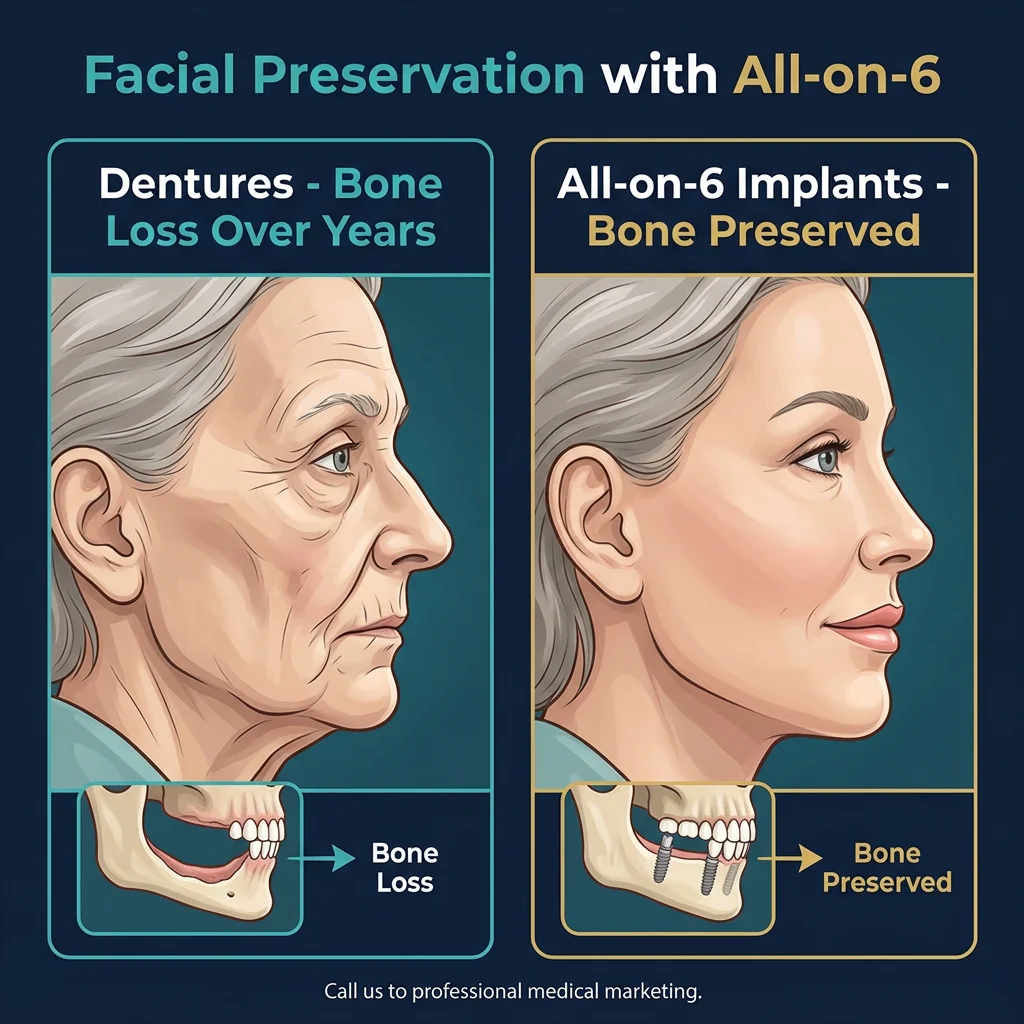
The Bone Loss Problem
After teeth are removed, the jawbone no longer receives stimulation from tooth roots. Without this mechanical stimulation, the bone resorbs (shrinks) at a rate of approximately 1–1.5mm per year. Over 10–20 years, this bone loss causes:
- Sunken cheeks and collapsed facial profile
- Reduced face height (closed bite) — lips come closer to nose
- Deepened nasolabial folds (nose-to-mouth lines)
- Lip thinning and inward pulling
- Jowl formation from loss of jaw definition
- The classic "denture face" appearance
How All-on-6 Preserves and Restores
Each of the 6 titanium implants transmits chewing forces directly into the jawbone, maintaining the mechanical stimulation the bone needs to remain healthy:
- Bone preservation: Implants halt or significantly slow bone resorption immediately after placement
- Facial height restoration: The implant-supported bridge restores the original vertical dimension of the face
- Lip support: Proper tooth position provides the internal scaffolding for lip fullness
- Cheek volume: Restored bite and facial height re-supports overlying soft tissue
- 6-point stimulation advantage: All-on-6 stimulates bone in more locations across the arch than All-on-4, providing more comprehensive bone preservation
Upper Jaw vs Lower Jaw — Key Clinical Differences
Why the same procedure requires different planning for maxilla vs mandible
| Feature | Upper Jaw (Maxilla) | Lower Jaw (Mandible) |
|---|---|---|
| Bone density | D3/D4 — softer, more trabecular | D1/D2 — denser, cortical bone |
| Anatomical challenges | Maxillary sinuses (limits vertical height) | Inferior alveolar nerve (must be avoided) |
| Implant recommendation | All-on-6 preferred | All-on-4 usually sufficient |
| Risk of sinus involvement | Yes — sinus lift may be needed | No |
| Success rate (10-year) | 92–95% (lower bone density) | 96–98% (higher bone density) |
| Bone grafting frequency | More commonly needed | Less commonly needed |
| Aesthetic impact | Higher — upper teeth most visible | Moderate — less visible at rest |
Full-Mouth Rehabilitation Strategy
For patients needing both upper and lower arch rehabilitation, Dr. Cuong typically recommends:
- Upper jaw: All-on-6 (compensates for softer maxillary bone with extra 2 implants)
- Lower jaw: All-on-4 (dense mandibular bone provides excellent stability with 4 implants)
- Both in one surgery: This is possible, extending the surgery to 5–6 hours with a break
- Cost: Full mouth = All-on-6 upper + All-on-4 lower. WhatsApp Dr. Cuong for combined quote with further discount.
💬 Need both upper and lower arch rehabilitation? Ask Dr. Cuong about full-mouth pricing.
💬 Get Full-Mouth QuoteAll-on-6 for Smokers — Special Guidance
Honest information for patients who smoke and want dental implants
Smoking increases implant failure risk by 2–3×. However, smoking does not automatically disqualify you. Dr. Cuong recommends: quit at least 2 weeks before surgery and 3 months after. If you cannot quit, Straumann SLActive implants are specifically recommended — their hydrophilic surface achieves osseointegration approximately 30% faster, compensating for smoking's impairment of healing. Always disclose smoking habits for accurate risk assessment.
🚭 Why Smoking Increases Risk
- Nicotine reduces blood flow to healing tissues
- Carbon monoxide impairs oxygen delivery to bone
- Compromised immune response increases infection risk
- Impaired collagen production slows bone-to-implant fusion
- Vasoconstriction reduces healing nutrient delivery
✅ Smoker's Protocol at HCMC Dental
- Quit minimum 2 weeks pre-surgery
- Quit minimum 3 months post-surgery (critical window)
- Straumann SLActive implants recommended
- More frequent follow-up monitoring
- Enhanced oral hygiene protocol
- Chlorhexidine rinse extended to 4 weeks post-op
🔗 Ask Dr. Cuong about Straumann SLActive implants for smokers →
Dental Tourism Guide — Planning Your Trip to Vietnam
Everything you need to plan a successful dental trip to Ho Chi Minh City
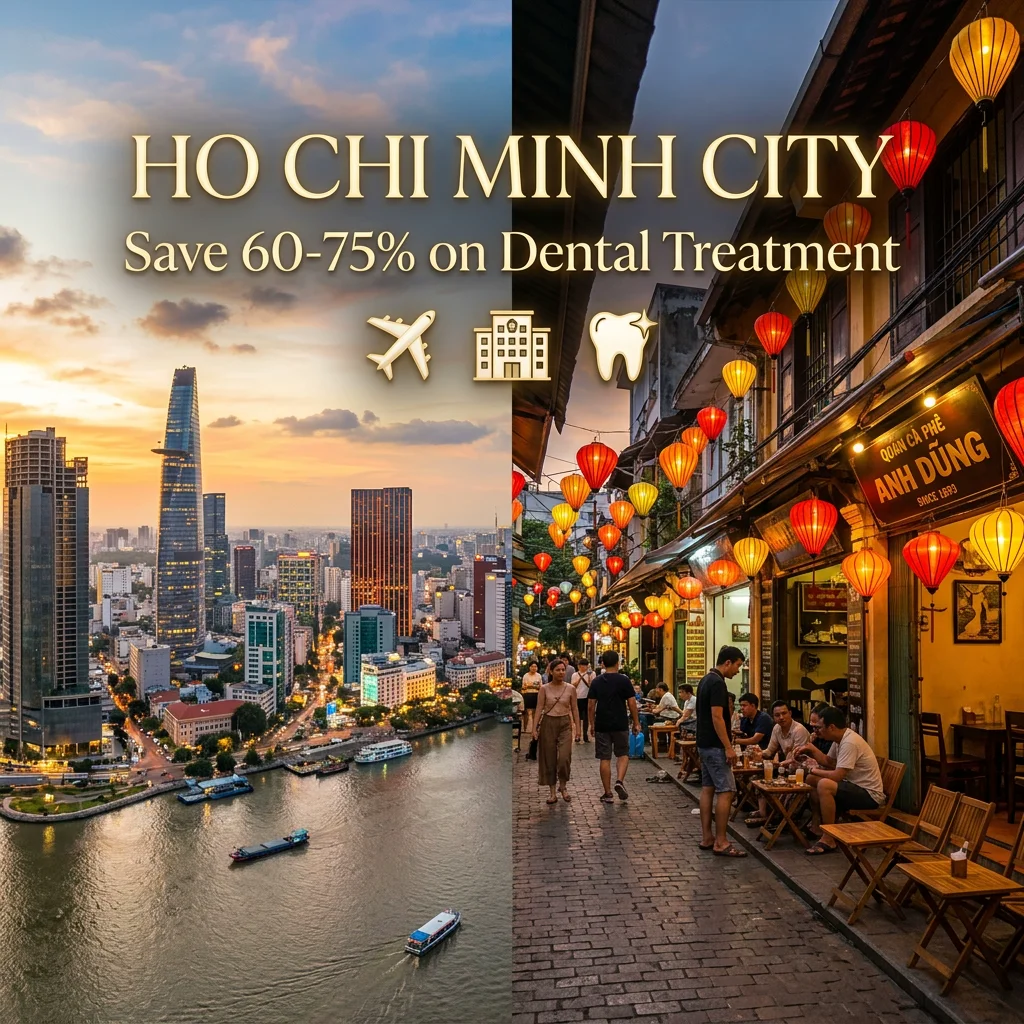
Ho Chi Minh City (District 1) is perfectly suited for dental tourism: world-class treatment at 60–75% lower cost, English-speaking staff, easy Grab (ride-share) from airport, excellent budget-to-luxury hotels near the clinic, visa-free or e-visa for most Western nationals, and a city full of culture, food, and light activities perfect for recovery days.
✈️ Getting Here
- Airport: Tan Son Nhat International Airport (SGN)
- Transfer: Grab (ride-share) ~$5–10 to District 1
- Visa: e-Visa available for 80+ countries. 30–90 day options. Apply at evisa.xuatnhapcanh.gov.vn
- Best airlines: Qatar Airways, Singapore Airlines, Vietnam Airlines
- Flight times: 16–22h from USA, 9–10h from Australia, 12h from UK
🏨 Recommended Hotels (Near Clinic)
- Budget: Oops! Hostel, The Common Room Project (~$20–40/night)
- Mid-range: Liberty Central Citypoint, Silverland Sakyo (~$40–80/night)
- Luxury: Park Hyatt, Caravelle Hotel, Hotel Majestic (~$120–300/night)
- All within 10–15 minutes of HCMC Dental by Grab
Recovery-Friendly Activities in HCMC
- 🍜 Pho & Soup Cafes — perfect soft-food restaurants throughout District 1
- ��️ War Remnants Museum — low-intensity walking tour
- 🌸 Notre-Dame Cathedral & Central Post Office — gentle stroll in District 1
- ☕ Café culture — HCMC has hundreds of excellent cafes for recovery relaxation
- 🚤 Mekong Delta day trip — boat-based, minimal walking, excellent from Day 7+
- 🛍️ Ben Thanh Market — gentle browse for souvenirs when you feel ready
Why Choose HCMC Dental for All-on-6?
What makes Dr. Cuong and HCMC Dental different
Direct Care from Dr. Cuong
No handoffs or junior dentists. Dr. Cuong personally performs every consultation, surgery, and bridge delivery. You get senior-level expertise at every step.
WhatsApp Direct Access
Dr. Cuong's personal WhatsApp — not a receptionist or call centre. Message him at any stage: before, during planning, between trips, and after treatment. Typical response: 1–2 hours.
3 Premium Implant Brands
Korean, German, and Swiss systems — giving every patient the right brand for their budget and clinical needs. Dr. Cuong recommends, never sells.
In-House Zirconia Milling
We mill your zirconia bridge on-site. Faster turnaround, lower cost, better quality control, and the ability to make same-day adjustments without lab delays.
Lifetime Implant Warranty
We back our work unconditionally. Lifetime warranty on implant posts, 5-year on zirconia bridge. All in writing in English. No fine print.
4.9★ Google Rating
178+ verified patient reviews from international patients across Australia, USA, UK, Singapore, and more. Transparent, unedited feedback you can read in full.
40% WhatsApp Discount
Guaranteed price reduction when you book via WhatsApp — no vouchers, no conditions. Dr. Cuong believes accessible pricing is better for patients and builds long-term trust.
500+ International Patients
Proven experience with patients from 30+ countries. We understand international patient logistics, insurance documentation, and the nuances of planning treatment from overseas.
Remote Coordination
Between trips, Dr. Cuong monitors your healing via WhatsApp photos. You are never "lost" between visits — remote oversight is built into our protocol.
"I researched for 18 months before choosing Dr. Cuong. Every other clinic felt like a business. Dr. Cuong felt like a dentist who genuinely cared. His WhatsApp responses at 11pm reassured me more than any slick website. My All-on-6 result exceeded every expectation."
Pre-Treatment Checklist — Are You Ready?
Everything to prepare before your All-on-6 trip to Vietnam
✅ Before You Book Flights
📋 Medical Preparation
Frequently Asked Questions — 30 Expert Answers
Everything you need to know, answered by Dr. Cuong and the HCMC Dental team
💬 Have a question not answered above? Dr. Cuong answers every WhatsApp message personally.
💬 Ask Dr. Cuong DirectlyRelated Treatments at HCMC Dental
Explore our full range of dental services
Planning a dental trip? → Dental Tourism Vietnam Guide