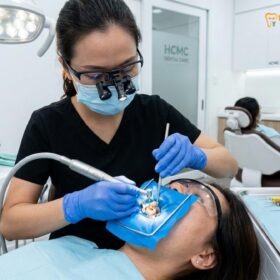
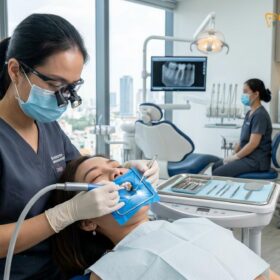
Root canal treatment during pregnancy is generally safe and often medically necessary to eliminate severe infection and acute pain. Delaying endodontic therapy poses significantly greater risks to both maternal and fetal health than the procedure itself, provided that proper clinical protocols and advanced shielding techniques are strictly utilized. Clinical evidence demonstrates that addressing oral infections promptly helps maintain systemic health for expectant mothers[1].
Clinical Summary:
Endodontic therapy during pregnancy requires a careful, evidence-based balance of maternal oral health and fetal safety. Untreated odontogenic infections can lead to severe systemic inflammation, potentially increasing the risk of adverse pregnancy outcomes such as preterm birth. Modern endodontics utilizes low-dose digital radiography with dual lead shielding, pregnancy-safe local anesthetics, and strategic appointment timing—ideally during the second trimester—to ensure optimal safety. Collaborative care between the endodontist and the patient’s obstetrician is highly recommended to tailor pharmacological management, including the prescription of appropriate antibiotics and analgesics, to the specific gestational stage.
Key Takeaways:
- Untreated dental infections pose a significantly higher risk of systemic inflammation than the root canal procedure itself.
- The second trimester is widely considered the most optimal and comfortable period for non-emergency endodontic care.
- Modern digital radiography combined with lead apron and thyroid collar shielding is highly safe for expectant mothers.
- Lidocaine with controlled epinephrine is the standard, safe local anesthetic utilized during pregnancy.
- Non-steroidal anti-inflammatory drugs (NSAIDs) like ibuprofen must generally be avoided, particularly in the third trimester.
The Danger of Untreated Dental Infections During Pregnancy
Leaving a severe tooth infection untreated during pregnancy allows bacteria to enter the bloodstream, potentially triggering systemic inflammation that can negatively impact both maternal health and fetal development.
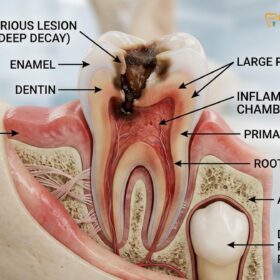
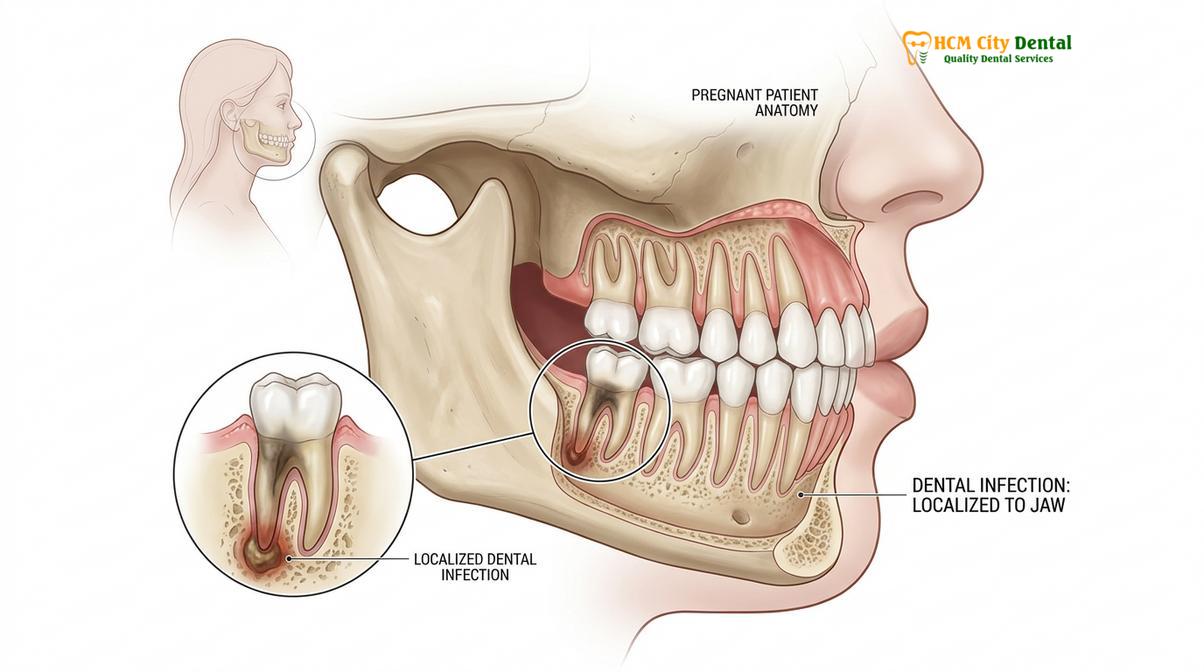
When an expectant mother experiences severe dental pain, it is frequently the result of irreversible pulpitis or pulpal necrosis—conditions where the inner nerve tissue of the tooth has become inflamed or infected due to deep decay or trauma. During pregnancy, hormonal fluctuations, particularly elevated levels of estrogen and progesterone, can exacerbate the body’s inflammatory response to dental plaque and oral bacteria. If an infected tooth is ignored, the localized bacterial colonization can spread beyond the apex of the tooth root into the surrounding alveolar bone, creating a periapical abscess.
The primary clinical concern is not merely the localized pain, but the potential for systemic bacteremia. Bacteria from a necrotic root canal system can enter the maternal bloodstream. Once in systemic circulation, these pathogens and their associated endotoxins stimulate the maternal immune system to release inflammatory mediators, including prostaglandins and interleukins. Elevated levels of these specific biochemical markers are known to induce uterine contractions and cervical dilation, which clinical studies suggest may increase the risk of premature labor and low birth weight. Major obstetric organizations strongly advocate for the prompt treatment of oral diseases to mitigate these risks[2].
Furthermore, the physiological stress induced by acute, unrelenting dental pain causes a spike in maternal cortisol and endogenous adrenaline levels. This stress response can lead to elevated blood pressure and reduced placental perfusion, indirectly affecting fetal oxygenation. Therefore, the traditional mindset of avoiding all dental work during pregnancy is clinically outdated and potentially harmful. The physiological stress and elevated inflammatory markers caused by acute dental pain can be far more detrimental to fetal well-being than a controlled, sterile dental procedure.
Trimester Guidelines: When is it Best to Perform Root Canal Treatment?
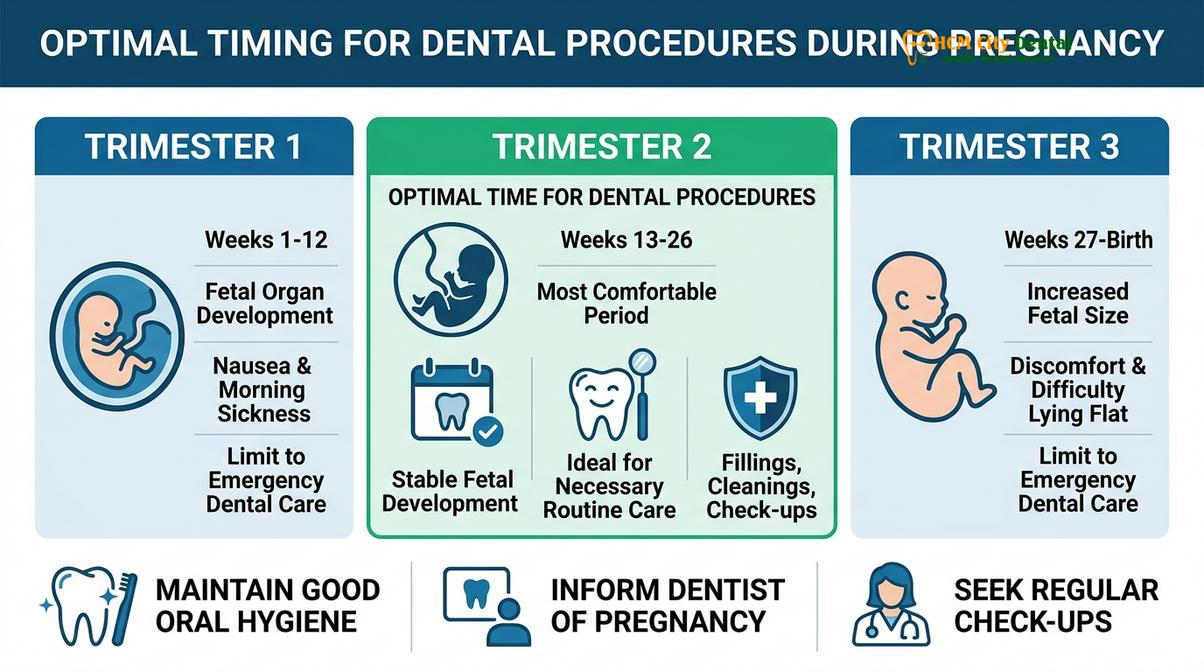
While emergency root canals can be performed at any time to relieve acute pain, the second trimester is universally recognized as the most ideal and comfortable window for comprehensive endodontic therapy.
The timing of dental interventions during pregnancy requires a nuanced understanding of fetal embryology and maternal physiological changes. While emergency treatment to resolve acute infection or severe pain should never be delayed regardless of the gestational week, elective or non-urgent phases of endodontic therapy are often strategically scheduled to optimize maternal comfort and fetal safety.
First Trimester: The Period of Organogenesis
The first trimester is the critical period of fetal organogenesis, during which the baby’s major organs and central nervous system are forming. Because the fetus is highly susceptible to environmental influences during this phase, dental professionals exercise maximum caution. While the materials and anesthetics used in modern endodontics are not teratogenic, the general clinical consensus is to defer non-emergency procedures until this sensitive developmental window has passed. However, if a pregnant patient presents with a severe acute abscess or debilitating pain, an emergency pulpectomy (the initial stage of a root canal to remove the infected nerve and drain the infection) is safely performed to stabilize the patient.
Second Trimester: The Optimal Treatment Window
The second trimester represents the safest and most comfortable period for dental care. Fetal organogenesis is largely complete, significantly reducing the theoretical risks associated with medication exposure. Additionally, the expectant mother has typically moved past the nausea and hyperemesis characteristic of the first trimester, making it much easier to tolerate the sights, sounds, and tastes associated with dental treatment. The uterus has not yet enlarged to the point of causing severe physical discomfort when lying in the dental chair. Consequently, this is the ideal time to complete the full cleaning, shaping, and obturation phases of the root canal procedure.
Third Trimester: Managing Physical Discomfort
During the third trimester, fetal growth accelerates rapidly, and the primary clinical challenge shifts from fetal development concerns to maternal physical comfort and hemodynamic stability. As the uterus expands, lying flat on the back (supine position) can cause the weight of the baby to compress the inferior vena cava, a major blood vessel returning blood to the heart. This compression can lead to supine hypotensive syndrome, characterized by a sudden drop in maternal blood pressure, dizziness, and reduced placental blood flow. While emergency root canals are still performed to prevent systemic infection, elective completion of the treatment may be postponed until after delivery to avoid subjecting the mother to prolonged periods in the dental chair.
| Pregnancy Stage | Fetal Development Phase | Endodontic Clinical Recommendation |
|---|---|---|
| First Trimester | Organogenesis (High sensitivity) | Perform emergency pain relief/drainage only. Defer definitive treatment if possible. |
| Second Trimester | Growth and Maturation | Optimal Window. Safe to perform comprehensive root canal therapy and diagnostics. |
| Third Trimester | Rapid Growth / Increased Size | Perform emergency care with modified chair positioning. Defer long elective procedures. |
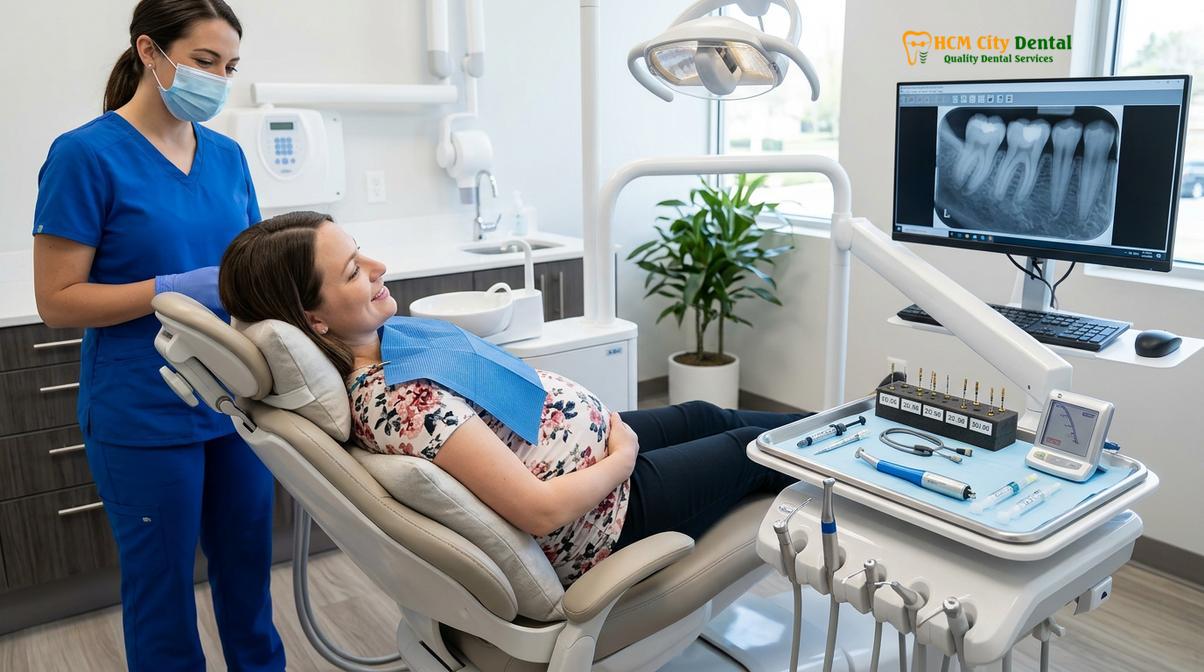
Dental X-Rays and Pregnancy: Shielding and Low-Dose Digital Safety
Diagnostic imaging is essential for successful root canals, and modern digital X-rays combined with proper lead shielding expose the fetus to virtually zero radiation, ensuring complete safety.
One of the most common sources of anxiety for expectant mothers facing endodontic treatment is the necessity of dental radiographs. A root canal cannot be performed blindly; the endodontist must visualize the complex internal anatomy of the tooth roots, determine the exact length of the canals, and verify that the infection has been fully cleared from the surrounding bone. Fortunately, the evolution of dental imaging technology has made this process incredibly safe, with modern radiographic guidelines confirming that fetal radiation exposure in contemporary dentistry is negligible[5].
Modern endodontic practices utilize low-dose digital dental X-ray sensors rather than traditional photographic film. Digital radiography requires up to 80% less radiation to produce a high-resolution image. To put this into clinical perspective, the amount of radiation exposure from a single digital periapical X-ray is roughly equivalent to the natural background radiation a person absorbs from the environment during a short airplane flight or simply living on Earth for a single day. The radiation beam is highly collimated, meaning it is narrowly focused exclusively on the small area of the jaw being treated, with minimal scatter.
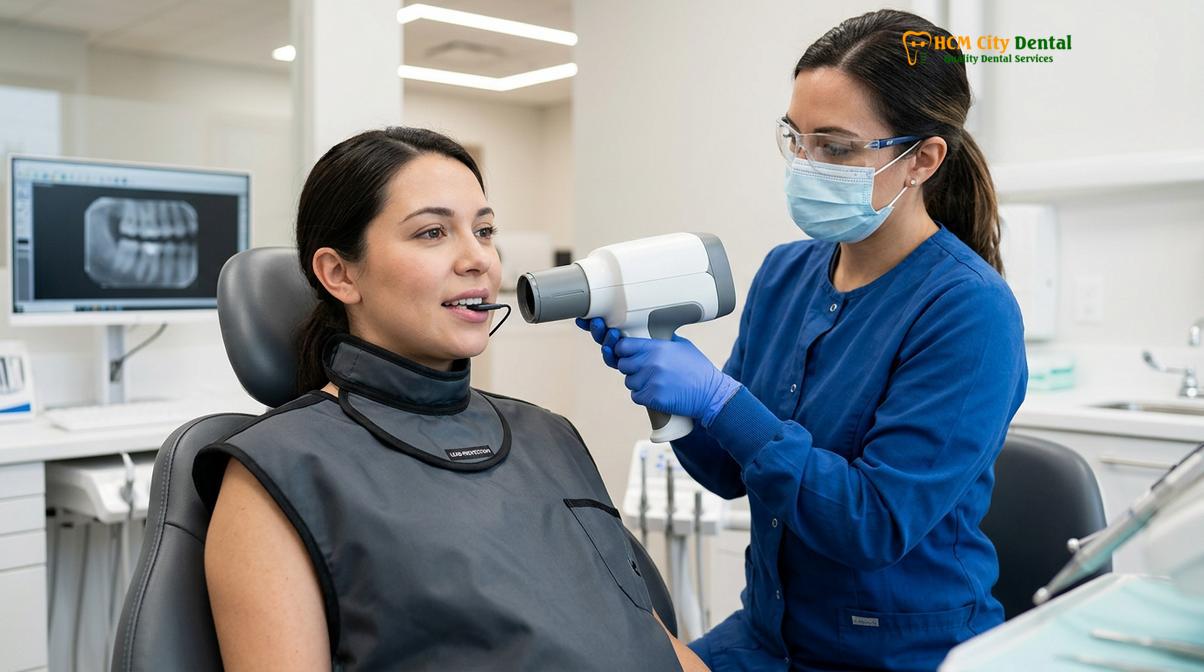
Despite this exceptionally low dose, dental professionals strictly adhere to the ALARA principle (As Low As Reasonably Achievable). To provide absolute protection for the developing fetus, the patient is draped with a heavy lead apron that covers the entire abdominal and pelvic region. A lead thyroid collar is also utilized to protect the maternal thyroid gland, which is particularly sensitive to radiation and crucial for regulating pregnancy hormones. Because radiation cannot penetrate the lead shielding, the fetal exposure is effectively zero.
“Prevention, diagnosis, and treatment of oral diseases, including dental X-rays (with protecting of the abdomen and thyroid) and the use of local anesthesia, are highly beneficial and can be undertaken safely during pregnancy.”
When a patient visits the clinic, the dental team ensures that radiographs are taken only when absolutely diagnostically necessary. Routine screening X-rays are postponed, but targeted imaging required to save an infected tooth and prevent systemic bacteremia is performed with the utmost confidence in its safety profile.
Local Anesthesia and Pain Management: What Medications Are Safe for the Baby?
Dentists utilize pregnancy-approved local anesthetics, primarily Lidocaine with minimal epinephrine, to ensure the mother is completely comfortable without compromising placental blood flow or fetal health.
Achieving profound pulpal anesthesia is critical during a root canal, as treating an infected nerve without adequate numbing would cause severe pain and trigger a massive release of maternal stress hormones. The pharmacological management of pain during pregnancy requires selecting anesthetic agents that are effective yet possess a proven safety record regarding placental transfer and fetal toxicity.
The gold standard for local anesthesia in pregnant patients is Lidocaine. Pharmacologically, Lidocaine is an amide-type local anesthetic that is metabolized in the liver. It has been extensively studied and is widely recognized as safe for expectant mothers, as animal reproduction studies have failed to demonstrate a risk to the fetus. Lidocaine provides deep, reliable numbness, allowing the endodontist to clean and shape the root canal system while the patient remains entirely comfortable.
A common clinical question arises regarding the inclusion of epinephrine (adrenaline) in the anesthetic carpule. Epinephrine is a vasoconstrictor; its role is to constrict the local blood vessels around the injection site. This serves two vital purposes: first, it keeps the anesthetic localized around the tooth, significantly prolonging the duration of profound numbness. Second, by preventing the anesthetic from being rapidly absorbed into the systemic bloodstream, it minimizes the total amount of medication that reaches the maternal liver and, subsequently, the placenta. Clinical evaluations confirm the safety of local anesthetics and vasoconstrictors in pregnant patients when used appropriately[3].
While high systemic doses of epinephrine can theoretically reduce uterine blood flow, the concentration used in dental anesthetics is miniscule. When administered carefully with an aspirating syringe to avoid direct intravascular injection, the endogenous adrenaline released by a patient in pain would be far higher than the controlled amount administered by the dentist. Therefore, achieving complete pain control with a lidocaine-epinephrine combination is not only safe but clinically preferred to prevent maternal distress.
Can Antibiotics and Post-Treatment Painkillers Be Taken Safely?
Post-operative pain and infection are managed using carefully selected medications, such as Acetaminophen and Penicillin-based antibiotics, which have a long history of safety during pregnancy.
Following a root canal procedure, it is normal for the patient to experience mild to moderate tissue tenderness around the treated tooth for a few days. This is a natural inflammatory response as the periapical bone begins to heal. Additionally, if the patient presented with a severe facial swelling or a systemic fever, the endodontist may need to prescribe a course of oral antibiotics to assist the maternal immune system in clearing the residual infection.
Pharmacological management must be carefully coordinated, often in consultation with the patient’s obstetrician. For post-operative analgesia, Acetaminophen is generally the drug of choice. It is widely considered safe for use throughout all three trimesters of pregnancy when taken at the recommended dosages. Acetaminophen effectively manages the mild discomfort associated with endodontic recovery without interfering with fetal development.
When antibiotics are clinically indicated to manage a spreading odontogenic infection, the Penicillin family (including Amoxicillin) and Cephalosporins are the first-line choices. These bactericidal antibiotics have decades of clinical data supporting their safety during pregnancy. They effectively target the anaerobic bacteria responsible for root canal infections without exhibiting teratogenic effects. If a patient has a documented penicillin allergy, alternative antibiotics may be prescribed under careful medical supervision, adhering to established guidelines for pharmacological management of endodontic pain during pregnancy[4].
“The judicious use of specific antimicrobials, notably penicillins and cephalosporins, remains the cornerstone of managing acute odontogenic infections in pregnant patients, balancing aggressive infection control with fetal safety.”
It is imperative that expectant mothers never self-medicate with leftover antibiotics or over-the-counter painkillers without consulting their dental or medical provider. Any prescription provided must be cross-referenced with the latest obstetric pharmacological guidelines.
Stress Reduction Protocols for Expectant Mothers
Managing physiological and psychological stress is a critical component of prenatal dental care, ensuring that both the mother and the developing baby remain relaxed and hemodynamically stable throughout the procedure.
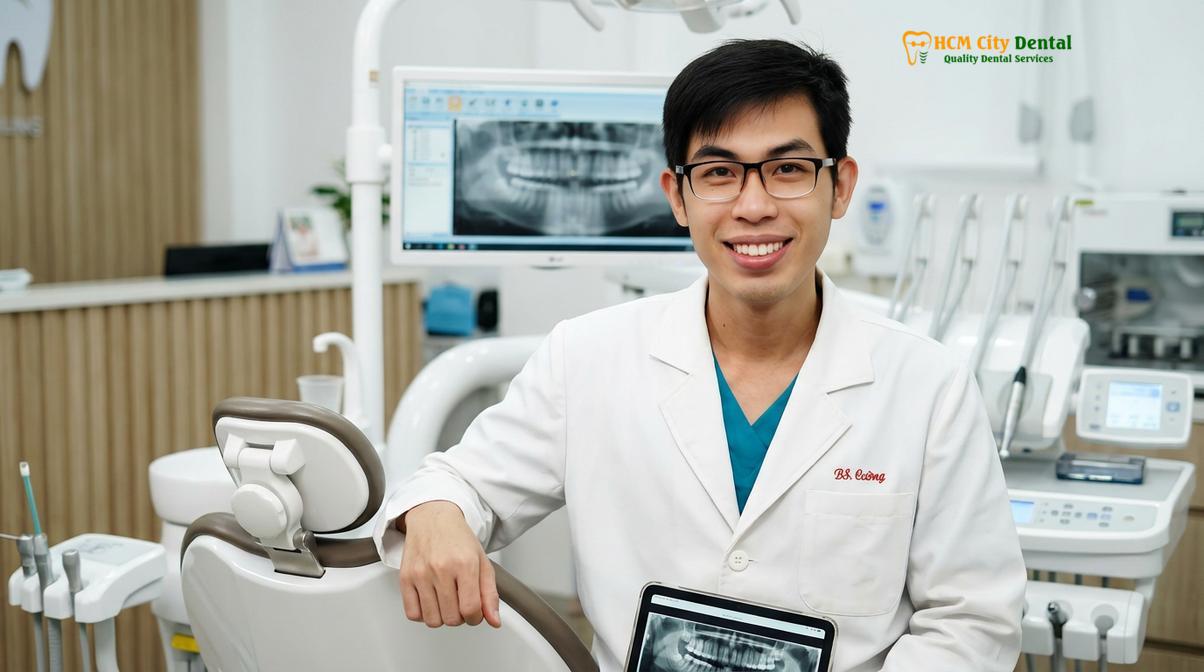
Elevated maternal anxiety can lead to increased endogenous adrenaline, which may temporarily affect placental blood flow. To mitigate this, modern endodontic practices implement comprehensive stress reduction protocols. Dr. Nguyen Van Cuong emphasizes that maternal comfort is paramount during any endodontic procedure. Dr. Cuong and the clinical team utilize specialized ergonomic chair positioning—specifically a semi-reclined posture with a slight left lateral tilt—to prevent vena cava compression. Furthermore, appointments are structured with frequent rest breaks, allowing the expectant mother to adjust her position and remain completely relaxed throughout the treatment.
When to Seek Immediate Dental Care During Pregnancy
Expectant mothers should never ignore signs of a dental infection, as prompt intervention is crucial to prevent the spread of bacteria and protect both maternal and fetal health.
Recognizing the symptoms of a severe dental infection can help pregnant women seek timely care before the condition escalates into a systemic issue. According to guidelines supported by the Vietnam Odonto-Stomatology Association (VOSA) and international health bodies, pregnant women should not defer essential emergency dental treatments. You should contact a dental professional immediately if you experience any of the following symptoms:
- Severe, throbbing tooth pain that disrupts sleep or daily activities.
- Visible facial swelling or swelling of the gums around a specific tooth.
- A persistent fever accompanying oral discomfort.
- A foul taste or odor in the mouth, which may indicate a draining abscess.
If you are experiencing severe tooth pain or suspect an infection, do not wait. Contact HCMC Dental Clinic in Ho Chi Minh City for a comprehensive evaluation. Learn more about our safe and effective Root Canal procedures tailored for expectant mothers.
References
- Journal of Endodontics. Systemic effects of endodontic infections and maternal health.
- American College of Obstetricians and Gynecologists (ACOG). Oral Health Care During Pregnancy and Through the Lifespan.
- Journal of the American Dental Association. Safety of local anesthetics and vasoconstrictors in pregnant patients.
- International Endodontic Journal. Pharmacological management of endodontic pain during pregnancy.
- Clinical Oral Investigations. Radiographic guidelines and fetal radiation exposure in modern dentistry.