Finding a highly qualified English speaking endodontist Ho Chi Minh City is essential for international patients requiring complex root canal therapy. Clear communication ensures accurate diagnostics, precise pain management, and a thorough understanding of your endodontic treatment plan, safeguarding your natural dentition with international clinical standards.
Clinical Summary:
Endodontic therapy demands microscopic precision and seamless patient-doctor communication. For expatriates and medical tourists in Vietnam, selecting an English-fluent specialist guarantees that complex procedures—such as treating calcified canals, managing severe periapical infections, or performing retreatments—are executed safely and effectively. Advanced clinics utilize 3D CBCT imaging and high-powered Zeiss dental microscopes to achieve superior success rates. Furthermore, transparent communication eliminates dental anxiety, ensures profound anesthesia, and guarantees informed consent throughout the entire restorative process, providing peace of mind for international patients seeking world-class dental care.
Key Takeaways:
- Fluent English communication prevents critical misunderstandings regarding pain management and post-operative protocols.
- Specialist endodontists possess advanced postgraduate training to navigate complex, curved, or severely calcified root canal systems.
- Modern endodontic success relies heavily on high-resolution 3D CBCT diagnostics and high-magnification dental microscopes.
- International patients benefit from comprehensive, translated medical records for seamless continuity of care with their home dentists.
- Timely intervention by a dedicated specialist can successfully save severely infected teeth that might otherwise require permanent extraction.
The Importance of Fluent Communication in Complex Endodontics
Clear communication between patient and endodontist is critical for accurate symptom reporting, effective anesthesia administration, and establishing informed consent before initiating complex root canal procedures.
When a patient experiences severe dental pain, the ability to articulate the exact nature of that discomfort is the first crucial step in achieving an accurate diagnosis. Dental pain is highly subjective and can manifest in various forms—ranging from a dull, continuous ache to a sharp, shooting pain triggered by thermal changes. An English speaking endodontist Ho Chi Minh City can effectively decipher these nuanced descriptions, differentiating between reversible pulpitis, which may only require a conservative filling, and irreversible pulpitis, which necessitates comprehensive root canal therapy.
Language barriers in a medical setting can lead to heightened anxiety, particularly during procedures that carry a historical stigma of being painful. By choosing an expat-friendly dental clinic HCMC, patients ensure that every step of the procedure is explained in a language they fully understand. This transparency is vital for managing expectations and reducing psychological stress. The clinician can explain the sensations the patient might feel, the sounds of the rotary instruments, and the purpose of the rubber dam isolation, transforming a potentially intimidating experience into a manageable, routine medical appointment.
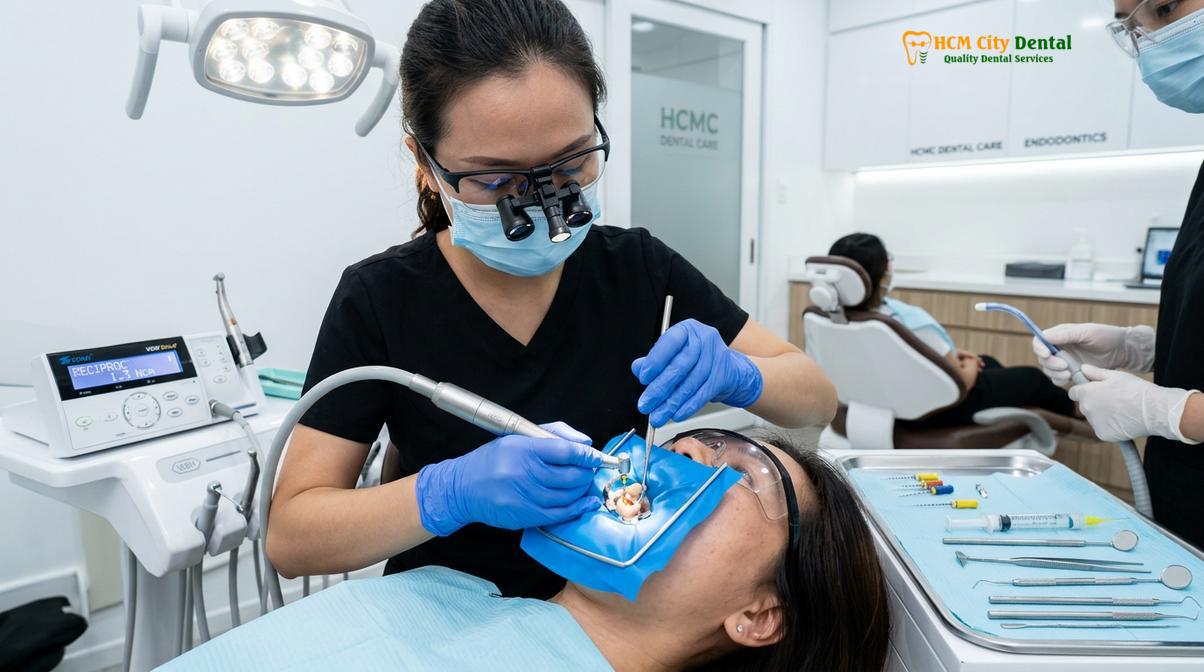
Furthermore, effective communication is paramount for pain management. During the administration of local anesthesia, the endodontist must continuously assess the patient’s comfort level. If a patient feels a “zing” or sharpness during the procedure, they must be able to communicate this instantly so the specialist can administer supplemental anesthesia, such as an intraligamentary or intraosseous injection. Research indicates that clear communication significantly lowers patient anxiety and improves the overall efficacy of pain management protocols during endodontic treatments [1].
“Effective endodontic care transcends mechanical instrumentation; it requires a foundation of trust built through transparent, empathetic communication regarding the patient’s clinical prognosis and comfort levels.”
Informed consent is another critical area where language fluency is non-negotiable. Before any irreversible procedure begins, the patient must fully comprehend the risks, benefits, alternative treatments (such as extraction and dental implants), and the prognosis of the tooth. A fluent specialist ensures that all medical terminology is translated into accessible concepts, allowing the patient to make an empowered, educated decision regarding their oral health.
Endodontic Qualifications: Specialist Training vs. General Dentistry
While general dentists perform basic root canals, endodontists undergo additional years of specialized training to manage intricate root anatomies, severe infections, and complex retreatment cases.
Understanding the distinction between a general dentist and an endodontic specialist is vital when seeking treatment for a compromised tooth. All endodontists are dentists, but less than three percent of dentists are endodontists. Following standard dental school, an endodontist completes two to three additional years of rigorous postgraduate training focused exclusively on diagnosing tooth pain and performing root canal treatment and other procedures relating to the interior of the tooth.
This specialized education equips them to handle cases that fall outside the scope of general practice. Human teeth exhibit incredible anatomical variation. A maxillary first molar, for instance, frequently contains a hidden fourth canal (the MB2 canal) that is notoriously difficult to locate and negotiate. Mandibular molars may present with C-shaped canal systems that require advanced irrigation protocols to disinfect thoroughly. An endodontist is trained to anticipate, locate, and successfully treat these complex anatomical anomalies, adhering strictly to international dentist standards.
The clinical outcomes of root canal therapy are heavily dependent on the thoroughness of the chemo-mechanical debridement—the process of cleaning and shaping the canals. Specialists utilize advanced rotary nickel-titanium (NiTi) files that can navigate severe curvatures without breaking or altering the natural canal anatomy. Clinical studies consistently demonstrate that treatments performed by endodontists, particularly in multi-rooted teeth or retreatment scenarios, exhibit higher long-term survival rates compared to those performed by non-specialists [2].
| Clinical Aspect | General Dentist | Endodontic Specialist |
|---|---|---|
| Scope of Practice | Comprehensive care, fillings, crowns, basic root canals. | Exclusive focus on pulp biology, root canals, and apical surgery. |
| Postgraduate Training | Standard dental degree (DDS/DMD or equivalent). | 2-3 additional years of specialized endodontic residency. |
| Case Complexity | Anterior teeth, straightforward premolars. | Complex molars, calcified canals, retreatments, trauma. |
| Technological Integration | Standard loupes, 2D digital radiography. | Operating microscopes, 3D CBCT imaging, ultrasonic units. |
Beyond initial treatments, endodontists are the definitive experts in endodontic retreatment. If a previous root canal fails due to recurrent infection, missed canals, or coronal leakage, the specialist must carefully remove the old obturation material, re-disinfect the entire system, and reseal the tooth. This requires a profound understanding of endodontic microbiology and the precise application of specialized solvents and ultrasonic instruments.
High-magnification Endodontic Setup: Zeiss Microscopes and 3D CBCT Scans
Utilizing 3D Cone Beam Computed Tomography (CBCT) and Zeiss dental microscopes allows endodontists to identify hidden canals, micro-fractures, and complex anatomical variations with unparalleled precision.
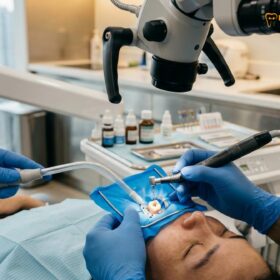
The landscape of modern endodontics has been revolutionized by the integration of advanced visualization and imaging technologies. In a premier facility like HCMC Dental Clinic, the standard of care dictates the use of high-magnification optics and three-dimensional diagnostics. The dental operating microscope, particularly industry-leading models like those from Zeiss, is arguably the most critical tool in the endodontist’s armamentarium.
A dental microscope provides magnification levels up to 25x, coupled with intense, coaxial coaxial illumination that lights up the deepest recesses of the pulp chamber. This enhanced vision allows the clinician to identify microscopic structures that are completely invisible to the naked eye or even under standard dental loupes. It facilitates the discovery of extra canals, the identification of longitudinal root fractures (which often render a tooth unrestorable), and the safe removal of separated instruments or calcified pulp stones. The use of microscope-assisted techniques significantly reduces the incidence of missed canals, which is a primary cause of post-treatment disease [3].
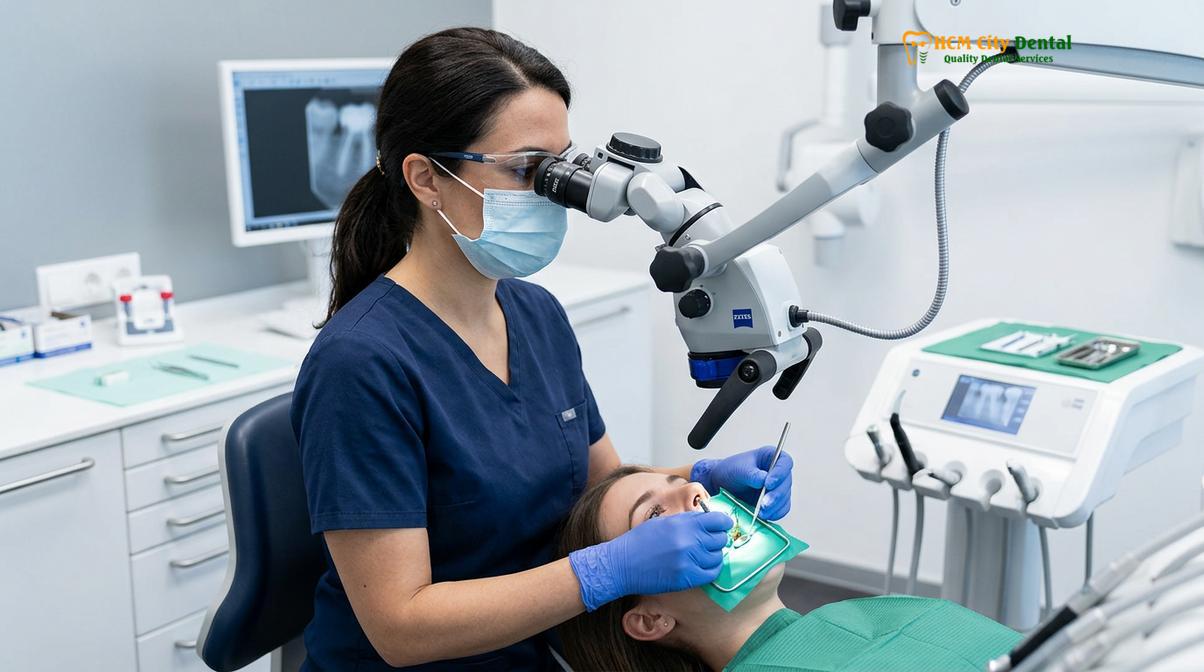
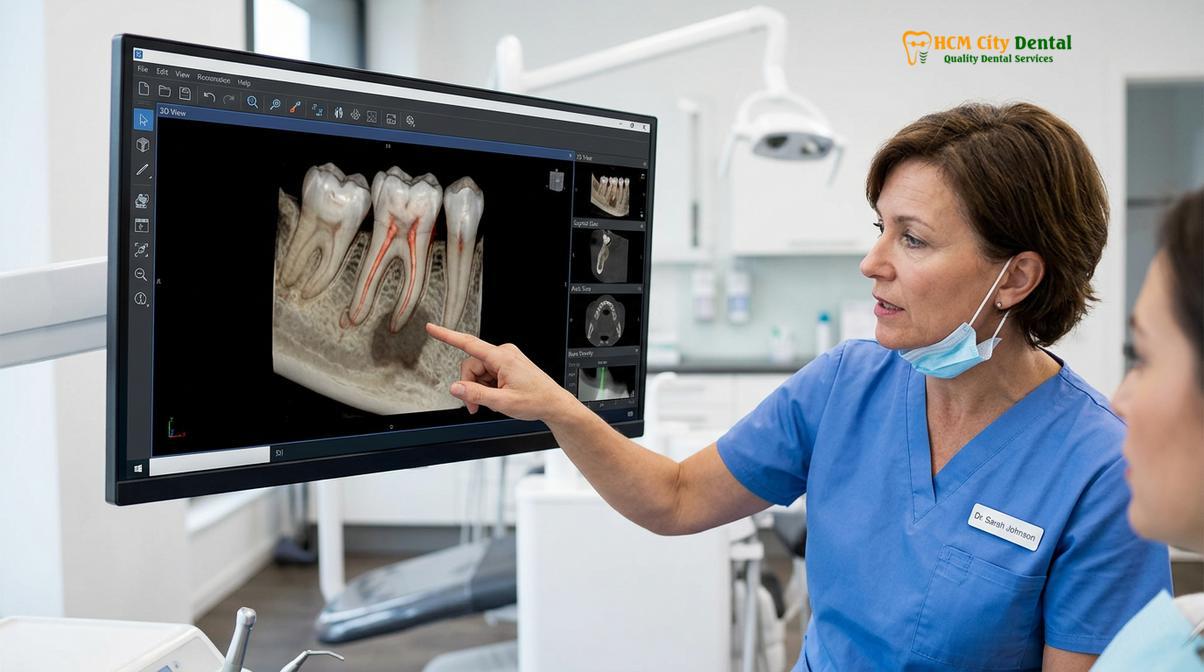
Complementing the microscope is the Cone Beam Computed Tomography (CBCT) scanner. Traditional 2D dental X-rays compress a three-dimensional object into a flat image, often obscuring critical anatomical details due to the superimposition of surrounding bone and adjacent teeth. A CBCT scan, however, captures a high-resolution 3D volume of the maxillofacial region. The endodontist can slice through this volume in axial, coronal, and sagittal planes, examining the tooth from every conceivable angle.
When searching for Dr. Cuong endodontics HCMC, patients are often seeking this exact level of technological sophistication. CBCT imaging is invaluable for diagnosing the true extent of periapical lesions (infections in the bone at the root tip), assessing root resorption, and planning surgical endodontic procedures like apicoectomies. By mapping the internal anatomy before the procedure even begins, the specialist can execute the treatment with greater safety, efficiency, and predictability, minimizing the removal of healthy dentin and preserving the structural integrity of the tooth.
Dr. Cuong and the Endodontic Team at HCMC Dental Clinic
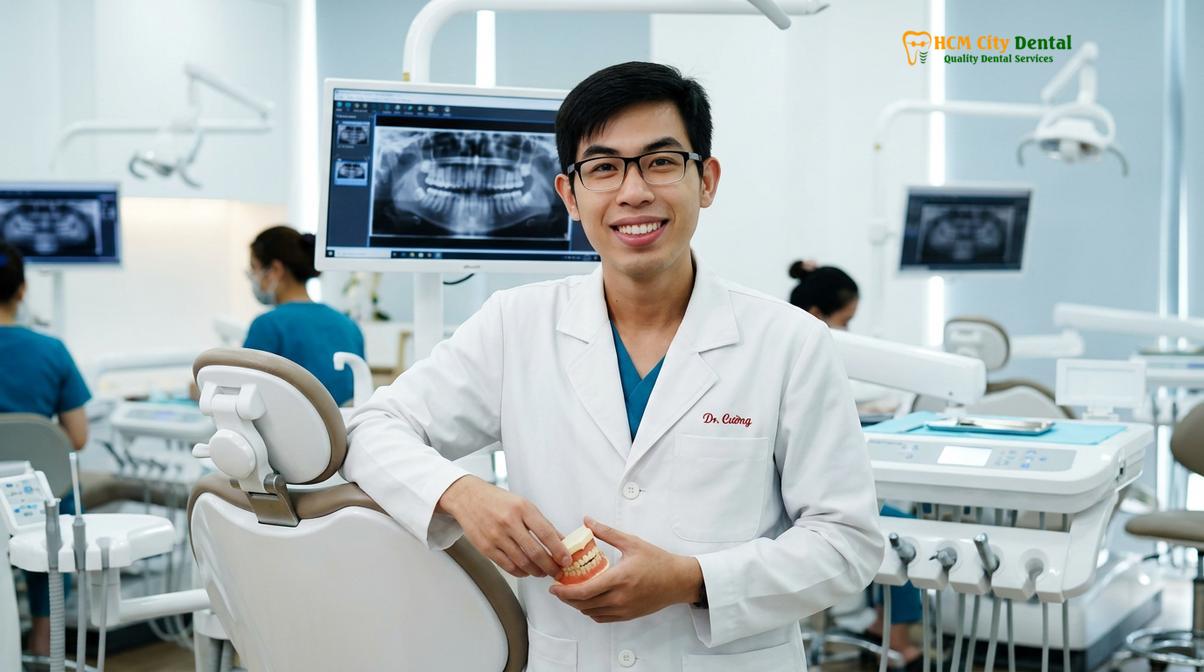
Led by Dr. Nguyen Van Cuong, the endodontic department at HCMC Dental Clinic combines advanced microscopic techniques with fluent English communication to deliver world-class root canal therapy.
At the forefront of specialized dental care in Vietnam is the dedicated team at HCMC Dental Clinic. The endodontic department is spearheaded by Dr. Nguyen Van Cuong, a highly respected clinician known for his meticulous approach to saving compromised teeth. Dr. Cuong’s philosophy centers on the belief that no artificial replacement can truly replicate the biomechanical properties and proprioception of a natural tooth. Therefore, every effort is made to preserve the natural dentition through advanced endodontic intervention.
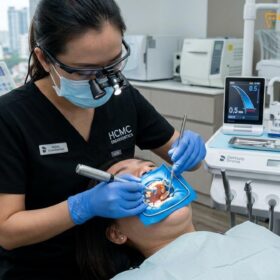
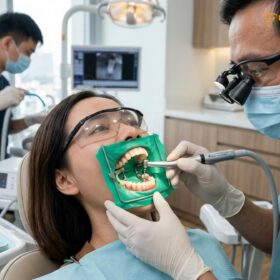
Dr. Nguyen Van Cuong has undergone extensive training in microscopic endodontics and continually updates his clinical protocols to align with the latest global research. His workflow incorporates absolute isolation using a dental rubber dam—a non-negotiable standard that prevents salivary contamination of the root canal system and protects the patient from aspirating small instruments or irrigating solutions. This strict adherence to aseptic techniques is a hallmark of General Dentistry excellence at the clinic.
The disinfection protocol utilized by Dr. Cuong involves a synergistic combination of sodium hypochlorite and EDTA, activated by ultrasonic energy. This acoustic streaming effect ensures that the antibacterial solutions penetrate deep into the dentinal tubules and lateral canals, eradicating biofilms that traditional needle irrigation cannot reach. Following thorough disinfection, the canals are obturated (filled) using state-of-the-art bioceramic sealers. These modern materials are highly biocompatible, hydrophilic, and actually promote osteogenesis (bone healing) in the periapical tissues, leading to faster recovery and superior long-term outcomes [4].
Beyond his technical proficiency, Dr. Nguyen Van Cuong is celebrated for his compassionate chairside manner. He understands that international patients may feel vulnerable when undergoing medical procedures far from home. His fluent English allows him to explain complex biological concepts in simple terms, ensuring that patients are fully informed and comfortable. This combination of clinical mastery and empathetic communication makes him a highly sought-after specialist for expatriates residing in Ho Chi Minh City.
Patient Reviews: Expat Experiences with Root Canal Therapy in Saigon
Expatriates consistently highlight the importance of finding a clinic that offers transparent pricing, empathetic care, and seamless English communication during stressful dental emergencies.
Navigating healthcare in a foreign country can be a daunting prospect, particularly when faced with an acute dental emergency. For the expatriate community in Vietnam, word-of-mouth recommendations and patient testimonials are invaluable resources. Reviews of endodontic care in Saigon frequently emphasize the profound relief patients experience when they discover a clinic that operates on par with, or even exceeds, the standards of their home countries.
International patients often praise the efficiency and responsiveness of the clinical staff. When dealing with severe pulpitis, time is of the essence. Clinics that prioritize emergency triage and offer prompt appointments with an English-speaking specialist are highly regarded. Furthermore, transparent pricing models—where the cost of the consultation, CBCT scan, root canal therapy, and the subsequent dental crown are clearly outlined before treatment begins—build immense trust and eliminate the fear of hidden medical fees.
Clinical Case Study: Managing Acute Irreversible Pulpitis
Patient Profile: A 45-year-old expatriate from Australia presented to HCMC Dental Clinic in Ho Chi Minh City with severe, spontaneous throbbing pain in the lower right quadrant, disrupting sleep.
Clinical Findings: Clinical examination and CBCT imaging by Dr. Nguyen Van Cuong revealed a deep carious lesion on tooth #46 (mandibular first molar) communicating with the pulp chamber, alongside a complex C-shaped canal anatomy.
Treatment Protocol: The patient received profound inferior alveolar nerve block anesthesia. Under Zeiss microscopic magnification, Dr. Cuong successfully navigated and disinfected the intricate canal system using ultrasonic activation. The tooth was obturated with bioceramic sealer in a single visit.
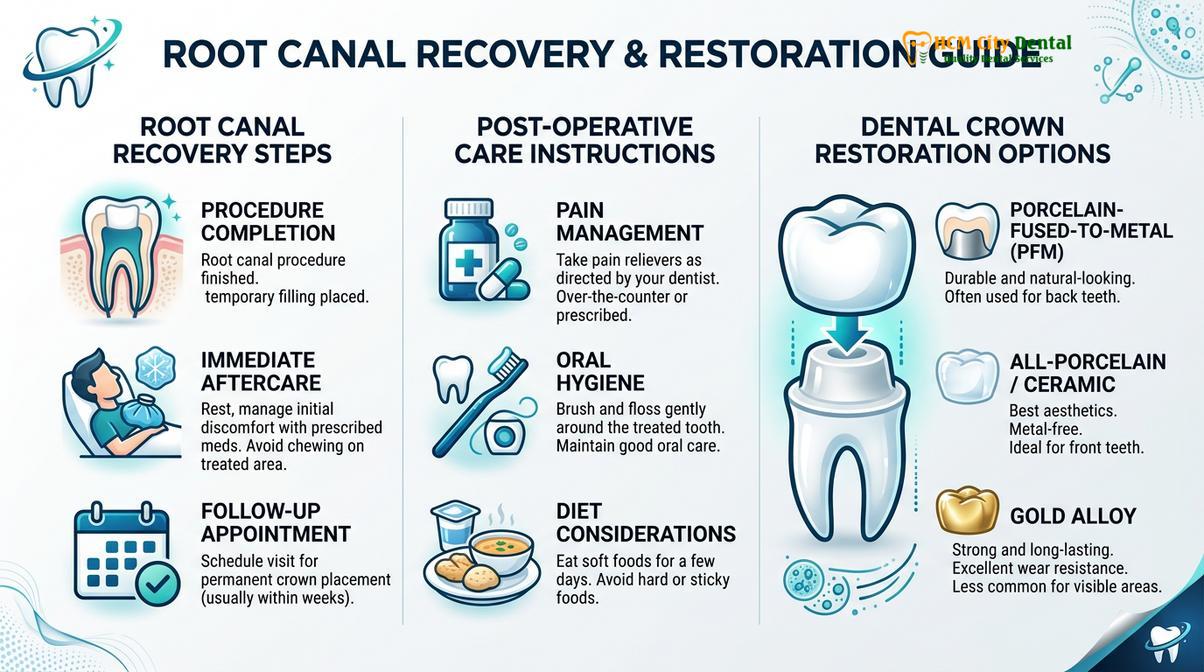
Outcome: The patient reported immediate pain relief post-anesthesia. A follow-up at six months showed complete resolution of symptoms and excellent radiographic healing, allowing for the successful placement of a protective zirconia crown.
These positive experiences underscore the value of comprehensive care. Expatriates appreciate that their treatment does not end when they leave the dental chair. Dedicated patient coordinators often follow up via messaging apps to monitor recovery, provide post-operative instructions in English, and assist with scheduling the necessary restorative appointments, ensuring a seamless and supportive healthcare journey.
Location and Access: Navigating Dental Care in District 1
Centrally located in Ho Chi Minh City, premium dental facilities offer convenient access for international patients, complete with dedicated support staff to assist with logistics and scheduling.
Accessibility is a crucial factor when selecting a dental provider, especially for procedures that may require multiple visits. Many of the top-tier dental facilities are strategically situated in or near District 1, the bustling commercial and cultural heart of Ho Chi Minh City. This central location provides unparalleled convenience for expatriates working in the central business district, as well as for medical tourists staying in nearby international hotels.
Navigating to these clinics is straightforward, with ample access to ride-hailing services and major thoroughfares. Beyond physical location, premium clinics enhance accessibility through streamlined digital communication. International patients can easily contact the clinic via WhatsApp, email, or integrated website portals to discuss their symptoms, share previous dental records, and arrange initial consultations before even stepping foot in the facility.
The administrative staff at these clinics are typically fluent in English and well-versed in the specific needs of foreign patients. They can assist with providing detailed medical invoices and treatment reports required for international health insurance claims. This comprehensive administrative support, combined with a prime location, ensures that the logistical aspects of receiving specialized endodontic care in Ho Chi Minh City are as smooth and stress-free as the clinical treatment itself.
When to See a Doctor: Recognizing Endodontic Emergencies
Recognizing the early warning signs of pulpal disease can mean the difference between saving a natural tooth and requiring an extraction. Dental pulp, which contains nerves and blood vessels, can become inflamed or infected due to deep decay, repeated dental procedures, faulty crowns, or a crack in the tooth. If left untreated, this infection can spread beyond the root tip into the surrounding jawbone, creating an abscess.
You should seek immediate evaluation from an endodontist if you experience prolonged sensitivity to hot or cold temperatures that lingers long after the stimulus is removed. Spontaneous pain that occurs without any trigger, particularly pain that wakes you up at night, is a classic symptom of irreversible pulpitis. Additionally, tenderness to biting or tapping on the tooth (percussion sensitivity) indicates that the inflammation has reached the periapical tissues.
Important Clinical Considerations
While many endodontic issues develop slowly, certain symptoms require immediate emergency intervention. Seek urgent dental care if you experience:
- Severe, rapid facial swelling that extends to the eye or neck.
- A persistent fever accompanied by dental pain.
- Difficulty swallowing or restricted mouth opening (trismus).
- A pimple-like bump on the gums (sinus tract) that discharges pus.
These signs indicate a spreading bacterial infection that requires prompt professional management, potentially including antibiotic therapy and immediate root canal debridement.
The presence of complex bacterial biofilms within the root canal system makes these infections highly resilient to systemic antibiotics alone. Antibiotics may temporarily suppress the swelling, but they cannot penetrate the necrotic space inside the tooth to eliminate the source of the infection. Therefore, mechanical debridement and chemical disinfection by a qualified specialist are absolutely necessary to resolve the pathology and promote long-term healing [5]. If you are experiencing any of these symptoms, do not delay in scheduling an evaluation with a specialist to discuss your dental emergency options.
“Preserving the natural dentition through timely endodontic intervention not only maintains the structural integrity of the dental arch but also prevents the complex cascading effects of tooth loss and subsequent bone resorption.”
For international patients seeking reliable, high-quality care, prioritizing a clinic that emphasizes clear communication, advanced technology, and specialized expertise is paramount. By choosing a dedicated professional, you ensure that your oral health is managed with the utmost precision and care, allowing you to enjoy your time in Vietnam with a healthy, pain-free smile.
Frequently Asked Questions
Do dentists in Vietnam speak English?
Yes, many specialists at premium dental facilities in Vietnam are highly fluent in English. Clinics catering to international patients prioritize bilingual communication to ensure precise diagnostics, informed consent, and a comfortable treatment experience for expatriates and medical tourists. This fluency extends beyond casual conversation to encompass complex medical terminology, ensuring that patients fully understand their diagnoses and treatment options.
How can I verify the credentials of an endodontist in HCMC?
You can verify an endodontist’s credentials by reviewing their clinical biography on the clinic’s official website, checking for specialized postgraduate degrees in endodontics, and looking for memberships in recognized international organizations such as the International Federation of Endodontic Associations. Additionally, reputable clinics are transparent about their specialists’ training backgrounds, often displaying certifications from advanced courses in microscopic and surgical endodontics.
Can I get my complete medical chart in English for my home dentist?
Absolutely. Reputable international clinics provide comprehensive medical records in English, including digital CBCT scans, pre- and post-operative radiographs, and detailed clinical notes, ensuring seamless continuity of care when you return to your home country. These records detail the specific diagnosis, the exact teeth treated, the materials used for obturation, and any recommendations for future restorative work.
Is microscopic root canal treatment painful?
Microscopic root canal treatment is generally not painful, as it is performed under profound local anesthesia. The use of advanced magnification allows for minimally invasive techniques, which significantly reduces postoperative discomfort and accelerates the healing process. Patients often report that the procedure feels similar to receiving a routine dental filling, with the primary sensation being mild pressure rather than sharp pain.
How long does a complex root canal procedure take?
A complex root canal procedure typically requires one to two appointments, lasting between 60 to 90 minutes each. The exact duration depends on the tooth’s anatomical complexity, the number of canals present, and the severity of the underlying periapical infection. In cases of severe infection, the endodontist may place a medicament inside the tooth and allow it to heal for a week before completing the final obturation in a second visit.
References
- British Dental Journal. Pain management and dental anxiety in endodontics. (2018).
- Journal of Endodontics. Outcomes of root canal treatment and restoration longevity. (2020).
- Journal of the American Dental Association. Microscope-assisted endodontics and missed canals. (2019).
- Clinical Oral Investigations. Biocompatibility of bioceramic root canal sealers. (2022).
- International Endodontic Journal. Biofilms in endodontics and disinfection strategies. (2021).