Natural toothache remedies like clove oil, warm salt water rinses, and cold compresses provide temporary relief by reducing inflammation and numbing the affected nerve. While these biological approaches manage acute pain effectively, they do not cure underlying dental infections and require professional clinical evaluation.
Clinical Summary:
When patients experience acute dental pain, immediate access to a dental professional is not always possible. In these interim periods, evidence-based natural toothache remedies serve as a critical bridge in pain management. Biological approaches utilize the inherent pharmacological properties of plant-based compounds and physical modalities to modulate pain pathways and suppress bacterial activity. Eugenol from clove oil acts as a potent sodium channel blocker, while hypertonic saline rinses induce osmotic pressure to draw out inflammatory exudate. Allicin from crushed garlic provides localized antimicrobial benefits. However, it is clinically imperative to understand that these modalities are strictly palliative. They mask nociceptive signals and temporarily reduce localized edema but cannot reverse pulpal necrosis, halt advancing caries, or drain a periapical abscess. Comprehensive diagnostic imaging and definitive treatment by a qualified dental professional remain the standard of care for resolving the underlying etiology of odontogenic pain.
Key Takeaways:
- Clove oil (eugenol) provides targeted, temporary nerve numbing but must be properly diluted to prevent mucosal burns.
- Warm hypertonic salt water rinses help neutralize oral acidity and reduce gingival swelling through osmotic action.
- Crushed garlic releases allicin, offering localized antimicrobial properties that temporarily suppress bacterial proliferation.
- Cold compresses applied externally induce vasoconstriction, effectively dulling throbbing pain and minimizing facial edema.
- Natural remedies are strictly palliative first-aid measures; persistent pain or swelling requires immediate clinical intervention to prevent systemic infection.
First Aid for Toothaches: The Biological Approach
Biological first aid focuses on utilizing biocompatible, plant-based compounds to temporarily stabilize oral pH, reduce bacterial loads, and soothe inflamed pulpal tissues before clinical intervention.
Experiencing a sudden, throbbing toothache can be one of the most distressing forms of acute pain. The trigeminal nerve, which supplies sensation to the teeth and jaws, is highly sensitive to changes in pressure, temperature, and chemical irritation. When the inner pulp of a tooth becomes inflamed—a condition known clinically as pulpitis—the rigid confines of the enamel and dentin prevent the tissue from expanding. This lack of space causes a rapid increase in intrapulpal pressure, compressing the delicate nerve fibers and resulting in severe, radiating pain. In these urgent scenarios, understanding how to apply biological first aid is crucial for managing discomfort until you can reach a dental professional.
The philosophy behind biological dental treatments emphasizes the use of biocompatible materials and minimally invasive techniques that respect the body’s natural healing capacities. When applied to emergency home care, this approach involves utilizing natural compounds that interact harmoniously with human physiology. Rather than relying solely on synthetic analgesics, biological first aid leverages the pharmacological properties of botanicals and minerals to modulate the inflammatory cascade. These natural toothache remedies work by intercepting pain signals, reducing localized edema (swelling), and creating an oral environment that is temporarily hostile to cariogenic (cavity-causing) bacteria.
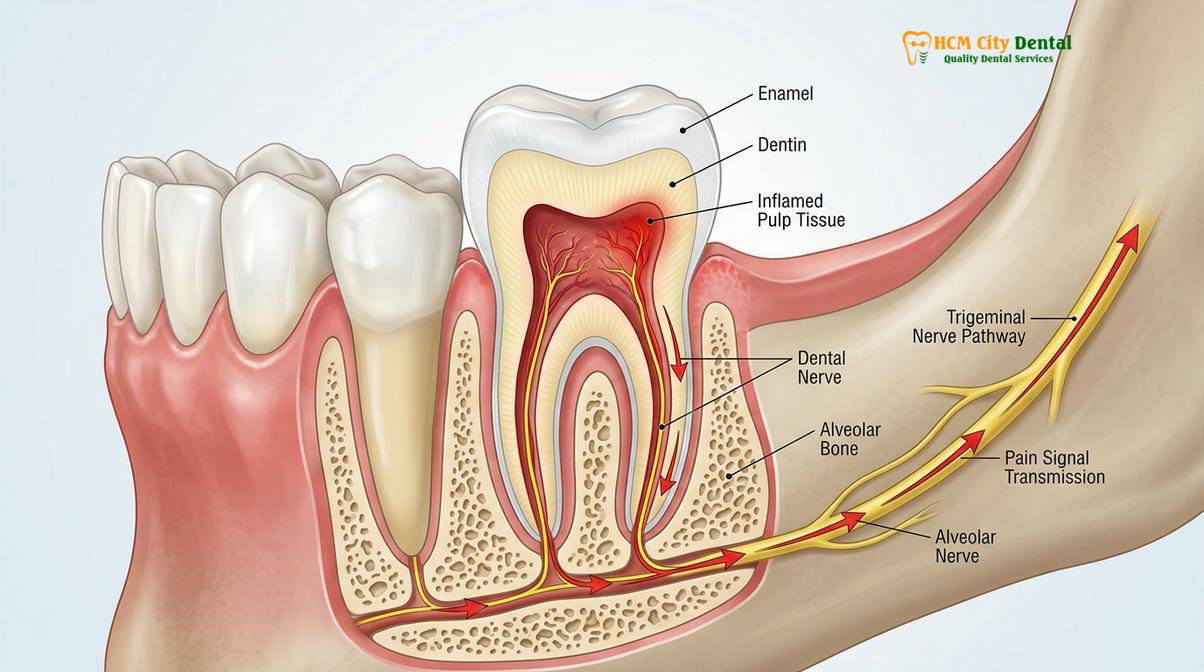
It is essential to categorize the type of pain you are experiencing to select the most appropriate remedy. Reversible pulpitis, often triggered by a mild cavity or exposed dentin, typically presents as a sharp, fleeting pain in response to cold or sweet stimuli. In contrast, irreversible pulpitis—where the nerve tissue is actively dying—manifests as a spontaneous, lingering, and throbbing ache that often worsens at night or when lying down. While natural remedies can provide significant symptomatic relief for both conditions, they operate strictly on a palliative level. They do not possess the capacity to regenerate necrotic tissue or seal a structural breach in the tooth enamel[1].
“The application of natural botanical agents in acute dental pain management serves as a vital interim measure. By stabilizing the localized inflammatory response, these biological remedies help prevent the escalation of hyperalgesia, making the patient more comfortable and cooperative once they arrive for definitive clinical diagnostics.”
Furthermore, the oral cavity is a complex microbiome. When a tooth is compromised, opportunistic bacteria such as Streptococcus mutans and Porphyromonas gingivalis can infiltrate the pulp chamber, leading to an infection. Biological first aid aims to disrupt this bacterial proliferation. Agents like hypertonic saline and essential oils alter the osmotic balance and pH of the oral environment, temporarily stunting bacterial growth. However, because these agents cannot penetrate the microscopic dentinal tubules or the apical foramen (the opening at the tip of the root), their efficacy is limited to the surface tissues. Therefore, while herbal toothache relief is a valuable tool in your emergency kit, it must always be followed by a comprehensive clinical evaluation to address the root cause of the pathology.
Remedy 1: Clove Oil (Eugenol) for Natural Nerve Numbing
Clove oil contains eugenol, a potent natural anesthetic and antibacterial agent that effectively numbs the dental nerve and reduces localized inflammation when applied correctly.
Among the pantheon of natural toothache remedies, clove oil stands out as the most clinically recognized and historically validated agent. The active compound in clove oil is eugenol, a phenylpropene that possesses profound analgesic, local anesthetic, and antibacterial properties. For over a century, eugenol has been a staple in endodontic and restorative dentistry, frequently combined with zinc oxide to create soothing temporary fillings and cements. When applied to an aching tooth, eugenol acts directly on the voltage-gated sodium channels of the nerve membrane. By inhibiting the influx of sodium ions, it effectively blocks the generation and conduction of action potentials—the electrical signals that the brain interprets as pain.
The efficacy of eugenol is so well-documented that many patients specifically seek out clove oil for tooth pain HCMC pharmacies and natural health stores provide. However, the potency of this essential oil requires careful handling. Pure, undiluted clove oil is highly caustic to soft tissues. If applied directly to the gums, tongue, or buccal mucosa (the inside of the cheek), it can cause severe chemical burns, tissue sloughing, and exacerbate the patient’s overall discomfort. Therefore, a strict dilution protocol must be followed to ensure safety and efficacy.
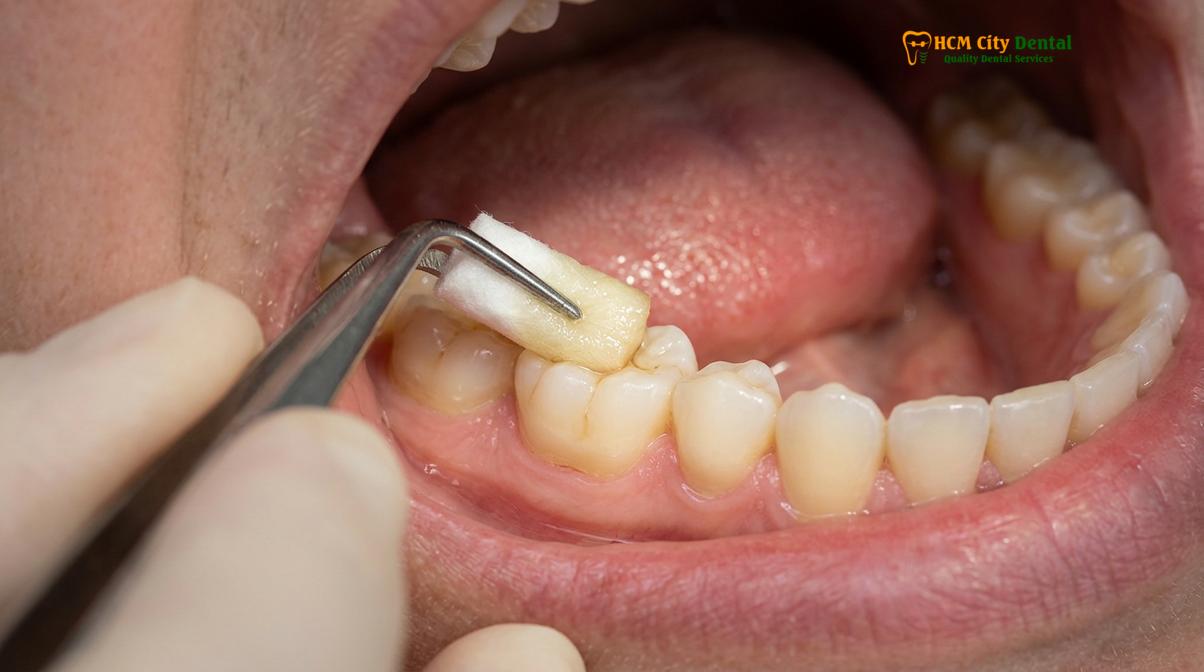
To prepare a safe clove oil application, you must use a carrier oil. Olive oil, coconut oil, or sweet almond oil are excellent choices. The recommended clinical ratio is approximately two drops of pure clove essential oil to one teaspoon of the carrier oil. This dilution reduces the concentration of eugenol to a level that is safe for mucosal contact while retaining its anesthetic properties. Once the solution is mixed, a small, sterile cotton pellet should be lightly soaked in the mixture. It is crucial to squeeze out any excess liquid; the cotton should be damp, not dripping.
Clinical Warning: Never pour clove oil directly into the mouth or onto a tooth. Undiluted eugenol is highly irritating and can cause chemical burns to the gingival tissues, leading to ulceration and increased pain. Always dilute with a carrier oil and apply precisely using a cotton pellet.
The application technique is equally important. Using clean tweezers, carefully place the damp cotton pellet directly onto the affected tooth, specifically targeting any visible cavity or area of decay. Avoid touching the surrounding pink gum tissue. The patient should gently bite down on the cotton pellet to hold it in place and allow the eugenol to seep into the dentinal tubules. Relief is typically noted within five to ten minutes as the numbing effect takes hold. This process can be repeated every few hours as needed. While eugenol is highly effective at masking the symptoms of irreversible pulpitis, it is vital to remember that the underlying nerve is still compromised, and professional endodontic therapy or extraction will ultimately be required.
Remedy 2: Warm Salt Water Rinses for Disinfection
Rinsing with warm hypertonic saline creates an osmotic gradient that draws out fluid from swollen tissues, neutralizes acidic environments, and flushes out trapped debris.
The warm salt water rinse is perhaps the most ubiquitous and accessible emergency toothache home remedy available. Despite its simplicity, its mechanism of action is grounded in fundamental cellular biology. When you dissolve a high concentration of salt (sodium chloride) in water, you create a hypertonic solution. In the presence of inflamed, swollen gingival tissues, this hypertonic environment induces a process called osmosis. Water naturally moves across the semi-permeable cellular membranes from an area of low solute concentration (inside the swollen tissue) to an area of high solute concentration (the salt water in the mouth). This osmotic action effectively draws out inflammatory exudate, reducing tissue edema and relieving the pressure that contributes to dental pain[2].
Beyond its osmotic benefits, a salt water rinse acts as a mild, natural disinfectant. The oral cavity is constantly subjected to fluctuations in pH, primarily driven by the metabolic byproducts of plaque bacteria. When these bacteria consume fermentable carbohydrates, they excrete lactic acid, which demineralizes enamel and exacerbates pulpal irritation. Rinsing with a slightly alkaline salt solution helps to buffer this acidity, temporarily raising the oral pH to a level that is less conducive to bacterial proliferation. Furthermore, the mechanical action of vigorous swishing helps to dislodge impacted food particles and necrotic debris from periodontal pockets and carious lesions, which are often the primary instigators of localized pain.
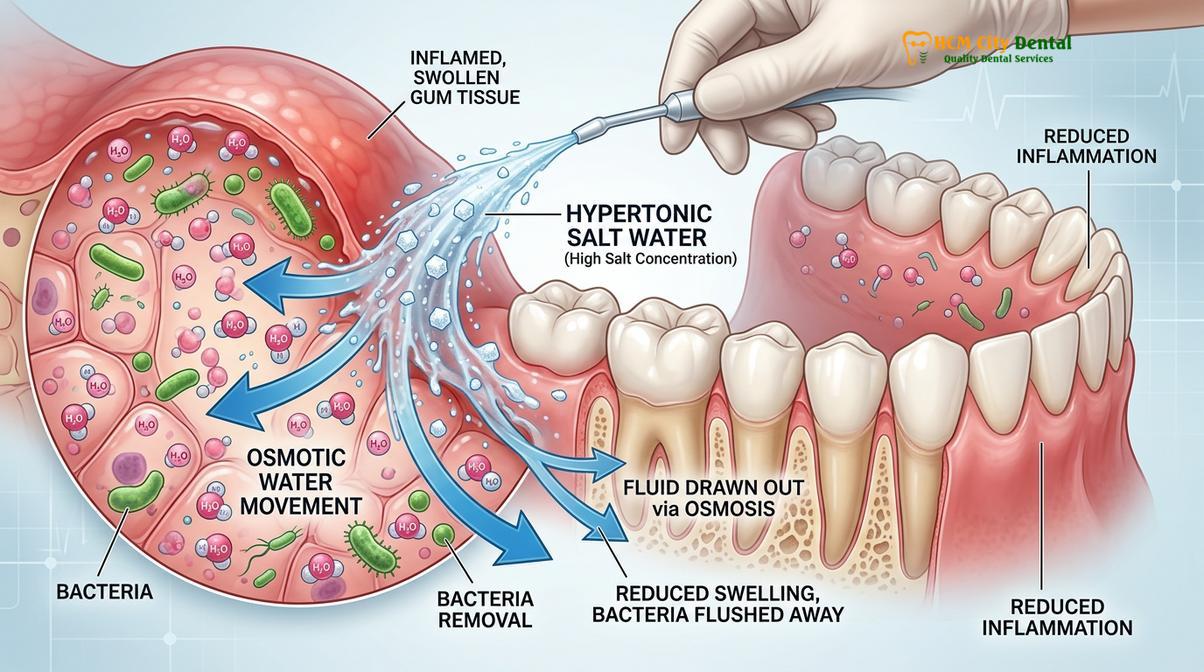
To formulate an effective hypertonic rinse, dissolve one-half teaspoon of standard table salt or sea salt into eight ounces (one cup) of warm water. The temperature of the water is a critical factor. It should be comfortably warm—similar to body temperature—to promote local vasodilation and enhance blood flow, which aids in the removal of inflammatory mediators. Water that is too hot can scald the mucosa and exacerbate pulpal hyperemia, while cold water can trigger severe sensitivity in a compromised tooth. The patient should take a mouthful of the solution and swish vigorously for 30 to 60 seconds, focusing the fluid dynamics around the affected area, before spitting it out. This process should be repeated until the cup is empty, and the regimen can be performed four to five times daily.
| Type of Rinse | Primary Mechanism of Action | Clinical Indication | Usage Precaution |
|---|---|---|---|
| Warm Salt Water (Hypertonic) | Osmotic fluid withdrawal, pH buffering, mechanical debridement. | General toothaches, swollen gums, post-extraction healing. | Safe for frequent daily use; do not swallow large amounts. |
| Hydrogen Peroxide (Diluted 1%) | Oxidative destruction of anaerobic bacterial cell walls. | Gingival infections, pericoronitis, minor oral wounds. | Must be diluted; prolonged use can disrupt normal oral flora. |
| Peppermint Tea (Cooled) | Mild numbing via menthol, soothing of inflamed mucosa. | Mild sensitivity, soft tissue irritation. | Ensure tea is completely cooled to avoid thermal shock to the pulp. |
While the salt water rinse is highly effective for managing the symptoms of periodontal inflammation and minor pulpal irritation, it is not a curative treatment for a periapical abscess. If a localized swelling (a “gum boil” or parulis) has formed adjacent to the tooth root, the salt water may help keep the surface clean and encourage spontaneous drainage, but it cannot eliminate the source of the infection harbored deep within the jawbone. Therefore, this remedy should be viewed as an excellent adjunctive therapy while awaiting professional emergency dental care.
Remedy 3: Garlic and Onion Paste as Anti-Inflammatory Agents
Crushed garlic releases allicin, a powerful antimicrobial compound, while onions provide flavonoids that help manage localized swelling and bacterial proliferation around the affected tooth.
For centuries, allium vegetables—specifically garlic and onions—have been utilized in traditional medicine for their potent antimicrobial and anti-inflammatory properties. In the context of dental first aid, these common culinary ingredients offer a surprisingly effective biochemical intervention. The therapeutic power of garlic lies in a sulfur-containing compound called allicin. Interestingly, allicin does not exist in intact garlic cloves. It is only synthesized when the cellular structure of the garlic is mechanically disrupted—such as by crushing, chopping, or chewing. This disruption allows the enzyme alliinase to convert the amino acid alliin into allicin. Allicin is a broad-spectrum antimicrobial agent capable of inhibiting the growth of both Gram-positive and Gram-negative bacteria, including the specific strains responsible for dental caries and periodontal disease[3].
When applied topically to an infected tooth, the allicin in crushed garlic helps to temporarily suppress the localized bacterial load. This reduction in bacterial activity can decrease the production of acidic byproducts and inflammatory toxins, thereby providing a degree of pain relief. Onions operate on a slightly different biochemical pathway. They are rich in quercetin, a flavonoid known for its strong anti-inflammatory and antioxidant properties. Quercetin helps to inhibit the synthesis of prostaglandins and leukotrienes—the chemical messengers that trigger inflammation and pain in the body. By modulating this inflammatory response, onion paste can assist in natural swelling reduction mouth tissues desperately need during an acute flare-up.
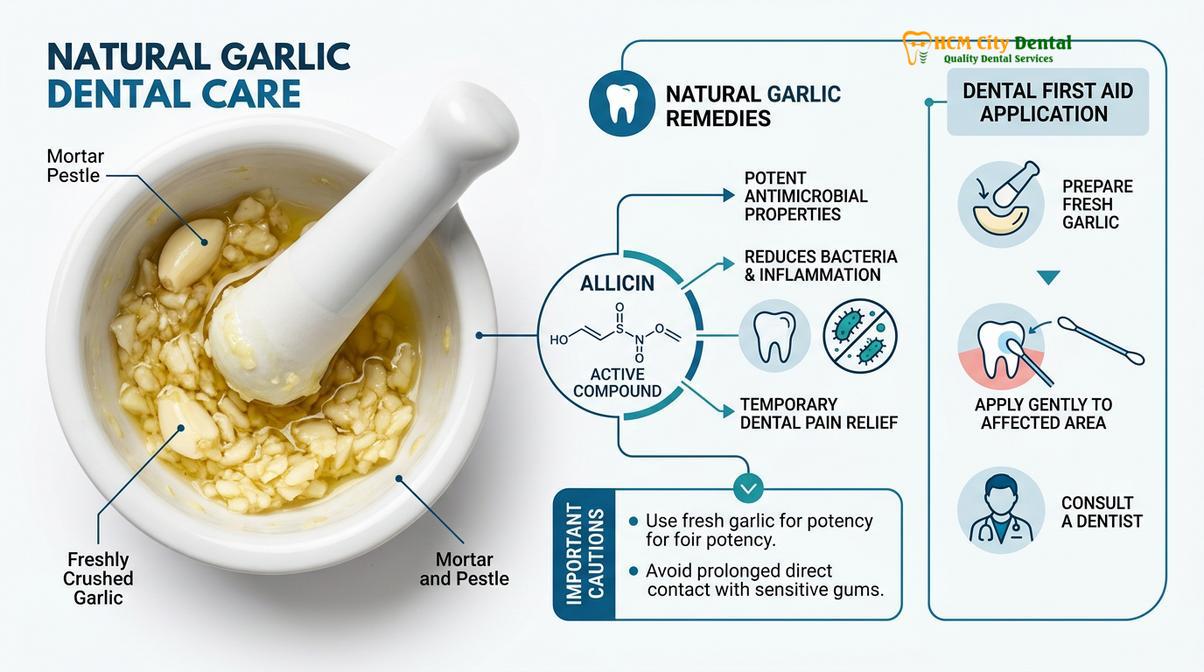
To utilize garlic effectively as a natural toothache remedy, take a single, fresh clove of garlic and crush it thoroughly using a mortar and pestle or the back of a spoon. It is essential to let the crushed garlic sit for approximately five to ten minutes before application; this resting period maximizes the enzymatic production of allicin. Once activated, a small pinch of natural sea salt can be mixed into the garlic paste to enhance its osmotic properties. Using a clean finger or a cotton swab, apply the paste directly to the affected tooth and the immediately adjacent gum tissue. The patient may experience a brief, intense burning sensation—this is a normal reaction to the allicin. The paste should be left in place for 10 to 15 minutes before rinsing the mouth thoroughly with warm water.
Clinical Case Review:
A 42-year-old patient presented to Dr. Nguyen Van Cuong at HCMC Dental Clinic with severe, localized pain in the lower right quadrant. Unable to secure an immediate appointment over the weekend, the patient utilized a crushed garlic and salt paste applied directly to the carious molar. Dr. Cuong noted that while the garlic application successfully managed the acute bacterial load and temporarily reduced the surrounding gingival inflammation, the underlying pathology was a necrotic pulp requiring immediate endodontic intervention. The case highlights the efficacy of allicin as a stabilizing first-aid measure, though it underscores the absolute necessity of professional diagnostics to resolve the core infection.
While chewing a raw piece of onion or garlic is an alternative method, it is often too painful for a patient experiencing severe pulpitis, as the mechanical pressure of biting can exacerbate the pain. Therefore, the topical paste application is generally preferred. It is important to caution patients that while these allium-based remedies are excellent for temporary microbial suppression, they can cause mild irritation to the oral mucosa if left in place for extended periods. Furthermore, the strong odor associated with these remedies is a minor trade-off for the biochemical relief they provide while awaiting a formal clinical assessment.
Other Natural Remedies: Peppermint Tea, Accupressure, and Ice
Adjunctive therapies like cold compresses induce vasoconstriction, peppermint offers mild numbing via menthol, and specific acupressure points can help modulate pain perception neurologically.
Beyond the primary botanical and osmotic interventions, several other adjunctive therapies can play a significant role in managing acute dental pain. Peppermint, for instance, is highly valued for its high menthol content. Menthol acts as a natural counter-irritant and a mild local anesthetic. When applied to the oral mucosa, menthol binds to the TRPM8 receptors—the same sensory receptors responsible for detecting cold temperatures. This binding action creates a cooling sensation that can effectively override and mask the underlying nociceptive (pain) signals traveling from the inflamed tooth to the brain. To utilize this remedy, a peppermint tea bag can be steeped in hot water to activate the essential oils, then placed in the freezer for a few minutes until it is comfortably cool. The chilled tea bag is then applied directly against the aching tooth and surrounding gums, providing a dual action of menthol-induced numbing and thermal soothing.
Cold therapy, or cryotherapy, is another cornerstone of emergency pain management, particularly when the toothache is accompanied by facial swelling or is the result of physical trauma. Applying a cold compress to the outside of the cheek adjacent to the affected area induces rapid vasoconstriction—the narrowing of blood vessels. This reduction in local blood flow serves two critical functions: it minimizes the accumulation of inflammatory exudate (thereby reducing swelling) and it slows the conduction velocity of the peripheral nerve fibers, effectively dulling the sensation of throbbing pain[4]. A cold compress should be applied in intervals of 15 to 20 minutes on, followed by 20 minutes off, to prevent thermal damage to the facial skin. It is crucial to note that cold should never be applied directly to the offending tooth, as a compromised pulp is often exquisitely sensitive to thermal changes.

Acupressure offers a completely different, neurologically based approach to pain modulation. Rooted in traditional Chinese medicine, acupressure involves applying firm, steady pressure to specific meridian points on the body to stimulate the release of endorphins—the body’s natural endogenous opioids. For dental pain, the most commonly targeted point is Large Intestine 4 (LI4), also known as Hegu. This point is located on the dorsum of the hand, in the fleshy web between the base of the thumb and the index finger. Applying deep, massaging pressure to this point for several minutes has been shown in various clinical studies to alter pain perception and provide systemic relaxation. While acupressure will not resolve a localized dental infection, it is an excellent, non-invasive technique to help patients manage the anxiety and distress associated with severe toothaches.
“The integration of physical modalities, such as external cryotherapy and targeted acupressure, provides a multi-disciplinary approach to pain management. By addressing both the localized inflammatory response and the central neurological perception of pain, patients can achieve a more comprehensive state of temporary relief.”
When combining these adjunctive therapies, patients can create a robust, multi-faceted approach to pain management. For example, a patient might utilize a cold compress externally to manage facial swelling while simultaneously applying a cooled peppermint tea bag internally for mucosal soothing. These combinations are particularly useful during the overnight hours when dental pain often feels most intense due to the increased blood pressure in the head while lying supine. However, all these methods remain strictly supportive. They are designed to make the patient as comfortable as possible during the critical waiting period before they can be evaluated by a dental professional for definitive care, such as a tooth extraction or restorative procedure.
When Natural Remedies Aren’t Enough: Identifying Dental Emergencies
While the biological remedies discussed above are highly effective for managing the acute symptoms of pulpitis and minor localized inflammation, there is a distinct clinical threshold where home care must immediately transition to professional medical intervention. Dental infections are unique in that they occur within the rigid structures of the jawbone and are in close anatomical proximity to critical systemic pathways, including the airway, the sinuses, and the brain. If a localized periapical abscess is left untreated, the bacterial infection can breach the confines of the alveolar bone and spread into the surrounding fascial spaces of the head and neck. This progression transforms a simple toothache into a potentially life-threatening medical emergency.
It is crucial for patients to recognize the “red flag” symptoms that indicate a spreading infection. If your toothache is accompanied by a high fever, chills, or a general feeling of malaise, the bacteria have likely entered the systemic circulation. Furthermore, if you observe significant, visible swelling of the face, cheek, or jaw—particularly if the swelling is warm to the touch and rapidly expanding—immediate clinical evaluation is mandatory. This type of swelling, known as cellulitis, indicates that the infection is moving through the soft tissues. In severe cases, an infection originating from a lower molar can spread to the submandibular spaces, a condition known as Ludwig’s angina. This can cause the floor of the mouth to elevate and the airway to become compromised, leading to difficulty swallowing (dysphagia) or breathing (dyspnea)[5].
Dr. Nguyen Van Cuong frequently emphasizes to his patients that pain is the body’s ultimate warning signal. A toothache that persists for more than 48 hours, or pain that is so severe it cannot be managed with over-the-counter analgesics and natural remedies, requires urgent diagnostic imaging. At HCMC Dental Clinic, the clinical protocol for acute dental pain involves a comprehensive radiographic assessment to visualize the root apices and surrounding bone structure. This allows the dental team to accurately diagnose the etiology of the pain—whether it be a deep carious lesion, a fractured root, or a fully developed abscess—and formulate a definitive treatment plan.
Patients residing in or visiting Ho Chi Minh City should not delay seeking care when these severe symptoms arise. Relying solely on natural remedies when an infection is actively spreading is a dangerous miscalculation. The goal of biological first aid is to provide temporary comfort and stabilization, not to replace the necessity of professional dental medicine. If you are experiencing any of the red flag symptoms mentioned, or if your pain is unmanageable, it is imperative to contact a qualified dental professional immediately. For comprehensive evaluation and definitive treatment of acute dental pain, please reach out to our team via our contact page to schedule an emergency consultation.
Frequently Asked Questions
What is the fastest natural way to stop a toothache?
The fastest natural way to stop a toothache is applying diluted clove oil directly to the affected tooth. Clove oil contains eugenol, a natural anesthetic that rapidly blocks nerve conduction, providing immediate but temporary relief from acute pulpal pain until you can receive professional dental care. To ensure safety, always dilute the essential oil with a carrier oil like olive or coconut oil before applying it with a small cotton pellet, taking care to avoid the surrounding gum tissue.
How do I use clove oil for tooth pain?
To use clove oil safely, dilute one to two drops of essential clove oil in a teaspoon of a carrier oil, such as olive or coconut oil. Soak a small cotton pellet in the mixture and gently apply it to the aching tooth, avoiding the surrounding gum tissue to prevent chemical burns. The patient should bite down gently to hold the pellet in place, allowing the eugenol to penetrate the dentin and numb the underlying nerve.
Does salt water rinse heal a tooth infection?
No, a salt water rinse cannot heal a bacterial tooth infection or cure an abscess. However, it acts as a hypertonic solution that draws out inflammatory fluids, neutralizes acidic oral environments, and temporarily reduces gingival swelling, making it an excellent supportive measure before clinical treatment. It is highly effective at keeping the area clean and managing localized soft tissue irritation, but it cannot penetrate the tooth structure to resolve necrotic pulp tissue.
Can garlic cure a tooth abscess?
Garlic cannot cure a tooth abscess. While crushed garlic releases allicin, which possesses potent localized antimicrobial and anti-inflammatory properties, it cannot penetrate deep into the jawbone or root canal system where the core of the abscess resides. Definitive clinical intervention is always required. Applying a garlic paste can temporarily suppress surface bacteria and reduce localized pain, but the underlying infection must be mechanically and chemically debrided by a dentist.
When should I go to the clinic for a toothache?
You should go to the clinic immediately if your toothache is accompanied by facial swelling, a fever, difficulty swallowing, or if the pain persists for more than two days. These are red flag symptoms indicating a spreading infection that requires urgent professional diagnostics and treatment. Delaying care in the presence of these symptoms can lead to severe systemic complications, including cellulitis or airway compromise.
References
- Journal of Dentistry. The efficacy of eugenol in the management of acute dental pain: A clinical review. (2021).
- International Endodontic Journal. Osmotic effects of hypertonic saline on inflamed gingival and pulpal tissues. (2020).
- Journal of Antimicrobial Chemotherapy. Antimicrobial properties of allicin from garlic against oral pathogens. (2019).
- British Dental Journal. The role of cryotherapy and cold compresses in maxillofacial pain management. (2022).
- American Association of Endodontists. Guidelines for the diagnosis and management of acute dental emergencies. (2023).