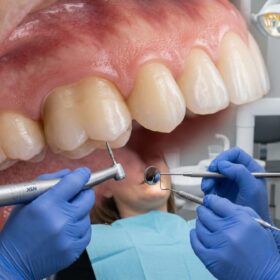
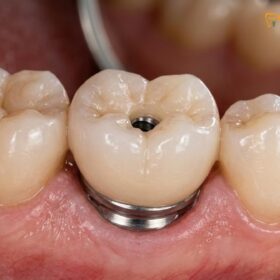
Metal free dental crowns are advanced, biocompatible tooth restorations crafted entirely from high-strength ceramics like zirconia or lithium disilicate. Unlike traditional metal-based options, they provide superior light transmission for a natural appearance while eliminating the risks of metal allergies, galvanic toxicity, and dark gum line discoloration.
Clinical Summary:
The transition to metal free dental crowns represents a significant advancement in restorative and biological dentistry. By utilizing monolithic zirconia and IPS e.max ceramics, clinicians can achieve exceptional mechanical strength and aesthetic integration without the drawbacks of metal alloys. These biocompatible dental crowns eliminate thermal conductivity issues and prevent galvanic currents in the oral cavity. Dr. Nguyen Van Cuong emphasizes that modern bonding protocols ensure these restorations integrate seamlessly with natural tooth structure, providing long-term durability, marginal integrity, and optimal periodontal health.
Key Takeaways:
- Metal-free restorations eliminate the risk of galvanic toxicity and metal hypersensitivity.
- Lithium disilicate (E.max) offers unparalleled translucency for anterior (front) teeth.
- Monolithic zirconia provides exceptional flexural strength, ideal for posterior molars.
- Advanced biocompatible cements ensure a hermetic seal, preventing bacterial microleakage.
- Non-metal crowns prevent the dark gray line often seen at the gingival margin with older PFM restorations.
The Evolution: Moving Away from Porcelain-Fused-to-Metal (PFM)
Porcelain-fused-to-metal (PFM) crowns are being phased out in biological dentistry due to their opaque appearance, potential for metal allergies, and the tendency to expose a dark metallic line at the gum margin over time.
For decades, restorative dentistry relied heavily on Porcelain-Fused-to-Metal (PFM) crowns. These restorations consisted of a cast metal alloy substructure—often containing base metals like nickel, cobalt, or chromium—overlaid with layers of feldspathic porcelain. While PFM crowns provided adequate strength and a reasonable aesthetic compromise for their time, they possessed inherent structural and biological limitations that modern dentistry seeks to overcome.
From an aesthetic standpoint, the primary challenge with PFM crowns is the necessity to mask the dark metal core. Dental technicians must apply a highly opaque layer of porcelain directly over the metal before adding the translucent enamel layers. This opaque masking prevents light from passing through the restoration naturally, resulting in a tooth that often looks dull, flat, or artificial under certain lighting conditions. Furthermore, as patients age and natural gingival recession occurs, the metal margin of the PFM crown frequently becomes exposed, creating an unsightly dark gray or black line at the gum level.
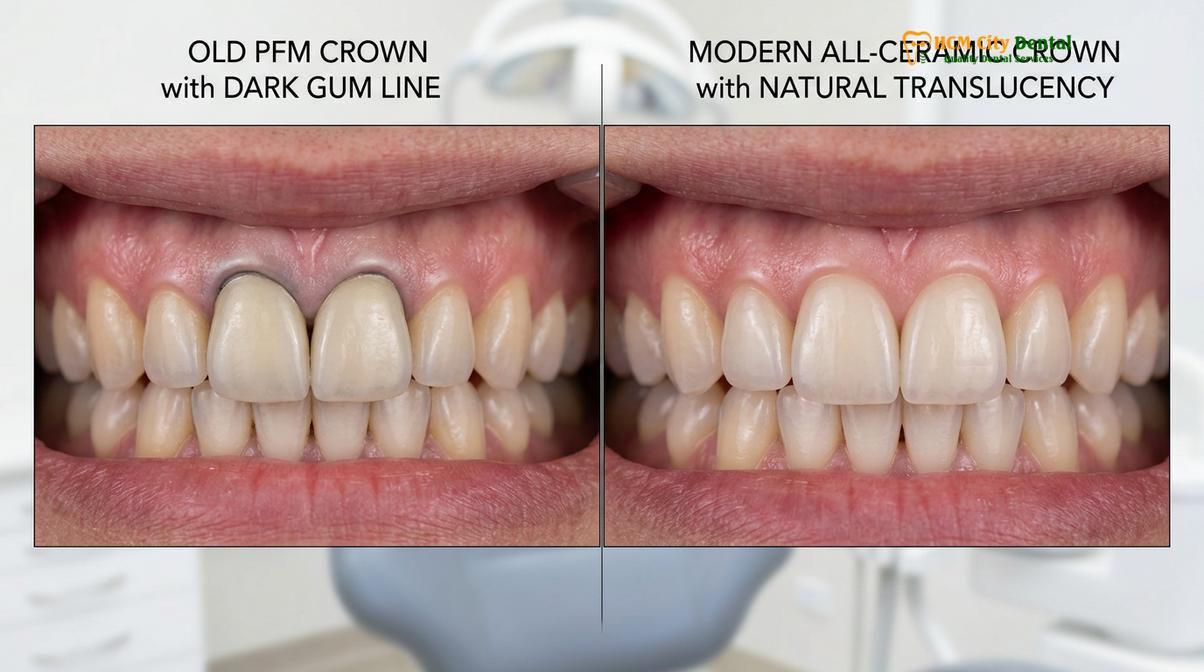
Biologically, the presence of base metal alloys in the oral cavity presents several concerns. A significant percentage of the population exhibits hypersensitivity to metals such as nickel and beryllium, which were commonly used in older PFM formulations. This hypersensitivity can manifest as localized gingival inflammation, chronic redness, and periodontal attachment loss around the crowned tooth. As the principles of holistic and biological dentistry have gained prominence, the demand for biocompatible dental treatments has surged, leading clinicians to seek safer, non-toxic alternatives.
“The shift from metal-based restorations to all-ceramic systems is not merely an aesthetic upgrade; it is a fundamental evolution toward materials that respect the biological environment of the oral cavity, promoting long-term periodontal health and systemic wellness.”
Today, porcelain fused to metal alternatives have become the gold standard in restorative care. The advent of CAD/CAM (Computer-Aided Design and Computer-Aided Manufacturing) technology has revolutionized the fabrication of all-ceramic crowns. Clinicians can now utilize highly precise digital impressions to mill restorations from solid blocks of biocompatible ceramics. This digital workflow ensures an impeccable marginal fit, reducing the risk of microleakage and secondary caries, while completely eliminating the need for metallic substructures [1].
IPS E.Max Crowns: Ultimate Aesthetics for Front Teeth
IPS E.max crowns are crafted from lithium disilicate glass-ceramic, offering unparalleled translucency and light-reflecting properties that perfectly mimic natural tooth enamel for anterior restorations.
When restoring teeth in the aesthetic zone—the front teeth visible when smiling—optical properties are paramount. The restoration must not only match the color of the adjacent teeth but also replicate the complex interplay of light absorption, reflection, and transmission seen in natural human enamel. In this regard, the emax metal free crown has established itself as the premier choice among cosmetic dentists and master ceramists.
IPS E.max is composed of lithium disilicate, a highly aesthetic glass-ceramic material. Unlike traditional ceramics, lithium disilicate possesses a unique crystalline structure that scatters light in a manner virtually identical to natural dentin and enamel. It exhibits natural opalescence (the ability to scatter shorter wavelengths of light, giving the incisal edges a bluish, translucent halo) and fluorescence (the ability to absorb invisible UV light and emit visible light, ensuring the teeth look bright and natural even under blacklights or club lighting).
The fabrication of an E.max crown can be achieved through two primary methods: CAD/CAM milling or the lost-wax hot pressing technique. The pressed technique, in particular, yields restorations with exceptional marginal adaptation and a flexural strength of approximately 400 to 500 MPa. While this strength is more than sufficient for anterior teeth and premolars, it is the material’s ability to be adhesively bonded to the tooth structure that truly sets it apart [2].
Unlike traditional crowns that rely on mechanical retention and conventional cements, E.max crowns are bonded using advanced adhesive dentistry protocols. The internal surface of the glass-ceramic is etched with hydrofluoric acid to create microscopic retentive pores, followed by the application of a silane coupling agent. Simultaneously, the natural tooth structure is conditioned and treated with a bonding resin. When the two surfaces are united with a dual-cure resin cement, they form a monolithic complex that significantly reinforces the remaining tooth structure. This seamless integration is why E.max is frequently utilized alongside aesthetic ceramic restorations to achieve comprehensive smile makeovers.
Solid Zirconia Crowns: Exceptional Strength for Posterior Molars
Solid zirconia crowns utilize zirconium dioxide, a highly durable and biocompatible ceramic that withstands immense occlusal forces, making it the premier choice for restoring posterior teeth.
While lithium disilicate excels in the anterior region, the posterior region of the mouth demands materials capable of withstanding extreme occlusal (chewing) forces. Molars are subjected to hundreds of pounds of pressure during mastication and parafunctional habits like bruxism (teeth grinding). For these demanding clinical scenarios, monolithic zirconia has become the material of choice.
Zirconia (zirconium dioxide) is a white, crystalline oxide of zirconium. In dentistry, it is typically stabilized with yttrium oxide to create Yttria-stabilized tetragonal zirconia polycrystal (Y-TZP). This specific formulation grants zirconia its remarkable mechanical properties, boasting a flexural strength that frequently exceeds 1000 to 1200 MPa. This makes solid zirconia virtually indestructible under normal physiological conditions, providing a robust solution for patients who have a history of fracturing traditional porcelain crowns.
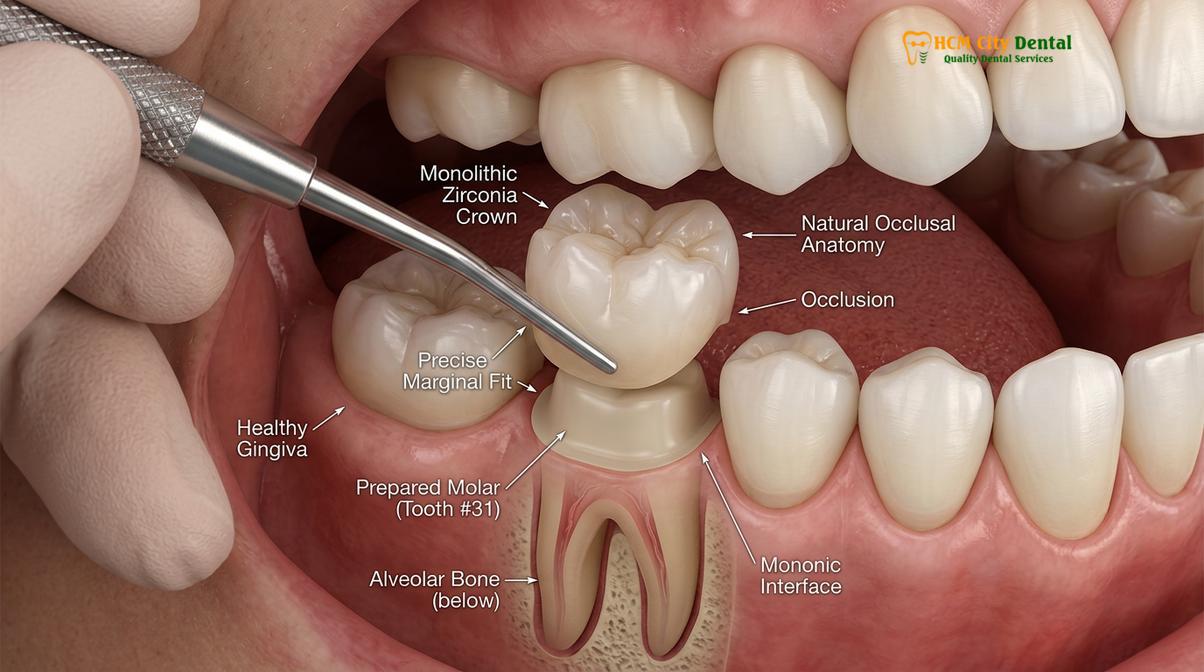
One of the most fascinating aspects of zirconia is its unique “transformation toughening” mechanism. When a microscopic crack begins to propagate through the material, the stress at the tip of the crack triggers a localized phase transformation in the zirconia crystals—from a tetragonal phase to a monoclinic phase. This transformation is accompanied by a volumetric expansion of the crystals, which effectively compresses the crack and halts its progression. This self-healing characteristic makes zirconia crowns and bridges exceptionally durable and reliable for long-term posterior restorations [3].
Modern zirconia restorations can be categorized into two main types: monolithic and layered. Monolithic zirconia is milled from a single, solid block of material and sintered to its final hardness. It is incredibly strong but historically lacked the translucency needed for highly aesthetic areas. However, recent advancements in high-translucent (HT) and ultra-translucent (UT) zirconia have significantly improved its optical properties. Layered zirconia, on the other hand, utilizes a strong zirconia core overlaid with aesthetic feldspathic porcelain. While layered zirconia offers better aesthetics, it carries a slight risk of the overlying porcelain chipping, making monolithic zirconia the preferred choice for heavy bruxers.
| Material Type | Primary Indication | Flexural Strength | Aesthetic Quality | Biocompatibility |
|---|---|---|---|---|
| Lithium Disilicate (E.max) | Anterior teeth, Premolars | 400 – 500 MPa | Exceptional (High Translucency) | Excellent |
| Monolithic Zirconia | Posterior Molars, Heavy Bruxers | 1000 – 1200+ MPa | Good to Very Good | Excellent |
| Layered Zirconia | Anterior teeth, Full Arch Bridges | 800 – 1000 MPa (Core) | Excellent | Excellent |
| PFM (Traditional) | Historically universal, now declining | Variable (Metal dependent) | Fair (Opaque, dark margins) | Poor (Risk of metal allergy) |
Galvanic Toxicity: Why We Avoid Metal in Crowns
Galvanic toxicity occurs when dissimilar metals in the mouth interact with saliva, creating an electrical current that can cause tissue irritation, metallic taste, and systemic health concerns.
A critical, yet often overlooked, aspect of restorative dentistry is the electrochemical environment of the oral cavity. When multiple types of metals are present in the mouth—such as a gold crown, a titanium implant, a nickel-based PFM crown, and silver amalgam fillings—they are bathed in saliva. Saliva is rich in minerals and acts as an excellent electrolytic solution. This combination of dissimilar metals and an electrolyte creates a literal battery in the patient’s mouth, a phenomenon known as oral galvanism.
Oral galvanism generates measurable electrical currents that flow between the different metal restorations. These micro-currents can lead to a variety of localized and systemic issues. Locally, patients may experience a persistent metallic taste, unexplained burning sensations in the tongue or oral mucosa, and increased salivary flow. The electrical current can also accelerate the corrosion of the metal restorations, leading to the release of heavy metal ions into the saliva, which are subsequently swallowed and absorbed into the gastrointestinal tract [4].
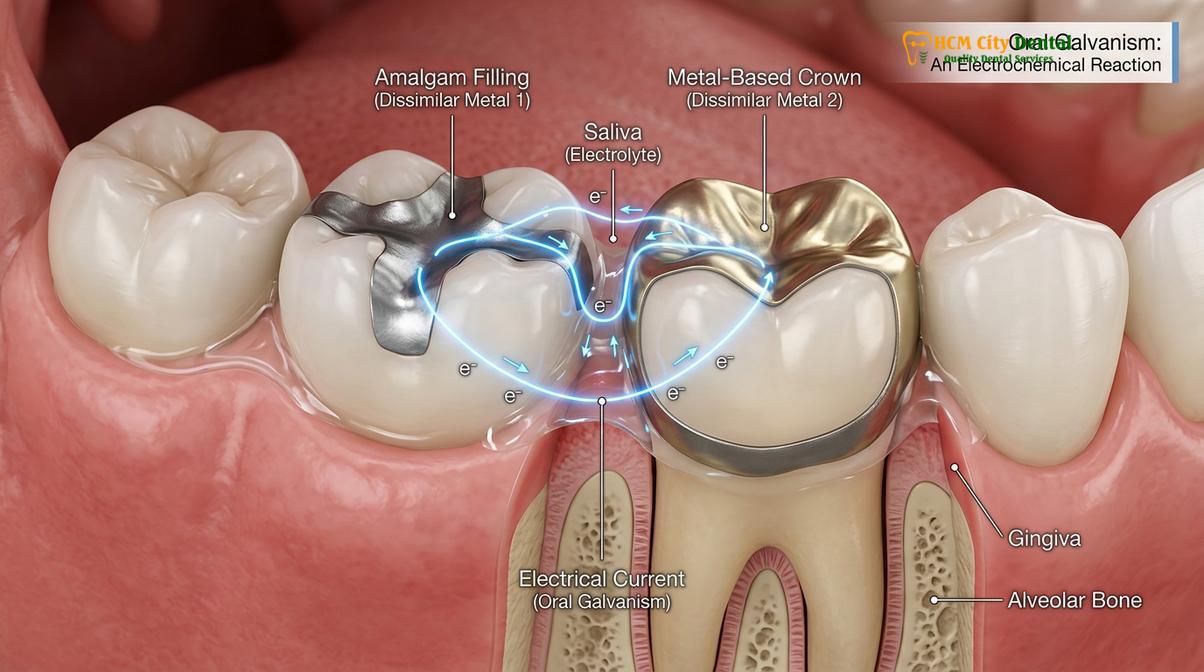
Clinical Warning: Patients experiencing unexplained metallic tastes, chronic headaches, or localized gum inflammation around older metal-based restorations should be evaluated for oral galvanism and metal hypersensitivity. Transitioning to inert, non-metal ceramics can often resolve these symptoms.
Furthermore, these galvanic currents can interfere with the normal neurological pathways in the head and neck region. Some holistic practitioners suggest that chronic oral galvanism may contribute to tension headaches, trigeminal neuralgia-like symptoms, and general fatigue. Dr. Nguyen Van Cuong, a leading advocate for biological dental protocols, strongly advises against the mixing of dental metals. By utilizing exclusively metal-free, biocompatible dental crowns, clinicians can completely eliminate the risk of galvanic toxicity, ensuring that the restorative materials remain completely inert and harmonious with the body’s natural physiology.
Biocompatible Dental Cements and Bonding Protocols
The clinical success of metal-free restorations relies heavily on biocompatible, resin-based luting agents that create a durable micromechanical and chemical bond with the natural tooth structure.
The transition to metal-free dentistry is not solely about the crown material itself; it equally involves the evolution of the cements and adhesives used to secure the restoration. Traditional metal crowns were typically cemented using zinc phosphate or glass ionomer cements, which relied primarily on the mechanical friction of the prepared tooth (macromechanical retention). These older cements were prone to washout over time, leading to microleakage, recurrent decay beneath the crown, and eventual failure of the restoration.
Modern all-ceramic restorations require highly sophisticated adhesive bonding protocols. The goal is to create a hermetic seal that fuses the ceramic material directly to the dentin and enamel, effectively turning the crown and the tooth into a single, unified structure. This process requires meticulous isolation, typically utilizing a rubber dam to prevent contamination from saliva or crevicular fluid during the bonding phase.
The bonding protocol varies significantly depending on the type of ceramic being used. For silica-based ceramics like lithium disilicate (E.max), the internal surface of the crown is etched with hydrofluoric acid to create a microporous surface. A silane coupling agent is then applied, which acts as a chemical bridge between the inorganic ceramic and the organic resin cement. This creates an exceptionally strong bond that resists dislodgement even under heavy functional loads [5].
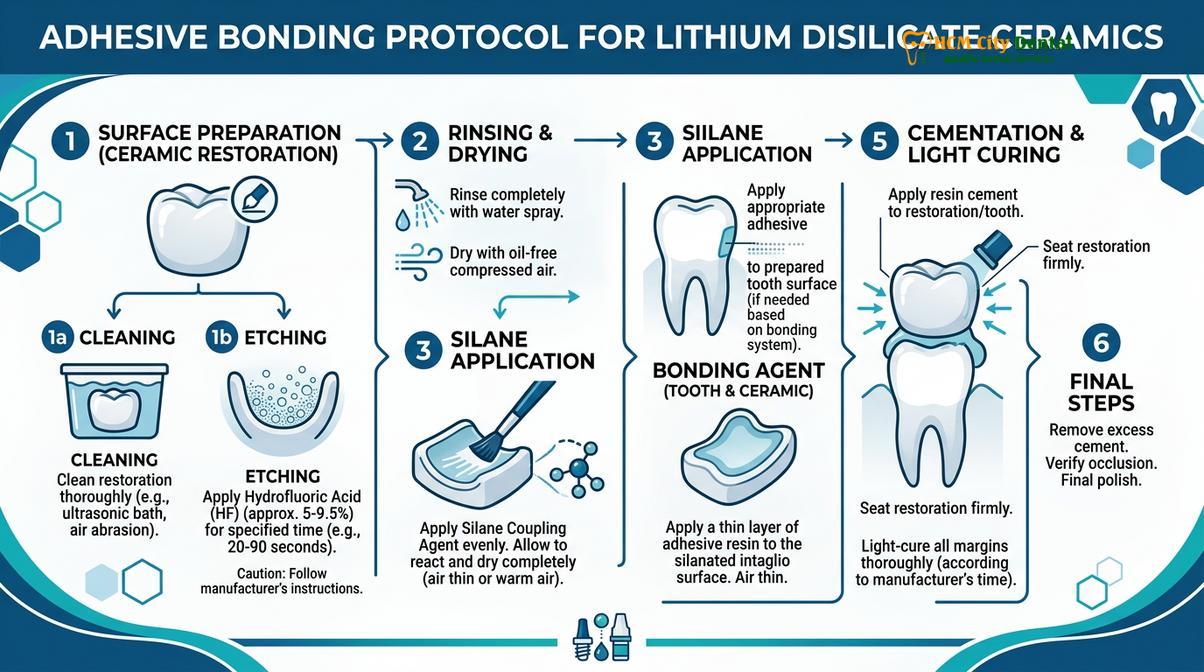
Zirconia, being an oxide-based ceramic, does not respond to hydrofluoric acid etching. Instead, the internal surface of a zirconia crown must be treated with airborne-particle abrasion (sandblasting with aluminum oxide) to increase surface roughness. The critical step in zirconia bonding is the application of a specialized primer containing 10-MDP (Methacryloyloxydecyl dihydrogen phosphate). The MDP monomer chemically bonds to the zirconium oxide crystals, ensuring a durable and long-lasting adhesion. By utilizing these advanced, biocompatible resin cements, clinicians ensure that the margins remain sealed, preventing bacterial infiltration and promoting optimal health of the surrounding gingival tissues.
Custom Smile Restorations at HCMC Dental Clinic
At HCMC Dental Clinic, our restorative workflows combine digital impression technology with master ceramists to deliver highly personalized, biocompatible smile makeovers in Ho Chi Minh City.
Achieving a flawless, natural-looking smile requires more than just high-quality materials; it demands a comprehensive understanding of facial aesthetics, occlusal dynamics, and meticulous clinical execution. At HCMC Dental Clinic, the process of designing and delivering metal-free restorations is a highly customized journey tailored to the unique anatomical and aesthetic needs of each patient.
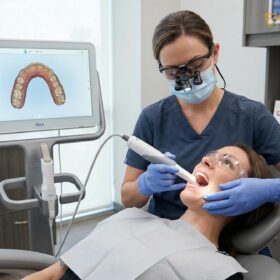
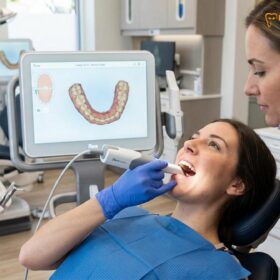
The workflow begins with a comprehensive diagnostic phase. Utilizing advanced intraoral scanners, the clinical team captures highly accurate 3D digital impressions of the patient’s dentition. This eliminates the need for uncomfortable, messy traditional impression materials and provides a precise digital model of the mouth. These digital files are then integrated into Digital Smile Design (DSD) software, allowing the dentist to plan the size, shape, and proportion of the new crowns in perfect harmony with the patient’s facial features, lip line, and gingival architecture.
Clinical Case Example: A 45-year-old patient visited HCMC Dental Clinic in Ho Chi Minh City presenting with failing, opaque PFM crowns on her upper incisors that exhibited dark gingival margins. The treatment plan involved the safe removal of the metal-based restorations and the placement of four custom-layered IPS E.max crowns. The result was a vibrant, highly translucent smile that seamlessly integrated with her natural dentition, completely resolving the gingival discoloration.
For complex cases involving full mouth rehabilitation or anterior aesthetics, Dr. Nguyen Van Cuong works closely with master ceramists to ensure that every restoration exhibits lifelike characteristics. This often involves custom shade matching, where subtle characterizations such as incisal translucency, mamelons, and surface texture are meticulously hand-painted and baked into the ceramic. Whether a patient requires a single solid zirconia molar crown for structural reinforcement or a combination of E.max crowns and anterior smile design techniques, the focus remains on delivering restorations that are biologically sound, functionally robust, and aesthetically breathtaking.
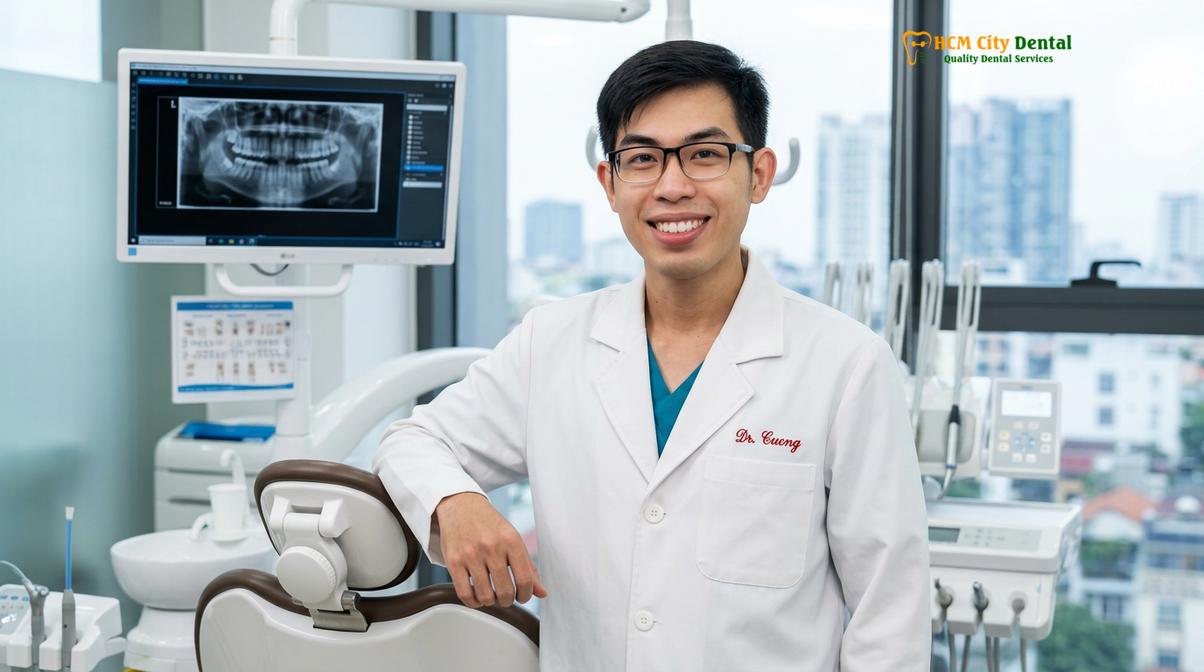
“True aesthetic dentistry is invisible. The highest compliment a restorative dentist can receive is when a patient’s new ceramic crowns are completely indistinguishable from their natural teeth, both in appearance and in function.”
When to See a Doctor for Crown Replacement
While metal-free restorations are designed for longevity, patients with existing traditional crowns should be aware of the clinical signs indicating that a replacement may be necessary. You should schedule a comprehensive evaluation with a dental professional if you experience any of the following symptoms:
- Dark Gingival Margins: The appearance of a dark gray or black line near the gum tissue, often indicating metal exposure or localized tissue tattooing from an older PFM crown.
- Chronic Gum Inflammation: Persistent redness, bleeding, or swelling around a specific crowned tooth that does not resolve with standard oral hygiene, which may suggest a metal allergy or a bulky, ill-fitting crown margin.
- Thermal Sensitivity or Pain: Sharp pain when consuming hot or cold foods, or pain upon biting down, which could indicate that the cement seal has failed, allowing bacteria to reach the underlying tooth structure.
- Chipping or Fractures: Visible damage to the porcelain layer of an existing crown, which compromises the structural integrity and aesthetics of the restoration.
- Unexplained Metallic Taste: A persistent metallic taste or burning sensation in the mouth, which may be a symptom of oral galvanism caused by mixed dental metals.
Every patient’s oral environment is unique. A personalized clinical examination, including digital radiographs and a periodontal assessment, is essential to determine the most appropriate holistic dental care plan and whether transitioning to biocompatible ceramic restorations is clinically indicated.
Frequently Asked Questions
What is a metal-free dental crown?
A metal-free dental crown is a biocompatible tooth restoration made entirely from high-strength ceramics like zirconia or lithium disilicate. These crowns contain no metal alloys, offering superior aesthetics, eliminating the risk of galvanic toxicity, and providing excellent long-term durability for both front and back teeth. Because they are fabricated from monolithic or layered ceramics, they integrate seamlessly with the natural oral environment without causing the adverse tissue reactions sometimes associated with base metals.
Why are PFM crowns considered less biological?
PFM (Porcelain-Fused-to-Metal) crowns are considered less biological because their metal substructures can trigger allergic reactions, cause gum discoloration, and create galvanic currents in the mouth. Furthermore, the opaque metal core blocks natural light transmission, resulting in a less lifelike appearance compared to all-ceramic alternatives. The presence of nickel or beryllium in older PFM alloys is particularly concerning for patients with metal hypersensitivities, leading to chronic localized inflammation.
Which is better: E.max or Zirconia crowns?
The choice between E.max and Zirconia depends entirely on the clinical indication and the tooth’s location. E.max offers unparalleled translucency and is generally preferred for highly visible front teeth, while monolithic zirconia provides exceptional flexural strength, making it the superior choice for heavy-chewing posterior molars. Your dentist will evaluate your bite forces, aesthetic goals, and the amount of remaining tooth structure to recommend the optimal material for your specific case.
Do metal-free crowns look more natural?
Yes, metal-free crowns look significantly more natural than traditional metal-based restorations. Because they lack an opaque metallic core, materials like lithium disilicate and layered zirconia allow light to pass through and reflect just like natural tooth enamel, creating a seamless and highly aesthetic smile. Master ceramists can customize the shade, translucency, and surface texture of these ceramics to perfectly mimic the adjacent natural teeth.
How long do metal-free ceramic crowns last?
With proper oral hygiene and regular clinical maintenance, metal-free ceramic crowns can last 10 to 15 years, and often much longer. Their longevity depends on factors such as the patient’s bite forces, the presence of bruxism (teeth grinding), and the precision of the initial bonding protocol. Wearing a custom night guard and maintaining routine professional cleanings will significantly extend the lifespan of your ceramic restorations.
References
- Journal of Prosthetic Dentistry. Clinical evaluation of all-ceramic crowns and fixed dental prostheses. (2021).
- Dental Materials Journal. Mechanical properties and clinical success of lithium disilicate glass-ceramics. (2020).
- International Journal of Periodontics & Restorative Dentistry. Periodontal response to monolithic zirconia restorations. (2019).
- Journal of Applied Oral Science. Oral galvanism and the systemic effects of dissimilar dental metals. (2022).
- Clinical Oral Investigations. Adhesion protocols for silica-based and oxide-based ceramics. (2018).
For premium porcelain crowns, bridges, and advanced smile reconstructions, visit our Dental Crowns & Bridges service page at HCMC Dental Clinic in Ho Chi Minh City.