Experiencing dental anxiety after a traumatic experience is a profound psychological response where past clinical pain conditions the brain to fear future visits. Overcoming this requires trauma-informed care, open communication, and specialized techniques like sedation to safely restore oral health without triggering panic.
Clinical Summary:
Dental anxiety stemming from a previous traumatic clinical encounter is a complex psychophysiological condition that goes beyond standard nervousness. It involves the central nervous system’s conditioned response to specific triggers—such as the sound of a drill, the smell of clinical materials, or the feeling of vulnerability in the dental chair. Effective management requires a paradigm shift from traditional dentistry to trauma-informed care. This approach emphasizes patient autonomy, systematic desensitization, and the strategic use of pharmacological interventions like conscious sedation. By acknowledging the validity of the patient’s fear and implementing strict communication protocols, dental professionals can help patients break the cycle of avoidance, safely manage their oral health, and gradually rebuild trust in the clinical environment.
Key Takeaways:
- Trauma-induced dental anxiety is a conditioned neurological response, not a personal weakness.
- Sensory inputs (sights, sounds, smells) from the dental office can trigger involuntary physiological panic.
- Trauma-informed care prioritizes patient control, utilizing “stop signals” and transparent communication.
- Pharmacological sedation offers a safe bridge to bypass the fight-or-flight response during necessary treatments.
- Rebuilding trust requires a phased approach, starting with non-clinical consultations before any physical examination.
Understanding Dental Trauma and Its Psychological Impact
Dental trauma triggers a neurobiological fear response where the brain associates the clinical environment with past distress, requiring specialized behavioral and pharmacological interventions to overcome.
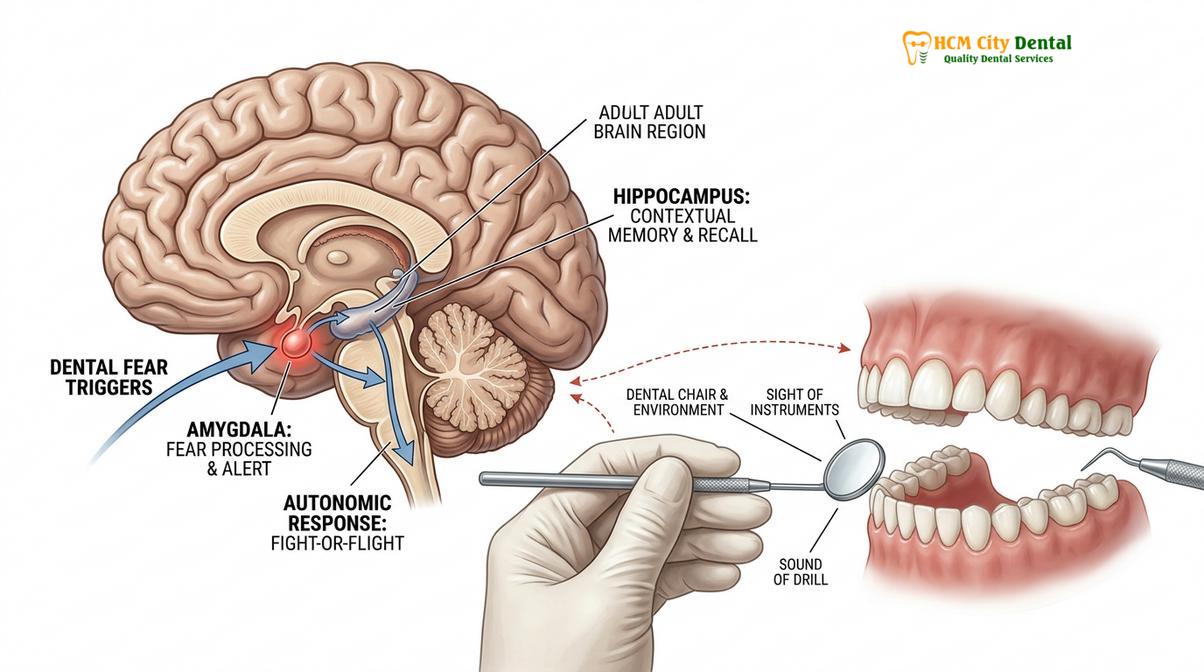
To fully comprehend the depth of dental anxiety after a traumatic experience, one must look beyond the surface-level symptoms of nervousness and examine the underlying neurobiology of fear conditioning. When a patient undergoes a highly distressing, painful, or psychologically violating experience in a dental setting, the brain’s threat-detection center—the amygdala—encodes the environmental stimuli associated with that event as dangerous. This process, known as classical conditioning, creates a deeply ingrained neural pathway. Consequently, future exposure to similar stimuli will trigger an involuntary “fight or flight” response, even if the current environment is entirely safe and the dental professional is highly empathetic [1].
This conditioned response is what differentiates standard clinical apprehension from genuine dental trauma anxiety. Standard anxiety is often anticipatory and manageable through basic reassurance. In contrast, trauma-induced anxiety is reactive, visceral, and often overwhelming. The hippocampus, which is responsible for memory consolidation, works in tandem with the amygdala to ensure that the traumatic memory remains vivid and easily accessible as a protective mechanism. Unfortunately, this evolutionary defense mechanism becomes maladaptive in the context of modern healthcare, leading to a profound cycle of avoidance. Patients may endure severe dental pain, chronic infections, and deteriorating oral health simply because the psychological cost of entering a dental clinic outweighs the physical pain of dental disease [2].
The psychological impact of these adverse events extends far beyond the dental chair. Patients often report feelings of shame, guilt, and embarrassment regarding the state of their oral health, which further compounds their reluctance to seek care. This emotional burden can lead to social isolation, dietary restrictions due to compromised masticatory function, and a significant reduction in overall quality of life. Furthermore, the trauma is not always rooted in physical pain; it can also stem from a loss of autonomy, feeling dismissed by a previous practitioner, or experiencing a severe lack of communication during a vulnerable procedure.
“The manifestation of trauma in the dental setting is rarely just about the fear of pain; it is fundamentally about the fear of losing control and being subjected to an environment where one’s physical boundaries are perceived to be under threat.”
According to Dr. Nguyen Van Cuong, a leading specialist in patient management, recognizing this loss of autonomy is the first critical step in clinical rehabilitation. Dr. Cuong emphasizes that practitioners must view the patient’s avoidance not as non-compliance, but as a valid psychological injury that requires as much clinical attention as the dental decay itself. By validating the patient’s experience and understanding the neurobiological underpinnings of their fear, the dental team can begin to dismantle the conditioned responses and lay the groundwork for successful, long-term dental phobia management.
Common Triggers and Symptoms
Symptoms of trauma-induced dental fear range from elevated heart rate and sweating to severe avoidance behaviors, often triggered by specific clinical sights, sounds, or smells.
The clinical dental environment is highly sensory, making it a minefield of potential triggers for someone who has experienced past trauma. Because the brain encodes traumatic memories holistically, any sensory input that was present during the initial adverse event can act as a catalyst for a panic response. Understanding these triggers is essential for both the patient and the dental team to proactively manage the environment and mitigate anxiety spikes [3].
Auditory triggers are among the most common and potent. The high-pitched whine of a high-speed dental handpiece, the mechanical sound of suction devices, or even the specific tone of clinical alarms can instantly transport a patient back to their traumatic experience. Olfactory triggers are equally powerful, as the olfactory bulb has direct neural connections to the amygdala. The distinct smell of eugenol (clove oil), acrylics, or clinical disinfectants can elicit a visceral reaction before the patient even reaches the reception desk.
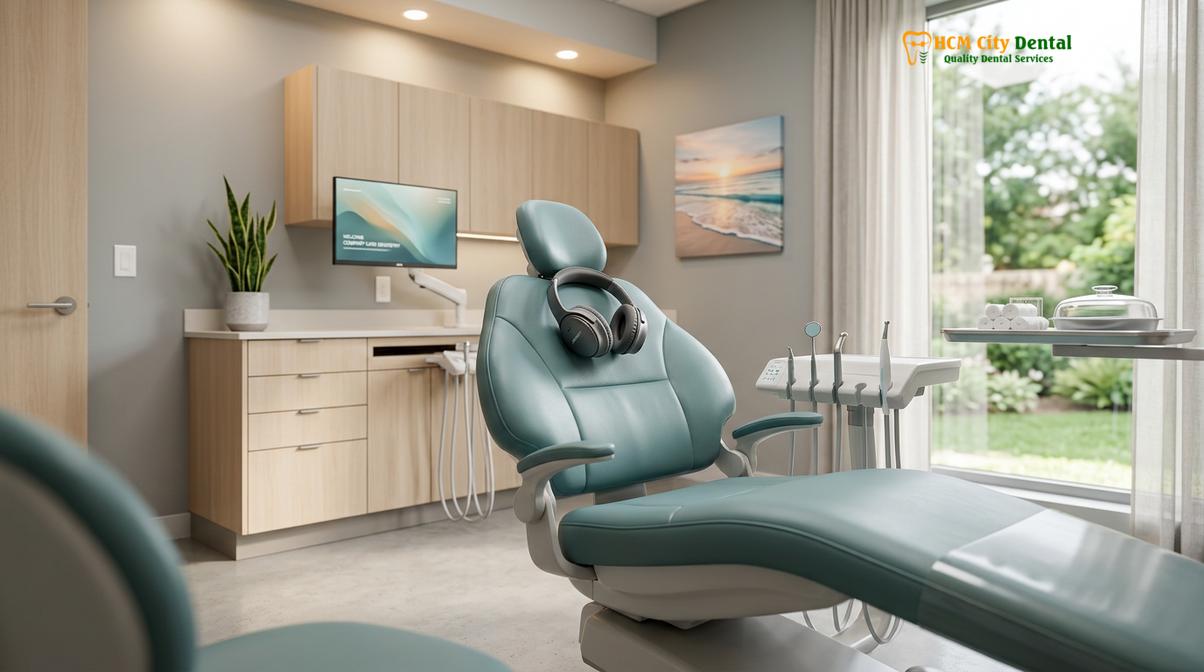
Visual and tactile triggers also play a significant role. The sight of a dental syringe, the bright glare of the overhead operatory light, or the feeling of the chair reclining into a supine position can induce feelings of helplessness and claustrophobia. For patients whose trauma involved a lack of profound anesthesia, the mere sensation of pressure or vibration on a tooth can be misinterpreted by the brain as impending sharp pain, triggering a sympathetic nervous system hyperarousal.
When these triggers are encountered, the physiological and psychological symptoms can be severe and rapid in onset. The body releases a cascade of catecholamines (epinephrine and norepinephrine), leading to a state of acute physiological distress.
| Category of Trigger | Specific Clinical Examples | Physiological / Psychological Symptoms |
|---|---|---|
| Auditory | High-speed drill, ultrasonic scaler, suction noise, clinical alarms. | Tachycardia (rapid heart rate), palpitations, hyperventilation, auditory hypersensitivity. |
| Olfactory | Eugenol, bonding agents, clinical disinfectants, latex. | Nausea, dizziness, immediate urge to flee (avoidance), diaphoresis (sweating). |
| Visual | Syringes, surgical instruments, bright overhead lights, white coats. | Pupillary dilation, muscle tension, tremors, intrusive flashbacks. |
| Tactile/Positional | Supine chair position, intraoral pressure, vibration, restricted movement. | Feeling of suffocation, claustrophobia, panic attacks, crying, defensive posturing. |
Recognizing these symptoms early is crucial. A patient experiencing a trauma response may not be able to verbally articulate their distress due to the overwhelming nature of the panic. Therefore, clinical teams must be trained to observe non-verbal cues, such as white-knuckling the armrests, rapid shallow breathing, or sudden rigidity. By utilizing tools like a standardized anxiety assessment prior to the appointment, the dental team can identify specific triggers and tailor the environment accordingly, perhaps by offering noise-canceling headphones, using alternative materials to mask clinical smells, or keeping instruments out of sight until absolutely necessary.
Clinical Approaches to Trauma-Informed Dental Care
Trauma-informed dental care prioritizes patient autonomy, utilizing clear communication, predictable workflows, and established stop signals to create a psychologically safe clinical environment.
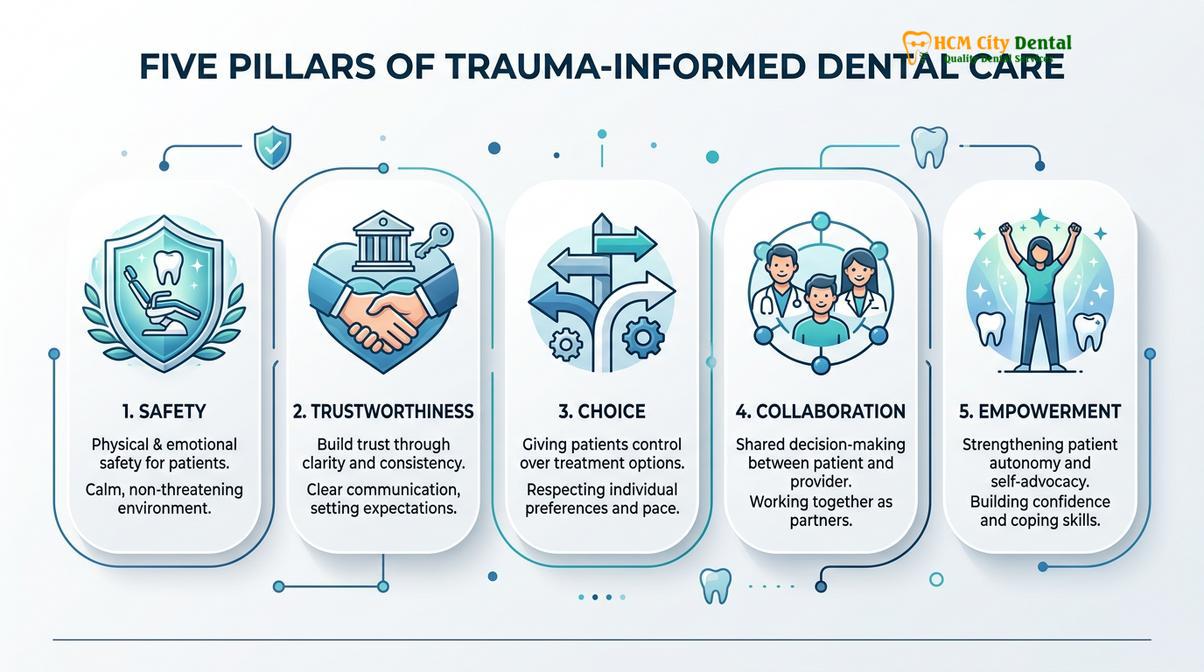
The traditional model of dentistry, which often prioritizes clinical efficiency and rapid treatment, is fundamentally incompatible with the needs of a trauma survivor. To safely and effectively treat these individuals, the practice must adopt a Trauma-Informed Care (TIC) framework. This paradigm shifts the clinical focus from “What is wrong with your teeth?” to “What happened to you, and how can we make this safe?” TIC in dentistry is built upon five core pillars: Safety, Trustworthiness, Choice, Collaboration, and Empowerment [4].
Establishing physical and psychological safety is the foundational step. This involves modifying the clinical environment to reduce sensory overload and ensuring that the patient feels physically secure. Trustworthiness is built through absolute transparency. The dental team must explain every step of the process, avoiding sudden movements or unexpected sensations. The “Tell-Show-Do” technique, originally developed for managing pediatric patients, is highly effective for adult trauma survivors. The dentist verbally explains the procedure (Tell), demonstrates it outside the mouth (Show), and only then proceeds with the actual treatment (Do).

Choice and Collaboration are vital for restoring the autonomy that was lost during the traumatic event. Patients must be given control over the pacing of their treatment. The most critical tool in this regard is the establishment of a clear, non-verbal “stop signal”—typically raising the left hand. The clinical team must honor this signal instantly and unconditionally. Knowing that they have the power to halt the procedure at any moment significantly reduces the anticipatory anxiety and empowers the patient to tolerate longer periods of treatment.
Clinical Case Review: Restoring Autonomy
Patient Profile: A 34-year-old female presented to HCMC Dental Clinic in Ho Chi Minh City with severe avoidance behavior spanning eight years following a highly painful root canal procedure where her previous dentist ignored her distress signals.
Clinical Approach: The initial two visits involved no clinical examination. The team focused entirely on building rapport and establishing a strict stop-signal protocol. Treatment was broken down into micro-appointments, starting with a simple visual inspection using only a mirror. The patient was given full control over the chair’s position and the pacing of the session.
Outcome: By the fourth visit, the patient successfully underwent a comprehensive examination and professional prophylaxis without the need for pharmacological sedation, demonstrating the profound efficacy of restoring patient autonomy in dental PTSD recovery.
Empowerment involves celebrating small victories and acknowledging the immense courage it takes for a trauma survivor to sit in the dental chair. The clinical team should actively involve the patient in treatment planning, offering alternative options whenever clinically viable, and ensuring that the patient feels like an active participant in their oral health journey rather than a passive recipient of care. This collaborative approach not only facilitates immediate treatment but also rewires the brain’s conditioned response, gradually replacing the traumatic memory with positive, safe clinical experiences.
How Sedation Dentistry Helps Trauma Survivors
Sedation dentistry provides a pharmacological bridge for trauma survivors, depressing the central nervous system to alleviate panic and allow necessary dental treatments to proceed comfortably.
While behavioral techniques and trauma-informed protocols are essential, they are sometimes insufficient for patients with severe, deeply ingrained phobias. In these cases, pharmacological intervention becomes a necessary and highly effective tool. Sedation dentistry offers a way to bypass the brain’s hyperactive threat-detection system, allowing the patient to receive critical routine care and restorative treatments without experiencing the physiological cascade of panic [5].
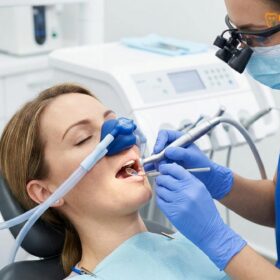
The spectrum of sedation ranges from minimal anxiolysis to deep sedation, and the appropriate modality is selected based on the patient’s medical history, the complexity of the procedure, and the severity of their anxiety. Nitrous oxide (laughing gas) is often the first line of pharmacological support. Administered via a nasal mask, nitrous oxide acts as an NMDA receptor antagonist, producing a mild state of euphoria and dissociation. It is highly titratable, meaning the dentist can adjust the level of sedation minute-by-minute, and it has a rapid onset and recovery time, allowing the patient to drive themselves home after the appointment.
For patients requiring a deeper level of relaxation, enteral conscious sedation (oral sedation) is frequently utilized. This involves the administration of a benzodiazepine (such as Triazolam or Diazepam) approximately one hour before the procedure. Benzodiazepines work by enhancing the effect of the neurotransmitter GABA, which inhibits central nervous system activity. This results in profound relaxation, decreased motor activity, and, crucially, anterograde amnesia. The amnesic effect is particularly beneficial for trauma survivors, as they often have little to no memory of the sights, sounds, or sensations of the procedure, preventing the formation of new negative memories.
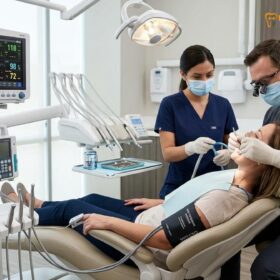
In cases of extreme phobia or when extensive, complex surgical procedures are required, intravenous (IV) sedation may be indicated. Administered directly into the bloodstream by a qualified anesthesiologist or specially trained dental surgeon, IV sedation provides a deep state of conscious sedation. The patient remains breathing on their own and can respond to basic verbal commands, but they are entirely unaware of the clinical environment. This modality offers the highest level of control for the practitioner and the deepest level of comfort for the patient.
Important Clinical Considerations for Sedation
While highly effective, sedation dentistry is not universally suitable for all patients. Contraindications may include severe respiratory conditions (such as advanced COPD), certain cardiovascular diseases, pregnancy, or specific medication interactions. A comprehensive review of the patient’s medical history, current medications, and baseline vital signs is mandatory before any pharmacological intervention. Patients must undergo a personalized clinical examination to determine the safest and most appropriate sedation modality.
It is important to view advanced sedation techniques not as a permanent crutch, but as a therapeutic bridge. By allowing the patient to experience painless, stress-free dental care, sedation helps to break the cycle of fear and avoidance. Over time, as the patient accumulates positive experiences and their oral health stabilizes, they may find that they require progressively lighter levels of sedation, eventually transitioning to behavioral management techniques alone.
Building Trust with a New Dentist
Establishing a new clinical relationship requires transparent communication, gradual exposure to the dental environment, and a mutual agreement on treatment pacing and pain management protocols.
The prospect of finding a new dental provider after a traumatic experience can be daunting. The process of overcoming bad dental experience begins long before the patient sits in the operatory chair; it starts with the initial contact and the deliberate selection of a practice that explicitly advertises and understands trauma-informed care. Patients should seek out clinics that offer pre-clinical consultations—appointments dedicated solely to conversation, without any expectation of an examination or treatment.
During this initial consultation, transparent communication is paramount. Patients are encouraged to be entirely honest about their past experiences, their specific triggers, and their boundaries. A skilled, trauma-informed dentist will listen actively, validate the patient’s fears without judgment, and collaboratively develop a customized desensitization plan. This plan may involve several visits just to acclimate to the clinical environment, practice using the stop signal, and gradually introduce non-invasive diagnostic tools.
Dr. Cuong notes that the burden of building trust lies primarily with the clinician, not the patient. “The patient has already taken a monumental step by simply walking through our doors,” he explains. “It is our clinical responsibility to prove that this environment is different, that their voice will be heard, and that their physical and emotional boundaries will be respected unconditionally.”
“Trust in a clinical setting cannot be demanded; it must be meticulously earned through consistent, predictable, and compassionate actions that prioritize the patient’s psychological safety above clinical expediency.”
At HCMC Dental Clinic, the protocol for integrating highly anxious patients involves a multidisciplinary approach. The administrative staff is trained to recognize signs of distress during the booking process, ensuring that these patients are scheduled during quieter hours to minimize auditory triggers in the waiting room. The clinical team employs a “no surprises” policy, where every sensation, sound, and step is thoroughly explained before it occurs. By consistently demonstrating reliability and respect for the patient’s autonomy, the dental team can slowly dismantle the walls of fear, fostering a therapeutic alliance that enables long-term oral health maintenance and successful anxiety reduction.
When to See a Doctor
While trauma-informed dental care and sedation can manage most cases of clinical anxiety, there are instances where the psychological trauma is so severe that it requires specialized psychiatric or psychological intervention alongside dental treatment. It is crucial to recognize the signs that indicate a need for a broader healthcare approach.
You should consider consulting a mental health professional if your fear of the dentist results in severe, debilitating panic attacks simply at the thought of making an appointment. If your avoidance behaviors are causing significant deterioration in your physical health—such as chronic systemic infections originating from the oral cavity, inability to eat solid foods, or severe chronic pain—and you still cannot bring yourself to seek care, professional psychological support is warranted. Furthermore, if your dental trauma has led to generalized symptoms of Post-Traumatic Stress Disorder (PTSD), including frequent nightmares, intrusive flashbacks that disrupt your daily life, or severe hypervigilance, a psychologist or psychiatrist can provide targeted therapies. Techniques such as Cognitive Behavioral Therapy (CBT) or Eye Movement Desensitization and Reprocessing (EMDR) can be highly effective in processing the underlying trauma, working in conjunction with your dental team to facilitate a safe return to oral healthcare.
Frequently Asked Questions
How do I overcome dental anxiety after a bad experience?
Overcoming dental anxiety requires a phased approach involving open communication with a trauma-informed dentist, systematic desensitization, and potentially pharmacological support. Begin by scheduling a consultation strictly for discussion, establishing a clear stop signal, and gradually reintroducing clinical procedures at a comfortable pace. It is essential to find a clinical team that validates your past experiences and prioritizes your autonomy, allowing you to rebuild trust in the dental environment incrementally.
Can a traumatic dental experience cause PTSD?
Yes, a severely distressing dental event can trigger symptoms consistent with Post-Traumatic Stress Disorder (PTSD). Patients may experience intrusive flashbacks, nightmares, severe physiological arousal when exposed to clinical triggers, and profound avoidance behaviors that require both psychological and dental intervention. The brain processes the clinical trauma similarly to other physical or psychological threats, leading to a conditioned fear response that persists long after the initial event has concluded.
Should I tell my new dentist about my past trauma?
Absolutely. Informing your new dentist about past traumatic experiences is critical for your safety and comfort. This disclosure allows the clinical team to modify their approach, avoid specific sensory triggers, implement tailored pacing, and utilize appropriate anxiety management protocols. A trauma-informed dentist will use this information to create a customized treatment plan that respects your boundaries and actively works to prevent re-traumatization during future visits.
What is trauma-informed dental care?
Trauma-informed dental care is a clinical framework that recognizes the widespread impact of trauma and integrates this knowledge into patient management. It prioritizes patient autonomy, psychological safety, transparent communication, and collaborative treatment planning to prevent re-traumatization during dental procedures. This approach shifts the focus from merely treating the tooth to treating the whole patient, ensuring that the clinical environment feels secure and predictable.
Is sedation recommended for patients with dental trauma?
Sedation is highly recommended for patients with severe trauma-induced anxiety, provided there are no medical contraindications. Modalities like nitrous oxide, oral conscious sedation, or intravenous sedation help depress the central nervous system, preventing panic responses and allowing necessary care to proceed safely. By bypassing the fight-or-flight response, sedation provides a therapeutic bridge, enabling patients to receive critical treatments while gradually rebuilding their tolerance for the clinical setting.
References
- Journal of the American Dental Association. Neurobiology of dental fear and classical conditioning in clinical settings. (2021).
- British Dental Journal. The psychological impact of adverse dental events and avoidance behaviors. (2020).
- International Journal of Paediatric Dentistry. Sensory triggers and physiological responses in dentally anxious patients. (2019).
- Clinical Oral Investigations. Trauma-informed care protocols in modern dental practice. (2022).
- Journal of Oral and Maxillofacial Surgery. Efficacy of conscious sedation in managing severe dental phobia. (2018).
For pricing, booking, and a free clinical assessment, visit our Sedation Dentistry service page at HCMC Dental Clinic in Ho Chi Minh City.