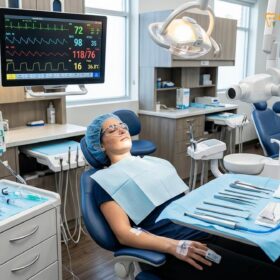
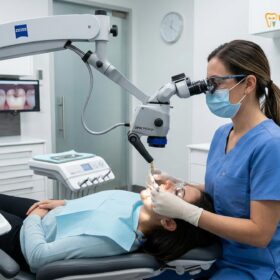
Understanding the difference between dental phobia vs anxiety is critical for effective care. While dental anxiety involves mild to moderate unease before an appointment, clinical dental phobia is an intense, paralyzing psychological condition that causes patients to completely avoid necessary oral healthcare despite experiencing severe pain.
Clinical Summary:
Dental anxiety and dental phobia represent different points on a spectrum of psychological distress related to oral healthcare. Anxiety manifests as manageable nervousness, whereas dentophobia (odontophobia) is a severe, clinically recognized anxiety disorder characterized by overwhelming panic, physiological distress, and avoidance behaviors. Effective management requires a dual approach: psychological interventions such as cognitive-behavioral therapy and pharmacological solutions like conscious sedation. Accurate diagnosis by a dental professional ensures that patients receive tailored, trauma-informed care to restore both their oral health and psychological well-being without triggering traumatic stress responses.
Key Takeaways:
- Dental anxiety is common and manageable, while dental phobia is an intense, debilitating psychological condition.
- Odontophobia often leads to a cycle of avoidance, resulting in severe oral health deterioration and emergency interventions.
- Physiological symptoms of phobia include tachycardia, panic attacks, and extreme sympathetic nervous system arousal.
- Standard relaxation techniques are generally insufficient for true clinical dentophobia without pharmacological support.
- Multidisciplinary treatment combining cognitive-behavioral therapy and sedation dentistry yields the highest success rates.
Defining the Boundary: Dental Anxiety vs. Dental Phobia
Dental anxiety is a common feeling of unease or apprehension regarding dental visits, whereas dental phobia is an overwhelming, irrational fear that triggers severe panic and complete avoidance of care.
The distinction between feeling nervous about a dental appointment and suffering from a clinical phobia is profound, both psychologically and physiologically. When evaluating dental phobia vs anxiety, clinicians look at the intensity of the fear response and the degree to which it interferes with a patient’s life and health. Dental anxiety is a widespread phenomenon. It is estimated that a significant portion of the global population experiences some level of trepidation before sitting in the dental chair. This anxiety might be triggered by the sound of the drill, the anticipation of discomfort, or a general feeling of vulnerability. However, patients with dental anxiety are typically able to rationalize their fears, attend their scheduled appointments, and tolerate the necessary procedures, perhaps with the aid of simple reassurance or mild distraction techniques.[1]
In stark contrast, dental phobia—clinically referred to as dentophobia or odontophobia—is an intense, disproportionate, and often paralyzing fear. It is not merely a heightened state of nervousness; it is a recognized psychiatric condition classified under specific phobias. For an individual suffering from this condition, the mere thought of a dental environment can trigger a cascade of severe physiological responses. Dr. Nguyen Van Cuong, a leading expert in patient management, notes that the psychological barrier in phobic patients is so immense that it overrides logical thought, compelling them to endure excruciating dental pain rather than seek professional help. This avoidance behavior is the hallmark of the condition, distinguishing odontophobia vs dental anxiety in a clinical setting.
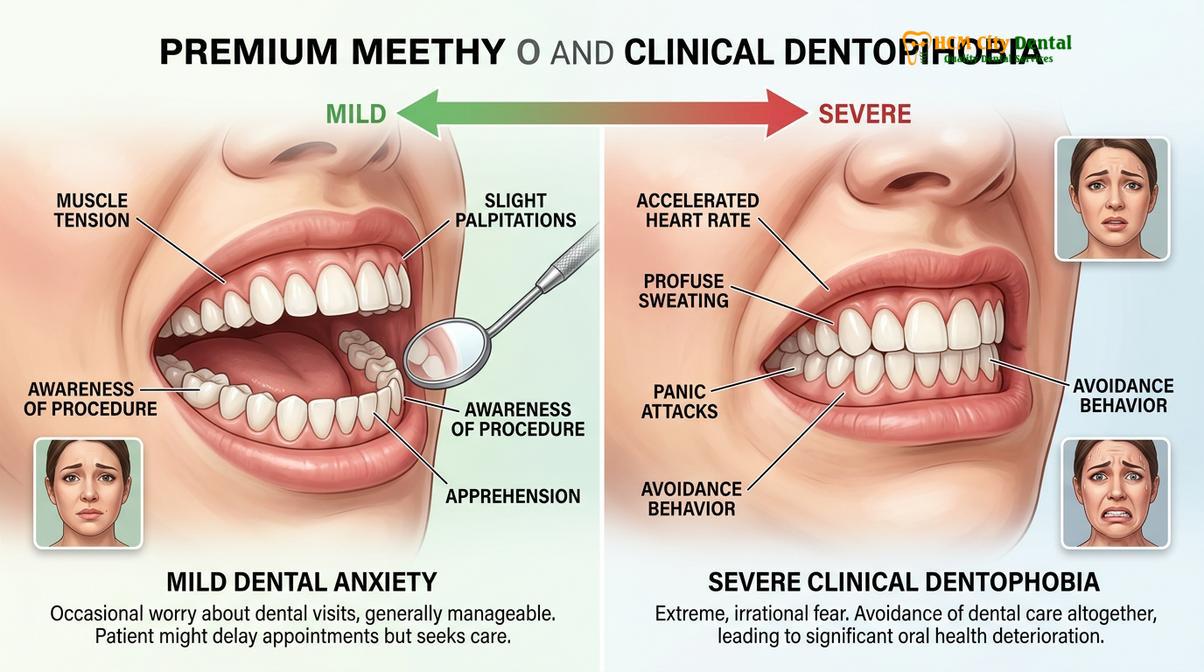
The boundary between these two states is not always a sharp line but rather a continuum. A patient may start with mild anxiety due to a negative childhood experience. If subsequent visits are also perceived as traumatic, or if the patient feels a profound loss of control, this anxiety can metastasize into a full-blown phobia. Understanding this progression is vital for dental professionals. Treating a phobic patient with the same protocols used for an anxious patient often leads to treatment failure and further psychological trauma. Therefore, recognizing the precise nature of the patient’s fear is the foundational step in developing a safe, effective, and compassionate treatment plan.
The Clinical Diagnosis of Dentophobia (Odontophobia)
Diagnosing dentophobia involves evaluating the patient against specific psychological criteria, focusing on the intensity of the fear, the presence of panic attacks, and the extent of avoidance behavior.
The clinical diagnosis of dentophobia requires a structured assessment, often drawing upon the criteria outlined in the Diagnostic and Statistical Manual of Mental Disorders (DSM-5) for specific phobias. To be formally diagnosed with clinical dentophobia, the patient’s fear must be marked, persistent, and excessive or unreasonable. It must be triggered by the specific presence or anticipation of a dental encounter. Furthermore, exposure to the phobic stimulus almost invariably provokes an immediate anxiety response, which may take the form of a situationally bound panic attack.[2]
During a diagnostic consultation, a trauma-informed dentist will look for specific behavioral markers. The most prominent of these is the “cycle of avoidance.” Patients with clinical dentophobia will cancel appointments repeatedly, endure chronic oral infections, and rely on over-the-counter analgesics to manage pain, only seeking professional help when a systemic infection or unbearable agony forces an emergency visit. This emergency visit, often requiring invasive procedures due to the advanced state of decay, reinforces the phobia, creating a devastating feedback loop.
| Clinical Parameter | Dental Anxiety | Clinical Dentophobia |
|---|---|---|
| Emotional State | Unease, worry, apprehension | Overwhelming terror, impending doom |
| Physiological Response | Mild sweating, slightly elevated heart rate | Tachycardia, hyperventilation, acute panic attacks |
| Behavioral Impact | Attends appointments despite discomfort | Complete avoidance, frequent cancellations |
| Cognitive Processing | Can rationalize and accept reassurance | Irrational thought patterns, inability to process logic |
| Treatment Requirement | Reassurance, distraction, mild sedation | CBT, systematic desensitization, advanced sedation |
Etiologically, the roots of dentophobia are multifaceted. The most common pathway is direct conditioning—a previous traumatic, highly painful, or psychologically distressing dental experience, often occurring in childhood. However, vicarious learning also plays a significant role. Hearing horrific stories from parents or peers can instill a deep-seated fear before a patient ever sits in a dental chair. Additionally, individuals with a history of generalized anxiety disorders, post-traumatic stress disorder (PTSD), or a specific fear of needles (trypanophobia) are at a significantly higher risk of developing odontophobia. Accurate diagnosis is paramount because it dictates the entire trajectory of care, shifting the focus from merely fixing teeth to managing a complex psychological condition.

Symptoms of Extreme Dental Phobia
Extreme dental phobia manifests through severe physiological and psychological symptoms, including tachycardia, hyperventilation, acute panic attacks, and profound sleep disturbances prior to appointments.
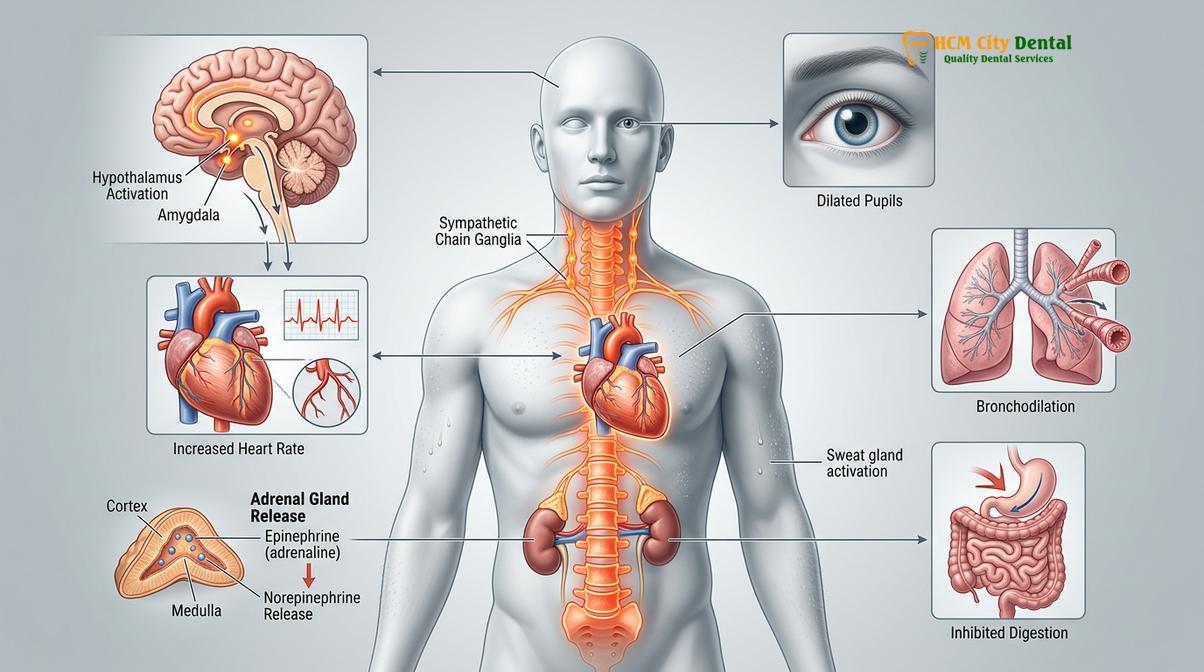
The symptomatology of extreme dental phobia extends far beyond simple nervousness, encompassing a wide array of severe physiological, cognitive, and behavioral manifestations. When a phobic individual is confronted with the prospect of dental care, their sympathetic nervous system initiates a massive fight-or-flight response. This neurobiological reaction is identical to what one would experience when facing a life-threatening predator. The hypothalamus signals the adrenal glands to release a surge of catecholamines, primarily epinephrine (adrenaline) and norepinephrine.[3]
Physiologically, this catecholamine surge results in profound somatic symptoms. Patients may experience severe tachycardia (rapid heart rate), palpitations, and elevated blood pressure. Hyperventilation is common, leading to dizziness, lightheadedness, and a tingling sensation in the extremities. Gastrointestinal distress, including nausea and acute abdominal cramping, frequently occurs in the hours leading up to an appointment. In the most severe cases of fear of dentist phobia, patients may suffer from full-blown panic attacks, characterized by a feeling of suffocation, chest pain, and an overwhelming fear of dying or losing control.
“The physiological response in a severely phobic dental patient is not a conscious choice but an involuntary neurobiological reflex. The amygdala perceives the dental environment as an acute threat, overriding the prefrontal cortex’s ability to rationalize, thereby triggering a systemic fight-or-flight cascade that makes standard dental treatment impossible without intervention.”
Cognitively, the symptoms are equally debilitating. Patients experience catastrophic thinking, imagining the worst possible outcomes of any procedure. They may suffer from severe insomnia for days or even weeks prior to a scheduled visit, leading to physical exhaustion and heightened emotional volatility. Behaviorally, the symptoms manifest as extreme avoidance. Even when seated in the dental chair, a phobic patient may exhibit psychomotor agitation—gripping the armrests tightly (white-knuckling), crying, trembling, or exhibiting an inability to follow basic instructions due to cognitive overload. Recognizing these symptoms is crucial for the clinical team to halt any planned procedures and pivot immediately to anxiety management protocols.
Why Standard Comfort Tips Fail for Clinical Phobia
Basic relaxation techniques like deep breathing or listening to music are often ineffective for clinical phobia because they cannot override the intense, hardwired fight-or-flight response triggered by the phobic stimulus.
A common misconception in general dentistry is that a soothing environment, a gentle chairside manner, and basic relaxation tips are sufficient to manage all fearful patients. While these strategies are highly effective for mild to moderate dental anxiety, they routinely fail when applied to cases of clinical dentophobia. The reason lies in the neurobiology of the phobic response. When a patient is in the grip of a true phobia, their brain has undergone what is colloquially known as an “amygdala hijack.” The amygdala, the brain’s fear center, has detected a profound threat and has shut down the prefrontal cortex, which is responsible for logical reasoning and emotional regulation.[4]
Because the logical part of the brain is effectively offline, telling a phobic patient to “just relax,” “take deep breaths,” or “listen to this calming music” is clinically futile. The patient’s nervous system is screaming that they are in mortal danger. Attempting to force a procedure while a patient is in this state is not only unethical but highly dangerous. It can lead to sudden, unpredictable movements that compromise patient safety, and it virtually guarantees the exacerbation of the psychological trauma, making future visits even more difficult.
Patients seeking extreme dental fear help often report immense frustration when their profound terror is dismissed as mere nervousness. Standard communication techniques, such as “tell-show-do,” which work well for children and mildly anxious adults, can actually trigger a panic attack in a phobic patient by forcing them to focus on the very instruments that cause their terror. Therefore, specialized clinical protocols that bypass or deeply suppress this hardwired fear response are absolutely necessary for successful treatment.
Clinical Treatment Protocols: Cognitive Therapy and Sedation
Managing severe dentophobia requires a comprehensive clinical protocol that integrates psychological interventions, such as cognitive-behavioral therapy, with advanced pharmacological sedation techniques to ensure patient safety and comfort.
The modern clinical approach to treating severe dentophobia is highly multidisciplinary, blending psychological therapies with advanced pharmacological interventions. The goal is not merely to force the patient through a single procedure, but to systematically dismantle the fear response, allowing for long-term oral health maintenance. Cognitive-Behavioral Therapy (CBT) is widely considered the gold standard psychological intervention for specific phobias. In the context of dentistry, CBT involves working with a trained therapist to identify and challenge catastrophic thought patterns. Patients learn to recognize their physiological triggers and employ cognitive restructuring to reframe the dental environment from a place of trauma to a place of healing.
A core component of CBT is systematic desensitization, or exposure therapy. This involves creating a “fear hierarchy,” starting with the least anxiety-provoking stimulus (e.g., looking at a picture of a dental clinic) and gradually working up to the most feared scenario (e.g., sitting in the chair while a drill is running). This process is done at the patient’s pace, allowing their nervous system to habituate to the stimuli without triggering a panic response. However, psychological therapy takes time, and many phobic patients present with acute dental emergencies that require immediate intervention.
This is where pharmacological management becomes indispensable. For patients who cannot tolerate exposure therapy or require immediate, extensive dental work, sedation dentistry offers a safe and highly effective solution. Sedation protocols exist on a continuum, tailored to the patient’s specific level of phobia and medical history:[5]
- Inhalation Sedation (Nitrous Oxide): Often referred to as laughing gas, this provides minimal sedation. It is excellent for mild to moderate anxiety, offering a rapid onset of relaxation and a quick recovery, though it may be insufficient for severe phobia.
- Oral Conscious Sedation: Involves administering a benzodiazepine (such as triazolam or diazepam) prior to the appointment. This provides moderate sedation, significantly blunting the fear response and often inducing an anterograde amnesic effect, meaning the patient remembers very little of the procedure.
- Intravenous (IV) Sedation: Administered directly into the bloodstream, IV sedation allows the anesthesiologist to precisely titrate the depth of sedation. It is highly effective for extreme dentophobia, placing the patient in a state of deep relaxation where they are largely unaware of the procedure but can still breathe independently and respond to physical stimulation.
A 45-year-old patient visited HCMC Dental Clinic in Ho Chi Minh City after avoiding dental care for over 15 years due to severe clinical dentophobia stemming from a traumatic childhood extraction. Presenting with multiple abscesses and severe pain, the patient was unable to even sit in the dental chair without experiencing a panic attack. Dr. Nguyen Van Cuong implemented a phased protocol: an initial consultation in a non-clinical setting, followed by the prescription of an oral anxiolytic for the night before the procedure. On the day of surgery, IV conscious sedation was administered by a specialized anesthesiologist. The patient underwent comprehensive restorative work and extractions while completely relaxed and pain-free. The amnesic effect of the sedation prevented the formation of new traumatic memories, allowing the patient to return for routine cleanings six months later using only mild nitrous oxide.
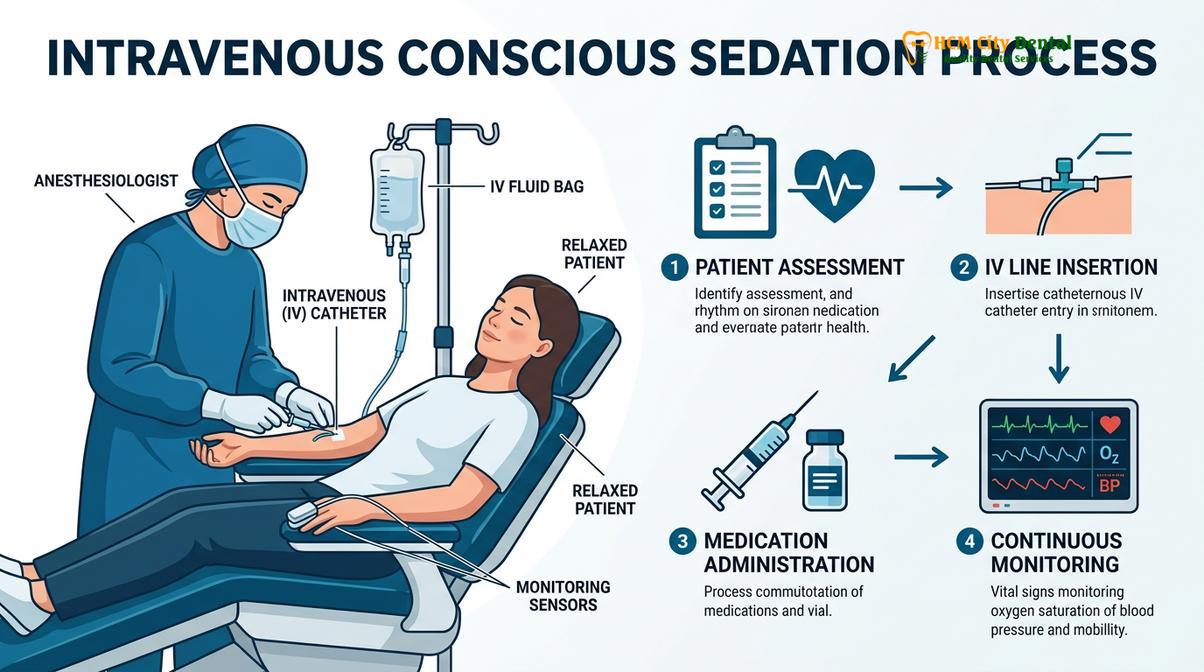
The integration of these techniques ensures that even the most fearful patients can receive the care they desperately need. By combining the immediate relief of sedation with the long-term cognitive restructuring of CBT, clinicians can help patients break the cycle of avoidance and reclaim their oral health.
When to See a Doctor
You should seek immediate professional help if your dental fear causes you to avoid treating active oral infections, severe pain, or if the anxiety significantly disrupts your daily life and sleep.
Understanding when your fear has crossed the threshold into a medical issue requiring intervention is crucial. It is highly recommended to seek a consultation with a trauma-informed dental professional if you experience any of the following:
- You are currently experiencing severe, throbbing tooth pain, facial swelling, or signs of an abscess (such as a fever or foul taste in the mouth) but are too terrified to book an appointment. Untreated oral infections can spread systemically and become life-threatening.
- The mere thought of a dental visit triggers severe physical symptoms, such as panic attacks, uncontrollable shaking, or vomiting.
- You have avoided routine General Dentistry check-ups for several years strictly due to fear, leading to noticeable deterioration in your oral health, such as loose teeth or bleeding gums.
- Your anxiety regarding your teeth is causing profound social embarrassment, preventing you from smiling, eating normally, or engaging in social activities.
In these instances, it is vital to look for a clinic that explicitly advertises expertise in phobia management and sedation. Do not force yourself into a standard dental environment if you know it will trigger a traumatic response; instead, seek out professionals equipped to handle complex psychological needs alongside dental care.
How to Take the First Step at Our Saigon Clinic
Taking the first step involves scheduling a non-clinical consultation where you can discuss your fears in a safe, judgment-free environment before any dental examination occurs.
For individuals suffering from severe dental phobia, the hardest part of the journey is often making the initial contact. At HCMC Dental Clinic in Ho Chi Minh City, we understand that forcing a phobic patient straight into a dental chair is counterproductive. Our protocol for highly anxious patients begins with a “no-drill, no-probe” consultation. This initial meeting takes place in a comfortable, non-clinical consultation room, entirely removed from the sights, sounds, and smells of the standard operatory.

During this visit, the focus is entirely on communication and trust-building. You will have the opportunity to discuss your past experiences, identify your specific triggers, and outline your boundaries. Our clinical team will listen without judgment and explain the various sedation and comfort options available. Only when you feel completely safe and ready will we proceed with a basic visual examination or digital imaging, always at a pace dictated by you. By prioritizing psychological safety and utilizing advanced sedation protocols, we strive to transform your relationship with dental care, ensuring that your journey to a healthy smile is as comfortable and stress-free as possible.
“The foundation of treating dental phobia is not found in the instruments we use, but in the trust we build. A patient must know that they are in complete control and that their psychological boundaries will be unconditionally respected at every stage of their care.”
Frequently Asked Questions
What is the clinical term for fear of dentists?
The clinical term for an extreme, irrational fear of dentists or dental care is dentophobia, also known as odontophobia. It is classified under the Diagnostic and Statistical Manual of Mental Disorders (DSM-5) as a specific phobia, distinct from general apprehension, and requires specialized psychological and clinical management to overcome.
How do I know if I have dental anxiety or a full phobia?
You likely have dental anxiety if you feel nervous but can still attend appointments and tolerate procedures. Conversely, a full phobia is characterized by overwhelming panic, severe physical symptoms like tachycardia, and a complete avoidance of dental care even when experiencing severe oral pain or infection.
What causes clinical dentophobia?
Clinical dentophobia is most frequently caused by traumatic past dental experiences, particularly during childhood. Other contributing factors include vicarious learning (hearing about others’ negative experiences), a generalized fear of needles or clinical settings, feelings of helplessness, and underlying anxiety disorders that amplify the perceived threat of dental procedures.
How do dentists treat patients with extreme phobia?
Dentists treat extreme phobia using a multidisciplinary approach that combines psychological techniques and pharmacological support. This includes cognitive-behavioral therapy, systematic desensitization, and various levels of sedation dentistry—ranging from nitrous oxide to intravenous (IV) sedation—to ensure the patient remains completely comfortable and physiologically stable during treatment.
Can severe dental phobia be cured?
While severe dental phobia may not be instantly cured, it can be highly effectively managed and significantly reduced over time. Through consistent exposure therapy, compassionate dental care, and the strategic use of sedation, patients can gradually rebuild trust, rewire their fear response, and successfully maintain their oral health without panic.
References
- Journal of the American Dental Association. Diagnostic criteria and prevalence of dental anxiety and phobia. (2021).
- British Dental Journal. The cycle of avoidance in odontophobia: psychological and clinical implications. (2020).
- International Journal of Oral and Maxillofacial Surgery. Neurobiological responses to phobic stimuli in dental settings. (2019).
- Clinical Oral Investigations. Efficacy of cognitive-behavioral therapy in managing specific dental phobias. (2022).
- Journal of Oral and Maxillofacial Surgery. Patient safety and efficacy in dental sedation and anesthesia protocols. (2021).
For pricing, booking, and a free clinical assessment, visit our Sedation Dentistry service page at HCMC Dental Clinic in Ho Chi Minh City.