Can a cracked tooth heal itself? The short clinical answer is no. Unlike bones, tooth enamel contains no living cells or blood vessels, making natural regeneration impossible. While minor surface lines may remain stable, deeper cracks require professional dental intervention to prevent infection and structural failure.
Clinical Summary:
A cracked tooth cannot heal naturally because the outer layers—enamel and dentin—lack the cellular mechanisms required for tissue regeneration. While the inner pulp can produce a thin layer of secondary dentin to protect the nerve, it cannot fuse a structural fracture. Minor craze lines are often harmless, but true cracks extending into the dentin or root will progressively worsen under the immense pressure of chewing forces. Early diagnosis and restorative treatments, such as dental bonding, custom crowns, or root canal therapy, are essential to stabilize the tooth, prevent bacterial infiltration, and preserve the natural dentition for long-term function.
Key Takeaways:
- Tooth enamel is non-living tissue and cannot biologically regenerate or repair structural fractures.
- Superficial enamel micro-fractures are generally cosmetic and rarely require invasive treatment.
- Deep cracks extending into the dentin or pulp will inevitably worsen over time without clinical intervention.
- Sharp pain upon releasing a bite is a classic, hallmark symptom of cracked tooth syndrome.
- Early stabilization with a custom dental crown can often save a compromised tooth from extraction.
The Biological Truth About Tooth Structure
Teeth cannot heal themselves because their primary protective layer, the enamel, is composed entirely of non-living minerals without a blood supply or cellular regenerative capabilities.
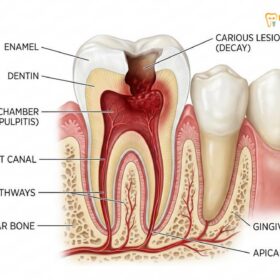
To fully understand why a fractured tooth behaves differently than a broken bone, we must examine the unique and highly specialized anatomy of human dentition. A tooth is not a solid block of bone; rather, it is a complex, multi-layered structure designed to withstand immense mechanical forces while protecting a delicate inner nerve center. The inability of a tooth to undergo biological repair is directly tied to how these layers are formed during human development.
The outermost layer of the tooth is the enamel. Enamel is the hardest substance in the human body, composed of approximately 96% inorganic minerals, primarily tightly packed hydroxyapatite crystals. During tooth development, specialized cells called ameloblasts secrete this enamel matrix. However, once the tooth erupts through the gums into the oral cavity, these ameloblasts undergo apoptosis (programmed cell death). Because there are no living cells left within the enamel, and absolutely no blood vessels to deliver nutrients or repair cells, enamel is entirely incapable of biological regeneration [1]. When enamel fractures, the physical bond between the mineral crystals is permanently severed.
Beneath the enamel lies the dentin, a slightly softer, porous layer that makes up the bulk of the tooth’s structure. Dentin contains millions of microscopic channels called dentinal tubules, which radiate outward from the center of the tooth. While dentin does contain cellular extensions from the inner pulp, it does not have the capacity to fuse a fracture. When a crack penetrates through the enamel and into the dentin, these tubules are exposed. This exposure is the primary reason why patients experience sharp, sudden sensitivity to hot, cold, or sweet stimuli.
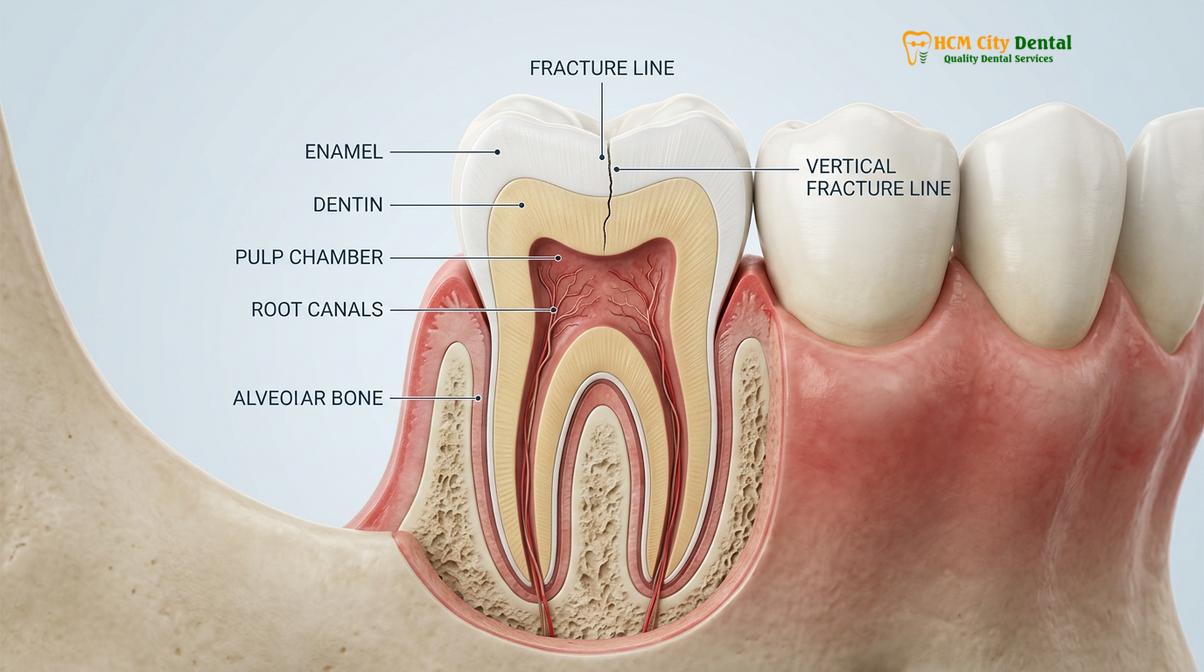
At the very core of the tooth is the dental pulp, a soft tissue chamber housing nerves, blood vessels, and connective tissue. The pulp is the only part of the tooth that possesses a true biological defense mechanism. When the tooth is traumatized or irritated by a slowly advancing crack, the pulp can lay down a protective barrier known as secondary or reparative dentin. However, this response is strictly internal. The reparative dentin serves only to insulate the nerve from incoming bacteria and thermal shock; it does absolutely nothing to repair the structural integrity of the outer enamel or dentin. Therefore, the concept of a cracked tooth self repair is a biological impossibility.
? Need urgent dental help in Ho Chi Minh City? Visit our Emergency Dentistry Hub for same-day appointments, 24/7 WhatsApp support, and comprehensive emergency dental services.
Hairline Cracks vs Craze Lines
Distinguishing between harmless craze lines and structural hairline cracks is critical, as superficial lines require no treatment, while deeper cracks demand immediate restorative care.
Patients often look in the mirror, shine a harsh light on their teeth, and panic upon seeing vertical lines running down the surface of their enamel. It is crucial to differentiate between a true structural fracture and normal wear-and-tear. In clinical dentistry, we categorize these visible lines into distinct classifications based on their depth, symptoms, and potential threat to the tooth’s vitality.
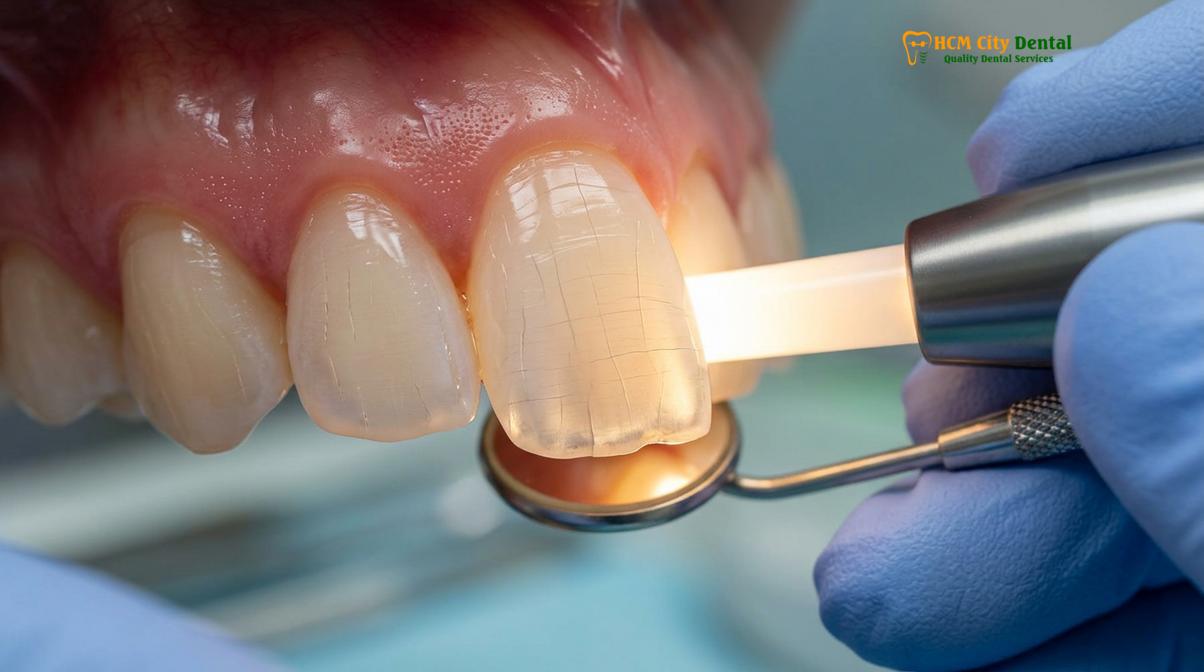
The most common and least concerning phenomena are craze lines teeth. Craze lines are microscopic, superficial micro-fractures that exist exclusively within the outer enamel layer. They do not penetrate into the dentin. These lines are an entirely normal part of aging, resulting from decades of daily chewing, temperature fluctuations (such as drinking hot coffee followed by ice water), and minor occlusal stress. Craze lines are asymptomatic; they do not cause pain, they do not cause sensitivity, and they do not weaken the tooth. From a clinical perspective, they are considered a cosmetic issue rather than a medical one. They may accumulate dietary stains over time, making them more visible, but they do not require structural repair.
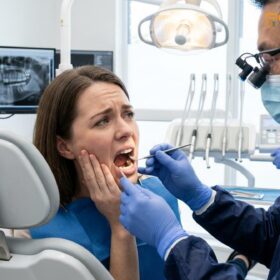
In stark contrast, a true hairline crack tooth represents a significant structural failure. A hairline crack extends beyond the enamel and penetrates into the dentin layer, and sometimes even further toward the pulp chamber. Unlike craze lines, hairline cracks are rarely visible to the naked eye without specialized dental lighting or magnification. Instead, they announce their presence through distinct symptoms. Patients with a hairline crack typically experience sharp, localized pain when biting down on specific foods, or a sudden “zing” of pain when releasing biting pressure. This occurs because the chewing force causes the fractured pieces of the tooth to flex microscopically, irritating the fluid within the dentinal tubules and triggering the underlying nerve [2].
| Feature | Craze Lines | Hairline Cracks | Deep Fractures / Split Tooth |
|---|---|---|---|
| Depth of Damage | Enamel only (superficial) | Enamel and Dentin | Enamel, Dentin, Pulp, and Root |
| Pain Symptoms | None (Asymptomatic) | Sharp pain on biting/release, thermal sensitivity | Severe, constant pain, swelling, infection |
| Visibility | Visible as faint vertical lines, often stained | Often invisible without transillumination | Visible separation of tooth segments |
| Clinical Treatment | No treatment needed (Cosmetic only) | Dental bonding, Onlay, or Crown | Root canal therapy or Extraction |
Accurate diagnosis requires a comprehensive clinical examination. Dentists utilize specialized tools, such as transillumination (shining a high-intensity fiber-optic light through the tooth to visualize the fracture plane), methylene blue dye to highlight the crack, and a bite stick (often called a Tooth Slooth) to isolate which specific cusp of the tooth is fractured. Because hairline cracks rarely show up on standard two-dimensional dental X-rays, relying on symptoms and clinical testing is paramount.
Why Teeth Cannot Self-Heal Like Bones
Unlike bones, which utilize a rich blood supply and specialized cells to rebuild fractured tissue, tooth enamel is avascular and acellular, making biological fusion impossible.
When a patient breaks an arm or a leg, the orthopedic treatment protocol is relatively straightforward: align the fractured bone segments, immobilize them with a cast, and allow the body’s natural healing mechanisms to take over. Within weeks, the bone fuses back together, often becoming stronger at the fracture site than it was before. This remarkable regenerative capability leads many patients to logically ask why a cracked tooth cannot undergo the same process. The answer lies in the fundamental histological differences between bone tissue and dental tissue.
Bone is a highly dynamic, living tissue. It is permeated by a dense network of blood vessels that deliver oxygen, nutrients, and immune cells. When a bone fractures, the body immediately forms a hematoma (blood clot) at the site. Specialized cells called osteoclasts clear away the damaged bone debris, while osteoblasts rapidly lay down new bone matrix (callus) to bridge the gap. This continuous cycle of cellular remodeling allows the bone to completely heal itself.
Tooth enamel, conversely, is entirely static. As previously established, enamel contains no blood vessels, no nerves, and no living cells. There is no biological delivery system to transport repair materials to the site of a dental fracture. When a crack propagates through the enamel, it creates a permanent physical void. The body cannot generate a “dental callus” to bridge this gap. Therefore, any hope for a cracked tooth self repair is fundamentally flawed [3].
“While the dental pulp can mount a localized defense by laying down reparative dentin, this biological response is designed solely to insulate the nerve from thermal shock and bacterial toxins. It is not designed to, nor is it capable of, fusing a fractured enamel shell back together.”
It is important to address a common misconception regarding tooth remineralization. Patients often read that fluoride and saliva can “heal” teeth, leading them to believe that a crack can be reversed. Remineralization is a real and vital chemical process, but it only applies to microscopic acid erosion—the very early stages of a cavity where the enamel has been softened but not structurally broken. Saliva, rich in calcium and phosphate, combined with fluoride, can harden this softened enamel by forming fluorapatite. However, remineralization cannot bridge a macroscopic physical gap or fuse two separated pieces of a fractured tooth. Once the structural integrity is compromised by a crack, mechanical intervention by a dentist is the only viable solution.
Prognosis: What Happens to an Untreated Crack?
An untreated cracked tooth will progressively deteriorate as chewing forces drive the fracture deeper, inevitably leading to severe pain, bacterial infection, and potential tooth loss.
Understanding the cracked tooth prognosis is vital for patients who are hesitant to seek immediate dental care. Because a cracked tooth may only cause intermittent pain—perhaps only hurting when biting down on a specific seed or nut—it is tempting to ignore the problem and simply chew on the other side of the mouth. However, a cracked tooth is a progressive mechanical failure. It will never remain static, and it will certainly never improve on its own.
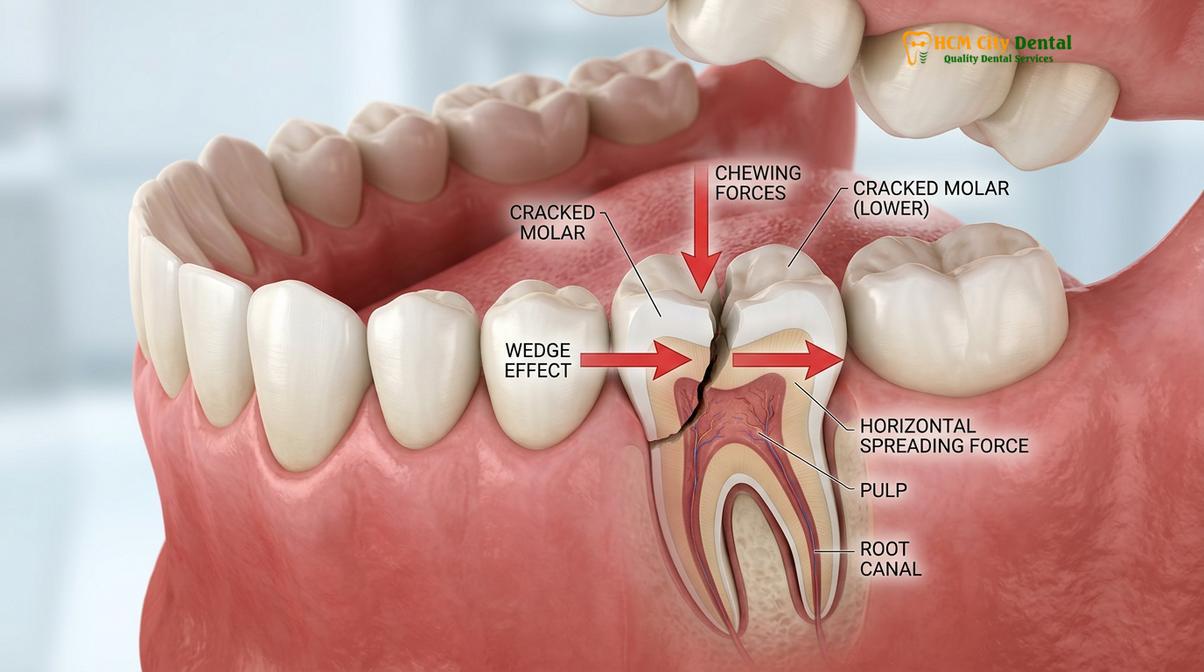
The primary driver of this progression is the biomechanics of human mastication (chewing). The human jaw is capable of exerting tremendous force—often exceeding 200 pounds of pressure per square inch on the molar teeth. When a tooth has a structural crack, every single bite acts like a microscopic wedge. The opposing tooth drives into the groove of the cracked tooth, forcing the fractured segments apart. Over time, this repetitive wedging action causes the crack to propagate deeper and deeper into the tooth structure.
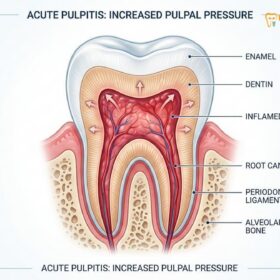
As the crack deepens, it eventually breaches the protective dentin and reaches the pulp chamber. This is where the situation transitions from a mechanical problem to a severe biological emergency. The crack serves as a direct superhighway for oral bacteria to bypass the enamel and invade the sterile pulp tissue. Once bacteria infiltrate the pulp, they cause severe inflammation known as irreversible pulpitis. The patient will experience intense, throbbing, spontaneous pain that is no longer dependent on chewing. The tooth will become exquisitely sensitive to hot and cold, with the pain lingering long after the stimulus is removed [4].
If the pulpitis is left untreated, the nerve tissue will eventually die (pulpal necrosis). The infection will then spread through the root canals and exit the tip of the root into the surrounding jawbone, creating a periapical abscess. At this stage, the patient may experience significant facial swelling, a foul taste in the mouth, and systemic symptoms such as a fever. What began as a simple, easily treatable hairline crack has now evolved into a complex medical situation requiring extensive endodontic therapy or, in the worst-case scenario, the complete loss of the tooth.
Modern Treatments to Support and Save Cracked Teeth
While teeth cannot heal naturally, modern dentistry utilizes advanced restorative techniques like bonding, crowns, and root canal therapy to stabilize fractures and preserve the tooth.
The primary goal of treating a cracked tooth is to eliminate pain, prevent the fracture from propagating further, and protect the underlying nerve from bacterial infection. Because the tooth cannot heal itself, the dentist must act as the structural architect, providing the mechanical support the tooth desperately needs. The specific treatment protocol depends entirely on the location, depth, and severity of the crack.
For very minor cracks that are confined to the outer layers of the dentin and have not compromised a significant portion of the tooth, dental bonding or a conservative composite filling may be sufficient. The dentist will carefully remove any weakened tooth structure along the fracture line and fill the void with a high-strength composite resin. This resin bonds micromechanically to the tooth, sealing the crack and preventing bacterial microleakage. However, composite resin has limited tensile strength and is generally not recommended for deep cracks on heavy load-bearing molars.
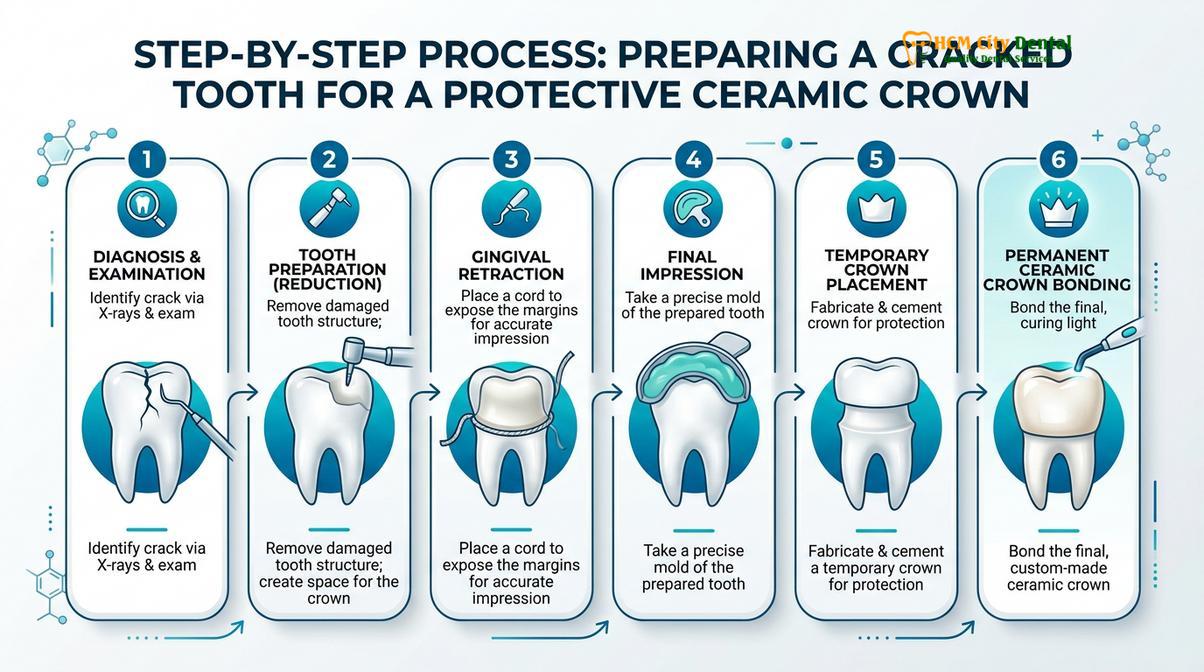
The gold standard for treating a symptomatic cracked tooth is a full-coverage dental crown. A crown acts like a protective helmet or a tight physical splint for the compromised tooth. During the procedure, the dentist carefully reshapes the outer circumference of the tooth. A custom-fabricated ceramic or porcelain crown is then permanently cemented over the remaining tooth structure. The biomechanical brilliance of a crown lies in its ability to bind the fractured segments together. When the patient bites down, the chewing force is distributed evenly across the rigid ceramic surface, preventing the underlying tooth segments from flexing apart. This eliminates the pain associated with the “wedge effect” and halts the progression of the crack.
A 45-year-old patient presented to Dr. Nguyen Van Cuong at HCMC Dental Clinic in Ho Chi Minh City complaining of sharp, intermittent pain in a lower right molar when chewing tough foods. Clinical examination and bite testing revealed a deep hairline crack extending across the central groove, though the nerve remained vital and uninfected. Dr. Cuong recommended immediate stabilization. The tooth was prepared, and a high-strength zirconia crown was placed. The rigid crown successfully splinted the fracture, resolving all pain symptoms immediately and saving the patient from requiring a complex root canal or extraction.
If the crack has already propagated deep enough to inflame or infect the dental pulp, a crown alone will not suffice. In these cases, Root Canal Therapy is mandatory before the crown can be placed. The endodontist or general dentist will access the inner chamber, remove the infected nerve tissue, thoroughly disinfect the canal system, and seal it with a biocompatible material. Once the biological infection is resolved, the structural crown is placed over the tooth. You can learn more about managing severe dental pain prior to treatment in our Dental Pain Medication Guide.
Unfortunately, there are limits to what modern dentistry can save. If a crack extends vertically down the root of the tooth, extending significantly below the gumline and into the jawbone, the tooth is classified as a “split tooth.” A split tooth cannot be saved by any current medical technology. The segments are completely separated, and the root is compromised. In these severe cases, the only clinical option is a safe extraction followed by replacement with a dental implant or a bridge to restore function and prevent the shifting of adjacent teeth.
How to Prevent Cracks and Protect Your Teeth
Preventing tooth fractures involves managing excessive occlusal forces, wearing protective nightguards for bruxism, and avoiding dietary habits that place undue stress on the enamel.
Given that a cracked tooth cannot heal and requires professional intervention, proactive prevention is the most logical and cost-effective strategy. The structural integrity of your teeth is finite, and protecting them from catastrophic stress is essential for lifelong oral health. Prevention strategies focus on mitigating the two primary causes of tooth fractures: excessive mechanical force and the weakening of the enamel substrate.
The leading cause of cracked teeth in adults is bruxism—the chronic, often subconscious clenching and grinding of teeth, particularly during sleep. Bruxism subjects the teeth to forces exponentially higher than normal chewing. Over years, this relentless pressure causes microscopic fatigue in the enamel, eventually leading to macroscopic fractures. The most effective preventative measure for bruxism is a custom-fabricated occlusal guard (nightguard). Unlike soft, over-the-counter boil-and-bite guards, a custom hard acrylic guard fabricated by a dentist precisely balances the bite. It acts as a shock absorber, dissipating the grinding forces and protecting the teeth from structural failure [5].
“Prevention is the ultimate treatment in restorative dentistry. A custom-fitted occlusal guard is one of the most cost-effective investments a patient can make to protect their dentition from catastrophic stress fractures and premature wear.”
Dietary habits also play a massive role in tooth fractures. Teeth are designed to masticate food, not to act as tools or ice crushers. Chewing on hard objects such as ice cubes, unpopped popcorn kernels, hard candies, or olive pits introduces sudden, extreme focal pressure that can easily shatter enamel. Furthermore, using teeth to open plastic packaging, bite fingernails, or hold objects places unnatural lateral forces on the incisors, significantly increasing the risk of chipping and cracking.
Finally, maintaining robust enamel through excellent oral hygiene is a foundational preventative step. While acid erosion (from citrus fruits, sodas, or acid reflux) does not directly crack a tooth, it demineralizes and thins the enamel shell. Weakened, eroded enamel is far more susceptible to fracturing under normal chewing forces than thick, healthy enamel. Regular brushing with a fluoridated toothpaste, routine dental cleanings, and addressing any underlying acid reflux issues are critical components of protecting your teeth from structural damage.
When to See a Doctor
Because a cracked tooth will never heal on its own, recognizing the clinical red flags that necessitate immediate professional evaluation is crucial. Do not wait for the pain to become unbearable, as this often indicates that the crack has reached the nerve, complicating the required treatment.
You should schedule an urgent evaluation with a qualified dental professional if you experience any of the following symptoms:
- Pain on Release: Sharp, sudden pain that occurs specifically when you let go of a bite.
- Thermal Sensitivity: A sudden, lingering pain when consuming hot or cold foods, which may indicate the crack is nearing the pulp.
- Localized Swelling: A small bump or swelling on the gums near a specific tooth, which is a strong indicator of a spreading infection. (For more information, see our Tooth Infection Spreading Signs guide).
- Unexplained Toothache: Intermittent pain that comes and goes without an obvious cavity or trigger.
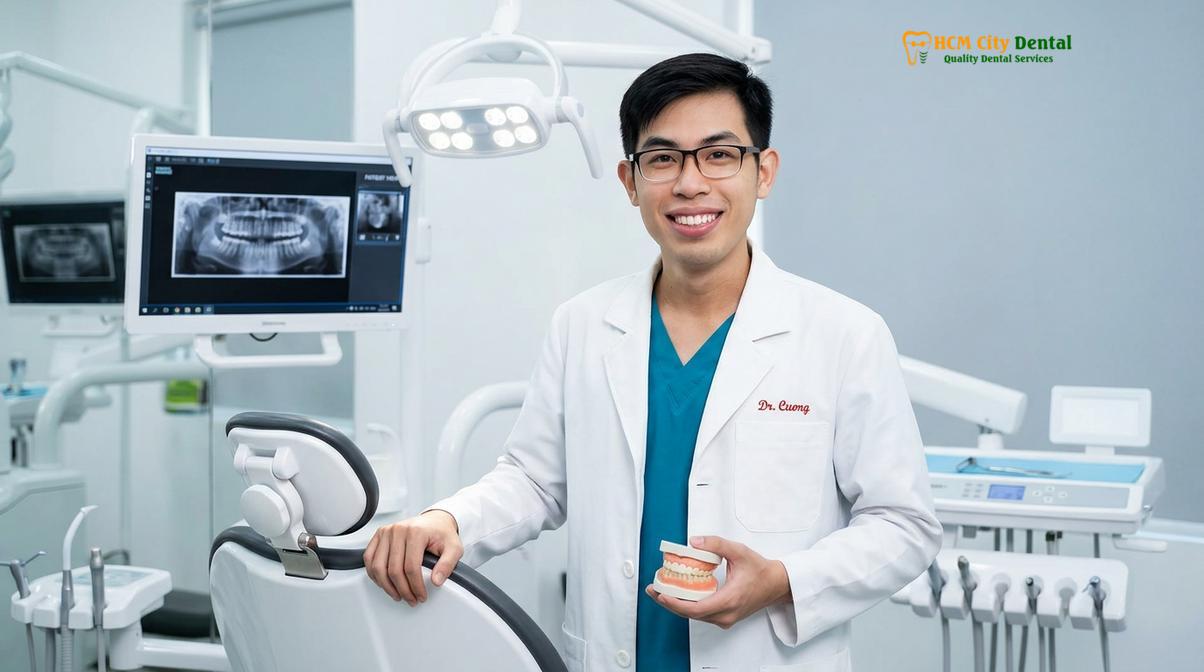
If you are experiencing these symptoms, prompt diagnosis is essential. Dr. Nguyen Van Cuong and the expert clinical team at HCMC Dental Clinic in Ho Chi Minh City utilize advanced diagnostic tools, including transillumination and high-resolution imaging, to accurately detect and treat cracked teeth before they lead to tooth loss. Early intervention is the key to preserving your natural smile. If you are experiencing severe facial swelling alongside tooth pain, please refer to our Swollen Face Tooth Infection Emergency Guide for immediate steps.
Frequently Asked Questions
Can a minor crack in a tooth heal?
No, a minor crack in a tooth cannot heal itself because tooth enamel lacks living cells and blood vessels. While superficial lines may not require immediate treatment, they will never biologically fuse back together. The body cannot regenerate lost or fractured enamel, meaning any structural damage is permanent unless mechanically repaired by a dentist.
What is the difference between craze lines and a crack?
Craze lines are superficial, painless micro-fractures limited to the outer enamel, whereas a true crack penetrates deeper into the dentin. True cracks often cause sharp pain when chewing and require professional dental restoration. Craze lines are considered a normal cosmetic sign of aging and do not compromise the structural integrity of the tooth.
Can a dentist repair a hairline crack?
Yes, a dentist can repair a hairline crack using restorative techniques such as dental bonding or a custom ceramic crown. These treatments stabilize the tooth structure and prevent the fracture from spreading into the root. By splinting the tooth, the dentist eliminates the pain caused by the fractured segments flexing during mastication.
How long does a cracked tooth take to show symptoms?
A cracked tooth can show symptoms immediately upon fracturing, or it may remain completely asymptomatic for months. Symptoms typically emerge once the crack deepens enough to irritate the inner nerve during chewing or temperature changes. Because the progression is unpredictable, any suspected crack should be evaluated clinically even if it does not currently hurt.
Does a crown cure a cracked tooth?
A crown does not biologically cure a cracked tooth, but it acts as a highly effective structural splint. By encasing the tooth, a crown binds the fractured segments together, eliminating pain and preventing further damage. While the crack remains underneath, the crown provides the mechanical support necessary to save the tooth and restore full chewing function.
References
- Journal of Endodontics. Cracked Tooth Syndrome: Epidemiology and Diagnosis. (2021).
- American Dental Association. Clinical Evaluation of Dental Fractures. (2020).
- International Endodontic Journal. Biomechanics of Cracked Teeth and Restorative Options. (2019).
- Journal of Prosthetic Dentistry. Survival Rates of Crowned Cracked Teeth. (2022).
- British Dental Journal. The Hydrodynamic Theory of Dentin Sensitivity in Fractured Teeth. (2018).