Losing or breaking a prosthesis while traveling is a stressful dental emergency that disrupts eating, speaking, and confidence. If you have a lost denture abroad in Vietnam, immediate clinical solutions range from same-day acrylic repairs to the rapid fabrication of temporary or permanent replacement prosthetics using advanced digital dentistry.
Clinical Summary:
Managing a lost or fractured denture during international travel requires swift prosthodontic intervention to restore oral function and aesthetics. In Ho Chi Minh City, modern dental facilities utilize CAD/CAM technology and in-house laboratories to expedite the replacement process. Depending on the clinical presentation, patients can receive same-day repairs for clean acrylic fractures or immediate temporary dentures while a definitive prosthesis is fabricated. Dr. Nguyen Van Cuong emphasizes that successful emergency restoration relies on precise intraoral impressions, accurate bite registration, and biocompatible materials to ensure optimal retention, stability, and mucosal health without compromising the patient’s travel itinerary.
Key Takeaways:
- Immediate action involves preserving any broken denture fragments in water and seeking prompt emergency dental care.
- Same-day repairs are highly viable for simple acrylic base fractures or single dislodged prosthetic teeth.
- Temporary replacement dentures can often be fabricated within 24 to 48 hours to accommodate tourist schedules.
- Permanent prosthetics require meticulous clinical steps, including custom trays and bite registration, typically spanning three to seven days.
- In-house dental laboratories in Ho Chi Minh City significantly reduce waiting times for international patients requiring urgent care.
What to Do When You Lose or Break a Denture Abroad
If your prosthesis is lost or damaged while traveling, secure any remaining fragments in a moist environment and immediately contact a local dental clinic equipped with an in-house laboratory for emergency assessment.
Experiencing a prosthetic failure while navigating a foreign country can induce significant anxiety. The sudden loss of masticatory function and aesthetic support requires immediate, structured action to mitigate further complications. When dealing with a lost denture abroad in Vietnam, the first clinical directive is to remain calm and assess the situation. If the denture has been fractured rather than entirely lost, it is imperative to collect all broken fragments, no matter how small. These pieces can often be reassembled by a skilled dental technician using an index matrix, which serves as a blueprint for the repair[1].
To preserve the structural integrity of the acrylic resin, any recovered pieces should be kept moist. Polymethyl methacrylate (PMMA), the standard material for denture bases, can undergo dimensional changes or warping if allowed to desiccate completely. Place the fragments in a sealed container with a small amount of clean water or wrap them in a damp paper towel. Do not attempt to clean the fractured edges with harsh chemicals or abrasive brushes, as this can round off the precise margins needed for a seamless laboratory repair.
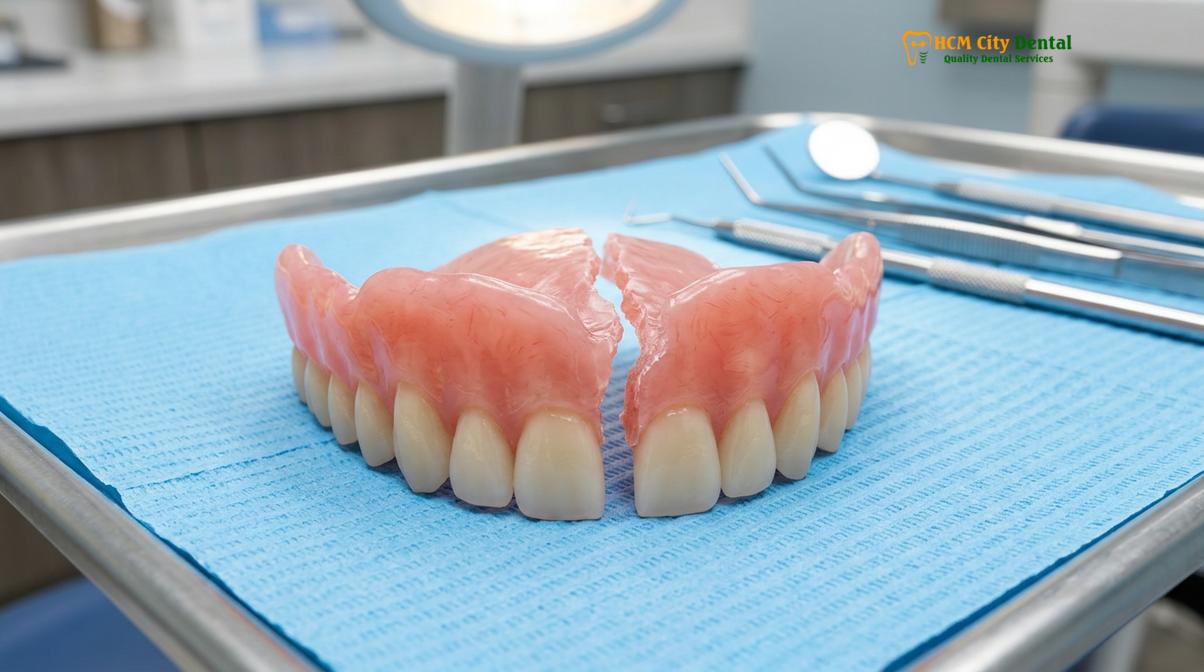
Clinical Warning: Never attempt to repair a broken denture using household superglue (cyanoacrylate) or DIY repair kits. Cyanoacrylate is cytotoxic to oral tissues, can cause severe allergic reactions, and permanently alters the fracture line, making professional repair impossible and necessitating a complete, costly remake.
Once the pieces are secured, the next step is to seek professional Emergency Dental Care. When searching for a clinic to handle a denture emergency hcmc, prioritize facilities that advertise in-house dental laboratories. The presence of on-site technicians drastically reduces turnaround times, eliminating the need to ship the prosthesis to an external lab. During your initial contact with the clinic, clearly communicate whether the denture is a full arch (complete denture) or a partial denture, and specify the material if known (e.g., rigid acrylic, flexible nylon, or cast metal framework). This allows the clinical team to prepare the appropriate materials and allocate sufficient laboratory time for your arrival.
Same-Day Denture Repair Services in HCMC
Many clinics in Ho Chi Minh City offer same-day repair for clean fractures or debonded teeth by utilizing on-site technicians and auto-polymerizing acrylic resins to restore structural integrity.
For tourists facing a sudden breakage, same-day repair services are a critical lifeline. The feasibility of a same-day repair depends heavily on the nature of the fracture. A clean, mid-line fracture of an upper complete denture—often caused by flexing during mastication or an accidental drop—is generally straightforward to repair. The dental technician will approximate the pieces, secure them with sticky wax, and pour a plaster index to capture the exact tissue surface contours. Once the index sets, the fracture line is widened to create mechanical retention, and new auto-polymerizing or light-cured acrylic resin is applied to bond the segments together[2].
Similarly, if a single prosthetic tooth has debonded or chipped, it can usually be replaced within a few hours. The clinic’s laboratory will select a replacement tooth that matches the shade, mold, and anatomical form of the adjacent teeth, securing it into the existing base. However, if the denture has shattered into multiple unalignable pieces, or if a cast metal framework has snapped, a simple same-day repair may not be clinically viable. Metal framework repairs often require laser welding or soldering, which demands specialized equipment and extended laboratory time.
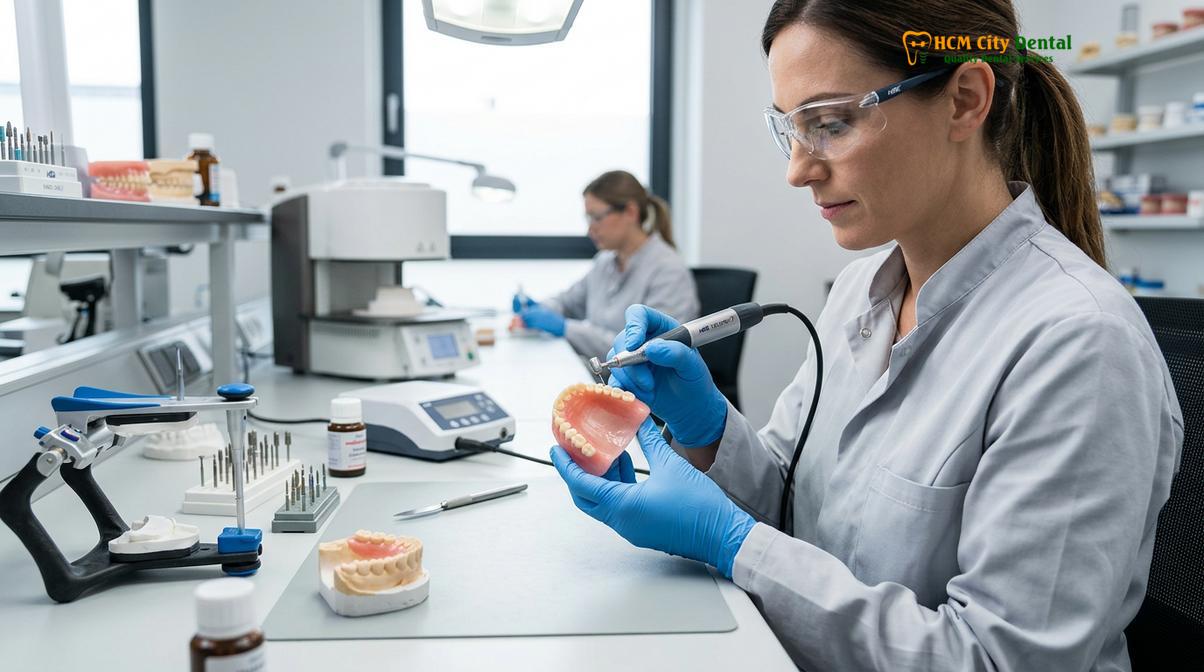
“A fractured denture is rarely just an accident; it is often a clinical symptom of underlying issues such as occlusal disharmony, bone resorption, or material fatigue. While we can execute a rapid repair to restore immediate function, it is crucial to evaluate the fit and bite to prevent recurrent fractures.”
— Dr. Nguyen Van Cuong, Lead Prosthodontist
When seeking broken denture repair saigon, patients will undergo a brief clinical evaluation before the repair begins. The dentist will examine the oral mucosa for any signs of trauma, ulceration, or pressure spots caused by the broken appliance. Once the repair is completed by the laboratory, the dentist will perform a clinical try-in. During this phase, articulating paper is used to check the occlusal contacts (how the upper and lower teeth meet). Adjustments are meticulously made to ensure that biting forces are evenly distributed, reducing the stress on the newly repaired fracture line and ensuring patient comfort.
Emergency Remake options: Temp vs Permanent
Tourists must choose between a rapid temporary prosthesis for immediate aesthetic and functional relief or investing additional days for a definitive, custom-fitted permanent denture.
If a prosthesis is entirely lost or damaged beyond repair, the patient faces a critical decision regarding replacement. The choice between a temporary (transitional) denture and a permanent (definitive) denture is dictated by the patient’s remaining travel itinerary, budget, and clinical needs. A replacement denture tourist often requires an immediate solution to continue enjoying their vacation without the embarrassment or functional impairment of missing teeth.
A temporary denture is designed for rapid fabrication, often completed within 24 to 48 hours. These prostheses are typically made entirely of cold-cured or heat-cured PMMA acrylic without a complex metal substructure. While they provide excellent immediate aesthetics and restore basic masticatory function, they are not designed for long-term use. Temporary dentures may lack the precise tissue adaptation and occlusal refinement of a definitive prosthesis, making them slightly bulkier. However, they serve as an excellent stopgap measure, allowing the patient to return to their home country where a permanent solution can be pursued at a later date[3].
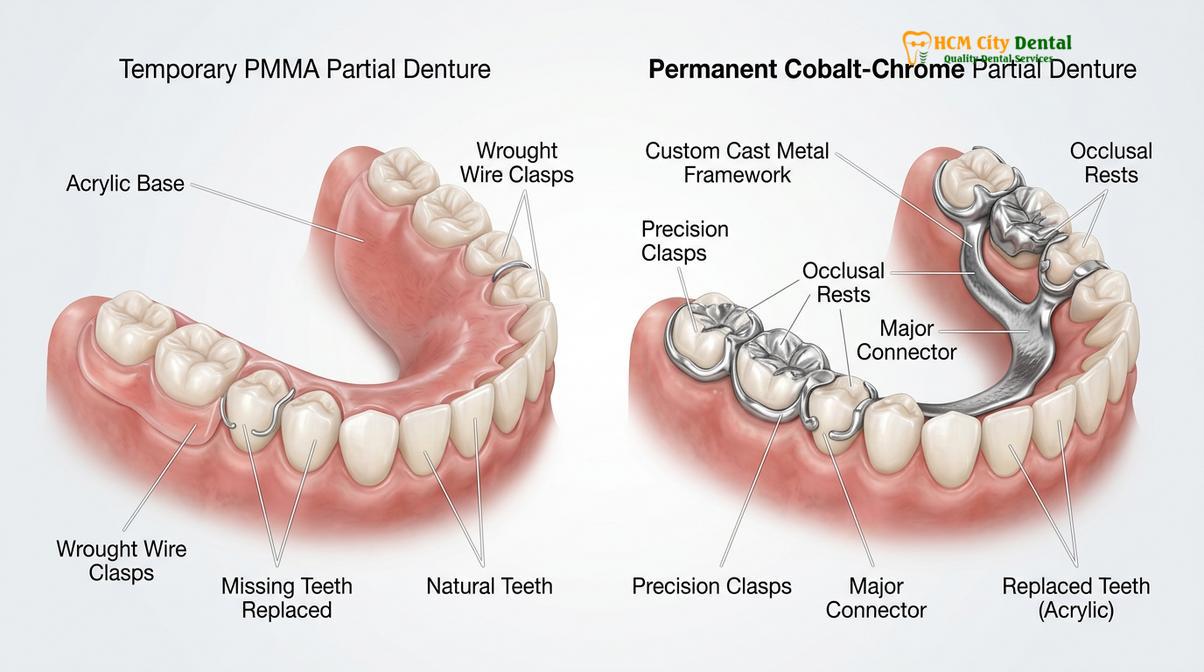
Conversely, a permanent denture is fabricated with long-term durability, optimal tissue health, and superior aesthetics in mind. These prostheses utilize high-impact acrylics, highly cross-linked prosthetic teeth, and, in the case of partial dentures, precision-cast cobalt-chrome or titanium frameworks. The fabrication of a permanent denture requires a more rigorous clinical workflow, involving custom impression trays, precise border molding, and detailed maxillomandibular relationship records. This process generally spans three to seven days, making it suitable for tourists who have an extended stay in Ho Chi Minh City.
| Clinical Parameter | Temporary (Transitional) Denture | Permanent (Definitive) Denture |
|---|---|---|
| Fabrication Timeline | 24 to 48 hours | 3 to 7 days |
| Primary Materials | Standard PMMA acrylic, basic resin teeth | High-impact acrylic, cross-linked teeth, metal frameworks |
| Clinical Visits Required | 1 to 2 sessions | 3 to 5 sessions |
| Durability & Longevity | Short-term (3 to 12 months) | Long-term (5 to 10+ years with maintenance) |
| Fit and Adaptation | Acceptable, may require adhesive | Highly precise, utilizes custom border molding |
When consulting with the clinical team, the dentist will evaluate the health of the residual alveolar ridge and the remaining natural dentition. If the patient has experienced significant bone resorption since their original denture was made, fabricating a new permanent denture offers the opportunity to re-establish the correct vertical dimension of occlusion, improving facial aesthetics and reducing temporomandibular joint (TMJ) strain.
Step-by-Step Replacement Process for Tourists
The replacement workflow involves comprehensive oral examination, primary and secondary impressions, maxillomandibular relationship registration, a wax try-in, and final delivery with occlusal adjustments.
Fabricating a high-quality replacement prosthesis requires a systematic prosthodontic workflow. While the timeline may be accelerated for international visitors, the fundamental clinical steps cannot be bypassed without compromising the final result. The process begins with a comprehensive oral examination. The dentist evaluates the health of the oral mucosa, checking for any pathology, inflammation, or retained root tips. For partial dentures, the remaining natural teeth are assessed for periodontal stability and structural integrity, as they will serve as abutments to support the new appliance.
The first major clinical step is obtaining accurate impressions. For a rapid workflow, the dentist may take a primary impression using alginate or a high-viscosity polyvinyl siloxane (PVS) material. In modern clinics, intraoral digital scanners may be utilized to capture the 3D topography of the arches, completely eliminating the discomfort of traditional impression materials. If a permanent denture is being fabricated, this primary model is used to create a custom tray. The dentist then performs border molding using green stick compound to capture the dynamic movements of the facial muscles and frenal attachments, followed by a definitive secondary impression[4].
Clinical Case Study: Emergency Full Arch Replacement
A 62-year-old tourist presented to HCMC Dental Clinic in Ho Chi Minh City after losing his upper complete denture in the ocean. With only five days remaining on his visa, the clinical team initiated an accelerated digital workflow. Intraoral scans and a rapid bite registration were completed on Day 1. By utilizing CAD/CAM technology and the in-house laboratory, a wax try-in was evaluated on Day 3. The final high-impact acrylic denture was delivered on Day 4, requiring minimal occlusal adjustments. The patient regained full masticatory function and aesthetic confidence, allowing him to complete his vacation without disruption.
Following impressions, the dentist must record the maxillomandibular relationship. This involves determining the correct vertical dimension of occlusion (the distance between the nose and chin when the teeth are closed) and the centric relation (the most stable position of the jaw joints). Wax bite blocks are used to record this relationship and transfer it to a mechanical articulator in the laboratory. The technician then sets the artificial teeth in wax according to the prescribed occlusal scheme.
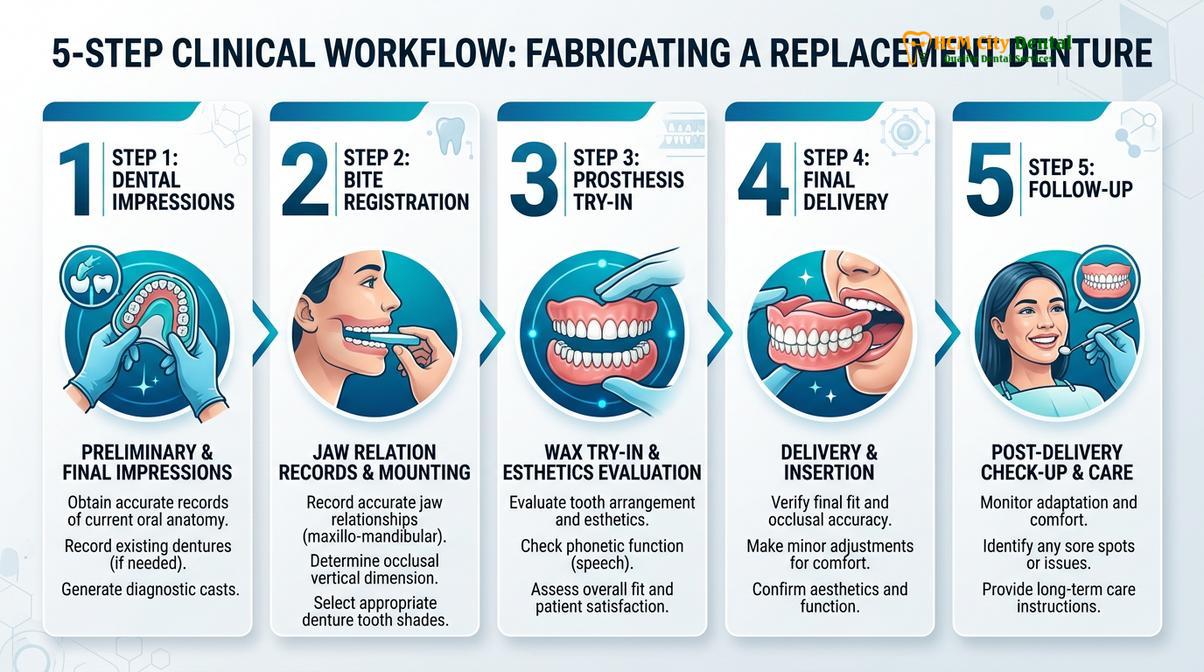
The wax try-in is a critical milestone. During this session, the patient evaluates the aesthetics, tooth shade, midline alignment, and lip support. The dentist checks the phonetics (speech patterns) and verifies the bite accuracy. Any necessary changes are easily made in the wax stage. Once approved, the denture is processed, polished, and prepared for final delivery. At the delivery appointment, pressure-indicating paste is used to identify and relieve any internal high spots, ensuring the prosthesis seats comfortably without causing mucosal trauma.
Required Clinical Sessions and Timelines
Fabricating a new prosthesis typically requires three to five clinical sessions over a span of three to seven days, depending on the complexity and the availability of digital CAD/CAM workflows.
Understanding the clinical timeline is essential for tourists managing a dental emergency. While the prospect of a same day denture vietnam is appealing, it is generally reserved for repairs or highly simplified temporary acrylic partials. For a fully functional, custom-fitted replacement, patients must allocate sufficient time in their schedule for multiple clinical interactions. The accelerated timeline offered by premium clinics in Vietnam is achieved through optimized scheduling and dedicated laboratory resources, not by skipping essential prosthodontic steps.
A typical accelerated timeline for a permanent complete or partial denture unfolds as follows:
- Session 1 (Day 1): Comprehensive examination, radiographic assessment (if necessary), and primary impressions. If custom trays are required, they are fabricated immediately by the lab.
- Session 2 (Day 2): Secondary (master) impressions using custom trays and border molding. Maxillomandibular relationship registration using wax bite rims. Selection of tooth shade and mold.
- Session 3 (Day 3 or 4): The wax try-in. This is the most interactive session, where the patient and dentist collaborate to ensure the aesthetics and bite are perfect before final processing.
- Session 4 (Day 5 or 6): Final delivery and insertion. The dentist performs occlusal equilibration and relieves any tissue pressure points.
- Session 5 (Day 7): A mandatory follow-up appointment. After 24 to 48 hours of wear, the mucosa may exhibit minor sore spots that require fine-tuning.
“The post-insertion adjustment phase is non-negotiable. Even the most accurately fabricated prosthesis will settle into the soft tissues differently once subjected to the dynamic forces of chewing. We strongly advise international patients to remain in the city for at least 48 hours after receiving their new denture to allow for these critical refinements.”
— Dr. Nguyen Van Cuong, Lead Prosthodontist
Patients should communicate their departure dates clearly during the initial consultation. If the timeline is too tight for a permanent metal framework partial denture—which requires complex casting procedures—the clinical team may recommend a high-quality acrylic transitional denture to ensure the patient leaves with a functional smile, deferring the definitive treatment until they return home.
Denture Repair and Replacement Costs
The financial investment for emergency prosthetic care in Vietnam is highly competitive, with costs varying based on the choice of materials, extent of repair, and the required turnaround time.
One of the primary advantages of seeking dental care in Vietnam is the exceptional cost-to-quality ratio. Emergency prosthetic services are delivered using internationally recognized materials and protocols, yet the financial burden is generally a fraction of what patients might expect in North America, Europe, or Australia. The cost of managing a lost denture abroad in Vietnam depends entirely on the clinical diagnosis and the chosen treatment pathway.
For simple repairs, such as fixing a clean acrylic fracture or reattaching a single debonded tooth, the fees are minimal. These procedures require limited clinical chair time and straightforward laboratory work. If the repair involves reinforcing the base with a cast metal mesh or laser-welding a broken cobalt-chrome clasp, the laboratory fees will increase accordingly. Clinics typically provide a transparent, itemized treatment plan before any work commences, ensuring patients are fully aware of the financial commitment.
When a complete replacement is necessary, the costs are categorized by material. Standard PMMA acrylic dentures are the most cost-effective option, making them ideal for temporary solutions. Flexible nylon dentures (such as Valplast) offer a metal-free alternative for partial tooth loss and sit at a mid-tier price point. The most significant investment involves cast metal framework partial dentures or implant-supported overdentures, which utilize premium materials like titanium or zirconia and require highly specialized laboratory fabrication[5]. According to the latest clinic fee schedules, expedited services requiring technicians to work after hours or over weekends may incur a nominal rush fee, which is always discussed upfront.
When to Seek Immediate Clinical Attention
While a broken prosthesis is highly inconvenient, certain clinical scenarios elevate the situation from a functional nuisance to a medical emergency. Patients should seek immediate evaluation if the fracture has resulted in sharp acrylic edges that are lacerating the tongue, buccal mucosa, or gingival tissues. Continuous trauma to the oral soft tissues can lead to severe ulceration, secondary bacterial infections, and significant pain that impairs the ability to swallow or speak.
Furthermore, if a small partial denture (such as a unilateral “flipper” replacing a single tooth) breaks and loses its retentive clasps, it poses a severe aspiration or choking hazard. A loose, unstable prosthesis should never be worn, especially during sleep or while eating. Additionally, if a patient has attempted a DIY repair using toxic adhesives and experiences localized swelling, burning sensations, or systemic allergic reactions, they must remove the appliance immediately and seek urgent clinical care to manage the chemical burn and safely remove the toxic residue from the oral cavity. Always rely on professional diagnostics at a reputable facility like HCMC Dental Clinic to ensure your safety and the longevity of your prosthetic restoration.
Frequently Asked Questions
Can a dentist fix a denture broken in half?
Yes, a dentist can often repair a denture broken cleanly in half using specialized dental acrylics and an index matrix. The clinical team will align the fractured pieces, create a stabilizing plaster model, and chemically bond the segments with auto-polymerizing resin. This process restores the structural integrity and fit, provided no pieces are missing and the fracture line is clean.
How long does it take to get a new denture in Vietnam?
Getting a new permanent denture in Vietnam typically takes between three to seven days, requiring multiple clinical visits. This timeline allows for accurate primary and secondary impressions, bite registration, wax try-ins, and final adjustments. However, if an immediate solution is required, temporary acrylic dentures can often be fabricated within 24 to 48 hours.
How much does emergency denture repair cost in Saigon?
Emergency denture repair in Saigon is highly affordable, generally ranging from a fraction of Western prices depending on the extent of the damage. Simple acrylic repairs or single tooth reattachments are very cost-effective. Complex repairs involving metal frameworks or the addition of reinforcing mesh may incur slightly higher laboratory fees, but all costs are transparently discussed prior to treatment.
Will travel insurance pay for a lost denture?
Travel insurance policies vary, but many comprehensive plans cover emergency dental care or lost medical prosthetics up to a specific limit. Patients are advised to review their policy documents carefully. The dental clinic can provide detailed clinical invoices, diagnostic X-rays, and treatment reports to help support your reimbursement claim with your insurance provider.
Where can I find emergency denture clinics in District 1?
District 1 in Ho Chi Minh City hosts numerous premium dental centers, including HCMC Dental Clinic, equipped with in-house laboratories. These facilities specialize in treating international tourists, offering rapid turnaround times for prosthetic emergencies, multilingual support, and advanced CAD/CAM technology to ensure high-quality, precise restorations on an accelerated timeline.
References
- Journal of Prosthetic Dentistry. Management of complete denture emergencies in clinical practice. (2021).
- International Journal of Prosthodontics. Fracture resistance of repaired acrylic resin denture bases. (2019).
- British Dental Journal. Rapid fabrication techniques for transitional removable prostheses. (2020).
- Journal of Oral Rehabilitation. Patient satisfaction with immediate vs conventional dentures. (2022).
- American College of Prosthodontists. Clinical guidelines for removable prosthodontic maintenance. (2018).
Read also: If you are wearing orthodontic retainers, see our guide on losing a retainer while traveling abroad.