A knocked out tooth in Vietnam requires immediate clinical intervention. If you experience a dental avulsion, handle the tooth by the crown, store it in milk or saliva, and seek emergency dental care within 30 minutes to maximize the chances of successful reimplantation and long-term survival.
Clinical Summary:
Dental avulsion is a severe maxillofacial emergency where a tooth is completely displaced from its alveolar socket. Immediate reimplantation yields the highest clinical success rate. Proper handling—strictly avoiding contact with the root surface—and utilizing physiological storage media like cold milk or Hanks’ Balanced Salt Solution (HBSS) are critical to preserving the vitality of periodontal ligament (PDL) cells before the patient reaches a dental professional. Comprehensive treatment involves socket preparation, flexible splinting, and often subsequent endodontic therapy to prevent inflammatory root resorption.
Key Takeaways:
- Time is critical: Reimplantation within 30 to 60 minutes offers the best prognosis for cellular survival.
- Never touch the root: Handle the avulsed tooth exclusively by the crown to protect delicate periodontal fibroblasts.
- Optimal storage: Transport the tooth in cold milk, saliva, or HBSS; never use plain tap water.
- Immediate splinting: A dental professional will stabilize the tooth using a flexible splint for 2 to 4 weeks.
- Follow-up care: Most replanted mature adult teeth will require root canal therapy to prevent infection and resorption.
The Golden Hour: Why 30 Minutes Matters
Replanting an avulsed tooth within the first 30 minutes significantly increases the survival rate of periodontal ligament cells, which are essential for successful reattachment and healing.
In the realm of dental traumatology, the concept of the “golden hour” is paramount, though clinical evidence suggests that a window of just 30 minutes is even more critical. When a tooth is completely knocked out of its socket—a condition clinically referred to as an avulsed tooth emergency—the blood supply and nerve connections are instantly severed. More importantly, the periodontal ligament (PDL), which is the specialized connective tissue that attaches the root of the tooth to the alveolar bone, is torn. The cells remaining on the root surface are highly sensitive to dehydration and mechanical damage.
The primary goal of emergency dental care in these scenarios is to maintain the viability of these PDL cells. If the tooth is left dry outside the mouth for more than 30 to 60 minutes, the PDL cells undergo rapid necrosis (cell death)[1]. When a tooth with necrotic PDL cells is replanted, the body’s immune system recognizes the dead tissue as foreign. This triggers a severe inflammatory response, leading to a condition known as replacement resorption or ankylosis. In ankylosis, the jawbone fuses directly to the tooth root, gradually replacing the root structure with bone until the tooth is eventually lost.
Conversely, if the tooth is replanted immediately or kept in a physiologically compatible storage medium, the PDL cells can survive, allowing the ligament to reattach normally to the bone. This biological imperative makes time the single most critical variable in the prognosis of a knocked-out tooth. Patients requiring emergency dental care must prioritize rapid transport to a qualified dental facility.
“The viability of periodontal ligament cells decreases exponentially after 30 minutes of dry extra-oral time, making immediate clinical intervention the single most decisive factor in long-term tooth survival and the prevention of ankylosis.”
It is important to note that the developmental stage of the tooth also plays a role in the urgency. Immature teeth with open apices (the tip of the root is not fully formed, common in children) have a unique potential for revascularization—meaning the blood supply can sometimes re-establish itself if replanted rapidly. Mature teeth with closed apices will inevitably lose their blood supply and require endodontic (root canal) treatment, but rapid reimplantation is still vital to save the periodontal ligament and maintain the surrounding bone structure.
How to Handle a Knocked-Out Tooth
Proper handling involves picking the tooth up exclusively by the crown, avoiding any contact with the root, and gently rinsing off visible debris without scrubbing or using chemicals.
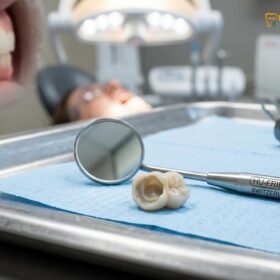
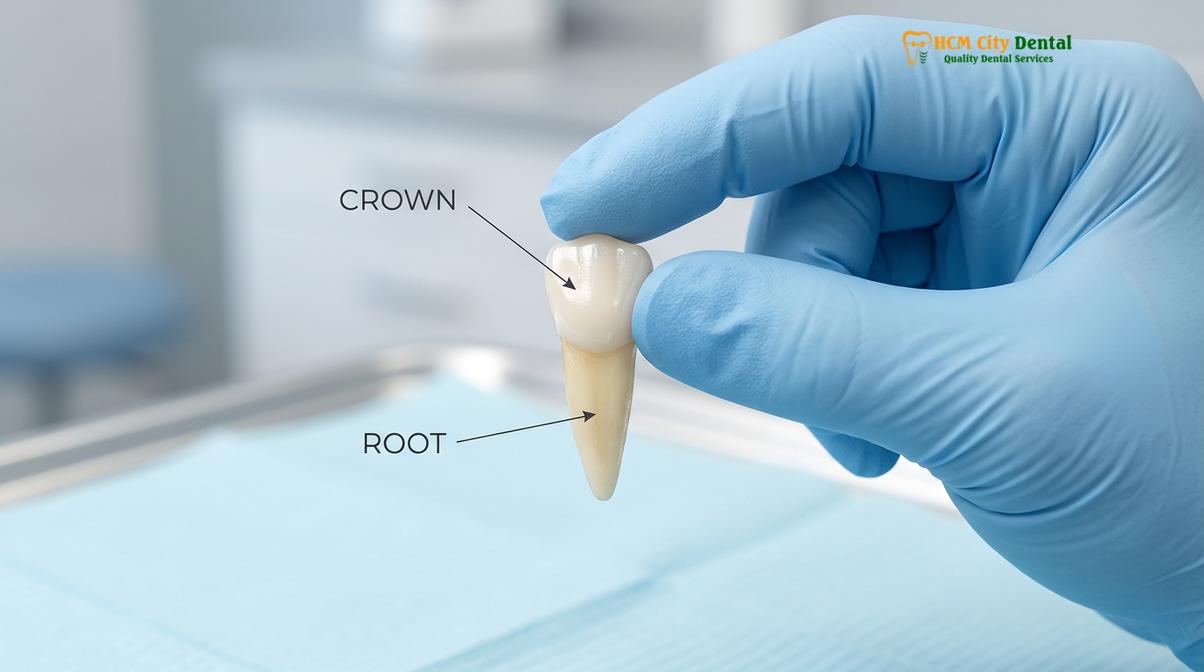
The moments immediately following a tooth knocked out accident are chaotic, but calm and precise action can mean the difference between saving and losing the tooth. The way the tooth is handled before reaching the clinic directly impacts the survival of the microscopic cells on the root surface. The crown is the part of the tooth that is normally visible in the mouth, covered in hard enamel. The root is the portion that anchors into the jawbone, covered in delicate cementum and periodontal ligament fibers.
When retrieving the tooth, you must only touch the crown. Grasping the root can crush the vital PDL fibroblasts, rendering successful reimplantation impossible. If the tooth has fallen on the ground and is visibly contaminated with dirt or debris, it must be cleaned, but this must be done with extreme caution. The recommended protocol is to gently rinse the tooth with cold milk, saline solution, or the patient’s own saliva for no more than 10 seconds[2]. If none of these are available, a very brief rinse under cold, gently running tap water is acceptable, but prolonged exposure to water must be avoided.
Clinical Warning: Never scrub the root of the tooth, do not use soap or chemical disinfectants, and never wrap the tooth in a dry tissue or cloth. Mechanical scrubbing or drying will instantly destroy the vital periodontal cells required for reattachment.
If the patient is cooperative, conscious, and calm, the best immediate action is to replant the tooth right at the scene of the accident. Gently push the tooth back into its socket, ensuring it is facing the correct direction. Once in place, the patient should bite down softly on a clean handkerchief or gauze to hold the tooth in position while en route to the dental clinic. However, if the patient is a young child, highly distressed, or if the tooth cannot be easily repositioned, do not force it. Instead, focus on proper storage and immediate transport.
Emergency Transport Solutions
Storing the tooth in a physiologically compatible medium like milk, saliva, or HBSS prevents cellular dehydration and osmotic lysis during transport to the dental clinic.
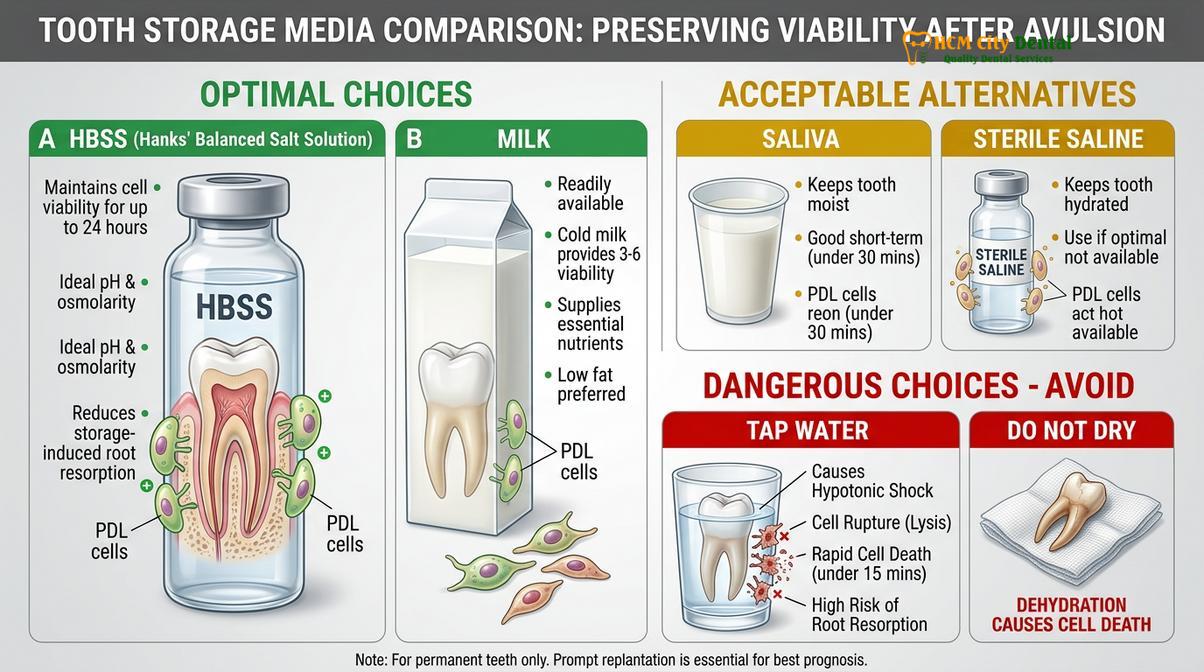
If immediate on-site reimplantation is not feasible, the environment in which the tooth is transported becomes the next critical factor. The goal of a storage medium is to mimic the body’s natural physiological conditions—specifically, maintaining the correct osmolality (concentration of solutes) and a neutral pH. If a tooth is placed in a non-physiological liquid, the cells on the root surface will either dehydrate and shrivel, or absorb too much fluid and burst.
Tap water is one of the worst storage media for an avulsed tooth. Water is hypotonic, meaning it has a lower concentration of solutes than the cells on the root. Through osmosis, water rapidly enters the PDL cells, causing them to swell and lyse (burst) within minutes. Storing a tooth in water is often more damaging than leaving it dry.
The optimal storage solutions, in order of preference, include:
- Hanks’ Balanced Salt Solution (HBSS): This is a specialized tissue culture medium found in commercial tooth rescue kits. It is the gold standard for preserving PDL cell viability for up to 24 hours, though immediate care is still preferred.
- Cold Pasteurized Milk: Milk is readily available and has an osmolality and pH highly compatible with human cells. It contains proteins and enzymes that help protect the root surface. Whole milk is preferred over skim milk, and it can preserve cell vitality for up to 6 hours.
- Saliva: If milk or HBSS is unavailable, the patient can spit into a small cup to store the tooth. Alternatively, the tooth can be placed inside the patient’s cheek (buccal vestibule). This method is only recommended for adults and older children who are not at risk of accidentally swallowing or aspirating the tooth.
- Saline Solution: Standard medical saline (0.9% NaCl) is isotonic and prevents cell bursting, though it lacks the nutrients found in milk or HBSS to sustain the cells for long periods.
| Storage Medium | Osmolality / pH Compatibility | Estimated Cell Viability Time | Clinical Recommendation |
|---|---|---|---|
| HBSS (Tooth Rescue Kit) | Excellent (Physiological) | Up to 24 hours | Highly Recommended (Gold Standard) |
| Cold Milk | Very Good | Up to 6 hours | Highly Recommended (Most Accessible) |
| Human Saliva | Good | Up to 2 hours | Recommended if milk is unavailable |
| Tap Water | Poor (Hypotonic) | Minutes (Causes cell lysis) | Strictly Avoid |
| Dry Storage (Tissue/Gauze) | Poor (Dehydration) | Less than 30 minutes | Strictly Avoid |
When seeking to save knocked out tooth structures, selecting the right transport medium is a simple yet profoundly impactful decision that dictates the trajectory of the clinical treatment upon arrival at the clinic.
Reimplantation Procedure Explained
The clinical reimplantation process involves socket preparation, precise repositioning of the tooth, and application of a flexible splint to stabilize it during the initial healing phase.
Upon arrival at a specialized facility like HCMC Dental Clinic in Ho Chi Minh City, the clinical team will immediately prioritize the avulsed tooth. The reimplantation procedure is a highly orchestrated workflow designed to minimize further trauma to the periodontal tissues while ensuring optimal stabilization.
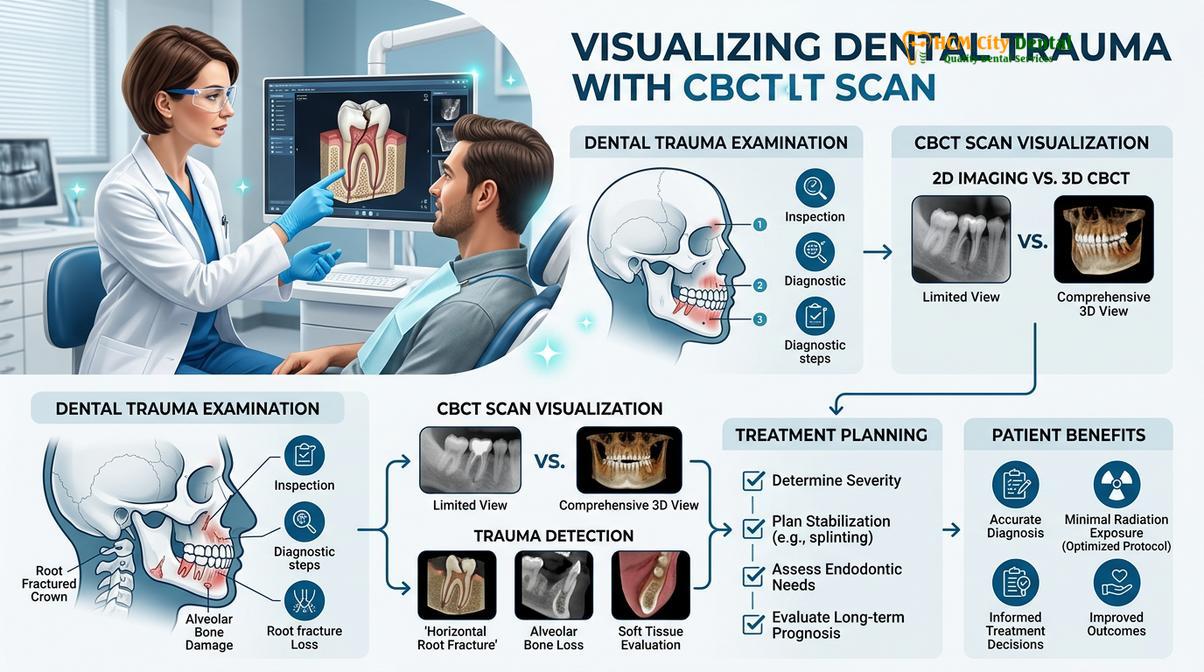
The first step is a rapid but thorough clinical and radiographic assessment. The dentist must rule out alveolar bone fractures (fractures of the jawbone socket) and assess the condition of adjacent teeth. Local anesthesia is administered to ensure patient comfort. The socket is gently irrigated with sterile saline to remove any coagulum (blood clots) or debris that may prevent the tooth from seating fully. The socket is never curetted or scraped, as this would destroy the bone cells needed for reattachment.
If the tooth was stored dry for more than 60 minutes, the clinical protocol changes. In these delayed cases, the PDL cells are presumed necrotic. Dr. Nguyen Van Cuong notes that in such instances, the root surface may be treated with specific chemical agents, such as sodium fluoride or Emdogain (enamel matrix derivative), to slow down the inevitable replacement resorption and encourage bone integration, though the long-term prognosis remains guarded.
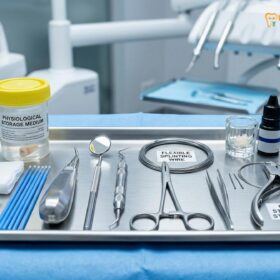
Once the tooth is gently reinserted into the socket and its anatomical position is verified radiographically, it must be stabilized. According to current International Association of Dental Traumatology (IADT) guidelines, a flexible splint is applied[3]. This usually involves bonding a thin orthodontic wire or specialized trauma splint to the avulsed tooth and the adjacent healthy teeth using composite resin. A flexible splint allows for slight physiological movement of the tooth, which has been shown to promote favorable healing of the periodontal ligament and reduce the risk of ankylosis.
Clinical Case Review: A 22-year-old patient presented at HCMC Dental Clinic in Ho Chi Minh City following a sports-related dental avulsion. The central incisor was transported in cold milk. Dr. Nguyen Van Cuong performed immediate reimplantation within 45 minutes of the injury. A flexible wire-composite splint was applied for two weeks. Following the splint removal and subsequent endodontic therapy, the tooth demonstrated complete clinical stability, normal gingival attachment, and no radiographic signs of root resorption at the one-year follow-up.
The splint is typically left in place for 2 to 4 weeks, depending on the severity of the trauma and whether there are accompanying bone fractures. During this period, the patient is prescribed a soft diet, instructed on meticulous oral hygiene using a soft brush and chlorhexidine mouthwash, and may be prescribed systemic antibiotics to prevent infection.
Success Rates and Factors
Long-term success depends heavily on the extra-oral dry time, the storage medium used, and the developmental stage of the tooth root at the time of injury.
The prognosis for a replanted tooth is highly variable and depends on a matrix of biological and environmental factors. The most critical determinant, as previously discussed, is the extra-oral dry time. Teeth replanted within 30 minutes have a success rate exceeding 85%, with a high likelihood of normal periodontal healing. As dry time increases, the probability of inflammatory root resorption and ankylosis rises sharply.
Another crucial factor is the stage of root development. In pediatric patients, teeth may have an “open apex”—meaning the root is not fully formed and the opening at the tip is wide. If an open-apex tooth is replanted rapidly, there is a remarkable potential for the severed blood vessels to reconnect, a process known as revascularization. If successful, the tooth remains vital, and the root continues to develop normally.
“Teeth with open apices replanted within optimal timeframes have a unique potential for spontaneous revascularization, occasionally negating the need for immediate endodontic intervention and allowing for continued root maturation.”
However, for mature teeth with a closed apex, revascularization is biologically impossible. The pulp tissue inside the tooth will inevitably become necrotic and infected. If left untreated, the bacteria in the necrotic pulp will travel through the dentinal tubules to the root surface, triggering a massive inflammatory response that rapidly destroys the surrounding bone and root structure (inflammatory root resorption)[4]. To prevent this, root canal therapy must be initiated within 7 to 14 days after reimplantation, before the splint is removed. The root canal system is typically dressed with calcium hydroxide, a highly alkaline medicament that neutralizes bacterial toxins and arrests resorption, before the final root canal filling is placed.
Patient compliance also plays a significant role in success. Adherence to a soft diet, maintaining impeccable oral hygiene, and attending all scheduled follow-up appointments for clinical and radiographic monitoring are essential to catch and manage any late-stage complications.
What If Reimplantation Is Not Possible
When a tooth cannot be saved due to extended dry time or severe structural damage, modern restorative options like dental implants or bridges provide highly functional and aesthetic replacements.
Despite the best efforts of patients and clinicians, there are scenarios where reimplantation is contraindicated or ultimately fails. If the tooth has been dry for several hours, if the root is severely fractured, or if the patient has severe medical conditions that compromise healing, attempting to save the tooth may not be viable. In cases where a replanted tooth undergoes severe replacement resorption over the years, it will eventually require extraction.
When tooth loss is inevitable, modern prosthodontics offers several sophisticated replacement options. A comprehensive reimplantation guide vietnam context emphasizes that the loss of a natural tooth is not the end of a patient’s functional or aesthetic smile. The primary alternatives include:
- Dental Implants: This is the gold standard for replacing a single missing tooth. A titanium post is surgically placed into the jawbone, acting as an artificial root. Once integrated with the bone, a custom ceramic crown is attached. Implants prevent bone loss, do not require the alteration of adjacent teeth, and offer the most natural look and feel[5]. If the buccal bone plate was damaged during the avulsion, bone grafting may be required prior to implant placement.
- Fixed Dental Bridges: If an implant is not suitable due to anatomical limitations or patient preference, a fixed bridge can be utilized. This involves preparing the healthy teeth on either side of the gap to serve as anchors for a prosthetic tooth suspended between them. While highly aesthetic, bridges require the irreversible removal of healthy enamel from adjacent teeth.
- Removable Partial Dentures: Often used as a temporary aesthetic solution while waiting for an implant site to heal, or as a more economical long-term option, partial dentures can replace one or more missing teeth. They are removable and rely on clasps attached to remaining natural teeth for retention.
The choice of replacement depends on the patient’s age, bone volume, aesthetic expectations, and clinical diagnostics. A personalized consultation is required to determine the most appropriate restorative pathway.
When to Seek Immediate Medical Attention
While a knocked-out tooth is a severe dental emergency, it is often the result of significant facial trauma. Before focusing solely on the dentition, it is crucial to assess the patient for more severe, life-threatening injuries. Immediate medical attention at a hospital emergency department is required if the dental avulsion is accompanied by any of the following “red flag” symptoms:
- Loss of Consciousness: Even a brief loss of consciousness following head trauma requires immediate neurological evaluation to rule out concussions or intracranial bleeding.
- Severe, Uncontrolled Bleeding: While bleeding from the tooth socket is normal, profuse bleeding that does not stop with direct pressure may indicate a deeper laceration or a bleeding disorder.
- Suspected Jaw Fractures: If the patient is unable to close their mouth properly, experiences severe pain when moving the jaw, or if there is visible facial asymmetry or step-deformities in the bone, a maxillofacial fracture must be suspected.
- Signs of Head Injury: Symptoms such as dizziness, vomiting, blurred vision, confusion, or clear fluid leaking from the ears or nose necessitate urgent medical intervention.
Additionally, if the avulsed tooth was contaminated with soil or dirt, the patient’s tetanus vaccination status must be reviewed. A tetanus booster may be required within 48 hours to prevent infection. Always prioritize general medical stability before addressing the dental trauma.
Frequently Asked Questions
How long can a knocked out tooth survive outside the mouth?
A knocked-out tooth has the highest survival rate if replanted within 30 to 60 minutes. Beyond this window, periodontal ligament cells begin to die, significantly reducing the chances of successful reattachment and increasing the risk of root resorption. If stored in a physiological medium like HBSS, viability can be extended, but immediate clinical care remains the priority.
Can you put a knocked out tooth back in?
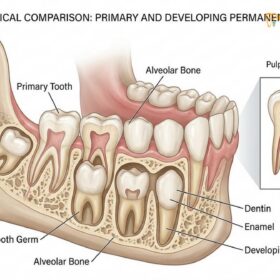
Yes, a permanent knocked-out tooth can often be successfully replanted if handled correctly and promptly. However, primary (baby) teeth should never be replanted, as doing so can severely damage the developing permanent tooth underneath the gum line. Always consult a dentist immediately to ensure correct positioning and stabilization.
What liquid should I store a knocked out tooth in?
The ideal storage liquids are Hanks’ Balanced Salt Solution (HBSS), cold pasteurized milk, or the patient’s own saliva. These fluids have the correct osmolarity and pH to keep the root cells alive during transport to the dental clinic. Never store an avulsed tooth in plain tap water, as it will cause the cells to burst.
Does milk really help preserve a knocked out tooth?
Yes, milk is an excellent emergency storage medium for an avulsed tooth. Its physiological properties, including a neutral pH and compatible osmolality, prevent the root surface cells from swelling and bursting, which occurs if the tooth is stored in water. It is highly accessible and can preserve cell vitality for several hours.
How much does tooth reimplantation cost in Vietnam?
The cost of tooth reimplantation in Vietnam varies depending on the complexity of the trauma, required splinting, and subsequent root canal therapy. A comprehensive clinical examination is necessary to provide an accurate, personalized treatment estimate based on current clinical fee schedules. Additional costs may apply if restorative work like crowns or implants are eventually needed.
References
- International Association of Dental Traumatology (IADT). Guidelines for the management of traumatic dental injuries: Avulsion of permanent teeth. (2020).
- Dental Traumatology. Survival of periodontal ligament cells in different storage media. (2019).
- Journal of Endodontics. Endodontic management of traumatized teeth. (2021).
- American Association of Endodontists. The treatment of the avulsed tooth. (2022).
- Journal of Oral and Maxillofacial Surgery. Prosthodontic rehabilitation following severe dental trauma. (2018).